Home Blog Page 602

The Reality and Rhetoric Pezeshkian’s Foreign Policy

The Reality and Rhetoric Pezeshkian’s Foreign Policy

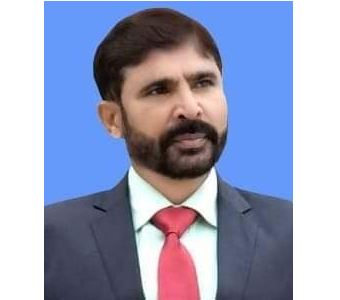
Dr. Muhammad Akram Zaheer

In the initial weeks of his presidency, Iranian President MasoudPezeshkian has demonstrated a cautious approach to foreign policy, opting to align his actions with established regime rhetoric rather than advancing the bold initiatives he championed during his electoral campaign. This hesitancy contrasts sharply with the expectations set by his campaign, where he vocally criticized Tehran’s growing international isolation and pledged to restore Iran’s global standing through more pragmatic and constructive diplomatic engagements.

Pezeshkian’s campaign rhetoric resonated with a populace weary of the socio-economic repercussions stemming from Iran’s strained international relations, particularly in the wake of U.S. sanctions and the protracted negotiations surrounding the Joint Comprehensive Plan of Action (JCPOA). His promises of a shift towards a more balanced foreign policy approach, one that could potentially ease Iran’s isolation and improve its economic conditions, garnered significant attention and support. However, since assuming office, Pezeshkian’s foreign policy actions have largely mirrored the hardline positions traditionally upheld by the Islamic Republic’s leadership, raising questions about his ability or willingness to fulfill his campaign promises. The continuity in foreign policy under Pezeshkian’s administration can be attributed to several factors. Firstly, the president’s office, while influential, operates within the broader framework of the Islamic Republic’s political system, where the Supreme Leader holds ultimate authority over key foreign policy decisions. This structural reality inherently limits any president’s ability to enact significant changes, particularly when such changes might diverge from the established ideological and strategic imperatives of the regime. Pezeshkian’s adherence to regime slogans suggests a recognition of these limitations and a strategic choice to avoid confrontation with more powerful elements within the state, including the Supreme Leader and the Islamic Revolutionary Guard Corps (IRGC).

Secondly, Pezeshkian’s cautious stance may reflect a pragmatic assessment of the international environment. The geopolitical context in which Iran operates is fraught with challenges, including ongoing tensions with the West, particularly the United States and complex relations with regional powers like Saudi Arabia and Israel. In such a volatile environment, Pezeshkian may have concluded that a more cautious approach, one that aligns with the regime’s established positions, would be more sustainable in the short term. This approach allows him to consolidate power internally and avoid exacerbating external pressures during a period of significant uncertainty. However, Pezeshkian’s reticence to deviate from established foreign policy positions has disappointed those who hoped his presidency would mark a departure from the status quo. The disconnect between his campaign rhetoric and his early actions in office has led to growing skepticism about his capacity to implement the reforms necessary to reduce Iran’s international marginalization. As his presidency progresses, Pezeshkian will likely face increasing pressure both domestically and internationally to clarify his foreign policy agenda and demonstrate a more proactive stance in addressing Iran’s diplomatic challenges.

In the complex political landscape of Iran, Ali Pezeshkian, a prominent figure within the reformist camp, is acutely aware of the limitations imposed upon his influence by the supreme authority of Ayatollah Ali Khamenei. The Iranian political system, characterized by a theocratic hierarchy with Khamenei at its apex, does not easily lend itself to the imposition of agendas that deviate from the established ideological and strategic doctrines of the state. Pezeshkian’s recognition of this reality is crucial, as it underscores the need for a more nuanced approach in navigating the corridors of power in Tehran. Pezeshkian’s strategy, therefore, does not involve directly challenging the authority of Khamenei or the Revolutionary Guards, the latter being a formidable military and political force that often aligns closely with the Supreme Leader’s vision. Instead, his approach appears to be centered on persuasion, a method that, while subtle, could potentially yield significant results if executed with strategic acumen. Persuasion in this context would require Pezeshkian to frame his arguments in a way that resonates with the core concerns of the Iranian leadership, particularly regarding national security, regional influence and the preservation of the Islamic Republic’s ideological integrity.

The notion of advocating for a less confrontational posture toward the outside world, as Pezeshkian might propose, would necessitate a careful balancing act. On one hand, it would involve articulating the potential benefits of reducing tensions with the international community, such as economic relief from sanctions, improved diplomatic relations and greater stability in the region. On the other hand, it would require addressing the deep-seated mistrust that has historically characterized Iran’s interactions with the West, particularly with the United States and its allies. For Pezeshkian to succeed in persuading the Supreme Leader and the Revolutionary Guards, his arguments would need to align with the strategic interests of the state. This could involve emphasizing how a less antagonistic foreign policy might enhance Iran’s long-term security by preventing the formation of hostile coalitions against it, thereby allowing the country to consolidate its regional influence without overextending its resources. Additionally, he could argue that a reduction in external tensions might provide the Revolutionary Guards with the space to focus on internal development projects, which could enhance their domestic legitimacy and economic power. However, Pezeshkian’s task is complicated by the ideological foundations of the Islamic Republic, which have long been defined by resistance to Western influence and a commitment to exporting the Islamic Revolution. Any suggestion of softening this stance could be perceived as a threat to the very identity of the state. As such, Pezeshkian would need to navigate these ideological sensitivities with care, possibly by framing his proposals not as a departure from the revolutionary principles but as an evolution of them, adapted to the current global realities.

While Pezeshkian cannot impose his agenda on Khamenei or the Revolutionary Guards, his potential to persuade them lies in his ability to present a less confrontational posture as a strategic necessity rather than a compromise. By aligning his proposals with the broader goals of the state and addressing, the core concerns of its leadership, Pezeshkian may find a receptive audience for his vision of a more diplomatically engaged Iran.
Magnolia Chapter of FASP hosts AGM with stunning floral art demonstration

Magnolia Chapter of FASP hosts AGM with stunning floral art demonstration

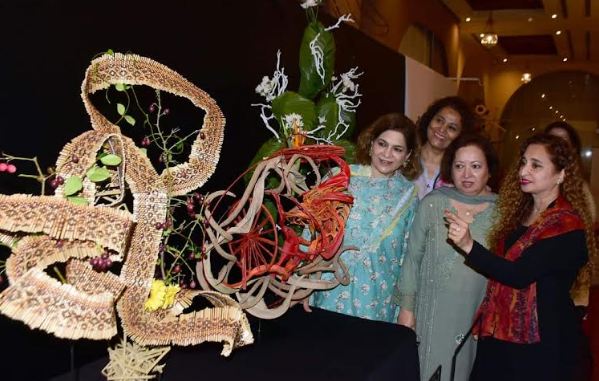
ISLAMABAD, AUG 31 /DNA/ – Serena Hotel, Islamabad. The meeting started with the recitation of Holy Quran by Sarwat Aslam. Then Magnolia’s journey from July 23 to July 24 was showcased in the form of a multi media presentation prepared by Sarwat Aslam.

 Huma Kamran and Farah Khursheed were the oral presenters. After that Shaista Khawar was invited on the stage for the demonstration on the topic, “ Nature Unleashed.” Shaista is the Ex President of Rose Chapter, Lahore. She has a multi faceted personality, having a niche in floral art. She made 14 outstanding floral arrangements using different techniques. Being a certified Ikebana teacher, every arrangement symbolically narrated a story. She used versatile plant material, wires, vegetables, her own hand crafted clay pots, wood slices, even the pieces of cloth, jute and discarded AC filters.

It was a labour of love and was deeply appreciated by the audience.

After the demonstration, the President Wiqarunnisa Boolani delivered a short speech. She thanked Shaista Khawar for gracing the occasion with her presence.  She also thanked all the Magnolians for showing their trust in her by electing her president for the fourth time. The demonstrator was presented a token of thanks. Birthday girls were also given small gifts.

The meeting ended as usual, with the pleasantries served by Serena Hotel.

Vietnam celebrates 79th national day

Vietnam celebrates 79th national day

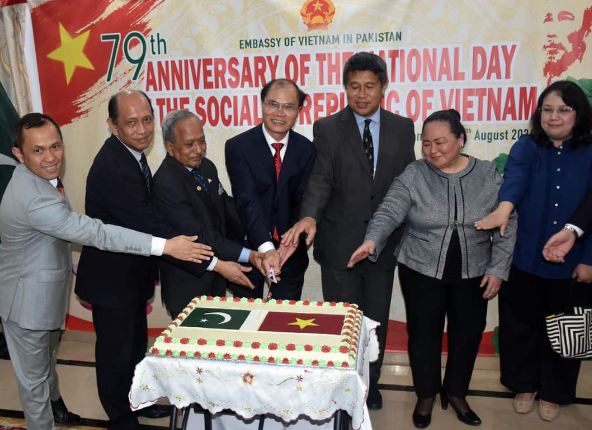
ISLAMABAD, AUG 31 /DNA/ – Ambassador of Socialist Republic of Vietnam Pham Anh Tuan the 79th Anniversary of the National Day of the Socialist Republic of Vietnam.

A Decision That Cost $2.56 Billion

Qamar Bashir

By Qamar Bashir

I vividly recall that the decision to use imported coal in Sahiwal power plant was made as part of the agreements under CPEC. The project was initially agreed upon in 2013 during the visit of the then Prime Minister Nawaz Sharif to China, where various energy projects, including the Sahiwal plant, were included in the CPEC framework. The construction began

in 2015 and it started production in May 2017 with a total capacity of 1,320 MW incurring a cost of $1.8 billion. Being  one of the most efficient plants, its levelized tariff (the average cost over the life of the plant) is around PKR 8-9 per kWh (approximately USD 0.05-0.06 per kWh).

Interestingly, the plant, from the conception to completion was during the period when Mian Nawaz Sharif was in power in the center and Shahbaz Sharif was the Chief Minister in the province of Punjab. This decision to use imported  coal was made by both the leaders with stark awareness and knowledge that the indigenous and much cheaper Thar  coal was available for power production.

The decision by the Sharif brothers not only surprised me but also baffled many national and international analysts and power experts. Another surprising decision was selecting Sahiwal as the project site, despite it being far from major consumption centers like Lahore, Karachi, and Faisalabad, as well as distant from the Karachi or Gwadar ports. This location inevitably led to additional costs for transporting imported coal from the ports to Sahiwal and transmitting electricity from Sahiwal to the country’s main consumption areas.

Despite these clear disadvantages, both Sharifs stubbornly pursued the Sahiwal plant without any sound economic or financial justification. The project’s objectives and scope were finalized, agreed upon, and signed, fully aware that the Sahiwal project was fraught with uncertainties and was primarily driven by the desire to gain political capital, resulting in high transmission and distribution costs and the expense of imported coal.

Now, in a sudden and characteristic move, Mr. Shahbaz Sharif has abruptly decided to change the direction of the Sahiwal coal power project without proper consideration or consultation with stakeholders, putting the entire project’s fate in jeopardy.

In project management terms, this change of scope is akin to initiating another capital-intensive undertaking and a nightmare for engineers and technologists. Once a project is completed and handed over to the investing party, any change in scope becomes a separate, exclusive, and independent undertaking.

It would involve a comprehensive project initiation, starting with the development of a project charter, stakeholder identification, and a feasibility study to assess technical, economic, and environmental viability. The planning phase would include defining the project scope, developing a detailed work breakdown structure (WBS), scheduling, cost estimation, resource allocation, risk management, and establishing a communication plan. During execution, the focus would be on detailed engineering design, procurement of necessary equipment, logistics planning for Thar coal transportation, and retrofitting the plant.

Quality control measures would be implemented throughout construction and installation. The project would proceed with rigorous testing, commissioning, and ongoing monitoring to ensure the plant’s efficiency and compliance with standards. The project would conclude with final inspections, handover, post-implementation review, and formal closure, followed by post-project support and continued performance monitoring to ensure the long-term success of the plant’s operation with Thar coal.

If the Sharif Brother could have taken the right decision to use Thar coal from the very start of this project,  it would have provided significant long-term benefits, including lower initial capital costs by eliminating the need for later retrofitting and reducing fuel costs through the use of a domestic coal source. It would have enhanced Pakistan’s energy security by decreasing reliance on imported coal, providing a stable and predictable supply chain, and fostering local economic development by boosting the Thar coal industry and creating jobs.

Environmentally, the plant would have minimized transportation emissions and could have incorporated advanced emissions control technologies tailored to Thar coal. Operationally, the plant would have been optimized for Thar coal’s specific properties, improving efficiency and long-term reliability. Strategically, this early adoption would align with Pakistan’s sustainable energy goals, driving innovation and contributing to a more self-sufficient energy future.

If the Sahiwal Coal Power Plant had utilized Thar coal from the beginning, Pakistan could have potentially saved approximately $2.058 billion over seven years, from 2017 to 2024. These savings would stem from the lower cost of Thar coal, which is domestically sourced and significantly cheaper than imported coal, as well as reduced transportation and handling expenses due to the proximity of the Thar coalfields. By avoiding the higher costs associated with importing and transporting coal, the country would have benefited from substantial economic advantages, contributing to greater energy independence and overall cost efficiency.

The conversion of the Sahiwal Coal Power Plant from imported coal to Thar coal is estimated to cost between $330 million and $555 million. This figure includes the necessary modifications to the plant’s systems, such as boilers, combustion, and emission controls, as well as upgrades to transportation infrastructure, with costs ranging from $240 million to $410 million. Additionally, the estimate now accounts for detailed design and engineering costs, which could add $20 to $30 million, along with consultancy fees and legal services estimated at $20 to $35 million, encompassing feasibility studies, project management, and regulatory compliance.

The billion-dollar question is: who will hold accountable those responsible for the imprudent, illogical, and shortsighted decision to run the Sahiwal power plant on imported coal, resulting in losses exceeding $2.08 billion? Now, with the reversal of this decision costing an additional $555 million, the total loss amounts to $2.635 billion.

The PML(N) stalwarts bear responsibility for increasing electricity tariffs, making power unaffordable for many Pakistanis. Their faulty decisions have escalated circular debt, depleted precious foreign exchange, and hurt Pakistani industry by making products uncompetitive due to expensive electricity. As a result, they have undermined exports, further impoverishing the country.

In conclusion, consumer groups, industrial consumers, and chambers of commerce should urgently seek judicial intervention to hold accountable those responsible for these financially and commercially unviable decisions. The National Assembly and Senate committees must also take action against the reckless misuse of the nation’s resources, ensuring those who caused this economic harm are held to account. To mitigate the losses, the Sahiwal plant could be sold on the international market, with the proceeds either invested in a new plant near Thar’s coal reserves to reduce costs or directed towards wind and solar farms to lower electricity prices and protect the environment. Alternatively, the decision to convert the Sahiwal plant to Thar coal could be reconsidered, and the $555 million that would have been spent on reconfiguring the plant could instead be used to establish wind and solar farms, thereby reducing the overall per unit cost of electricity from Sahiwal.

By Qamar Bashir

Former Press Secretary to the President

Former Press Minister to the Embassy of Pakistan to France

Former MD, SRBC, CEO, ATV

Chief Election Commissioners of Pakistan, Azerbaijan meet to enhance electoral collaboration

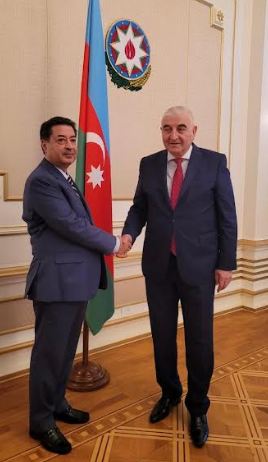
Chief Election Commissioners of Pakistan, Azerbaijan meet to enhance electoral collaboration

BAKU, AUG 30 /DNA/ – Chief Election Commissioner of Pakistan, Sikandar Sultan Raja, met with the Chairman of the Central Election Commission of Azerbaijan, Mazahir Panahov, at the Central Election Commission. The meeting focused on strengthening bilateral cooperation in electoral processes and exchanging best practices in election management.

Victory Day of Türkiye celebrated

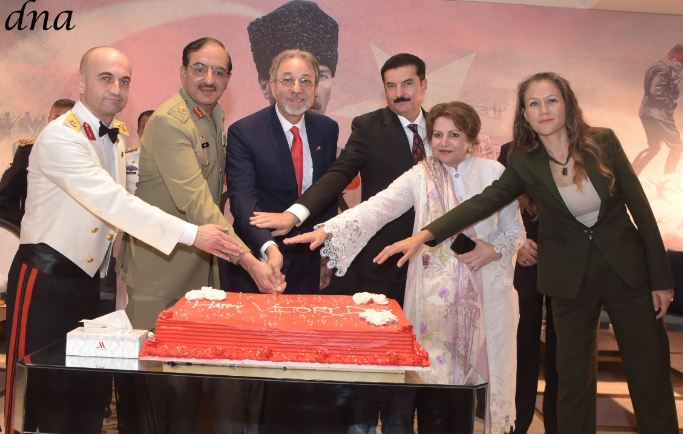
ISLAMABAD, AUG 30 /DNA/ – A ceremony was held in Islamabad to celebrate Türkiye’s Victory Day. The event was attended by prominent figures including Lt. Gen Avais Dastgir, Pakistan Army’s Chief of General Staff, Governor KP Faisal Karim Kundi, Türkiye’s Ambassador Mehmet Paccaci, Defence Attache Brig. Gen. Umul Onol, TRNC Representative Dilsad Senol, and Begum Shaista Pervez.

The dignitaries jointly cut a cake to commemorate the occasion.

MOFA Defies PIC’s Orders on Access to Information

MOFA Defies PIC’s Orders on Access to Information

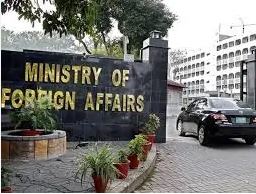
ISLAMABAD, AUG 30 (DNA) — In a troubling move, the Ministry of Foreign Affairs (MOFA) has refused to comply with the Pakistan Information Commission’s (PIC) directives to revise its procedures for public access to information, raising concerns about transparency and accountability in government affairs.

Despite a clear order from the PIC to remove specific procedural requirements from its website, MOFA continues to mandate that citizens submit an affidavit on stamp paper and fee to obtain information. This procedure, which is prominently displayed on the Ministry’s website, has been criticized for being overly cumbersome and in direct conflict with the Right of Access to Information Act, 2017.

Journalist Sadia Mazhar sought clarification from the Ministry regarding the origins of these procedures, specifically requesting the minutes of the meeting where this method was decided. Instead of providing the requested information, the Ministry responded with a directive for Mazhar to follow the same disputed procedure—submitting an affidavit and fee on stamp paper.

The Right to Information (RTI) form developed by MOFA requires personal details such as name, CNIC, profession, contact information, and email ID. Additionally, the form categorizes information as Confidential, Secret, Top Secret, or Other, and mandates that the purpose of the query be specified. Moreover, it includes an undertaking that the information seeker will use the information solely for personal purposes and will not share it without MOFA’s permission. The form also requires signatures from the seeker and two witnesses.

The Pakistan Information Commission found these requirements to be inconsistent with the spirit and provisions of the Right of Access to Information Act, 2017, particularly Section 11 (3) and (4). The PIC stated that such prerequisites hinder the Act’s objective of promoting transparency and good governance within public bodies.

“The Commission is perplexed by MOFA’s requirements, which are not aligned with the intent of the Right of Access to Information Act, 2017,” the PIC’s order stated. “This approach restricts appellants from filing information requests essential for fostering transparency and accountability.” —DNA

Punjab MPAs unite to protect girls’ rights and prevent child marriages through a legal amendment

Punjab MPAs

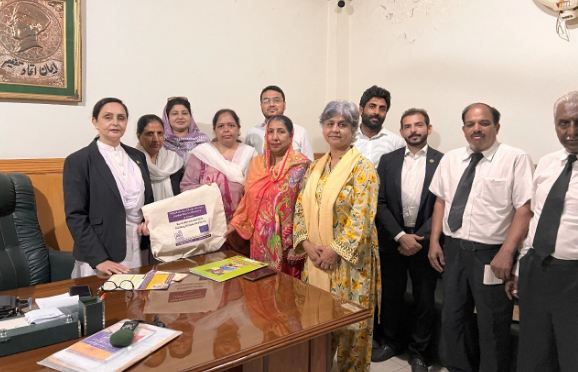
LAHORE, AUG 30 /DNA/ – The PODA team held a series of strategic meetings with women Members of the Provincial Assembly (MPAs of PML-N) in Punjab, advocating for a crucial legal amendment to the Child Marriage Restraint Act 2015. The team emphasized the need to raise the minimum age of marriage for girls to 18 years, ensuring a safer and more empowering future for young girls in the province. Through these meetings, PODA aimed to amplify the voices of marginalized communities and garner support for this vital legislative change.

The PODA team presented the case of child marriages, highlighting its social, economic, health, and mental implications on a girl child, in order to amplify voices in favor of a legal amendment to raise the minimum age of marriage for girls to 18 years in the province.

These efforts are part of a 3-year project, “Reducing Early Marriages to Enhance Gender Equality” (December 2022 to November 2025), supported by the Norwegian Embassy in Islamabad. PODA is implementing it across the entire province of Punjab, engaging with a wide range of stakeholders, including parents, adolescent girls, women, community leaders, government officials from health, education, population, social welfare, police, religious leaders, nikah khawans/registrars, secretaries of union councils, local governments, teachers, MPAs, academicians, lady health workers, staff of basic health units, doctors, lawyers, and social activists. This is being achieved through a comprehensive set of activities, including: A series of educational theater performances, multiple series of radio programs, seminars, workshops, sessions, trainings, social media campaigns, letter-writing campaigns initiated from communities addressed to members of the provincial assembly.

In a significant meeting with MPA Sarah Ahmad, Chairperson of the Child Protection & Welfare Bureau Punjab, the PODA team received a reassuring commitment to take all necessary measures to ensure a legal amendment protecting adolescent girls. The Chairperson emphasized that safeguarding the right to education is pivotal to fulfilling all child rights, and she pledged to champion this cause, paving the way for the protection of girls’ fundamental rights. She described working on children’s issues as “highly sensitive”, explaining that it’s a challenging task since it involves helping children who have faced trauma in precarious situations, such as those living on the streets. In response to a question, she noted that often, people abandon ‘girl children’ and leave them in vulnerable situations, only to be rescued later by the communities.

MPA Sarah Ahmad is leading efforts to table a bill increasing the minimum age of marriage for girls to 18 years. She submitted a resolution on April 3 this year in the Punjab Assembly, seeking to raise the minimum marriage age to 18 years, emphasizing that child marriages have far-reaching negative impacts.

In a meeting with the PODA team, MPA Advocate Kanwal Liaquat provided an update, stating that as a member of Committee 1 of the assembly, she is pleased to share that the committee has thoroughly reviewed the legal amendment to raise the minimum age of marriage for girls to 18 years. The committee has successfully completed a comprehensive consultation process with all stakeholders, and now, under the promising leadership of the Chief Minister of Punjab, the government is prepared to table the bill in the assembly soon, she added. She emphasized that, alongside the proposed amendment, her party will take steps to ensure its effective implementation as well. She urged the PODA team to work actively to raise community awareness about child marriages, in order to help combat and stop this social menace.

In a meeting with MPA Advocate Rushda Lodhi, Parliamentary Secretary for Health and Member of the Punjab Bar Council, she commended PODA’s efforts in reducing early marriages in the province through a series of educational and awareness-raising activities engaging all stakeholders. She suggested holding joint awareness-raising sessions for a larger number of MPAs on issues crucial to the lives and survival of girl children, to amplify their voices. She also assured that, as Parliamentary Secretary of Health, she will prioritize the “health of girl children” and make every effort to ensure that healthcare is recognized and protected as their fundamental right, essential for their well-being.

The PODA team also met with MPA – (PML-N), Sumbal Maalik Hussain, at her office located in Delhi Gate, Lahore. She appreciated PODA’s effort in visiting her and taking the time to understand the real situation on the ground, rather than just holding activities in hotels. She suggested that we should focus on identifying and addressing the underlying reasons why parents opt to marry off their young, underage daughters, in order to effectively tackle these issues and safeguard communities, thereby enhancing the impact of the proposed legislation

Activities under CM’s Awami agenda inspected

Activities under CM’s Awami agenda inspected

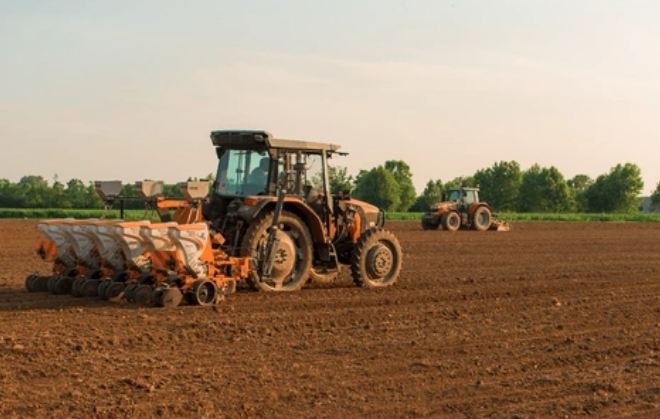
DERA ISMAIL KHAN, AUG 30 (DNA) — Additional Deputy Commissioner of Bannu Ameenullah Khan visited the Agriculture Office Bannu as part of the chief minister’s ‘Public Agenda” to examine various activities including the ongoing cleaning campaign.

During the visit, Deputy Director Agriculture Khuda Yaar provided briefed him about the office’s current activities and the status of the cleaning campaign. It was noticed that the cleaning campaign was progressing well; the office’s whitewashing was complete, and work on tree trimming and lawn beautification was ongoing.

Similarly penaflex, urea, and charts displaying the official fees for agricultural medicines were posted in the office to provide necessary information to the public. The ADC lauded the staff’s efforts and instructed that all related tasks under the Chief Minister Khyber Pakhtunkhwa’s “Awami Agenda” be completed effectively. —DNA

Stay Connected

64FansLike
60FollowersFollow

Latest Reviews

Exchange Rates

USD - United States Dollar
EUR
1.17
GBP
1.34
AUD
0.67
CAD
0.73