Home Blog Page 601

Ethiopian cultural troupe set to enthrall audiences at ICCI hall

Ethiopian cultural troupe set to enthrall audiences at ICCI hall

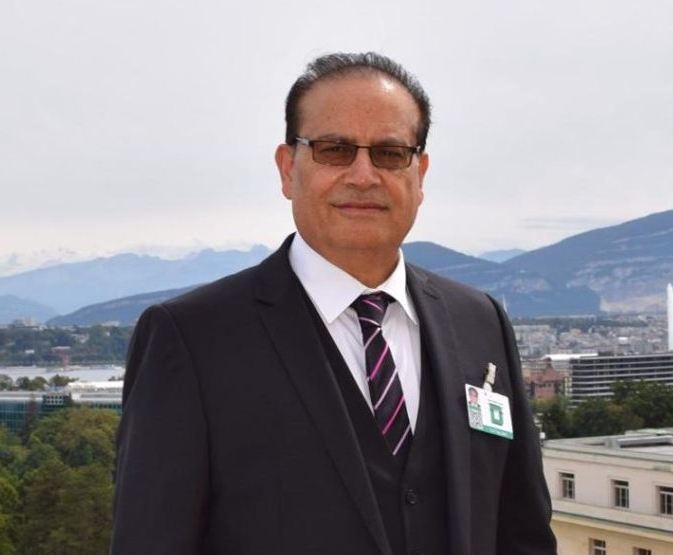
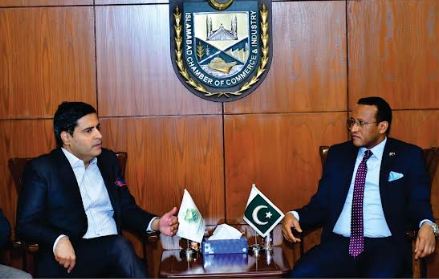
ISLAMABAD, SEPT 3 (DNA) – Pakistan and Ethiopia have a long history of cooperation and friendship with strong ties in various fields such as trade, culture, and education. The similarities between Pakistan and Ethiopia are numerous, including their commitment to sovereignty, territorial integrity and economic development. Both countries also share a rich cultural heritage and a strong desire for regional peace and stability. This has been stated by Dr. Jemal Beker Abdula, Ambassador of Ethiopia while talking to Ahsan Zafar Bakhtawari, President Islamabad Chamber of Commerce and Industry during his visit to the Chamber House.

The Ambassador praised Ahsan Zafar Bakhtawari’s endeavors in fostering stronger ties between Pakistan and Ethiopia as well as with African nations at large. He emphasized the importance of continued collaboration to further strengthen the strategic partnership and bring the people of both countries closer together. He stressed that collective efforts are essential to deepen mutual understanding, promote economic cooperation and enhance the overall bilateral relationship.

Ambassador Beker announced that the Embassy plans to host a cultural ceremony at the Chamber House on September 11, coinciding with Ethiopian National Day. The event aims to showcase the rich cultural heritage of Ethiopia, featuring a cultural troupe that will perform for the audience. This initiative seeks to foster greater understanding and closeness between the people of Pakistan and Ethiopia.

Furthermore, on September 12, the Embassy will organize a marathon in Islamabad, which will bring together esteemed runners from Ethiopia, diplomats, dignitaries, students, and other participants.

On this occasion, the ‘Green Legacy’ initiative of H.E. Prime Minister Dr. Abiy Ahmed was discussed as a potential area of collaboration.

Ahsan Zafar Bakhtawari acknowledged Dr. Jemal Beker Abdula’s efforts and pledged his wholehearted cooperation and support to the Embassy in strengthening the existing relationship. He stated that hosting an event at ICCI on Ethiopian National Day would be an honor for the Chamber. Bakhtawari recognized the Ambassador’s contributions to deepening the partnership by warmly terming him the “Ambassador of Pakistan.

He also commended the Ambassador’s initiatives for a green and clean Islamabad, stressing that collective efforts are necessary to raise awareness about climate change among the masses. Bakhtawari also expressed hope that Ethiopian Airlines’ direct flights will significantly boost bilateral relations, particularly in the tourism sector. He noted that the Airlines’ direct operations from Lahore and Islamabad after Karachi will be a notable achievement during the Ambassador’s tenure.

Zafar Bakhtawari, Secretary General of the United Business Group and Chairman Pakistan-Africa Friendship Association, praised Ambassador Beker’s initiatives by  emphasizing that African states hold paramount importance for Pakistan in terms of exploring new business opportunities and boosting its exports.

He recognized the immense potential for trade and economic cooperation between Pakistan and Africa and expressed optimism that collaborative efforts will bear fruit and lead to deepening of relations in all fields.

ICCI member Kashif Zaheer, Zia Chadurhy, Nisar Mirza, and Secretary General Ghulam Mustafa Siddique were also present on the occasion.

UN coordinator briefs finance minister on development efforts in Pakistan

UN coordinator briefs finance minister on development efforts in Pakistan

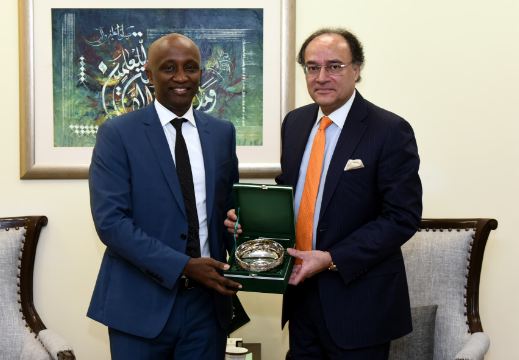
ISLAMABAD, SEPT 2 (DNA) – Muhammad Yahya, United Nations Resident and Humanitarian Coordinator for Pakistan, called on Federal Minister for Finance and Revenue, Senator Muhammad Aurangzeb, at the Finance Division in Islamabad.

Mr. Muhammad Yahya briefed the Finance Minister on the work of UN and its agencies undertaking development and humanitarian assistance projects in Pakistan. He also shared the success of UNESCAP and its work on debt consolidation in middle income countries. Mr. Yahya noted that energy transition was an important area for possible cooperation with Pakistan.

The Finance Minister shared the commitment of the government towards policy reforms and sustainable economic development and appreciated the cooperation provided by the UN and its agencies in this regard. The Minister reiterated that climate finance and energy transition were essential areas for improving energy sector viability in the country and welcomed the cooperation with UNESCAP in this regard.

The meeting concluded with both sides expressing their resolve to continue working closely to address Pakistan’s development challenges and to implement sustainable solutions that benefit all segments of society.

Pakistan in the SCO: Silent or Strategic?

Qamar Bashir

By Qamar Bashir

China has emerged as the prime driver and a leader of the Shanghai Cooperation Organization (SCO) not only in the political, economic, and commercial sectors but also by providing the backbone of infrastructure, including roads, railroads, and air links. China has invested a total of $150 billion, reinforcing its broader Eurasian strategic sectoral development. This figure includes direct investments, loans, and financial support provided through various Chinese financial institutions such as the AIIB and the Silk Road Fund.

Seeing is believing. During my visit to China in August 2024, I witnessed the breathtaking development taking place at a neck-breaking speed, particularly in Xinjiang and Shaanxiprovinces, aimed at uplifting the SCO. While the SCO may not yet be equal to, it is becoming competitive with other regional organizations such as NATO, ASEAN, the EU, and BRICS. With two superpowers, China and Russia, as the engines of influence, weight, and financial might, the SCO, currently strong in Central Asia, is likely to expand its integration and scope to eventually become a global force. This will help balance Western influence, particularly in Eurasia, and serve as a platform for China and Russia to collaborate on regional issues.

During the visit, we observed that China has established sectoral hubs for all initiatives under the purview of the SCO, including security (counter-terrorism, regional stability) through the institutional framework of the Regional Anti-Terrorist Structure (RATS). Economic cooperation is being advanced through the Belt and Road Initiative (BRI), with China committing over $50 billion in infrastructure projects such as roads, railways, and energy pipelines to enhance connectivity within the SCO region.

China has invested over $10 billion in the Digital Silk Road, focusing on digital infrastructure, including 5G networks, fiber optic cables, and smart city initiatives. It has invested $5-7 billion in developing logistics hubs, warehousing, and cross-border trade facilities. It has invested in agricultural R&D and joint ventures within SCO member states at around $2-3 billion, which includes funding for advanced farming techniques, seed development, and sustainable agriculture projects.

Besides providing sectoral hubs for SCO initiatives, which we witnessed firsthand, China is also pursuing highly capital-intensive bilateral projects with other SCO member countries.

In Tajikistan, China has invested approximately $3 billion in road and power infrastructure projects, while the Khorgos Gateway on the China-Kazakhstan border, a major logistics hub, has seen $2 billion in investments. Energy and industrial projects in Uzbekistan have attracted about $4 billion, and agricultural cooperation with Kazakhstan has involved around $1.5 billion. The China-Russia energy cooperation, particularly through the Power of Siberia gas pipeline, represents a $55 billion investment, while the China-Mongolia-Russia Economic Corridor has seen investments of $15 billion to enhance connectivity and trade.

The dividends of China’s aggressive integration with other SCO members have been immense. Since the formation of the SCO, bilateral trade and investment with its members have significantly expanded. Trade with Russia reached a record $190 billion in 2022, fueled by energy cooperation and infrastructure investments. In Central Asia, China’s trade with Kazakhstan surpassed $25 billion. Uzbekistan saw trade grow to around $8 billion, complemented by Chinese investments in agriculture and industrial sectors.

During our discussion, a key factor regarding Pakistan’s inability to fully utilize the SCO forum became clear. Pakistan, with its limited road connectivity, has failed to establish direct road, air, or rail links with other SCO members, especially Central Asian countries (CAC), Belarus, and Russia.

Unlike other SCO countries, which have multiple transportation links, Pakistan’s reliance on the KKH as its only road connection with China makes it vulnerable to disruptions and limits its scope for increasing trade or engaging in regional transportation networks.

Pakistan lacks direct railroad connections with other SCO member countries, including the CAC. In contrast, China, Russia, and the CAC are connected via major rail corridors that facilitate trade and transportation.

These countries are also connected through a network of highways, road links, and regional infrastructure projects. Pakistan, however, has not yet integrated into this network beyond its bilateral connection with China through the KKH. While Pakistan has air links with China, it lacks extensive air transportation routes with Central Asian SCO members. Air transport between Pakistan and other SCO states is relatively underdeveloped compared to the routes between China, Central Asia, and Russia.

Pakistan’s limited transport links with other SCO members restrict its ability to fully benefit from the economic and trade opportunities within the organization. CAC, Russia, and China can trade and cooperate more seamlessly because of their physical connectivity, while Pakistan’s relative isolation limits its engagement beyond its bilateral relationship with China.

This lack of connection to Central Asian markets and other SCO member states means Pakistan cannot easily participate in the expanding trade routes that China and Central Asia are developing. This isolation reduces Pakistan’s potential role as a transit country for SCO trade and restricts its access to CAC markets.

Pakistan’s limited integration into the SCO system compared to Central Asian states, Belarus, Russia, and others can be attributed to geopolitical tensions, infrastructural and economic limitations, security concerns, and internal political challenges. While Pakistan plays a vital role in China’s bilateral strategy, particularly through CPEC, its integration within the broader SCO framework remains limited due to these complex factors.

China is making concerted efforts across all dimensions to create enabling conditions for Pakistan through the bilateral platform of CPEC, providing a gateway to fully capitalize on the SCO’s opportunities. However, our inability to rise to the occasion stems from a national attitude marked by lethargy, lack of seriousness, and a failure to harness our inherent potential. It is crucial that we move beyond the petty issues that drain the energy of our already strained state structure. Now is the time to proactively enhance our regional connectivity, diversify our economic ties, deepen security cooperation, and take on a more active leadership role within the SCO. By leveraging our strategic position and engaging more deeply with other SCO members, Pakistan can maximize its benefits from the organization and play a stronger role in shaping regional affairs. The path forward requires decisive action, focused on long-term national interests, to unlock the full potential of our participation in the SCO.

By Qamar Bashir

Former Press Secretary to the President

Former Press Minister to the Embassy of Pakistan to France

Former MD, SRBC, CEO, ATV

Secy-General of IPC commends transparency in Azerbaijan’s parliamentary elections

Secy-General of IPC commends transparency in Azerbaijan's parliamentary elections

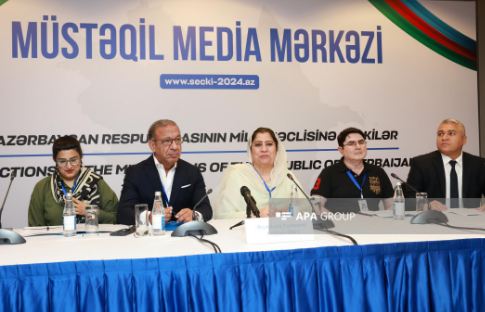
BAKU, SEPT 2 (DNA) – It is an honor to address you today following our observation of the Snap parliamentary elections of Azerbaijan on 1st September 2024. As the Secretary-General of the International Parliamentarians Congress (IPC), I would like to begin by commending the state authority and the people of Azerbaijan for the well-organized and efficient conduct of this election.

Our delegation, which included Ambassador at Large Mr. Duarte Pacheco (Former President of IPU), Special Advisor of IPC global Think tank on climate change and SDGs Mr. Fida Hussain Malik, and Ms. Mehk Butt Manager Communications IPC are deeply overwhelmed by the professionalism and transparency demonstrated throughout the electoral process.I can confidently say that today’s parliamentary elections were conducted in an exemplary manner.

We started our observation mission at 10: 00 am today, and we visited nearly 10 polling stations across Baku and other districts, including Sabunchu and settlementMastaga. Our overall experience has been both productive and positive. We have observed a strong turnout, with the citizens of Baku showing great interest in exercising their right to vote.

We are pleased to report that the elections have been peaceful, with no signs of pressure or coercion. Representatives from various political parties were present at the polling stations, and it was encouraging to see them participating peacefully. The presence of these representatives contributed to the transparency of the process, which we observed throughout the election day.

The staff at the polling stations were well-prepared, and with only two exceptions out of the 10 stations we visited, there was sufficient English-speaking staff present, which greatly facilitated our observation efforts. Furthermore, we particularly appreciatethe providence of the accessibility measures in place for persons with special needs. The polling stations are equipped with the necessary facilities, and there are special arrangements for disabled individuals to cast their vote from home. This is a commendable effort that reflects inclusivity and respect for all voters.

The commitment to democratic principles and the dedication to ensuring a fair electoral process were evident at every stage, reflecting the strength of Azerbaijan’s democratic institutions. We are grateful to the Milli Majlis for inviting us to observe this important event. The cooperation and hospitality extended to our delegation were truly admirable.

The International Parliamentarians Congress remains committed to supporting and promoting democratic processes worldwide. We look forward to continued collaboration with Azerbaijan in the future.

FL Smidth to bring global expertise to Pakistan’s mining industry

FL Smidth to bring global expertise to Pakistan's mining industry

In a significant development, Denmark has expressed its commitment to contribute to the modernization and investment in Pakistan’s mining industry

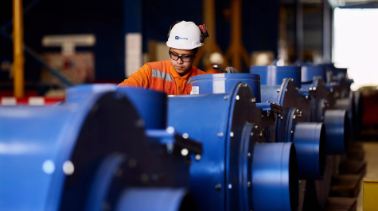
ISLAMABAD, SEPT 2 (DNA) – Federal Ministers Dr Musadik Malik, Muhammad Aurangzeb, Abdul Aleem Khan, Jam Kamal Khan held a meeting with the delegation of FL Smidth headed by the CEO Mr. Mikko Keto including Chris Reinbold, president mining products, Iqrar Hussain, global key account project manager.Ambassador of Denmark to Pakistan H.E Jakob Linulf were also present.

FLSmidth is a leading technology and service supplier to the global mining and cement industries.
Its operations span the globe with more than 9,000 employees, present in more than 60 countries.
FLSmidth has been active in Pakistan for the past three decades, and have contributed in the development of cement industry in Pakistan with about 60-70% of the cement plants supplied in Pakistan.
In 2017, FLSmidth opened its after-sales service office in Islamabad, employing a local workforce that provide the full scope of cement plant services to customers in Pakistan.
FLSmidth is also collaborating with one of the biggest Local Foundry for the manufacturing and supply of wear parts for the local market and export.
Like cement industry, FLSmidth is looking forward to contribute in the development of a thriving and responsible mining industry in Pakistan.

Federal Ministers welcomed the visiting delegation and expressed their commitment to facilitate the investment. Federal Minister for Petroleum Dr Musadik Malik highlighted Government’s focus on mining sector and remarked that these partnerships will not be limited to investing but diffusion of technology, trainings and capacity building, new ways of thinking. He further added that we are focused on competitiveness, establishing small industrial clusters that would be able to stand on their own feet.

H.E Jakob Linulf apprised the Pakistani side that Pakistan is at a very high agenda in Denmark and there is growing momentum. Recently, 75 years of Denmark-Pakistan diplomatic relations were celebrated. Denmark is willing to contribute to mining industry of Pakistan and take partnership to new levels.

CEO Mikko Keto,who is on a two day visit to Pakistan, expressed his gratitude for the warm welcome and briefed about his companies interest in Pakistan’s mining sector. He underscored the succesful collaborations in mining with various countries of the world that would be replicated in Pakistan. FL Smidth has competence not only in technolgy but also operations. We have decades of experience in Pakistan, that will now be expanded to mining.

Federal Minister for Finance and Revenue Muhammad Aurangzeb opined that having FL Smidth team on ground already makes huge amount of difference. Government will facilitate and support.
Federal Minister for commerce Jam Kamal Khan said that Denmark’s partnership in mining will bear fruit for the economy of Pakistan. Denamrk is an important partner of Pakistan and we would like to expamd this cordial relation. Federal minister for privatization Abdul Aleem Khan remarked that investment from Denmark is very encouraging for Pakistan and will bring good results.

Federal Minister for Petroleum Dr Musadik Malik mentioned that this visit will be start of many new collaborations. Other mining companies of Pakistan will also be connected to FL Smidth group to explore new avenues. Focus wil also be on research and training. Mr. chris Reinbold highlighted that already there are programs for students for training and reasearch. Similar will be explored for Pakistani students.

Secretary Petroleum Mr Momin Agha, additional secretary Mr Hasan Yousafzai,DG Minerals Dr Nawaz and other officials were also present at the occasion.

PM satisfied with economic stability

PM Shehbaz vows unwavering resolve to root out terrorism from country

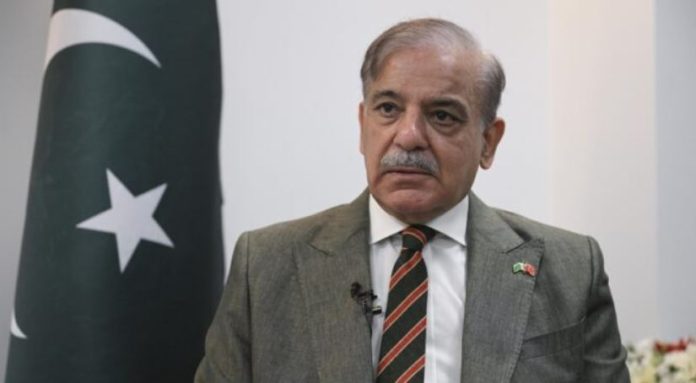
ISLAMABAD, Sep 01 (DNA): Prime Minister Muhammad Shehbaz Sharif on Sunday expressed his satisfaction over the nosediving of inflation rate in the country and the indicators of Pakistan Bureau of Statistics, showing a decline in the inflation rate.

The prime minister said that ‘Consumer Price Index’ fell to record low in July 2024, bringing inflation to 11 percent and welcomed the economists’ forecast of further decline in inflation in the current month of September.

“After Fitch, the global rating agency, Moody’s recently upgraded Pakistan’s credit rating, which is an acknowledgement of country’s positive economic indicators by the international financial institutions,” PM Office Media Wing, in a press release, quoted the prime minister as saying.

The prime minister further said that the government was pursuing a policy of economic reforms and the implementation work was rapidly in progress over the right-sizing policy of the government which he himself was monitoring.

He expressed the confidence that its positive impact on the economy would be visible soon.

The prime minister also acknowledged that the federal and Punjab governments had provided a big relief to the electricity consumers in respect of monthly bills, adding the prices of petroleum products were further reduced from today.

The prime minister said that the government believed in passing on all the benefits of such policies to the common man.

The economy was moving towards stability owing to the hard work of the government’s economic and financial team, he added.

He said the government was cognizant of the issues of the people and was striving day and night to resolve them.

Muqam praises Pakistani community’s role in strengthening Pakistan-Canada relations

Muqam praises Pakistani community’s role in strengthening Pakistan-Canada relations

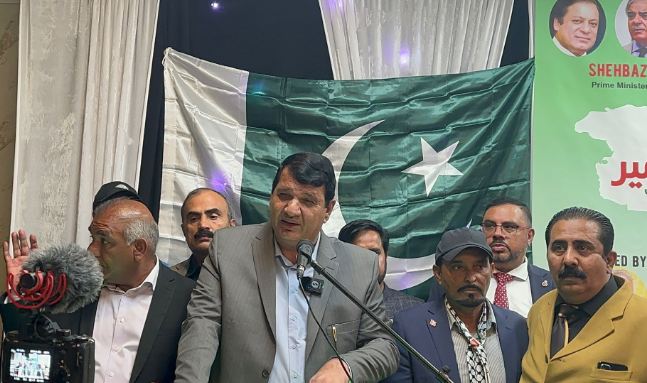
OTTAWA, /DNA/ – The Pakistan High Commission in Canada warmly welcomed the Federal Minister for Kashmir Affairs and Gilgit-Baltistan & SAFRON, Engr. Amir Muqam on his visit to Canada. The Federal Minister addressed a gathering of prominent Kashmiri diaspora which also included Mr.  Shafqat Ali MP, and members of the Pakistan community in Toronto, Canada and he reiterated to reinforce the strong ties between our communities and Pakistan’s unwavering support for the Kashmiri cause.

In his welcome address, the Acting High Commissioner of Pakistan to Canada, Mr. Shah Faisal Kakar, emphasized the significance of the Minister’s visit in the context of the 3rd anniversary of the iconic leader Syed Ali Gilani and the ongoing struggle of Kashmiris for justice and peace in Indian Illegally Occupied Jammu and Kashmir (IIOJK). He highlighted the crucial role that the Pakistani community, particularly the Kashmiri diaspora in Canada, plays in advocating for the rights and aspirations of the Kashmiri people. On this occasion, a rich tribute was paid to Syed Ali Gilani who dedicated his life to Kashmir cause.

“Your visit, Honourable Minister, not only highlights the importance of the Kashmir cause but also serves as a powerful reminder of Pakistan’s steadfast support for the Kashmiri people in their legitimate struggle for self-determination,” stated theActing High Commissioner. “We are confident that your presence here will inspire and galvanize our community as they work in unity to further the cause of Kashmir”, he further added.

The Federal Minister Engr. Amir Muqam underscored the contributions of the Pakistani diaspora in Canada, noting that the community plays a pivotal role in the development and progress of both Pakistan and Canada. He mentioned that Pakistan’s leadership raises the voice of the Kashmiri people at every forum and urges international community to work for the implementation of the UN Resolutions on IIOJK. The visit of Minister Muqamwould further strengthen the bonds between Pakistan and the Pakistani community in Canada, andreinforce the shared commitment to supporting the Kashmiri people.

Kiln workers – Braving tougher times in Pak

Kiln workers – Braving tougher times in Pak

FAISALABAD, SEP 01 (DNA) — Amidst challenges of economic slowdown and price hike, the poor in anywhere in the world had to toil hard for survival and earn living for their families. In an environment where capitalists take it as their just right to exploit them, these workers had to go extra miles for keeping their families go as they are paid a meager share out of millions and billions earned by their employers.

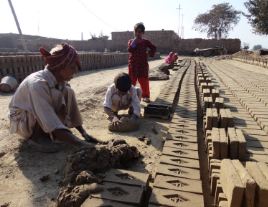
Brick kiln workers are also not an exception to this exploitation who despite flourishing business, seldom enjoy basic amenities and are forced to work in the most vulnerable situation along with their families. Categorized in six types, they are Munshis (accountant), Jalai Wala (fire man), Bharai Wala (brick setter), Nakasi Wala (brick excavator), Jamadar (sweeper) and Patheras (brick molder). But, Patheras are the most vulnerable segment like Jalaiwala and Nakasiwala.

“Patheras have to live at sight along with their families with minimum facilities. They have to work for long hours to fulfill demand of owners,” stated Akbar Ali, worker at a kiln house. “Not they alone, but their families also have to work till odd hours because they are often bound in debt bondage.”

“Same is the situation of a fire worker or a brick excavator. Although their work duration is lesser than brick maker yet their task is the most dangerous as they even risk their lives as their job is like playing with fire,” Akbar said. “Even then, these workers are paid less than minimum wages occasionally announced by the government. The job of Munshi is somehow comfortable for only being a bit literate while all other segments are either illiterate or lesser qualified.”

Workers or laborers are generally registered with Punjab Employees Social Security Institution (PESSI), Employees’ Old-age Benefits Institution (EOBI) and Workers’ Welfare Fund and are eligible to get marriage and death grants, talent scholarships and other incentives. But most of kiln workers are ignorant of these facilities while the kiln owners are also hesitant to pay their mandatory contribution on one pretext or the other. For this, they do not even hesitate to offer bribes to officials who ask them to get their employees registered.

Kiln workers are also forced to work without health cover. Their children cannot get education and their families unable to benefit from social cover like death, health and other grants sanctioned by the workers welfare fund due to their non-registration. Amidst all this, Ghulam Shabbir Kalyar Director Labor West Faisalabad claims, there are 478 brick kilns across the district with a number of 21632 registered kiln workers. “After brick kilns were declared an industry, their workers are entitled to all incentives and facilities admissible to industrial workers.”

He said the Punjab government is fully cognizant to its duties. The kiln workers are registered with PESSI or EOBI and can avail a marriage grant of Rs.400,000 while the government pays Rs.800,000 as death grant to worker’s family if he dies while performing his duties. “Similarly, educational scholarships were also admissible for their children if they wanted to get higher education at colleges or universities.”

Kalyar informed that Labor and Human Resource Department had chalked a strategy to implement minimum wages notification. “Therefore, the teams of Labor Department visit industries including brick kilns and force kiln owners to pay minimum wages announced by the government. Rana Muhammad Azam Khan, a social activist said he observed lives of kiln workers very closely as he remained teacher at a private school run by an NGO to educate children of kiln workers.

“Their lives are miserable and major reason behind this is their illiteracy and ignorance of their basic rights. Hence they cannot raise their voice if someone exploits them and usurp their rights,” he said. Azam said it is very common that kiln workers borrow money from kiln owners to run their families but spend this money on frivolous activities like taking drugs, gambling, pigeon flying etc. So when under debt, the owners force them to work as per their desires and pay lesser amount.

“Consequently, they approach another kiln owner, borrow money from him to retire the previous debt and are further trapped and this vicious cycle goes on throughout their lives,” Azam regretted.He said some kiln philanthropists have launched special education for children of kiln workers and facilitate them on religious and other occasions but all are not covered.

Some of NGOs also exploit this situation and grab grants from donors for kiln workers welfare but spend a nominal amount keeping remaining with them in the name of other expenditures. No doubt that the government has repeatedly assured and directed the PESSI to issue social security cards to kiln workers but it is not fully implemented apparently due to kiln owners’ refusal to submit their contribution.

Therefore, in the prevailing situation, the government must take strict measures and introduce revolutionary reforms for this unorganized sector to extend all facilities to kiln workers admissible under the relevant laws. It should also force kiln owners to pay their contribution so these workers could get their due share from concerned departments. —DNA

Xinjiang, Balochistan and FATA 

Qamar Bashir

By Qamar Bashir

In Pakistan, we often adhere to the belief that force is the primary solution for dealing with terrorists, extremists, separatists, insurgents, and even civil unrest, whether it involves political, religious parties, students, or civil society. The prevailing notion is that if force doesn’t achieve the desired outcome, more force should be applied. In contrast, China’s approach in Xinjiang, where separatism, Pan-Islamism, and Pan-Turkism were significant issues since 1949, has been to respond with development. When challenges arise, China has chosen to accelerate development further. These two philosophies—force versus development—are starkly opposed and have yielded opposite results.

The insurgencies in Xinjiang, Balochistan, and Pakistan’s erstwhile Federally Administered Tribal Areas (FATA) have distinct historical, ethnic, and geopolitical contexts, yet they share similarities in grievances but differ markedly in the governmental responses.

The narratives of the insurgencies in Xinjiang, Balochistan, and FATA share more similarities than differences.

In Xinjiang, the Uyghur insurgency is driven by claims of cultural and religious repression, economic disenfranchisement, and ethnic discrimination. The insurgents frame their struggle as a fight for cultural survival and autonomy, often invoking the idea of an independent “East Turkestan.”

The Baloch insurgency, while lacking a religious element, is fueled by economic exploitation, particularly in natural resources like gas and minerals, political marginalization, and human rights abuses. As one of Pakistan’s least developed regions, many Baloch feel excluded from their own wealth, seeking greater autonomy or independence, citing historical grievances and ongoing exploitation.

In FATA, the insurgency stems from resistance to Pakistan’s military operations, perceived interference in local customs, and the impact of the war on terror. The TTP, in particular, framed its struggle in religious terms, opposing the Pakistani state’s alignment with the US and seeking to impose their version of Sharia law.

When comparing the narratives of these three ethnic groups, the Uyghur and Taliban in FATA share more similarities, particularly in their use of religious connotations to justify their struggles for autonomy or independence. In contrast, the Baloch narrative is distinctive due to its focus on economic and political grievances, without a religious dimension. Consequently, the Baloch narrative may be easier to address or counter compared to the more deeply rooted and ideologically driven narratives of the TTP and Uyghurs.

To counter the Baloch insurgency and integrate the Baloch people into the national mainstream, the government only had to adopt a holistic approach to address the root causes of the conflict, including economic marginalization, political exclusion, and cultural grievances by investing in local development, ensuring fair resource distribution, and enhancing political representation while granting greater administrative autonomy to Balochistan.

On the contrary, the government response to deal with insurgency in Balochistan is normally perceived exactly the opposite. The propaganda war has inculcated the impression albeit without any conclusive evidence that the response of   Pakistan’s government included military operations, targeted killings, enforced disappearances.The media is rife with reports that tens of thousands of people, including insurgents, civilians, and security personnel, have been killed in the ongoing conflict making this conflict as one of Pakistan’s deadliest.

Similarly the response of the Government to erstwhile FATA is perceived primarily kinetic. Reportedly, the Pakistani government has conducted numerous military operations (e.g., Operation Zarb-e-Azb) to dismantle militant networks. The insurgency and counter-insurgency operations have led to tens of thousands of deaths, including militants, security forces, and civilians. Displacement and destruction of infrastructure have also been significant.

Contrastingly, in Xinjiang, the Chinese government primarily pursued the policy of development which worked like magic. The region has purposefully made a lynchpin of China’s Belt and Road Initiative (BRI). During the 13th Five-Year Plan period (2016-2020), China invested over $100 billion in Xinjiang’s development. The substantial investment has also been made in infrastructure, industry, IT, and modern agriculture, as part of its broader strategy to integrate the region more closely with the rest of the country and to address the underlying economic disparities that contribute to unrest.

Xinjiang now boasts a state of art modern  transportation network, including railways, highways, and airports connecting it to major cities in China and neighboring countries. Notable projects include the Urumqi-Hami section of the Lanzhou-Xinjiang high-speed railway, which links Xinjiang to the eastern provinces. The total investment in these transportation projects over the years runs into tens of billions of dollars.

Cities like Urumqi, Kashgar have been developed on ultramodern lines including the construction of modern residential areas, commercial centers, and public facilities and development of “new towns” to accommodate the growing population and improve living standards.

Xinjiang has become a hub for energy production, particularly in coal, oil, and natural gas. The region is also a significant producer of cotton and textiles, beside adorning industrial parks and zones for petrochemicals and mining, and Kashgar Economic Development Zone and the Urumqi Economic and Technological Development Zone. In addition,   IT parks,  advanced surveillance technologies, data centers, technology parks, 5G networks, cloud computing, and big data technologies have been developed to attract domestic and foreign investment.

In the agriculture sector China has introduced modern water management, crop genetics, and mechanization to substantially enhance the yield of cotton, grapes, and melons production, besides setting up of  large-scale farms, processing plants, and distribution networks.

These investments are part of China’s broader strategy to stabilize the region, boost economic growth, and integrate Xinjiang more closely with the rest of the country and the global economy, particularly through the Belt and Road Initiative.

Contrarily the investments in FATA and Balochistan pale in comparison to the scale of investment made by China in Xinjiang. While China’s investments in Xinjiang have transformed the region’s infrastructure and economy, Pakistan’s investments in FATA and Balochistan are insignificant and are plagued by issues like governance challenges, security concerns, and underutilization of funds no matter how meager.

China’s investments in Xinjiang are part of a strategic focus on integrating the region into the national economy and the Belt and Road Initiative. In contrast, Pakistan’s investments in FATA and Balochistan have often been reactive, addressing immediate security concerns rather than being part of a long-term strategic vision for regional development.

If we genuinely aim to reintegrate FATA and Balochistan into the national mainstream, we must adopt the Chinese philosophy of development and more development. Without this focus on economic and social progress, the cycle of violence from both the government and insurgents will persist, leaving the regions mired in conflict and instability. Development offers the only sustainable path to peace and inclusion.

By Qamar Bashir

Former Press Secretary to the President

Former Press Minister to the Embassy of Pakistan to France

Former MD, SRBC, CEO, ATV
Innovative Solutions to Terrorism and Extremism

Qamar Bashir

By Qamar Bashir

If I were to ask you to name the country that hosts one of the largest Islamic research institutes in the world, an Islamic institute housing over 50,000 books on Islam, your mind might naturally scan through Muslim-majority countries or even Western nations with significant Islamic scholarship. But what if I told you that this remarkable center isn’t in any of those places, but rather in our iron brother, China?

Yes, you read that right. In China, there’s an Islamic institute that boasts a digital library with hundreds of workstations for students, state-of-the-art hostels that accommodate over 500 students at a time, and a university that provides a generous stipend to its students along with guaranteed job placement. This university also has prayer halls equipped with hot and cold water year-round, and a mosque capable of hosting hundreds of Muslims for their five daily prayers in complete freedom and security. It’s a place where the pursuit of Islamic knowledge is nurtured with the utmost care and respect.

I recently spent three days in Urumqi, a city once known as a hotbed of unrest in China. This was my second visit to this north western city after a gap of ten years, and the transformation I witnessed was nothing short of remarkable. Unlike Pakistan, where most cities—save for a few exceptions—seem to have deteriorated over time, Urumqi has evolved into something entirely different.

Ten years ago, Urumqi had the feel of a small town with a rudimentary industrial base. The streets were sparsely populated with cars, and the Grand Bazaar had the appearance of something akin to our own Raja Bazaar. But today, Urumqi is a city reborn. It now boasts an IT park, Innovative Development Corridor of Urumqi Economic and Development Zone, Software Park, Taishan Cloud Computing Industry Base and Green Valley Scientific Innovation Town  where leading Chinese and international companies have established their regional headquarters, research and innovation centers, manufacturing plants, and import-export hubs providing jobs of hundreds and thousands of local youths.

I had the unique experience of wandering through the Grand Bazaar in Urumqi, which has undergone a remarkable transformation in recent years. What was once a traditional market is now a state-of-the-art bazaar, offering every food, fruit, and sweet delicacy imaginable. The atmosphere was vibrant, with dance performances, live music, and cultural displays adding a festive touch to the bustling market.

One of the most striking changes was the shift in security measures. Instead of a heavy presence in the bazaar itself, security has been moved to control rooms, allowing people to enjoy a sense of freedom and ease as they explore. Unlike my visit twelve years ago, when only a few faces reflected prosperity, now you would be hard-pressed to find anyone who appeared to be in poverty or distress.

The cultural experience at Xinjiang Art Theatre was nothing short of overwhelming. Tall, beautifully dressed girls with bright, glittering smiles, along with young boys and handsome men, danced to traditional Muslim folk tunes. Their graceful dance steps and the melodious music filled the entire atmosphere with a sense of magic and celebration, making the experience truly unforgettable.

I also had the opportunity to visit Yinning, another city in Xinjiang, which has developed into a bustling commercial and industrial complex along the Kazakhstan border, right on the Euro rail route. Here, towering high-rise buildings and shopping complexes have sprung up, where Chinese and Kazakh citizens engage in frantic shopping sprees. The complex also features numerous food courts and even a 5D cinema. We watched a movie that almost physically transported us across the Euro Triangle, making half the journey feel incredibly real.

With substantial investment, the government has transformed the Grand Bazaar of Yining into a vibrant cultural hub. Beautifully decorated horse-drawn buggies now ferry delighted tourists through the artistically adorned bazaar and its surrounding streets. The houses in the vicinity of the bazaar have been converted into elegant guest and rest houses, where tourists can immerse themselves in the traditional lifestyle, experience local cooking, and savor delicious, mouthwatering home-cooked delicacies, along with homegrown fruits and vegetables. The out-of-this-world hospitality provided here not only offers tourists a unique cultural experience but has also given local households a decent livelihood. This innovative approach has successfully blended tourism with cultural preservation, benefiting both the visitors and the community.

The once poor, rustic, and rugged shepherds have been provided with excellent homes at just 20% of the cost, payable through easy installments. They have also been equipped with modern skills in cattle and sheep breeding, as well as the production of high-quality dairy products. Additionally, they have been trained in modern agricultural techniques, enabling them to achieve a decent living and sustainable higher income. This initiative has significantly improved their quality of life and economic prospects.

This is China’s five prong approach to counter extremism and terrorism from its soil. First, China linked Xinjiang with the nation’s main trade routes, integrating the region more closely with the rest of the country and boosting economic opportunities and providing thousands of high-quality jobs to the indigenous population.

Second, China revolutionized agriculture in Xinjiang by replacing primitive farming methods with ultra-modern techniques. This not only increased productivity but also improved the quality of life for farmers, reducing economic disparity and fostering stability.

Third, the government made significant investments in religious education, promoting it on modern footings. Religious schools and mosques received increased funding and state protection, which not only preserved religious practices but also modernized them, creating an environment where faith and progress could coexist.

Fourth, China passed numerous laws and regulations coupled with speedy justice aimed at narrowing the space for terrorism and extremism.

Finally, China made a concerted effort to reduce economic and financial disparities between Muslims and non-Muslims. The government valued and promoted Muslim social and cultural values, embracing them as an integral part of China’s cultural and social fabric fostering a sense of unity and belonging among its Muslim population.

Through these coordinated efforts, China has successfully transformed Xinjiang from a region plagued by unrest into one characterized by stability, prosperity, and cultural pride. This model, rooted in economic development, education, legal reform, and cultural integration, offers valuable lessons in how to address the complex challenges of extremism and terrorism.

However, when we compare China’s strategic interventions with our own efforts in Pakistan’s restive regions of Balochistan and the erstwhile FATA, we are met with a stark and, frankly, embarrassing contrast.

In these regions, we have largely relied on kinetic power, failing to complement it with the multifaceted approach that China has employed to reintegrate its restive regions into the national fold. The miscreants, as well as the innocent citizens who have been ensnared by the pernicious ideologies of terrorism and extremism, are our own brothers and sisters. We must not view their elimination as the sole strategy for peace.

While our armed forces are doing an exceptional job, rendering invaluable sacrifices in the fight against this two-headed monster, it is imperative that the civilian government and civil society step up to their responsibilities. We must look to China’s successful practices and adapt them to our context. By doing so, we can bring our misled and misguided brothers and sisters back into the national stream as responsible, skilled, and productive members of society. This comprehensive approach is not just a necessity; it is a moral imperative for the future of our nation.

By Qamar Bashir

Former Press Secretary to the President

Former Press Minister to the Embassy of Pakistan to France

Former MD, SRBC, CEO, ATV
Stay Connected

64FansLike
60FollowersFollow

Latest Reviews

Exchange Rates

USD - United States Dollar
EUR
1.17
GBP
1.34
AUD
0.67
CAD
0.73