Home Blog Page 600

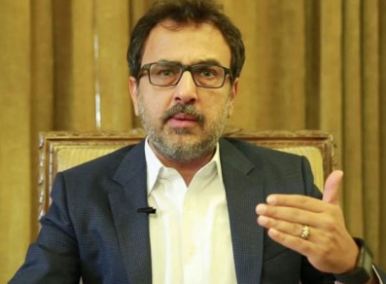
Govt renegotiating power deals with IPPs to cut costs: Power Minister Leghari

Govt renegotiating power deals with IPPs to cut costs: Power Minister Leghari

ISLAMABAD, SEPT 7: The government is renegotiating contracts with independent power producers (IPP) to rein in “unsustainable” electricity tariffs, said the head of the power ministry, as households and businesses buckle under soaring energy costs.

Rising power tariffs have stirred social unrest and shuttered industries in the $350 billion economy, which has contracted twice in recent years as inflation hit record highs.

“The existing price structure of power in this country is not sustainable,” Federal Minister of Power Division Awais Leghari told Reuters in an interview on Friday.

He said discussions were underway between power producers and the government because “there is a clear understanding on both sides that the status quo can’t be maintained.”

Leghari stressed that all stakeholders would have to “give in to a certain point” — though without compromising completely on business sustainability — and this would have to be done “as soon as possible”.

Faced with chronic shortages a decade ago, dozens of private projects by IPPs were approved, financed mostly by foreign lenders. The incentivised deals included high guaranteed returns and commitments to even pay for unused power.

However, a sustained economic crisis has slashed power consumption, leaving the country with excess capacity that it needs to pay for.

Short of funds, the government has built those fixed costs and capacity payments into consumer bills, sparking protests by domestic users and industrial associations.

Four anonymous sources in the power sector told Reuters that changes to contracts demanded included slashing guaranteed returns, capping dollar rates and moving away from paying for unused power.

On Saturday, local media outlet Business Recorder said in a report citing sources that 24 conditions have been proposed for the transition of capacity based model to take-and-pay model.

However, Leghari told Reuters that no new draft agreements or specific demands had been officially sent to power companies and said the government would not force them to sign new watered-down contracts.

“We would sit and talk to them in a civil and professional manner,” he said, adding that the government has always maintained contractual obligations to investors, both foreign and local.

He said contract revisions would be by “mutual consent”.

Energy sector viability was the focus of a critical staff-level pact in May with the International Monetary Fund (IMF) for a $7bn bailout. The IMF’s staff report stressed the need to revisit power deals.

Talks on reprofiling power sector debt owed to China as well as negotiations on structural reforms had already initiated but progress has been slow. Pakistan has also committed to stop power sector subsidies.

Leghari said current rates were not affordable for domestic or commercial consumers and this was hurting growth because power prices were no longer regionally competitive, putting critical exports at a disadvantage.

He said the aim was to bring tariffs down to nine US cents per unit for commercial users from about 28 cents currently.

Serena Hotels and Nomad Gallery’s crafts Festival

Serena Hotels and Nomad Gallery's crafts Festival

Mahnoor Ansar

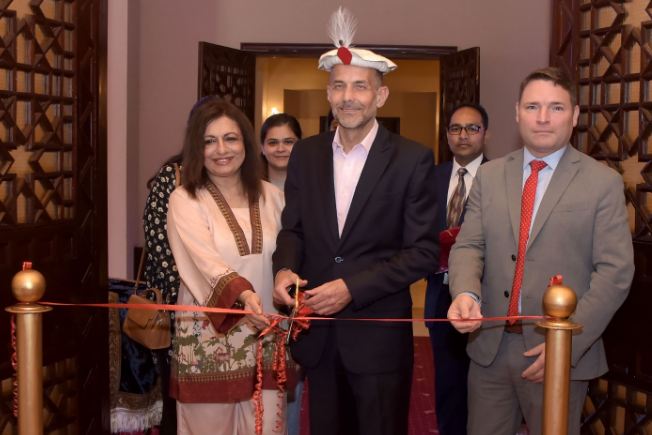
ISLAMABAD: In a vibrant celebration of culture, artistry, and women’s empowerment, Serena Hotels, under its Culture Diplomacy initiative, has collaborated with Nomad Gallery to organize a two-day Crafts Festival on the 7th and 8th of September 2024 that will showcase Pakistan’s rich artistic heritage. This festival marks a significant milestone as Nomad Gallery celebrates 40 years of creating a space for artistic voices and supporting women’s empowerment within the cultural community.

The festival will also feature the beauty of the Kalash people and their cultural contributions with the screening of the award-winning documentary “Discovering Greater Chitral”, which celebrates the natural beauty and heritage of the region.

The crafts festival will offer a dynamic showcase of handicrafts, textiles, design aesthetics, and contemporary art, focusing on women’s economic empowerment and cultural preservation. Artisans and women entrepreneurs from regions across Pakistan, including Punjab, Sindh, Baluchistan, Khyber Pakhtunkhwa, Gilgit-Baltistan, and Kashmir, will present exquisite creations such as jewelry and textiles, reflecting Pakistan’s diverse artistic traditions.

H.E. Georg Steiner, the Swiss Ambassador to Pakistan, inaugurated the festival as the guest of honor. Speaking on the occasion, he said: “Art and culture are powerful tools for promoting mutual understanding and strengthening the ties between communities. This festival is an excellent platform to showcase the creativity and strength of Pakistan’s artisans, especially women who are using their craft to drive economic and social change “.

As part of Serena Hotels’ Culture Diplomacy initiative, this Crafts Festival is an indication to the continuing commitment to preserving cultural heritage and empowering communities. Through its extensive CSR programs, Serena Hotels has long supported the development of sustainable tourism and cultural preservation, providing platforms for artisans and entrepreneurs to thrive.

Breaking the Chains of Pakistan’s Drug Crisis

Breaking the Chains of Pakistan’s Drug Crisis

Author: Sundas Mehreen

The author is a Research Associate and anti-drug activist dedicated to tackling substance abuse through research and advocacy for community impact.

Undoubtedly, youth is the decisive force behind a progressive and developed state. Though they were a minority, the youth remarkably revitalized the independence movement in 1947 and played a crucial role in defending the state during the 1965 war. This historical role underscores the untapped potential they offer today, as Pakistan’s youth bulge stands at a staggering 64% of the total population. This demographic shift presents a pivotal opportunity to reshape the future, but only if harnessed productively.

However, this opportunity comes with challenges. The current socio-economic landscape of Pakistan, marked by unemployment, lack of educational opportunities, and a rise in societal tensions, creates an environment where the youth, if left unsupported, can be easily drawn towards destructive behaviors. The internet and social media, while offering great opportunities for learning and connection, also expose the youth to dangerous influences, such as extremist ideologies, cybercrime, and drug peddling, which can flourish in online spaces. In this context, the exodus of talent through brain drain becomes a critical liability, particularly when adversaries seek to disincentivize, demoralize, corrupt, and even weaponize the youth, leading to behaviors that harm national stability. One of the most perilous threats among these is the proliferation of drugs.

In Pakistan, an estimated 7.8 million people (UN) take drugs regularly, and about 700 people die every day due to drug-related complications, translating to 250,000 deaths annually. The severity of the issue is magnified by the alarming statistics of drug-related arrests in 2024 alone, where 1,344 individuals were apprehended, including 105 females, 88 students, and 34 foreigners. This clearly shows that the drug menace is not only widespread but deeply embedded within our societal framework, particularly in educational institutions and family structures, which are supposed to cradle our future.

The education system, once seen as a protective environment for youth, is now becoming vulnerable to this menace. The explosive rise in synthetic drugs and the increasing involvement of females in drug trafficking clearly indicate that youth are the primary target, and this threat has been festering for a long time. Educational institutions are now grappling with the spread of narcotics on campuses, from universities to high schools, contributing to a vicious cycle of addiction that leads to deteriorating academic performance, behavioral problems, and, ultimately, the breakdown of family and community structures. Given the sheer magnitude of the problem, it is imperative to build a robust defense against the proliferation of narcotics. This can only be achieved through collective involvement, synergizing Law Enforcement Agencies with the youth, thereby creating the most effective defense mechanism to protect the very individuals who will shoulder the future of the nation.

A safe and healthy youth is directly proportional to a strong and stable state. Therefore, promoting healthy activities like sports, debates, and arts can play a crucial role in preventing youth from falling into the trap of addiction. While the Anti-Narcotics Force (ANF) has conducted 3,414 awareness sessions across Pakistan, involving the youth in the fight against drugs, there remains an urgent need to take this a step further. Drug awareness programs should be formally integrated into the school curriculum, and evidence-based initiatives should be launched within families, schools, and communities to spearhead a nationwide campaign. Such campaigns must focus on prevention, early intervention, and creating support systems that are easily accessible to all youth, regardless of socio-economic background.

Furthermore, efforts to reclaim those already ensnared by addiction are critical. The government must provide proper regulation, registration, and monitoring of private rehabilitation centers, which are currently operating with little oversight. Registering and regulating private rehabilitation centers, providing adequate support, and encouraging public-private partnerships in addiction recovery can offer pathways for these individuals to return as productive members of society.

To fully address this issue, we must also recognize the role of the family unit in preventing drug addiction. Parents need to be educated on how to detect early signs of drug use and how to support their children through difficult times. Awareness sessions that involve parents, guardians, and teachers could strengthen the social safety net around youth, making it harder for them to fall through the cracks and into addiction.

The consequences of ignoring this issue are too severe to overlook. With our youth bulge serving as the torchbearers of Pakistan’s future, it is crucial to intensify drug demand reduction campaigns, starting from the grassroots levels and pushing for pragmatic societal change. This change must come from both top-down and bottom-up approaches, where the government enforces strict anti-drug policies while communities take charge of spreading awareness and protecting their youth. Unfortunately, the gravity of the problem remains underappreciated, as addicts continue to be stigmatized as societal outcasts rather than individuals in need of support and rehabilitation.

If this stigma is not addressed, it will hinder efforts to reintegrate former addicts into society, leaving them vulnerable to relapse and perpetuating the cycle of drug abuse. But are we, as a society, truly listening?

The time to act is now. The window of opportunity is shrinking, and the future of Pakistan hinges on how we respond to this looming crisis. Will we rise to the challenge and protect our youth, or will we continue to turn a blind eye as this demographic treasure is turned into a liability?

Pakistan Navy inducts two state of the art ships in its fleet

Pakistan Navy inducts two state of the art ships in its fleet

KARACHI,  Sep 6: A graceful ceremony for induction of MILGEM Class Corvette PNS BABUR and Offshore Patrol Vessel PNS HUNAIN was held at PN Dockyard Karachi. President of Pakistan, MrAsif Ali Zardari graced the occasion as Chief Guest.

PNS BABUR is a multipurpose Ship built and commissioned at Istanbul Naval Shipyard on 23 Sep 23. PNS HUNAIN, an Offshore Patrol Vessel was built and commissioned at DAMEN Shipyard, Romania on 25 Jul 24.

Speaking at the ceremony, the Chief Guest dilated upon the precarious geo-strategic environment in the Indian Ocean and the need to have a potent Naval force to counter growing traditional and non-traditional challenges. He remarked that induction of state of the art ships on Defence Day of Pakistan is a milestone achievement. He reiterated that induction of these ships in PN Fleet will consolidate and enable the Fleet to meet its ever-growing operational responsibilities. The Chief Guest also mentioned that PN Ships BABUR and HUNAIN equipped with state of the art weapons, sensors and robust machinery, will In Sha Allah serve Pakistan Navy for years to come. Chief Guest formally handed over the ships’ scrolls to the Commander Pakistan Fleet which marked the induction of PN Ships BABUR and HUNAIN in PN Fleet.

In his welcome address, the Chief of the Naval Staff termed the induction of these ships in PN Fleet as a major milestone in capacity building of PN Fleet. He acknowledged the government’s full support for providing best possible resources for this purpose. He also acknowledged the professional competence of M/s ASFAT, Istanbul Shipyard, DAMEN Shipyard Galati Romania and the entire project team for delivering potent ships which showcased the deep rooted friendship and cooperation between friendly countries.

The ceremony was also attended by HE Mr Bilal Burdali, Deputy Minister of National Defence Turkiye, Chairman Joint Chiefs of Staff Committee, Chief of the Naval Staff, senior reps of construction yards, political leadership and high ranking officials of the Armed Forces.

Minister visits Martyrs’ grave at Navy graveyard

Minister visits Martyrs' grave at Navy graveyard

KARACHI, SEP 06 (DNA) — Federal Minister for Maritime Affairs Qaiser Ahmed Shaikh on Friday visited the Pakistan Navy graveyard and laid a floral wreath on the grave of Martyr Lt Cdr Zeeshan.  The minister, after laying the wreath offered Fateha and prayed for the departed soul of Shaheed Lt Cdr Zeeshan. While paying tribute to Pakistan’s valiant Armed Forces soldiers and officers, the Federal Minister said that in 1965, our forces fought bravely against the enemy and defended the frontiers of the homeland.

The bravery shown by our forces on September 6, 1965, is memorable for all of us, Qaiser Shaikh said, adding that he still remembers that day clearly. The minister said he would never forget that spirit shown by our heroes for which the entire nation pays respect to them.

Replying to a question regarding challenges being faced by the country, Qaiser Shaikh said Pakistan was confronted by multiple external as well as internal threats but our Armed Forces and the Federal Government were taking measures to face these challenges with national unity and spirit.

The federal minister said ‘Pakistan is a great country which is the result of the sacrifices of our forefathers’. He expressed hope that our country will achieve all its goals including its development. He said Pakistan’s defence is impregnable and no one dare to put the evil eye on us and the government is committed to providing all resources to our brave Armed Forces.

The vision of our young generation is a clear manifestation that this nation will always flourish and all challenges would be overcome, Shaikh said. —DNA

Deputy PM Dar greets UK’s first Muslim Lord Chancellor

Deputy PM Dar greets UK’s first Muslim Lord Chancellor

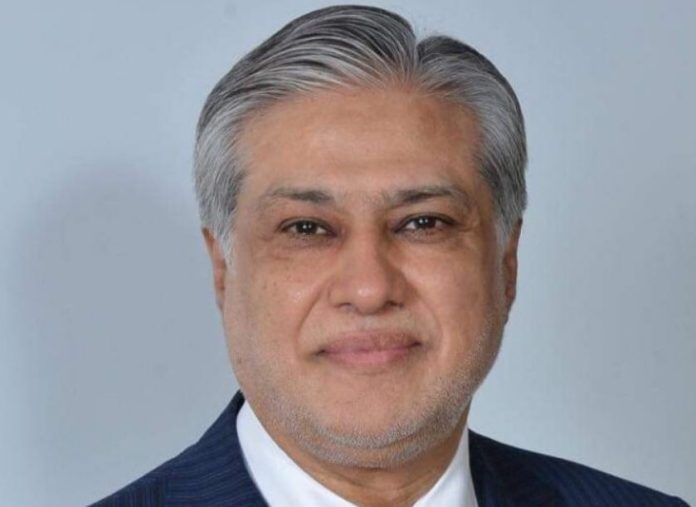
ISLAMABAD, SEPT 6 /DNA/ – Deputy Prime Minister / Foreign Minister Senator Ishaq Dar spoke with Shabana Mahmood, Lord Chancellor and Secretary of State for Justice of the United Kingdom. She is the first Muslim woman to hold this position.

Deputy Prime Minister Dar congratulated Lord Chancellor Mahmood on her historic appointment, saying that her success was a source of pride for all Muslims and Pakistanis in particular. He lauded the role played by 1.7 million British-Pakistanis in fortifying the Pakistan-UK partnership.

The Deputy Prime Minister said that he looked forward to working with Lord Chancellor Mahmood to further strengthen the special relationship between Pakistan and the UK for the benefit of both peoples. He invited the Lord Chancellor to visit Pakistan at a mutually convenient date.

Lord Chancellor Mahmood thanked the Deputy Prime Minister for his warm message of felicitations. She agreed that the vibrant British-Pakistani community was playing a critical role in enriching the ties between the two countries.

ISSI commemorates Defence Day

ISSI commemorates Defence Day

ISLAMABAD, SEPT 6 /DNA/ – The Arms Control and Disarmament Centre (ACDC) at the Institute of Strategic Studies Islamabad (ISSI) organized a ceremony to commemorate Pakistan Defence Day. The thematic focus of the event was on “Pakistan Strategic Defence: A Journey to Ensure Credible Deterrence.” Commenceing with the national anthem, the proceedings were attended by the ISSI Research Faculty, interns and students.

DG ISSI Ambassador Sohail Mahmood, in his remarks on the occasion, paid rich tributes to the Pakistan Armed Forces and paid homage to the martyrs who made the ultimate sacrifice while defending the country. He stated that Pakistan, by virtue of its geography, has always faced complex security challenges. It was a region where the pursuit of peace and security demanded constant vigilance and readiness. He added that over the past 77 years, Pakistan had navigated through turbulent waters, adapting to evolving threats and challenges. He underscored that Pakistan’s journey in strategic defence had been one of perseverance, innovation, and determination. Further, the spirit of the nation was never dampened, no matter what the odds. The nation had abiding faith in what Quaid-e-Azam Muhammad Ali Jinnah had said: “There is no power on earth that can undo Pakistan.” Over the decades, Pakistan has built a credible deterrence capability, ensuring that no one can threaten its existence. From strengthening our conventional forces to developing a robust nuclear deterrent, our defence strategy evolved to meet the changing dynamics of regional and global security. He stressed the importance of renewing the commitment to ensure that Pakistan remains strong, secure, prosperous, and on-track to realize the Quaid’s vision. He concluded by underscoring that with unity, faith and discipline, we will continue to build on the legacy of our founding fathers, honour the sacrifices of our martyrs, and bequeath a better Pakistan to our succeeding generations.

Earlier, Malik Qasim Mustafa, Director ACDC, stated that the nation commemorates this national day as one of the proudest moments in Pakistan’s history when Pakistani soldiers sacrificed their lives to safeguard our freedom and protect the homeland.

Sardar Jahanzaib, Research Associate ACDC, gave a presentation on the event’s theme. He outlined the key security challenges faced by Pakistan since its inception. He emphasized Pakistan’s adoption of “Credible Minimum Deterrence” following India’s nuclear tests and elaborated on the evolution of Pakistan’s nuclear doctrine in response to the Indian Nuclear Doctrine of 2003, India’s Cold Start Doctrine of 2004, and the development of India’s second-strike capability with nuclear submarines. He detailed Pakistan’s “Full Spectrum Deterrence” to ensure comprehensive security at tactical, operational, and strategic levels.

Participants appreciated the sacrifices of the Pakistan armed forces and added that there was no compromise on territorial integrity and sovereignty. They also highlighted the importance of national unity, social cohesion, economic strength, and the sacrifices of ordinary Pakistanis. Participants also discussed the ideological aggression Pakistan faces from the adversary as part of hybrif warfar, which needs to be countered.

In his remarks, Ambassador Khalid Mahmood, Chairman BoG ISSI, stated that today security is an all-embracing concept encompassing territorial integrity, safeguarding ideological frontiers, and achieving economic security. As a nation, we have the responsibility to meet these challenges.

The event concluded with dua for the shuhada.

Are Solar Panels Contributing to Circular Debt?

Qamar Bashir

Qamar Bashir

China has a robust, well-regulated solar energy policy driven by long-term vision and comprehensive planning, unlike Pakistan, where policies are often short-sighted and poorly implemented. During a recent visit to three provinces and five cities in China, we observed that rooftops in residential and commercial areas lacked solar panels, in contrast to Pakistan, where rooftop solar installations are common but often give a cluttered appearance to homes and neighborhoods.

China’s focus is on large-scale solar farms and industrial applications, with most of its renewable energy capacity coming from centralized installations rather than individual households. Both state and local governments prioritize energy-efficient infrastructure and centralized solar energy feeding into the national grid, rather than encouraging decentralized rooftop solar production.

In contrast, Pakistan’s telemetry policy promotes household solar panel installations, allowing households to sell excess electricity to the national grid while using WAPDA-supplied power for their own needs. Although this provides short-term electricity cost relief for households, it has unintended consequences. The policy has not accounted for its impact on the national energy system, contributing to circular debt in the electricity sector. This happens because reduced household demand forces Independent Power Producers (IPPs) to shut down production, but they still receive capacity payments despite not generating electricity, creating financial strain on the government.

The high initial cost of solar panels has made them inaccessible to poorer households, exacerbating inequality. While wealthier households can install solar systems to avoid rising electricity costs, lower-income segments are left to bear the burden of increasing tariffs, worsening the financial strain on the energy sector.

Additionally, China’s solar panel overcapacity, exacerbated by international sanctions, has led to a significant drop in the price of Chinese-made solar panels. As a result, Chinese manufacturers have flooded markets like Pakistan with cheaper panels, further incentivizing households and businesses to adopt solar energy to escape rising electricity costs.

Compounding the issue, political parties such as PML(N), PPP, and PTI have promoted the distribution of portable solar panels to households as a means of gaining voter support. This has led provincial governments to launch large-scale subsidy programs for solar energy installations, driven more by political motives than long-term energy planning. These interventions, while providing short-term relief, have intensified the challenges faced by Pakistan’s formal energy sectors, such as coal, oil, gas, hydel, and nuclear power, and contributed to rising electricity costs.

These policy interventions and the political promotion of widespread solar panel adoption have ultimately increased the cost of electricity produced by the formal sector. Any potential savings households may have gained from installing solar panels have, in reality, been offset by the growing circular debt, which will eventually be paid by the Pakistani consumer. As a result, the net financial impact of mass solar panel installations has turned into a loss at the national level.

Based on an estimated total power generating capacity of 43,000 MW versus an actual demand of 14,000 MW, and with the cost of electricity to the consumer set at Rs. 72 per unit, the nation is suffering a projected annual loss of Rs. 8.83 trillion due to the reduced demand faced by Independent Power Producers (IPPs) following the shift to solar panels.

While this figure might seem exaggerated—factors such as taxes, levies, line losses, and electricity theft are not fully accounted for—even if the loss were reduced by half to Rs. 4.42 trillion, it would still represent a significant cost. This burden, whether absorbed by the federal government or passed on to consumers, constitutes an accrued liability that ultimately affects the people of Pakistan.

If we compare Chinese and Pakistan policy initiatives we might reach the conclusion that China focuses on large-scale solar farms and centralized solar energy production integrated into the national grid. This ensures controlled energy management, reduces grid instability, and avoids the complications of decentralized solar power generation by households. It also ensures uniformity in policy implementation and reduces the risk of creating energy imbalances that could impact the overall energy sector.

Whereas, Pakistan’s telemetry policy, allowing households to produce and sell electricity, creates an unregulated surge in household-level solar panel installations. While this policy has benefits, particularly for individual household savings, it also introduces challenges like grid instability, capacity payment obligations to IPPs, and increased circular debt.

Pakistan’s solar energy policy requires a shift from its current decentralized, short-sighted approach to a more balanced and long-term strategy. Unlike China, which focuses on large-scale solar farms and centralized energy integration, Pakistan’s telemetry policy encourages household solar installations, leading to grid instability, increased circular debt, and financial strain due to capacity payments to Independent Power Producers (IPPs). To resolve these issues, Pakistan should prioritize large-scale solar projects, reform the IPP payment model, and implement grid modernization with smart technologies. Additionally, equitable access to solar energy for lower-income households and reform of the net metering system are essential to prevent the financial burden from falling on the poorer segments of society. Rural areas should adopt localized solar systems to reduce dependence on the national grid, while energy efficiency measures and public awareness campaigns can ensure responsible adoption of solar power. By focusing on a centralized, well-regulated solar strategy, Pakistan can stabilize its energy sector and mitigate the economic challenges it currently faces.

Qamar Bashir

Former Press Secretary to the President

Former Press Minister to the Embassy of Pakistan to France

Former MD, SRBC, CEO, ATV

Terrorist Safe Havens in Afghanistan Pose Global Threat

Terrorist Safe Havens in Afghanistan Pose Global Threat

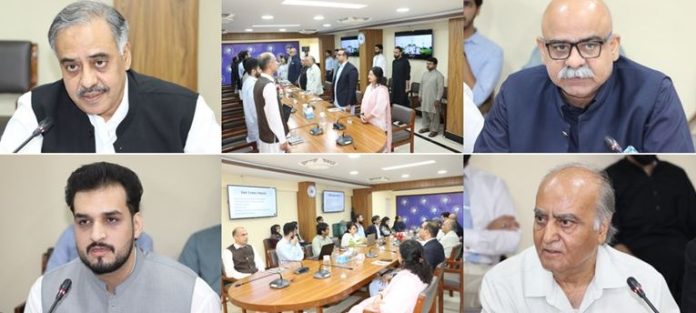
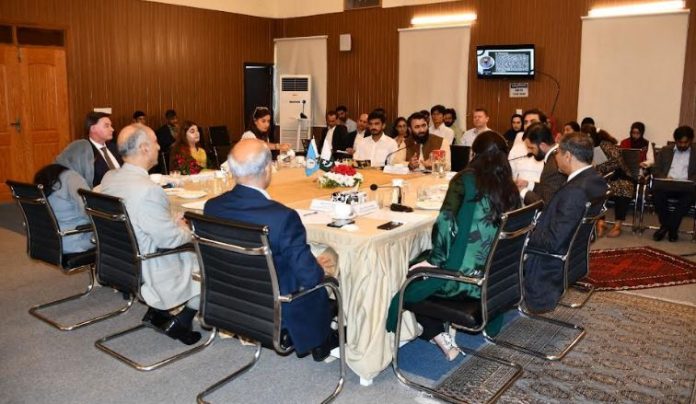
ISLAMABAD, SEPT 6: /DNA/ – Prominent experts at a roundtable discussion organized by the Institute of Regional Studies (IRS) expressed concern over the growing nexus between various jihadist organizations operating out of Afghanistan.

They highlighted the growing collaboration not only between various jihadist terrorist organizations such as the Tehrik-i-Taliban Pakistan (TTP), and the Islamic State Khorasan Province (ISKP), but also between the jihadist terrorist organizations and Baloch separatist groups.

The experts were not optimistic about the Afghan interim administration taking meaningful action against the terrorist groups based in Afghanistan under its watch. The speakers maintained that Afghan Taliban could not be expected to act against their former partners in resistance against foreign troops in Afghanistan unless they get convinced that it is essential for the regime’s survival. It was also felt that the Afghan interim administration fears that taking serious action against terrorist groups such as the TTP might create dissension within the Taliban ranks, which could be exploited by the ISKP, an adversary of the Afghan Taliban.

The speakers called for a long-term policy approach towards the Afghan interim administration on the subject of TTP presence in Afghanistan noting that jihad had a long history in Afghanistan, which had led to creation of durable and interlinked jihadist networks. The experts were of the opinion that understanding of sociocultural and religious nuances of Afghanistan was essential for a long-term strategy for dealing with terrorism emanating from the country. Such an understanding, according to the panellists, needed to take into consideration dichotomies within the Afghan interim administration and the multiple influencing factors at play, including regional geopolitics.

The speakers also noted that addressing terrorism in the region would not only require patient diplomatic engagement with the Afghan interim administration, but also strengthening the legal and institutional structure against terrorism in Pakistan.

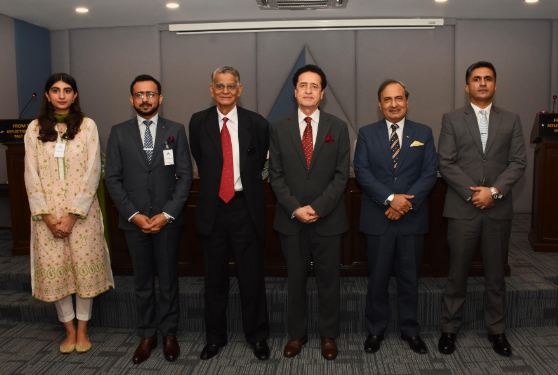
The participants of the roundtable included President IRS, Ambassador Jauhar Saleem, Executive Director Centre for Research and Security Studies (CRSS) Mr Imtiaz Gul, Director Religious Engagement International Research Council on Religious Affairs (IRCRA) Mr Tahmeed Jan, Co-Found of Khorasan Diary Mr Ihsanullah Tipu Mehsud, Pakistan’s former envoy to Afghanistan Ambassador Arif Ayub, and IRS researchers Aarish U. Khan and Aleena Shah. A large audience including diplomats, academics, researchers, opinion-makers, and students witnessed the lively discussion.

CASS Lahore hosts thought-provoking event on PAF’s evolution

CASS Lahore hosts thought-provoking event on PAF’s evolution

LAHORE, SEPT 6 /DNA/ – In celebration of the Pakistan Air Force (PAF) Day, the Centre for Aerospace and Security Studies (CASS), Lahore, hosted an engaging guest lecture titled “From the Cockpit: Reflections from the PAF’s Past for the Future.” The event, held on 5 September 2024, featured Wing Commander Salim Baig Mirza (Retd), a distinguished war veteran and revered fighter pilot, who shared insights into the PAF’s illustrious history as a guide for the future.

The lecture began with a preamble by Air Commodore Khalid Chishti (Retd) on the 1965 and 1971 wars, which also included an introduction of the guest speaker. He praised the remarkable achievements of Wing Commander Salim (Retd) in aerial combat, which included two confirmed kills, highlighting PAF’s motto, “Second to None”.

Wing Commander Salim (Retd) shared his experiences of the 1965 and 1971 wars. While recounting his kills, he addressed the Indian propaganda that misrepresented the true nature of those events. He highlighted the PAF transformation over the decades under its visionary leadership, evolving into a modern and formidable force distinguished by exceptional courage, training, and professionalism. He also noted the PAF’s technological and strategic edge, which offsets India’s numerical superiority. Following his address, an engaging interactive session ensued, where attendees explored the PAF’s history and discussed the current and future challenges it faces.

The event concluded with closing remarks from Air Marshal Asim Suleiman (Retd), President CASS, Lahore, who emphasised the Air Force’s crucial role and status as the leadership’s preferred choice in contemporary warfare. He noted that all modern-day conflicts are employing the air medium for achieving military objectives. He also mentioned PAF’s enduring legacy and steadfast dedication to national security. The President further highlighted the ongoing strategic transformation of the PAF under the leadership of Chief of the Air Staff, Air Chief Marshal Zaheer Ahmad Babar Sidhu. He remarked that the PAF is now prioritising cutting-edge technologies and infrastructure to sustain its combat advantage, especially in light of increased defence spending by neighbouring countries like India.

The guest lecture was well-attended by both serving and retired PAF officers, as well as members of civil society and academia. The attendees appreciated the insights and the opportunity to celebrate the PAF’s rich heritage.

Stay Connected

64FansLike
60FollowersFollow

Latest Reviews

Exchange Rates

USD - United States Dollar
EUR
1.17
GBP
1.34
AUD
0.67
CAD
0.73