Home Blog Page 60

Mexico beat Ecuador 2-0 to reach World Cup last 16 and end knockout hoodoo

Mexico beat Ecuador 2-0 to reach World Cup last 16 and end knockout hoodoo

Mexico ended a 40-year wait for a World Cup knockout victory as first-half goals from Julian Quinones and Raul Jimenez secured a 2-0 win over Ecuador, sending the co-hosts into the last 16 amid euphoric scenes at a rocking Azteca Stadium.

The victory was Mexico’s first in the knockout stages of a World Cup since beating Bulgaria on home soil in 1986 and booked a meeting with either England or the Democratic Republic of Congo in the last 16, with the co-hosts returning to the Azteca for the stadium’s final match of the tournament.

Kickoff was delayed by an hour due to thunderstorms, but the weather did little to dampen an atmosphere that surpassed even Mexico’s tournament opener, with over 80,000 fans turning the venue into a sea of green long before the opening whistle.

Mexico fed off that energy from the outset and nearly took an early lead when Raul Jimenez peeled away to meet Luis Romo’s inviting cross, only to stoop a header narrowly wide.

Teenager Gilberto Mora then came within inches of producing one of the goals of the tournament, whipping a fierce effort from a tight angle just beyond Hernan Galindez’s far post.

Ecuador weathered the early pressure and almost stunned the home crowd when Gonzalo Plata launched a swift counter-attack that ended with John Yeboah skipping past his marker before drilling an angled effort against the outside of the post.

Mexico’s breakthrough arrived in the 22nd minute, though, and sparked deafening celebrations around the Azteca.

Roberto Alvarado picked out Quinones with a perfectly weighted pass through Ecuador’s high press, and the Colombian-born forward shrugged off Willian Pacho before opening his body and unleashing a thunderous finish into the top corner for his third goal of the tournament.

Mexico doubled their advantage nine minutes later after Ecuador cheaply surrendered possession on the edge of their own penalty area. Jimenez started the move himself, exchanged passes with Quinones and rifled a first-time strike into the top corner for his 47th international goal, moving within five of Javier Hernandez’s all-time Mexico scoring record.

The hosts looked transformed by their two-goal cushion, playing with confidence and intensity as Ecuador struggled to contain waves of green-shirted attacks roared on by the crowd.

Ecuador showed signs of life before the break and almost pulled one back when Yeboah cut inside and unleashed a rising drive that forced Raul Rangel into an excellent diving save, but Mexico went into halftime firmly in control after producing arguably their most complete 45 minutes of the tournament.

Team’s rallying cry
The second half began with thousands of Mexico supporters chanting “Y si si?” (“What if?”), a slogan that has become the team’s rallying cry during the tournament as belief spread through the packed Azteca that this could finally be the year the hosts ended their long knockout drought.

Ecuador enjoyed more of the ball after the restart as they searched for a way back into the contest, but without threatening Rangel.

At the other end, Galindez produced an excellent save to deny Mexico captain Cesar Montes’ powerful header before the defender glanced another effort narrowly wide as the co-hosts continued to threaten from set pieces.

Mexico coach Javier Aguirre then turned to his bench, withdrawing goalscorers Quinones and Jimenez along with 17-year-old Mora, who received a standing ovation after becoming the youngest player to start a World Cup match since Pele.

Ecuador threw men forward in the closing stages but found no way past a disciplined Mexico defence, still to concede a goal in the tournament, and their frustration boiled over when defender Piero Hincapie was shown a red card after covering his mouth while arguing with Santiago Gimenez.

As Mexico’s players embraced at the final whistle, the strains of the famous mariachi song “El Rey” (The King) rang around the Azteca, with tens of thousands of supporters singing in celebration at their team’s latest success.

Pakistan extends FESCO, GEPCO privatisation bidding deadlines

Pakistan extends FESCO, GEPCO privatisation bidding deadlines

ISLAMABAD, JUL 1 /DNA/ – The Privatisation Commission of Pakistan has extended the deadline for the submission of Expressions of Interest (EOIs) for the privatisation of Faisalabad Electric Supply Company (FESCO) and Gujranwala Electric Power Company (GEPCO) under the Government’s Batch-I DISCOs privatisation programme.

The revised deadlines are as follows:

* FESCO: August 7, 2026 (1600 Hours PKT)

* GEPCO: August 21, 2026 (1600 Hours PKT)

However the deadline for the submission of EOI for the Islamabad Electric Supply Company (IESCO) remains the same which is:

September 7th, 2026 ( 1600 Hours PKT)

The extension has been granted in response to requests from prospective investors to allow additional time for completing their internal evaluations and preparing comprehensive submissions.

The Government of Pakistan is offering 51% to 100% shareholding, together with management control, in the privatisation of first batch of distribution companies as part of its broader economic reform and privatisation agenda. The objective is to attract strategic investors capable of enhancing operational efficiency, improving service delivery, reducing losses, and strengthening the country’s power distribution sector.

The Privatisation Commission remains committed to conducting a transparent, competitive, and investor-friendly process that encourages broad participation from qualified local and international investors.

Interested parties may obtain further information from the Privatisation Commission or its Financial Advisor, Alvarez & Marsal Middle East Limited, and submit their EOIs by the revised deadlines.

Iran says it won’t meet US envoys, clouding prospects for peace deal

Iran says it won't meet US envoys, clouding prospects for peace deal

TEHRAN, JUL 1: Iran said on Tuesday it would not meet with top US envoys who flew to the region following an outbreak of hostilities, clouding the prospects for a lasting peace between the two countries.

Iranian officials also said the two sides must still sort out the terms of a ceasefire they signed two weeks ago before they could tackle more difficult topics, such as possible limits to its nuclear programme.


The developments indicated the two sides are far apart on key pillars of the initial framework, which calls for Iran to lift its chokehold on the Strait of Hormuz in exchange for financial incentives, and sets up 60 days of negotiations to work out a permanent peace deal.

US President Donald Trump’s son-in-law Jared Kushner and envoy Steve Witkoff arrived in Doha for what the White House described as “high level” talks, but Iran and host Qatar said they would meet with mediators, rather than the Iranians themselves.

Qatar said Prime Minister Sheikh Mohammed bin Abdulrahman al-Thani was among those to meet with Witkoff and Kushner.

“No meeting at any level with the American side has been scheduled for the coming days,” Iranian Foreign Ministry spokesperson Esmaeil Baghaei said.

The two countries were due to commence lower-level technical talks, according to Majed al-Ansari, spokesperson for Qatar’s foreign ministry.

Trump said to be contemplating strikes
Looking for ways to break the deadlock, Trump has weighed a return to all-out war, holding conversations with Defense Secretary Pete Hegseth and Chairman of the Joint Chiefs of Staff General Dan Caine on conducting more strikes, the Wall Street Journal reported, citing US sources familiar with the discussion. Reuters could not immediately confirm the report.

But for now Trump, who has publicly threatened Iran with more attacks, has decided to give diplomacy more time, the report said.

Shipping has partially resumed through the strait, which handled one-fifth of global oil and liquefied natural gas before the war broke out on February 28.

But Iranian officials said they had a right to manage traffic along with US ally Oman, which lies on the other side of the strategic waterway, and would impose tolls in mid-August when the 60-day period expires.

“The sovereignty of the Strait of Hormuz lies with Iran and Oman, and traffic in the Strait is subject to arrangements determined by Iran,” Iran’s top negotiator, Mohammed Baqer Qalibaf, said on state TV.

US Vice President JD Vance said Iran would be prevented from charging tolls through the international waterway, telling The Michael Knowles Show, “This is not going to end in a place where the Iranians are collecting tolls on ships going through the Strait of Hormuz.”

Vance also said in the interview recorded on Monday but released on Tuesday that oil flows through the Strait of Hormuz had returned to pre-war levels, even exceeding that on some days, without citing figures.

Despite the uncertainty, oil prices have fallen since the weekend, when the US bombed Iranian military facilities in response to drone strikes on commercial ships and Iran attacked US military sites in Kuwait and Bahrain.

Vulnerable economies, however, could remain at risk from food and fuel price increases even after energy markets feel relief, the UN trade and development agency said on Tuesday.

The war pushed up global inflation and has put Trump under political pressure before midterm elections in November that will determine control of the US Congress. Trump and Treasury Secretary Scott Bessent are both urging gasoline retailers to lower prices.

The interim deal between the US and Iran also provides for an end to the conflict between Israel and Iran-backed militant group Hezbollah in Lebanon.

But Lebanon’s powerful parliament speaker Nabih Berri, an ally of Hezbollah, cast doubt on a separate, US-brokered framework deal between Lebanon and Israel to halt that war.

Analysts said the deal risks entrenching a stalemate by tying Israel’s withdrawal from southern Lebanon to Hezbollah’s disarmament.

Pakistan and India exchange lists of prisoners

Pakistan and India exchange lists of prisoners

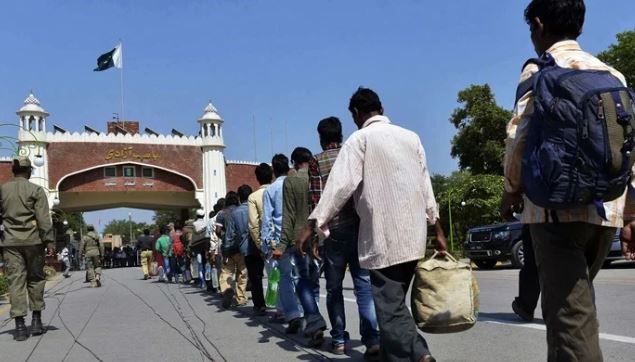
ISLAMABAD: Pakistan and India on Wednesday exchanged lists of prisoners held in each other’s custody under the 2008 Consular Access Agreement, the Foreign Office said.

The exchange of prisoners’ lists is conducted in accordance with the 2008 Consular Access Agreement, which provides a mechanism for both countries to share information on prisoners in each other’s custody.


Both nations exchange the lists of prisoners on the first of January and July each year, while they share details of nuclear installations and facilities on the first day of each calendar year.

According to the FO, Pakistan handed over a list of 250 Indian prisoners in Pakistan, including 52 civilian prisoners and 198 fishermen, to the Indian High Commission in Islamabad.

Simultaneously, India provided a list of 439 Pakistani or believed-to-be-Pakistani prisoners, including 386 civilian prisoners and 53 fishermen, who are in Indian jails.

Islamabad also urged New Delhi to release and repatriate 97 Pakistani prisoners — 64 civilian prisoners and 33 fishermen — who have completed their sentences and whose nationality has been confirmed.

India was also urged to ensure the safety, security, and well-being of all Pakistani and believed-to-be-Pakistani prisoners awaiting release and repatriation.

Pakistan also called for expeditious consular access to all believed-to-be-Pakistani prisoners to facilitate the early confirmation of their nationality.

“The Government of Pakistan will continue its efforts to ensure the early return of all Pakistani prisoners,” the FO added.

Earlier this year, Pakistan and India had also exchanged the lists of their nuclear installations under the special agreement prohibiting them from attacking each other’s nuclear facilities.

On January 1, 2026, Islamabad handed over a list of 257 Indians — 58 civilians and 199 fishermen — imprisoned in Pakistan to the High Commission of India in the capital.

Pakistan downs four Afghan Taliban drones along Balochistan border

Pakistan downs four Afghan Taliban drones along Balochistan border

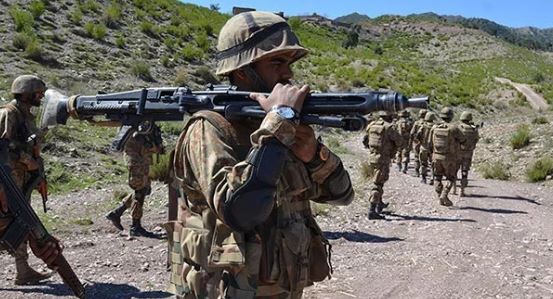
RAWALPINDI, JUL 1: The Pakistani military has downed four drones launched by the Afghan Taliban along the Balochistan border, the Inter-Services Public Relations (ISPR) said on Wednesday.

In a statement, the military’s media wing said that the Taliban regime had launched the “rudimentary” drones as part of their patronisation and support of terrorist outfits operating from inside their controlled territories.


Islamabad and Kabul’s relations have deteriorated as the Taliban regime continues to support terrorists, who launch cross-border attacks, resulting in the martyrdom of civilians and security personnel in Pakistan.

Demonstrating high operational readiness, the ISPR said, Pakistan’s robust air defence network immediately picked up the hostile aerial platforms and successfully neutralised all four incoming drones using sophisticated countermeasures.

“Due to the swift and effective response, the malicious attempts were effectively thwarted,” the ISPR said, noting that such gimmicks of the Afghan Taliban regime are aimed at misleading the Afghan population suffering under their oppressive regime.

It added that the Afghan Taliban should realise that their irresponsible behaviour is only adding to the hardships of the Afghan people.

Instead of trying to sedate their population through such antics and hollow rhetoric, the ISPR said, they should eschew sponsorship of terrorism and adhere to the principle of peaceful coexistence.

“However, if the Afghan Taliban continue to provoke Pakistan, they would receive a befitting response which would cost them heavily. The Pakistan Armed Forces remain fully vigilant and capable of defending every inch of the motherland.”

“Any misadventures or cross-border provocations threatening the sovereignty of Pakistan and endangering our people will continue to be met with swift, decisive, and overwhelming responses under Operation Ghazab-lil-Haq.”

Notably, Pakistan has also witnessed a spike in terror activities since 2021, when the Taliban came into power. Most recently, the Foreign Office issued a demarche to the Afghan Charge d’ Affaires over the terrorist attack on a Pakistan Rangers (Sindh) camp in Karachi.

The attack martyred three Rangers personnel. The demarche was issued in light of the fact that Afghan nationals, including one apprehended alive, participated in this attack, proving yet again that Afghan soil and Afghan nationals continue to be used to orchestrate terrorist attacks inside Pakistan.

Riding the wave of tourism growth, Uzbekistan and Belarus are expanding cooperation

Riding the wave of tourism growth, Uzbekistan and Belarus are expanding cooperation

TASHKENT, JUL 1: Despite growing competition for tourist flows, international tourism is increasingly seen not only as an economic sector but also as an important tool for developing international cooperation. Today, the success of tourist destinations is determined not only by the number of visitors, but also by the ability of states to build sustainable partnerships, create new points of attraction, and effectively promote their potential in foreign markets.

Uzbekistan is one of the most vivid examples of such transformation. According to the latest data from the UN Tourism World Tourism Barometer, for the January–March 2026 period, the country ranked among the five states in the world with the highest rates of international tourism growth. The flow of foreign visitors to Uzbekistan increased by 37% compared to the same period last year, while the global average was 2%.

This strong momentum confirms Uzbekistan’s strengthening position on the global tourism map. In 2025, the country received a record 11.7 million foreign tourists, and in the first five months of 2026 alone, more than 5.3 million people have already visited the country. The expansion of visa-free regimes, development of transport infrastructure, modernization of tourism services, and active promotion of the national tourism product in foreign markets are creating new opportunities for international cooperation.

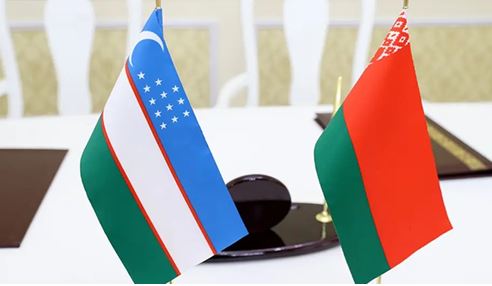
One example of such interaction is the development of tourism ties between Uzbekistan and Belarus. In recent years, cooperation between the two countries has become increasingly systematic, covering not only the exchange of tourists, but also joint efforts to promote tourism potential, develop business contacts, and expand humanitarian ties.

An important factor strengthening this cooperation remains the high level of political dialogue between the two countries. The consistent policy of the President of the Republic of Uzbekistan Shavkat Mirziyoyev, aimed at expanding international partnerships and developing tourism as one of the drivers of the economy, creates additional opportunities for establishing ties with foreign states. In this context, a practical outcome has been the coordination and implementation of programmatic agreements in the field of tourism reached during official talks between the leaders of Uzbekistan and Belarus in February 2024, which became a significant stage in the development of institutional cooperation between the relevant agencies of the two countries.

A major milestone in the development of professional dialogue was the First Tourism Forum “Belarus and Uzbekistan,” held in 2024, which brought together representatives of government bodies, the tourism business, and educational organizations, and became a platform for discussing new areas of cooperation. In the subsequent period, interaction continued to develop within international exhibitions and business events in 2025, including Uzbekistan’s participation in the “ОТДЫХ-2025” exhibition in Minsk, the Third Women Entrepreneurs Business Forum in Vitebsk, as well as Belarus’s active participation in the 30th Tashkent International Tourism Fair “Tourism on the Silk Road,” confirming the stable and mutually beneficial nature of the partnership.

An important role in the development of bilateral cooperation is played by information and media support, including the organization of reciprocal press tours for media representatives and bloggers. Over the years, visits of Belarusian and Uzbek journalists and television crews to both countries have been carried out, significantly expanding coverage of the tourism potential of Uzbekistan and Belarus in national media spaces. A substantial contribution has also been made by visits of Belarusian media representatives to Uzbekistan, helping to generate sustained interest in the tourism opportunities of both countries. Additional promotional tools have included modern digital formats, in particular the screening of videos about Uzbekistan on LED screens at the “Galleria Minsk” shopping and entertainment center, which ensured broad audience reach and increased the country’s visibility in Belarus.

It is noteworthy that cooperation is developing not only at the interagency level. In recent years, contacts between tourism companies, educational institutions, and hospitality industry representatives of the two countries have significantly intensified.

The results of this work are also gradually reflected in statistics. In 2025, more than 32,000 citizens of Belarus visited Uzbekistan. A positive trend continues this year as well: in January–May 2026, the number of Belarusian tourists reached 14,251 people compared to 12,988 in the same period last year.

The growing interest of Belarusian travelers in Uzbekistan is largely connected to the transformation of the country’s tourism offering itself. If a few years ago the republic was perceived primarily as a destination for exploring the historic cities of the Great Silk Road, today tourists have access to a much more diverse range of experiences. Alongside cultural and historical routes, gastronomic, ecological, pilgrimage, event, and mountain tourism are actively developing, allowing the country to attract new categories of travelers and stimulate repeat visits.

The experience of recent years shows that sustainable growth in tourism exchange is the result not of isolated projects, but of the consistent development of bilateral cooperation. That is why the relations between Uzbekistan and Belarus in the field of tourism can today be seen as an example of how state support, business activity, and mutual public interest form a long-term partnership. As tourism opportunities in both countries continue to expand, this cooperation will become increasingly substantive, creating new growth points for the economy and strengthening ties between the peoples of Uzbekistan and Belarus.

Radio Pakistan pensioners meet Standing Committee Chairman Phaleen Baloch

Radio Pakistan pensioners meet Standing Committee Chairman Phaleen Baloch

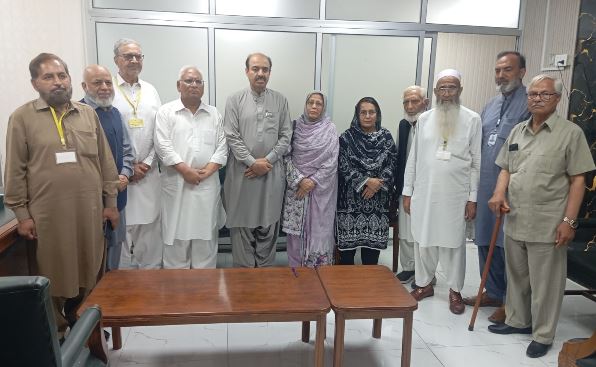
ISLAMABAD, JUL 1 /DNA/ – A representative delegation of the Radio Pakistan Pensioners Welfare Association (RPPWA), led by Chairman Naveed Ahmed Chohan, met with Phaleen Baloch, Chairman of the National Assembly Standing Committee on Information and Broadcasting, here on Wednesday. The delegation apprised him of the issues faced by retired employees of the organization.

The issues raised included the long-pending payment of commutation, which has been due for over six years, deprivation of the medical allowance approved in 2010, and non-payment of arrears on the pension increase announced in the national budget over the past three years.

Mr. Phaleen Baloch listened patiently to the delegation’s demands and assured them of sympathetic consideration and his full cooperation in resolving their problems.

Speaking on the occasion, Mr. Phaleen Baloch stated that the people of Balochistan have immense love for their Punjabi brothers. However, he expressed regret over the recent Jaffar Express tragedy and noted that the province is generally a cradle of peace and brotherhood.

On this occasion, members of the delegation, who had served at various Radio Pakistan stations in Balochistan, shared their memories with Mr. Phaleen Baloch. Mr. Baloch also extended an invitation to the delegation to visit Balochistan.

The delegation included retired Director Programs Sharif Shad, retired Controller Mahmood Riazuddin, Malik Abdul Rehman, Ms. Zahra Usmani, Ms. Asima Gul, Deputy Controllers Syed Abdul Aziz Zaidi, Rashid Ahmed, Syed Imdad Ali, Mr. Qudratullah, and other members.

D-8 member states explore medical tourism opportunities for MSME sector growth

D-8 member states explore medical tourism opportunities for MSME sector growth

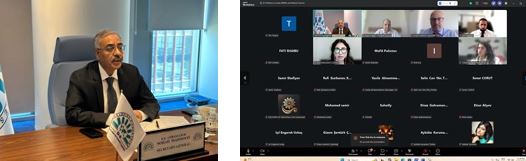
ISTANBUL, JUL 1 /DNA/ – The Developing-8 Organization for Economic Cooperation (D-8) underscored its commitment to inclusive and sustainable economic development by convening a special webinar on “Green MSMEs and Medical Tourism: Opportunities for MSME Development” in commemoration of the International Micro, Small and Medium-sized Enterprises (MSME) Day.

The virtual event drew over 40 participants from across D-8 Member States, including representatives from Ministries of Foreign Affairs, Health, Culture and Tourism, Energy, SME governmental bodies, chambers of commerce, and business support institutions. The diverse attendance highlighted the critical role MSMEs play in driving inclusive growth and achieving the Sustainable Development Goals (SDGs) within the D-8 region.

In his opening address, H.E. Ambassador Sohail Mahmood, Secretary-General of the D-8, reaffirmed the status of MSMEs as the backbone of D-8 economies and the primary engine for generating employment, fostering entrepreneurship, and stimulating innovation.

“The transition to greener and more sustainable economies presents vast new opportunities for MSMEs to enhance productivity, strengthen competitiveness, improve resource efficiency, create quality employment, and attract sustainable investment,” stated Ambassador Mahmood. He specifically identified green entrepreneurship and medical tourism as emerging sectors with immense potential to integrate MSMEs into regional and global value chains.

The Secretary-General expressed appreciation to SME Corp. Malaysia for its contribution of expert speakers, who shared valuable national experiences and best practices. He also highlighted the Secretariat’s ongoing efforts to forge closer partnerships with international bodies, including the United Nations, to facilitate access to capacity-building programs and financial services for MSMEs across the bloc.

The technical sessions featured industry experts who provided practical insights for MSME development.

  • Ms. Michelle Tee, Founder and Chief Marketing Officer of Wakili Venture Berhad, urged businesses to view sustainability as a strategic investment rather than a cost. She detailed practical approaches for integrating sustainability into operations, including circular business practices, AI-enabled inventory management, and sustainable procurement.
  • Mr. Lokman Izam, Vice President of Marketing and Communications of the Malaysia Healthcare Travel Council (MHTC), showcased Malaysia’s successful healthcare travel ecosystem. He demonstrated how medical tourism generates extensive business opportunities for MSMEs across hospitality, transport, wellness, and digital services.

The webinar also served as a platform for Member States to exchange national strategies and collaborative initiatives:

  • Türkiye’s KOSGEB presented its comprehensive framework for supporting the green transformation of MSMEs through its Strategic Plan 2024-2028, while acknowledging access to finance as a persistent challenge.
  • Azerbaijan’s KOBIA introduced the Baku Climate Coalition for SMEs Green Transition, formally inviting D-8 Member States to join the initiative, which aims to accelerate sustainable MSME development in the aftermath of COP29.
  • Bangladesh shared its experience in promoting sustainable supply chains, particularly within the textile and manufacturing sectors, while emphasizing the need for enhanced financing mechanisms for green MSMEs.
  • The Turkish Ministry of Culture and Tourism highlighted its progress in sustainable tourism certification in line with Global Sustainable Tourism Council (GSTC) standards. The Ministry noted that health tourism welcomed approximately 1.4 million international visitors in 2025, generating USD 3.3 billion in revenues, underscoring the significant economic potential for MSME development.

While delegates acknowledged that challenges such as access to finance, technology, certification, and technical expertise remain common, the interactive discussions reaffirmed that stronger regional cooperation, knowledge-sharing, and institutional partnerships can significantly accelerate the transition towards greener, more competitive MSME ecosystems.

Member States expressed their commitment to strengthening collaboration on green entrepreneurship and medical tourism, and signaled their intent to engage actively with the Baku Climate Coalition.

The webinar builds upon the D-8’s long-standing commitment to MSME development, as outlined in the 2015 Memorandum of Understanding among D-8 SME Governmental Bodies, the D-8 Decennial Roadmap 2020-2030, and the ongoing work of the D-8 SME Centre in Abuja, Nigeria.

Through these strengthened partnerships and a focus on innovation and knowledge exchange, the D-8 continues to promote resilient, sustainable, and globally competitive MSMEs that contribute to shared prosperity across all Member States.

Pakistan rejects Indian statement on actions against terrorist infrastructure

Pakistan rejects Indian statement on actions against terrorist infrastructure

Saifullah Ansar

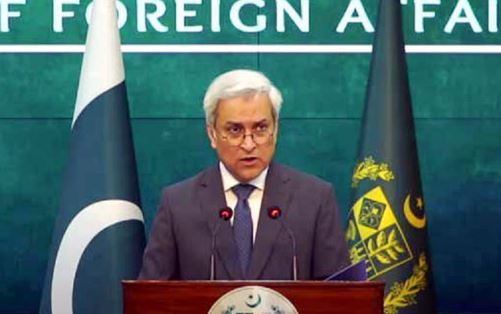
Islamabad, July 1 — The Ministry of Foreign Affairs of Pakistan has strongly rejected remarks made by India’s Ministry of External Affairs on June 29, calling them “baseless” and “preposterous.”

Responding to a media query, Foreign Office Spokesperson Tahir Andrabi emphasized that Pakistan’s recent actions against terrorist infrastructure in Afghanistan were “legitimate, targeted and proportionate,” carried out to safeguard its citizens in line with international law.

“Pakistan rejects the baseless statement by the Indian Ministry of External Affairs on Pakistan’s legitimate, targeted and proportionate actions against terrorist infrastructure in Afghanistan.”

He accused India of historically interfering in the sovereignty and territorial integrity of neighboring countries, in violation of the UN Charter. The spokesperson also highlighted India’s continued suppression of the right to self-determination of Kashmiris in Indian Illegally Occupied Jammu and Kashmir, which he said contravenes relevant UN resolutions.

Allegations Against India

The Foreign Office further alleged that India has been actively aiding and sponsoring terrorist groups operating from Afghan soil against Pakistan, in violation of UN Security Council sanctions. Mr. Andrabi described India as a “regional spoiler,” warning that its “baseless accusations and inflammatory statements” must not be entertained.

Reaffirming Pakistan’s stance, the spokesperson concluded:

“Pakistan has been and will continue to take all appropriate measures to uphold the safety and security of its citizens in accordance with international law.”

This latest exchange underscores the ongoing tensions between Islamabad and New Delhi, with both sides trading accusations over regional security and sovereignty.

Lahore tragedy: a stark reminder of neglected realities

At least 14 children die as tuition centre roof collapses in Lahore

The collapse of a tuition center roof in Lahore, killing 14 children, is more than a local disaster, it is a national indictment. It exposes the fragility of Pakistan’s social fabric and the failure of governance to protect its most vulnerable citizens

Opinion

Ansar Mahmood Bhatti

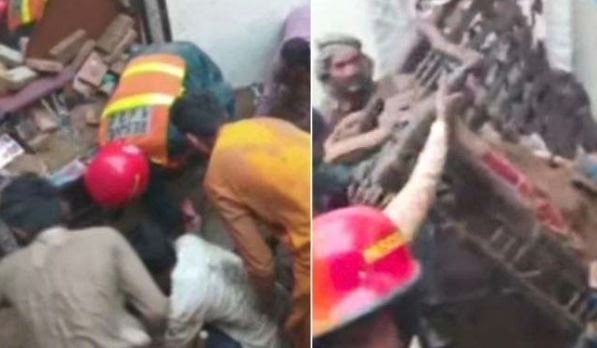
A devastating tragedy struck the provincial capital Lahore on June 30, 2026 when the roof of a tuition center collapsed, killing 14 innocent children who had gathered there to study. The incident has shaken the conscience of Punjab and the nation at large, exposing the stark contrast between official claims of progress and the grim realities faced by ordinary citizens.

The collapse was not merely an accident; it was the culmination of years of neglect, poverty, and systemic failure. Families struggling to make ends meet cannot afford to repair their homes or community buildings. For millions across Punjab, dilapidated structures are not a choice but a harsh reality. When survival itself is a daily battle, house repairs or safety upgrades remain an unaffordable luxury.

Parents send their children to tuition centers hoping to secure a better future through education. Instead, they were forced to bury them under rubble. This tragedy is emblematic of the silent suffering endured by countless households across the province.

Chief Minister Maryam Nawaz has often highlighted her government’s achievements, pointing to initiatives such as laptops for students, green and yellow buses, metro projects like the Orange Line, and schemes like Kissan Cards. While these programs may serve as political optics, the tuition center collapse underscores that they do little to address the fundamental needs of the people.

Punjab, the largest province with a massive budget, continues to allocate resources disproportionately toward projects that generate publicity rather than welfare. The tragedy in Lahore is a painful reminder that glossy announcements cannot substitute for structural reforms, social safety nets, or merit-based governance.

The economic situation in Punjab mirrors the broader national crisis. Acute price hikes, unemployment, and lack of merit-based opportunities have left families vulnerable. Social welfare remains absent, leaving the poor to fend for themselves. The tuition center collapse is not an isolated incident—it is the story of millions living in unsafe, crumbling houses across Punjab and beyond.

The tragedy also highlights the absence of effective local governance. Had there been proper inspections, regulations, and enforcement of building safety standards, the collapse could have been prevented. Instead, corruption and negligence continue to erode public trust.

While Punjab’s size and budget make its failures more glaring, the situation is not unique to the province. Across Sindh, Balochistan, and Khyber Pakhtunkhwa, families face similar struggles. Poverty, unemployment, and lack of social welfare are national issues. The collapse in Lahore is a symbol of a broader malaise afflicting Pakistan’s governance and development model.

Projects like metro lines, bus fleets, and technology giveaways may create headlines, but they cannot transform Pakistan into a welfare state. True development requires rule of law, meritocracy, equal distribution of resources, law and order, and a corruption-free society. These are the foundations of sustainable progress, yet they remain absent from political discourse because they offer no immediate kickbacks, commissions, or personal projections.

The tuition center tragedy exposes the hollowness of development that prioritizes optics over substance. It is a call to rethink what progress truly means.

Pakistan, after 78 years of independence, continues to search for a messiah—a leader who can deliver justice, equality, and prosperity. Each new government promises change, but the cycle of neglect and mismanagement persists. The collapse in Lahore is not just about a roof; it is about the collapse of governance, accountability, and social responsibility.

The grieving families of Lahore are not alone. They represent millions across Pakistan who live in fear of similar tragedies, whether from unsafe housing, lack of healthcare, or absence of social protection. Their plight is a reminder that Pakistan’s journey toward becoming a welfare state remains unfinished. The tragedy demands more than condolences and promises. It requires a fundamental shift in priorities:

Rule of law must be enforced to ensure accountability and safety standards. Meritocracy must replace nepotism and favoritism in governance. Equal resource distribution must ensure that budgets serve the people, not political optics. Corruption-free society must become the cornerstone of reform. Social welfare must be institutionalized to protect vulnerable families. Without these pillars, Pakistan will continue to witness tragedies like the one in Lahore.

The collapse of a tuition center roof in Lahore, killing 14 children, is more than a local disaster, it is a national indictment. It exposes the fragility of Pakistan’s social fabric and the failure of governance to protect its most vulnerable citizens. As families mourn their children, the nation must confront the uncomfortable truth: development cannot be measured in buses, laptops, or publicity campaigns. It must be measured in safety, welfare, justice, and dignity for all.

Until Pakistan embraces genuine reform, tragedies like Lahore will remain grim reminders of promises unfulfilled and lives lost to neglect.

Stay Connected

64FansLike
60FollowersFollow

Latest Reviews

Exchange Rates

USD - United States Dollar
EUR
1.15
GBP
1.35
AUD
0.70
CAD
0.71