Home Blog Page 597

PM Shehbaz praises ADB’s support for Pakistan’s flood recovery efforts

PM Shehbaz praises ADB's support for Pakistan’s flood recovery efforts

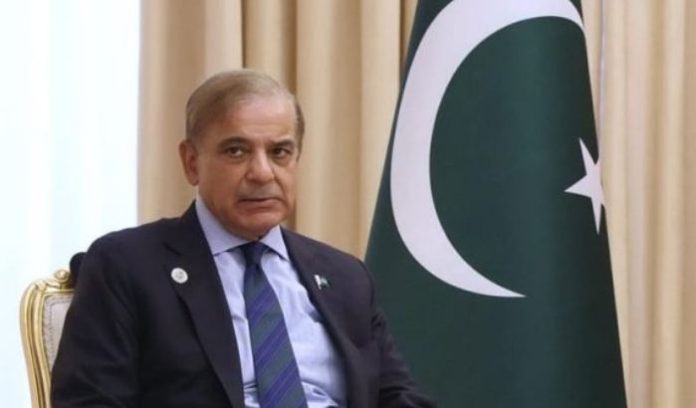
ISLAMABAD, SEPT 16 (DNA) – The President of Asian Development Bank (ADB) Masatsugu Asakawa alongwith a delegation called on Prime Minister Muhammad Shehbaz Sharif today.

While appreciating ADB’s long-standing and steadfast support to Pakistan, the Prime Minister informed the visiting President on a series of reforms introduced by the Government. The key reforms include enhancing tax revenues, improving financial sustainability of the energy sector, enhancing climate resilience, reduction in untargeted subsidies and scaling up social protection.

The Prime Minister emphasized that he is personally overseeing the progress of these reforms to ensure their successful implementation and long-term impact, underscoring the Government’s commitment to sustainable economic growth and stability.

The Prime Minister appreciated ADB’s generous support of over US$ 1.5 billion in response to the devastating floods of 2022. He showed Pakistan’s keen desire to work with the development partners in climate resilience projects including agriculture.

President ADB Mr. Masatsugu Asakawa in his remarks appreciated Pakistan’s long association with ADB as one of its founding members. He lauded the Government for undertaking comprehensive reforms and reaffirmed ADB’s continued support to Pakistan. He renewed support in Pakistan in infrastructure development, climate and resilience enhancement, and institutional reforms.

Federal Ministers for Planning & Development, Investment & Privatization, Economic Affairs, Finance & Revenue and other senior government officials also attended the meeting.

The Prime Minister and President of ADB also witnessed the loan signing of the Sindh Emergency Housing Reconstruction Project amounting to US$400 million and Khyber Pakhtunkhwa Rural Roads Development Project worth US$320 million. Both these projects are part of the ADB’s flood commitments.

Pakistan cooperates with China advancing research in Medicine

Pakistan cooperates with China advancing research in Medicine

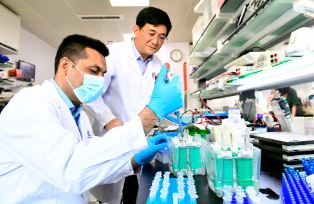
ISLAMABAD, SEP 16 (DNA) — Pakistan wished to further deepen cooperation with China and other nations in advancing research and innovation in Traditional Chinese Medicine (TCM). This was stated by Khalil Hashmi, Pakistani Ambassador to China while addressing here the 7th Belt and Road Forum for Traditional Chinese Medicine (TCM) Development. 

Officials from other countries also expressed the wish to further deepen cooperation with China and other nations in advancing research and innovation in TCM, according to a report published by China Economic Net (CEN). At the Forum, Bruno Masier, President of the World Trade Point Federation (WTPF), highlighted the crucial role of TCM in global healthcare systems.

“Traditional Chinese medicine has long played a vital role in healthcare, especially in China,” Masier stated. “Today’s forum is not only about exploring the development of TCM, but also about understanding how traditional medicine can contribute to the advancement of healthcare systems as a whole. 

We hope to see more growth in traditional medicine globally, fostering greater development in the medical field.” “To truly unlock the potential of TCM, we need to combine the diagnostic precision and advanced treatment technologies of Western medicine with the preventive and holistic healing strengths of TCM, providing more comprehensive healthcare services to people around the globe,” Hashmi noted.

Co-hosted by WTPF and the World Federation of Chinese Medicine Societies (WFCMS), the forum as part of the 2024 China International Fair for Trade in Services (CIFTIS) focused on promoting TCM and global health collaboration.

During the forum, several major developments were announced to enhance the global integration of TCM. These included the establishment of the Expert Committee of the Belt and Road Forum for Traditional Chinese Medicine Development, aiming to support the high-quality incorporation of TCM into the Belt and Road Initiative.

Additionally, the Belt and Road Traditional Chinese Medicine Global Tour was launched, involving renowned TCM experts and companies who will collaborate with regions in Southeast Asia, Latin America, Europe, and Africa. The forum also saw the signing of several international cooperation agreements on expanding TCM’s global reach. —DNA

Bilawal Bhutto Zardari extends Eid Milad-un-Nabi “P.B.U.H” greetings to Nation

Bilawal Bhutto Zardari extends Eid Milad-un-Nabi

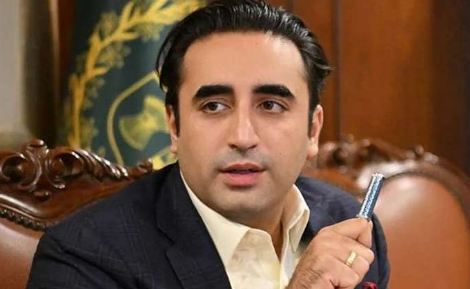
KARACHI/ISLAMABAD/LAHORE, Sept 16 /DNA/ – Chairman Pakistan People’s Party (PPP) Bilawal Bhutto Zardari has extended heartiest greetings to the entire nation on the blessed occasion of Eid Milad-un-Nabi (Peace Be Upon Him).

In a press release issued by the Media Cell Bilawal House, the PPP Chairman remarked that the Holy Prophet Muhammad (Peace Be Upon Him) came as a beacon of mercy for all of humanity, and every aspect of his life serves as a guiding light for us. He emphasized that the message of the Prophet (Peace Be Upon Him) transcends time, place, and borders, offering wisdom and guidance for all generations and communities.

Chairman Bilawal Bhutto Zardari urged the nation to work towards building a society grounded in the teachings of the Holy Prophet (Peace Be Upon Him), one where peace, tolerance, and brotherhood prevail. “We must follow the example of our beloved Prophet (Peace Be Upon Him) by striving to bring ease and comfort to the lives of others,” he said. He concluded by encouraging everyone to embody the values of compassion and kindness that the Prophet (Peace Be Upon Him) stood for, in both personal and collective efforts.

Elang Strike-II: Pakistan, Indonesian forces conduct counterterrorism drills

Elang Strike-II: Pakistan, Indonesian forces conduct counterterrorism drills

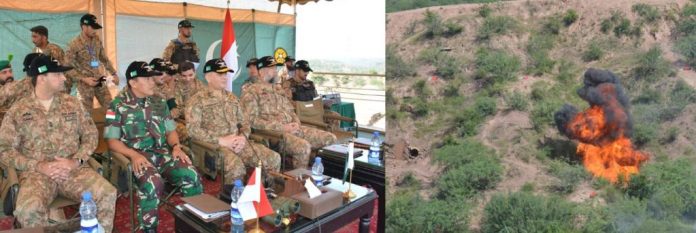
RAWALPINDI: /DNA/ – Pakistan-Indonesia Joint Exercise Elang Strike-II was conducted between Pakistan Army and Indonesian Armed Forces at National Counter Terrorism Centre (NCTC), Pabbi today.

Exercise Elang Strike-II is second exercise in Counter Terrorism domain between both the countries.

A week-long Exercise Elang Strike-II commenced on 08 September 2024. The exercise was aimed at mutually beneficial sharing of experience and training methodology between the two armies which have strong brotherly relations.

At the closing ceremony, General Officer Commanding 17 Division was the Chief Guest. Colonel Budi Wirman, Defence Attaché of Indonesia also attended the closing ceremony.

The troops displayed highest standards of professional excellence during the conduct of exercise.

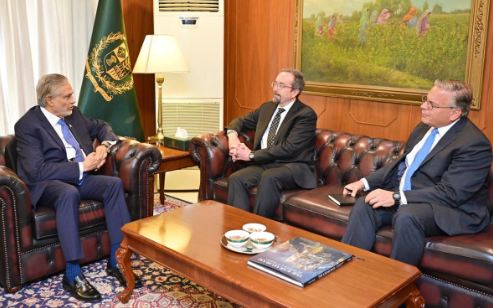
US Under Secretary John Bass and Elizabeth Horst meet Deputy PM Ishaq Dar

US Under Secretary John Bass and Elizabeth Horst meet Deputy PM Ishaq Dar

ISLAMABAD, SEPT 16 (DNA) – The US Under Secretary of State John Bass and Principal Deputy Assistant Secretary, Elizabeth Horst called on Deputy Prime Minister and Foreign Minister, Mohammad Ishaq Dar in his office today.

They discussed Pakistan-US bilateral relations and ongoing collaboration projects. DPM/FM underlined the importance of positive and productive engagement between Pakistan and the United States.

China edges past Pakistan in Asian Hockey Cup semi final shoot-out thriller

China edges past Pakistan in Asian Hockey Cup semi final shoot-out thriller

Asian Hockey Cup: Semin Final: China defeat Pakistan on Penalty shoot-out. Earlier Pakistan, China Semi Final ends 1-1 draw. Pakistan has been quite weak on shoot-outs, so the result was quite predictable. Pakistan has to do something about penalty corners and penalty shoot-outs. These areas are extremely weak.

IHC seeks govt’s clarification on Imran Khan’s possible military trial in May 9 case

Imran Khan Remains in Good Spirits Despite Challenging Conditions

ISLAMABAD: The Islamabad High Court (IHC) on Monday once again sought clarification from the government over Pakistan Tehreek-e-Insaf (PTI) founder Imran Khan’s possible military trial over his alleged involvement in the May 9 riots.

IHC’s Justice Miangul Hassan Aurangzeb presided over the hearing on PTI founder’s petition against the military trials in the May 9 case that witnessed military installations being vandalised following his arrest in a graft case last year.

“There is no clear answer from the government. I am giving you time to bring instructions in this regard,” said Justice Aurangzeb during the hearing today.

The court ordered the Ministry of Defence to give a clear stance on the next hearing after which the ministry sought time. The hearing was adjourned till next Tuesday (September 24).

The former prime minister’s pleas came in the wake of statements by government high-ups including Defence Minister Khawaja Asif and Law Minister Azam Nazeer Tarar that fuelled rumours of his military trial.

It is pertinent to know that in July last year, an anti-terrorism court in Lahore — in a four-page written verdict — said that reasonable grounds existed to connect the PTI founder with the May 9 incidents.

It is to be noted that the Pakistan Democratic Movement (PDM) led government had initiated military trials of those involved in targeting state and military installations in last year’s riots.

The matter ended up in the Supreme Court which declared civilians’ trials in military courts null and void in its October 23, 2023, verdict which was later suspended by the apex court in a 5:1 majority ruling in December.

The majority order was announced on the intra-court appeals filed by the federal and provincial governments and the defence ministry against the top court’s verdict.

The December 13, 2023, verdict stated that military court trials would be conditioned on the apex court’s final verdict on the intra-court pleas.

During the hearing today, Justice Aurangzeb asked the procedure of handing someone in military custody. “The Ministry of Defence has no information of military detention and trial till date,” he remarked, adding that nothing regarding the matter has been brought before the ministry.

The additional attorney general said: “If any request is made, action will still be taken according to the law.”

At this, Justice Aurangzeb said he has nothing to proceed with in this case. The court then sought the procedure of civilians’ trial in military court from the defence ministry.

The defence ministry’s representative said they have a “very clean procedure”.

“If a notice is issued to PTI founder before the military trial, then the case will be wrapped up,” said Justice Aurangzeb, adding that the civil court will first frame the charge, according to the procedure.

If the trial court says that the case is to be sent to the military court, then the notice should be issued first, he added.

Scheme Behind Constitutional Amendments

Qamar Bashir

Qamar Bashir

The government and parliament, working in concert, appear bent on laying landmines for democracy and its institutions—actions that are more likely to backfire on them than harm institutions like the judiciary, the army, or others.

The government and parliament, which have a vested interest in clipping an independent judiciary, have resorted to a three-pronged strategy aimed at curbing judicial independence. First, they seek to prevent Justice Mansoor Ali Shah, the architect of the restoration of the PTI as a political party in parliament and provincial assemblies, from becoming the next Chief Justice. Justice Mansoor is known for being resolute and independent, and his ascension could challenge the government’s interests, particularly in implementing the Supreme Court’s decision to restore PTI and allocate seats to the party. Furthermore, his leadership could accelerate the work of election tribunals, currently stalled by stays granted by Justice Qazi Faez Isa.

Second, the government seeks to almost double the number of Supreme Court judges, likely to increase the presence of judges they have cultivated for political purposes. Lastly, the most serious and unconstitutional attempt involves stripping the superior courts of their independence and bringing them under the control of the executive. These actions not only undermine the judiciary but also threaten the fundamental principles of democracy by eroding the separation of powers.

The government, in its haste to bring the judiciary under its control, seems to have overlooked a fundamental constitutional principle: in parliamentary democracies, the three pillars of the state—the executive, legislature, and judiciary—perform their mandated functions independently of each other. Each branch is equal in status and independence, and none reports to the other in terms of its organizational or executive decisions. All three pillars are accountable only to the President, who serves as the head of state. Even when these branches need to communicate, they do so through the office of the President. For instance, the President administers the oath of office to both the Prime Minister and the Chief Justice, convenes sessions of the National Assembly and Senate, and ultimately gives assent to bills, allowing them to become law.

While the government’s attempt to enlarge the strength of the Supreme Court may carry some logic, its attempt to give the Prime Minister the power to appoint the Chief Justice, restrict the tenure of the Chief Justice to three years, and hold judges of the superior courts accountable for their performance is absurd, outrageous, and contrary to the norms of parliamentary democracy. Such moves violate the principle of separation of powers between the three pillars of the state. Therefore, the best course of action for the government is to halt these shortsighted constitutional amendments, as it is likely to be struck down by the Supreme Court for being in conflict with the general scheme, structure, and intent of the Constitution.

In established democracies, the judiciary operates independently to check the powers of the executive and legislature. In the UK, for instance, judges are appointed through independent bodies like the Judicial Appointments Commission, ensuring merit-based appointments without political interference. Similarly, in India, the Collegium System enables senior judges to appoint their peers, safeguarding the judiciary’s independence. Granting the Prime Minister such appointment powers would seriously erode this balance and compromise the judiciary’s autonomy.

Limiting the Chief Justice’s tenure to three years is equally problematic. In democracies like Australia and Canada, the Chief Justices are appointed until a mandatory retirement age, allowing them to make long-term judicial reforms and ensure continuity in legal governance. A three-year term would allow frequent political interference in judicial appointments, undermining the stability and independence necessary for a well-functioning judiciary. Short-term tenures would make it easier for the executive to influence judicial decisions by frequently appointing new Chief Justices, diminishing the role of the judiciary as an impartial and independent body.

Furthermore, holding judges accountable to the executive or political entities contradicts the norms of judicial accountability, which should remain within the judicial framework itself. In countries like Germany and France, judges are accountable to higher judicial bodies or peer committees, maintaining their independence from the executive. Political oversight of the judiciary would open doors for manipulation, especially in politically sensitive cases, eroding public trust in the courts and turning the judiciary into a tool of the government, as seen in Hungary and Poland where similar reforms led to the weakening of democratic values.

Through these amendments, the government or establishment aims to reduce the judges of the superior judiciary to the level of civil servants, who are at the mercy of the government in terms of their postings to valuable and powerful positions and are vulnerable to punishment if they fail to comply with the legal or illegal demands of the government or establishment. As a result of such manipulative control over civil servants, the entire civil service has been weakened, becoming inefficient, self-serving, and focused on seeking power and influence rather than serving the public and the nation. This leads to a system driven by personal whims, desires, and vested interests, rather than the rule of law. God forbid, if this amendment is passed in its current form, it would spell the end of parliamentary democracy and usher in the worst form of dictatorship.

Ironically, a parliament accused of consisting of members who were selected rather than elected, and who allegedly came to the assemblies based on manipulated and falsified Form 47 results, lacks the moral standing to introduce constitutional amendments until the allegations of election rigging and issues surrounding Form 47 are resolved.

Similarly, the government is composed of ministers who are either unelected, or in the case of those elected, are alleged to have won their seats through manipulation of Form 47. The government is inefficient, with the country facing a severe law and order crisis, a surge in terrorism, rampant smuggling, disastrous financial management, dried-up foreign investment, skyrocketing inflation, and a brand value that ranks just above Afghanistan from the bottom. With these issues, how can the government be expected to bring meaningful reform to the judiciary? If the government had been functioning efficiently and delivering results, it might have some justification for initiating judicial reforms or holding the judiciary accountable for its performance.

In conclusion, these proposals would distort the balance of power in a parliamentary democracy, erode judicial independence, and weaken the separation of powers essential for democratic governance. Public trust in the judiciary and its role as an independent arbiter of the law would be severely compromised if such reforms were implemented, making it crucial to uphold the principles of judicial autonomy and democratic integrity.

Qamar Bashir

Former Press Secretary to the President

Former Press Minister to the Embassy of Pakistan to France

Former MD, SRBC, CEO, ATV

The Baluchistan Crisis

The Baluchistan Crisis

Dr. Muhammad Aram Zahreer

The recent escalation in terrorism within Pakistan has cast significant doubts on the efficacy of the state’s security measures, especially as the country embarks on one of its most costly counter-terrorism initiatives to date, Operation Azm-e-Istekham (Resolve for Stability). This operation is designed to restore stability in regions plagued by insurgency and terrorism. However, recent events in Baluchistan, the most volatile and conflict-ridden region of Pakistan, have starkly highlighted the limitations and challenges of this approach.

Last week, Baluchistan was the epicenter of a series of meticulously coordinated violent attacks that resulted in the deaths of over 70 individuals and caused extensive damage to critical infrastructure. The Baloch Liberation Army (BLA), an ethnic separatist group that has been engaged in a protracted insurgency against the state for over a decade, claimed these attacks.The BLA’s recent actions have not only caused immediate harm but have also sent a powerful message about their growing capability and reach.

The emergence of videos online showing convoys of BLA militants openly brandishing weapons and moving unchallenged through various parts of Baluchistan’s westernmost province, where they were seen celebrating with locals, has further exacerbated concerns about the state’s ability to maintain control. These images, combined with the insurgents’ increasing success in closing roads and extending their influence into urban areas, have created a widespread perception that the state is gradually losing its grip on the province. This perception of declining state control is deeply troubling and raises questions about the future stability of Baluchistan and, by extension, Pakistan.

In response to these developments, the Pakistani government, which has historically employed a heavy-handed approach to managing the Baluchistan issue, swiftly convened an emergency meeting of the top national security committee. During this meeting, the government reiterated its commitment to forcefully suppressing those who threaten the region’s peace and stability. The military has already initiated intelligence-based retaliatory operations, aimed at targeting the insurgents with precision. Additionally, the government has pledged billions of rupees to enhance the counterterrorism capabilities of law enforcement agencies.

These measures, however, are not without their complications. For the first time, the federal government has publicly acknowledged a critical shortage of appointed personnel, which is severely hampering its counterterrorism efforts. In an unexpected and controversial move, the government has decided to depute officials from other provinces, particularly Punjab, to take up posts in Baluchistan. This decision has sparked fierce criticism and is widely viewed as an attempt to marginalize the local Baloch population by denying them the governance and policing of their own province.The federal government’s recent actions have added to the already numerous grievances harbored by the Baloch population against state security agencies.

These agencies have long been accused of engaging in enforced disappearances, extrajudicial killings and other severe violations of basic human rights. The government’s handling of Baluchistan’s natural resources has also been a point of contention. The Baloch population has repeatedly accused the government of exploiting the province’s resources while failing to provide adequate local employment opportunities, particularly in the context of the multibillion-dollar China-Pakistan Economic Corridor (CPEC) project. This project, which is a cornerstone of Pakistan’s economic strategy, has been marred by allegations of corruption and mismanagement, further fueling local discontent.

In a recent escalation of tensions, a Baloch human rights group organized region-wide protests, effectively blocking access to Gwadar city’s Chinese-operated deep-sea port. These protests, which have garnered significant attention, are seen as a direct challenge to the government’s authority and a demand for greater autonomy and rights for the Baloch people. The BLA’s armed attacks appear to be coordinated with these ongoing protests, aiming to pressure the government into addressing the longstanding grievances of the Baloch population. The timing of these attacks and protests is particularly significant as Pakistan prepares to host a crucial Shanghai Cooperation Organization (SCO) summit in October. The civil-military regime has characterized the recent wave of insurgency as an attempt by hostile foreign elements to sabotage the upcoming summit and has described the protesters as proxies for terrorists, labeling them as the political wing of the Baloch separatist militants.

The government’s conflation of non-violent protests with armed militancy has exacerbated the situation and risks further alienating the Baloch population. This lack of distinction between legitimate expressions of dissent and violent insurgency increases the likelihood of escalating violence in the region. The BLA, through its recent attacks, has significantly raised its profile, positioning itself as a formidable rebel movement capable of challenging Pakistani security forces. This, in turn, has bolstered its appeal among the ethnic Baloch population, particularly those who are disillusioned with the state and its policies. The BLA’s ability to exploit the genuine grievances of the Baloch people has helped legitimize its cause and expand its recruitment efforts.

Another critical factor in the strengthening of the BLA is the increasingly active participation of women in their ranks. The recruitment of women as suicide bombers is a stark indication of how deeply the BLA’s cause has permeated the province’s society. This development also reflects the militants’ growing ability to mobilize and radicalize a broader segment of the population, including women and youth. In a province where 65% of the population is under the age of 30, the many frustrated, unemployed Baloch youth are prime recruits for the BLA. The involvement of women in the insurgency marks a significant and troubling evolution in the conflict, suggesting that the BLA’s influence is expanding and becoming more deeply rooted in Baloch society.The government’s reliance on a predominantly military-focused strategy to address the challenges posed by the Baloch uprising is unlikely to succeed in the long term. A more holistic approach is urgently needed—one that incorporates both hard and soft power strategies. This approach should focus on addressing the root causes of unrest, including the implementation of justice reforms, curbing corruption and improving the socioeconomic conditions in Baluchistan. The province’s high poverty and mortality rates, poor literacy levels and insufficient infrastructure and job opportunities are all critical issues that need to be addressed. Failure to do so will likely result in the continued alienation of the Baloch population and play directly into the hands of both internal and external forces seeking to destabilize Pakistan.

The current policies being implemented in Baluchistan are not only unwise but also potentially dangerous. They threaten the integrity of the Pakistani state and are unlikely to bring the desired stability, security and development to the province. If the government continues on its present course, the situation in Baluchistan could deteriorate further, with potentially catastrophic consequences for Pakistan as a whole. The need for a more nuanced and comprehensive approach to the Baluchistan issue cannot be overstated. The stakes are too high for the government to continue relying solely on military solutions. A sustainable peace in Baluchistan can only be achieved through genuine engagement with the Baloch people, addressing their grievances and providing them with a stake in their own governance and future.

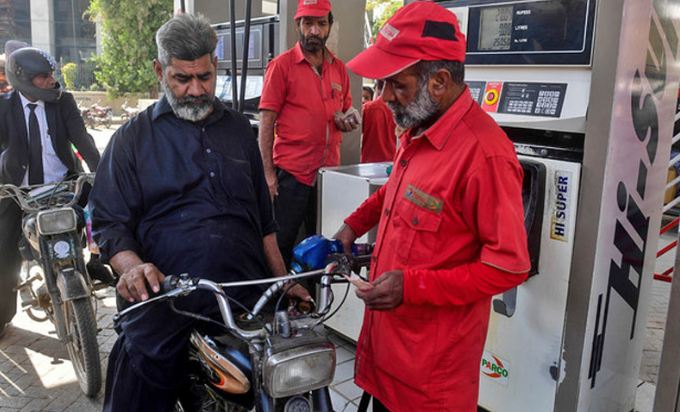
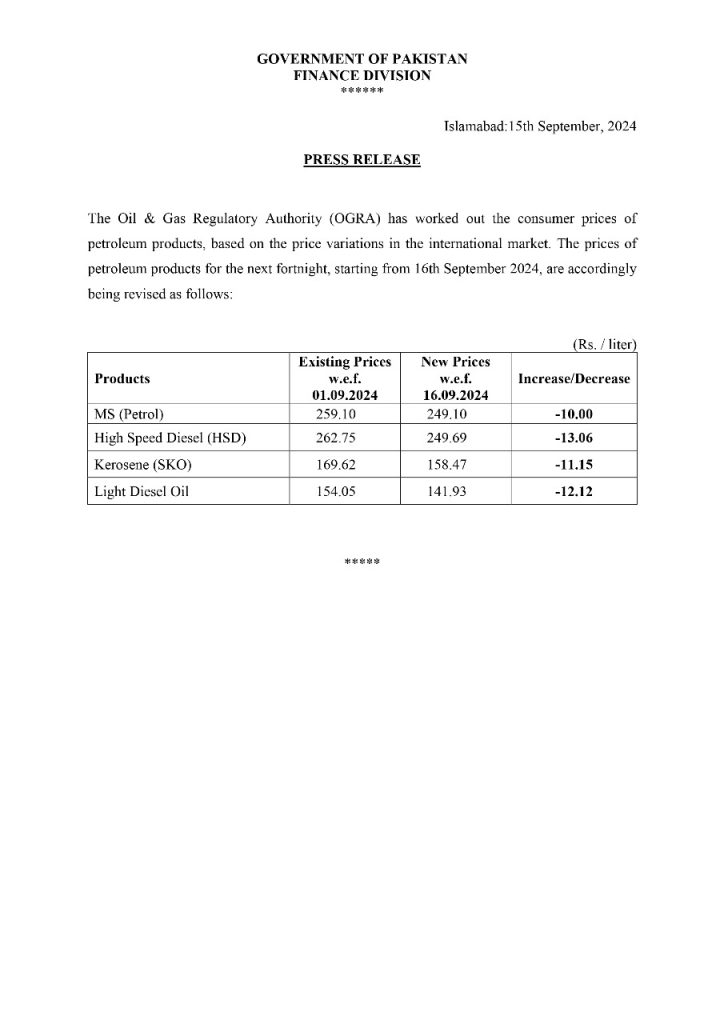
Govt announces massive reduction in petrol, diesel prices

Govt announces massive reduction in petrol, diesel prices

ISLAMABAD, SEPT 15: A sigh of relief for inflation-stricken masses as Prime Minister Shehbaz Sharif-led government on Sunday announced a massive reduction in petrol and diesel prices from September 16 for the next fortnight.

The finance ministry in a notification stated that petrol price has been reduced by Rs10 per litre while diesel price has been slashed by Rs13 per litre.

Stay Connected

64FansLike
60FollowersFollow

Latest Reviews

Exchange Rates

USD - United States Dollar
EUR
1.17
GBP
1.34
AUD
0.67
CAD
0.73