Home Blog Page 598

Malaysian HC greets Pakistan’s New Foreign Secretary, eyes stronger bilateral ties

Malaysian HC greets Pakistan's New Foreign Secretary, eyes stronger bilateral ties

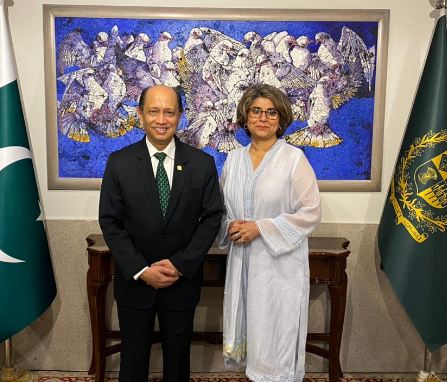
ISLAMABAD, SEPT 14: (DNA) – Ambassador Dato’ Mohammad Azhar Mazlan, High Commissioner of Malaysia to Pakistan, paid a courtesy call on the newly appointed Foreign Secretary of Pakistan, Ambassador Amna Baloch on On 13 September 2024, who officially assumed her post on 11 September 2024.

During the meeting, Ambassador Dato’ Azhar extended his warmest congratulations and heartiest felicitations to Her Excellency Ambassador Amna Baloch on her appointment as Foreign Secretary. Considering her extensive diplomatic experience, including her tenure as High Commissioner of Pakistan to Malaysia from 2019 to 2023, Ambassador Dato’ Azhar expressed his confidence that the excellent bilateral relationship between Malaysia and Pakistan will be elevated to greater heights.

Both sides held extensive constructive discussion aimed at advancing the strategic partnership between the two nations. They explored new collaboration in emerging areas such as automotive industry, blue economy, education, energy production and technical and vocational education and training (TVET) for skilled and semi-skilled workers. Ambassador Dato’ Azhar emphasised that despite the highest bilateral trade recorded at USD1.8 billion previously, there existed immense potential for growth, and that both countries should put efforts to increase the figure through new trade and investment initiatives.

In the regional context, Ambassador Dato’ Azhar highlighted the opportunities presented by ASEAN, particularly Malaysia’s strategic position as a gateway to the ASEAN market, offering immense potential for Pakistan to expand its economic engagement in the region. Malaysia would assume the chairmanship of ASEAN in 2025. Both sides also touched on issues of mutual concern, including the situation in Palestine and Afghanistan.

As both sides were preparing for the upcoming visit by the Honorable Prime Minister of Malaysia to Pakistan, Ambassador Dato’ Azhar acknowledged the importance of the visit in reinvigorating relations between the two nations. Given the last Prime Ministerial visit five years ago, he stressed that the timing was crucial for strengthening ties. The meeting also touched on potential deliverables of the visit, focusing on trade, halal cooperation, air connectivity, and tourism sector.

The meeting marks a renewed step towards further deepening cooperation and cementing the long-standing fraternal ties between Malaysia and Pakistan. Considering that both Foreign Secretary and High Commissioner have had the privilege of working together during the former’s stint in Malaysia and the latter as Undersecretary at the Ministry of Foreign Affairs Malaysia overseeing Malaysia-Pakistan relations, the atmosphere of the meeting was warm and friendly.

Business Forum at ICCI highlights UAE-Pakistan Investment Potential

Business Forum at ICCI highlights UAE-Pakistan Investment Potential

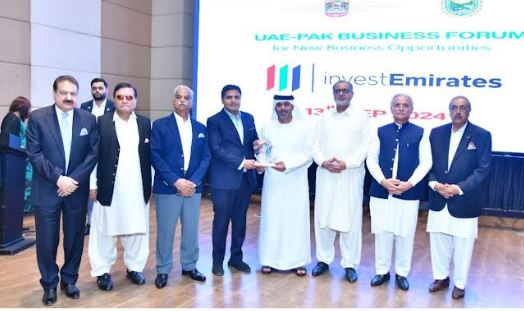
ISLAMABAD, SEPT 14: (DNA) – Ambassador Hamad Obaid Alzaabi of the United Arab Emirates (UAE) highlighted the deep-rooted bilateral relationship between Pakistan and the UAE, built on mutual respect, cultural ties and strong economic cooperation. Addressing the UAE-Pakistan Business Forum, themed “Invest Emirates: An Opportunity for Inbound and Outbound Investments,” he emphasized the growing trust-worthy strategic partnership between the two nations.

Alzaabi showcased multiple investment opportunities in the UAE, encouraging business-to-business collaboration between Pakistani and Emirati entrepreneurs. He praised the Islamabad Chamber of Commerce and Industry (ICCI) for its support in organizing the Forum, which aims to enhance linkages between the business communities of both countries.

ICCI President Ahsan Zafar Bakhtawari acknowledged the UAE as Pakistan’s third largest trading partner and a significant source of remittances, contributing to Pakistan’s economic stability. He highlighted the robust and mutually beneficial relationship between the two countries, encompassing various sectors such as investment, infrastructure development, and regional cooperation.

Bakhtawari described the UAE as the most favorite destination of Pakistani businessmen and invited the UAE business community to explore lucrative investment opportunities in Pakistan, particularly in tourism adding that he himself led a delegation of over 160 businessmen to UAE in the beginning  of this year  and organized  a successful Business Opportunities Conference to explore the investment panoramas in that country.

ICCI President said that the Pakistani diaspora is enthusiastically contributing to the development of the UAE and that its skill development will be a value addition in its performance enabling it to have reasonable wages.

Chairman Founder Group ICCI Khalid Iqbal Malik said that UAE with its robust economy, innovative spirit and global hub for trade and commerce offers immense potential for Pakistani businesses and investors. He went on to say that together we can create a future where both the nations can thrive, grow and prosper.

The Forum featured a presentation on investment opportunities and incentives offered by the UAE government to foreign investors. Head of Economic Division UAE Embassy Mr. Mohammad Alkaitoob also addressed the gathering.

ICCI Vice President Engr. Azhar ul Islam Zafar in his vote of thanks by mentioning the close relationship between the two countries expressed the hope that the Forum will go a long way  in further strengthening this relationship.

Earlier ICCI member Ms. Naeema Ansari apprised the attendees about the purpose of the Forum.

Those prominent among the participants included  Ambassador of Iraq, Hamid Abbas Lafta DHM  Palestine, Nader K. Alturk,  United Business Group Secretary General Zafar Bakhtawari, former Presidents ICCI Mian Akram Farid,  Mohammad Ejaz Abbasi, Mian Shaukat Masood, business community leaders,  ICCI Executives and members.

Asian Hockey: India beat Pakistan 2-1 in a thrilling match

Asian Hockey: India beat Pakistan 2-1 in a thrilling match

Both teams have already qualified for the semi finals

DNA

CHINA: Asian Hockey Championship: Pakistan lose to India 2-1. Pakistan played extremely well and contained India to just 2 goals. India is No 5 in World ranking while Pakistan is No 16.

Both teams have already qualified for the semi finals.

India was expected to perform well but valiant Pakistani side contained the Indian from scoring more goals. Pakistan team exhibited excellent field play however on penalty corner the green shirts could not per form well.

ALSO READ: 3 key players of Pak national hockey team seek political asylum in Malta

Abu Bakar got a knee injury hence he had to quit the game. The alternate drag flicker Sufian could not convert penalty corners into goals.

Striker Hannan, Zikria played well. Rana Waheed got 10-minute suspension therefore the team played with 10 players in the last 10 minutes of the game.

ALSO READ: PHF slaps lifetime ban on hockey players who sought asylum in Europe

Pakistan also changed goalkeeper after the first quarter and gave chance to Muneed by replacing him with Abdullah. Muneed played well and saved a few goals. India scored all goals two goas on the penalty corner through its captain who happens to be the world NO 1 flicker.

ALSO READ: Rising Stars Hockey player Jawairia gets rousing welcome

Trump or Harris: No Respite for Palestine

Qamar Bashir

Qamar Bashir

A day after Hamas’ unprecedented attack on Israel on October 7, 2023, I penned an article titled “Hamas Stunted Israel,” in which I warned that the Israeli response would be robust, devastating, and exemplary. I predicted that once the conflict began, it would not subside quickly. For Israel, a full-scale assault on Hamas would significantly endanger Palestinian civilians, leading to a global backlash against civilian casualties. This conflict was likely to escalate into multiple fronts, involving Hamas, Fatah, Hezbollah, and even Israel’s own Arab citizens. Given the historical context of the Palestine-Israel conflict, the impotence and vulnerabilities of the Muslim world, their dependence on the USA, and some knowledge of Middle Eastern politics, this outcome seemed inevitable.

Ironically, while three of the five major superpowers support Israel in its military actions, resulting in indiscriminate violence against Palestinians, the remaining superpowers issue rhetoric and call for a permanent ceasefire without applying any tangible pressure through kinetic, economic, trade, or investment measures.

This has emboldened Israel to continue its pursuit of Palestinians and those supporting or facilitating them, particularly in the Middle East but also globally, with total impunity. Amid this crisis, global attention has shifted to a fundamental question that could reshape international dynamics: “Who will be the next President of the USA?”

Kamala Harris and Donald Trump have notably different approaches to the Israel-Gaza conflict and the broader West Bank situation, yet the ultimate outcomes might appear similar. Kamala Harris supports Israel’s right to self-defense, particularly in response to the Hamas attacks on October 7, 2023, which resulted in significant Israeli civilian casualties. She also acknowledges the humanitarian crisis in Gaza and has called for a ceasefire, emphasizing that how Israel conducts its defense is crucial. Despite increasing calls from progressive factions, Harris has not proposed conditioning U.S. military aid to Israel. She remains committed to working towards a two-state solution that ensures self-determination for both Israelis and Palestinians.

However, the fate of this stance may mirror the situation in Indian-administered Jammu and Kashmir (IIOJ&K), where India has integrated the disputed territory with mainland India, effectively imprisoning its 12 million residents and stripping them of basic rights. The outcome for IIOJ&K and the Israeli-Palestinian conflict may thus become historical examples of larger powers overpowering and subsuming smaller, weaker entities, leading to their eventual marginalization and extinction.

Donald Trump is even more clear and determined to end Palestine from the world map offering near-unconditional support for Israel in its killing spree, without providing any solution no matter how trivial and impractical.

When he was the president his record spoke for itself. He moved the U.S. embassy to Jerusalem, recognized Israel’s annexation of the Golan Heights, and withdrew from the Iran nuclear deal, actions that showcased his alignment with Israeli right-wing policies. He even criticized Harris as being anti-Israel, positioning himself as the stronger defender of Israel without any notable concerns for Palestinian humanitarian issues. One thing is common in both of them, neither has shown a willingness to leverage U.S. influence to pressure Israel into stopping the ongoing military operations in Gaza.

The other two superpowers, China and Russia, which have positioned themselves as maintaining independent stances on global conflicts, advocate for a two-state solution to the Israeli-Palestinian conflict but do so without exerting significant influence. China, while supporting Palestinian statehood in international forums, also aims to build economic ties with both Israel and Palestine, balancing its interests in the region.

Russia’s position is somewhat similar to China’s in that it supports a two-state solution and has historically maintained a relationship with both Israel and the Palestinian territories. Russia has also been involved in peace negotiations and has sought to position itself as a mediator in the conflict but again without having any appetite for kinetic, economic or financial commitments.

The European Union is a strong proponent of a negotiated two-state solution and has been critical of actions that it views as undermining the prospects for peace, such as settlement expansion in the West Bank. The EU provides substantial humanitarian aid to the Palestinians and supports diplomatic efforts to achieve a peaceful resolution.

India, though not a declared superpower, has for the past few years mustered sizable and impressive international clout. Surprisingly, India has traditionally supported the Palestinian cause and advocates for a two-state solution. However, in recent years, India has also developed closer ties with Israel, particularly in areas like defense and technology, reflecting a balancing act between its historical support for Palestine and its growing relationship with Israel.

Countries like Turkey and Iran have their own distinct positions. Turkey has generally supported the Palestinians and has been critical of Israeli policies, while Iran is a strong supporter of Palestinian resistance groups and is critical of Israel, reflecting its broader regional strategies.

Regardless of who wins the most powerful position on the world stage, or whatsoever it is the position taken by other super powers and important countries, Israel is likely to remain unaffected and shielding from any aggressive and kinetic or financial response and will continue to pursue complete annihilation of palestine population.

We have witnessed the futility of the United Nations and the toothlessness of the International Court of Justice. Resolutions passed by the UN and verdicts issued by the ICJ have been blatantly disregarded by Israel with total impunity, once again making it abundantly clear that without the backing of the United States, UN resolutions and ICJ rulings hold little value or consequence for aggressive parties, such as India in the case of Indian Illegally Occupied Jammu and Kashmir (IIOJ&K), and Israel in the Israel-Palestine conflict in the Middle East.”

Meanwhile, Palestinians are left to weigh their chances of survival under either Trump or Harris. Their hopes are rapidly fading in the complete darkness that has engulfed them. With the international community largely silent and the UN and ICJ completely blunted, the beleaguered and helpless Palestinian civilians find themselves with no one to turn to but Allah, the Almighty.

Qamar Bashir

Former Press Secretary to the President

Former Press Minister to the Embassy of Pakistan to France

Former MD, SRBC, CEO, ATV

No morning papers on Sept 18 as APNS publications observe Eid Milad un Nabi “P.B.U.H” holiday

No morning papers on Sept 18 as APNS publications observe Eid Milad un Nabi “P.B.U.H” holiday

KARACHI, SEPT 13 (DNA) – The All Pakistan Newspapers Society has announced that member publications of the All Pakistan Newspapers Society will observe one closed holiday on Tuesday, September 17, 2024 on account of Eid Milad un Nabi “P.B.U.H”.

Consequently, there will be no morning newspapers on Wednesday, September 18, 2024  whereas the evening newspapers not appearing on Tuesday, September 17, 2024 may bring out their editions on Wednesday, September 18, 2024, if they so desire.

EU Special Envoy on freedom of religion or belief concludes official visit to Pakistan

EU Special Envoy on freedom of religion or belief concludes official visit to Pakistan

ISLAMABAD, Sept 13: /DNA/ – Ambassador Frans van Daele, Special Envoy for the promotion of freedom of religion or belief (FoRB) outside the European Union, has concluded his week-long visit to Pakistan. FoRB is a key priority for the EU, including in the context of the strategic engagement with Pakistan.

During the visit, he met Federal and Provincial Government officials, the Parliament, religious leaders, Non-Government and Civil Society Organisations, human rights defenders and local communities, to engage and exchange on the state of freedom of religion and belief in Pakistan and to foster the respect for diversity of religions and beliefs.   

In his meeting with Chairman Senate Syed Yousuf Raza Gillani; National Assembly Speaker Sardar Ayaz Sadiq; Senator Azam Nazeer Tarar, Minister for Law and Justice, Human Rights and Parliamentary Affairs; Federal Minister for Religious Affairs Chaudhry Salik Hussain; the Special Envoy enquired about the challenges of freedom of religion or belief in Pakistan and mentioned areas of concern, in line with the last GSP+ monitoring report of November 2023.

The Special Envoy noted that the next GSP+ monitoring mission is expected in early 2025. He encouraged Pakistani authorities to continue implementing the relevant international conventions to facilitate Pakistan’s reapplication for the trade scheme once the new Regulation on GSP is in force. In his interactions with interlocutors, Ambassador van Daele underlined the EU’s continued support for and interest in enhanced cooperation with Pakistan. 

Ambassador van Daele began his visit in Punjab, where he engaged with local communities in Jaranwala and Rabwah. In Lahore, he held meetings with Sardar Ramesh Singh Arora, Minister for Minorities Affairs, Government of Punjab; and Dr. Usman Anwar, Inspector General of Police Punjab.

He also expressed his appreciation for the Ministry of Foreign Affairs’ facilitation of his visit during a meeting with Pakistan’s newly appointed Foreign Secretary, Ms. Amna Baloch.

The mandate of the Special Envoy involves raising awareness and engaging with state and non-state actors, civil society, churches, faith-based and religious organisations, as well as non-confessional organisations in order to prevent and address violations of the freedom of religion and belief.

KfW and AKF strengthen partnership to support Pakistani entrepreneurs

KfW and AKF strengthen partnership to support Pakistani entrepreneurs

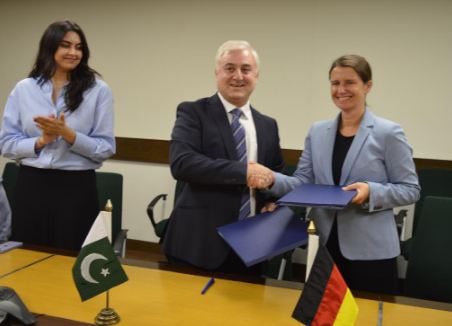
ISLAMABAD, SEPT 13 (DNA) – KfW Development Bank and the Aga Khan Foundation (AKF), in collaboration with Aga Khan Rural Support Programme (AKRSP), and Accelerate Prosperity (AP) have formalized their partnership to support entrepreneurial culture in Pakistan.

The agreement, signed today at the AKF office, marks the official launch of the “Start-up Pakistan” initiative. This groundbreaking project is expected to lead to improved job creation, innovation and economic resilience with a transformative impact on the entrepreneurial landscape of Pakistan.

Earlier in the day, KfW mission, including Mr. StephanOpitz – Member Management Committee,Dr. Bianca Clausen – Director Afghanistan, Pakistan, Iraq Cluster and Mr. Sebastian Jacobi – Director KfW Pakistan, visited the National Science and Technology Park (NSTP) housed at National University of Science and Technology (NUST) to gain insights into Pakistan’s burgeoning start-up ecosystem. The delegation met with various green and technology-driven start-ups to understand the entrepreneurial landscape and identify areas where the collaboration could make the most significant impact.

Start-up Pakistan, a €10 million initiativefunded by the German Government through KfW, aims to support start-up entrepreneurs by building capacities and models, developing business networks and secured tailored capital for businesses with a special focus on youth and women entrepreneurs. Over the next five years, the project will support start-ups in diverse sectors such as education, health technology, sustainable tourism, and green building, prioritizing businesses that promote digitization and environmental sustainability.

Speaking on the occasion, Dr. Clausen emphasized the importance of this collaboration: “We are thrilled to work alongside AKF and other key partners to strengthen Pakistan’s start-up ecosystem. This initiative will create opportunities for youth and women to innovate and build sustainable businesses, contributing to the economic well-being of communities across the country.”

Akhtar Iqbal, CEO AKF, Pakistanadded that, “With Pakistan’s economic challenges and climate vulnerabilities, we are thrilled to embark on this flagship initiative to create an enabling environment for start-ups and businessesto grow and scale.AKF is excited to strengthen its decades long partnership with Germany whichremains amongst our top partners in the country.”

Theagreement signed today cements the commitment of both KfW and AKF to foster job creation, innovation, and sustainable growth in Pakistan. By targeting pre-revenue and post-revenue start-ups, this project aims to create over 2,500 direct jobs and support 1,500 entrepreneurs, 50% of whom will be women and youth. It also contributes to Pakistan’s alignment with the United Nations’ Sustainable Development Goals (SDGs), particularly SDG 8 for Decent Work and Economic Growth and SDG 5 for Gender Equality.

Parliamentary Secretary Shazia Rizwan visits Public Relations Department in Rawalpindi

Parliamentary Secretary Shazia Rizwan visits Public Relations Department in Rawalpindi

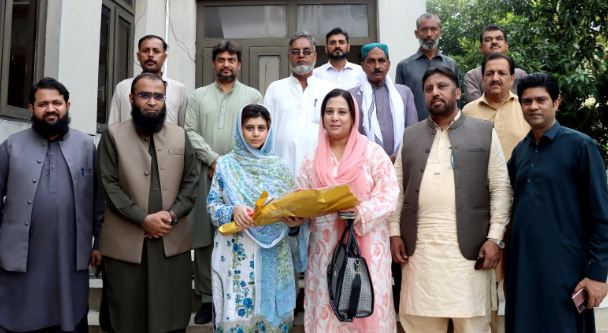
RAWALPINDI, Sept 13 (DNA) – Parliamentary Secretary Information and Culture Punjab Shazia Rizwan visited Public Relations Department Rawalpindi during which she was given a detailed briefing about the performance of the department and under construction the Information Complex Rawalpindi.


Director Information Rawalpindi Syed Iftikhar Ali Shah and officers of the department were also present on this occasion. Speaking on the occasion, Shazia Rizwan said that it is the vision of Chief Minister Maryam Nawaz to align information and culture with modern demands and a comprehensive strategy has been made to strengthen DGPR, its field offices and arts councils across the province.

She said that the protection and promotion of the great and historical culture of Punjab is the main priority of Chief Minister Maryam Nawaz and ‘we will preserve the rich culture of Punjab and make people aware of it’.


Shazia Rizwan said that a comprehensive policy is being prepared for the promotion of culture under which religious tourism and culture will be promoted so as to strengthen the environment of tolerance, inter-faith harmony and brotherhood. She said that she is getting awareness of the problems by visiting all the arts councils of Punjab.


Shazia Rizwan made a detailed inspection of the under-construction Information Complex Rawalpindi and expressed her satisfaction over the quality of work. She directed the timely completion of the project. On arrival at the DPR Rawalpindi office, officers and staff welcomed the Provincial Parliamentary Secretary and presented a bouquet.

The Complexity of China-North Korea Relations

The Complexity of China-North Korea Relations

Dr. Muhammad Akram zaheer

The relationship between China and North Korea is deeply intricate, shaped by a combination of historical ties, shared ideological foundations and strategic imperatives. The stability of the Korean Peninsula is a critical concern for Beijing, given its geographical proximity and the far-reaching security implications of any instability in the region. For China, the Korean Peninsula’s stability is not only about maintaining regional peace but also about preserving its influence in Northeast Asia.At the heart of China’s policy towards North Korea is the imperative to prevent a nuclear conflict. A nuclear war on the peninsula would have catastrophic consequences for all parties involved, including China. Such a conflict could lead to massive destruction, severe regional destabilization and a humanitarian disaster, all of which would be detrimental to Beijing’s economic and security interests. A nuclear exchange would likely draw in other powers, particularly the United States and its allies, heightening tensions between China and the West and further complicating the global security landscape.However, Beijing faces the additional challenge of ensuring that North Korea, despite its belligerence and defiance of international norms, does not collapse. The implosion of the North Korean regime would likely result in a flood of refugees crossing the Chinese border, creating significant economic and humanitarian challenges for China. Such a scenario would also risk the unification of the Korean Peninsula under a government aligned with the United States, potentially bringing American military forces closer to China’s borders. For these reasons, regime collapse in Pyongyang is viewed as a threat to China’s strategic interests.

China’s approach to North Korea is thus one of delicate balancing. On one hand, Beijing must curb Pyongyang’s provocative actions, particularly its nuclear ambitions, which have drawn widespread international condemnation and sanctions. On the other hand, China must continue to offer substantial economic and diplomatic support to ensure the regime’s survival. This support comes in the form of trade, food aid and energy supplies, all of which help sustain the North Korean economy and prevent the humanitarian crisis that could follow regime collapse.Diplomatically, China has often acted as a mediator between North Korea and the international community, particularly in the Six-Party Talks aimed at denuclearizing the peninsula. Although Beijing has supported some international sanctions against Pyongyang, it has also advocated for dialogue and engagement, wary of isolating North Korea entirely. This underscores China’s preference for stability over confrontation.At present, the divergent needs of North Korea and China shape their respective strategies and foreign policy agendas, revealing a complex and occasionally conflicting relationship between the two countries. North Korea, economically isolated and severely strained by international sanctions, finds itself in dire need of financial assistance, economic relief and humanitarian aid. The regime in Pyongyang remains heavily dependent on external support to sustain its economy, manage food shortages and provide essential services to its population. Given its geopolitical isolation, China remains one of North Korea’s few avenues for economic and diplomatic assistance.On the other hand, China’s current strategic priorities lie beyond simply supporting its North Korean neighbor. Beijing’s foremost concern is to revitalize its own faltering economy, which has encountered significant challenges in recent years. To this end, China is keen to attract U.S. investment and strengthen economic relations with major global players, particularly the United States. This economic cooperation is vital for ensuring China’s long-term growth and stability, especially as it navigates complex trade tensions and a shifting global economic landscape. Additionally, China recognizes the importance of cultivating stronger ties with South Korea, a key U.S. ally in the region. Beijing views improved relations with Seoul as a stepping stone towards stabilizing its relationship with Washington and reducing tensions on the Korean Peninsula.A more stable relationship with South Korea, in China’s view, could pave the way for progress on the broader issue of denuclearizing the Korean Peninsula. Beijing has long held a vested interest in preventing the proliferation of nuclear weapons in its immediate neighborhood, understanding that North Korea’s nuclear ambitions pose a direct threat to regional stability. A peaceful and denuclearized Korean Peninsula better serves China’s geopolitical interests, as continued tensions only heighten the risk of military conflict and destabilization.However, North Korea’s actions present a significant challenge to China’s strategic goals. Pyongyang’s frequent threats, missile tests and provocative behavior fuel regional insecurity and contribute to an arms race, prompting both South Korea and Japan to bolster their defense capabilities. Furthermore, these actions trigger a stronger U.S. military presence in the region, as Washington intensifies its security commitments to its East Asian allies. For China, this increased U.S. military presence is undesirable, as it threatens to undermine Beijing’s influence and security in the region.

In this context, Beijing finds itself in a delicate balancing act. While it seeks to maintain its historical ties with North Korea, it must also navigate the complexities of its broader strategic interests, which include stabilizing its relationship with the United States and ensuring regional security. What China does not need is for North Korea to exacerbate tensions by making threats, conducting missile tests, or escalating the regional arms race. Such actions are counterproductive to Beijing’s objectives and complicate its efforts to foster a more stable and cooperative regional environment.

Govt’s IPP capacity expansion plan likely to worsen circular debt crisis: IPS’ study

Govt’s IPP capacity expansion plan likely to worsen circular debt crisis: IPS’ study

ISLAMABAD, SEPT 13: /DNA/ – The government aims to expand power generation capacity by adding 7,500 MW by 2034 and extending independent power producer (IPP) licenses, potentially worsening the circular debt crisis in the sector. In FY 2022-2023, capacity payments to 17 of the 100 IPPs with a combined capacity of 12,847 MW reached Rs472.12 billion, while heavy interest payments to nine notable IPPs amounted to Rs133.5 billion. In some cases, interest payments exceed both capacity and electricity purchase prices.

With the current installed capacity of 45,000 MW surpassing peak demand of around 30,000 MW, further expansion and license renewals risk increasing financial obligations. Therefore, the government should adopt a balanced energy strategy, focusing on fiscal sustainability and reassessing both capacity expansion and IPP license renewals.

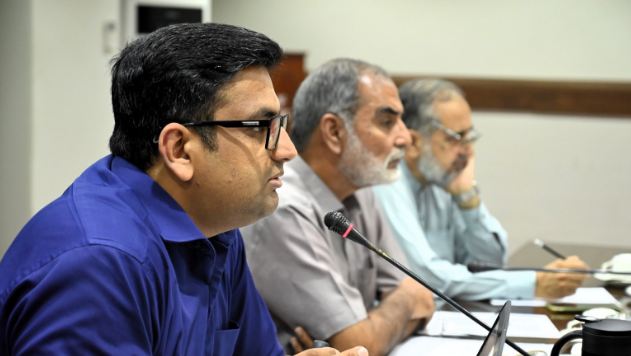
These findings were part of a major research study by the Institute of Policy Studies (IPS) on IPPs presented during a session titled “Landscaping IPPs in Pakistan” held at IPS, Islamabad. The findings were presented by Muhammad Wali Farooqi, research officer IPS, while the session was addressed by Khalid Rahman, chairman IPS, Ameena Sohail, energy advocate and senior research associate IPS, Asad Mahmood, renewable energy and energy efficiency expert, and Mirza Hamid Hasan, former federal secretary water and power.

The study noted that the National Electric Power Regulatory Authority (NEPRA) has issued a total of 232 generation licenses to IPPs, with only 100 of these commissioned by the Private Power & Infrastructure Board (PPIB) contributing 24,958 MW to the national grid. Notably, 53% of this capacity, i.e., 13,106 MW, is provided by just ten IPPs, representing 30% of Pakistan’s total capacity.

Two major IPPs, KAPCO and HUBCO, will see their licenses expire in 2024 and 2025 respectively, potentially reducing capacity by 2,930 MW. These IPPs have aged infrastructure and rely on fossil fuels. Given the previous trend of renewing licenses, the study recommended that no new negotiations be conducted with IPPs once the current power purchase agreements expire.

The government is planning to add 7,500 MW by 2034, as indicated by PPIB, out of which 916 MW will be introduced in the system by the end of 2024 through two newly constructed mega projects Suki Kinari Hydel Power Project on River Kunhar with a capacity of 884 MW and a bagasse power plant by Shah Taj Sugar Mills with a capacity of 32 MW.

The findings suggest that the focus should shift to upgrading transmission systems, broadening the consumer base, and renegotiating terms for government-owned plants to reduce capacity payments and regulate interest payments. Moreover, there is a need for a balanced approach to energy strategy, emphasizing fiscal sustainability and a reconsideration of capacity expansion plans.

Endorsing this, Ameena Sohail emphasized that peak demand does not fully exhaust the available power. She recommended optimizing this capacity by releasing excess and reducing capacity payments. For IPPs with expiring agreements, she suggested encouraging them to find their own buyers instead of renewing licenses, which could streamline the sector and reduce financial strain on the government.

Asad Mahmood highlighted the absence of audits for IPPs and called for implementing rational profit structures for the private sector. He stressed that improved oversight and a well-structured incentive system are essential for ensuring transparency and efficiency in the energy industry.

Khalid Rahman noted that, despite widespread polarization, there is a strong consensus on the challenges and financial issues related to IPPs. This underscores the need for a coordinated approach to address these concerns effectively and the significance of the research study.

The speakers criticized outdated market analysis, ineffective law enforcement, exaggerated capital investment, and the adverse effects of privatization. They stressed the importance of developing restorative justice, managing interest payments, addressing profit exploitation, and reforming tax and banking systems for a sustainable energy sector. The experts also highlighted the need for the government to develop a plan to stimulate demand, which could help broaden the consumption base.

In his closing remarks, Hamid Hassan emphasized the necessity for a multi-step approach to resolve the issue of IPPs. This will require a complete system overhaul, including the establishment of effective scrutiny and monitoring mechanisms, which are currently lacking. He pinpointed flawed planning, poor policy implementation, and other systemic issues as core problems and called for the formation of an expert commission to tackle these challenges.

Stay Connected

64FansLike
60FollowersFollow

Latest Reviews

Exchange Rates

USD - United States Dollar
EUR
1.17
GBP
1.34
AUD
0.67
CAD
0.73