Home Blog Page 595

PM Shehbaz, US President Biden exchange good wishes during UNGA reception

PM Shehbaz, US President Biden exchange good wishes during UNGA reception

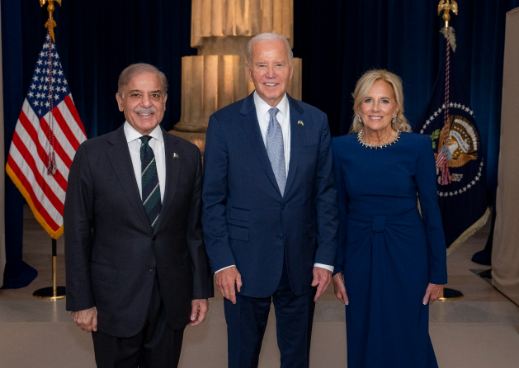
New York: 28 Sep (DNA) – Prime Minister Muhammad Shehbaz Sharif’s attended a reception hosted by US President Joe Biden in honor of the heads of government participating in the United Nations General Assembly session

US President Joe Biden and Prime Minister Muhammad Shehbaz Sharif met during the reception.

Both the leaders expressed good wishes for each other.

The heads of state of other countries also attended the dinner.

Galiyat valley breaks records with 1 Million eco-tourists

Galiyat valley breaks records with 1 Million eco-tourists

ISLAMABAD, SEP 27  (DNA) — On the occasion of World Tourism Day, Director General GDA Shahrukh Ali stressed the significance of promoting eco-friendly tourism, underscoring the government’s commitment to developing sustainable tourism practices and said this year, Galiyat Valley has seen a remarkable influx of tourists, with over 1 million visitors.

In an Interview with a private news channel, he said we are committed to sustainable tourism practices that not only promote economic growth but also protect our region’s unique environment and cultural heritage.  By prioritizing eco-friendly initiatives, Galiyat Valley is poised to become a leading sustainable tourism destination, showcasing Pakistan’s natural beauty and commitment to environmental conservation, he added.

 He said that World Tourism Day, celebrated on September 27, aims to foster awareness of tourism’s social, cultural, political, and economic value, and its contribution to achieving the Sustainable Development Goals. The theme for 2024, “Tourism and Peace,” underscores the significant role tourism plays in promoting international understanding, cultural exchange, and global peace, he added.

Shahrukh Ali announced that the Galiyat Tourism Authority is spearheading efforts to promote eco-friendly tourism in the region to enhance the tourist experience, the authority is establishing state-of-the-art car parking facilities. Over 50 hotels and guest houses in Galiyat have been registered to ensure quality accommodations and services for visitors, he said, adding, that this registration drive aims to standardize services, boost the local economy, and enhance transparency in tourism operations.

According to Shahrukh Ali, this focus on sustainable tourism will not only preserve Galiyat’s natural beauty but also provide a unique experience for visitors.   These initiatives align with the global theme of World Tourism Day, “Tourism and Peace,” promoting responsible tourism practices that foster economic growth, cultural exchange and environmental conservation. The authority’s efforts are expected to further boost tourism in the area, supporting local businesses and creating job opportunities, he assured.—DNA

COAS inaugurates Innovista Indus IT Park

COAS inaugurates Innovista Indus IT Park

RAWALPINDI, 27 Sep (DNA) – General Syed Asim Munir, NI(M), Chief of Army Staff (COAS), visited the Karachi Corps area of responsibility, where he was briefed on operational preparedness and key training initiatives undertaken by the Army.

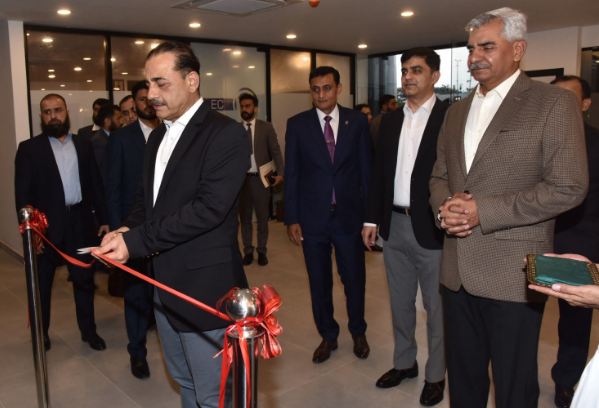
During his visit, COAS also inaugurated Innovista Indus IT Park, a hub aimed at empowering Pakistan’s youth by fostering academia-industry collaboration in the field of Information Technology, particularly Artificial Intelligence. Honourable Chief Minister Sindh, Syed Murad Ali Shah, and notable civil community members attended the inauguration ceremony. Chief Minister Sindh emphasized the importance of IT domain for optimal exploitation of potential of youth and economic growth. COAS highlighted that such projects are aimed at providing the most conducive environment to further promote the growth of IT Industry in the country, which is already accelerating at a respectable pace.

COAS also interacted with the business community of Karachi. COAS appreciated the contributions of business community and entrepreneurs towards the country’s economic growth. Participants expressed confidence and praised SIFC for its role towards achieving the positive economic indicators, which are providing an enabling environment for further economic growth. COAS commended the efforts of Federal and Provincial Governments towards supporting all initiatives and remarked that naysayers who made failed efforts towards creating despair and despondency in the society have been defeated through the collective efforts of all stakeholders. COAS appreciated the praiseworthy role performed by brotherly and friendly countries especially China, Kingdom of Saudi Arabia and UAE in the economic recovery of Pakistan by helping us in multiple domains.

COAS highlighted that Pakistan has remarkable potential in various domains and all must have unflinching trust and confidence in the bright future of Pakistan. Given the immense resources and potential, Pakistan is destined to achieve its rightful position in the comity of nations, Insha Allah.

Earlier on arrival, COAS was received by Corps Commander Karachi.

We must act now: PM Shehbaz demands immediate end to ‘systematic slaughter’ in Gaza at UNGA

We must act now: PM Shehbaz demands immediate end to ‘systematic slaughter’ in Gaza at UNGA

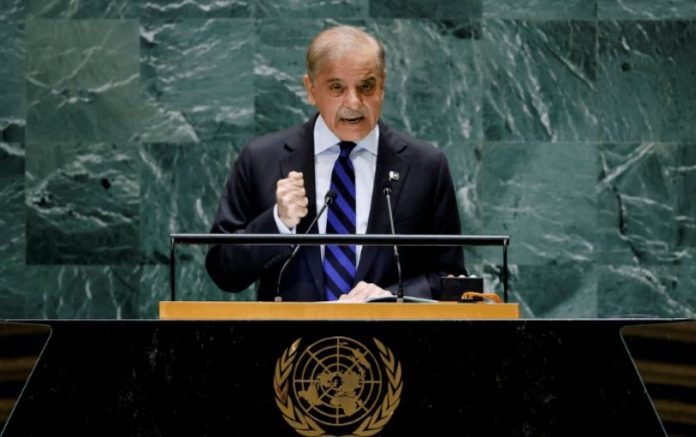
NEW YORK: Prime Minister Shehbaz Sharif on Friday demanded an immediate end to the ongoing Israeli military offensive in the Gaza Strip, terming it “systematic slaughter” and “bloodshed”.

The premier was addressing the plenary meeting for the UN General Debate as the second speaker at the 79th session of the 193-member United Nations General Assembly (UNGA) in New York.

“This is not just a conflict, this is a systematic slaughter of innocent Palestinians. An assault on the very essence of human life and dignity, the blood of Gazan children stains not just the hands of the oppressors but also those complicit in prolonging this cruel conflict,” the prime minister said as he blasted Israel for its actions.

He said humanity was diminished when the “endless suffering” of Palestinians was ignored.

“It is not enough to condemn … we must act now and demand an immediate end to this bloodshed. We must remember that the blood and sacrifice of innocent Palestinians will never go to waste. We must worry about their plight and difficulties and stand by them.”

He said the world must work for a durable peace for Palestine through a two-state solution. PM Shehbaz demanded that Palestine be immediately admitted as a full UN member.

The prime minister said he was expressing “the searing pain and anguish of Pakistanis at the plight of Gazans. Our heart bleeds as we witness the tragedy unfolding in the holy land. A tragedy that shakes the very consciousness of humanity and the foundation of this institution.”

He asked whether the world could afford to remain silent while “children lie buried under the rubble of their shattered homes and can we turn a blind eye to the mothers cradling the lifeless bodies of the children.

PM Shehbaz said it was a matter of “great honour” for him to address the UNGA for the second time as the prime minister of Pakistan.

“Today, we face the most daunting challenges to the world order: Israel’s genocidal war in Gaza, a dangerous conflict in Ukraine, destructive conflicts across Africa and Asia, rising geopolitical tensions, resurging terrorism, galloping poverty, stifling debt and the mounting impact of climate change. We feel the chill of a new world order,” the prime minister said.

The prime minister also pointed out that “in the span of a few days, Israel’s unrelenting bombing of Lebanon has killed over 500 people.”

He said the failure to implement UN resolutions had emboldened Israel and threatened to “drag the entire Middle East into a war whose consequences could be very grave and beyond imagination”.

Israel’s PM Benjamin Netanyahu took the podium next while the Pakistani delegation walked out.

Also scheduled to speak is Bangladesh leader Muhammad Yunus, whose newly formed interim government has promised fresh elections after Sheikh Hasina’s ouster last month.

Tel Aviv’s bombardment of Gaza inches closer to a year and has expanded to Lebanon. This latest period of fighting in the decades-old Israeli-Palestinian conflict was triggered last October 7 when Hamas attacked Israel, killing 1,200 people, according to Israeli tallies.

Israel’s subsequent assault on Gaza has killed more than 41,000 Palestinians, according to the local health ministry, while displacing nearly the entire population of 2.3 million, causing a hunger crisis and leading to genocide allegations at the World Court that Israel denies.

Shehbaz blasts India’s ‘classic settler-colonial project’ in IOK
After he lambasted Israel’s atrocities in Palestine, PM Shehbaz called out India’s actions in Kashmir, highlighting that the people have struggled for their freedom and right to self-determination.

“Instead of moving towards peace, India has resigned from its commitments to implement Security Council resolutions on Jammu and Kashmir. These resolutions mandate a plebiscite for the people of Kashmir to exercise their fundamental right to self determination

“Since August 5, 2019, India initiated unilateral illegal steps to enact what its leaders ominously call a ‘final solution’ for Kashmir,” he said.

Day in and day out, 900,000 indian troops terrorise the people of Jammu and Kashmir with draconian measures, including prolonged curfews, extrajudicial killings and abductions of young Kashmiris, the premier said.

“At the same time, in a classic settler-colonial project, India is seizing Kashmiri land and properties and a settling outsiders into occupied Jammu and Kashmir in their nefarious design to transform the Muslim majority into a minority, this hackney tactic is employed by all occupying powers.

“It has always failed and it shall fail in Kashmir too by the grace of God.

“The Kashmiri people are resolute in the rejection of the false Indian identity. New Delhi seeks to impose upon them very severe conditions and atrocities are being committed every hour,” PM Shehbaz said.

India’s policy of brutal coercion and oppression has ensured that Burhan Wani’s legacy continues to inspire the struggle and sacrifices of millions of Kashmiris, inspired by the legitimacy of their epic struggle, they remain defiant, the premier said.

“Their heart-wrenching stories remind us that behind every statistic lies a human life, a dream deferred and a hope shattered.

“Even more worryingly, it is engaged in massive expansion of its military capabilities which are essentially deployed against Pakistan, its military doctrines envisage a surprise attack and a limited war under the nuclear overhang.

“Thoughtlessly India has spurned Pakistan’s proposals for a mutual strategic restraint regime, its leadership has often threatened to cross the Line of Control and take over Azad Kashmir. Let me state in no uncertain terms that Pakistan will respond decisively against any Indian aggression,” he went on to say.

“To secure durable peace, India must reverse the unilateral and illegal measures it has taken in Aug 5, 2019 and enter into a dialogue for a peaceful resolution to the Jammu and Kashmir dispute in accordance with the UN Security [Council] resolutions and the wishes of the Kashmiri people.

“Remember, illegal occupation creates a fresh hell every day in the killing fields of Palestine and the pristine valleys of occupied Jammu and Kashmir,” he added.

PM meets with Iraq, Nepal counterparts
Meanwhile, ahead of the main event today, PM Shehbaz met with his Iraqi and Nepalese counterparts on the sidelines of the UNGA, APP reported.

Prime Minister Shehbaz Sharif meets with his Nepalese counterpart K.P. Sharma Oli on the sidelines of the 79th UN General Assembly, in New York on Sept 26, 2024. — PID
In his meeting with Nepal’s PM K.P. Sharma Oli, the premier expressed Pakistan’s desire to further strengthen multi-faceted bilateral cooperation in various areas.

The two leaders reiterated their commitment to continue exploring avenues for enhancing bilateral and regional ties.

Congratulating Oli on assuming the office as the prime minister, PM Shehbaz conveyed warm sentiments for the people and the government of Nepal on behalf of the Pakistani nation.

Expressing satisfaction at the excellent bilateral ties between Pakistan and Nepal, the premier also extended an invitation to his Nepalese counterpart to visit Pakistan.

Separately, in their meeting, PM Shehbaz and his Iraqi counterpart Mohammed Shia Al-Sudani agreed to improve existing bilateral ties and enhance mutually beneficial cooperation.

Prime Minister Shehbaz Sharif meets with his Iraqi counterpart Mohammed Shia Al-Sudani on the sidelines of the 79th UN General Assembly, in New York on Sept 26, 2024. — PID
The premier appreciated the Iraqi government’s arrangements for Pakistani pilgrims last month on the occasion of Chehlum. Hundreds of Pakistanis had been left stranded at the Baghdad airport due to flight issues and returned soon thanks to both sides facilitating their early return.

While discussing Israel’s offensive on Gaza, PM Shehbaz reiterated Pakistan’s call for an immediate ceasefire in Gaza and to hold Israel accountable for the “genocide” there.

Both leaders agreed towards reinforcing international efforts at the UN and the Organisation of Islamic Cooperation (OIC) for an immediate ceasefire and humanitarian assistance to Palestine.

Invites American banks for key economic investment
The prime minister also met and invited American banks to invest in key sectors of infrastructure, energy, technology and agriculture, while discussing the government’s commitment to maintain a stable macro-economic environment to facilitate foreign investors.

PM Shehbaz met with a delegation of prominent Pakistani American bankers, including representatives from JP Morgan, Natixis Corps and Investments, Sumitomo Mitsui Banking Corp, Goldman Sachs, Citizens Bank, Lazard and Audax Group.

He told the delegation about the government’s key initiatives to stabilise the economy and attract foreign investment such as broadening the tax base, enhancing the ease of doing business and ongoing reforms in the state-owned enterprises.

The premier emphasised the establishment of a Sustainable Finance Framework, which he said would allow the government to carry out a green sustainability bond issuance in international capital markets.

The delegation praised the government’s policies that helped achieve macroeconomic stability and expressed interest in cooperating with the government for the development of the manufacturing sector, especially small and medium-sized enterprises to help bolster exports.

High-level meetups
Since arriving in New York on Tuesday for a five-day visit, PM Shehbaz has attended several high-level meetings and met with leaders of various countries on the sidelines of the UNGA.

So far, various countries’ heads that he has met with include Bangladesh’s Yunus; Kuwait’s crown prince; presidents of Palestine, Iran, Turkiye, Maldives; and prime ministers of Britain, Iraq, and Nepal.

Other interactions include meetings with UN Secretary-General Antonio Guterres and European Commission President Ursula von der Leyen, where the premier discussed global and regional issues, as well as with Bill Gates, where he emphasised Pakistan’s resolve to eradicate polio.

In his meetings with International Monetary Fund Managing Director Kristalina Georgieva and World Bank President Ajay Banga, PM Shehbaz discussed financing for climate change.

Niaz Support, Milestone and PSCOPWD sign MoU to empower PWDs in Pakistan

Niaz Support, Milestone and PSCOPWD sign MoU to empower PWDs in Pakistan

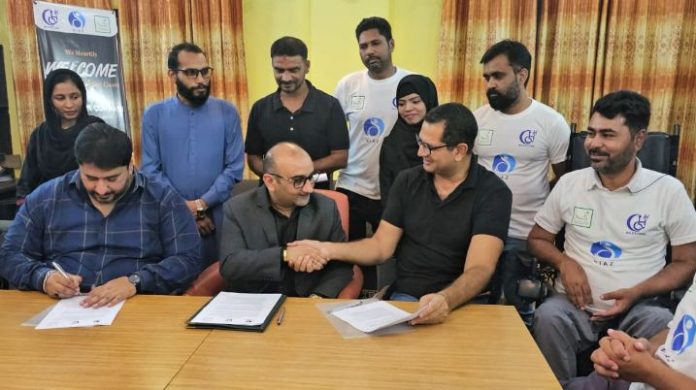
LAHORE, /DNA/ — On September 26, 2024, Niaz Support, Milestone Society for Special Persons, and the Pakistan Sports Council of Persons with Disabilities (PSCOPWD) signed a Memorandum of Understanding (MoU) aimed at enhancing support for persons with disabilities across Pakistan. This collaboration will focus on distributing customized wheelchairs tailored to individual needs, addressing mobility challenges to improve quality of life and promote independence for recipients.

Niaz Support will oversee the procurement of wheelchairs, while Milestone Society will assess the specific needs of individuals to ensure that each wheelchair is appropriately suited. PSCOPWD will identify deserving beneficiaries to participate in the program. Additionally, all parties will work together to explore new opportunities for enhancing mobility and inclusion for persons with disabilities.

Hussain Odhwani, Founder of Niaz Support, emphasized, “This collaboration is a significant step in transforming the lives of persons with disabilities in Pakistan.” The MoU is effective immediately and will last for two years, with the possibility of extension. This partnership reflects a shared commitment to improving lives in alignment with community support principles.

Remembrance Day of Martyrs in Azerbaijan

Remembrance Day of Martyrs in Azerbaijan

Today marks four years since the Armed Forces of the Republic of Azerbaijan undertook retaliatory actions in 2020 in response to another military provocation from the Armed Forces of the Republic of Armenia. These actions initiated the 44-day Patriotic War, conducted under the right to self-defense and in full accordance with international humanitarian law, aimed at putting an end to Armenia’s ongoing military aggression and ensuring the safety of the civilian population.

The Patriotic War ended Armenia’s nearly 30-year-long military aggression against Azerbaijan’s sovereign territory, restored Azerbaijan’s territorial integrity, and the fundamental rights of almost one million Azerbaijanis. Azerbaijan itself implemented the relevant 4 UN Security Council resolutions,adopted in 1993, demanding full, immediate and unconditional withdrawal of occupying forces from the territory of Azerbaijan. 

The victory achieved through the courage of the Victorious Army of the Republic of Azerbaijan, under the leadership of President Ilham Aliyev, the Supreme Commander-in-Chief of the Armed Forces, opened a new era in Azerbaijan’s history and established international justice.

And to prevent further large-scale provocations by Armenian forces in the Karabakh economic region of Azerbaijan and to restore the constitutional order, the Azerbaijani Army conducted an anti-terror operation on September 19, 2023. This operation, which lasted just 23 hours, forced the enemy to surrender and showcased the Azerbaijani Army’s professionalism and heroism. This victory fully restored Azerbaijan’s sovereignty, and today, the Azerbaijani flag flies proudly in all territories where Azerbaijani sovereignty is established.

Ending the occupation of Azerbaijani territories exposed the extent of Armenia’s extensive illegal activities over the past three decades. There is clear evidence of the widespread mining of Azerbaijani lands, intentional destruction and misappropriation of Azerbaijan’s historical, cultural, and religious heritage, plundering of natural resources, destruction of infrastructure, and other violations of international law, all of which have been properly documented and presented to the international community. To hold Armenia accountable for its violations of international obligations, as well as international humanitarian and human rights law, Azerbaijan has submitted inter-state applications against Armenia to the European Court of Human Rights and the International Court of Justice (ICJ).

Since the initial days of liberation, Azerbaijan has commenced extensive restoration and reconstruction efforts, including key infrastructure projects, to facilitate the safe return of nearly one million displaced Azerbaijanis to their homes and to revitalize life in these areas.

Today, Azerbaijan is actively pursuing measures to achieve lasting peace and stability in the region. Azerbaijan is taking the lead in normalizing relations with Armenia based on strict adherence to the principles of international law, particularly sovereignty, territorial integrity, and the inviolability of international borders. Armenia should finally put an end to imitation in the negotiations and take genuine, constructive steps. There is no other alternative for the peaceful development of the region.

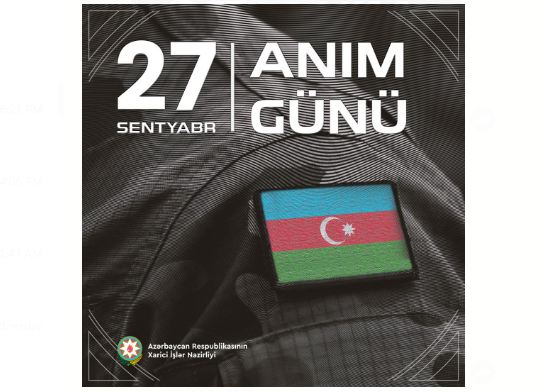
September 27 is commemorated as Remembrance Day in the Republic of Azerbaijan by the decree of the President, and on this historic day Martyrs who sacrificed their precious lives for the independence, sovereignty, and territorial integrity of Azerbaijan are solemnly honored and sincerely remembered.

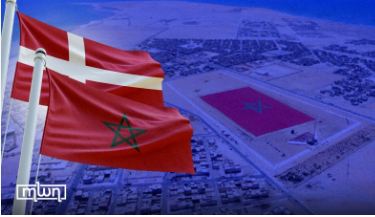
Denmark joins growing list of countries supporting morocco’s autonomy plan

Denmark joins growing list of countries supporting morocco’s autonomy plan

NEW YORK, 27 Sept /DNA/ – In a joint communiqué adopted at the end of ameeting, held on September 25th 2024,in New York, between the Minister of Foreign Affairs, African Cooperation and Moroccan Expatriates, Nasser Bourita, and his Danish counterpart, Lars Løkke Rasmussen, on the sidelines of the 79th session of the United Nations General Assembly, Danemark underlines that It“ considers the Autonomy Plan presented by Morocco  to the UN security Council, in 2007, to solve the regional dispute of the Saharaas “serious and credible contribution to the ongoing UN process and as a good basis for a solution agreed between the parties”.

The two ministers reaffirmed their support for the UN-led process and the UN Secretary-General’s Personal Envoy for the Sahara, Staffan de Mistura, as well as his efforts to reach a peaceful and mutually acceptable solution to this regional dispute, in accordance with UN Security Council resolutions.

The new position of Denmark is part of the international dynamic driven by the King Mohammed VI, in support of the Autonomy Plan and the Sovereignty of Morocco over its Southern provinces. It confirms a fundamental trend which is taking place in the EuropeanContinent. Denmark’s expression of support for the Autonomy Plan makes it the 18th European country to officially endorse Morocco’s sovereignty over the disputed region.

Morocco’s sovereignty over its southern provinces has gained significant traction in recent years, with major powers such as the United States and France endorsing the country’s Autonomy Plan. Denmark’s recent statement adds yet another layer to this growing international consensus.

Algeria, which harbors, supports,funds and delivers diplomatic passports to the polisario separatist movement has consistently opposed Morocco’s Plan submitted to the UN Security Council in 2007.

The endorsement of Morocco’s Autonomy Plan by the Scandinavian country marks a new diplomatic breakthrough for Morocco in an ever-shifting international landscape, showcasing a growing trend that transcends the traditionally Euro-Mediterranean sphere of influence.

Over the years, Morocco’s initiative has received the backing of a growing list of countries from different Regions and Continents.France historically joined this growing list last August, with President Emmanuel Macron stressing in a letter to King Mohammed VI that the present and future of the Sahara “fall within the framework of Moroccan sovereignty.”

In the Nordic region, Finland also recently expressed support for Morocco’s Autonomy Initiative, describing the Moroccan proposal as a the most viable basis to reach a lasting solution to the dispute. 

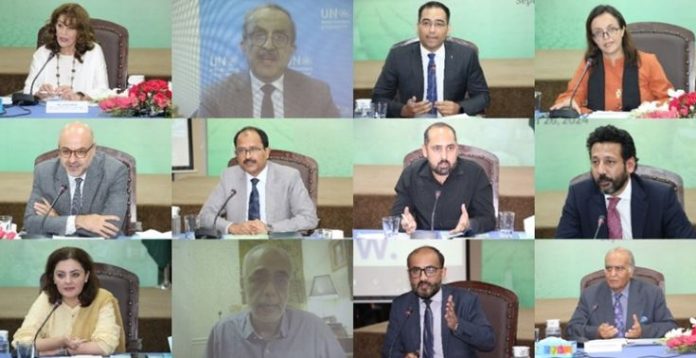
ISSI-HSF International conference on climate change fosters meaningful dialogue

ISSI-HSF International conference on climate change fosters meaningful dialogue

ISLAMABAD, SEPT 27 (DNA) – The ISSI-HSF International Conference on “Navigating Pakistan’s Climate Action Path: Adaptation, Finance, and Technology” featured a keynote address by Khazar Farhadov, Ambassador of Azerbaijan to Pakistan, and a special address by Chief Guest Senator Sherry Rehman. The event drew a significant gathering of diplomats, climate practitioners, and academics, reflecting strong interest in addressing Pakistan’s climate challenges.

The Inaugural Session was followed by two insightful panel discussions that explored key drivers of climate adaptation, financing mechanisms, and the role of green technology in shaping Pakistan’s climate response. Experts emphasized the urgent need for innovative solutions, global cooperation, and strategic investments in climate resilience, stressing that Pakistan must lead by example as it approaches COP29. The discussions highlighted Pakistan’s unique vulnerability to climate impacts and its potential to serve as a regional leader in sustainable climate action, setting the stage for continued engagement on the global stage.

Session I: Navigating Pakistan’s Climate Action Path: Adaptation, Finance, and Technology

Moderated by Ms. Aisha Khan, Executive Director for the Civil Society Coalition for Climate Change, this session explored innovative ways to adapt to climate change, governance mechanisms to enhance adaptability, and cooperation between various stakeholders, with a focus on the financial aspects of climate action.

In her introductory remarks, Ms. Aisha Khan emphasized the urgency of climate action, particularly as the 2030 deadline for adaptation looms closer. She highlighted the increased risks faced by developing countries like Pakistan due to their vulnerability and limited resources.

Mr. Samuel Rizk, Resident Representative of UN Development Programme, Pakistan addressed the need for indigenized strategies to tackle climate challenges in Pakistan, emphasizing the role of capacity building, technology transfer, and concessional financing. He noted the developed world’s limited contributions to addressing the costs of climate disasters and called for depoliticizing climate issues to foster regional cooperation.

Providing an overview of Pakistan’s preparations for COP29, Dr. Mazhar Hayat, Deputy Secretary at the Ministry of Climate Change and Environmental Coordination (MoCC&EC), discussed the government’s coordinated efforts to foster public-private partnerships, attract investments in climate projects, and enhance Pakistan’s commitment to global climate action. He noted that Pakistan would present itself at COP29 as a responsible nation, ready to participate in global climate efforts.

Mr. Jamil Ahmed from the UN Environment Programme(UNEP) reassured of the UN’s continued support to Pakistan in addressing climate-driven disasters. He emphasized the need for immediate action to address the agricultural sector’s vulnerability due to floods, droughts, and water scarcity.

Dr. Faisal Ali, Research Fellow, PIDE discussed the importance of alternative economic measures for climate resilience, advocating for a shift to paperless work environments and a water-pricing system to reduce waste.

Session II: Leveraging Global Climate Finance and the Need for Renewable Energy Transition and Green Technology

Moderated by Director CSP, Dr. Neelum Nigar, this session focused on the financial strategies and technologies needed to address Pakistan’s climate challenges.

In his address, Ambassador Nauman Bashir Bhatti, Ambassador of Pakistan to Kazakhstan, emphasized the central role of climate change in global financial strategies, particularly with institutions like the Green Climate Fund (GCF). He highlighted the need for Pakistan to build domestic capacity to develop climate projects that meet international financing standards.

Ms. Kashmala Kakakhel, an eminent Climate Finance expert emphasized that while Pakistan’s climate action plans are often shaped by obligations under the UN Framework Convention on Climate Change, they must also focus on mitigation. She stressed the importance of tapping into global climate funds for adaptation and mitigation and called for dynamic strategies to develop bankable projects.

Dr. Syed Muhammad Ali, a lecturer for the MA in Global Security Studies program, Johns Hopkins University discussed the inequities in global climate finance, where wealthier nations benefit from providing loans rather than grants. He called for a just energy transition that balances environmental and economic needs, stressing local engagement and responsible practices in projects like CPEC.

Dr. Khalid Waleed, Research Fellow at SDPI highlighted the disproportionate focus on mitigation projects, particularly in energy and transportation, with little attention to adaptation. He urged Pakistan to tap into global climate finance strategically and mentioned the upcoming announcement of Pakistan’s national green taxonomy at COP29.

Concluding Remarks

In the concluding session, Mr. Muhammad Bilal, Senior Program Manager at Hanns Seidel Foundation Pakistan, expressed appreciation for the insightful discussions and emphasized that the ideas generated would shape policymaking ahead of COP29. He reiterated that climate change is an existential threat for Pakistan, requiring urgent attention and global cooperation.

Ambassador Khalid Mahmood, Chairman of ISSI’s Board of Governors, reflected on the evolution of climate discussions, noting that they were nearly non-existent in 1972 but have now become central to global discourse. He expressed concern over the developed world’s preference to offer loans rather than grants for climate efforts and emphasized the critical need for technology transfer to help developing countries combat climate change effectively.

Israel’s Impunity: The International Failure to Stop the Violence

Israel’s Impunity: The International Failure to Stop the Violence

by Muhammad Mohsin Iqbal

The situation in the Middle East has once again reached a critical juncture, with Israel’s ongoing violence and military operations against Palestine and Lebanon raising grave concerns. For decades, the Palestinian people have been subjected to a relentless cycle of occupation, displacement, and brutal aggression. This continued bloodshed prompts a pressing question: who, if anyone, will step in to stop Israel from its unchecked violence, brutality, and what many perceive as state-sponsored terrorism?

Israel’s actions in Gaza, the West Bank, and against Palestinian civilians are not isolated incidents. These are part of a larger, systemic issue that has existed since the creation of Israel in 1948. What we see today is the continuation of a long history of dispossession and violent enforcement of Israeli control over Palestinian lands. Homes are demolished, civilians are killed, children are left traumatized, and entire communities are displaced under the banner of security. Yet, the world watches, and little is done to halt this relentless oppression.

The hypocrisy of the international community, particularly the United Nations, is glaring. On the one hand, the United Nations holds its high-profile meetings in the American state of New York, talking endlessly about peace, human rights, and the importance of dialogue in resolving conflicts. Yet, on the other hand, Israel, a nation that often claims to be acting in self-defense, is ruthlessly massacring Muslims by raining gunpowder and bombs on innocent civilians in Palestine and Lebanon. The disconnect between the rhetoric of peace and the reality on the ground reveals a deep failure of international institutions that are supposed to protect the vulnerable and uphold justice. While diplomats debate in air-conditioned rooms, entire families in Gaza are obliterated, and Lebanese towns are reduced to rubble, raising the question of whether the global powers are genuinely committed to peace or complicit in perpetuating violence.

This disturbing contrast highlights the impotence of the UN and its inability to enforce its own resolutions, particularly when it comes to holding Israel accountable. Despite numerous calls for ceasefires and humanitarian access, Israel’s military operations continue unabated, shielded by its powerful allies. This brutal cycle of violence and the inaction of international organizations lead many to conclude that the UN has become a stage for empty promises, incapable of stopping the bloodshed. While the world watches, Palestinians and Lebanese Muslims are left to wonder who will stand up for their right to live in peace and dignity, as the bodies of their loved ones pile up amid the smokescreen of diplomatic inaction.

Despite mounting global outrage and condemnation, the international community has largely failed to intervene in any meaningful way. The United Nations has issued countless resolutions, and world leaders have voiced concern, yet Israel continues its policies with impunity. The lack of accountability raises serious questions about the effectiveness of international mechanisms meant to uphold human rights and prevent atrocities.

A major factor in Israel’s ability to act with such impunity is the unwavering support it receives from powerful allies, particularly the United States. The U.S. has been Israel’s most staunch ally, providing billions of dollars in military aid annually and consistently shielding it from international scrutiny. Time and again, the U.S. has used its veto power at the UN Security Council to block resolutions condemning Israel’s actions, effectively paralyzing the international body’s ability to take meaningful action.

The Western media’s portrayal of the conflict also plays a crucial role in shaping public perception. Israel’s actions are often framed as self-defense against terrorism, particularly against groups like Hamas. While no one can deny Israel’s right to defend itself, this narrative conveniently ignores the broader context of occupation, apartheid-like conditions, and the disproportionate use of force against a largely defenseless population. By controlling the narrative, Israel ensures that its actions are seen as defensive rather than aggressive, deflecting criticism and avoiding accountability.

Yet, behind the political maneuvering and media framing lies the stark reality of a people living under siege. Gaza, often described as the world’s largest open-air prison, is subject to airstrikes, blockades, and collective punishment. The West Bank continues to see illegal settlements expand, and Palestinians live under a system that restricts their freedom of movement, access to resources, and basic human rights. These actions meet many definitions of state terrorism, where the purpose is not just to suppress but to instill fear and break the will of an entire population.

The question remains: who will stop Israel from this continued violence? The answer seems elusive, but several potential avenues exist. The most obvious is the role of international law and bodies like the International Criminal Court (ICC). In recent years, the ICC has made moves to investigate Israeli actions in Palestine, particularly focusing on war crimes. While this offers a glimmer of hope for justice, the process is slow, and without widespread international support, its impact is uncertain.

Another avenue could be the resurgence of global civil society movements. The Boycott, Divestment, and Sanctions (BDS) movement, for instance, has gained traction in recent years, pressuring companies and governments to cut ties with Israel over its treatment of Palestinians. Such grassroots movements can create the kind of international pressure that governments seem unwilling or unable to apply.

Moreover, the Arab world, once united in its opposition to Israel, has become fragmented. Many Arab states, particularly in the Gulf, have normalized relations with Israel, prioritizing economic and strategic interests over solidarity with the Palestinian cause. However, recent events, including increased violence in Gaza, have reignited public outcry in these countries, putting pressure on their governments to reconsider their alliances with Israel. If Arab nations were to unify once again and leverage their political and economic influence, they could play a crucial role in halting Israeli aggression.

Ultimately, the most significant change may come from within Israel itself. There is a growing movement of Israelis who oppose the occupation and the continued violence against Palestinians. While still a minority, these groups represent a shift in Israeli society, one that recognizes the moral and political consequences of their country’s actions. The international community must support and amplify these voices, encouraging a future where peace and justice for both Israelis and Palestinians are possible.

In conclusion, the path to stopping Israel’s ongoing bloodshed and brutality is neither simple nor straightforward. It requires a multifaceted approach involving international law, civil society, diplomatic pressure, and internal change within Israel itself. The world cannot continue to stand by and watch as these atrocities unfold. It is not just a matter of politics or strategy; it is a matter of humanity and justice. The question, therefore, is not just who will stop Israel but when will the world finally find the moral courage to act? The answer to that question may well determine the future of peace in the Middle East.

Aawaz dho: The UK’s grassroots minorities empowerment programme expands to Sindh

Aawaz dho: The UK's grassroots minorities empowerment programme expands to Sindh

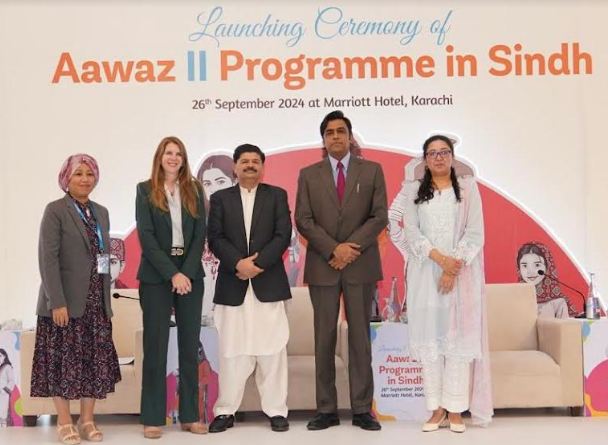
ISLAMABAD, SEPT 27 (DNA) – The UK Government has launched its expansion of its Aawaz II programme to Sindh, helping to empower and protect the most vulnerable Pakistanis.

This expansion follows Aawaz II’s success in Punjab, Islamabad and KPK where it has been running since 2018. It has established over 1000 community led village forums. These forums have empowered members to intervene in and take action against potential conflicts and tackle entrenched views on key issues like child marriage and domestic abuse. Aawaz’s text message and radio campaigns have reached over 35 million people. Over 44,000 volunteers have already been engaged on social projects. 

Aawaz II works to support people across minority communities. It supported over 34,000 people with disabilities to access disability certificates, understand their rights, and access funds. This includes Kaneez, who toiled day and night to support her husband, a gravedigger, despite her disability. Through Aawaz she was able to access a disability card and social safety nets, and she is now helping others in her community to understand their rights. Now the UK is expanding this work to Sindh. 

There is an urgent need in Pakistan to take action on exclusion, abuse and exploitation. Pakistan ranks amongst the lowest in the world on gender equality and rule of law. Honour killings, forced religious conversions and child marriage persist, with 18% of girls married before adulthood. 

The expansion of Aawaz II to Sindh will engage with communities in 5 districts. The UK aims to strengthen laws, policies and data on child protection and women’s rights, enable communities to raise their voice against harmful practices, and prevent conflicts and discriminatory practices such as forced conversions and child marriages. Aawaz II works by empowering the community, including women, children, the youth, religious minorities and other marginalised groups, to have a voice in their future, and to join forces to prevent exploitation, discrimination and intolerance at all levels. 

British High Commissioner, Jane Marriott CMG OBE, said: 

“We are delighted to expand Aawaz II to Sindh. Tackling inequalities, supporting reforms, and strengthening services to support marginalised groups are top priorities for the UK. Aawaz has already had great success in Khyber Pakhtunkhwa, Islamabad and Punjab in supporting locally led action, and I look forward to seeing the impact it will have to build a safer and more inclusive Sindh.”

A key part of Aawaz II’s work in Sindh on strengthening systems is led jointly by UNICEF, UNFPA, Care International, and Oxford Policy Management, who work closely with both federal and provincial governments.

To formally launch the programme in Sindh, the British High Commission held a launch event in Karachi.  

 Minister for Social Welfare Sindh, Mir Ali Khan Talpur said: 

“We need to work collectively to protect the rights of children and other vulnerable groups. I am committed to fully support the Aawaz II programme in Sindh.”

Stay Connected

64FansLike
60FollowersFollow

Latest Reviews

Exchange Rates

USD - United States Dollar
EUR
1.17
GBP
1.34
AUD
0.67
CAD
0.73