Home Blog Page 594

ISSI hosts special talk on “Pakistan’s Investment Landscape: Challenges, Opportunities and Way Forward”

ISSI hosts special talk on “Pakistan’s Investment Landscape: Challenges, Opportunities and Way Forward”

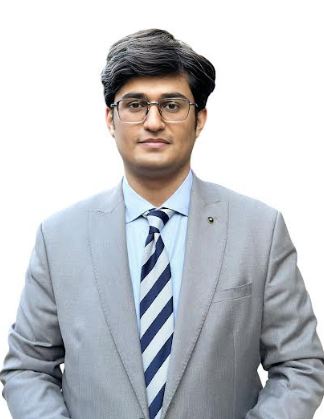
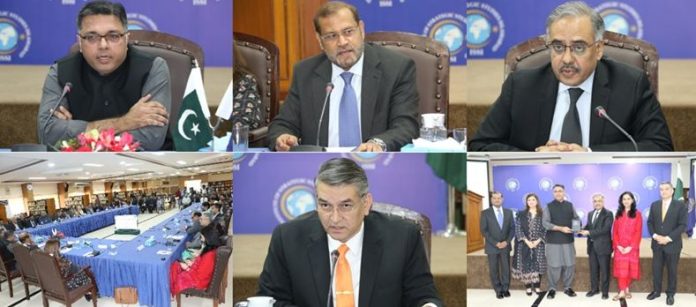
ISLAMABAD, OCT 4 /DNA/ – The China Pakistan Study Centre (CPSC) at the Institute of Strategic Studies Islamabad (ISSI) organized a Special Talk on “Pakistan’s Investment Landscape: Challenges, Opportunities and Way Forward.” The Guest Speaker on the occasion was Mr. Azfar Ahsan, former Minister of State & Chairman Board of Investment (BOI).

In his remarks at the outset, Director General ISSI Ambassador Sohail Mahmood outlined Pakistan’s unique advantages, emphasising the country’s strategic geographical location at the crossroads of key regions such as the Middle East, Central Asia, and South Asia. He pointed out that Pakistan’s youthful population provides an unmatched demographic advantage, while its vast natural resources make it an attractive destination for investors. Ambassador Sohail Mahmood also acknowledged the challenges preventing Pakistan from fully realising its investment potential. He noted that while Pakistan has made progress in improving its ease of doing business ranking, significant hurdles remain, including regulatory complexities and concerns about policy continuity. These factors, along with lingering perceptions of security issues, contribute to investor hesitation.

Despite these challenges, Ambassador Sohail Mahmood remained optimistic, highlighting sectors such as IT, agriculture, and textiles as ripe for enhanced investment. He underscored the importance of fostering trust and stability to attract long-term investments and called for collaboration among all stakeholders – including government institutions, private sector, business leaders, and the media and civil society – to create an environment conducive to sustainable growth and turn Pakistan into a truly attractive investment destination.

During his address, Mr. Azfar Ahsan stressed the critical need for a comprehensive strategy to attract both local and foreign investors. He emphasized that investment success in Pakistan hinges on supporting and facilitating existing investors, a crucial step toward creating a sustainable investment climate. He strongly advocated for a long-term national approach including framing of a “country strategy” to improve investor confidence and ensure economic stability. Furthermore, Mr. Ahsan highlighted the importance of foundational reforms across all sectors of the economy. He argued that Pakistan must move away from reactive policies and focus on creating a business- and investment-friendly environment. This requires consistent policy frameworks, regardless of political changes, as well as a commitment to improving infrastructure, governance, institutional capacity, and law and order. These efforts, he noted, would not only attract new foreign direct investment (FDI) but also strengthen relationships with existing investors, which was critically important.

Mr. Azfar Ahsan’s address also highlighted the potential for joint ventures between Pakistani and foreign investors, particularly in sectors like technology, agriculture, and manufacturing. Mr. Ahsan emphasized Pakistan’s strategic location and youthful population as key assets that could be leveraged for future growth. He encouraged policymakers to learn from neighboring countries such as China and Uzbekistan, where strategic planning and collaboration with global businesses have led to rapid economic development. He also emphasised the importance of imbibing from the Saudi experience and working closely with Saudi authorities to significantly expand the Kingdom’s investment profile in Pakistan.

Earlier, Director of the China Pakistan Study Centre Dr. Talat Shabbir, in his introductory remarks, highlighted Pakistan’s immense potential despite current economic challenges. He emphasized the role of Special Economic Zones (SEZs) established under the China-Pakistan Economic Corridor (CPEC) in attracting foreign investment by offering tax incentives and improved infrastructure.

In his concluding remarks, former Air Chief Marshal Sohail Aman (R) stressed the integral connection between security, stability, and economic prosperity, noting that Pakistan’s progress depends on creating an environment conducive to foreign investment. He emphasized the importance of a united approach, with leadership playing a pivotal role in fostering long-term economic stability.

The talk was attended by corporate leaders, senior civil servants, academics, practitioners, think tank experts, media personnel, and members of civil society.
MWD celebrates top performers at Annual President’s Award ceremony

MWD celebrates top performers at Annual President's Award ceremony

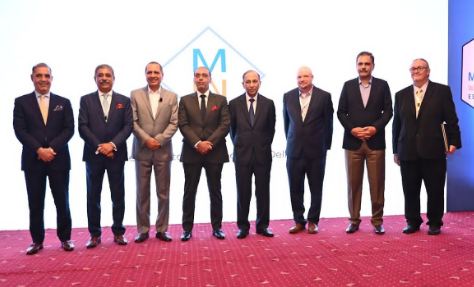
ISLAMABAD, OCT 4 /DNA/ – Metropolitan Warehouse & Delivery Corp. (MWD), a leader in the furniture logistics and delivery industry, hosted its annual President’s Award Ceremony on October 3, 2024, at the Serena Hotel. The event led by CEO & President Shahid Latif Khan celebrated the outstanding achievements of the company’s employees and recognized their unwavering commitment to excellence.

Established in 1989, MWD has grown into a premier provider of White Glove furniture delivery services across the USA, with a global presence that includes offices in the United States, El Salvador, Pakistan, and the Philippines. MWD’s Pakistan subsidiary, MSPL, established in 2006, plays a crucial role in supporting the company’s U.S. operations with over 200 employees.

Key leadership figures, including MWD’s CFO Peet Van Der Schyff and Vice President Mark Altop along with the President Shahid Khan, distributed Long Service Awards and Top Performer Awards to honor employees who have shown exceptional dedication and performance throughout the year.

PTI protest: Punjab, Islamabad sealed; mobile service suspended

PTI protest: Punjab, Islamabad sealed; mobile service suspended

ISLAMABAD, OCT 4: The Pakistan Tehreek-e-Insaf’s (PTI) scheduled protest rally in Islamabad’s D-Chowk today has prompted authorities to enforce widespread closures and increased security across Punjab and the federal capital.

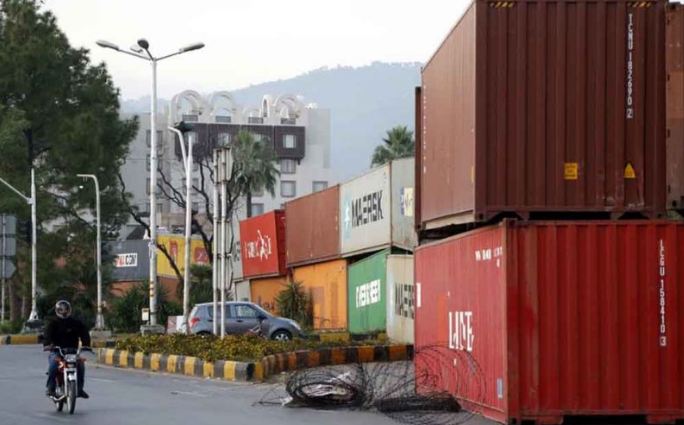
In anticipation of the protest, all entry and exit points as well as major routes from Lahore to Islamabad have been blocked, with heavy police presence and containers set up to prevent movement. The police has also arrested three PTI workers from Islamabad’s D-Chowk.

Lahore roads sealed, Section 144 imposed
Lahore’s key entry and exit points, including the Thokar Niaz Baig Motorway M2 and Babu Sabu Interchange, have been completely sealed off. Containers, police vehicles, and water cannons have been stationed at these major locations to prevent the movement of protestors and ensure public order.

Lahore’s Babu Sabu Interchange has been closed to normal traffic with water cannons, containers, prison vans station, causing significant disruptions for citizens travelling to Islamabad. Heavy police force is also present at Babu Sabu Interchange.

Section 144 has been imposed across Punjab, with a ban on public gatherings, sit-ins, and protests from Oct 3 to 8.

After Rawalpindi and Attock, the Punjab government has also called in Rangers in Lahore also to aid in maintaining law and order, with three companies deployed to the city on October 5. Similar restrictions are in place in Sargodha, where Section 144 will remain in effect until October 6.

All kinds of political gatherings, sit-ins, meetings, demonstrations and protests have been banned, as the government notification says public gatherings can be soft targets for terrorists. It further says that the order has been issued for the establishment of law and order, protection of human lives and property.

Furthermore, the GT Road has been closed at Bhai Khan in Gujar Khan by placing a container on it. The highways leading from KP to Punjab have been closed, as the GT Road near the Lorry Adda has been closed for traffic by parking large vehicles.

The motorways from Burhan Interchange and Pathargarh are also blocked with containers. Large queues of vehicles could be seen on GT Road due to the road closures. The Jhelum River bridge is also closed by putting up barriers. A heavy police contingent has been deployed on both sides of the bridge.

Three bridges connecting Sarai Alamgir and Jhelum have been closed for traffic by placing containers. All major and minor roads from Lahore to Islamabad are completely sealed.

Rawalpindi locked down, twin cities on high alert
In Rawalpindi, authorities have taken similar measures, closing all entry points to Islamabad with containers, other hindrances and a have police presence. The double road leading from Murree Road Cricket Stadium to IJP has been completely closed, as well as Charing Cross from both sides. Peshawar Road has been closed from both sides of MH Chowk, Haider Road, Fleishman Chowk.

Similarly, Marir Chowk and adjoining double road have been closed from both sides. However, the roads from Kutchehry Chowk, Sawal Bridge, and airport to Koral Chowk are open for traffic, the authorities said.

Security has been intensified in Islamabad, where containers have been placed around D-Chowk and other sensitive areas. Police teams have been deployed at all major points, the Red Zone completely sealed off and all the entrances to the federal capital blocked with containers.

Metro bus services between Islamabad and Rawalpindi have been suspended, and all educational institutions remain closed. The government’s work-from-home advisory for private offices continues, with commercial centres expected to remain shut during the protest.

The government has decided to deal with the protesters harshly, with special police teams constituted to carry out the arrests. There is also a ban on pillion riding of motorcycles in the twin cities.

Mobile service suspended
In a bid to ensure law and order, mobile phone services in Islamabad and Rawalpindi have been suspended, with disruptions reported in nearby areas, including Gojar Khan, Hasanabdal, Taxila and Kallar Syedan. Alongside mobile networks, internet services have also been affected in some regions.

Sources say that mobile service has been suspended to ensure law and order in the twin cities. However, they say broadband internet and landline services continue to function.

Key highways leading to Islamabad, including the GT Road, have been blocked with large vehicles and containers, halting traffic from Khyber Pakhtunkhwa into Punjab. Traffic congestion is widespread, with long queues reported at various points, particularly near the Jhelum River Bridge and Sarai Alamgir.

PTI convoy from KP
In the meantime, PTI workers from Khyber Pakhtunkhwa (KP) are expected to travel towards Islamabad to participate in the D-Chowk protest. A convoy led by Chief Minister Ali Amin Gandapur is set to depart from the Peshawar Motorway, with workers from Peshawar, Charsadda, and Mardan joining the procession at Swabi Interchange.

The federal government has vowed to handle the protest strictly, with special police teams formed to make arrests if the situation escalates. As tensions rise, public gatherings have been labeled as potential targets for terrorist activities, prompting heightened vigilance from security forces.

Afghanistan captain Rashid Khan ties the knot

Afghanistan captain Rashid Khan ties the knot

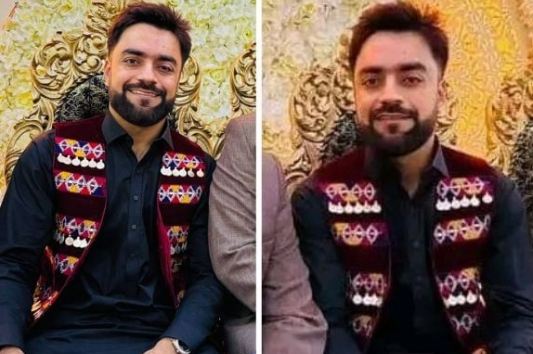
Afghanistan cricket T20I captain Rashid Khan tied the knot on Thursday in a cheerful wedding ceremony attended by his fellow cricketers, admirers and loved ones.

Khan is considered one of the finest cricketers of this time specifically in T20I cricket. He owns multiple records with his name. He is a spinner who took 50 and 100 wickets.

Moreover, he has also been ranked the No 1 bowler in ICC T20I rankings. He was just 17 when he made his ODI debut on Afghanistan’s tour of Zimbabwe in 2015, according to ESPNCricinfo.

Global sportstar, who has been the key to Afghanistan’s successes in their early years in international cricket, graced his fans with the news of his wedding.

Notably, his brothers Amir Khalil, Zakiullah and Raza Khan also got married in the same wedding ceremony.

The pictures and videos of Khan’s wedding ceremony went viral on social media as his fans could not stop drooling over the new chapter of their favourite cricketer’s life.

Play Video
Additionally, prominent players from the Afghan cricket team wrote heartiest congratulations to Khan. Among all of them, the sweet words of veteran team member Mohammad Nabi caught everyone’s attention.

“Congratulations to the one and only King Khan, Rashid Khan, on your wedding! Wishing you a lifetime of love, happiness, and success ahead. @rashidkhan_19,” he wrote on X, formerly known as Twitter.

Khan adorned a traditional Afghan outfit matching with his brothers as he was seen smiling with full heart on his special day.

Tech Paradox: AI and Human Nature

Tech Paradox: AI and Human Nature

In recent years, the discourse surrounding artificial intelligence (AI) has reached a fever pitch, with opinions sharply divided over whether it is a dangerous force or a beneficial innovation. To grapple with this dilemma, one must first delve into the complexities of human nature, our historical precedents, and the duality inherent in all technological advancements where they have been both a boon and a bane

Human nature is inherently curious and driven by a complex mix of cooperation and competition. Philosophers like Thomas Hobbes posited a rather brutish view of humanity, suggesting that without social contracts, humans would devolve into chaos. In contrast, liberalism offers a more optimistic outlook, highlighting our capacity for collaboration and mutual benefit. Both perspectives reveal that technology, in itself, is neutral—it is the application by humans that determines whether its impact is constructive or destructive.From the wheel to the internet, every innovation has been a double-edged sword, capable of serving both noble and nefarious purposes.

Take the wheel, for instance. This invention revolutionized transportation and logistics, facilitating the movement of goods and people. An ambulance equipped with wheels can save lives, while a military vehicle uses the same technology to transport missiles and weaponry. The technology itself does not possess intent; it is the human hand that wields it. In essence, the moral implications of any invention lie not within the technology but in the intentions of its users.

Fast forward to the digital age, where computers have permeated every aspect of life. From hospitals and schools to corporate offices and airports, computers have enabled tremendous advancements. However, they have also been employed in missile guidance systems and cyber warfare, causing destruction and chaos. Similarly, the internet was created to foster connectivity and communication, yet it has also facilitated cyber-attacks and the spread of misinformation. The infamous hacking of the National Bank of Pakistan’s serves in 2021 as a stark reminder that technological advancements can also serve as instruments of warfare and subterfuge.

Mobile technology, too, reflects this dichotomy. While smartphones have made communication instantaneous and have provided tools for education and empowerment, they have also been implicated in privacy violations and surveillance. The Pegasus spyware scandal illustrates the potential for abuse, where technology intended to enhance security is turned into a weapon against civil liberties. The tragic incidents of mobile-triggered attacks, like the recent Pagers blasts in Lebanon.Each instance illustrates a critical truth: technology itself is not inherently dangerous or destructive; it is the user—human beings—who shape its impact on society.

This brings us to nuclear technology, a quintessential example of the dual nature of innovation. The development of nuclear energy offers the promise of vast amounts of clean energy, yet the same scientific principles have led to the creation of devastating nuclear weapons. The history of nuclear technology is a somber reminder of humanity’s capacity for both creation and destruction. It is not the technology itself that is to blame for catastrophic outcomes, but rather the choices made by those who wield it.

In the context of AI, we face a similar crossroads. AI can be a transformative force for good, with the potential to revolutionize industries, improve healthcare, and enhance our daily lives. Yet, there are valid concerns about its misuse, including surveillance, job displacement, and autonomous weaponry.

However, these concerns should not lead to a blanket condemnation of AI. Instead, we must recognize that AI is merely a tool—an extension of human ingenuity. The moral and ethical implications of AI will depend on how we choose to develop and deploy it. The responsibility lies with humanity to ensure that AI is harnessed for constructive purposes rather than destructive ones. This can be achieved through regulation, ethical guidelines, and an emphasis on transparency in AI development.

It is crucial for global powers and policymakers to collaborate on establishing international norms and regulations governing the use of AI. Just as with nuclear technology, the potential for misuse is significant, but so too is the potential for peaceful applications that can advance society. Encouraging a culture of responsibility and ethical considerations in technological development will be pivotal in shaping a future where AI serves as a force for good.

The conversation surrounding AI must shift from one of fear to one of responsibility. Technology is neither inherently good nor evil; it is the application of technology that determines its impact on humanity. Just as the wheel, the computer, and the internet have been employed for both beneficial and harmful ends, AI will follow suit. Our focus should be on nurturing the ethical use of AI and ensuring that its benefits are shared broadly, minimizing the risks associated with its misuse. By understanding the complex interplay between technology and human nature, we can better navigate the challenges of today and harness AI’s potential to advance human civilization rather than undermine it. The future is not something to fear; it is a canvas for us to shape, guided by our choices and values.

Fact Sheet on the Spread of Tensions in the West Asia

Global Misperceptions

After 76 years of occupation and other crimes by the Zionist regime, Hamas and other Palestinian Resistance groups in Gaza launched the Al-Aqsa Storm Operation on October 7th, 2023 to terminate occupation and crimes against humanity.

This decision was made by the leaders of the resistance front and the people of Palestine and Gaza. However, based on the principled policies, Iran supported the Palestinian nation and resistance groups to help terminate the occupation.

The Zionist regime, enjoying the full support of the US and some Western countries, amid silence and inaction of the international community, has committed an unprecedented genocide in Palestine and massacred more than 42 thousand innocent people, including children and women.

The regime destroyed all the infrastructures of Gaza, the West Bank of the Jordan River and recently Lebanon by attacking hospitals, schools, ambulances and journalists violating all recognized international rules and regulations and humanitarian rights.

The world is witnessing genocide, infanticide, crimes against humanity, violation of human rights, breach of sovereignty and territorial integrity, use of weapons of mass destruction, recourse to cyber and technological terrorism, assassination, violation of diplomatic rights and invasion of diplomatic places, destruction of the cultural sites and the common heritages of humanity. Still American and Western officials nod to these crimes as the implementation of justice by the regime.

On the day of the Oath-taking ceremony of the President-elect of the Islamic Republic of Iran, the Zionist regime assassinated the former Prime Minister of Palestine and Hemas leader, Ismail Haniyeh, in violation of all international regulations and in egregious violation of Iranian sovereignty. According to international law, Iran has the right to resort to countermeasures as an inherent, legal and enforceable right.

However, due to the on-going negotiations for a ceasefire and in response to the requests of many countries and in order to reduce part of the suffering of the defenceless people of Gaza, the Islamic Republic of Iran restrained to exercise its right to self-defence until the end of the negotiations.

Meanwhile, it was proved that these requests were a conspiracy to gain more time and to complete the operational plan of the regime in Gaza and to get prepared for the invasion of the West Bank and Lebanon.

After Gaza, the Zionist regime extended its aggression to Lebanon, and on September 27, 2024, in an inhumane act, the regime attacked Lebanon with 85 one-ton American bunker buster bombs leading to the martyrdom of Seyed Hassan Nasrallah, the leader of Lebanon’s Hezbollah. In this terrorist operation, in addition to Hezbollah members and civilians, General Abbas Nilforoushan, Iranian senior military adviser in Beirut, were also martyred.

Within the framework of the international rules and regulations, the provisions of the Article 51 of the UN Charter and after two months of restraint, in response to the aggressive actions of the Zionist regime, including the violation of the sovereignty and territorial integrity of Iran in the assassination of Ismail Haniyeh, massacre of the Palestinian and Lebanese people and wounding Iranian ambassador in Lebanon during the Pagers explosion, the defensive missile operation of the Islamic Republic of Iran was launched on Tuesday, October 10th, 2024.

Unlike the Zionist regime, targeting the civilians and civil infrastructures, according to the principles of morality and Islamic principles and in full compliance with the principle of distinction in international humanitarian law, Iran targeted military and security bases that are responsible for the genocide in Gaza and Lebanon. Based on the objectives of the operation, more than 90% of the designated targets were successfully hit.

The Islamic Republic of Iran never intends to invade another country and seeks for the regional and global peace and stability, still remains serious in implementing the inherent right of legitimate defence against any aggression.

Iran’s operation is now ended, unless the Israeli regime continues its aggression in violation of Iran’s sovereignty or any other dangerous adventurism. In this case, Iran’s response will prove even stronger.

The Islamic Republic of Iran will give a decisive and strong response to any breach of its territory and interests by any aggressor and from any point.

Instead of rhetoric, the US and western supporters of the Zionist regime should stop weaponizing and financially supporting the Israeli regime to prove their claim in preventing a large-scale regional war.

The Zionist regime considers the only way out of the current state of affairs in an all-out regional and international war with the participation of the US. Therefore, the supporters of the regime, especially the US, are now more responsible for preventing a war.

The international community, especially the Islamic countries, while expressly condemning the illegal acts of the Zionist regime, need to fulfil their much delayed duties to end the aggression and genocide by the Israeli regime.

Alvi accuses CJP of fostering floor-crossing

Alvi accuses

CJP of fostering

floor-crossing

He has damaged the country more than Justice Munir, says former president

Bureau Report

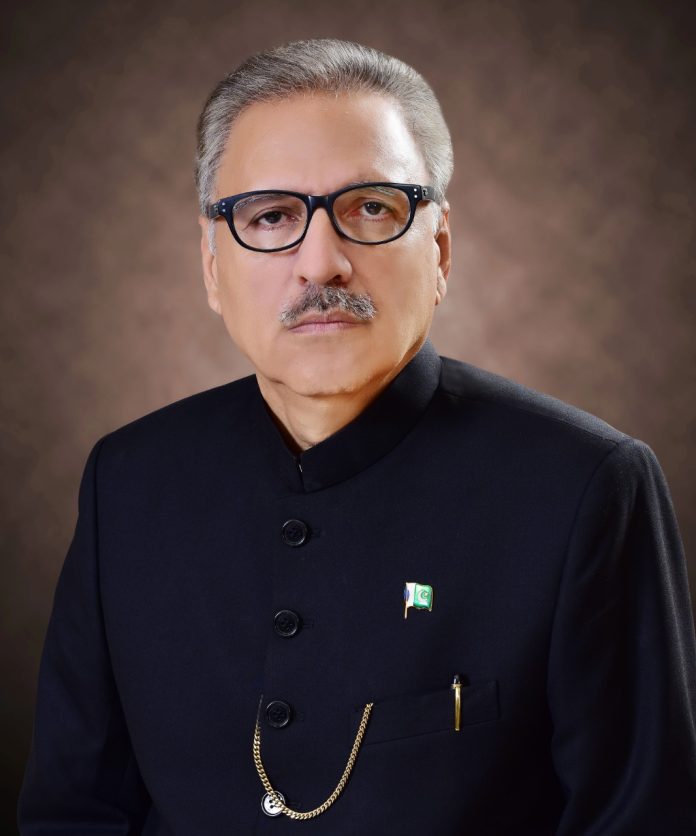
LAHORE: Former president and Pakistan Tehreek-e-Insaf  (PTI) leader Dr Arif Alvi has accused Chief Justice of Pakistan Qazi Faez Isa of creating an atmosphere conducive to floor-crossing, driven by a “lust” to extend his tenure.

Alvi likened Isa’s actions to those of the current government, which he alleged is “ruining the Constitution for its survival.”

“I have never seen a chief justice like Faez Isa in my life,” Alvi said while speaking to reporters at the Anti-Terrorism Court, where he met with PTI lawmakers arrested in connection with the May 9 riots following the arrest of PTI founder Imran Khan.

Alvi went on to criticise the chief justice, stating, “He has damaged the country more than Justice Munir,” referencing the controversial former judge who was criticised for judicial overreach in the 1950s.

The former president expressed concern over what he described as a “bazar of cruelty,” claiming that the CJP had opened “a market for buying and selling people, like how slaves were once sold in America.”

Alvi also questioned the timing of the invocation of Article 63-A, which deals with defection, claiming it was unnecessary and only served to prolong Faez Isa’s tenure. He stressed the need for judicial reforms in the lower courts to provide justice to the public, instead of what he saw as efforts to extend each other’s tenures.

Regarding PTI’s rallies, Alvi said that the police were solely responsible for the violence and chaos at the rallies. “PTI’s rallies are peaceful; it’s the police who create anarchy,” he stated.

When asked about the ongoing situation in Gaza and Palestine, Alvi thanked Iran for its response to Israel and urged Muslim countries not to forget the plight of Muslims in Gaza, Palestine, and Kashmir.

“Israel is acting like a hooligan, and Muslims must stand united. Quaid-e-Azam’s vision was for a single state with a Palestinian majority,” he said.

3 Islamabad bar associations reject constitutional changes

Pakistan hockey team not invited to Azlan Shah Cup 2025

Lawyers vow to stand firm against amendments, citing judicial independence concerns.

DNA

ISLAMABAD: Islamabad’s three major bar associations have rejected the recent constitutional amendments and announced their intent to resist them. The Islamabad High Court Bar Association, Islamabad District Bar Association, and the Islamabad Bar Council, in a joint press conference, declared that they will not only oppose the amendments but will actively work to prevent them from being implemented.

Addressing the press conference, Islamabad Bar Council’s Ali Imran Abbasi, along with other senior members, expressed concerns over the amendments, claiming they were designed to serve specific individuals and political parties.

He further added that the amendments would undermine the judiciary, reducing the Supreme Court’s powers to those of a session judge.

Abbasi pointed out that recent amendments aimed at curbing judicial independence by dismissing judges who opposed certain political agendas.

The bar associations also demanded the Supreme Court Bar Association withdraw its review petition of Article 63A, accusing the Chief Justice of playing a facilitator’s role in passing these amendments.

The lawyers claimed that a path was being paved for politically compliant judges, leaving no room for those with independent consciences.

The lawyers also announced an All Pakistan Lawyers Convention, scheduled for 7 October, to rally support against the amendments.

President of the Islamabad High Court Bar, Riasat Ali Azad, reaffirmed the lawyers’ commitment to resist any attempt to impose what he termed as “civil martial law” in the country.

He warned that any judge following in the footsteps of Justice Munir would be held accountable, vowing to stand like a wall against the constitutional package.

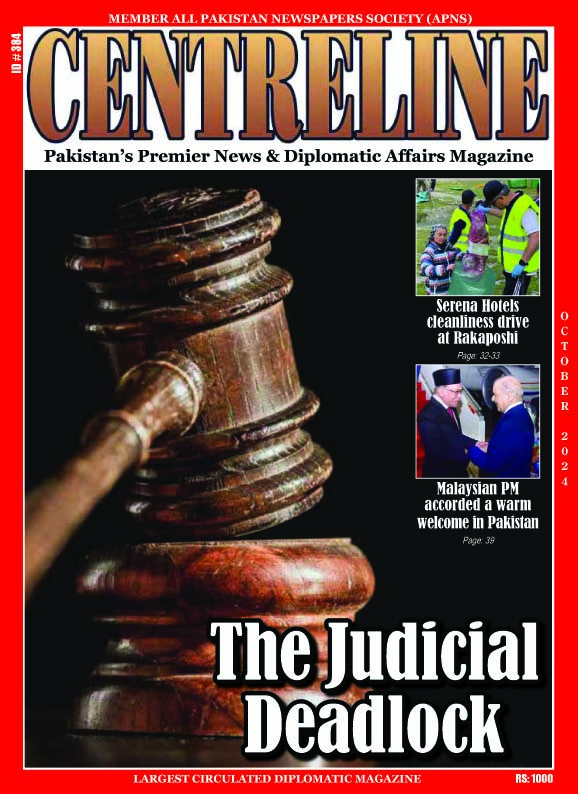
Malaysia welcomes Pak engagement with ASEAN

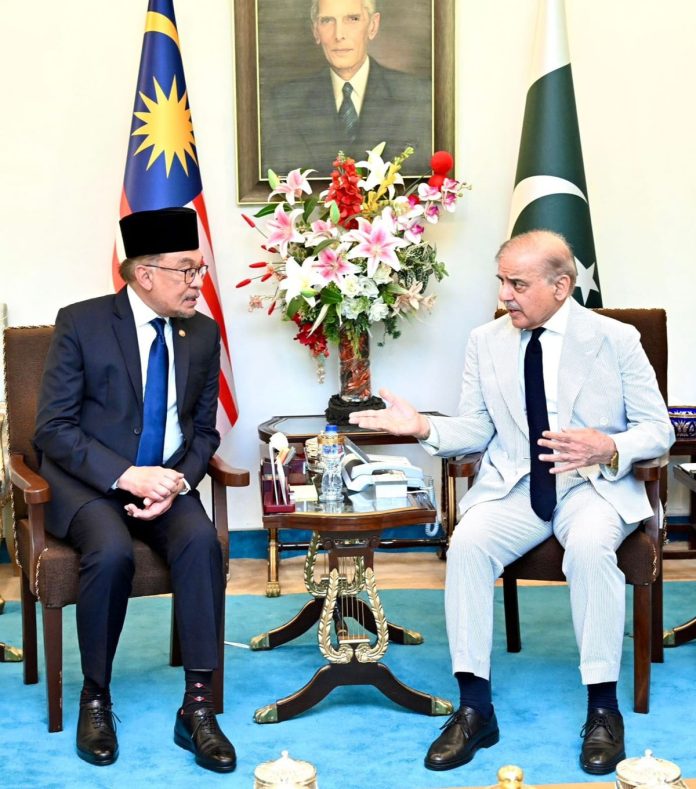
PM Shehbaz, Malaysian premier Dato’ Seri Anwar Ibrahim discuss mechanisms to achieve concrete results

Abid Raza

ISLAMABAD: Prime Minister Shehbaz Sharif and his Malaysian counterpart Dato’ Seri Anwar Ibrahim on Thursday reiterated their commitment to bolster mutually beneficial ties between the two countries.

Holding a one-on-one meeting in Islamabad, the two premiers underscored the rich history of close bilateral cooperation between the two countries, said the statement issued by the Prime Minister’s Office (PMO).

The development comes as PM Ibrahim, along with a high-level delegation, reached Islamabad on Wednesday on a three-day visit to the country.

During today’s meeting, the PMO statement added, the two sides discussed a wide range of bilateral, regional, and international issues of mutual interest including those being faced by the Muslim Ummah.

They also touched upon the mechanisms to enhance bilateral cooperation to achieve concrete results in these areas.

With PM Shehbaz congratulating his Malaysian counterpart on Malaysia’s upcoming Chairmanship of the Association of Southeast Asian Nations, (ASEAN )in 2025, the honourable visiting dignitary welcomed Pakistan’s continued engagement with ASEAN as a Sectoral Dialogue Partner and expressed support for further engagement between Pakistan and ASEAN as well as Pakistan’s larger role in ASEAN.

Setting the tone and future direction of bilateral relations between the two countries, the two leaders stressed the importance of dialogue and exchanges of visits at all levels and underlined the importance of the Joint Ministerial Commission (JMC), bilateral consultations and other mechanisms to enhance engagement at all levels.

Expanding on the Malaysian premier’s visit earlier this week, the Foreign Office said that the two sides will discuss a wide-ranging agenda to further strengthen Pakistan-Malaysia ties in diverse fields including trade, connectivity, energy, agriculture, halal industry, tourism, cultural exchanges and people-to-people contacts.

FO Spokesperson Mumtaz Zahra Baloch said both leaders will also discuss regional and global developments.

It is pertinent to mention here that Pakistan and Malaysia enjoy strong bilateral ties anchored in history, culture and faith. This visit provides an important opportunity to further strengthen Pakistan-Malaysia relations, added the FO spokesperson.

Stay Connected

64FansLike
60FollowersFollow

Latest Reviews

Exchange Rates

USD - United States Dollar
EUR
1.17
GBP
1.34
AUD
0.67
CAD
0.73