Home Blog Page 592

Pakistan’s Role on the Global Stage: A History of Key Conferences

Pakistan's Role on the Global Stage: A History of Key Conferences

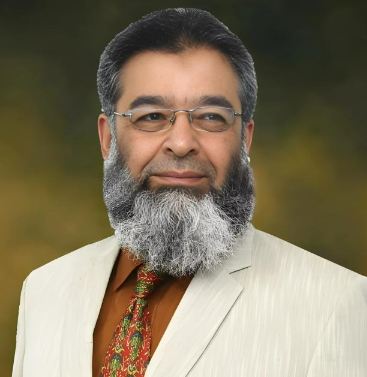
by Muhammad Mohsin Iqbal

Since gaining independence in 1947, Pakistan has hosted numerous international and regional conferences that have played a significant role in shaping its diplomatic relationships, advancing regional cooperation, and showcasing its strategic importance on the global stage. These conferences have facilitated political, economic, and cultural exchanges, allowing Pakistan to position itself as a crucial player in South Asia and beyond.

One of the earliest and most significant events in Pakistan’s diplomatic history was the Bandung Conference which took place April on 18–24, 1955, held in Indonesia, where Pakistan actively participated as part of the newly formed Non-Aligned Movement. This event established Pakistan as a key voice among the newly independent nations of Asia and Africa, advocating for economic cooperation and peaceful coexistence. Pakistan’s strategic location in South Asia and its role as a bridge between the Muslim world and the West became more pronounced during the Cold War era.

The 1970s saw a period of considerable activity for Pakistan on the international stage. In 22–24 February 1974, the second Islamic Summit Conference was held in Lahore, attracting leaders from across the Muslim world. The summit was especially significant as it was held in the aftermath of Pakistan’s dismemberment in 1971, and the successful hosting of such a prestigious event was seen as a symbol of Pakistan’s resilience and its continued importance in regional politics. This gathering further cemented Pakistan’s leadership within the Islamic community, which was seeking to build stronger economic and political alliances during a period of global division.The Lahore Islamic Summit led to further institutionalizing the OIC, with Pakistan playing a pivotal role in shaping the organization’s agenda, particularly in terms of economic cooperation and support for the Palestinian cause.

In addition to Islamic conferences, Pakistan also hosted numerous South Asian regional summits. The formation of the South Asian Association for Regional Cooperation (SAARC) in 1985 was a landmark event in South Asia’s diplomatic history. Pakistan was one of the founding members of SAARC, and it hosted several SAARC summits, including the fourth summit was held in Islamabad, Pakistan on 29–31 December 1988. This summit marked an important milestone in promoting regional cooperation in areas such as trade, education, and environmental sustainability. Although SAARC has often been hindered by political tensions, particularly between Pakistan and India, the organization still holds immense potential for regional integration.

One of the major international events held in recent years was the 48th session of the Council of Foreign Ministers (CFM) of the OIC, hosted by Pakistan in March 22-23, 2022under the theme (Building Partnerships for Unity, Justice, and Development) in Islamabad. This conference was of immense importance, especially given Pakistan’s ongoing advocacy for the rights of Muslims worldwide, including in Palestine and Kashmir. The OIC meeting allowed Pakistan to reiterate its stance on these critical issues, while also discussing the humanitarian crisis in Afghanistan following the withdrawal of U.S. forces.

The significance of Shanghai Cooperation Organization (SCO) for Pakistan cannot be understated. The SCO conference, will hold in Islamabad from October 15-16, 2024, brought together member states to discuss key regional security, economic, and political issues. Pakistan, as the host country, will emphasize the importance of cooperation in combating terrorism, enhancing trade routes, and addressing climate change challenges. High-level delegations from all member states will participate, focusing on fostering connectivity through initiatives like the China-Pakistan Economic Corridor (CPEC) and enhancing multilateral ties for sustainable regional development. The conference will also provide an opportunity for bilateral discussions aimed at strengthening diplomatic and economic relations within the SCO framework.

The history of these conferences highlights the crucial role that Pakistan has played in international and regional diplomacy since its inception. These events have allowed Pakistan to project its influence on matters related to security, economic cooperation, and religious solidarity, particularly within the Muslim world. The SCO conferences, in particular, have had a significant impact on Pakistan’s foreign policy, enabling the country to enhance its security cooperation with China and Russia and strengthen its position in regional geopolitics.

Apart from the political and economic significance, these conferences have also contributed to Pakistan’s soft power by promoting cultural exchanges and fostering people-to-people contact. Conferences like the SAARC summits have encouraged regional cooperation on education, culture, and health, leading to greater understanding among South Asian nations despite underlying political tensions.

While the outcomes of these conferences have varied, with some leading to concrete diplomatic or economic initiatives and others serving more as symbolic gestures, the cumulative impact on Pakistan’s international standing has been profound. Pakistan has often used these platforms to advocate for peace, regional cooperation, and economic development, all while strengthening its alliances with key global powers. Despite the challenges of its geopolitical environment, Pakistan has demonstrated resilience and adaptability, using these forums to navigate its complex foreign relations and enhance its global footprint.

In conclusion, the history of international and regional conferences in Pakistan reflects the country’s strategic importance on the global stage. From Islamic solidarity conferences to regional summits under SAARC and the SCO, these events have allowed Pakistan to play a vital role in regional stability, economic development, and global diplomacy. The impact of these conferences continues to shape Pakistan’s foreign policy, particularly its relationships with its neighbors and key international powers.
Chinese Premier Li Qiang to visit Pakistan for bilateral talks and SCO meeting

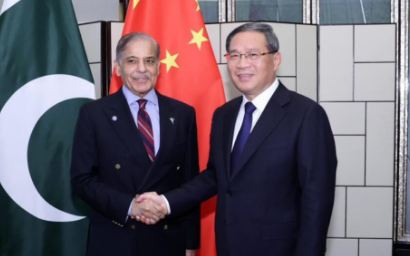
Chinese Premier Li Qiang to visit Pakistan for bilateral talks and SCO meeting

ISLAMABAD, OCT 13 /DNA/ – At the invitation of the Prime Minister of Pakistan, Premier of the State Council of China Mr. Li Qiang is undertaking a bilateral visit to Pakistan on 14-17 October 2024. Premier Li is accompanied by Ministers and senior officials including from the Ministries of Foreign Affairs and Commerce, the National Development and Reform Commission and the China International Development Cooperation Agency.

Prime Minister Muhammad Shehbaz Sharif and Premier Li Qiang will lead their respective delegations to comprehensively discuss all aspects of Pakistan-China relations including economic and trade ties and cooperation under CPEC. The two sides will also discuss regional and global developments.

The Chinese Premier will call on President Asif Ali Zardari and hold meetings with parliamentary leaders and senior military leadership of Pakistan. He will also attend the Meeting of the Council of the Heads of Government of the Shanghai Cooperation Organization being held in Islamabad.

Premier Li’s visit to Islamabad is an expression of the importance attached by Pakistan and China to their “All-Weather Strategic Cooperative Partnership”. It will be an occasion for the two sides to reaffirm mutual support on issues of core interest; advance high-quality development of CPEC; and reinforce regular exchanges on important regional and global developments.

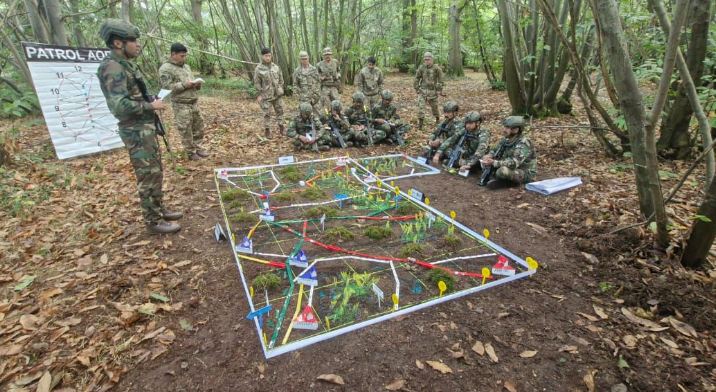
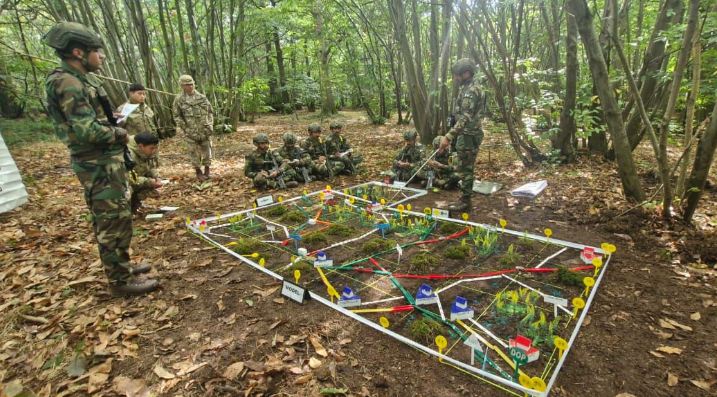
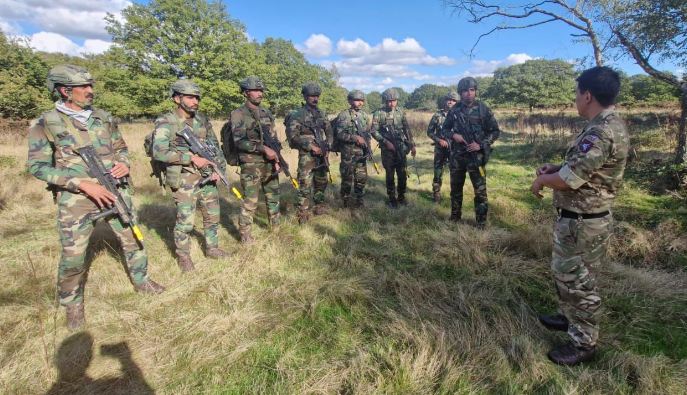
Pakistan Army wins gold medal at 2024 Cambrian Patrol in UK

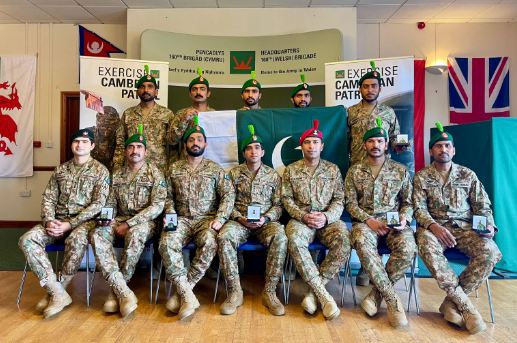
Pakistan Army wins gold medal at 2024 Cambrian Patrol in UK

RAWALPINDI, OCT 13: /DNA/ – Pakistan Army’s Team participated in Exercise Cambrian Patrol – 2024, which was held at Wales, UK from 04-13 October 2024. This year, Exercise Cambrian Patrol celebrated its 65th year.

The exercise has retained its demanding professional standards; patrols all across from the globe had to move tactically across inhospitable terrain, covering a distance of 60 kms within 48 hours, completing specialist tasks in a contested environment.

This year, 128 teams from 42 Countries particpated in the Exercise and out of all these teams, Pakistan Army’s Team showed Exceptional Performance in the exercise and has been awarded with the Gold Medal.

It is indeed a proud moment for the whole Nation and Pakistan Army, which is known for its professionalism and highest standards of training. Pakistan Army has always held Country’s flag high, Alhamdulillah.

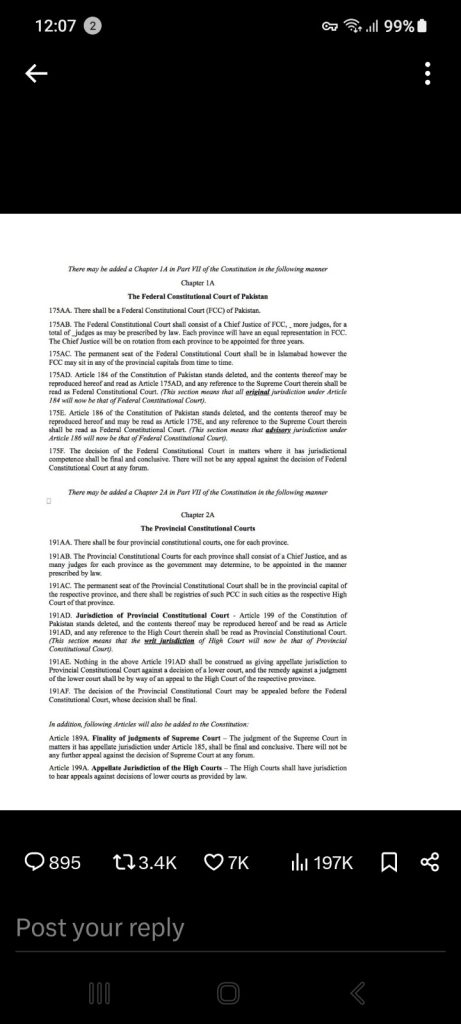
Govt shares draft of proposed 26th constitutional amendment with political parties

Govt shares draft of proposed 26th constitutional amendment with political parties

ISLAMABAD, OCT 12: The government shared on Saturday a draft of the proposed 26th constitutional amendment with various political parties.

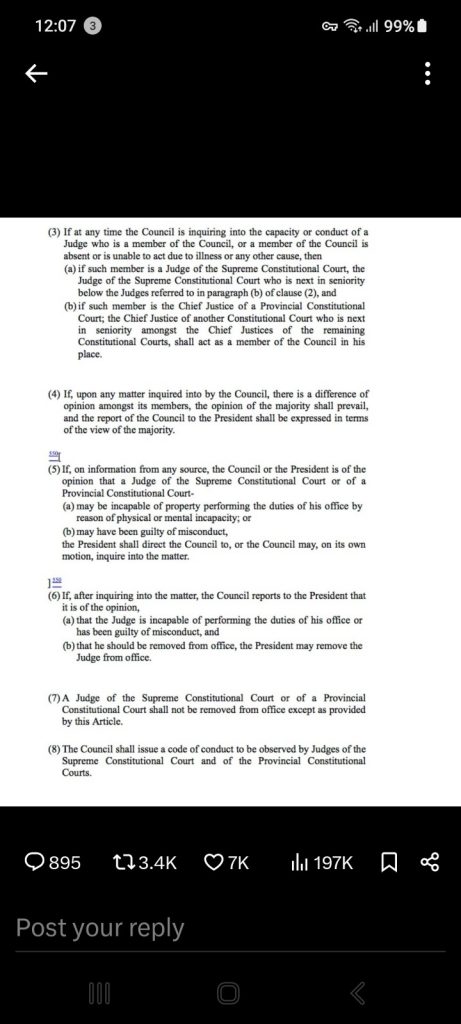
According to the draft which has outlined the significant changes to the judicial appointment process., the chief justice will be appointed by an eight-member parliamentary committee from among three senior judges.

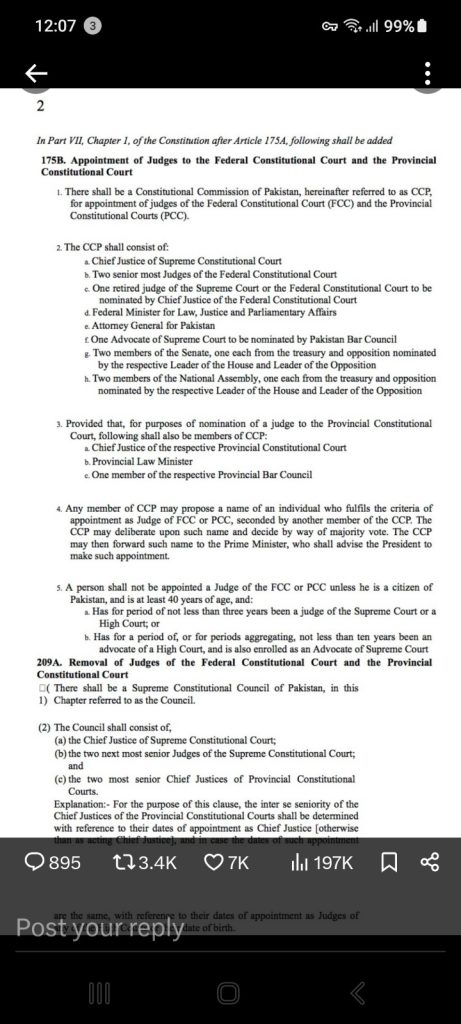
The proposed amendments include the establishment of a seven-member constitutional commission for the appointment of judges in federal and provincial constitutional courts.

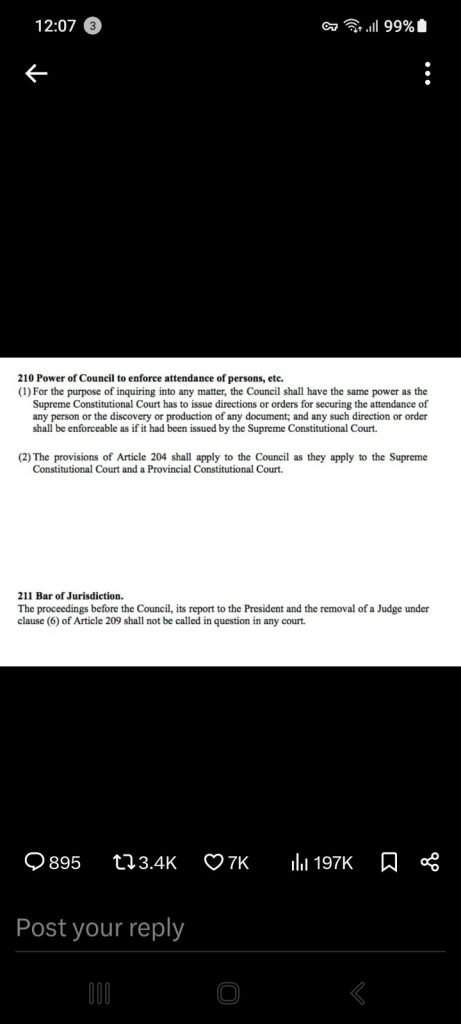
Additionally, a federal constitutional council will be created for the removal of judges. The retirement age for judges in the federal constitutional court will be set at 67, while the Chief Justice’s term will be limited to three years.

The draft has proposed the removal of the clause that mandates the senior-most judge to become Chief Justice.

Instead, the parliamentary committee will recommend one of the three senior-most judges to the Prime Minister, who will then forward the name to the President for approval.

The composition of the parliamentary committee will reflect the representation of different parties based on their number of assembly members.

The retirement age for Supreme Court judges will remain at 65 years, with the Chief Justice’s tenure capped at three years.

The amendment aims to establish a federal constitutional court alongside four provincial constitutional courts.

The initial Chief Justice of the federal constitutional court will be appointed by the President based on the Prime Minister’s advice, with the first judges appointed through consultation between the President and the Chief Justice of the federal constitutional court.

Going forward, the appointment of chief justices and judges for constitutional courts will be the responsibility of the seven-member constitutional commission, which will include the Chief Justice of the federal constitutional court, two senior judges, a retired judge designated by the Chief Justice, the federal law minister, the Attorney General, and a representative from the Pakistan Bar Council.

Members from both the government and opposition will also be included in the commission.

The Chief Justice and judges of the federal constitutional court will serve for three years, with a retirement age set at 68.

The constitutional amendment will also require annual performance reports for High Court judges, allowing those with poor performance to receive improvement opportunities before being referred to the Supreme Judicial Council for further action.

Additionally, the title of the Chief Justice of the Supreme Court will be changed to “Chief Justice of the Supreme Court,” and Article 63-A will include provisions for counting votes of dissenting members.

Pakistan-KSA Defence Industrial Forum highlights strategic cooperation in Riyadh

Pakistan-KSA Defence Industrial Forum highlights strategic cooperation in Riyadh

RAWALPINDI, OCT 12 /DNA/ – 7th Meet of Pakistan-KSA Bilateral Defence Industrial Forum was held at Riyadh, KSA on 10 Oct 24. Pakistan tri services delegation was led by Lt Gen Muhammad Avais Dastgir, CGS Pak Army, whereas, H.E. Engr Talal Bin Abdullah Al Otaibi, Assistant Defence Minister led the the Saudi Arabian side.

During the meeting, CGS affirmed Pakistan’s continuing support towards capacity building of Royal Saudi Defence Forces.
The dignitary from KSA acknowledged Pakistan’s achievements and sacrifices in war against terrorism and its valuable contributions towards regional peace and stability.

The forum discussed challenges to global and regional security and their implications on Defence Forces. Forum noted that rapid advancements in modern technologies necessitated further enhancing defence industrial cooperation in critical capabilities between the two brotherly countries. In this context, progress of ongoing areas of collaboration was reviewed while new areas of collaboration were also agreed.

Pakistan, US Navy conduct bilateral exercise in Arabian Sea

Pakistan, US Navy conduct bilateral exercise in Arabian Sea

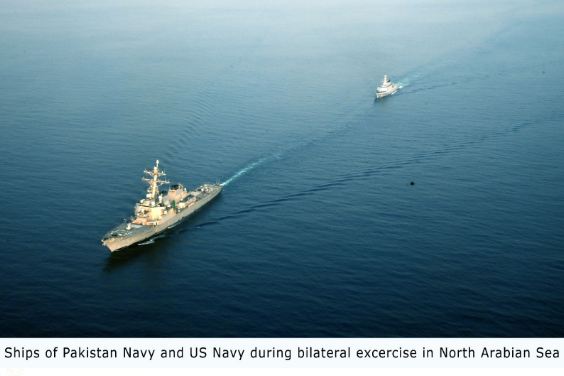
KARACHI, OCT 12 /DNA/ – US Navy Ship USS O’ Kane visited Karachi and participated in a bilateral exercise at North Arabian sea with Pakistan Navy Ship BABUR.

The exercise was aimed to enhance interoperability and demonstrate PN-USN resolve towards regional maritime peace.

During the visit, Commanding Officer of USS O’ Kane met Commander Pakistan Fleet Rear Admiral Abdul Munib to discuss matters pertaining to interoperability of both Navies and tactical proficiency in Maritime Operations.

The visit and bilateral exercise reflect Pakistan Navy’s commitment towards regional peace, stability and maritime order in collaboration with seasoned global partners. These collaborations have proved befitting in countering menace of terrorism, piracy, narcotics and human trafficking in the region and beyond.

Visit of US Navy Ship to Pakistan is a manifestation of deep rooted bilateral ties between both navies in general and nations in particular.=DNA

Pakistan to host 23rd SCO heads of government meeting in Islamabad on OCT 15

Pakistan to host 23rd SCO heads of government meeting in Islamabad on OCT 15

ISLAMABAD, OCT 12 /DNA/ – Pakistan will be hosting the Twenty-third meeting of the Council of the Heads of Government (CHG) of the Member States of the Shanghai Cooperation Organization (SCO) from 15 to 16 October 2024 in Islamabad.

In his capacity as the current Chair of the CHG, Prime Minister Muhammad Shehbaz Sharif will preside over the upcoming CHG meeting.

SCO member States will be represented by the Prime Ministers of China, Russia, Belarus, Kazakhstan, Kyrgyzstan, Tajikistan and Uzbekistan as well as the First Vice President of Iran and External Affairs Minister of India. Prime Minister of Mongolia (Observer State) and Deputy Chairman of the Cabinet of Ministers and Foreign Ministers of Turkmenistan (Special Guest) will also participate in the meeting.

The Prime Minister will also hold important bilateral meetings with visiting Heads of Delegation on the sidelines of the meeting.

The CHG meeting will discuss ongoing cooperation in the fields of economy, trade, environment, socio-cultural linkages and review the performance of the Organization. The leaders will adopt important organizational decisions to further enhance cooperation among SCO member States and approve the budget of the Organization.

PM visits Jinnah Convention Center to review preparations for SCO Summit

PM visits Jinnah Convention Center to review preparations for SCO Summit

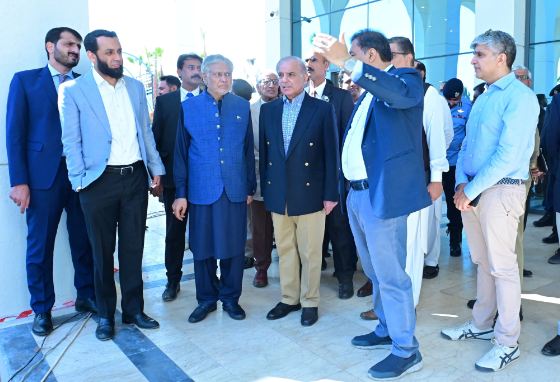
ISLAMABAD, OCT 12 (DNA): Prime Minister Shehbaz Sharif on Saturday visited Jinnah Convention Center to review arrangements for the upcoming Shanghai Cooperation Organization (SCO) Council of Heads of Government in Islamabad scheduled for October 15-16.

On the occasion, the prime minister was briefed by the Chairman Capital Development Authority (CDA) and officials of Ministry of Foreign Affairs, PM Office Media Wing said in a press release.

Deputy Prime Minister and Foreign Minister Ishaq Dar, Minister for Planning and Development Ahsan Iqbal, Minister for Information and Broadcasting and other relevant authorities also accompanied the prime minister.

The prime minister expressed his satisfaction over the preparations made for the SCO meeting.=DNA

Tahseen Sayed, Honorary Consul of Albania, meets PM Rama to promote bilateral trade, tourism

Tahseen Sayed, Honorary Consul of Albania, meets PM Rama to promote bilateral trade, tourism

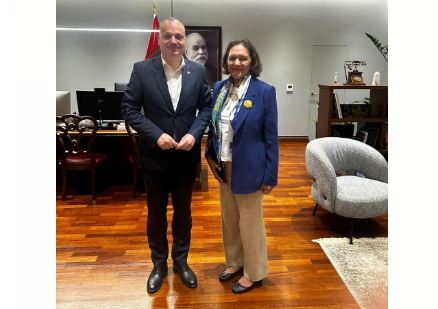
ISLAMABAD, OCT 12 /DNA/ – Honorary Consul of Albania in Islamabad, Tahseen Sayed, has returned to Pakistan after an important and successful visit to Albania to promote Pakistan’s trade and tourism plus strengthening bilateral ties. In an interaction with media here today, Tahseen Sayed, formerly the senior-most Pakistani in the World Bank as Regional Director, referred to her role as as an international expert member of Albania’s National Economic Council chaired by Prime Minister Edi Rama.

She said that ‘during my visit, I met with the top Albanian leadership including  Prime Minister Rama, Ministers of Foreign Affairs, Tourism, Defense, Entrepreneurship, European Integration, Finance, Economy & Planning, and the Mayor of Tirana. She said that ‘main focus of my visit was to have discussions with representatives of the private sector, including Chambers of Commerce, banking sector and tourism and travel operators.  She expressed satisfaction that ‘Albania’s leadership expressed their country’s desire to strengthen engagement with Pakistan and especially welcomed opportunities in the areas of, labour market, tourism and trade’.

 Tahseen Sayed welcomed the recent decision by Government of Pakistan to include Albania among the countries listed for receiving tourists with visa on arrival, which will help in trade and tourism with Pakistan.

Albania is located in southeastern Europe in the Balkans on the Adriatic and Ionian seas and has land borders with Greece, Serbia, Montenegro, Kosovo and North Macedonia. 

The country is well situated for connecting to European markets, especially in southeastern Europe. During recent years, it has seen a phenomenal rise in tourism with tourist arrivals doubling from the pre-Covid period. Albania was once part of the Ottoman Empire.

New powers of the parliament of the new Uzbekistan

New powers of the parliament of the new Uzbekistan

The year 2016 for Uzbekistan was marked by the beginning of a fundamentally new in essence and content stage of state and social construction, in which the main strategic goal was proclaimed – the construction of a New Uzbekistan, based on the values that served the greatest flourishing of our statehood in the 9th-10th centuries (known in world history as First Eastern Renaissance) and XIV-XV centuries (Second Eastern Renaissance). As in previous periods, the basis and priorities of the Third Renaissance of our statehood are the development of science and modern technologies, which are intended to become drivers of dramatic development of the country’s economy, a radical improvement in the well-being of the people and the prosperity of the nation.

At the same time, a new paradigm of relations between the state and the individual was formed and is gradually being introduced, where the highest value is determined by the person, his life, freedom, honor, dignity and other inalienable rights, and the principle of the supremacy of human rights is proclaimed.

This philosophy was reflected in the development strategies of New Uzbekistan adopted during this period, where the basic principle of the state was laid: “Everything for the people, everything for the benefit of the people.” On the basis of this postulate, the main guideline for state policy and government bodies was determined: “It is not the person who serves the state, but the state that serves the person.”

For this purpose, the legislative foundations of the system for ensuring the constitutional rights of citizens, formed at the dawn of independence, were completely revised.

One of the first initiatives of the President the Republic Uzbekistan Sh.M. Mirziyoyev was the idea of theneed to adopt an Electoral Code that would ensure convenient use by citizens of their voting rights, enshrined in numerous and disparate acts of legislation. As a result of systematization and modernization of basic laws and many by-laws, departmental documents of the Central Election Commission of the Republic of Uzbekistan, the Electoral Code of the Republic of Uzbekistan was developed and came into force on June 26, 2019.

One of the important purposes and significance of the Electoral Code was to consolidate, firstly, of the following basic principles of electoral rights, which are fully consistent with international standards and the best democratic practices of developed countries: the universality of the right to vote, equal suffrage, direct suffrage, secret ballot and freedom of elections.

Secondly, the basic principles of the electoral system of the Republic of Uzbekistan, including openness and transparency of elections.

A number of other important innovations of the electoral legislation should be highlighted:

– the rule limiting the participation in elections of persons held in prison for crimes that do not pose a great public danger and less serious crimes has been excluded. This innovation is a significant step in guaranteeing the voting rights of citizens. In addition, the provision on creating conditions for citizens with disabilities to exercise their voting rights deserves attention.

– the introduction of a single electronic list of voters of the Republic of Uzbekistan, and the introduction of a single ballot paper for voting on election day;

– creation of the possibility of affixing a voter’s signature in support of several candidates or parties during the collection of signatures by political parties.

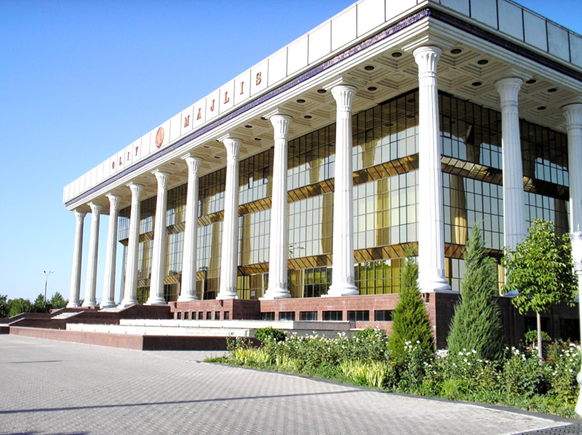
Another priority of the constitutional reform was strengthening the role of the Parliament of Uzbekistan – the Legislative Chamber and the Senate of the Oliy Majlis of the Republic of Uzbekistan in the system of state power by revising the main tasks in the context of the updated Constitution.

What exactly did this mean?

First. In order to form an effective parliament, optimize the activities of the upper chamber based on its main purpose – regional representation, taking into account the preservation of a unique platform and effective platform for interaction and coordination of the activities of the Kengashes of people’s deputies, eliminating parallelism in the activities of the chambers of the Oliy Majlis, based on the goals and objectives of the administrative The reforms of New Uzbekistan modernized the upper house of parliament – the Senate, and strengthened the powers of the lower house of parliament – the Legislative Chamber.

If in the 1992 edition of the Constitution 5 powers were assigned to the exclusive powers of the Legislative Chamber, then in accordance with the new edition of the Constitution their number reached 12. The number of exclusive powers of the Senate increased from the current 14 to 18.

Second. The number of members the Senate has been optimized from 100 to 65, who will be elected in equal numbers, 4 people from each of the 14 regions at meetings of deputies of the Jokargy Kenes and local Kengashes from among these deputies, and 9 members of the Senate will be directly appointed by the President.

In there, foreign experience in forming the composition of representative government bodies was taken into account. Thus, in foreign countries, out of 83 bicameral parliaments, the number of members of the upper house is up to 49 people in 29 countries, 50–99 people in 31 countries, 100 or more in 23 countries. For example, in the Senate of Kazakhstan there are 50 members, in Tajikistan – 33, in Belarus – 64. The number of members the upper chambers appointed by heads of state: Italy – 5, Belarus, Tajikistan – 8, Kazakhstan – 10, Ireland – 11.

Third. Consideration and approval of the Prime Minister’s candidacy is enshrined as the exclusive authority of the Legislative Chamber.

We introduced this innovation taking into account the parliamentary practice of Germany, the Czech Republic, Russia, Belarus, Kazakhstan, etc.

The control powers of parliament have been revised and redistributed by excluding certain of its forms from the powers of the Senate (monitoring the execution of the State Budget; hearing the annual report of the Cabinet of Ministers; hearing the report of the Prime Minister on the socio-economic development of the country, etc.) with their consolidation as the exclusive powers of the Legislative Chamber.

Fourth. With the reduction of control powers, other powers of the Senate were simultaneously expanded, incl. by transferring to him a number of powers of the President, as well as strengthening his role in coordinating the activities of representative bodies of government at the local level, in particular:

– election on the recommendation of the President of the Supreme Judicial Councilheads of the republican anti-corruption body and the republican antimonopoly authority;

– approval of Presidential decrees on the formation and abolition of ministries and other republican executive bodies, etc.

At the same time, the Senate is vested with the authority to perform the functions of parliament in adopting laws (with the exception of the Constitution and constitutional laws) during the period of temporary absence of the Legislative Chamber caused by the early termination of its powers (dissolution).

The control function of the Senate over the activities of regulatory, law enforcement and intelligence agencies are being strengthened. In particular, a procedure is being introduced for the President to appoint the Prosecutor General and the Chairman of the Accounts Chamber with the approval of the Senate, and the Chairman of the State Security Service – after consultations with the Senate.

Fifth. In order to further improve the system of checks and balances in the mechanism of state power, the chambers of the Oliy Majlis are given the power to dissolve themselves, the decision on which is made accordingly by a majority of at least 2/3 of the votes of the total number of deputies of the Legislative Chamber or members of the Senate (Articles 94 and 95) .

At the same time, it is taken into account that parliaments also have the right to self-dissolve in a number of foreign countries, for example, Israel, Bulgaria, Turkmenistan, etc. In some countries, parliament has the power to dissolve itself based on a decision made by a simple majority – in Austria, Croatia, Hungary, Turkey ; qualified majority – in Bosnia and Herzegovina, Cyprus; by a two-thirds majority in Kyrgyzstan and Poland; three-fifths of the votes of (elected) members – in Lithuania.

Sixth. The control powers of the chambers of the Oliy Majlis are expanding, incl. by securing the power to conduct a parliamentary inquiry. In particular, the role of the Oliy Majlis in the fight against corruption is being strengthened by consolidating the powers of the chambers of parliament to hear the annual National Anti-Corruption Report.

The Uzbekistan-2030 Strategy is also aimed at creating a new look for the parliament of Uzbekistan.

Thus, in direction IV “Ensuring the rule of law, organizing public administration focused on serving the people”, in paragraph 4.1. “Reforms to organize public administration focused on serving the people and improve public administration” provide for a further increase in the role of the Oliy Majlis and political parties in the construction of the New Uzbekistan. At the initial stages it is planned:

firstly, to ensure the digital transformation of the work processes of parliament and its bodies, including 100% digitalization of the processes of making and promulgating decisions;

secondly, to ensure the possibility of electronic communication with voters, sending and monitoring deputy requests in electronic form;

thirdly, introduce a procedure for submitting and considering proposals for legislation;

fourthly, introduce a mixed (majority-proportional) system of elections to representative bodies in order to further increase the role of political parties in the process of deepening democratic reforms and modernizing the country.

The last measure is enshrined in the Electoral Code of the Republic of Uzbekistan.

At the same time, we are clearly aware of the possibilities for further improvement of parliamentary activities, especially in terms of strengthening parliamentary control.

Thus, we see one of the tasks in this area as the development and legislative consolidation of clear and clear procedures for the implementation of all forms of parliamentary control for members of Parliament. Here, the main expectation is connected, first of all, with the institution of parliamentary investigation, which can become an effective tool in the case of the development and legislative consolidation of clear and clear grounds for parliamentary deputies to conduct a parliamentary investigation, a detailed procedure and procedure for its conduct, which in foreign practice resemble the procedure of criminal prosecution.

Another task of the new parliament should be to further strengthen and strengthen parliamentary financial control.

Here we expect that the parliament will not only approve the main parameters of the state budget, but also:

– actively participate in the formation of the draft state budget before its submission to the country’s parliament;

– have the opportunity to make all necessary, from the point of view of the electorate, changes and additions to the parameters of the state budget;

– carry out systematic monitoring and control over the efficiency of spending budget funds (with the determination of specific performance indicators, on the basis of which it could make appropriate adjustments) wit the right to suspend and reduce funding for ineffective projects.

Of course, the solution to these and other pressing issues related to the formation of a new look for the country’s parliament will ensure the further development of modern parliamentarism in the Republic of Uzbekistan, strengthen the role and place of parliament in the system of state power and administration in order to achieve such a strategic goal of state building as the construction of a democratic legal states.

Professor Alimjon Akilov,

Chief Researcher,

Institute of Legislation and Legal Policy

under the President of the Republic of Uzbekistan,

Doctor of Legal Sciences

Stay Connected

64FansLike
60FollowersFollow

Latest Reviews

Exchange Rates

USD - United States Dollar
EUR
1.17
GBP
1.34
AUD
0.67
CAD
0.73