Home Blog Page 591

Trump’s Immigrant Xenophobia and the U.S. Constitution 

Qamar Bashir

Qamar Bashir 

In his latest tirade against immigrants in the Denver suburb of Aurora, Colorado, on October 5, 2024, Trump vowed to “rescue America” from what he described as “rapists,” “bloodthirsty criminals,” and the “most violent people on earth,” claiming they are destroying the fabric of the country and its culture. This rhetoric is yet another example of his xenophobic and racist attacks on migrants and minority groups, whom he portrayed as genetically predisposed to criminal behavior. He positioned himself as the only one capable of saving the country from these individuals, whom he labeled as “animals,” “stone-cold killers,” “the worst people,” and “the enemy from within.”

He is no longer just discussing keeping immigrants out of the country, building a wall, or banning Muslims from entering the United States. Now, he warns that migrants have already “invaded,” destroying the country from within its borders. He uses this narrative to justify a second-term policy agenda that includes constructing massive detention camps and carrying out mass deportations.

During his inflammatory speech, which resonated well with his supporters who endorse white supremacist views, Trump launched a broadside against thousands of Venezuelan migrants in Aurora. He declared that he would invoke the Alien Enemies Act, which allows a president to authorize the roundup or removal of individuals from enemy nations during times of war, to target migrant gangs and criminal networks. He also blamed Kamala Harris for “importing an army of illegal alien gang members and migrant criminals from the dungeons of the third world,” claiming that she had resettled individuals from prisons, jails, insane asylums, and mental institutions into American communities to prey on innocent citizens.

Since the September 10 presidential debate, Trump has increasingly used dark, graphic language to demonize minority groups, particularly migrants, in his speeches. His rhetoric can be described as political fear mongering, echoing authoritarianism and even elements of Nazi ideology. This consistent vilification of both legal and illegal immigrants has instilled a widespread sense of fear, uncertainty, and insecurity within immigrant communities across the country.

Trump’s rhetoric on immigration, particularly his demonization of migrants and minorities, represents a significant deviation from the core principles of the U.S. Constitution. The 14th Amendment’s Equal Protection Clause guarantees that “no state shall…deny to any person within its jurisdiction the equal protection of the laws.” By broadly labeling immigrants as “rapists” or “animals,” Trump undermines this constitutional mandate, promoting discrimination based on nationality and ethnicity. His language, which paints entire groups of people as inherently criminal, conflicts with the Supreme Court’s interpretation of the Equal Protection Clause, which requires that laws and policies must not unfairly target specific groups without justification.

The 5th and 14th Amendments also enshrine the right to due process, stating that no person shall be “deprived of life, liberty, or property, without due process of law.” Trump’s proposals for mass deportations and the construction of detention camps raise serious concerns about violating due process. Historically, due process has been interpreted to mean that all individuals, including immigrants, must be given a fair hearing before being subjected to punitive measures such as deportation. The Supreme Court has consistently ruled in cases such as Zadvydas v. Davis (2001) that even non-citizens are entitled to procedural fairness under the Constitution.

Additionally, Trump’s rhetoric around the Muslim travel ban and his discriminatory remarks about Mexican immigrants contradict the First Amendment, which protects religious freedom. The Establishment Clause prohibits the government from favoring or disfavoring a particular religion, as emphasized in Church of the Lukumi Babalu Aye, Inc. v. Hialeah (1993), where the Court ruled that laws targeting specific religious practices are unconstitutional. Trump’s Muslim ban, justified through rhetoric that broadly frames Muslims as potential terrorists, flies in the face of this protection and has been widely criticized as unconstitutional.

Beyond constitutional violations, Trump’s rhetoric sharply diverges from the broader societal and political norms of American democracy. The U.S. is historically a nation of immigrants, and the American civic identity has long embraced diversity and multiculturalism. Trump’s statements that immigrants are “destroying the fabric” of the country contradict the American ethos of being a “melting pot,” where people from diverse backgrounds contribute to society. The Pew Research Center has shown that immigrants—both legal and undocumented—are integral to the labor force, with over 17% of the U.S. workforce consisting of immigrants. Deporting large numbers of people, particularly without due process, risks destabilizing communities and entire industries that rely on immigrant labor.

Furthermore, Trump’s inflammatory language undermines the norms of respect and civil discourse that have long been foundational to U.S. politics. His labeling of immigrants as “animals” and “stone-cold killers” deviates from the accepted standards of political debate, where even contentious issues have typically been discussed within a framework of civility. This kind of rhetoric can have real consequences: studies by the FBI and Southern Poverty Law Center show that hate crimes surged following the 2016 election, fueled in part by inflammatory political language. Such outcomes illustrate how rhetoric that deviates from constitutional norms and societal expectations can foster a dangerous atmosphere of division, hatred, and violence.

Economically, mass deportations would severely disrupt industries that rely heavily on immigrant labor, such as agriculture, manufacturing, and services. Immigrants contribute billions of dollars in taxes and are integral to the workforce, and their removal would lead to labor shortages and increased costs for businesses and consumers. Moreover, the financial burden of implementing such policies, including the establishment of detention camps, would fall on taxpayers. Politically, Trump’s alienation of immigrant voters could mobilize them to vote against him in large numbers, particularly in swing states like Michigan, where immigrant communities play a key role. His divisive agenda not only threatens the economy and public order but also risks deepening polarization in an already fractured society.

Qamar Bashir 

Former Press Secretary to the President 

Former Press Minister to the Embassy of Pakistan to France 

Former MD, SRBC, CEO, ATV

JOINT COMMINQUE OF THE SCO SUMMIT ISLAMABAD 2024

JOINT COMMINQUE OF THE SCO SUMMIT ISLAMABAD 2024

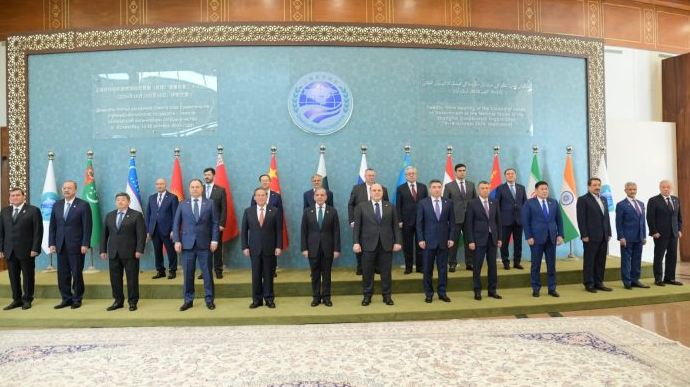
Islamabad, Oct 16 (DNA) : On 15-16 October 2024, the twenty-third meeting of the Council of Heads of Government (Prime Ministers) of the Shanghai Cooperation Organization (hereinafter referred to as the SCO or the Organization) was held in Islamabad.

It was attended by Prime Minister of the Republic of Belarus R.A. Golovchenko, Minister of Foreign Affairs of the Republic of India S. Jaishankar, Minister of Industry, Mine and Trade of the Islamic Republic of Iran, Seyed Mohammad Atabak, Prime Minister of the Republic of Kazakhstan O.A.Bektenov, Premier of the State Council of the People’s Republic of China Li Qiang, Chairman of the Cabinet of Ministers of the Kyrgyz Republic A.U. Zhaparov, Prime Minister of the Islamic Republic of Pakistan Muhammad Shehbaz Sharif, Chairman of the Government of the Russian Federation M.V. Mishustin, Prime Minister of the Republic of Tajikistan Kokhir Rasulzoda and Prime Minister of the Republic of Uzbekistan A.N. Aripov.

The meeting was chaired by the Prime Minister of the Islamic Republic of Pakistan Muhammad Shehbaz Sharif

The meeting was attended by SCO Secretary-General Zhang Ming, Director of the Executive Committee of the SCO Regional Anti-Terrorist Structure R.E. Mirzaev, Chairman of the National Part of the SCO Business Council from the Islamic Republic of Pakistan Sheikh Atif Ikram, Chairman of the SCO Interbank Association Council M.T. Elibaev.

The meeting was attended by the Prime Minister of Mongolia L. Oyun-Erdene (SCO Observer State) and Deputy Chairman of the Cabinet of Ministers, Minister of Foreign Affairs of Turkmenistan R. Meredov as a guest of the presiding party, as well as the heads of the permanent bodies of the CIS and CICA.

The heads of delegations highly appreciated the chairmanship of the Republic of Kazakhstan in the SCO in 2023-2024 and stressed the importance of implementing the decisions taken following the outcomes of the meeting of the Council of Heads of State of the SCO Member States (CHS) in Astana on July 4, 2024.

The Heads of Delegation expressed their support for the People’s Republic of China as the current chair of the Organization for 2024-2025.

The Heads of Delegation noted that the Member States advocate respect for the right of peoples to independently and democratically choose their political, social and economic development, emphasising that the principles of mutual respect for the sovereignty, independence, and territorial integrity of States, equality, mutual benefit, non-interference in internal affairs, non-use of force or threat of use of force are the basis for the sustainable development of international relations. They reaffirm the commitment to the peaceful settlement of differences and disputes between countries through dialogue and consultations.

The Heads of Delegation reaffirmed the intention of the Member States to promote the proposal for the adoption of a Resolution by the UN General Assembly in connection with the SCO Initiative “On World Unity for a Just Peace, Harmony and Development”.

Heads of Delegations, taking into account the views of Member States, confirmed the relevance of initiatives to promote interaction in building a new type of international relations in the spirit of mutual respect, justice, equality and mutually beneficial cooperation, as well as the formation of a common vision of the idea of creating a community of common destiny of mankind and the development of dialogue on the idea of “One Earth. One Family. One Future”.

The Heads of Delegations reaffirmed that the Member States intend to further develop cooperation in the spheres of politics and security, trade, economy, finance and investment, and cultural and humanitarian ties in order to build a peaceful, safe, prosperous and ecologically clean planet Earth to achieve harmonious coexistence of man and nature.

The Heads of Delegation noted the tectonic shifts in the global economy, characterized by rapid advancements and interconnectivity in the areas of information technology, digitalization, artificial intelligence, virtual/digital assets, e-commerce, etc. They expressed concern over the exacerbation of various challenges that have led to reduced investment flows, disrupted supply chains and uncertainty in global financial markets as a result of protectionist measures and other impediments to international trade.

The Heads of Delegation consider it important to continue joint efforts to counter protectionist trade measures that are contrary to WTO rules and regulations, as well as to continue working on strengthening the rules-based WTO, non-discriminatory, open, equitable, inclusive and transparent multilateral trading system, based on the WTO.

They also oppose protectionist actions, unilateral sanctions and trade restrictions that undermine the multilateral trading system and impede global sustainable development.

The heads of delegations emphasized that the unilateral application of sanctions is incompatible with the principles of international law and has a negative impact on third countries and international economic relations.

The Republic of Belarus, the Islamic Republic of Iran, the Republic of Kazakhstan, the Kyrgyz Republic, the Islamic Republic of Pakistan, the Russian Federation, the Republic of Tajikistan and the Republic of Uzbekistan while reaffirming support for the People’s Republic of China’s One Belt, One Road (OBOR) initiative, noted ongoing work on joint implementation of the project, including efforts to bridge the Eurasian Economic Union and OBOR.

The Heads of Delegation stressed that the Member States consider it important to use the potential of the countries of the region, international organizations and multilateral associations to create in the SCO region a space of broad, open, mutually beneficial and equal interaction in accordance with the norms of international law, mutual respect and consideration of national interests.

They noted the proposal to create a Greater Eurasian Partnership with the participation of the SCO, Eurasian Economic Union, Association of Southeast Asian Nations, as well as other interested states and multilateral associations.

The Heads of Delegations, advocating the promotion of cooperation within the framework of the SCO Year of Sustainable Development, considered it important to pursue sustainable and inclusive economic growth of Member States by optimizing the region’s potential in areas such as green development, digital economy, trade, e-commerce, finance and banking, investment, high technology, start-ups and innovation, poverty alleviation, health care, including traditional and folk medicine, agriculture, industry, transport, logistics connectivity, energy, including renewable energy, communications, science and technology, environment and climate change.

The heads of delegations, reaffirming their desire to ensure stable economic and social development in the SCO region, noted the importance of implementing the SCO Economic Development Strategy for the period up to 2030 and the Program of Multilateral Trade and Economic Cooperation of the SCO member states. They stressed the need for coordinated efforts through the mechanisms of relevant cooperation in order to implement the respective action plans.

The heads of delegations noted the results of the Meeting of SCO Ministers responsible for foreign economic and foreign trade activities ( Islamabad, 12 September 2024) and instructed to ensure the implementation of the Concept for the Establishment of the Base of Economic Preferences of the SCO Member States, the Concept of Cooperation between Trade Promotion Organizations of the SCO Member States and the Framework for Cooperation of the SCO Member States in the Development of Creative Economy.

The heads of delegations, noting the presence of significant potential and opportunities for further building up trade and economic ties, stressed the importance of implementing the Concept of Cooperation in the Development of the “New Economic Dialogue” between the SCO member states.

The heads of delegations believe it is necessary to effectively utilize the digital economy and scientific and technological innovations in order to give a new impetus to economic development and progress in the SCO space, as well as to enhance the competitiveness of the region’s economy and potential. They emphasized that technology should benefit everyone.

The Heads of delegations stressed the importance of deepening cooperation in the field of information security, the relevance of the “digital divide” issue and advocated for exploring the creation of a mechanism for cross-border data exchange, taking into account the national legislations of countries, the introduction of digital technologies in the economic and social spheres, the development of e-government, electronic payment systems, e-commerce and other areas of digital business.

They noted the adoption by interested Member states of the Concept for the Development of Digital Public Infrastructure for the Dissemination of Digital Technologies among the Population (Digital Inclusion) and the Promotion of Innovation (New Delhi, May 13, 2023).

The heads of delegations emphasized the importance of regular meetings of the Special Working Group on Electronic Commerce and noted the proposal to convene the next meeting in China in the first quarter of 2025 and to develop a draft Program of Cooperation of the SCO Member States in the field of electronic commerce.

The Heads of Delegation noted the role of standardization tools in trade facilitation and called for the promotion of mutually beneficial and equal interaction between the SCO Member States, as well as the exchange of experience in these areas.

The Heads of Delegation noted the positive dynamics in the development of customs cooperation, in particular on projects aimed at simplifying, securing and strengthening logistics chains in the SCO space, improving customs control and suppressing smuggling channels.

Recognizing the importance of the work of the Meeting of Industry Ministers of the SCO Member States, the heads of delegations noted the proposals to hold the next meeting in 2025. They believe that support for creative industries will stimulate the competitiveness of economies and industrialization, which will lead to the expansion of labour markets, including for the benefit of youth, a reduction in unemployment, and sustainable growth in the SCO member states.

The Heads of Delegation also advocated the elaboration of the proposal to create a Data Bank of investment projects in the field of industry of the SCO Member states and the adoption of the Regulations on the organization of congress and exhibition events under the auspices of the Meeting of Industry Ministers of the SCO member states.

The heads of delegations noted the positive experience of the SCO’s participation as a partner organization of the INNOPROM International Industrial Exhibition (Ekaterinburg, July 8-11, 2024)

The heads of delegations noted the proposal to establish an exchange of experience on the implementation of national industrial policy, digital platforms, production technologies, standardization in the field of IT solutions.

The heads of delegations noted that the development of micro, small and medium-sized enterprises is important to stimulate economic growth and create jobs. In this regard, they emphasized the need to continue practical interaction under the Memorandum of Understanding on Promoting SCO Cooperation in Micro, Small and Medium Enterprises (Qingdao, June 10, 2018).

The Heads of Delegations, stressing the importance of promoting a common vision of the energy future, noted the results of the Meeting of the Ministers of Energy of the SCO Member States (Astana, June 21, 2024). They emphasized the need to continue mutually beneficial cooperation in the energy sector, in particular, in order to develop cross-border energy infrastructure, strengthen energy security on the basis of the Strategy for the Development of Energy Cooperation of the SCO Member States for the period up to 2030 (Astana, July 4, 2024), and instructed to accelerate the development of a “roadmap” for its implementation.

The heads of delegations noted the proposal to prepare a comprehensive plan to stimulate investment and attract technologies in renewable energy. Taking into account the national interests of the Member States, they will continue to promote the development of a full-scale dialogue on energy issues, practical cooperation among energy producers, transit countries and energy consumers.

The heads of delegations welcomed the outcomes of the first Meeting of the heads of Ministries and Departments of the SCO Member states in the field of antitrust policy (Dushanbe, May 30, 2024), which made an important contribution to strengthening cooperation in the field of antitrust regulation and combating unfair competition in order to create a fair international economic and trade environment.

The Heads of delegations noted the need to improve the mechanism of external audit of the Organization by involving the supreme audit institutions of the SCO Member States with the necessary professional competencies in this activity. They instructed the heads of the Supreme Audit Institutions to consider this issue at the next relevant meeting.

The heads of delegations welcomed the establishment of the SCO Investors Association and instructed the authorized bodies of the SCO Member States to take measures to establish the practical work of this cooperation mechanism. They noted the results of the meeting of the Special Working Group on Investment Promotion of the SCO Member States(Tehran, February 20-22, 2024), co-chaired by the Republic of Tajikistan and the Islamic Republic of Iran, as well as the proposal to develop a set of measures to stimulate mutual investments. The heads of delegations expressed confidence that the activities of these mechanisms will give a new impetus to cooperation within the SCO in the investment sphere.

Pursuant to the SCO CHS Decision of 4 July 2024 on the mechanisms of financial support for project activities of the Shanghai Cooperation Organization, the heads of delegations instructed the authorized Ministries and Departments of the Member States to intensify consultations on the establishment of the SCO Development Bank, the SCO Development Fund (Special Account) and, in the format of the interested parties, the SCO Investment Fund.

The heads of delegations of the interested SCO member states, noting the efforts to seek consensus to develop agreed recommendations for the SCO member states, reaffirmed the need for consistent implementation of the Road Map of the SCO Member States on gradual increase in the share of national currencies in mutual settlements (Samarkand, September 16, 2022).

They highlighted proposals for the establishment of an independent settlement-clearing mechanism, as well as for the convergence of payment systems by interested member states.

The heads of delegations, stressing the important role of the SCO Business Council (BC) in the development of cooperation between the business communities of the SCO member states, noted the results of the meeting of the SCO BC Board and the SCO Business Forum (Astana, June 28, 2024).

The heads of delegations noted the efforts of the SCO Interbank Association (IBA) in studying best practices for implementing ESG-financing between SCO IBA member banks and the introduction of financial innovations in order to promote sustainable and balanced growth of national economies.

They noted the intention of the Government of the Islamic Republic of Iran to join the work of the SCO IBA.

The heads of delegations consider the contribution of the BC and IBA to practical cooperation in the interests of sustainable socio-economic development in the SCO space to be important.

The heads of delegations noted the work of the Consortium of SCO Economic Think Tanks, including the preparation of a report on the topic “Improving Trade and Technological Cooperation between the SCO Member States: proposals and Further Actions”. They welcomed the accession of the Belarusian Institute for Strategic Studies to the Consortium.

The heads of delegations, reaffirming the special role of the development of interregional cooperation, noted the results of the Forum of the Heads of SCO Regions (Omsk, September 17-19, 2024).

They consider the activities of these formats important for strengthening trade and economic cooperation between the SCO Member States, studying the state and assessing the prospects of multilateral interaction within the framework of the Organization.

The heads of delegations noted the importance of building multilateral cooperation in the field of official statistics for the introduction of best statistical practices and methodological developments in order to timely provide the Member states with official statistical information within the framework of priority directions of trade and economic cooperation.

The heads of delegations confirmed that the member states, sharing the international community’s desire to strengthen interconnectivity, welcome initiatives of the SCO countries in the transport sphere aimed at developing mutually beneficial cooperation on a fair and balanced basis in accordance with international law, the goals and principles of the UN Charter and the SCO Charter.

They advocated further implementation of the Concept of Cooperation of the SCO Member States on the Development of Interconnectivity and Creation of Efficient Transport Corridors (Samarkand, September 16, 2022).

The heads of delegations noted the results of the Meeting of the Transport Ministers of the SCO Member States(June 20, 2024, VC).

They spoke in favour of the active implementation of the Agreement between the Governments of the SCO Member States on Establishing Favourable Conditions for International Road Transport (Dushanbe, 12 September 2014), including regular meetings of the relevant Joint Commission. The heads of delegations welcomed the holding of an international, regional conference dedicated to the 10th anniversary of the signing of the above-mentioned intergovernmental agreement (Dushanbe, May 29, 2024).

They instructed relevant ministries and departments to take measures to implement previously adopted conceptual documents in the areas of decarbonization of transport, digital transformation and innovative technologies, and development of ports and logistics centres.

The Heads of Delegation stressed the need for further development of cooperation in the field of railway transport and welcomed the holding of the Meeting of the Heads of Railway Administrations (Railways) of the SCO Member States in Moscow on 27-29 November 2024.

They advocated the use of innovations and the latest technologies, including digital ones, in multimodal transportation in the railway industry.

The Heads of Delegation emphasized the importance of taking measures to develop port, logistics and railway infrastructure, scientific and technological innovations, the development of multi- and intermodal transport, modern logistics centres and human resources, digitalization, and ensuring safety, including environmental initiatives, in railway transport. They called for active, practical cooperation within the framework of the adopted Concept of Cooperation of the SCO Member states in the field of development of ports and logistics centres (Astana, July 4, 2024).

The Heads of Delegations spoke in favor of increasing cooperation in the field of environmental protection, including biodiversity conservation and waste management. They instructed the authorized agencies to take measures for effective implementation of the Statement of the Council of Heads of State of the SCO Member States on effective waste management adopted on July 4, 2024, in Astana, the Agreement between the Governments of the SCO Member States on cooperation in the field of environmental protection and the Program on development of cooperation between the SCO Member States in the field of protected areas (specially protected natural territories, protected natural areas) and eco-tourism. The Heads of Delegations highly appreciated for holding environmental actions and events within the framework of the SCO Year of Ecology in 2024.

The heads of delegations noted the importance of implementing the UN General Assembly resolutions on “Sustainable Mountain Development” on declaring 2023-2027 as the “Five Years of Action for the Development of Mountain Regions”, as well as the annual celebration of World Glacier Day on March 21 and the establishment of a trust fund to support glacier conservation activities.

The Heads of Delegation noted the results of the Meeting of the Heads of Ministries and Departments of the SCO Member states responsible for Environmental Protection (Astana, May 22, 2024) and called for the consistent implementation of the Program for the Creation of a Platform for the Exchange of Information in the Field of Environmental Protection (Beijing, November 1, 2022), adopted by the interested Member States, as well as the Joint Approaches of the SCO Member States to Address Environmental Issues adopted in Astana on May 22, 2024, and the Joint Action Plan for the Implementation The SCO Green Belt Program for 2024-2026 and the Plan for the Implementation of the Concept of Cooperation of the SCO Member States in the Field of Environmental Protection for 2025-2027.

The Heads of Delegations, reaffirming the commitment of the SCO Member States to cooperate on climate change and overcome its negative consequences through the exchange of experience and the study of best practices, instructed the relevant ministries and departments to accelerate the establishment of the activities of the Special Working Group on Climate Change, including the adoption of the relevant Regulation. They noted the proposals for the development of a draft agreement between the governments of the SCO Member States on cooperation in the field of climate change, as well as on the creation of the SCO Database on Innovative Environmental Technologies.

They are in favor of developing a dialogue with relevant international institutions in order to attract investment and finance joint projects and programs in the field of environmental protection, the introduction of new environmentally friendly technologies, and increasing the share of the “green” economy.

The heads of delegations also noted the results of the SCO Forum on Green Development (Qingdao, July 8-9, 2024).

The heads of delegations, noting the increasing risks of natural disasters, spoke in favor of further deepening cooperation between emergency agencies, including in the field of space monitoring of natural disaster risks, the exchange of operational information and best practices, the holding of seminars and practical exercises for timely response to emergencies, including ensuring safety during emergency rescue operations.

They reaffirmed their intention to ensure the implementation of the Action Plan for 2023-2025 on the implementation of the Agreement between the Governments of the SCO Member States on Cooperation in Providing Assistance in Emergency Response (Moscow, 26 October 2005).

The heads of delegations spoke in favour of increasing cooperation of the Member States in the prevention and treatment of infectious and non-infectious diseases, ensuring sanitary and epidemiological well-being, digitalization of healthcare systems, ensuring access to high-quality medicines, and development of medical tourism in the SCO region. In the context of the results of the SCO Health Ministers Meeting (Astana, March 14, 2024), they instructed the relevant Ministries and Departments to ensure the implementation of the adopted Plan of Basic Measures for the Development of SCO Health Cooperation for 2025-2027, as well as to accelerate the consideration of the proposal to establish the SCO Medical Association in the format of interested states.

The heads of delegations noted the results of the Meeting of the Expert Working Group of the SCO Member States on Traditional Medicine (23 November 2023, VC) and the SCO International Medical Congress (Bishkek, March 27-29, 2024).

The Heads of Delegations emphasized that in order to ensure sanitary and epidemiological well-being and improve the preparedness of the Member States to counter epidemics of infectious diseases, it is necessary to achieve reliable access to basic sanitation and hygiene services for all. They noted the proposal to hold the next Meeting of the Heads of Services of the SCO Member States responsible for ensuring sanitary and epidemiological well-being on December 12th, 2024, in St. Petersburg, including considering the implementation of the Statement of the Council of Heads of the SCO Member States on Ensuring Safe Drinking Water and Sanitation (Astana, July 4, 2024), as well as the preparation for the draft Agreement on Cooperation of the SCO Member States in Combating Plague.

The heads of delegations noted the importance of developing further cooperation in overcoming poverty and increasing the well-being of the population within the framework of the activities of the Special Working Group (SWG) of the SCO Member States on poverty reduction issues. The work of the SCO Member States in this area contributes to the formation of a lifestyle aimed at achieving the relevant UN Sustainable Development Goals, and also helps to disseminate the experience of best programs and practices among the SCO Member States. They noted the results of the meeting of the SWG (December 6th, 2023, VC) and the thematic expert meeting (September 10th, 2024, VC), as well as the proposal to develop a programme of cooperation among the SCO Member States on poverty reduction.

The Heads of Delegation noted the results of the Meeting of the Ministers of Agriculture of the SCO Member States(29 May 2024, VC), including the approval of the Programme for the Development of Cooperation in Breeding and Seed Production of Agricultural Crops between the SCO Member States. They called for further strengthening cooperation in order to increase mutual trade in agricultural products and expand the areas of interaction between the Member States on the basis of previously adopted documents and solutions in the field of agriculture and food security.

The Heads of Delegation reaffirmed the need for action to strengthen global food security and improve nutrition and encourage efforts to develop cooperation in research on climate-resilient and nutritious cereal crops, including millet, rice, wheat, maize and other traditional crops.

The Heads of Delegation noted the proposal for the participation of the SCO Member States in the Belagro International Agricultural Exhibition (Minsk, 3-7 June 2025).

The heads of delegations stressed the unwavering commitment of the Member States to respect and preserved traditional values and cultural and civilizational diversity, as well as the need to further deepen cooperation in the humanitarian field by introducing new formats of interaction in education, culture, tourism and sports. They noted the importance of strengthening the global dialogue between religions and cultures, including within the framework of the Congress of Leaders of World and Traditional Religions.

The heads of delegations noted the results of the Meeting of Heads of Ministries and Departments responsible for the development of physical culture and sports in the SCO Member States(Almaty, 24 May 2024), as well as the need to accelerate the consideration of the initiatives to establish the Association of SCO Sports Organizations, establish a Working Group on Physical Culture and Sports and hold the SCO Sports Games.

The heads of delegations noted the proposal to hold the “Silk Road” mini-football tournament for the SCO Member States Cup in futsal on December 9-18, 2024 in Tehran.

The heads of delegations, noting the results of the Meeting of the Heads of Tourism Administrations of the SCO Member States(Almaty, May 24, 2024), spoke in favor of the consistent implementation of the Agreement between the Governments of the SCO Member States on the Development of Cooperation in the Field of Tourism (Samarkand, September 16, 2022) and the SCO Joint Plan of Action in the Field of Tourism for the period 2024-2025.

The heads of delegations stressed the positive contribution of the annual SCO marathon in Kunming (People’s Republic of China) and Issyk-Kul region (Kyrgyz Republic) to the development of sports cooperation within the SCO.

The Heads of Delegations attach great importance to holding sports events and competitions with the participation of SCO Member States, SCO Observer States and SCO Dialogue Partners in order to strengthen sports ties between the countries, as well as the development of Olympic, non-Olympic, and Paralympic and national sports.

Recognizing the unique role of physical culture and sport in strengthening solidarity and peace, The Heads of Delegations stressed that the SCO Member States will promote the development of international sports cooperation on an equal and depoliticized basis, oppose discrimination against athletes on any grounds, including nationality, language, political and other beliefs, national or social origin.

The heads of delegations, advocating the development of cooperation in the field of youth policy, noted the role of the SCO Youth Council in strengthening cooperation between youth organizations and young leaders, including the results of the SCO Business Incubator event (Moscow and Dubai, 23-28 September 2024).

The Heads of Delegations noted the results of the Meeting of the Heads of Ministries and Departments of Science and Technology of the SCO Member States(19 June 2024, VC), at which it was agreed to give priority to the formation and implementation of mutually interested programs and projects in the field of scientific and technical cooperation, improving the legal framework and intensifying scientific and technical cooperation of the SCO Member States. The Heads of Delegation highlighted the need to intensify interaction within the framework of the Action Plan on Scientific and Technical Cooperation between the SCO Member States on priority areas (2022-2025) (Samarkand, September 16th, 2022).

The Heads of Delegations believe that in the context of globalization, startups and innovations play a key role in increasing the competitiveness of states, and in these regards noted the results of the meeting of the Special Working Group on Startups and Innovations (November 23, 2023, VC) and the 4th SCO Startup Forum (New Delhi, March 18-20, 2024).

The Heads of Delegations welcomed the joint efforts of the SCO Member States to conduct a pilot selection for the joint research and innovation projects within the SCO, as well as the adoption of a roadmap for the implementation of the Cooperation Programme of the SCO Member States for the Development of Artificial Intelligence.

The Heads of Delegations noted the results of the Meeting of the Ministers of Culture of the SCO Member States(15 May 2024, VC) and emphasized the importance of further developing cultural cooperation to strengthen friendship and good-neighbourly relations. They stressed the prospects for cooperation in the field of culture and noted the proposal to draw up a Calendar of Cultural Exchanges of the SCO Member States.

The Heads of Delegations spoke in favour of further active implementation of the Agreement between the Governments of the SCO Member States on Cooperation in the Protection of Cultural Heritage Sites (Dushanbe, 17 September 2021), including in order to counter the smuggling of cultural property.

The Heads of Delegations highly appreciated the events within the framework of the tourist and cultural capital of the SCO in 2023-2024 in Almaty. They believe that the announcement of the city of Qingdao as the tourist and cultural capital of the SCO for the period 2024-2025 will also contribute to unlocking the tourism potential of the region and further strengthening cooperation in the field of culture.

The Heads of Delegation noted the results of the Meeting of the Ministers of Education of the SCO Member States(Moscow, 18 April 2024), at which priority was given to building up cooperation within the SCO University, the development of cooperation in the field of academic exchanges, joint scientific work, the organization of vocational education, language training, enhancing youth interaction, as well as digitalization in the field of education in the SCO interested Member States.

The heads of delegations emphasize that people-to-people diplomacy contributes to strengthening mutual understanding and cultural and humanitarian ties within the SCO. They noted the contribution of the Chinese Committee for Good-Neighborliness, Friendship and Cooperation, the Center for People-to-People Diplomacy of the SCO in Uzbekistan, the Center for Cultural and Integration of the SCO in the Kyrgyz Republic, the Center for Friendship and Cooperation of the SCO in the Republic of Tajikistan and the National Center for People-to-People Diplomacy of the SCO in the Russian Federation to the development of humanitarian cooperation within the Organization.

The Heads of Delegation approved the Report of the SCO Secretariat on the Events and Meetings held within the framework of the Implementation of the Programme of Multilateral Trade and Economic Cooperation of the SCO Member States and the SCO budget for 2025.

Decisions were made on a number of issues related to the financial and organizational activities of the SCO Permanent Bodies, taking into account the accession of the Republic of Belarus to the Shanghai Cooperation Organization.

The Heads of Delegation expressed their gratitude to the Islamic Republic of Pakistan for the successful organization of the twenty-third Meeting of the Council of Heads of Government (Prime Ministers) of the SCO Member States, which was held in a constructive and friendly atmosphere.

The next meeting of the Council of Heads of Government (Prime Ministers) of the SCO Member States will be held in 2025 in the Russian Federation.

Drones in Modern Warfare

Drones in Modern Warfare

Dr. Muhammad Akram Zaheer

The concept of drones as the future of warfare has gained significant attention over the years, as advancements in technology have dramatically reshaped the landscape of military operations. Drones, or unmanned aerial vehicles (UAVs), offer a distinct set of advantages that make them increasingly attractive to military strategists and defense planners. Their lightweight design, high maneuverability and ability to deliver payloads with precision, all while minimizing direct human involvement in combat, highlight their growing importance. These factors have already been observed in several conflicts, with the United States leading the way in utilizing drones extensively in campaigns in Afghanistan and Iraq for precision strikes as well as broader military operations.

One of the most significant benefits of drones is their ability to operate without placing the lives of their operators at risk. Traditional aerial combat and reconnaissance missions often require manned aircraft, which, despite their advanced capabilities, expose pilots to direct enemy fire and other combat-related dangers. By removing the human element from the aircraft itself, drones ensure that military personnel can conduct missions remotely, often from locations thousands of miles away from the combat zone. This remote operation reduces the likelihood of casualties and allows for more strategic flexibility in decision-making.In addition to reducing risks to human lives, drones are cost-effective compared to traditional manned aircraft. Producing and maintaining manned fighter jets is not only expensive but also time-consuming, requiring extensive resources for both pilot training and aircraft maintenance. In contrast, drones are relatively inexpensive to produce and maintain. Their lightweight design allows for simpler engineering, reducing the need for heavy-duty components, which, in turn, lowers costs. Furthermore, the absence of human pilots allows for more flexibility in terms of fuel usage and operational endurance.Drones also offer greater operational flexibility due to their size and maneuverability. Unlike traditional manned aircraft, which often require large airstrips and specific weather conditions to operate, many drones are designed to take off and land in minimal space and can operate in diverse environmental conditions. This versatility makes drones highly effective in both urban and remote settings, enabling military forces to deploy them in a wide range of missions, including surveillance, reconnaissance, target acquisition and combat strikes.

The evolution of drones from surveillance tools to active combatants in warfare has been driven by technological advancements and strategic necessities. Initially, drones were used primarily for intelligence, surveillance and reconnaissance (ISR) missions. Their ability to gather real-time data from above the battlefield provided invaluable information to military commanders, helping to shape strategy and tactical decision-making. By offering a bird’s-eye view of enemy movements, infrastructure and terrain, drones enhanced the military’s situational awareness and improved overall battlefield management.However, drones soon evolved beyond their ISR roles. Advances in weaponization technology allowed drones to carry and deliver a range of payloads, including missiles, bombs and other precision-guided munitions. This capability transformed drones into a critical asset for executing precision strikes. By leveraging GPS-guided weaponry and advanced targeting systems, drones could carry out highly accurate attacks with minimal collateral damage, which is crucial in modern warfare where civilian casualties and infrastructure damage are major concerns.In the United States’ campaigns in Afghanistan and Iraq, drones played a pivotal role in counterterrorism and counterinsurgency operations. Drones such as the MQ-1 Predator and the MQ-9 Reaper were utilized to conduct airstrikes against high-value targets, including terrorist leaders and key insurgent positions. The precision of these strikes reduced the need for large-scale ground operations, allowing U.S. forces to neutralize threats while minimizing their physical presence in hostile territories.

While the advantages of drones in warfare are clear, their use raises significant ethical and legal questions. One of the most pressing concerns is the potential for civilian casualties. Although drones are designed to carry out precision strikes, there have been instances where drone operations have resulted in unintended deaths and injuries. The complexity of modern battlefields, where combatants often hide among civilian populations, complicates targeting processes and increases the risk of collateral damage. This issue has led to debates over the proportionality and legality of drone strikes, particularly when they are conducted in countries where the United States is not officially at war, such as Pakistan and Yemen.Another ethical dilemma is the relative ease with which drone strikes can be authorized and executed compared to traditional military operations. The remote nature of drone warfare allows decision-makers to initiate strikes with minimal direct oversight, which has raised concerns about the accountability of military and political leaders. Critics argue that the detachment created by remote operations can lead to a “video game” mentality, where the consequences of lethal force may not be fully considered. Furthermore, the legal status of drone strikes, especially in sovereign nations without formal declarations of war, remains a point of contention in international law.

Looking ahead, drones are poised to play an even more significant role in future warfare. Technological innovations continue to expand their capabilities, with advances in artificial intelligence (AI), machine learning and autonomous systems enhancing their operational potential. AI-enabled drones could soon be capable of executing complex missions with minimal human input, making decisions based on real-time data and adjusting to dynamic battlefield conditions. Autonomous drones could operate in swarms, overwhelming enemy defenses through sheer numbers and sophisticated coordination.Moreover, the integration of drones into multi-domain operations, where air, land, sea, space and cyber domains are interconnected, is likely to further elevate their strategic importance. Drones equipped with advanced sensors and communication systems could act as key nodes in a networked battlefield, providing real-time data to military assets across different domains. This interconnectedness would enhance the military’s ability to conduct synchronized operations and improve overall combat effectiveness.As more countries develop their own drone capabilities, the global proliferation of military drones is inevitable. Nations such as China, Russia and Turkey have already made significant strides in drone technology and their use of drones in various conflicts highlights the growing significance of UAVs in global security dynamics. The widespread availability of drones also raises the prospect of non-state actors and terrorist groups acquiring and using drones for their own purposes, adding a new layer of complexity to modern warfare.

Drones have revolutionized warfare by providing military forces with a versatile, cost-effective and low-risk tool for conducting a wide range of operations. Their ability to operate remotely, deliver precision strikes and gather real-time intelligence has made them indispensable in modern conflicts. However, the use of drones also raises important ethical and legal challenges, particularly in terms of civilian casualties and the accountability of military leaders. As drone technology continues to evolve, its role in future warfare is likely to expand, with AI and autonomous systems paving the way for even more sophisticated military applications. The global proliferation of drones will further shape the strategic landscape, making it essential for policymakers and military leaders to address the ethical and legal implications of drone warfare while harnessing its full potential for national security.

PM Shehbaz welcomes state dignitaries to SCO dinner

PM Shehbaz welcomes state dignitaries to SCO dinner

ISLAMABAD, OCT 15: Prime Minister Shehbaz Sharif welcomed foreign dignitaries, including India’s Minister for External Affairs Subrahmanyam Jaishankar, to the dinner for the Shanghai Cooperation Organisation’s (SCO) first day on Tuesday.

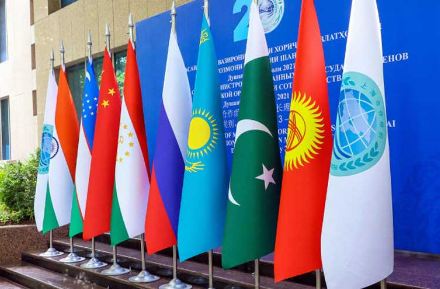
The SCO comprises China, India, Russia, Pakistan, Iran, Kazakhstan, Kyrgyzstan, Tajikistan, Uzbekistan and Belarus — with 16 more countries affiliated as observers or “dialogue partners”.

Pakistan became a full member of the SCO at its 2017 summit in Kazakhstan, which was attended by ex-PM Nawaz Sharif, who recently also expressed hope for reviving ties with India.

In his capacity as the current Chair of the Council of the Heads of Government (CHG), Prime Minister Shehbaz Sharif will preside over the summit.

Right before the SCO dinner, footage from the venue showed PM Shehbaz welcoming and shaking hands with dignitaries, including India’s Jaishankar, with whom he held a brief conversation.

View this post on Instagram

Jaishankar arrived in Pakistan today — the first such visit in nearly a decade. State-run PTV showed images of Jaishankar being received by the Director General for South Asia at the Ministry of Foreign Affairs, Ilyas Mehmood Nizami, and other Pakistani officials after his plane touched down at the Nur Khan Airbase just before 3:30pm.

View this post on Instagram

Jaishankar’s own post on X about his arrival only mentioned the SCO summit.

Jaishankar not to discuss bilateral ties during moot

The Indian minister has said he would not discuss bilateral relations during his visit.

Jaishankar would “represent India at the meeting”, his foreign ministry said on Tuesday, adding that the country “remains actively engaged in the SCO format”.

“Even though it won’t be a fleeting visit as was previously thought, Jaishankar will likely spend not more than 24 hours in Pakistan before flying back to India,” Times of India reported.

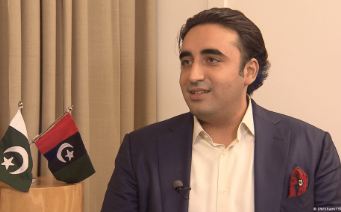
PPP Chairman and former foreign minister Bilawal Bhutto-Zardari, while speaking to Geo News, said that according to the rules of the SCO, country representatives cannot talk about bilateral issues during the summit.

“There are other forums where countries can talk about their bilateral matters,” Bilawal said.

When asked about a comment on India’s developing situation in Canada, Bilawal said that the accusations against the Indian government were “quite serious”, however, given that Pakistan was hosting the event and according to the country’s tradition of protecting the esteem of its guests, he would respect India and not give a detailed comment in that regard.

State heads, ministers arrive ahead of summit

From China, Premier Li Qiang will be attending the summit, with his Monday visit to Pakistan being the first by a Chinese premier in 11 years.

China, Russia, Belarus, Kazakhstan, Kyrgyzstan, Tajikistan and Uzbekistan will be represented by their prime ministers while Iran’s First Vice President Mohammad Reza Aref will be attending the summit, the Foreign Office has said.

PM Luvsannamsrain Oyun-Erdene of Mongolia, an observer state, and Turkmenistan’s Foreign Minister Raşit Meredow will also participate in the meeting.

Around noon today, Kyrgyz premier, Chairman of the Cabinet of Ministers Akylbek Japarov, arrived at the Nur Khan Airbase, where he was received by Petroleum Minister Musadik Malik, PTV News reported.

View this post on Instagram

Shortly after, Belarus PM Roman Golovchenko landed at the Islamabad International Airport, where Law Minister Azam Nazir Tarar welcomed him.

View this post on Instagram

Tajik premier Kokhir Rasulzoda also landed at the same airport, where Commerce Minister Jam Kamal Khan greeted him.

View this post on Instagram

FM Meredov of Turkmenistan, who is a special guest at the SCO, was received by Education Minister Khalid Maqbool Siddiqui at the Islamabad airport, PTV News reported.

Summit programme

According to a programme for the summit released by the foreign ministry, a copy of which is available with Dawn.com, today’s main event will be a welcome dinner by the prime minister.

Delegations will continue arriving today as well.

View this post on Instagram

Once all the delegations have arrived, a flurry of activities is planned for throughout the day tomorrow, with the summit proceedings expected in the morning.

According to the programme, the participants will arrive on Wednesday morning at the Jinnah Convention Centre, where they will be received by PM Shehbaz.

After group photos, PM Shehbaz will give his opening remarks, which are set to be followed by statements from other member states. A notable agenda of the day is “documents signing” before the prime minister offers the concluding remarks.

In the afternoon, Deputy Prime Minister Ishaq Dar and SCO Secretary General Zhang Ming will brief the media about the highlights of the summit. This would be followed by “official luncheons” by PM Shehbaz.

Top-notch security

With the arrival of foreign top officials, the security agencies are determined to prevent any disruptions and have amped up security in Islamabad.

The Army has already been called in to provide security for the event, as well as key government buildings and the Red Zone. Rangers have already been deployed in the capital.

Many businesses and routes in the federal capital and its twin city, Rawalpindi, have been closed due to safety concerns.

The government has deployed more than 10,000 police and paramilitary personnel for the security of about 900 delegates who are set to arrive for the event.

The delegates will stay at different places in the capital located inside the ‘Red Zone’ or in the vicinity, as 14 locations in the capital have been arranged for their accommodation.

A total of 124 vehicles will be deployed for the motorcade, with 84 accompanying the heads of states, and 40 for other delegates.

According to a Dawn report, a four-member delegation from India, 76 delegates from Russia, 15 representatives from China, a two-member team from Iran and a four-member delegation from Kyrgyzstan reached Islamabad on Sunday.

Seven delegates of SCO also arrived in the capital.Prime Minister Shehbaz Sharif welcomed foreign dignitaries, including India’s Minister for External Affairs Subrahmanyam Jaishankar, to the dinner for the Shanghai Cooperation Organisation’s (SCO) first day on Tuesday.

The SCO comprises China, India, Russia, Pakistan, Iran, Kazakhstan, Kyrgyzstan, Tajikistan, Uzbekistan and Belarus — with 16 more countries affiliated as observers or “dialogue partners”.

Pakistan became a full member of the SCO at its 2017 summit in Kazakhstan, which was attended by ex-PM Nawaz Sharif, who recently also expressed hope for reviving ties with India.

In his capacity as the current Chair of the Council of the Heads of Government (CHG), Prime Minister Shehbaz Sharif will preside over the summit.

Right before the SCO dinner, footage from the venue showed PM Shehbaz welcoming and shaking hands with dignitaries, including India’s Jaishankar, with whom he held a brief conversation.

Jaishankar arrived in Pakistan today — the first such visit in nearly a decade. State-run PTV showed images of Jaishankar being received by the Director General for South Asia at the Ministry of Foreign Affairs, Ilyas Mehmood Nizami, and other Pakistani officials after his plane touched down at the Nur Khan Airbase just before 3:30pm.

Jaishankar’s own post on X about his arrival only mentioned the SCO summit.

Jaishankar not to discuss bilateral ties during moot
The Indian minister has said he would not discuss bilateral relations during his visit.

Jaishankar would “represent India at the meeting”, his foreign ministry said on Tuesday, adding that the country “remains actively engaged in the SCO format”.

“Even though it won’t be a fleeting visit as was previously thought, Jaishankar will likely spend not more than 24 hours in Pakistan before flying back to India,” Times of India reported.

PPP Chairman and former foreign minister Bilawal Bhutto-Zardari, while speaking to Geo News, said that according to the rules of the SCO, country representatives cannot talk about bilateral issues during the summit.

“There are other forums where countries can talk about their bilateral matters,” Bilawal said.

When asked about a comment on India’s developing situation in Canada, Bilawal said that the accusations against the Indian government were “quite serious”, however, given that Pakistan was hosting the event and according to the country’s tradition of protecting the esteem of its guests, he would respect India and not give a detailed comment in that regard.

State heads, ministers arrive ahead of summit
From China, Premier Li Qiang will be attending the summit, with his Monday visit to Pakistan being the first by a Chinese premier in 11 years.

China, Russia, Belarus, Kazakhstan, Kyrgyzstan, Tajikistan and Uzbekistan will be represented by their prime ministers while Iran’s First Vice President Mohammad Reza Aref will be attending the summit, the Foreign Office has said.

PM Luvsannamsrain Oyun-Erdene of Mongolia, an observer state, and Turkmenistan’s Foreign Minister Raşit Meredow will also participate in the meeting.

Around noon today, Kyrgyz premier, Chairman of the Cabinet of Ministers Akylbek Japarov, arrived at the Nur Khan Airbase, where he was received by Petroleum Minister Musadik Malik, PTV News reported.

Shortly after, Belarus PM Roman Golovchenko landed at the Islamabad International Airport, where Law Minister Azam Nazir Tarar welcomed him.

Tajik premier Kokhir Rasulzoda also landed at the same airport, where Commerce Minister Jam Kamal Khan greeted him.

FM Meredov of Turkmenistan, who is a special guest at the SCO, was received by Education Minister Khalid Maqbool Siddiqui at the Islamabad airport, PTV News reported.

Summit programme
According to a programme for the summit released by the foreign ministry, a copy of which is available with Dawn.com, today’s main event will be a welcome dinner by the prime minister.

Delegations will continue arriving today as well.

Once all the delegations have arrived, a flurry of activities is planned for throughout the day tomorrow, with the summit proceedings expected in the morning.

According to the programme, the participants will arrive on Wednesday morning at the Jinnah Convention Centre, where they will be received by PM Shehbaz.

After group photos, PM Shehbaz will give his opening remarks, which are set to be followed by statements from other member states. A notable agenda of the day is “documents signing” before the prime minister offers the concluding remarks.

In the afternoon, Deputy Prime Minister Ishaq Dar and SCO Secretary General Zhang Ming will brief the media about the highlights of the summit. This would be followed by “official luncheons” by PM Shehbaz.

Top-notch security
With the arrival of foreign top officials, the security agencies are determined to prevent any disruptions and have amped up security in Islamabad.

The Army has already been called in to provide security for the event, as well as key government buildings and the Red Zone. Rangers have already been deployed in the capital.

Many businesses and routes in the federal capital and its twin city, Rawalpindi, have been closed due to safety concerns.

The government has deployed more than 10,000 police and paramilitary personnel for the security of about 900 delegates who are set to arrive for the event.

The delegates will stay at different places in the capital located inside the ‘Red Zone’ or in the vicinity, as 14 locations in the capital have been arranged for their accommodation.

A total of 124 vehicles will be deployed for the motorcade, with 84 accompanying the heads of states, and 40 for other delegates.

According to a Dawn report, a four-member delegation from India, 76 delegates from Russia, 15 representatives from China, a two-member team from Iran and a four-member delegation from Kyrgyzstan reached Islamabad on Sunday.

Seven delegates of SCO also arrived in the capital.

Joint Statement between the Islamic Republic of Pakistan and the People’s Republic of China

Joint Statement between the Islamic Republic of Pakistan and the People’s Republic of China

ISLAMABAD, OCT 15: At the invitation of Muhammad Shehbaz Sharif, Prime Minister of the Islamic Republic of Pakistan, Mr. Li Qiang, Premier of the State Council of the People’s Republic of China, paid an official visit to Pakistan from October 14 to 17, 2024 and participated in the 23rd Meeting of the Council of Heads of Government of Member States of the Shanghai Cooperation Organization chaired by Pakistan. During the visit, Premier Li Qiang held talks with Prime Minister Shehbaz Sharif, and met with Asif Ali Zardari, President of Pakistan; Syed Yusuf Raza Gilani, Chairman of the Senate; Sardar Ayaz Sadiq, Speaker of the National Assembly. The Chairman of the Joint Chiefs of Staff Committee as well as the Chiefs of Staff of the Army, Navy and Air Force of Pakistan called on Premier Li Qiang. The two sides had an in-depth exchange of views and reached extensive consensus on further consolidating and deepening the Pakistan-China All-Weather Strategic Cooperative Partnership, on promoting practical cooperation in various sectors, and on issues of mutual interests.

2.     The two sides underscored that since the establishment of diplomatic ties, Pakistan-China relations have withstood the test of times and have remained rock-solid. Since President Xi Jinping’s historic state visit to Pakistan in 2015, the All-Weather Strategic Cooperative Partnership between the two countries has made significant progress. After Prime Minister Shehbaz Sharif’s successful official visit to China in June 2024, the two countries have enjoyed even stronger political mutual trust, more vibrant cooperation, and closer strategic coordination. Both sides expressed satisfaction with the momentum of Pakistan-China relations and agreed to further strengthen the ironclad friendship and cooperation between the two countries.

3.     The Pakistani side highly commends and firmly supports major visions and propositions put forth by President Xi Jinping, such as fostering a community with a shared future for mankind, the Belt and Road Initiative, the Global Development Initiative, the Global Security Initiative, and the Global Civilization Initiative. Both sides advocate for an equal and orderly multipolar world and a universally beneficial and inclusive economic globalization, and are committed to working together with all countries around the world for a bright future of peace, security, prosperity and progress.

4.       The two sides noted that in a transforming and turbulent world where major changes are unfolding at a faster pace, the Pakistan-China relationship is of strategic significance, and any attempt to disrupt or undermine Pakistan-China cooperation is bound to fail. Pakistan and China enjoy an all-level, cross-board and high-quality relationship. The Chinese side reiterated that the China-Pakistan relationship is a priority in its foreign relations. The Pakistani side underscored that the Pakistan-China relationship is the cornerstone of its foreign policy while the Chinese side highlighted that the China-Pakistan relationship is of special significance in China’s foreign policy. The two sides will continue to deepen cooperation in various fields and accelerate efforts to build an even closer Pakistan-China community with a shared future in the new era.

I. Strengthening High-Level Political Mutual Trust

5.      The two sides agreed to maintain the momentum of exchanges under the strategic guidance of the top leaders for the development of bilateral relations. They agreed to further strengthen exchanges and cooperation at all levels and across various fields between governments, legislative bodies and political parties.

6.     The Pakistani side expresses warm congratulations on the 75th anniversary of the founding of the People’s Republic of China and the successful conclusion of the Third Plenary Session of the 20th Central Committee of the Communist Party of China and highlighted that China’s endeavor to further deepen reform comprehensively and advance high-standard opening up will bring new development opportunities for Pakistan and all other countries around the world. The Chinese side commends the new achievements attained by Pakistan in economic reform and development under the leadership of Prime Minister Shehbaz Sharif. The two sides reaffirmed their firm support to each other in independently choosing a development path that suits their respective national realities, and agreed to strengthen exchanges of governance experience and foster greater synergy between their development strategies.

7. The two sides reaffirmed their unyielding support for each other on the issues concerning their respective core interests and major concerns. Both sides stressed that the authority of the U.N. General Assembly Resolution 2758 brooks no question or challenge. The Pakistani side reaffirmed its firm commitment to one-China principle, and reiterated that Taiwan is an inalienable part of the territory of the People’s Republic of China, and that Pakistan firmly supports all efforts made by China to achieve national reunification, firmly opposes any form of “Taiwan independence,” and will firmly support China on issues concerning Xinjiang, Xizang, Hong Kong and the South China Sea. The Chinese side reiterated its unwavering support for Pakistan in defending national sovereignty, independence, and territorial integrity, and its support for Pakistan’s efforts to safeguard national security, stability, development and prosperity.

Ⅱ.Deepening High-Level Practical Cooperation

8.     The two sides reaffirmed their commitment to an upgraded version of CPEC by jointly building a growth corridor, a livelihood-enhancing corridor, an innovation corridor, a green corridor and an open corridor, and develop CPEC into a demonstration project of high-quality Belt and Road cooperation. The two sides agreed to further synergize China’s eight major steps for supporting Belt and Road cooperation with Pakistan’s 5Es framework based on Exports, E-Pakistan, Environment, Energy, and Equity & Empowerment. The Pakistani side positively assessed the visit by the Chinese working team on economic cooperation, and expressed its willingness to continue experience-sharing on development in various areas with the Chinese side.

9.     Following the important common understanding between leaders of the two countries, the two sides reaffirmed their readiness to advance the upgradation of ML-1, and agreed to build Karachi-Hyderabad section in line with the modality of “implementing in a phased manner.” The two sides will work together to refine and optimize the construction plan of Karachi-Hyderabad section and formulate financing and implementation plans that are feasible and sustainable at the earliest.

10. The two sides agreed to actively seeking financial support for the Karakoram Highway (Raikot-Thakot) realignment project under the terms of the Framework Agreement of the project. Meanwhile, the two sides agreed to continue harnessing the Intergovernmental Joint Technical Working Group for the Karakoram Highway (Raikot-Thakot) realignment project, and see to it that it provides technical guidance during the entire process of implementation, so as to facilitate the project’s early execution.

11. Recognizing the significance of the Gwadar Port as a key hub for cross-regional connectivity, the two sides reaffirmed their readiness to speed up the development of the auxiliary infrastructure of the Gwadar Port, to steadily attract more cargo shipments to the port, to find a solution to inadequate water and power supply at an early date, to accelerate the development of the port’s industrial zone, and to solidly enhance connectivity between the port and other parts of Pakistan. During the visit, leaders of both sides attended the completion ceremony of the New Gwadar International Airport.

12. The two sides agreed to further strengthen industrial cooperation suited to local conditions, and promote international cooperation on industrial and supply chains. The Chinese side reiterated its support for Chinese companies to invest in Pakistan’s Special Economic Zones in line with the market and commercial principles. The Pakistani side reiterated its commitment to improving its business environment and providing a favorable policy framework for Chinese investment. Both sides welcome the active participation of third parties in CPEC cooperation.

13. The two sides reaffirmed their willingness to actively encourage Chinese companies to engage in investment and cooperation in Pakistan’s mining industry, and jointly explore the planning of mining industrial parks, including downstream mineral processing.

14. The two sides agreed to further strengthen their practical cooperation in areas such as crop cultivation, animal husbandry, epidemic prevention and control for plants and animals, agricultural mechanization, agricultural technical exchange, and capacity building for modernization & resilience of Pakistan’s agriculture. The two sides agreed to continue to promote agricultural cooperation between China’s Xinjiang and Pakistan.

15. The two sides positively assessed the achievements of Pakistan-China energy cooperation, and agreed to continue to promote the CPEC energy cooperation in a practical, prudent and orderly manner. The two sides will jointly explore solutions for specific issues based on scientific research and friendly consultation. The two sides agreed to strengthen professional exchanges on improving the efficiency and management of the power system of Pakistan.

16. The two sides agreed to continue advancing practical cooperation in such areas as basic geological survey, resource potential evaluation, offshore oil and gas resources exploration, and natural gas hydrates, carrying out exchanges and training on geological technology, and work toward conducting a new round of Pakistan-China joint survey of marine geology.

17. The two sides agreed to conduct further consultation on promoting trade liberalization under the framework of the Phase-II of China-Pakistan Free Trade Agreement, and actively explore the possible bilateral concessional arrangements based on the spirit of mutual benefit and win-win cooperation. The Chinese side welcomes Pakistani enterprises to make full use of platforms such as the China International Import Expo to expand bilateral trade, and supports Pakistan enhancing its exports to China. The Pakistani side welcomes Chinese enterprises to expand investment in priority sectors for enhancing export-oriented industries as identified by Pakistan. The two sides agreed to facilitate deeper exchanges and cooperation between business communities of the two countries.

18. The Pakistani side expressed high appreciation for China’s valuable support for the fiscal and financial stability of Pakistan. The two sides spoke highly of the extension of the China-Pakistan Bilateral Currency Swap Arrangement, and agreed to further strengthen bilateral cooperation in the financial and banking sectors, and support each other within regional and international multilateral financial platforms.

19.  The Chinese side expressed willingness to continue supporting Pakistan in improving the well-being of its people, aiming to ensure that development benefits reach all regions and communities. The Pakistani side expressed its appreciation for China’s support, particularly in providing solar lighting equipment and health kits as well as contributing to the development of key projects such as the China-Pakistan Friendship Hospital, the China-Pakistan Technical and Vocational Institute, and the desalination plant in Gwadar. Both sides agreed to strengthen their cooperation under the framework of the CPEC Working Group on Socio-Economic Cooperation, particularly in areas like healthcare, agriculture, education, climate response, and disaster prevention, while continuing to promote projects that improve people’s livelihoods.

20. The two sides agreed to further enhance exchanges and cooperation in areas such as youth, education, culture, tourism, radio and television, online audio-visual services and think tanks, deepen interactions among their peoples, at sub-national levels and between sister cities, and further facilitate two-way travels, so as to foster closer people-to-people exchanges and pass on the baton of Pakistan-China friendship to younger generations. The two sides will harness local resources and actively organize training programs to cultivate talents in agriculture, science and information technology. The Chinese side welcomes Pakistani delegations to China for China International Travel Mart 2024, the 9th Asian Winter Games Harbin 2025 and the 2025 World Games Chengdu.

III.Deepening High-Level Security Cooperation

21. The Chinese side spoke highly of Pakistan’s unremitting efforts and tremendous sacrifices in combating terrorism, and its contributions to maintaining international peace and security. The two sides reiterated their commitment to combating terrorism in all its forms and manifestations with a zero-tolerance attitude, and agreed to further strengthen bilateral and multilateral cooperation in counterterrorism, and jointly oppose the politicization and instrumentalization of counterterrorism. The two sides expressed readiness to work with the international community to strengthen multilateral counter-terrorism cooperation within frameworks such as the U.N. and the SCO.

22. The Pakistani side strongly condemned the terrorist attack on the vehicle of Chinese personnel working on the Dasu Hydropower Project in Pakistan on March 26, 2024, and the terrorist attack on the Chinese convoy of the Port Qasim Power Plant on October 6, 2024, and pledged to find out the whole truth of the above incidents, and hunt down and bring to justice all the perpetrators. The Pakistani side emphasized its firm and unswerving commitment to further enhancing security input and coordination, further strengthening security measures, and making comprehensive efforts to ensure the safety and security of Chinese personnel, projects and institutions in Pakistan. Acknowledging the efforts made by the Pakistani side to ensure the safety and security of Chinese personnel, projects and institutions in Pakistan, the Chinese side underscored the need and urgency to take targeted security measures in Pakistan, to jointly create a safe environment for cooperation between the two countries.

23. The two sides underscored that strategic defence and security cooperation between Pakistan and China plays an irreplaceable and critical role in maintaining peace, stability and strategic balance in the region. The two sides expressed satisfaction that the two militaries have long enjoyed high-level of mutual trust, high-level cooperation, and high-level coordination. The two sides agreed to maintain the momentum of high-level military-to-military visits and exchanges, and to continuously elevate cooperation in areas of joint training, exercises and military technology.

IV. Strengthening High-Level International Cooperation

24. The two sides reaffirmed their commitment to jointly upholding the international system with the U.N. at its core, the international order based on international law, and the basic norms governing international relations underpinned by the purposes and principles of the U.N. Charter. The two sides will continue to uphold the core values and basic principles of the World Trade Organization, oppose decoupling and disrupting supply chains, and firmly resist unilateralism and protectionism.

25. The two sides reaffirmed the importance of maintaining peace and stability in South Asia and the need for resolution of all outstanding disputes, and their opposition to any unilateral action. The Pakistani side briefed the Chinese side on the latest developments of the situation in Jammu and Kashmir. The Chinese side reiterated that the Jammu and Kashmir dispute is left over from history, and should be properly and peacefully resolved in accordance with the U.N. Charter, relevant U.N. Security Council resolutions and bilateral agreements.

26.    The Chinese side supports Pakistan in hosting the 23rd Meeting of the Council of the Heads of Government of Member States of the Shanghai Cooperation Organization which marks the end of its year-long constructive and peaceful presidency of the SCO-CHG. In light of Pakistan’s term as a non-permanent member of the U.N. Security Council from 2025 to 2026 and China’s assumption of the rotating presidency of the Shanghai Cooperation Organization, the two sides agreed to further strengthen communication and collaboration in international affairs.

27. The two sides agreed to strengthen communication and coordination on the issue of Afghanistan. Both sides call for concerted efforts of the international community to encourage the Interim Afghan Government to build an inclusive political framework, adopt moderate policies and pursue good-neighborliness. They also called for strengthening counter-terrorism cooperation at bilateral and multilateral levels to support Afghanistan in taking comprehensive measures to eradicate terrorism and called on the Interim Afghan Government to take visible and verifiable actions to dismantle and eliminate all terrorist groups based in Afghanistan which continue to pose a serious threat to regional and global security, and to prevent the use of Afghan territory against its neighbors, the region, and beyond. The two sides also agreed to play a constructive role in helping Afghanistan achieve stable development and integrate into the international community.

28.    The two sides expressed grave concern over the protracted conflict in Gaza and the dire and rapidly deteriorating humanitarian situation, and urged for an immediate and permanent ceasefire as well as efforts to ensure unimpeded humanitarian assistance. The two sides reaffirmed their support for the right of the Palestinian people to self-determination, including their right to establish an independent State of Palestine. Both sides expressed support for resuming the process of political settlement and their readiness to work with the rest of the international community to promote a comprehensive, just and lasting settlement of the Palestinian question. The two sides expressed grave concern over recent Israeli aggression on Lebanon, which further escalated the tension in the region. We oppose practices that violate the purposes and principles of the Charter of the United Nations, the violation of Lebanon’s sovereignty, security and territorial integrity and oppose moves that fuel antagonism and escalate tensions. Pakistan and China call on the international community, especially major countries with influence, to play a constructive role and avoid further turmoil. 

29. Premier Li Qiang expressed appreciation to the government and people of the Islamic Republic of Pakistan for the friendship and warm hospitality extended to him.

30. During the visit, the two sides signed and exchanged 13 documents covering cooperation on CPEC, currency swap, quarantine requirements of Pakistani products, people’s livelihoods, science and technology, co-production of TV programs, etc.

Lawyers threaten nationwide protests

Lawyers threaten nationwide protests

At a convention held by Karachi Bar, prominent legal figures, regional associations gathered to voice their concerns

DNA

Karachi: Lawyers across Pakistan have come together on a unified platform to oppose proposed constitutional amendments, warning of a nationwide movement if the government proceeds with the changes.

At a convention held by the Karachi Bar Association at City Court on Tuesday, prominent legal figures, including officials from the Pakistan Bar Council, Supreme Court Bar Association, and other regional associations, gathered to voice their concerns.

Attendees included Munir A Malik, Hamid Khan, and Abid Zuberi, among others. However, no representatives from the Sindh High Court Bar Association attended the event.

The proposed amendments were denounced as unconstitutional and illegal, with lawyers threatening a countrywide protest in response.

Peshawar High Court Bar President Fida Gul expressed his determination to prevent any changes.

“We will not allow these amendments to happen. The government’s unconstitutional tactics will be met with resistance,” he stated, adding that the creation of a constitutional court would divide the judiciary. “We will fight to the end against such amendments.”

Asad Manzoor Butt, President of the Lahore High Court Bar, criticised the government’s plans to establish constitutional courts at both federal and provincial levels, and also condemned extending the age limit of the Chief Justice of Pakistan.

“The entire legal fraternity is ready for a nationwide movement,” Butt warned.

There was tension at the convention when members of the People’s Lawyers Forum protested the event.

The convention organisers emphasised that the meeting was held for the benefit of lawyers, not to serve any political agenda.

Former federal law minister Shahida Jamil advised caution, stating, “Everyone has their version of the amendments, but we must tread carefully. What happens if there’s a clash between the constitutional court and the Supreme Court?”

Lawyers agreed that the government’s secretive approach to these amendments would not be tolerated, with calls for transparency in the legislative process.

‘Opposition to reforms based on likes, dislikes’

‘Opposition to reforms based on likes, dislikes’

PPP chief says establishment of constitutional court has been part of his party’s manifesto since 2007 elections

Nazir Siyal

KARACHI: Pakistan Peoples Party (PPP) Chairman Bilawal Bhutto-Zardari has said opposition to the judicial reforms including establishing federal constitutional courts is based on personal likes and dislikes.

The remarks come after the government failed to secure the magic number to sail through the bill to amend the Constitution last month, as its allies as well as members from the opposition benches vehemently opposed the proposal, forcing the administration to begin a consultation process.

Jamiat Ulema-e-Islam-Fazl (JUI-F) Chief Maulana Fazlur Rehman, who is a key player in influencing the passing of the bill in parliament, on October 11 showed a willingness to support the government’s “constitutional package” with “ifs and buts”, while stressing the need for building consensus among all political forces.

On the other hand, the Pakistan Tehreek-e-Insaf (PTI) has also raised objections to the constitutional package, which among other things includes the establishment of the constitutional court.

In a message on X, the PPP chairman said many of those opposing the reforms now because of party position, had supported it in the past.

“While many of today’s opponents have supported this reform in the past. Their opposition today is based on personal likes and dislikes or partisan positions on the politics of the moment,” he wrote in a tweet.

On the other hand, Bilawal said that the establishment of a federal constitutional court had been a part of his party’s manifesto since the 2007 elections after the Charter of Democracy in 2006.

He also attached the relevant portions of the Charter of Democracy and the party’s manifestos of 2013 and 2024 with his message.

“The PPP has fought every election since 2007 with the manifesto pledge of implementing judicial reforms including but not limited to establishing federal constitutional courts,” he said, adding the PPP’s permanent party position for almost two decades had remained consistent.

“Our representatives elected in every election under my Chairmanship of this party have been given the mandate by the people of Pakistan to establish a Federal Constitutional Court with equal representation for all.”

In a statement a day ago, the PPP chairman suggested that establishing a constitutional court alongside regular courts could help resolve constitutional issues and protect fundamental rights.

He said that if there was a dispute between the federation and a province, there should be a platform to resolve such issues.

Protests spread against alleged rape of student

Protesters stage sit-in in front of Punjab Assembly; dozens of students arrested in MultanBureau Report

LAHORE: Students of a private college took to streets for the second day on Tuesday to protest against the alleged rape of a girl in Lahore, a day after dozens were injured in violent clashes between protesters and law enforcers.

A group of students gathered outside a private college on Monday on a protest call after reports of the alleged rape of a female student went viral on social media platforms.

At least 28 people, including four policemen, were injured after the protests turned violent. Later, the protest was put off and it was decided to resume the demonstration today again.

It may be noted that the police had arrested a security guard of the college, who was accused of raping the student and launched an investigation into the matter.

However, the suspect denied the allegations, while the police also couldn’t find the evidence to prove them.

Earlier today, the Punjab police also refuted the claims related to the alleged rape of a private college student, saying that “there is no victim” linked to allegations.

However, the students continued their protest today and staged a sit-in in front of the Punjab Assembly on Charing Cross Mall Road amid heavy police presence.

Assistant Superintendent of Police (ASP) Defence Shehrbano Naqvi said while speaking to ‘Geo Pakistan’ hosts on Tuesday that the girl who is being named as alleged victim was hospitalised 10 days prior to the day that is being claimed as the day of the incident.

“Her medical reports are available, the record of the hospitals she has been admitted to are also available, and information about the way she fell while getting ready for school at her own house is also available,” the officer said.

The ASP noted that two girls in the college had the same names, one of them was completely fine, while the other one was the girl admitted to the hospital.

Meanwhile. the students from other cities of Punjab also joined the protests with some of them vandalising a college building on Bosan Road in Multan after which the police arrested dozens of students and baton charged them.

A motorcycle rally was taken out by students in Jahanian, while in Zafarwal, students blocked traffic by setting tires on fire, demanding justice and a transparent investigation into the matter.

Punjab Chief Minister Maryam Nawaz on Monday formed a six-member investigation committee under the chairmanship of chief secretary.

Meanwhile, Lahore police also asked details of the incident from the citizens, saying anyone with information should inform the Virtual Women Police Station.

While the protests rocked the provincial capital, the girl’s family surfaced and denied the claims regarding the purported rape.

In a video message with ASP Naqvi, the girl’s father and uncle — with their faces covered with masks — said that “there has been no sexual assault” on their daughter.

“We are surprised to see the videos of ongoing protests on social media.”

The girl’s uncle said that she was currently under treatment in a hospital’s intensive care unit (ICU) for the injury in her back that she had sustained from a fall in their house, adding that the protests in her name were being wrongly held.

In the video, ASP Naqvi said requested the masses to avoid involving anyone on the basis of false reports.

Police always register a case on their behalf in case of such offences, she insisted.

Pakistan bolsters ties with Tajikistan, Belarus, Kyrgyzstan

Pakistan bolsters ties with Tajikistan, Belarus, Kyrgyzstan

Golovchenko congratulated Pakistan on successfully hosting the SCO meeting and expressed Belarus’ commitment to working closely with Pakistan under the “Shanghai Spirit.”

DNA

ISLAMABAD: Prime Minister Shehbaz Sharif engaged in multiple high-level bilateral meetings with regional counterparts during the Shanghai Cooperation Organization (SCO) summit held in Islamabad on Tuesday. The discussions aimed at strengthening cooperation in trade, investment, and regional connectivity between Pakistan and its Central Asian partners.

In a meeting with Tajik Prime Minister Qohir Rasulzoda, PM Shehbaz stressed the importance of enhancing bilateral collaboration across all spheres of shared interest, including trade, investment, energy, and regional connectivity.

He praised Tajikistan’s active participation in the SCO meeting and fondly recalled his productive visit to Dushanbe in July, 2023. PM Rasulzoda conveyed his appreciation for Pakistan’s hospitality and thanked the country for allowing sugar exports to Tajikistan a step that will further boost bilateral trade.

On his X timeline, PM Shehbaz expressed his satisfaction with the positive trajectory of the relationship between the two countries and reaffirmed the commitment to strengthening ties.

Additionally, PM Shehbaz met with Belarusian Prime Minister Roman Golovchenko. The leaders discussed potential cooperation in the areas of trade, investment, agricultural machinery, and joint production of tractors.

Both leaders reiterated the need for sustained high-level exchanges to build on the positive momentum of bilateral relations. Golovchenko congratulated Pakistan on successfully hosting the SCO meeting and expressed Belarus’ commitment to working closely with Pakistan under the “Shanghai Spirit.”

PM Shehbaz also reiterated Pakistan’s desire to deepen cooperation with Kyrgyzstan during his meeting with Chairman Akylbek Japarov.

Both leaders expressed satisfaction with the positive trajectory of bilateral relations, stressing the need to explore new areas of collaboration in trade, investment, and people-to-people contacts. Japarov also praised Pakistan’s hospitality and its successful organisation of the SCO meeting.

PM welcomes state dignitaries to SCO dinner

The SCO Summit: Some Musings

The SCO comprises China, India, Russia, Pakistan, Iran, Kazakhstan, Kyrgyzstan, Tajikistan, Uzbekistan and Belarus — with 16 more countries affiliated as observers or “dialogue partners

Saifullah Ansar

ISLAMABAD: Prime Minister Shehbaz Sharif welcomed foreign dignitaries, including India’s Minister for External Affairs Subrahmanyam Jaishankar, to the dinner for the Shanghai Cooperation Organisation’s (SCO) first day on Tuesday.

The SCO comprises China, India, Russia, Pakistan, Iran, Kazakhstan, Kyrgyzstan, Tajikistan, Uzbekistan and Belarus — with 16 more countries affiliated as observers or “dialogue partners”.

Pakistan became a full member of the SCO at its 2017 summit in Kazakhstan, which was attended by ex-PM Nawaz Sharif, who recently also expressed hope for reviving ties with India.

In his capacity as the current Chair of the Council of the Heads of Government (CHG), Prime Minister Shehbaz Sharif will preside over the summit.

Right before the SCO dinner, footage from the venue showed PM Shehbaz welcoming and shaking hands with dignitaries, including India’s Jaishankar, with whom he held a brief conversation.

Jaishankar arrived in Pakistan yesterday— the first such visit in nearly a decade. State-run PTV showed images of Jaishankar being received by the Director General for South Asia at the Ministry of Foreign Affairs, Ilyas Mehmood Nizami, and other Pakistani officials after his plane touched down at the Nur Khan Airbase just before 3:30pm.

Jaishankar’s own post on X about his arrival only mentioned the SCO summit.

The Indian minister has said he would not discuss bilateral relations during his visit.

Jaishankar would “represent India at the meeting”, his foreign ministry said on Tuesday, adding that the country “remains actively engaged in the SCO format”.

“Even though it won’t be a fleeting visit as was previously thought, Jaishankar will likely spend not more than 24 hours in Pakistan before flying back to India.

PPP Chairman and former foreign minister Bilawal Bhutto-Zardari, while speaking to a private news channel, said that according to the rules of the SCO, country representatives cannot talk about bilateral issues during the summit.

“There are other forums where countries can talk about their bilateral matters,” Bilawal said.

When asked about a comment on India’s developing situation in Canada, Bilawal said that the accusations against the Indian government were “quite serious”, however, given that Pakistan was hosting the event and according to the country’s tradition of protecting the esteem of its guests, he would respect India and not give a detailed comment in that regard.

Stay Connected

64FansLike
60FollowersFollow

Latest Reviews

Exchange Rates

USD - United States Dollar
EUR
1.18
GBP
1.35
AUD
0.67
CAD
0.73