Home Blog Page 590

Chairman Bilawal announces consensus on 26th Constitutional Amendments

Chairman Bilawal announces consensus on 26th Constitutional Amendments

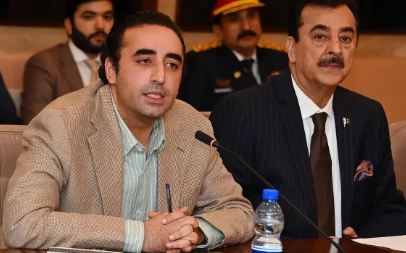
ISLAMABAD, OCT 18 /DNA/ – Chairman of the Pakistan Peoples Party (PPP), Bilawal Bhutto Zardari, announced on Friday evening during a joint parliamentary party meeting that a consensus had been reached in the special parliamentary committee regarding Constitutional Amendments. He highlighted that the attendance of PPP members in Parliament was better than that of any other party.

Chairman Bilawal expressed his gratitude to the members for being present in Islamabad for this crucial session, noting their hard work in achieving agreement on the Constitutional Amendments. He emphasised the party’s commitment to getting these amendments passed in Parliament, adding that one of the unfinished items from the Charter of Democracy would also be completed. He mentioned that the PPP, Pakistan Muslim League (N), and Jamiat Ulema-e-Islam (JUI) had already reached a consensus on the draft of these amendments.

Chairman Bilawal also addressed complaints raised by some parliamentarians, calling them unfortunate and strongly condemning them. He noted that Syed Khursheed Ahmed Shah had taken notice of the complaints and had brought them to the attention of the Speaker of the National Assembly. He further remarked on the historical collaboration between the PPP and JUI since 1973 for the development of the Constitution.

The alliance between the Pakistan Peoples Party and Pakistan Peoples Party Parliamentarians has contested elections under the symbol of the arrow. Bilawal Bhutto Zardari clarified that all necessary paperwork had been completed to avoid confusion and instructed party members to vote in alignment with his position, stressing the importance of following the party line.

US Elections: Anti-Immigrant Rhetoric vs. Economic Extravaganza

Qamar Bashir

Qamar Bashir 

As the U.S. presidential election approaches, two pivotal issues dominate the political landscape: the Republican Party’s anti-immigrant rhetoric and the Democratic Party’s expansive economic policies. The intensification of the Republican stance on immigration has deepened divisions across the country, leaving many Americans anxious about the future. Immigrant communities, in particular, feel targeted, as they are portrayed as threats to national security and cultural values. This rhetoric not only alienates these groups but also raises concerns among a broader base of voters who fear such sentiments undermine America’s diversity. According to a 2023 Pew Research Center survey, nearly 60% of Americans believe that immigrants strengthen the country due to their hard work and talent, while only 36% agree with the sentiment that immigrants are a burden. These figures reflect how divisive and polarizing the immigration debate has become.

At the same time, the Democratic Party’s ambitious economic policies, which include increased government spending and social programs, have sparked significant concerns about inflation and economic stability. Inflation surged to over 6% in mid-2023, the highest in a decade, eroding the purchasing power of middle- and working-class families. In a Gallup poll conducted in early 2024, 65% of Americans cited inflation and rising costs as their top economic concern, with many fearing that unchecked spending could drive up the cost of living without proportionate wage growth. These economic worries have left voters increasingly indecisive as they weigh the long-term consequences of both parties’ approaches.

According to the U.S. Census Bureau, about 14% of the U.S. population is foreign-born, with key voting blocs such as Latinos, who make up 19% of the population, and Asian Americans, who represent around 7%. These communities are not only essential to the labor force but are playing an increasingly influential role in shaping the electorate. A Voter Participation Center survey showed that immigrant communities are more likely to turn out in greater numbers in 2024, driven by concerns over immigration policies and economic stability. Negative portrayals of immigrants have raised fears about their integration into society and the broader economic implications, further complicating the voting calculus for many.

Multinational corporations such as Amazon, Walmart, and Kroger rely heavily on a disciplined and affordable immigrant workforce. Immigrants have become a permanent and indispensable part of the U.S. economic fabric, particularly in labor-intensive industries like retail, logistics, and manufacturing. In addition to these sectors, immigrants play critical roles in blue-collar and menial jobs—positions that many American-born workers are often unwilling to fill, such as construction, agricultural labor, food service, and cleaning services. They also support civic services in roles like sanitation, transportation, and caregiving, which are vital to maintaining the nation’s infrastructure and public well-being.

This immigrant workforce not only fills these essential roles but also contributes billions to the U.S. economy. According to the American Immigration Council, immigrant workers make up more than 17% of the U.S. labor force, generating substantial tax revenue and driving consumer spending. Any threat to this workforce through anti-immigrant policies risks destabilizing key sectors, which depend on their labor to function efficiently. From farms to factories, construction sites to hospitals, immigrants perform hard, physically demanding jobs that sustain critical industries and civic services. This connection between economic vitality and immigration underscores how intertwined these issues are in the 2024 election. Voter turnout among immigrant communities surged in 2020, and a Latino Decisions poll predicts that these communities will again play a decisive role in 2024, particularly in swing states like Arizona and Michigan.

As Americans face this complex political landscape, they are caught between two difficult choices. On one hand, Trump’s inflammatory anti-immigrant rhetoric threatens social cohesion, while on the other, Harris’s expansionary economic policies have contributed to inflation and rising costs. A recent CNN Poll revealed that 51% of voters are dissatisfied with the current economic trajectory, while 48% express concern over social division caused by immigration policies. This split highlights the challenge facing voters as they grapple with both social and economic instability.

Real wages, adjusted for inflation, have failed to keep pace with rising costs, leaving many Americans feeling financially strained. According to the Bureau of Economic Analysis, real wages for American workers fell by 2-3% in 2023, exacerbating financial pressures. In response, the Biden-Harris administration introduced stimulus packages, such as the $1.9 trillion American Rescue Plan, to stimulate economic recovery. However, a Harvard-Harris poll found that 58% of Americans believe that the government’s economic policies are contributing to higher inflation, suggesting a growing disillusionment with the Democratic Party’s approach.

Despite these challenges, Kamala Harris has made ambitious promises to support middle-class families, workers, and first-time homebuyers. Yet, according to a Reuters/Ipsos poll, only 42% of Americans believe Harris has a solid plan to manage inflation, casting doubt on her leadership. Her inability to present a clear strategy to curb inflation and address wage stagnation, housing affordability, and government spending has raised significant concerns among voters. Meanwhile, Trump’s anti-immigrant rhetoric may alienate key voting blocs, with a Pew Research Center survey showing that 54% of Americans oppose his immigration policies.

Both candidates face mounting criticism, and their shortcomings on these pivotal issues are likely to play a decisive role in shaping the election’s outcome. American voters, however, are far from passive. They understand that campaign rhetoric rarely translates into effective governance. A Gallup poll from mid-2024 shows that 64% of voters believe that campaign promises, whether on immigration or economic recovery, will largely be forgotten once either Trump or Harris assumes power. This skepticism suggests that voters are carefully weighing their options, knowing that whoever wins will need to confront the realities of governing in a deeply divided and economically strained nation.

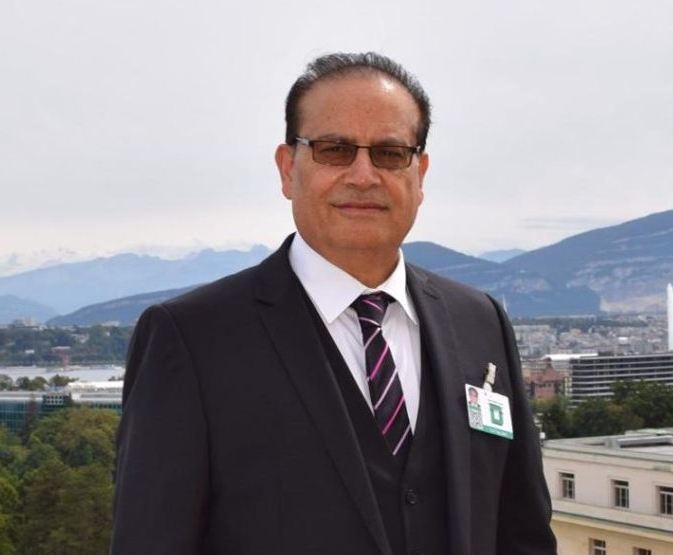
Qamar Bashir 

Former Press Secretary to the President 

Former Press Minister to the Embassy of Pakistan to France 

Former MD, SRBC, CEO, ATV

KCEU’s Chair Ali Raza Syed condemns India’s involvement in terrorism in Canada

KCEU’s Chair Ali Raza Syed condemns India’s involvement in terrorism in Canada

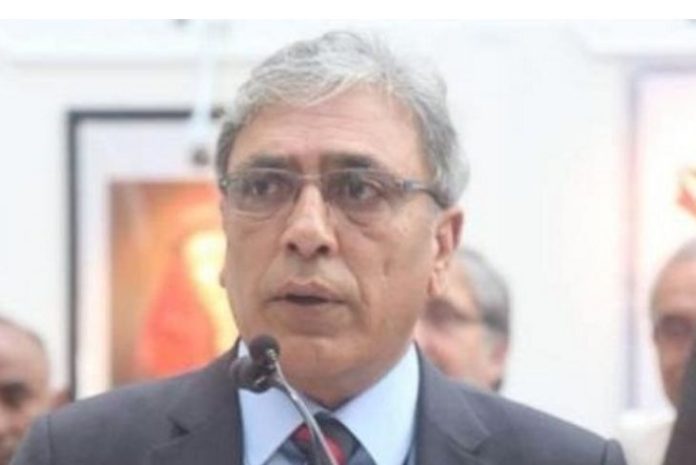
BRUSSELS, OCT 18 /DNA/ – Kashmir Council Europe (KCEU) Ali Raza Syed has strongly condemned India’s involvement in acts of terrorism and conspiracy for violence within Canada and United States.

In a statement he said, specifically the accusations made by Canada reveal India’s malicious agenda on the international front. This situation proves that India is not only engaging in state terrorism and violent extremism against the oppressed people of occupied Jammu and Kashmir and helpless communities in various parts of India and but is also endangering the sovereignty and security of other countries.

KCEU’s Chair urges the international community to take immediate notice of this issue and to restrain India from the horrible activities that pose a threat to global peace.

He said, we appreciate the Canadian government’s courageous action in globally exposing India’s terrorist acts in its country. This bold step sets an example for other countries to raise their voices against India’s illegal and oppressive actions. India must abandon its policy of terrorism and adhere to international laws and agreements to maintain global peace and security.

Ali Raza Syed also said, India illegally had deployed its military forces in the large parts of Jammu and Kashmir on October 27, 1947 and since then, it has been involved in serious crimes against humanity in the illegally occupied territory. Kashmiris in occupied Kashmir and Azad Kashmir and Kashmiris based in other parts of the world observe the day of 27th October as black day and hold protest every year. Like the previous years, Kashmir Council Europe will observe a protest demonstration in front of Indian Embassy in Brussels on October 27, 2024.

He said, India must be held accountable for its ongoing atrocities against the people of Jammu and Kashmir, and it should be forced to respect their freedom and right to self-determination. By promoting extremism and using state power to suppress the people of Jammu and Kashmir and minorities in different parts of India, the Indian government is destabilizing the whole region. Now, this extremism and terrorism have spread beyond its borders.

Kashmir Council Europe’s Chair calls on the international community, especially the United Nations and human rights organizations, to intervene in this situation. He specially asked that iImmediate steps should be taken to stop India’s oppression and to protect the Kashmiri people.

We also urge the international community to exert pressure on India to seek a peaceful resolution to the Kashmir issue and to grant the Kashmiri people their right to self-determination, Ali Raza Syed concludes.

ISSI hosts Hong Ting Forum: dialogue in Islamabad

ISSI hosts Hong Ting Forum: dialogue in Islamabad

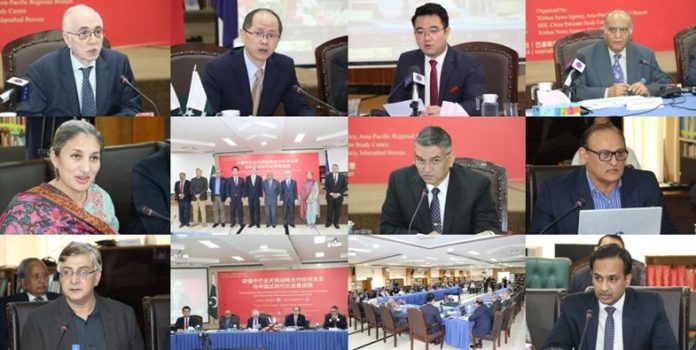
ISLAMABAD, OCT 18 /DNA/ – China Pakistan Study Centre at the Institute of Strategic Studies Islamabad (ISSI) in collaboration with Xinhua News Agency organised the Hong Ting Forum: Dialogue in Islamabad titled “Understanding China-Pakistan All-Weather Strategic Cooperative Partnership and Chinese-Style Modernization Development Path.” The event highlighted China’s unique national modernisation and the importance of the China Pakistan All Weather Strategic Cooperative Partnership. Participants included notables from the diplomatic community, academia, think tanks and civil society.

During his welcome remarks, Jiang Chao, Bureau Chief Xinhua News Agency, stated that under the strategic guidance of the leaders of both countries, the China Pakistan friendship has stood the test of time. He added that comprehensiv reform and promoting the Chinese style modernization under the 18th CPC Central Committee has led to a new milestone. This has also facilitated strengthening the China Pakistan All Weather Strategic Cooperative Partnership.

Mr. Mudassar Iqbal, Deputy Director Associated Press of Pakistan, commended China’s people centered approach to modernization which has resulted in the fruits of growth reaching the people. Pakistan also aspired to follow a similar path to modernization and development. Furthermore, China’s sustainable and ecological development is also a guiding beacon that can serve as a model for developing nations including Pakistan.

Dr. Salma Malik, Associate Professor Quaid-i-Azam University, stated that the Chinese modernization is rooted in Deng Xiaoping’s cardinal principles which included rejuvenation of the Chinese nation, strengthening China’s global position, envisioning a new type of the development of Communist Party’s own principles. She said that the cardinal principles create harmony between nature and humanity which is reflected in the greening of CPEC and BRI projects.

Dr. Hassan Daud Butt, Associate Professor Bahria University Islamabad, stated that the China Pakistan Economic Corridor (CPEC) remains the buckle of the belt in the Belt and Road Initiative, where CPEC is still the most inclusive, vital and progressive of all BRI corridors. Developing countries can also walk the Chinese path to middle and higher income levels by following the Chinese model of development and modernization.

Mr. Farrukh Pitafi, Senior Anchorperson, emphasized that storytelling has always been vital in building positive narratives and that the China story has always been a part of Pakistan’s national narrative. It is high time that a retelling of the story of Pakistan-China relations is undertaken by media of both countries. A comprehensive CPEC media strategy must include in its goal to help Chinese people understand Pakistan and Pakistani people understand China better. It must also rebut any negative propaganda directed against CPEC and BRI.

Mr. Shi Yuanqiang, Deputy Head of Mission of the Embassy of China in Pakistan, during his remarks stated that continuous reforms and opening up is an important step in the development path of China. He added that Premier Li Qiang’s recent visit to Pakistan marks another significant step in strengthening the China-Pakistan All Weather Strategic Cooperative Partnership. The leadership of both countries agree on supporting and promoting the Three Initiatives namely the Global Development Initiative, Global Security Initiative, and the Global Civilization Initiative, in addition to promoting CPEC and people-to-people relations between both countries. He also added that any attempts to undermine cooperation between both countries by acts of terrorism shall yield no result.

Ambassador Masood Khalid, former Ambassador of Pakistan to China, in his keynote address stated that China has made significant developments to the world including building the Great Wall, introducing meritocracy and building the great canal system. China’s development journey has been marked with the economy growing from $2.286 trillion in 2005 to $18 trillion today. He added that the China-Pakistan relationship is a special high priority relation and any attempts to sabotage it is bound to fail. Pakistan can learn a lot from the Chinese approach to modernization. However, it is important to take a whole-of-government approach in order to make use of CPEC and BRI as a learning opportunity for development.

Earlier in his introductory remarks, Dr. Talat Shabbir stated that China and Pakistan shared a history of exceptional relations that have matured into a comprehensive, multi-faceted partnership addressing the political, economic, strategic, and cultural aspirations of both nations. President Xi Jinping’s Chinese-style modernization offers invaluable lessons for Pakistan as we chart our own path towards sustainable development.

In his closing remarks, Ambassador Khalid Mahmood, Chairman BOG ISSI, stated that Chinese development is a path of constant struggle and reform. China’s vision of a Community with Shared Future for Mankind does not mean the imposition of its worldview but rather a prescription of how countries should adopt a development path suited to their own needs.=DNA

================

Pakistan, France strengthen educational ties: A growing partnership

Pakistan

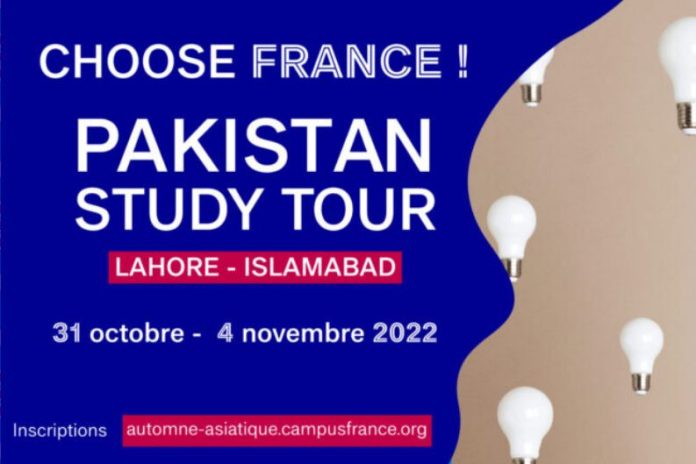
ISLAMABAD, OCT 18 /DNA/ – France Ambassador to Pakistan, Nicolas Galey on Friday said the partnership between Pakistan and France in higher education is gaining momentum, with increasing academic cooperation and student exchanges.

This relationship, bolstered by the “Choose France” initiative, is paving the way for more collaboration between universities in both countries.

Rana Mashhood Ahmad Khan, Chairman of the Prime Minister’s Youth Programme, esteemed members of the Choose France delegation, and representatives of the media, welcome to the French residence.

This event marks the visit of a high-level academic delegation from France. We gather to highlight the achievements and ongoing efforts in educational cooperation between France and Pakistan.

Strengthening ties in higher education remains a key objective in the bilateral roadmap of both nations.

The Ambassador said that the occasion was particularly timely, as we concluded the 3rd edition of the Choose France Education Tour in Pakistan, which took place in Karachi, Lahore, and Islamabad. The Choose France initiative aims to achieve two main objectives: first, to engage students by providing direct interaction with leading French universities; and second, to foster collaboration between French and Pakistani universities through individualized visits, laying the groundwork for long-term partnerships, he said.

He said, in the past two years, eight agreements between universities from both countries have been signed, resulting in active academic and research cooperation. These agreements are just the beginning, as we seek to take the relationship further. One area of focus is establishing a double degree system between the two countries, which would enhance the quality of education and open up opportunities for joint participation in programs such as Erasmus Mundus.

Nicolas Galey said, this year’s edition of the Choose France Education Tour attracted significant interest from both sides. A total of 2,200 Pakistani students attended education fairs, while 22 bilateral visits between universities were organized. The response from France has also been encouraging, with 21 Pakistani representatives participating in this edition, compared to just five universities in the first edition two years ago. These interactions are essential in building mutual understanding and fostering friendship between our nations.

He also mentioned that France was keen to welcome talented Pakistani students with clear academic goals. The growing number of Pakistani students choosing France for their studies is a testament to the increasing awareness of the opportunities available. Over the past three academic years, the number of Pakistani students accepted into French institutions has increased sixfold, and many have received scholarships to support their studies. Most of these students pursue courses in English, he expressed.

The Ambassador said, It is crucial for Pakistani students to select institutions in France that offer state-recognized degrees. Campus France Pakistan plays a pivotal role in guiding students and families through the process of finding suitable programs and universities. As the official organization supporting students in their educational journey, Campus France provides free advice and assistance to help students make informed decisions. This year, the embassy has expanded its team to provide better support, with the addition of new personnel, including a dedicated staff member at the embassy and four Campus France officers in Karachi, Lahore, and Islamabad, all of whom are alumni of French universities.

The success of these initiatives would not have been possible without the support of the Prime Minister’s Office, the Government of Punjab and Sindh, the Higher Education Commission, and various Pakistani universities. Their contribution has played a key role in bringing the academic communities of Pakistan and France closer together, he remarked.

To provide more insights on the cooperation between our countries, he said that, I now invite our guest speakers to share their thoughts on Campus France Pakistan, the mutual benefits of this collaboration, and the long-term impact it will have on our societies.=DNA

Pakistan ambassador to Belarus attends Mogilev International Economic Forum

Pakistan ambassador to Belarus attends Mogilev International Economic Forum

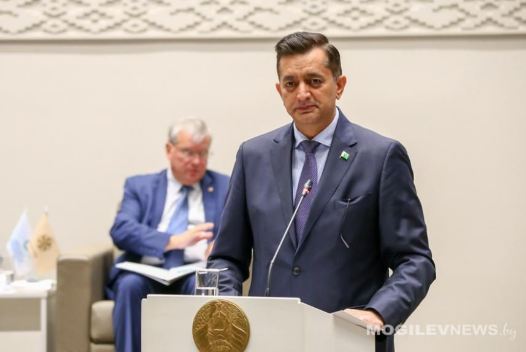
MOGILEV, BELARUS, OCT 18 /DNA/ – At the invitation of the Chairman of the Executive Committee (Governor) of the Mogilev Region, Ambassador Sajjad Haider Khan of Pakistan attended the Mogilev International Economic Forum on 17 October 2024. The forum’s theme, centered on “import substitution,” aimed to identify alternative suppliers and strengthen connections between manufacturers and consumers from SCO countries.

The Plenary Session, chaired by the Governor of Mogilev and the Governor of the Kaliningrad Region (Russia), attracted over 300 delegates, including government officials, industry leaders, investors, and representatives from various sectors, particularly from SCO member states such as China, Russia, Kazakhstan, Kyrgyzstan, Tajikistan, Uzbekistan, and Pakistan.

Addressing the Plenary Session, Ambassador Khan emphasized the potential for enhanced Pakistan-Belarus cooperation while highlighting the significance of the SCO, which represents 40% of the global population and 30% of the world’s GDP. He reaffirmed Pakistan’s strong commitment to the SCO and outlined vast opportunities for trade, investment, and cooperation within its framework. He also noted the successful conclusion of the SCO Council of Heads of Government (CHG) Meeting, held in Islamabad on October 15-16, 2024, which was attended by several Heads of Government, including the Prime Minister of Belarus.

During his address, the Ambassador highlighted the 30th anniversary of diplomatic relations between Pakistan and Belarus, emphasizing the strong ties and recent high-level visits. He shared insights into Pakistan’s potential, underscoring its strategic location, abundant natural and human resources, and vibrant economy. He pointed out opportunities for collaboration in various sectors, including agricultural modernization, textiles, machinery, defense, renewable energy, IT, cybersecurity, education, research, mining, pharmaceuticals, biotech, healthcare, tourism, and transport infrastructure.

Toward the end, the Ambassador underscored Pakistan’s tourism potential and recent visa liberalization, inviting Belarusian citizens to explore the country.

Four including two attackers killed in fresh Kurram firing

Pakistan: A Pivotal Bridge Aligning Economic Interests Between China and the Middle East

PESHAWAR, Oct 18 (DNA): At least four people including two attackers were killed and three others injured in firing in the troubled Kurram district, police informed on Friday.

According to police, local residents were busy working in their fields in the Shinguk when armed motorcyclists came and opened fire on them. As a result, two persons identified and sustained multiple bullet injuries and died on the spot, while three others were wounded.

Sources in the District Headquarters Hospital said that they had received two bodies and injured persons.

Police added that local armed area people chased the assailants and shot both of them dead.

Terming it an act of terrorism, Deputy Commissioner said that they were investigating the incident, saying that certain elements were involved in violence.

It may be noted that unknown gunmen had killed two persons in the same area in the same fashion a week ago.

Police further said that intense firing still continued in the area while firing on passenger vehicles in Kanj Alizai area near Pak-Afghan border further aggravated the situation.

Meanwhile, the elders have said that continuous closure of main and link roads would lead to massive humanitarian crises due to acute shortage of edibles, medicines, petrol and diesel reserves in District Kurram.

Tribal elders from the Turi and Bangash tribes have expressed concern that the continuous closure of roads has caused shortage of food and fuel supplies, raising the fear of a major humanitarian crisis.

They said that suspension of 3G and 4G services had also caused distress for students and citizens, affecting studies and businesses alike in the area.

After incidents of firing on passenger vehicles a few days ago, the main Parachinar-Peshawar and other routes have been closed owing to fear of more such incidents. Violence had stopped last month and the authorities also re-opened the Pak-Afghan border crossing at Kharlachi.

The dispute involves two rival tribes who have been fighting over a piece of land.

In August, the two sides had reached a two-month ceasefire after the armed clashes resulted in at least 50 casualties and wounded around 225 others.=DNA

‘We are back’: PM lauds Team Pakistan for winning first Test after long

'We are back': PM lauds Team Pakistan for winning first Test after long

ISLAMABAD, Oct 18 (DNA): Prime Minister Shehbaz Sharif on Friday lauded the Pakistan cricket team for winning the first home Test match against England after a long haul.

Pakistan defeated England at the Multan Cricket Stadium and leveled the three-match series 1-1. The Green Shirts beat England by 152 runs in the second Test.

“Well done, Team Pakistan for winning the first home Test after a long haul with a historic win against England,” the prime minister wrote on his X timeline.

He also appreciated the “spectacular” performances by Sajid Khan and Noman Ali for claiming nine and eleven wickets respectively.

“Remarkable team effort at display,” Prime Minister Shehbaz remarked.=DNA

===========

Academia and Palestine

Academia and Palestine

Dr. Muhammad Akram Zaheer

The 2023-2024 academic year witnessed a significant transformation across university campuses in the United States and other parts of the world, marked by a rise in pro-Palestinian sentiments alongside incidents of anti-Semitism. This shift has provoked substantial debates about the role and value of a college education, as well as the reputations of elite institutions traditionally viewed as bastions of intellectual discourse and progressive thought.This emerging trend has raised fundamental questions about the underlying principles that govern higher education, particularly in elite institutions such as Ivy League universities. The growing alignment of university narratives with political violence, under the guise of “resistance,” has drawn criticism from various quarters. Critics argue that it challenges the neutrality and academic freedom that universities claim to uphold, leading to concerns about whether these institutions are nurturing environments for free expression or breeding grounds for one-sided political advocacy. Consequently, the integrity of higher education has been called into question, with skepticism growing over whether universities are providing an education that fosters critical thinking or merely pushing ideological agendas.

Pro-Palestinian sentiment on college campuses is not a new phenomenon. It has evolved over decades, gaining particular momentum during periods of heightened conflict between Israel and Palestine. Historically, student groups, academic departments, and faculty members have engaged in discussions about the political, social, and humanitarian dimensions of the Israel-Palestine conflict. However, the recent surge in visible activism, demonstrations, and organized protests reflects a more pronounced and polarizing shift.The realignment on campuses can be attributed to multiple factors, including the influence of Middle East studies programs and the active role played by organizations such as the Middle East Studies Association (MESA). These programs and associations have often facilitated the organization of events, lectures, and debates on issues related to the Middle East, creating platforms where pro-Palestinian perspectives are amplified. Critics argue that this alignment has, in some cases, provided tacit endorsement of actions that cross the line from advocacy to the glorification of political violence.Middle East studies programs have been instrumental in shaping the discourse around the Israel-Palestine conflict on campuses. By offering courses that focus on the historical, political, and cultural aspects of the region, these programs have played a key role in educating students about the complexities of Middle Eastern geopolitics. However, critics claim that many of these programs have exhibited biases, promoting narratives that favor Palestinian resistance while neglecting broader contextual considerations, such as Israel’s security concerns and regional dynamics involving neighboring countries.MESA, as an association representing scholars of the Middle East, has also contributed to this discourse. Through its publications, conferences, and public statements, MESA has been influential in framing the conflict and its associated narratives. Supporters view these efforts as a necessary intervention to provide a counter-narrative to what they perceive as mainstream media biases, while detractors see it as a politicization of academic spaces. The association’s calls for boycotts, divestments, and sanctions (BDS) against Israel have also been contentious, drawing both support and condemnation.

Institutions such as Columbia University and Harvard University have found themselves at the center of the debate due to their responses to the protests and activism on their campuses. Columbia, in particular, has a history of activism related to the Middle East, with various student organizations and faculty members advocating for Palestinian causes. Similarly, Harvard has seen a surge in activism, leading to public statements from student groups and academic bodies.The administration’s responses, or lack thereof, have been scrutinized, leading to significant brand damage. In some cases, university leaders have issued statements that seem to balance a fine line between acknowledging the rights of students to express their opinions and addressing the concerns of those who feel threatened by anti-Semitic rhetoric. These statements have often been perceived as either too cautious or too lenient, resulting in backlash from multiple stakeholders. For example, while some students and faculty members demand a stronger condemnation of anti-Israel sentiment, others criticize any attempt to censure pro-Palestinian activism as a violation of free speech.This balancing act has not been without consequences. Several universities have experienced a drop in donations from alumni who disagree with the administration’s perceived stance on the issue. Moreover, public perception of these institutions has been affected, as they are increasingly viewed as spaces where political activism can override academic rigor. The impact on their brands has raised concerns about the long-term implications for student enrollment, faculty recruitment, and partnerships with external organizations.

The rise in pro-Palestinian sentiments and associated activism has also brought to light the issue of academic freedom and intellectual diversity. While universities have long been seen as arenas where diverse opinions can be debated and discussed, the current atmosphere on many campuses has prompted questions about whether this principle is genuinely upheld. Reports of faculty members facing pressure to align with specific narratives or students feeling alienated for expressing dissenting views suggest a narrowing of the space for open dialogue.This environment has, in turn, fueled concerns about self-censorship. Students and faculty members may hesitate to engage in discussions on sensitive topics for fear of being ostracized or penalized, which undermines the very foundation of higher education as a place for intellectual exploration. This situation has been particularly concerning for Jewish students, many of whom have reported feeling unsafe or marginalized due to the growing intensity of anti-Semitic incidents that often accompany pro-Palestinian activism.The developments on university campuses reflect a broader societal shift, where discussions on international issues are increasingly polarized. The Israel-Palestine conflict has become a microcosm of this polarization, with university campuses acting as battlegrounds for competing ideologies. This phenomenon is not limited to the United States; similar patterns have been observed in other countries, including Canada, the United Kingdom, and across Europe.In this context, universities are being challenged to define their roles. Are they merely institutions for learning, or do they have a responsibility to shape social and political discourse? The rising activism has shown that, for many students and faculty, universities are more than just places to acquire knowledge; they are spaces to engage with, and sometimes advocate for, global causes. This dual role, however, has placed institutions in a difficult position, as they navigate the expectations of stakeholders with diverse, and often conflicting, views.The ongoing protests and the responses from university administrations are eroding the academic brands of several institutions, leading to critical questions about their competence, stewardship, and commitment to their foundational principles. The delicate balance between supporting freedom of expression and ensuring a safe, inclusive environment for all students has proven to be a challenging task for many university leaders.As the 2023-2024 academic year unfolds, it remains to be seen how universities will address these issues without compromising their reputations. What is clear, however, is that the current dynamics on campuses have sparked a broader conversation about the purpose of higher education and the ethical responsibilities of institutions that serve as forums for debate and the exchange of ideas. Whether these institutions can navigate these turbulent waters without further brand damage will depend largely on their ability to foster genuine intellectual diversity, resist the pressures of politicization, and address the concerns of all stakeholders.

Azerbaijan marks 33rd anniversary of the restoration of its independence

Azerbaijan marks 33rd anniversary of the restoration of its independence

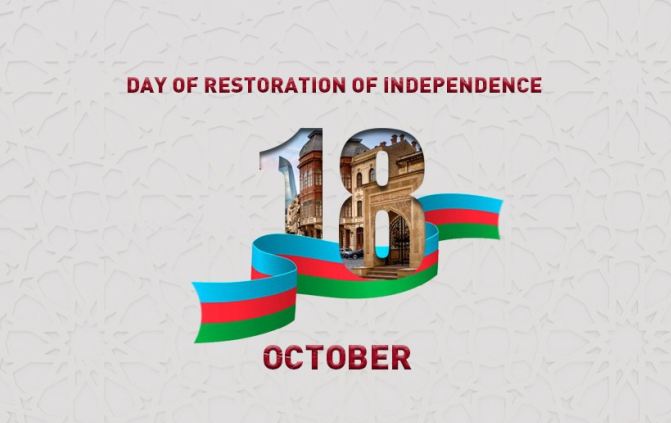
DAY OF RESTORATION OF INDEPENDENCE
OF THE REPUBLIC OF AZERBAIJAN

The country restored its state independence in the late 20th century after the collapse of the USSR. On 18 October 1991, the Supreme Council of the Republic of Azerbaijan adopted the Constitutional Act “On the State Independence of the Republic of Azerbaijan”.

The Constitutional Act referred to the Declaration on the Independence of the Republic of Azerbaijan dated 28 May 1918 and the Declaration “On the Restoration of State Independence of the Republic of Azerbaijan” adopted by the Supreme Council of the Republic of Azerbaijan on 30 August 1991, proclaiming the independent state of Azerbaijan as a legal successor of Azerbaijan Democratic Republic.

Thus, according to the Constitutional Act “On the State Independence of the Republic of Azerbaijan” consisted of 6 chapters and 32 articles, the people of Azerbaijan restored their independence on 18 October 1991.

On 29 December 1991, the people of Azerbaijan voted for the country’s independence and sovereignty in a nationwide referendum.

The chaos and government crisis within the country, as well as Armenia’s military aggression against Azerbaijan, seriously damaged the independent state-building process at that time. Only in 1993, when National Leader Heydar Aliyev returned to power with continuous demand of the people, the country did manage to take consistent steps to fulfill the ideas of national independence and restore the traditions of statehood and sovereignty.

After that Azerbaijan embarked on the path of development, ensured stability and the country began to confidently move forward. Heydar Aliyev, the Great Leader of Azerbaijan have made great achievements leading Azerbaijan to embark on a path of real independence.

Thanks to his dynamic and forward-thinking leadership Azerbaijan overcame great difficulties and laid strong foundations for its development.
The development and implementation of a balanced and serving the protection of national interests of the foreign policy of the Republic of Azerbaijan are associated, in general, with the name of the national leader Heydar Aliyev who devoted his life to the prosperity of Azerbaijan.

It was thanks to his exceptional sense of statehood, profound wisdom, and ability to deeply understand the essence of issues that it became possible to determine the correct approach to the establishment of international relations.

Since 2003, Azerbaijan has been continuing to implement the policy of Heydar Aliyev, and enriching it under the leadership of H.E. Mr. Ilham Aliyev, the President of the Republic of Azerbaijan.

Under the leadership of Commander-in-Chief President Ilham Aliyev, the victorious Azerbaijani Army liberated the occupied territories from the almost 30-year occupation by Armenia, implemented UN Security Council 4 resolutions of 1993 itself alone, and restored historical justice.

Currently, restoration and reconstruction work based on smart and green technologies are underway in these areas.
It also should be stated that, over the past years, the Republic of Azerbaijan has successfully chaired several important organizations such as the UN Security Council, the Non-Aligned Movement, the Organization of Turkic States, and many others.

Furthermore, Azerbaijan has been unanimously supported as the next host of the UN Climate Change Conference. Thus, in November of 2024 tens of thousands of delegates from all over the world, including brotherly Pakistan are expected in Baku for the COP29 Summit to discuss the future of our planet from a climate change perspective.

This is another sign of Azerbaijan`s strong diplomacy at a global scale and well recognized reputation of Azerbaijan as a reliable partner for multilateral negotiations.

Stay Connected

64FansLike
60FollowersFollow

Latest Reviews

Exchange Rates

USD - United States Dollar
EUR
1.17
GBP
1.35
AUD
0.67
CAD
0.73