Home Blog Page 589

Empowering Rural Women: PODA’s 17th Annual Leadership Training Conference Kicks Off in Islamabad

PODA

1st Day of 3-Day Annual Rural Women Leadership Training Conference

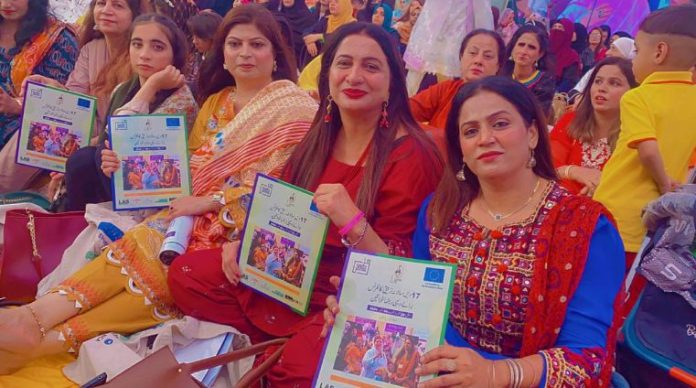
ISLAMABAD, OCT 22 /DNA/ – On the first day of PODA’s 17th Annual Rural Women Leadership Training Conference, women from over 132 districts nationwide, including the four provinces and the regions of Gilgit-Baltistan and AJK, united to advocate for the recognition of women as “farmers.” The fundamental focus of Tuesday’s proceedings was to bring the issues facing rural women to the forefront, ensuring that they can benefit from government policies and services. Lok Virsa collaborated with PODA to organize the 3-day conference on its premises.

Prime Minister’s Coordinator for Climate Change and Environmental Coordination, Ms. Romina Khurshid Alam, called for the empowerment of women to address climate change challenges while praising their contributions in agriculture, the economy, and other fields. Ms. Alam urged all provincial governments to take steps toward empowering women and improving healthcare, particularly focusing on the rights of girls and women in rural areas. She commended the resilience of rural women in the face of challenges, emphasizing that their participation in decision-making processes and empowerment will positively impact the overall plight of women across the country.

Ms. Alam informed the women leaders that the federal government has launched a program in Balochistan titled “She Power,” in collaboration with the Chinese government, aimed at improving health and hygiene conditions for girls and women. She stated that women’s empowerment will have far-reaching impacts on the country’s economy, agriculture, and climate change issues.

While welcoming the women leaders, Ms. Sameena Nazir, Executive Director of PODA, informed them that women make up around 60 percent of the agricultural labor force in Pakistan. However, research indicates that if these women had equal access to productive resources as men, they could increase farm yields by 20 to 30 percent, leading to a rise in total agricultural output in the country by 2.5 to 4 percent. This improvement could help reduce hunger and poverty while enhancing the quality of life for women, who are the backbone of the agricultural sector, she said.

In a message, Prime Minister Muhammad Nawaz Sharif commended the women participants for highlighting the progress and development of rural women. He emphasized that rural women play a crucial role in ensuring food security, maintaining agricultural sustainability, protecting the environment, and significantly contributing to the health and education sectors. He also reiterated his government’s commitment to providing an enabling environment for all women and girls, particularly in rural areas, ensuring they have access to quality education, health services, vocational and professional training, and sustainable livelihoods.

Director General of Population Welfare, Punjab, Ms. Saman Rai, appreciated PODA for its efforts in organizing an impactful gathering where women could come together to share their experiences, strengthen their leadership skills, and advocate for their rights in the agricultural sector. “It’s a wonderful platform for imparting information, knowledge, and skills,” she added.

Ms. Rai also visited the stalls and praised PODA for providing training to women in olive production, thereby creating opportunities for their economic empowerment.

Other prominent speakers included: Ms. Rahila Hameed Durrani, Minister for Women Development, Balochistan;MPA Uzma Kardar, CM-Punjab’s Focal Person for Polio; MPA Advocate Kanwal Liaquat, Parliamentary Secretary for Environment Protection and Climate Change and Member of the Women Protection Authority, Punjab; Ms. Farah Naz Akber, Parliamentary Secretary, National Heritage and Culture Division; Dilshad Bano, Minister for Social Welfare and Women Development of Gilgit-Baltistan; Ms. Samina Fazil, President of the Islamabad Women’s Chamber of Commerce and Industry; and Akeela Naz, representing women farmers of South Punjab.

During the second session of the day on “Empowering Rural Women Through Sustainable Innovations, Digital Entrepreneurship, and Climate Action: Challenges and Opportunities,” children from Zameer Akhtar School in Rawalpindi delivered an engaging educational theater performance that depicted the practices contributing to the devastating impacts of climate change on people’s lives. They also emphasized the importance of saving the ozone layer and the Earth by adopting habits such as using cloth bags.

During the strategic session, the panelists discussed the pressing challenges of climate change and the significant vulnerabilities rural women in Pakistan face due to these challenges. The participants agreed that despite their crucial role in food production, they often lack access to essential resources, technical bio-sciences information, and decision-making opportunities. Rural women also experience gaps in digital literacy that limit their entrepreneurial potential. They were of the opinion that by integrating climate-resilient practices and empowering women through knowledge and technology, community resilience and confidence in women farmers can be fostered.

Women from all provinces showcased their folk songs and dances, highlighting the strength of diversity that is a hallmark of Pakistan as a federation.

Pakistan’s Digital Lag

Global Misperceptions

By: Bisma Rafique

Pakistan has established itself as a global leader in freelancing, ranking 4th in the world according to Payoneer’s Global Gig Economy Index. A youthful, tech-savvy population, with 64% of citizens under the age of 30, has fueled the rapid growth of the gig economy. This thriving sector is contributing significantly to Pakistan’s economy. In 2023 alone, freelancers generated over $500 million in export remittances, which serves as crucial support for the country, especially amid financial instability. However, despite these advancements, Pakistan faces significant digital challenges. Limited internet access, poor infrastructure, and low digital literacy have put Pakistan’s global competitiveness at serious risk.

As the world increasingly embraces digital solutions, Pakistan is struggling with an internet slowdown that is adversely affecting economic progress. Slow internet is more than just a daily inconvenience; it is a barrier to growth, particularly in key sectors like IT services, e-commerce, and remote work. Internet use in Pakistan has surged in recent years, but the country’s digital infrastructure has not kept pace.

Shaza Fatima Khawaja, the Minister of State for IT & Telecommunication, has acknowledged the problem. She pointed out that one of the major reasons for the internet slowdown is the widespread use of VPNs, which has further strained the system’s already limited capacity. While VPNs allow users to bypass government restrictions, their heavy use has placed additional pressure on Pakistan’s outdated network. With over a million Pakistanis employed in remote jobs and freelancing, these digital roadblocks are having widespread effects. The unreliable internet threatens their ability to perform. Arooj Fayyaz, who works remotely for the US-based IT education platform JOBSKILLSHARE, voiced her concerns: “Working on critical projects has become very difficult. I have missed deadlines due to internet issues, and during important meetings, it is tough to stay engaged with frequent connection drops. This is frustrating for me and my clients.”

The ongoing internet slowdown threatens this growing source of revenue. Reduced efficiency and project delays are leading to lost contracts, tarnishing Pakistan’s reputation as a reliable hub for outsourced talent. If these internet issues persist, Pakistan risks losing clients to countries with better digital infrastructure, leading to a loss of foreign earnings and thousands of jobs for skilled workers. E-commerce, another rising sector, could also face challenges as businesses struggle to maintain consistent online services. This could harm consumer trust and further slow economic growth.

To address these pressing challenges, Pakistan must invest in modernizing its digital infrastructure. This includes expanding internet access, improving bandwidth, and enhancing overall service quality. By prioritizing these improvements, Pakistan can create an enabling environment for its freelancers and businesses, allowing them to thrive in the global market. A robust IT infrastructure will not only enhance productivity but also attract foreign investment and foster economic growth. With the right strategies in place, Pakistan can harness its digital potential and secure its position in the rapidly evolving global economy. In a world increasingly driven by technology, ensuring a reliable internet connection is essential for Pakistan’s success and prosperity.

The writer is a freelance journalist. She tweets/posts @bismarafique and can be reached at: [email protected]

Much ado about the constitutional amendment

Opinion

Ansar M Bhatti

Has the dust settled? This is perhaps the most pressing question following the controversial passage of the 26th Constitutional Amendment in Parliament. According to this amendment, the superior judiciary is no longer to function independently in matters such as the appointment of judges and the evaluation of their performance; these powers have been transferred to Parliament. Additionally, the amendment restricts the scope of the apex court’s authority by limiting its ability to take suo motu actions. In essence, the government appears to have significantly curtailed the independence of the judiciary, rendering it effectively powerless.

It is now an open secret that the proposed constitutional amendment was not an original idea conceived by Parliament. Instead, both the PPP and PML-N were tasked with pushing it through if they wished to ensure their political survival. For the PPP, the reward dangled was the prime ministership for Bilawal Bhutto, contingent on securing the passage of the initial 60-point amendment package, which would have granted significant powers to the Establishment. However, thanks to Maulana Fazal ur Rehman’s outright refusal to support the draft, the original proposal was sidelined.

A revised version of the amendment was then presented to Fazal ur Rehman, which he accepted, albeit with some conditions.

For PML-N, the stakes were made crystal clear: their hold on power hinged entirely on the passage of this amendment. Moreover, it was unequivocally conveyed to the party leadership that Nawaz Sharif would not be permitted to leave the country until the amendment was approved. As a result, PML-N seemingly had no choice but to comply, even though this move is likely to cost them politically. Their public support had already diminished, and with the passage of this amendment, their popularity is expected to decline even further.

“Ostensibly, the idea of controlling the superior judiciary involves multiple facets, both internal and external. Internally, from the Establishment’s perspective, it was crucial to maintain a firm grip on the higher judiciary to ensure favorable rulings. The lower judiciary, already under control, remains ever prepared to ‘dispense justice’ when directed.”

The Pakistan government has occasionally faced challenging situations when the apex court issued verdicts affecting foreign investors. Two prominent cases stand out.

First, in the Reko Diq case, the Supreme Court nullified the entire agreement, forcing the affected party to seek legal recourse. The international court ruled against the Pakistan government, resulting in a hefty penalty that the government had to pay.

In another instance, the Supreme Court annulled the agreement with the Turkish power generation company, Karkey. This decision strained relations with the Turkish government. Karkey subsequently filed a claim for millions of dollars in penalties. However, with intervention from both the Pakistani and Turkish governments, the issue was eventually resolved. Then-Prime Minister Imran Khan announced that, with the help of Turkish President Recep Tayyip Erdoğan, the dispute was “amicably resolved,” saving Pakistan from a $1.2 billion penalty imposed by the International Centre for Settlement of Investment Disputes (ICSID).

These cases, among others, have led to significant embarrassment for the government. This has perhaps fueled the argument by some in power that there should be more oversight or control over the judiciary to prevent such outcomes.

The key question now is whether the new system will function effectively, as doubts linger. Concerns have been raised that the system could create internal divisions and confusion among the judges. The government is expected to elevate Justice Yahya Afridi to the position of chief justice, despite his being third in the seniority list. Some speculate that Justice Mansoor Ali Shah, who is widely regarded as the most deserving candidate, may also be considered for the role.

Justice Mansoor is a bold and highly competent judge. If anyone can match the intellect, insight, presence of mind, and eloquence of the outgoing Chief Justice Qazi Faez Isa, it is Justice Mansoor. While Qazi Faez Isa was undoubtedly an exceptional judge, his perceived bias against the PTI has overshadowed his tenure as chief justice. Justice Afridi, by contrast, is seen as a more low-profile and less assertive figure. However, it is possible that once in leadership, he could defy expectations and prove himself to be a strong chief justice.

The lawyers are expected to initiate a movement opposing these amendments. The PTI has signaled its intention to challenge the matter in the Supreme Court. According to the amendment, all such petitions will now be heard by a Constitutional Bench, appointed by the government. This bench may consist of five or more judges. From a legal and technical standpoint, the amendments may not hold up, as the intent behind them appears questionable. Additionally, the timing of the amendment’s passage is likely to influence the bench’s decision-making process.

Bilawal Bhutto, speaking in the National Assembly before the vote on the amendment, referred to the Charter of Democracy (CoD) signed between the Pakistan People’s Party (PPP) and Pakistan Muslim League-Nawaz (PML-N) in 2006. He emphasized that this historic agreement laid the foundation for the establishment of the constitutional bench and made it clear that neither party would ever come to power with the assistance of the establishment. His remarks alluded to how both parties had once committed to standing independent of such forces.

Bhutto also criticized certain judges, holding them responsible for the disqualification and ouster of former Prime Ministers Yousaf Raza Gillani and Nawaz Sharif. However, he seemingly ignored the broader context that the judiciary often acts in collaboration with the establishment. This reflects a harsh reality of Pakistan’s political dynamics, where judges and the establishment work in tandem to influence political outcomes.

Despite this, Bhutto’s criticism focused solely on the judges, perhaps overlooking the deeper entanglements of both the PPP and PML-N with powerful elements in the establishment. Both parties have, at times, been brought to power with the backing of these influential forces, which might explain why their leadership tends to deflect full responsibility onto the judiciary.

The international stakeholders, particularly those with vested interests in Pakistan, have been eager to see the judiciary’s influence reduced. These foreign countries are concerned about their investments in cases like Karkey and Reko Diq, may have pushed for these judicial constraints to protect their economic interests. This reflects a broader international dimension to Pakistan’s internal power struggles, where foreign economic stakes sometimes drive domestic political changes.

Crackdown in Islamabad: 74 beggars, 18 shopkeepers arrested

Crackdown in Islamabad: 74 beggars, 18 shopkeepers arrested

ISLAMABAD, OCT 21 (DNA) — The district administration of Islamabad has ramped up its efforts to address growing concerns over illegal activities in the Federal Capital, leading to the arrest of 74 beggars and 18 shopkeepers in separate operations.

The spokesman of Islamabad Capital Territory (ICT) administration said that this action was part of a larger initiative to maintain public order and enforce price regulations. Islamabad’s district administration continues its aggressive campaign against the alms-seekers in the city and arrested 74 professional beggars over the past 48 hours.

All the Assistant Commissioners (ACs) were actively involved in the crackdown. The AC Saddar, Maheen Hassan accompanied by the district administration teams have arrested 38 beggars from sectors G-10 and G-11, and F-11 area while the AC Rural, Kamran detained 21 beggars in the Sihala police station area. Additionally, the AC Industrial Area, Farwa Batool apprehended 15 beggars and transferred them to Margalla police station.

Deputy Commissioner (DC) Islamabad Irfan Nawaz Memon emphasized the need for increased surveillance and quick responses to any information regarding professional beggars. He instructed the administration to take immediate action when reports are received.

Meanwhile, in a parallel operation, the district administration also took action against shopkeepers who were not adhering to the official price list. Eighteen shopkeepers were arrested for overcharging customers during market inspections.

Assistant Commissioner City Farhan Ahmad has arrested eight shopkeepers, while Assistant Commissioner Saddar detained another eight in separate operations. The AC Industrial Area arrested two shopkeepers and imposed a fine on one for violating the price regulations. These operations were carried out in the city’s Sunday markets, where price gouging had become a common issue.

The Deputy Commissioner urged citizens to follow the official price list when making purchases and report any violations. DC Islamabad assured that price control magistrates are present in markets to monitor compliance at all times.

However, the district administration has called on the public to cooperate with these efforts and report any further violations as it continues to tighten control on illegal activities across the capital. —DNA

FBR’s I&I notices to industries condemnable: Atif Ikram

Inquiries of fake invoices are harassment, industries should be protected for economic flow

Islamabad, OCT 21 /DNA/ – President Federation of Pakistan Chamber of Commerce and Industry Atif Ikram Shaikhhas said that the notices of I&I by FBR to industrialists are condemnable. The notices stated that fake sales tax invoices were taken as inputs. Scrutiny of the importers to some extent can be done by the buyer before buying the goods but a thorough investigation procedure should be adopted because what can the purchaser do if the importer refuses to accept his own sales tax invoices.We can check NTN and the genuineness of the company but FBR says that the buyer should investigate completely, it is not possible for us.

Federation President AtifIkram said that Purchaser conducts banking transactions, maintains all records, yet issuing notices is tantamount to harassment.FBR should oblige the importers to update their complete record and put it on their website.Our demand is that the government and FBR should adopt the rules of doing business so that industries can run and exports can increase.If the industries are freed from day to day inquiries then the economy can move towards improvement

Israel deemed an ‘enemy of mankind’ amid rising global support for Palestinian resistance

Israel deemed an ‘enemy of mankind’ amid rising global support for Palestinian resistance

ISLAMABAD, OCT 21 /DNA/ – Israel, driven by messianic ideological motives, has become hostis humani generis, an “enemy of mankind,” as it continues to impose collective punishment and apartheid in the Palestinian territories. The reality of these actions has emerged, despite the widespread disinformation in the Western media, leading to overwhelming international support for Palestinian resistance. In this context, supporting Israel or maintaining neutrality is equivalent to complicity in these crimes.

This was observed during a seminar on “Israeli Aggression: Perspectives, Policies, and Emerging Scenario” held at the Institute of Policy Studies (IPS), Islamabad. The session featured distinguished panelists, including Syed Muhammad Ali, policy analyst and strategist, Oves Anwar, director, Research Society of International Law, Dr Khurram Iqbal, associate professor, National Defense University, Islamabad, Khalid Rahman, chairman IPS, and Ambassador (r) Syed Abrar Hussain, vice chairman, IPS.

The speakers noted that Israel’s atrocities are not new and traced the origins of the Israel-Palestine conflict to early 20th century events including the Balfour Declaration and the 1948 Palestinian displacement.

From the perspective of the growing violence and devastation, the speakers emphasized that Israel’s military aggression has killed over 42,000 Palestinians since October 7, 2023, with a disproportionate number of 22 Palestinians killed for every Israeli. This degree of intentional destruction, according to the speakers, is consistent with Israeli messianic goals. These actions have bolstered Prime Minister Netanyahu’s popularity in domestic politics, which had been under pressure before the October 7, 2023, escalation, incentivizing him to prolong the war.

Regarding the forces behind Israel’s military strategy, the speakers pointed out that it is influenced more by extreme ideological motives than by political goals. They pointed out that Israel’s main objectives are to strengthen identity politics in the Middle East, take political advantage of the chaotic situation, undermine the Palestinian economy, weaken the structural and defense capabilities of resistance forces, isolate Iran, and reduce US influence in the region. They pointed out that the war is being fought in five different areas: intelligence, economics, diplomacy, military, and information.

Addressing the international dimension, the speakers noted that the conflict is likely to continue but might not expand geographically due to concerns over the global energy supply from the Middle East and the presence of reformist elements in Iran that deter geographical escalation.

Another significant evolvement is the massive public support for Hamas resistance, which is backed by a justified cause and falls under the ambit of insurgency under the international law. The extent of Israeli crimes directly fuels increased public favor and support for Palestinian resistance.

The speakers criticized the limitations of the international legal framework in addressing the ongoing conflict. They noted that Israel not only rejects international law and global institutions but also violates fundamental principles of International Humanitarian Law, such as distinguishing between combatants and non-combatants and adhering to proportionality in conflict.

Additionally, Israel relies on its own legal definitions to justify its apartheid and collective punishment. The speakers emphasized that a just international order cannot be established without holding Israel accountable.

Khalid Rahman, in his concluding remarks, noted that the ongoing situation in Gaza is part of the broader Israel-Palestine conflict, which cannot be expected to resolve quickly, especially with external dynamics involved. While the Western media has spread disinformation about Palestinians and the conflict, the evolving situation has also revealed significant truths, influencing Western youth and potentially shifting global perspectives. Resultantly, despite heavy losses, Hamas has managed to bring substantial international attention to its cause.

Rahman said supporting Israel or remaining neutral in the face of its war crimes and genocide is equivalent to complicity. Moreover, these atrocities have gone beyond the limit where current academic and legal terms could describe the extent of Israel’s inhumane policies. He emphasized that Pakistan must stay committed to its principled stance on Palestine and adjust its approach in response to changing circumstances.

Commodore Shahzad Iqbal of Pak Navy promoted to the rank of rear admiral

Commodore Shahzad Iqbal of Pak Navy promoted to the rank of rear admiral

ISLAMABAD, OCT 21: /DNA/ – Commodore Shahzad Iqbal of Pakistan Navy has been promoted to the rank of Rear Admiral.

Rear Admiral Shahzad Iqbal was commissioned in Operations Branch in 1995. The Flag Officer is a graduate of Pakistan Navy War College, Lahore, and National Defence University, Islamabad.

He has also done B.Sc. in Naval Sciences from University of Karachi and Gunnery Officer Command Course from China. The Admiral has an illustrious career covering vast experience of various Command and Staff appointments.

 His command appointments include Commanding Officer PNS SAIF, Commander Jinnah Naval Base, Ormara, and Commander 25th Destroyer Squadron.

He also served as Senior Staff Officer (Operations & Plans) at HQ Commander Pakistan Fleet, Director Foreign Military Collaboration, Director Naval Operational Plans and Assistant Chief of Naval Staff (Operations) at Naval Headquarters, Islamabad. In recognition of his meritorious services, the Flag Officer has been awarded Sitara-i-Imtiaz (Military).

New Election System in Uzbekistan: Creation of platforms for the emergence of new public politicians

Uzbekistan

The formation of a free society and state is impossible without the formation of stable electoral legal culture. It is a generally accepted fact that elections are the basis of people’s power. It is generally accepted that the existence of free elections in the country is one of the principles of a democratic regime of government and a republican form of government. In accordance with clause 1 of Article 9 of the Convention on Standards of Democratic Elections, Electoral Rights and Freedoms in the CIS Member States: “Genuine elections ensure the identification of the freely expressed will of the people and its direct implementation».
Over the past few years, significant changes have taken place in the political system of the Republic of Uzbekistan, which have affected all spheres of socio-political life. One of these changes is the innovation of the electoral legislation. This means changing the electoral system of the Republic of Uzbekistan from majority to majority-proportional one (sometimes it is called mixed) in elections to the Legislative Chamber of the Oliy Majlis of the Republic of Uzbekistan. The mixed electoral system, in which two classical electoral formulas (majority and proportional) are linked, is also used in a number of other states on different continents, from the states of the European Union (Bulgaria, Hungary, Germany, Italy, etc.) to the states of the Far East (Japan, etc.)
What is the purpose of the transition to majority-proportional electoral system?
Firstly, this system facilitates more complete accounting of votes and reflects the real political situation in the country more accurately.
Secondly, the representation of the regions of Uzbekistan in the lower house of parliament will become more balanced.
Thirdly, a change in the format of relations between parties and candidates, since parties will have to focus on the search for candidates who are really famous, authoritative and able to work actively with voters.
Fourthly, a platform is created for the emergence of new public politicians.
Mixed electoral systems are divided into three types:
1) with the dominance of proportional representation (proportional-majority);
2) with the dominance of the majority system (majority-proportional);
3) balanced systems, in which proportional and majority systems are used on an equal footing.
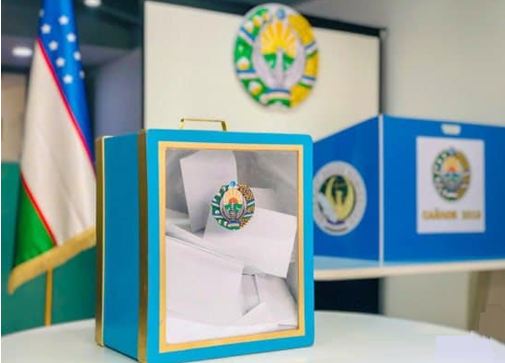
In the Republic of Uzbekistan, the legislation enshrines the transition to the balanced system. Thus, Part 2 of Article 67 of the Electoral Code of the Republic of Uzbekistan establishes that seventy-five deputies of the Legislative Chamber are elected in single-mandate electoral district, seventy-five -on the basis of the party list in proportion to the number of votes cast for political parties in a single electoral district. Usually, under such systems, on election day, the voter is given a separate ballot in which he votes specifically for the candidate, and a separate ballot in which he votes for the party. Although each state has its own practice. For example, in Germany, the precinct election commission issues one ballot, in which candidates of a single-mandate electoral district are placed on the one hand, and land lists areplaced on the other hand, in Russia voters are given two ballots at polling stations.
Part 3 of Article 31 of the Electoral Code of the Republic of Uzbekistan stipulates that “the ballot paper shall contain the surname, first name, patronymic of the candidate in alphabetical order, indicating the year of birth and the political party that nominated him/her as a candidate”, which characterizes the elections to the Legislative Chamber in single-mandate electoral districts.
Part 4 of Article 31 of the Electoral Code establishes that “the ballot paper for the election of deputies of the Legislative Chamber in a single electoral district shall include the name and symbols of the political parties participating in them sequentially in accordance with the procedure in which they were allowed to participate in the elections.” This means that two types of ballots will be produced in the elections to the Legislative Chamber. This norm is a serious test for political parties and implies painstaking work on the development of their political program in order to eliminate deliquescence and determine the clarity of party lines.
It should be noted that Art.401 of the Electoral Code of the Republic of Uzbekistan enshrined the norm on the registration and publication of the party list by the Central Election Commission, as well as single-mandate candidates.The idea of registering and publishing lists of candidates running in a single electoral district is correct. The voter will form his own idea of the party, based on the candidates nominated by the parties in their party lists. At the same time, it is necessary to resolve the most important issue – the methodology for distributing mandates within the list.
The changes concerning the issue of detecting the election results are not less interesting. Candidates for deputy from a single-mandate electoral district are determined by the winner-take-all system. Thus, according to Part 5 of Article 96 of the Electoral Code of the Republic of Uzbekistan, the candidate who has received the largest number of votes becomes the winner. This system is very effective, except for cases when two or more candidates have received the same number of votes. The winner-take-all system is used as the only one for elections of any chamber of parliament (or both chambers) in 43 countries, including the United States and a number of states – members of the British Commonwealth of Nations.
With regard to political parties elected in a single electoral district, Art.961of the Electoral Code of the Republic of Uzbekistan established a seven percent threshold. Thus, a political party receives a parliamentary mandate only if it received seven percent of the votes of voters who took part in the voting in a single electoral district.
Why did the legislator establish this threshold? What is the reason for its existence? In the legal literature containing various opinions on this issue, the following grounds for its introduction are noted:
1)The threshold is introduced to reduce the participation in the distribution of seats in parliament of parties that received support from voters at the level of “noise”, error or accident that occurred at polling stations, which made up about 2 percent of the total number of citizens’ votes. This value is considered acceptable due to the instability of the group of voters, the high share of accident and a number of other factors that affect the elections
2) The threshold is used to avoid excessive factional fragmentation within parliament, which could lead to its decentralization and paralysis of its work.
3) The threshold is introduced to exclude negative activity and the influence of small parties on the adoption of important decisions, including in the formation of the government. This effect lies in the fact that small parties form factions that have significant weight in making the final decision, which actually puts them in a dominant position over large parties. Ultimately, this resulted in the political crisis in Israel in 2019–2022, when five snap elections to the Knesset were held for 3.5 years.
4) The threshold is also introduced in order to provide parties participating in the distribution of mandates with the opportunity to have efficient fractions for the most fruitful implementation of their functions.
What is this threshold in foreign countries? In the Netherlands, it is 0.67%, Russia – 5%, Kazakhstan – 7%, Egypt and Liechtenstein – 8%, Turkey – 10%. Along with this, there is a number of countries where there is no threshold at all: we see this in Portugal, the United States, Great Britain, Canada, France, Sweden and some other countries.
Conclusion
Through its own mechanics, socio-political life has influenced the structure of inter-party competition, and inter-party competition, in turn, is a factor in reforming the intra-party system. All this together is a determinant of changes in the electoral system. We have something to strive for. We are confident that the upcoming elections to the representative bodies of state power of the Republic of Uzbekistan will set us the task of developing and supplementing the sphere of electoral law with new ideas prompted by practice and experts.

Gulchekhra Malikova,
Chief Researcher,
Institute of Legislation and Legal Policy
under the President of the Republic of Uzbekistan,
Doctor of Law, Professor

Countdown is on for naming new chief justice of Pakistan

Countdown is on for naming new chief justice of Pakistan

ISLAMABAD, OCT 21: The coalition government has a little over 30 hours to appoint a new Chief Justice of Pakistan (CJP) after the enactment of the 26th Constitutional Amendment, which mandates the top judicial slot be filled three days before the incumbent’s retirement.

With CJP Qazi Faez Isa’s retirement scheduled for October 25, 2024, the new appointment must be finalised by October 22 at 12am, as per the new law.

The 26th Constitutional Amendment sets the CJP’s term at three years or until they reach the retirement age of 65. President Asif Ali Zardari has signed the bill into law upon the advice of Prime Minister Shehbaz Sharif in the wee hours of Monday.

After the 26th amendment, the selection of the chief justice will no longer be based solely on seniority, and instead, the choice will be made among the three most senior judges of the Supreme Court.

A 12-member parliamentary committee will decide on the chief justice’s nomination with a two-thirds majority. The committee will then forward the selected name to the prime minister, who will send the nomination to the president for final approval.

If any of the three senior judges declines the position, the next senior judge will be considered. Currently, Justice Syed Mansoor Ali Shah is the most senior judge, followed by Justice Munib Akhtar, and Justice Yahya Afridi.

A report published in The News last week suggested that Justice Afridi would likely be appointed the next chief justice of Pakistan, as well-placed sources in the government and its allies are likely to support his appointment.

“It is noteworthy that in recent times, when the apex court judges have been badly divided, Justice Afridi has remained non-controversial and neutral,” the report added.

Successful Mission—a view of what did by a Governor in four provinces of war stricken Afghanistan

Successful Mission—a view of what did by a Governor in four provinces of war stricken Afghanistan

Shamim Shahid

No doubt despite some dots, all those who remain occupants of important offices from December 2011 till mid of August 2021 have did a lot for Afghanistan and its war affected people. Prolonged external aggression, interference and investment had made devastated the one time most civilized and beautiful Afghanistan. At one stage, almost Afghans have lost hopes regarding future, especially restoration of lost infrastructures both public and private, centralized authority and revival of the well civilized society. But it was made possible by former presidents Hamid Karzai and Dr. Ashraf Ghani and their most competent, talented and dedicated aides like Abdul Jabbar Naeemi who had served four provinces as its Governor.

Serving as or occupying office of Governor is no any difficult or strange but serving the most complicated four provinces as Governor was a difficult task. Though nature of imposed extremism and , terrorism in war devastated Afghanistan is same and similar but it has different roots and causes at regional and provincial levels. Jabaar Naeemi had served Central Maidan-Wardak, South Eastern Khost, North-Eastern Kundoz and Eastern Laghman provinces. Khost is bordering with Pakistan’s Waziristan region, therefore, one may be in a better position to knew about threats and challenges for the person who remain occupant of top administrative office. He remained Governor of Khost when thousands of North Waziristan families, slipped into (Khost) when Pakistan army initiated most accomplished Zarb-i-Azab operation against militants. On such grounds, he had accredited him as host of North Waziristan displaced families, majority of whom are still waiting for repatriation.

Besides Khost, serving the Kundoz province bordering with Tajikistan because it was hub of first Afghan Taliban and later on of Islamic States (IS) also called Daeesh. Along Afghan Taliban, the Hizbe Islami Afghanistan of Engineer Gulbadin Hekmatyar having strong roots in this region. Similar was the position of Laghman province, which is surrounded by Nooristan, Kunar, Badakhshan and Kapisa provinces. Soon after 9/11 and dislodging of Taliban regime, militants continued sheltering in their hideouts throughout Maidan Wardak province and these militants controlling or dislodging  was not an easy task. But Naeemi did the job.

The Successful Mission  is the book comprising details of all sorts of development schemes and projects, executed under Jabbar Nameemi supervision from 2002 till 2021. Besides others it included a serious of educational institutions including universities, colleges and schools. Similarly he in his governed provinces made successful reconciliations with a large number of opponents-called Taliban, enabling the Afghans to remain in peace.

Associated with moderate National Islamic Front of Afghanistan (NIFA) of late Pir Syed Ahmad Gillani, Jabbar Naeemi had first served as a diplomat in Pakistan for two terms. After empowering of President Hamid Karzai, he was assigned the task to serve as his Election Agent in 2004. At that time he was also occupant of Governor office in Maidan Wardak. And he had played a key role in victory of Hamid Karzai. As a Governor, he had executed record development, social and welfare projects in all four provinces of Maidan Wardak, Khost, Kundoz and Laghman provinces. For the purpose, he had not only made agree former Presidents Hamid Karzai and Dr. Ashraf Ghani for grants and fundings but he had convinced almost foreign missions and embassies. On the request of Jabbar Naeemi, foreign countries and missions contribution in reconstruction process in these four provinces is very well accomplished in his book.

Jabbar Naeemi in his book states, “It is more important to restore the mind than to restore the building.” During his stay in Governor Houses of four provinces, Jabbar Naeemi preferred meetings, consultations and discussions with common people, through which he was succeeded in restoration confidence of common people in government institutions. He always focused his views on creating unity and cohesion amongst the war-scattered Afghans which had helped him in execution of extra ordinary developments in all such four provinces.

Diverting attentions of global community towards miseries and hardships of war affected Afghans, Mr. Naeemi states, “above all nations, the people of Afghanistan aspire for peace, security and comfort having endured hardships and sorrows unmatched in the history of humanity. The establishment of enduring peace hinges on the establishment of a unified national will. By fulfilling their Islamic and national responsibilities to uphold peace and security, every individual in Afghanistan can actively contribute to this endeavor. Moreover, I all political parties align themselves with the national interest  and if every political and national figure disseminates a positive message to the people, the strong call for peace from every household and the collective opposition to war from mosques, Madrasas and schools will undoubtedly bring an end to the current challenges and issues.”

Jabbar Naeemi has always opposed wars and hostilities and advocated for unity, patience and tolerance, which he believes the right way towards getting the objectives of peace, progress and prosperity. He states. “to achieve lasting peace and put an end to the conflict, it is essential to priorities unity, uphold the national will, communicate a positive message, show respect for Islamic and national principles, reject war, demonstrate courage, exercise patience and embrace national tolerance. Our firm belief in the power of collaboration and the effective implementation of measures, which can fortify our political system and ultimately lead to the establishment of peace and the cessation of hostilities in our nation. The wide-open doors to peace present a favourable opportunity  for armed opponents to choose the right path and abandon the futile pursuit of war.”

Stay Connected

64FansLike
60FollowersFollow

Latest Reviews

Exchange Rates

USD - United States Dollar
EUR
1.17
GBP
1.35
AUD
0.67
CAD
0.73