Home Blog Page 3449

GM HR, PTCL hands over cheque to Nadeem Hashmi, Marketing Head of SKRC

ISLAMABAD, MAY 15 (DNA) – As part of PTCL’s Coronavirus support and relief package, the company is supporting Shaukat Khanum Research Center for the purpose of enhancing Coronavirus testing facilities.

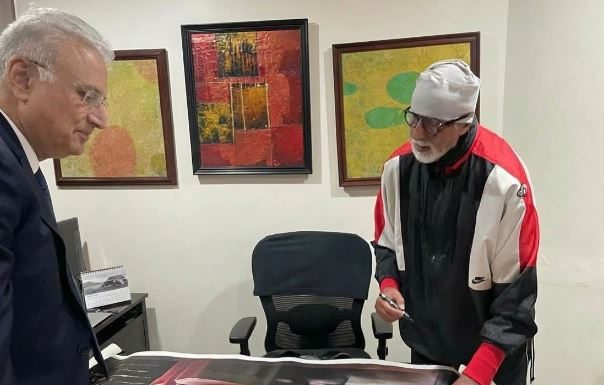
Nadeem Nazir, GM HR, PTCL presenting cheque to Nadeem Hashmi, Marketing Head, Shaukat Khanum Research Center, along with Akram Zubair, GM Admin & Security, PTCL and Zeeshan Sarwar, Head of Corporate Collaboration, Shaukat Khanum Research Center.

ISLAMABAD, MAY 15: Nadeem Nazir, GM HR, PTCL presenting a cheque to Nadeem Hashmi, Marketing Head, Shaukat Khanum Research Center.=DNA

Palestinians around the globe celebrate Nakba Day

Dr. Mehmood Ul Hassan Khan

On May 15, Palestinians living around the world commemorated 72nd Nakba Day. It represents massive displacement of real owners of holy land, the Palestinians. It showcases colossal pains, grieves and sorrows of native people of Palestine. It upholds unshakable peaceful resolve of helpless Palestinians against vicious forces of Israel, the champion of illegal occupier on the lands of Palestinians. Last but not least, it also portrays unfinished struggle, uncompromised commitment and unfading desire of Palestinians to reclaim their lands from Israel.

Due to ongoing deadly and infectious coronavirus (COVID-19) pandemic and the state of emergency announced in the West Bank, Palestinians marked this year’s “Nakba Day” with statements and speeches.

Palestinians on Friday marked the 72nd anniversary of “Nakba Day” (“Day of Catastrophe”) by vowing to thwart Israel’s plan to apply sovereignty to parts of the West Bank and US President Donald Trump’s plan for Mideast peace, also known as the Deal of the Century.

Despite due to natural calamity and sever cruelty of Israel  a number of Fatah activists held a small rally to protest US Secretary of State Mike Pompeo’s visit to Israel this week. The activists carried a sign “Palestine is ours, Jerusalem is ours.”

PA President Mahmoud Abbas said in a televised speech that “those who created our catastrophe wanted Palestine to be land without people or territories and were betting that the name of Palestine would be erased from the records of history.”

To achieve their goal, Abbas said, “they practiced the ugliest conspiracies, pressures, massacres and liquidation projects, the latest being the so-called Deal of the Century.”

Abbas said that “despite all the obstacles, and despite all the aggressive occupation policies, measures and violations, we are proceeding with confident steps towards the restoration of our full rights and the removal of this hateful occupation.”

The Palestine President again repeated his threat to renounce all agreements with Israel if the Israeli government implements its plan to apply sovereignty to any part of the West Bank.

On its part, Fatah faction said in a statement that it would not abandon the goals of its “revolution, particularly achieving the right of return [for Palestinian refugees and their descendants to their former homes in Israel, self-determination, and national independence.”

The immediate goal today, Fatah said, is to “confront the Deal of the Century and the Israeli plan to annex areas of the West Bank.” Fatah added that the Palestinians would “resist in every way this scheme that aims to liquidate the Palestinian cause and the political rights of the Palestinian people.”

PA Prime Minister Mohammad Shtayyeh said that the “biggest challenge the Palestinians are facing today is the Israeli threat to annex” parts of the West Bank. The move, he said, “constitutes the last chapter of a systematic campaign to destroy the possibility of establishing a Palestinian state.”

A Palestinian state can’t be established without Jerusalem, the Gaza Strip and all of the West Bank, including Area C and the Jordan Valley, Shtayyeh emphasized he added. He further warned that the Israeli plan would not only end the two-state solution, but also pose a threat to regional security and stability.

Palestine the land of unlimited prophecies and prosecutions, holy consensuses and modern day conspiracies, existence of divinity and manmade destructions last but not least mercy and mercilessness have been hub of power struggle and domination of national narratives since centuries. In this connection, Nakba Day is commemorated by Palestinians on May 15, the day after the Gregorian calendar date for Israel’s independence.

“Nakba” is the Arabic word for “catastrophe” or “disaster” and the occasion remembers the 700,000 Palestinians forced to flee as a result of the 1948 Arab-Israeli War and seek refuge in Jordan, Lebanon, Syria, the West Bank and the Gaza Strip, often without citizenship being granted.

Nakba Day commemorations typically take the form of rallies and speeches in cities around Israel, the West Bank and Gaza, with Palestinian marchers commonly brandishing placards, flags and house keys, the latter symbols of the homes and still-deserted villages their families have not been allowed to return to.

However, this year the rallies have been cancelled amid the coronavirus pandemic. Palestinian president Mahmoud Abbas has officially authorised digital activities to observe the anniversary, with many planning to join virtual reality tours and Zoom video chats.

This year’s is the 22nd since Palestinian Authority president Yasser Arafat inaugurated the day in 1998 in response to Israeli celebrations marking half a century of independence, but it had been unofficially commemorated as early as 1949.

Till day, more than 5.3 million Palestinian refugees live outside of Israel were  victims of ethnic cleansing during the 1948 conflict and insist on their right to return to territory they consider their homeland.

Israel refuses to meet the demand because doing so would compromise the Jewish nature of the state defying Resolution 194 passed by the UN in 1948, siding with Palestinians on the issue.

As Palestinians around the world mark the 72nd year of their resistance to Israeli dislocation and dispossession, thousands gathered online for a virtual rally to commemorate Nakba Day and stood in opposition to land theft and annexation.

Justice, equality and dignity in Palestine/Israel must include Palestinians realizing their right to return home. Nakba means catastrophe in Arabic, and Nakba Day refers to the destruction of hundreds of Palestinian villages and the violent expulsion of 750,000 Palestinians that began with Israel’s founding, and that continues to this day.

 The catastrophes of the Nakba continue through ongoing land theft and expulsion. Israeli annexation means more deeply entrenched apartheid, more home and village demolitions, and the further loss of Palestinian land, livelihoods, and connections.  All Palestinians stand together in resistance.

Palestinians suffered the pain of displacement between tents and camps and used to sleep on ground under the sky since 1948. Their original homes were stolen and they were left to live in crowded camps.

According to the Gaza Health Ministry, at least 47 Palestinians were wounded by Israeli soldiers during the latest protests. Witnesses said the soldiers fired live ammunition, tear gas canisters and rubber coated steel bullets to disperse protesters and keep them away from the fence.

From ancient prophecies to modern profit orientation of modern state, politics and economy, unending struggle of Palestine people against aggression, political isolation economic marginalization and social alienation is still alive and sustainable.

The loyal Palestinians have been confronting the Israeli occupation since 1948. It has been unending journey during which hundreds of thousands innocent people have been martyred, wounded and kept in prisoners.

Unfortunately, Palestinians have also been victim of state terrorism and racist policies of Israel. Constant apartheid policies of Israel has badly damaged basic core of the society. Nevertheless, it has been vivid reflection of its collective struggle, determination, nationalism, patriotic spirits and above all political means to defend its rights of independence despite all hurdles.

With the passage of time, Israeli occupation has been further strengthened which is still being implemented and making lives of common Palestinians miserable and crestfallen. Israeli policy of annexation and grabbing of land from the real owners (Palestinians) have been creating havocs in the lives of our people.

The Israel forces have been wagging unstoppable human siege, cruelty, brutality, drastic demographic decomposition, social and political marginalization, alienation, and ruthless killing in its home land. Israel forces are also engaged to destroy limited resources of human survival in shape of SME, agriculture, demolition of comfort zones (houses/homes) and building, massive displacement, harming natural harmony and racist separation walls etc. According to World Bank report restrictions on Palestinian movement and access have serious repercussions on its fragile national economy.

Despite all hurdles Palestinians are still fighting against all odds and hold the flag of steadfastness and hope that one day siege of darkness and injustice may be over and they will reclaim their lost paradise from illegal occupier Israel in the days to come.

Dynamics of COVID-19 in the Era of Fourth Industrial Revolution

Fauzia Nasreen

During the current phase of history defined as the fourth industrial revolution, different   assessments have been proffered about its impact on sustainable development. Concerns range from widening of gap and inequality within and among states to a more opportune environment for the developing countries. The adoption of 2030 Global Development Agenda with the 17 Sustainable Development Goals (SDGs) is meant to address some of the dire inequalities in a spirit of international solidarity.

The overarching ambition of these goals is to ensure that “no one is left behind” and make these interdependent goals inclusive especially in reaching out to “the furthest first”.

The socio-economic aspects of the targets have been interwoven under such rubrics as eradication of poverty, hunger, good health, access to information and digital technology, combating climate change and food insecurity.

The novel corona virus has, without doubt, exposed in varying degrees the vulnerabilities of states and international system’s ability to manage shocks of the scale of the current pandemic. The outbreak of the contagious disease has multiple dimensions at the national, regional and global levels catapulting health and digital technological transformations as meaningful aspects of sustainable security. The health challenges have impacted rich and poor, developed and developing countries alike. However, the absorbing cushion and capacities of countries that are already confronting socio-economic fragility is extremely narrow compounding the systemic and structural issues.  The situation in weak societies where deprivation is endemic and employment and livelihood openings are severely constrained, the protective measures against the spread of the infectious disease becomes a colossal challenge. The curtailment of mobility and almost a halt in economic activity is a double whammy for the underprivileged and marginalized segments of society.  Protection against the virus and making the two ends meet acquires a threatening dimension for these communities. The constricted fiscal space available to the governments aggravates the situation further.

The impact of COVID-19 is compelling states and societies to reorient their development plans in an effort to address imbalances in social sector allocations. Attention to the healthcare system and creation of corresponding infrastructure has perforce become a priority for the planners. The inadequacy of digitalization is additionally limiting new approaches to conducting businesses of daily lives. It is hampering online education, online businesses and most importantly telemedicine and tele health. Adaptation to new approaches is constrained because of lack of broadband facilities and national telecommunication coverage. In a way the social stratification in terms of access to technology are complicating the already limited opportunities. At the same time  there is an increasing recognition   that the core aspects of computer science, artificial intelligence, nanotechnology and data computation have been instrumental in managing the COVID-19 health and medicinal problems. The effective use of combination of the technologies available in the era of the fourth industrial revolution has provided dividends for healthcare system and management. It is expected that these new tools will help in finding drugs and vaccine that would help in prevention and treatment of the virus.

A study jointly conducted by Centre for Infectious Disease Research and Policy, University of Minnesota and Harvard School of Public Health has dispelled “the idea that this is going to be done soon (as it) defies microbiology” (CNN report). The study has talked about three scenarios all pointing out that COVID-19 in one form or another will dog humanity for the next 18 months to two years. If the current situation is the new normal for the world population then what should be the long term response at the national, regional and global levels. These are times that demand international solidarity and united action against the pandemic. So what are the challenges and possible way out especially for Pakistan in overcoming the health hazards?

The Commission on Science and Technology for Sustainable Development in the South (COMSATS) has over the years smartly used its Internet Services (CIS) for providing telehealth services in remote and far flung areas of Pakistan. This is being done through the Basic Health Units (BHUs) where staff has been trained to manage the service linked to a team of doctors based in the CIS Secretariat in Islamabad. Necessary equipment is also providing the end users in BHUs. This has enabled in a modest way reaching out to the “furthest” communities in the country. Briefly challenges and suggestions for future planning are enumerated below:

Challenges:

  • Balancing between safety measures and livelihoods
  • Revamping the healthcare infrastructure
  • Universal health cover that may include a combination of insurance cover for poorer communities and support for private welfare oriented initiatives as well government interventions (a kind of hybrid variant)
  • Allocation of adequate resources to create smart healthcare infrastructure
  • Bottom-up approach that would involve strategies developed through participation of localized structures
  • Strengthening the role of BHUs in monitoring the local health conditions especially early warning about infectious diseases and disaster response. Integration of healthcare workers would provide the kind of outreach needed for early warning
  • How to make ICT provide wide digital coverage to inaccessible and remote as well as rural areas.
  • How can the marginalized communities get integrated in the response mechanisms
  • Given the lockdown situations, OPDs operating at minimum level how can telehealth/telemedicine fill the vacuum in reaching out to people without discrimination

Suggested Measures for Future Planning:

  • The historical neglect of the healthcare system can be rectified through a well thought-out strategy and targeted policies
  • Allocation of more resources for health needs to be ensured. Spending should be smart to avoid wastage
  • Covid 19 has shown how every individual in the humanity is interconnected. Infection contracted by one individual has implications for the entire world health. People oriented  responses must be at the heart of public policies and strategies
  • R&D has been catapulted as a priority field improving chances for more regional and international cooperation to fight infectious diseases
  • Measures to upgrade ST&I as well as invigorated efforts are needed to achieve SDGs especially those related to health and wellbeing as well as alleviation of poverty. SDG 16 and 17 should form the basis of interventions at the local, regional and global levels. Removing inequalities within and among countries as the major objective as 16 and 17 have acquired more relevance and importance particularly in the context of post-COVID-19 environment
  • Smart collaboration at the regional and international levels can be strengthened diverting attention from conflicts meeting the collective challenges of peace and security. UN Secretary General’s call for pause in global conflict is pertinent and worthy of global attention and response.

Fauzia Nasreen is from foreign service of Pakistan and remained posted asambassador of Pakistan in many countries. Presently, she is working as Advisor COMSATS Headquarters as SDGS

ZHAO LIJIAN says China will never forget Pak support


China appreciates the relevant resolution. Since the start of the outbreak, China and Pakistan have supported and worked closely with each other to jointly fight the virus. We will never forget that

BEIJING, May 15 (DNA):A Chinese foreign ministry’s spokesperson on Friday highly praised a resolution unanimously passed by the Senate of Pakistan and said that China would never forget Pakistan’s support and medical supplies in a critical moment in its fight against COVID-19.

“China appreciates the relevant resolution. Since the start of the outbreak, China and Pakistan have supported and worked closely with each other to jointly fight the virus. We will never forget that,” Zhao Lijian said while responding to a question asked by APP during his regular briefing held here.

He said that in a critical moment in China’s fight against the virus, Pakistan poured in its domestic resources to help China with medical supplies.

The spokesperson said that China had also provided batches of grants to meet Pakistan’s needs, sent experts and mobilized all sectors of society to donate supplies and goods to help Pakistan battle the novel coronavirus.

“This again proves that China and Pakistan are true friends and good brothers sharing wheal and woes,” he added.

He remarked that the virus knew no borders and races. To smear and stigmatize other countries was to interfere with international cooperation against the virus. The right and the wrong were very clear and the justice always prevailed.

“We highly appreciate Pakistan’s objective and just position on this issue and we will like to continue to uphold the vision of a community with shared future for mankind, strengthen cooperation with international community including Pakistan and work together to win this fight against the virus,” he added.

It may be mentioned here that the Senate of Pakistan had unanimously passed a resolution expressing its gratitude to China, led by President Xi Jinping, for its decisive and timely measures to combat novel coronavirus and appreciating China’s support to Pakistan in the fight against COVID-19.

Palestinians around the globe celebrate Nakba Day

Dr. Mehmood Ul Hassan Khan

The Israel forces have been wagging unstoppable human siege, cruelty, brutality, drastic demographic decomposition, social and political marginalization, alienation, and ruthless killing in its home land. Israel forces are also engaged to destroy our limited resources of human survival in shape of SME, agriculture, demolition of comfort zones (houses/homes) and building, massive displacement, harming natural harmony and racist separation walls etc.

On May 15, Palestinians living around the world commemorated 72nd Nakba Day.

It represents massive displacement of real owners of holy land, the Palestinians. It

showcases colossal pains, grieves and sorrows of native people of Palestine. It

upholds unshakable peaceful resolve of helpless Palestinians against vicious forces

of Israel, the champion of illegal occupier on the lands of Palestinians. Last but not

least, it also portrays unfinished struggle, uncompromised commitment and

unfading desire of Palestinians to reclaim their lands from Israel.

“Nakba Day” with statements and speeches.

Palestinians on Friday marked the 72nd anniversary of “Nakba Day” (“Day of

Catastrophe”) by vowing to thwart Israel’s plan to apply sovereignty to parts of the

West Bank and US President Donald Trump’s plan for Mideast peace, also known

as the Deal of the Century.

Despite due to natural calamity and sever cruelty of Israel a number of Fatah

activists held a small rally to protest US Secretary of State Mike Pompeo’s  visit to

Israel  this week. The activists carried a sign “Palestine is ours, Jerusalem is ours.”

PA President Mahmoud Abbas said in a televised speech that “those who created

our catastrophe wanted Palestine to be land without people or territories and were

betting that the name of Palestine would be erased from the records of history.”

To achieve their goal, Abbas said, “they practiced the ugliest conspiracies,

pressures, massacres and liquidation projects, the latest being the so-called Deal of

the Century.”

Abbas said that “despite all the obstacles, and despite all the aggressive occupation

policies, measures and violations, we are proceeding with confident steps towards

the restoration of our full rights and the removal of this hateful occupation.”

The Palestine President again repeated his threat to renounce all agreements with

Israel if the Israeli government implements its plan to apply sovereignty to any part

of the West Bank.

On its part, Fatah faction said in a statement that it would not abandon the goals of

its “revolution, particularly achieving the right of return [for Palestinian refugees

and their descendants to their former homes in Israel, self-determination, and

national independence.”

The immediate goal today, Fatah said, is to “confront the Deal of the Century and

the Israeli plan to annex areas of the West Bank.” Fatah added that the Palestinians

would “resist in every way this scheme that aims to liquidate the Palestinian cause

and the political rights of the Palestinian people.”

PA Prime Minister Mohammad Shtayyeh said that the “biggest challenge the

Palestinians are facing today is the Israeli threat to annex” parts of the West Bank.

The move, he said, “constitutes the last chapter of a systematic campaign to

destroy the possibility of establishing a Palestinian state.”

A Palestinian state can’t be established without Jerusalem, the Gaza Strip and all of

the West Bank, including Area C and the Jordan Valley, Shtayyeh emphasized he

added. He further warned that the Israeli plan would not only end the two-state

solution, but also pose a threat to regional security and stability.

Palestine the land of unlimited prophecies and prosecutions, holy consensuses and

modern day conspiracies, existence of divinity and manmade destructions last but

not least mercy and mercilessness have been hub of power struggle and domination

of national narratives since centuries. In this connection, Nakba Day is

commemorated by Palestinians on May 15, the day after the Gregorian calendar

date for Israel’s independence.

“Nakba” is the Arabic word for “catastrophe” or “disaster” and the occasion

remembers the 700,000 Palestinians forced to flee as a result of the 1948 Arab-

Israeli War and seek refuge in Jordan, Lebanon, Syria, the West Bank and the Gaza

Strip, often without citizenship being granted.

Nakba Day commemorations typically take the form of rallies and speeches in

cities around Israel, the West Bank and Gaza, with Palestinian marchers commonly

brandishing placards, flags and house keys, the latter symbols of the homes and

still-deserted villages their families have not been allowed to return to.

However, this year the rallies have been cancelled amid the coronavirus pandemic.

Palestinian president Mahmoud Abbas has officially authorised digital activities to

observe the anniversary, with many planning to join virtual reality tours and Zoom

video chats.

This year’s is the 22nd since Palestinian Authority president  Yasser

Arafat  inaugurated the day in 1998 in response to Israeli celebrations marking half

a century of independence, but it had been unofficially commemorated as early as

1949.

Till day, more than 5.3 million Palestinian refugees live outside of Israel were

victims of ethnic cleansing during the 1948 conflict and insist on their right to

return to territory they consider their homeland.

Israel refuses to meet the demand because doing so would compromise the Jewish

nature of the state defying Resolution 194 passed by the UN in 1948, siding with

Palestinians on the issue.

As Palestinians around the world mark the 72nd year of their resistance to Israeli

dislocation and dispossession, thousands gathered online for a virtual rally to

commemorate Nakba Day and stood in opposition to land theft and annexation.

Justice, equality and dignity in Palestine/Israel must include Palestinians realizing

their right to return home. Nakba means catastrophe in Arabic, and Nakba Day

refers to the destruction of hundreds of Palestinian villages and the violent

expulsion of 750,000 Palestinians that began with Israel’s founding, and that

continues to this day.

The catastrophes of the Nakba continue through ongoing land theft and expulsion.

Israeli annexation means more deeply entrenched apartheid, more home and

village demolitions, and the further loss of Palestinian land, livelihoods, and

connections. All Palestinians stand together in resistance.

Palestinians suffered the pain of displacement between tents and camps and used to

sleep on ground under the sky since 1948. Their original homes were stolen and

they were left to live in crowded camps.

Unfortunately, Palestinians have also been victim of state terrorism and racist

policies of Israel. Constant apartheid policies of Israel have badly damaged

core of the society. Nevertheless, it has been vivid reflection of its collective

struggle, determination, nationalism, patriotic spirits and above all political means

to defend its rights of independence despite all hurdles.

With the passage of time, Israeli occupation has been further strengthened which is

still being implemented and making lives of common Palestinians miserable and

crestfallen. Israeli policy of annexation and grabbing of land from the real owners

(Palestinians) have been creating havocs in the lives of our people.

According to World Bank

report restrictions on Palestinian movement and access have serious repercussions

on its fragile national economy.

Despite all hurdles Palestinians are still fighting against all odds and hold the flag

of steadfastness and hope that one day siege of darkness and injustice may be over

and they will reclaim their lost paradise from illegal occupier Israel in the days to

come.

Quarantine Center in Faisalabad district Jail

FAISALABAD, MAY 15 (DNA) – The Only way to prevent the Spread of the Measles Virus is Through Precautionary Measures that have been made globally, including hand Sanitizer masks, Caution and Social distance in social interactions.

Superintendent Jail Ali Akbar Gujjar told that inmates of Faisalabad District Jail are incarcerated for various crimes and security arrangements have been made to save them from the current epidemic. Corona filter counters at the entrances and exits of the prison have been set up.

FAISALABAD, MAY 15: Health-care workers busy in disinfectant spray inside the Faisalabad District Jail to curb the spread of coronavirus.= DNA PHOTO BY M Tahir

Than 25 corona wards have been set up in the jail. Newly arrived inmates are kept in these wards for 14 days separately and tests are conducted. He further said that random and complete corona tests have been conducted on the inmates of the jail and the staff has not been tested for corona virus in any of them yet.=DNA

===========

UNICEF procures PPEs for Pakistan

ISLAMABAD, MAY 15 (DNA) – 8 Metric Tons of much-needed Personal Protective Equipment for health workers ordered by the Government of Pakistan arrived at Islamabad airport.

The N-95 masks and surgical gowns were procured by UNICEF on behalf of the Government in response to the COVID19 pandemic, with financial support from the World Bank.

UNICEF thanked the National Disaster Management Authority, Pakistan and the Chinese Embassy in Pakistan for facilitating the shipment.

UNICEF supports the national response to COVID-19 through Risk Communication and Community Engagement; Infection and Prevention Control in health care settings; Psycho-Social Support and Procurement of essential supplies.

UNICEF also works with the relevant line ministries and partners to ensure the continuity of essential services for children during the emergency.=DNA

=========

Int’l flights suspension till May 31

NEHAL MIRAJ

 ISLAMABAD, MAY 15 (DNA) – Pakistan on Friday extended the suspension of international flight operations till May 31 in line with the national strategy to contain the spread of novel coronavirus (COVID-19).

“As per the government decision, the suspension of international flight operations, as effected earlier, has been extended up to Sunday, May 31, 2020 at 2359 hours PST,” a spokesman for the Aviation Division said.

 Remaining provisions as applicable to the suspension of international flights, reflected in the previous orders, would remain unchanged, he added.

On March 21, the government had suspended the operation of all international passenger/chartered and private flights to Pakistan initially for a period of two weeks.

 Diplomats and special/cargo aircraft were exempted from the suspension with certain conditions and preventive measures against the virus.=DNA

=======

Women-led businesses facing severe financial stress: Founder IWCCI

ISLAMABAD, MAY 15 (DNA) – Samina Fazil, founder President, Islamabad Women’s Chamber of Commerce and Industry (IWCCI) has said the prolonged lockdown has damaged the businesses of women and they are desperately seeking help.

Women running small businesses are among the hardest hit their plight is not being taken seriously by the policymakers, she said.

Samina Fazil said that majority of the population comprises of the women but they are subjected to negative treatment announcements regarding helping out businesswomen never got implemented.

She added that the government officials are not taking issues confronting women seriously while the central bank is not genuinely interested in helping them ride out of the crisis.

She said that SBP is only interested in supporting commercial banks and big corporations while the stringent terms and conditions for forwarding loans to small businesses, cottage industry and microfinance sector are impossible to meet.

The SBP should announce interest-free loans for small businesses, cottage industry and microfinance sector if it is interested in an economic revival, she underlined.

Majority of women earn their bread and butter through the services sector which has been badly hit by the lockdown therefore the government should allow reopening of beauty parlours, boutiques, saloons, home kitchens, handicraft centres and consultancy services etc., she demanded.

The business leader said that many businesses run by women have collapsed while others will also fail soon if the government failed to come to their rescue.

Sources of income of women should be protected as they are bearing the brunt of the COVID-19 lockdown with thousands of them getting unemployed, she informed.

She lamented that the government is expanding the lockdown period but no financial package has been announced for women entrepreneurs who have been left on the mercy of the situation.

Samina Fazil said that businesswomen deserve relief in rent, taxation and utility bills and the Prime Minister Imran Khan should announce a grant for them as they are striving hard to survive amid the lockdown.=DNA

==============

Zafar Mirza urges ‘rational use’ of personal protective equipment

ISLAMABAD, MAY 15 (DNA) – “No matter how much personal protective equipment we provide to doctors and nurses, unless it isn’t used rationally, no quantity will be enough to meet the demand,” Prime Minister’s Special Assistant on Health Dr Zafar Mirza said.

Addressing doctors and paramedical staff at the inauguration of a training centre in Islamabad, he said that along with the increase in the production of PPEs and N-95 masks, the government was also working on “promoting and training doctors on how to rationally use the equipment”.

“My vision is to not just reach to every health professional in Pakistan with this message that we care but also provide training to them,” Dr Mirza said, explaining that the training would educate doctors on what equipment to use in what circumstances, how to put it on and even how to dispose of it.

“Recently, we have launched a guideline on National Prevention and Control in a PDF version and I want all professionals to go through it,” the PM’s assistant said.

He pointed that National Guidelines on COVID-19 and PPEs have also been launched. All doctors will be trained according to these guidelines.

“We will send PDF files to you so that you have a reference document to consult in case of any ambiguity or confusion,” Dr Mirza said.

The training should not just be limited to a number of doctors but also other people at the hospital. “We want to show the people that we don’t just say that we care but also mean it,” he said.

Dr Mirza remarked that the programme will also be extended to private hospitals. “A helpline will also be set up where health care professionals can call in case of a shortage of equipment.”

He explained that a shortage persisted because of a disconnect between doctors and the hospital management. “I want to request hospitals to form committees for the management of PPEs.”

This will ensure active communication between both parties, he added. Dr Mirza lauded the efforts of health care professionals in Pakistan and thanked them for their service. DNA

==============

Stay Connected

64FansLike
60FollowersFollow

Latest Reviews

Exchange Rates

USD - United States Dollar
EUR
1.17
GBP
1.35
AUD
0.71
CAD
0.72