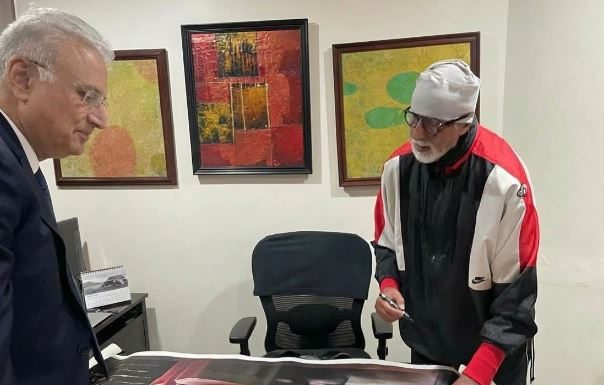
Japanese envoy expresses condolences over loss of Pak Army Soldiers’ lives in Quetta
ISLAMABAD, MAY 19 (DNA) – Matsuda Kuninori, Ambassador of Japan to Pakistan has expressed his profound grief and sincere condolences over the loss of precious lives of the Frontier Corps soldiers in two separate attacks in Balochistan on May 18.
“I was deeply shocked and would like to express my condolences and sympathies to all the bereaved families.
Terrorism cannot be justified for any reason. In close cooperation with Pakistan and the international community, Japan is determined to resolutely stand up against terrorism” said Ambassador MATSUDA on Tuesday.=DNA
===============
Pak-China relations-new heights
By: Syed Ali Nawaz Gilani
21st May 2020 will be 69th Anniversary day of establishment of diplomatic ties between the two countries in May 1951, China and Pakistan have developed an exemplary all-season friendship which was based on equality, brotherhood and overall cooperation. In the past 69 years, the two countries have carried out multi-dimensional cooperation in varied fields. Despite unstable international situation, the China-Pakistan friendship remained strong and vibrant. Recent past years specially last after the two high level state visits from China in 2013 & 2015, have witnessed a frequent exchange of visits between the leadership of the two countries which further promoted cooperation.
Chinese President Xi Jinping said on terms special friendship between Pakistan and China was choice of the history as it had deep roots in the hearts of people of the two countries.“We want to see a united and strong Pakistan with stability and prosperity,” he said during a meeting with President Dr Arif Alvi here at the Great Hall of People. President Xi said no matter how international landscape might change, China would always stand firmly by Pakistan. “China will stay committed to our ironclad friendship and will expand our strategic cooperation.”President Xi said China backed Pakistan in stepping up its constructive role in regional and international affairs. He said when China was fighting against the outbreak, the Pakistani government and people did their level best to make donations to China to which he expressed heartfelt thanks.President Arif Alvi said he was visiting China to show solidarity with the people and the leadership of China while they were successfully fighting the Covid-19 outbreak.He said China had shown to the world its ability to deal with the challenge and set an example for other countries, which were facing the corona virus outbreak.
In the early years of establishment of the Sino-Pakistan diplomatic relations, Pakistan remained inactive as it was an ally of the West. The period between 1957 and 1969 witnessed an important phase in the history of the Sino-Pakistan relations. During this period, historical changes took place in bilateral relations, which changed the lukewarm attitude of Pakistan. This gesture opened a new chapter in the relationship and in the 1970s; steady developments were made to strengthen friendly cooperation between the two governments and their people. Since 1990, drastic changes have taken place on the international horizon; however, China and Pakistan has further developed.
The success & strengthening of these relationship also remembered the important role started from His Excellency Mr. Han Nian Long first Chinese Ambassador
who served from 1951-54 till to Widely respected & friendly Ambassador Yao Jing who assumed the office in November 2017 likewise Pakistan first Ambassador H. E. Maj. Gen. Nawabzada Agha Muhammad Raza from 1951 to 1954 till our present Ambassador Naghmana Hashmi Sahiba who took the office in 2019 while She also served as DCM in China from 2003-2007, She is doing a great to further strengthen these relationship & explore more avenues which is really need of the houre.
The Sino-Pakistan both plays a central role in Asia’s geopolitics, from India’s rise to the prospects for a post-American Afghanistan, from the threat of nuclear terrorism to the continent’s new map of mines, ports and pipelines. China is Pakistan’s great economic hope and its most trusted military partner. Pakistan lies at the heart of China’s geostrategic ambitions, from its take-off as a global naval power to its grand plans for a new silk road connecting the energy fields of the Middle East and the markets of Europe to the mega-cities of East Asia.
China and Pakistan have witnessed steady growth in mutual investments in recent years. In the last few years, China invested more than USD……. billion in Pakistan. A large number of Chinese companies are presently working in Pakistan in different sectors. Chinese goods are very much in demand in the Pakistani markets. Their experience of growth in trade is positive due to convenient trade flows and openness measures. China has become one of the top five import sources of Pakistan. Bilateral trade had reached around USD……. billion in 20`18 and is on the rise. The balance, however, is in favour of China due to lesser exports by Pakistan.
Tensions between the US and Pakistan over the presence of Osama bin Laden in Pakistan, and a speedy US withdrawal from Afghanistan are likely to reinforce Sino-Pak ties. China is the only country that has taken a supportive stand for Pakistan after the Bin Laden operation.
The Soviet invasion of Afghanistan in 1979 opened a new chapter of consultation and collaboration between China and Pakistan. The two countries were in total agreement that the Soviet military presence in Afghanistan posed a great threat to the security of the entire region and prepared to co-ordinate their policies to face the challenge. Support to Pakistan’s security was the major feature of China’s Afghan policy because they wanted to honour their often repeated commitments. Regarding recent developments in Afghanistan, China and Pakistan have a close understanding of each other’s point of view.
Page 3
In the recent past, a 100-member youth delegation of Pakistan visited China for a week long visit. Chinese Government also regularly inviting youth & young people from various walks of life from Pakistan to visit China as a response, the Pakistani government also invited Chinese youths to Pakistan. Being launched in 2007, the youth exchange program is aimed at increasing mutual understanding between the people of the two countries.
There are many opportunities of collaboration between the two countries in the realm of higher education. The largest number of students of Pakistan are now studying in Pakistan. There is close cooperation between the Universities of China and Pakistan. High level delegations are reciprocally exchange visits. Recently A seminar on, “Pakistan and China Relations” was organized by China Study Centre University of Peshawar in July 2019. A delegation from China Embassy Islamabad under the leadership of Ms Bao Zhang, Director General Political & Media Affairs participated in the seminar.
Ms Bao Zhang while speaking said that China and Pakistan relations are higher than mountains, deeper than oceans and sweeter than honey. Pakistan and China are iron brothers. Pakistan and China relations became stronger when President Xi Jinping visited Pakistan in 2015. Pakistan supported China on many global and regional issues and appreciated the completion of early harvest projects of CPEC and optimistically underlined that the second phase of CPEC will boost industrialization in Pakistan. She also highlighted the important role of the business community in the economic development of the country. Ms Bao said that China has helped Pakistan to overcome its energy problem and recently it has also helped Pakistan in addressing the problem of forex reserves. Prof Dr Zahid Anwar, Director, China Study Centre, University of Peshawar said that came into existence, recently with the support of China Embassy Islamabad. The China Study Centre (CSC) endeavours to enrich understanding between China and Pakistan through research, learning, institutional linkages, and people to people contacts.
This is high time to properly utilize the services of various groups of Friends of China in Pakistan. In order to increase awareness for this friendly relationship among the youth of both countries, the vital role played by Pakistan-China Friendship Association, Listeners of Urdu Services from China Radio and the Urdu Department of Peking University must be appreciated for their result oriented efforts and to use these informal channels for further awareness.
As a part of 70th Anniversary of Founding of the People’s Republic of China last year 2019, the Pakistan-China Friendship Association – Khyber Chapter & Radio China Listener’s Club (a group of listeners of Urdu Service from CRI) organized many specially focused events to highlight the importance of the occasion,
Page 4
The Chinese Ambassador Yao Jing along with Mr. Chen Xian-Director Pakistan CRI donated books to the Central Libray UoP in on behalf of the CRI. The book donation has led to the establishment of a Chinese Corner.. On daily basis hundreds of student come and take benefit from these books and get to know about the time tested relations that both the countries enjoy. The love of Amb. Yao Jing for this great alma mater of North of Pakistan is evident from the fact that he has visited several times to this institution since he has taken charge of the office. Ambassador visited the Institute of Peace & Conflict Studies and had a fruitful interaction with research students and galaxy of experts on Afghan affairs to share views on the afghan peace process and regional integration.
The Mass Media’s dynamic role Strengthening the Pak-China Relations & further understanding amoung the peoples of both countries can not be over looked and with each passing day their role become more and more vital like Urdu Service from China Radio International since August 1955 and recently successfully launching of FM 98-Dosti Channel with the cooperation of Radio Pakistan First in Islamabad, later Lahore & Karachi successfully improving the nobale cause of this examplery relations and as mentioned by Director CRI & FM-98 Dosti Mr. Chen with Urdu name Shaheen, proudly mentioned that FM-98 Dosti networks day by day increase across the country shows height of people to people heart to heart relationship. Director Urdu Service Section, China Radio International (CRI) Madam Zhao Qiao (Mahvesh –Urdu name) while speaking termed mass media a key player in widely spreading the message of BRI and CPEC’s. Ms Zhao Qiao said, Media significantly contributed in highlighting benefits of BRI and CPEC to regional countries and clearing the misconceptions about the vision. Mass Media informed people that through BRI’s economic cooperation and communication skills, Chinese leaders are determined to share their fruits of prosperity with regional countries. Director CRI Pakistan, Chen Xiang apprised that via FM 98 Dosti Radio Channel in Islamabad, Lahore, and Karachi and Beijing’s Urdu Service in China have built a liaison to interact with the local community. Like wise print media and official news agencies of both Pakistan & China are doing great and updating their peoples about latest specially in recent past in COVID 19 all of them play their role in the best interest of masses which great appreciated. Recently, the government of China had also established China Media Group (CMG) headed by senior leader Mr. Shen Haixiong as First President of CMG, to provide in time and accurate information to the masses across the world. China Media Group would comprise the CCTV, China National Radio and China Radio International.
There is a lot of potential for trade between Pakistan and China. In the present geo-political and geo-strategic dynamics, Pakistan and China need each other more than ever. The economic ties between China and Pakistan need to be strengthened on a war footing and beyond rhetoric. We need to identify areas of priority, where mutual growth can take effect efficiently.
For example, China can practically guide Pakistan in increasing its economic growth rates just as it has doubled its GDP in a record 10 years, while it took USA almost 50 years, to achieve the same growth rate. It can provide technical assistance to Pakistan in policy and planning.
Furthermore, there should be a free and facilitated exchange of business persons between the two countries. Pakistani companies should be encouraged to develop joint ventures with multinational Chinese countries, which would help penetrate the Chinese market as well as the global market. These joint ventures will also help in transfer of technology, management skills and improve innovation in products and services.
China has vast and valuable experience in development of its agricultural sector. Pakistan can achieve monumental strides in development of its agricultural sector by following successful Chinese methodologies. Another very important area for cooperation from China is the education sector. Pakistan has a very high section of its population in the 15-24 age category, and the overall literacy rates are not very encouraging. China and Pakistan can form ‘sister universities’ for the promotion of education and research. China can offer some seats in its universities for deserving students and Pakistan can facilitate Chinese students likewise.
Finally, China’s influence as a growing economic power, can wield substantive support to Pakistan in the decisions of the international financial institutions. Such support can go a long way in helping Pakistan fight its way out of its financial distress, and in getting the desired foreign investment.
(The writer a Media Consultant, the President of Radio China Listener’s Club & Secretary-General Pakistan-China Friendship Association Khyber-Pakhtunkhwa. President, Radio China Listener’s Club. His email is syeed.gilani@gmail.com)
Pakistani students rejoice with response letter from Chinese President
BEIJING, May 19 (DNA): Pakistani students studying in China rejoiced with the response letter from Chinese President Xi Jinping, stating that it motivated them to contribute more in promoting Sino-Pak friendship.
Fifty two Pakistani students who study in University of Science and Technology Beijing (USTB), including Masters and Doctoral students, had written a letter to Chinese President Xi Jinping last month.
According to China Economic Net (CEN), last Sunday, Xi replied to this letter, encouraging them to communicate more with their Chinese peers.
In his letter, the President said, learning that the students have enriched their knowledge and made quite a few Chinese friends while studying in China, Xi said he felt happy for the achievements they have made.
Pakistani students of USTB told CEN and the Economic Daily that they are so glad and excited to receive president Xi’s reply.
Ali, an Information and Communication doctoral student of USTB, said that dating to February, they had an idea on writing letter to president Xi. The cooperation between Pakistan and China on fighting against COVID-19 has shocked them. Ali said, “strengthening the friendship between Pakistan and China is our responsibility.”
Since the beginning of setting up this idea, Pakistani students of USTB have participated to write the joint letter enthusiastically. “We heard that there was an idea to write a letter to president Xi, we were so excited. Most of us immediately decided to take part in such a good thing.
My father has studied in USTB as well when he was young, I followed his steps and came to Beijing. I think the joint letter to President Xi is significative to improve the relationship between Pakistan and China. We have to do it,” Ali said.
In the letter to President Xi, Pakistani students have recalled their experiences and feelings of studying in China, meanwhile expressed their gratitude to the university for providing care and help for them after the COVID-19 outbreak.
Regarding whether they expect a reply, students said “We have never imagined that president Xi would reply our joint letter, but he did. It is the most exciting result for us, just likes an amazing dream!”
Abdul Sattar, a student of energy resource, said that Xi’s reply firmed his determination on working for friendship between Pakistan and china. He intends to go back to Pakistan after graduating from USTB and working for CPEC projects in the field of clean energy.
Ali supplemented that Xi’s reply means a lot, “He is affable and I feel like I’m having a conversation with him directly.”=DNA
================
Payment of media dues:APNS dismayed over Govt’s indifference
The All Pakistan Newspapers Society has requested the Prime Minister Imran Khan to personally intervene and help the media workers
KARACHI (DNA) -The APNS has expressed its dismay on the consistent indifference of the Federal Government in making payment of media dues before Eid despite clear instructions by the Prime Minister Mr. Imran Khan.
Hameed Haroon, Present and Mr. Sarmad Ali, Secretary General of All Pakistan Newspapers Society in a statement have stated that the Committee on Media Issues headed by Senator Shafqat Mahmood which held its meeting on April 16, 2020, had decided to effect payment of outstanding dues to media houses, so that the newspapers could pay salaries of their employees before Eid. It must be noted that the PID has verified an amount of Rs.1.25 Billion approximately as payable to Print Media but so far only a payment of about Rs.7 Million has been released on account of advertisements in newspapers. From this negligible amount the salaries of employees cannot be paid.
The APNS expresses its profound concern and alarm that despite lapse of about one month, the concerned ministries and departments have not made the payments. Since there left just 3 working days before Eid and payments not being made, the media houses would not be able to pay salaries to their employees who would for the first time celebrate their Eid without bare necessities.
The All Pakistan Newspapers Society has requested the Prime Minister Imran Khan to personally intervene and help the media workers.
Predictions regarding Indian aggression in Kashmir have become true: Masood
ISLAMABAD (DNA) – Sardar Masood Khan – President of Azad Jammu and Kashmir stated on Tuesday that predictions regarding Indian aggression have become true. India has introduced a law that enables the non-nativesto reside in Kashmir. This law gives them permission and further facilitates the non-natives in acquiring permanent residence in Kashmir.
He expressed these views during a seminar organized by Center for Global & Strategic Studies (CGSS) on the topic, “Latest Situation in Kashmir Vis-À-Vis Indian Policies”.
This Webinar was organized to examine the prevailing situation in Kashmir while analyzing the Indian strategies and what can be the possible policy options for Pakistan.
According to our calculations, around 2 million Hindus will be settling in Kashmir in the first wave. In this way, Kashmir will be turned into a Hindu sate and Muslim majority will be reduced. Kashmir is under a triple lockdown.
The 5th August act is a siege and its purpose is to kill people. India has violated the ceasefire at the LOC a number of times while targeting the civilians, which has caused damage to the infrastructure also. Crimes that are being committed there can be listed as crimes against humanity, genocide war crimes and ethnic cleansing. So the International Community of the multilateral institutions are directly relevant here. Therefore, we must engage them because this lack of engagement is making India prevalent.
Lieutenant General Khalid Maqbool HI(M), (Retd) – Former Governor of Punjab shared valuable insight regarding latest situation on the LOC and possibility of a military conflict. He stated that the grand strategy of India is to destabilize Azad Kashmir and Gilgit-Baltistan. We can expect increased activities on the Line of Control through ceasefire violations in which our civilian population would be primarily targeted.
Dr. Maleeha Lodhi, HI – Former Pakistan Representative to UN stated that the pandemic has given an opportunity to the Indian Government to further intensify the repression and take even more draconian steps at a time when the world is preoccupied by fighting COVID-19.
At this time, countries and human rights organizations are distracted and the media attention is fixed particularly on the health crisis.Facing a health emergency with hands tied and lips sealed each one of us can now directly feel some of the pain of a lockdown as we ourselves have been practicing some degree of social isolation.The International Community has a responsibility to address this dire situation but Pakistan holds the major responsibility. The Kashmiri’s look to us and we cannot let them down. Our policy has to be consistentand need consistency in our diplomatic circle.Kashmir today lives in a state of multiple deprivations since last many years that has taken away their fundamental liberties and prevented them from exercising their right to self-determination.
Ambassador Riaz Khokhar – Former Ambassador of Pakistan to India stated that Kashmiri’s must be saluted, they have made enormous sacrifices. Modi is committed to a policy on which they may not have a national consensus but this incremental genocide policy is being supported by the majority.
Ambassador Abdul Basit – Former High Commissioner of Pakistan to India stated that Hindutva is nothing new. We need to pursue a consistent policy on Kashmir as it has cost us and the Kashmiri’sto a large extent. Kashmiri’s are determined and have never given up and will continue to do so. Pakistan requires coherent efforts and come up with a consolidated Kashmir policy. In this pandemic, India is taking advantage by pursuing illegal policies aimed at targeting the right of self-determination of Kashmiri’s. The point is how Pakistan should be countering these Indian policies and need clarity in this regard.
Dr Muhammad Khan – Professor, Department of Politics and IR, International Islamic University stated that Pakistan has been frequently warning International Community about India’s False Flag Operations in Jammu and Kashmir.
In 21st century, India conducted small and large scale false flag operations against Pakistan. The broader objective of India with regard to these false flag operations was to malign the image of Pakistan, both regionally and globallyThere is a specific objective pertaining to each false flag operation, but different depending upon situation in the design of this the broad objective.
The Webinar was attended by approximately 52 participants and was moderated by Lieutenant Colonel Khalid Taimur Akram (Retd), Executive Director, CGSS.
ADB allocates US$1.36 million grant for Uzbekistan’s fight against COVID-19
Tashkent, Uzbekistan , MAY 19 — The Asian Development Bank (ADB) has allocated a US$1.36 million grant for Uzbekistan to procure medical equipment and supplies to support the country’s efforts to combat the novel coronavirus disease (COVID-19) pandemic.
The grant will be used to procure personal protective equipment for health care workers and other medical supplies that will help to rapidly build up the capacity of the country’s health care system. The grant is drawn from a previously approved technical assistance—Regional Support to Address the Outbreak of Coronavirus Disease 2019 and Potential Outbreaks of Other Communicable Diseases—and adds to an initial US $200,000 in technical assistance allocated to Uzbekistan to acquire medical supplies in March 2020. A further US $19.5 million in loan savings from existing ADB projects has been reallocated to enable Uzbekistan to procure 800 ventilators.
“The Government of Uzbekistan has reacted rapidly and decisively to deploy and mobilize resources to manage the spread of COVID-19,” said ADB Country Director for Uzbekistan Cindy Malvicini. “At a time when the magnitude and rapid transmission of the disease has left governments and health care workers around the world scrambling for personal protective equipment, we stand ready to support Uzbekistan’s needs—particularly as it builds up capacity in its health care system.”
ADB is working with the government and other development partners to mobilize additional resources to further strengthen Uzbekistan’s health care systems. It is also preparing countercyclical support and policy advice to help mitigate the negative impact of the pandemic.
On 1 April, ADB President Masatsugu Asakawa and Uzbekistan’s Deputy Prime Minister, Minister of Investments and Foreign Trade, and ADB Governor Sardor Umurzakov discussed how ADB can support Uzbekistan in its fight against the COVID-19 pandemic.
On 13 April, ADB tripled to US $20 billion its initial package to address the immediate needs of its developing member countries, including Uzbekistan, as they respond to the COVID-19 pandemic. ADB also approved measures to streamline its operations for quicker and more flexible delivery of assistance. The $20 billion package includes about US $2.5 billion in concessional and grant resources. Visit ADB’s website to learn more about our ongoing response.
ADB is committed to achieving a prosperous, inclusive, resilient, and sustainable Asia and the Pacific, while sustaining its efforts to eradicate extreme poverty. Established in 1966, it is owned by 68 members—49 from the region.
Turkey ready to enhance cooperation with Pakistan in maritime sector: envoy
ISLAMABAD, MAY 19 (DNA) – Turkish Ambassador to Pakistan İhsan Mustafa Yurdakul called on Federal Minister for Maritime Affairs Ali Haider Zaidi in Islamabad to discuss widening the Pak-Turkish cooperation maritime sector.
The new shipping policy includes tax exemptions for newly acquired ships, hence carrying a huge potential for investment by Turkish ship liners in Pakistan.
Since the Turkish Minister for Transportation Mr Cahit Turhan supported the proposal for Visa facilitation to Pakistani seafarers during his visit to Pakistan in February 2020, the matter was also brought into the discussion. Pakistan is also expected to benefit from the vast experience of Turkish shipbuilding and maintenance of pilot boats and tug boats. Further SOPs are underway to attract Turkish collaboration in the Maritime Services company in the domain of dredging etc.
Materializing the vision of Minister for Maritime Affairs to turn Pakistan into Maritime Nation, Pakistan is actively developing its industrial zones ancillary to ports hence the meeting also included discussion on Pak-Turkish cooperation in the development of the joint Industrial port city.
The Turkish companies will benefit from the establishment of industrial units in Gawadar Free Zone and Bin Qasim Industrial Zone with their products having expeditious access to eastern and western China once the CPEC is fully operational.=DNA
=============
Pakistani student passes online thesis defense
WUHAN (CHINA), May 19 (DNA): Pakistani student Faheem has qualified his Ph.D. thesis defense online, and become the first international student that has went through his higher studies from China University of Geosciences (CUG) in 2020.
According to China Economic Net, Faheem was a doctoral candidate at the School of Environmental Studies of CUG. He has been studying in Wuhan since 2017. He returned to Pakistan for the winter vacation at the beginning of 2020.
However, due to the COVID-19 pandemic, Faheem had to stay at home and wrote his thesis under the remote guidance of his supervisors in China,
Faheem has completed on time his research article for graduation purpose . Then, he was worried about the Ph.D. thesis defense. Fortunately, CUG rolled out a customized policy in a timely manner which allowed the students to make online thesis defense. Faheem has finally succeeded in completing his thesis defense via a video conference call.
“I was very happy when I got the good news that I had successfully passed my Ph.D. thesis defense. I am very grateful for the school’s online defense policy for graduates during this special period so that we can graduate as scheduled,” said Faheem.
Recalling the three years’ study here, Faheem told CEN, “I put my all efforts into carrying high-level research work to obtain useful findings for the sake of humankind’s benefits. During this duration, I have nominated as Student of the Year consecutively in 2018 and 2019. I have also won high-level paper published awards. I am proud of my research contribution to CUG.”
Faheem said, “I sincerely thank my tutors Prof. Bao Jianguo and Dr. Du Jiangkun for their careful guidance and strong support. I should also thank the teachers of the School of Environmental Studies and the International Education College for their help and care in my studies and life in CUG.”
Professor Bao said, “Faheem is a diligent and excellent student. He has published four SCI papers as the first author in only three years, while it is usually done in four years for a doctoral candidate. He has demonstrated outstanding study capacity and scientific research potential.”
When asked how he made such academic achievements, Faheem said, “I just say that nothing is impossible to achieve if you are in the right direction and keep moving. The slow, consistent, and steady behavior is key to success. Every day, I learned different tools to make myself stronger to get my targeted research objectives. Mostly, I joined online courses related to my research interest.”
He added that “Some people think that luck is a factor behind the SCI publication. But, I would like to quote, ‘Luck favors the prepared mind’. So, we should fully prepare to achieve our research target in a given period. Finally, I shall say that do not just attach with luck factor and keep in mind that hard work pays off.”
He told, “I have drawn my priority graph, which assists me in judging whether something is a priority or not. During the working day, I remain in the laboratory to accomplish assigned research tasks from 8:30 am to 5:00 pm. At night, I am used to taking online short courses. On weekends, I usually participate in sports activities, which is the main source to entertain myself.”
Besides following effective time management policy and drawing a priority graph, Faheem also advises students to put together a realistic plan and establish a routine at the beginning of a new semester to realize their expectations.
Faheem thinks China is a symbol of ambition, hard work, and success around the globe. His decision to study in CUG was based on the amazing academic facilities, global standards of education and research, friendly Pak-China relations, and above all, the love and hospitality of the Chinese people.
Faheem told, “Currently, I am physically in my hometown in Pakistan. However, mentally, I am still in my second hometown Wuhan. My sincere and best wishes are with Wuhan people.”
He said, “The China-Pakistan Economic Corridor(CPEC) projects have opened windows for education, research, trade, economic and social exchanges, which has further strengthened and promoted our bilateral relations. I am convinced that China is the best place for studying engineering-related degree programs for Pakistani students.” =DNA
==============