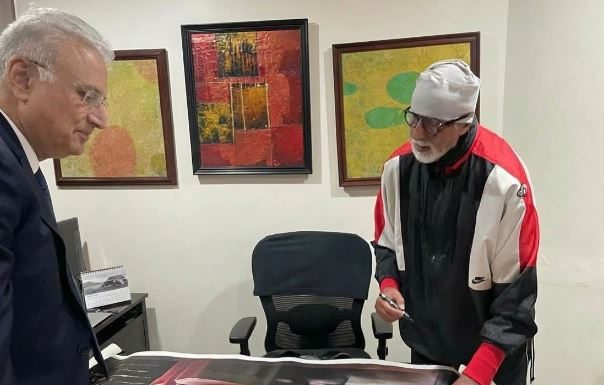
Shaikh lauds US support for FATF, COVID-19, G-20 debt relief
Adviser to the Prime Minister on Finance and Revenue Dr. Abdul Hafeez Shaikh has said that Pakistan appreciates the support extended by the US in FATF, COVID-19 and debt relief from the G-20 countries.
“We value our relationship with the US particularly the business collaborations which have a great potential of growth given the opportunities for business and investment available in Pakistan,” he said while speaking during a virtual discussion with the office-bearers and members of the US-Pakistan Business Council here at the Finance Division today. Esperanza Jelalian, president of the US-Pakistan Business Council, Charles Freeman, senior vice-president Asia of US Chamber of Commerce, Steven Kobos, chairman of the US-Pakistan Business Council, Dr. Asad M. Khan, Ambassador of Pakistan to the US and other senior office-bearers and members of the US-Pakistan Business Council and US Chamber of Commerce also attended the discussion.
During the discussion, Dr. Abdul Hafeez Shaikh conveyed heartfelt sympathies from the government and the people of Pakistan on the loss of precious lives in the US due to COVID-19 pandemic. He said the Pakistani leadership had met President Trump thrice in the past and the visit by US Secretary of Commerce Wilbur Ross to Pakistan earlier this year was a confirmation of the growing trade and investment ties between the two countries. He said the business environment in Pakistan facilitated by a greater ease of doing business, improved regulations and huge market potential, was ideal for investment and joint ventures by the US businessmen.
The Adviser said the government had recently announced a Rs 1.2 trillion stimulus package that included direct cash transfers, payment of tax refunds, subsidized credits and payroll loans, to shore up the economy and boost businesses. Similarly, the upcoming budget was being designed in a way to provide maximum relief and incentives to the businesses and promote trade by reducing tariff on a large number of items of raw material.
While speaking on the occasion, Esperanza Jelalian, president of the US-Pakistan Business Council and Steven Kobos, chairman of the US-Pakistan Business Council, said the US government and the businessmen saw Pakistan as an important trade partner and the visit by US Secretary of Commerce to Pakistan was an evidence of the degree of importance the US attached to Pakistan. The hoped the bilateral collaborations between the two countries would further grow in the coming times.
RCCI delegation calls on FBR Chairperson
RAWALPINDI, MAY 20 (DNA) – Chairperson FBR Nosheen Javed Amjad has said that next financial budget will be an extraordinary budget in view of the Corona epidemic. Businesses were closed due to the lockdown and FBR is facing shortage on tax collections.
She made these remarks during her meeting with a delegation of the Rawalpindi Chamber of Commerce and Industry (RCCI). The delegation led by President Saboor Malik which includes group leader Sohail Altaf and former president Zahid Latif Khan.
FBR Chairperson said that the budget for the next financial year is in the final stages of preparation. Suggestions are being collected from the stakeholders.
The joint declaration of the RCCI’s Chambers Presidents Conference will be useful in finalizing the budget. Appreciating the budget proposals from the Rawalpindi Chamber, she said that the best budget would be formulated with the consultation and suggestions of the stakeholders.
On the occasion, President Saboor Malik said that the Chamber held a virtual summit with all the chamber presidents through video link and gathered joint proposals. He expressed hope that the chamber’s budget proposals would be included in the budget formulation. Group Leader Suhail Altaf said that the Joint Declaration was an important document and would serve as a basic guideline for the government to address economic challenges.
He demanded that the ground realities be kept in mind while setting budgeting and revenue targets. The FBR should introduce such tax reforms that not only attract new taxpayers but also increase its revenue.=DNA
=================
Pakistani student hails China’s poverty alleviation campaign
YUNNAN, China, May 20 / DNA / = : “To help the needy by whatever means is a great accomplishment,” said Talha Elahi, a Pakistani student who spent his 2019 winter holiday to observe China’s poverty alleviation campaign in a small village named Sabazi in Yunnan Province, China.
According to a report published by China Economic Net (CEN), a few months ago Talha was an average Pakistani student studying in Sichuan Normal University. He attends classes, plays basketball, friends others, travels around, with not much difference from his schoolmates.
But earlier this year when he returned to school from Sabazi Village, he came to understand things about China’s poverty alleviation – a must-win battle for the Chinese government – as quoted by him, “two months that I’ll never forget”.
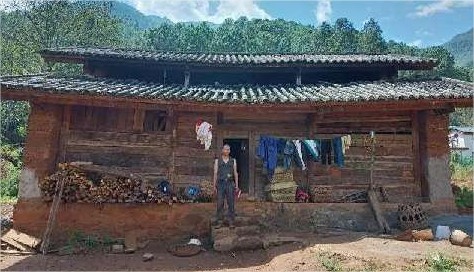
Talha has been in China for further study since 2016. Living in Chengdu, one of the most important financial, commercial, cultural and transportation centers of western China, he is quite familiar with urban life, so he made a decision to experience rural life in China’s developing Yunnan Province, and more importantly, to see how the Chinese government help its people who yearns for a better life.
Sabazi Village, with a population of 1,171, is located in Songping Town, Yongsheng County of Yunnan Province. By the end of 2019, residents here have got access to water, electricity, roads and street lights.
The village is an impoverished one in dire need of being lifted out of poverty; its economy, in common with other villages nearby, is dominated by crop and plant cultivation, with purchasers mainly from Yongsheng County.
The village is quite distant from Chengdu that it took Talha four and a half hours to get there. Led by the poverty alleviation group, he got chances to see how they find out information and facts about the deserving people and come up with a list of definite targets to hit for.
Stepping into a 89-year-old granny’s house, they were shocked by her living conditions. It is unbearable to stay in her woolen house with chilly winter coming, and what is worse, the roof would leak when it rained. To Talha’s surprise, the old lady offered to cook her only hen for him out of kindness.
“I did cry, ” Talha told CEN, “they are so needy but still, they are nice. I was deeply moved by her goodwill.” Touched by the granny’s move, he gave her all his money in the pocket. People might be poor for different reasons, but one’s kindness will never lie, and that is the reason why we are ready to help them, Talha added.
According to CEN, 2020 is set to be the year China eradicates poverty in the country and becomes a “moderately prosperous society in all respects.” En route to delivering the target of eradicating poverty in rural areas and eliminating regional poverty, China still has 52 counties, 2,707 villages and 5.51 million people who need to be lifted out of poverty.
To ensure a smooth implementation of poverty alleviation, China has taken several measures. According to China’s State Council Leading Group Office of Poverty Alleviation and Development, the government had built schools, houses, hospitals in poverty-stricken areas; on top of that, people now have access to education, training programme and job opportunities.
Azerbaijan Piano artists show rare solidarity by singing Dil Dil Pakistan
Ansar M Bhatti
ISLAMABAD: Relations between Pakistan and Azerbaijan are getting deeper and deeper with the each passing day. The hallmark of these relations is growing interest on both sides to give these ties versatile dimensions.
Cultural cooperation happens to be the cornerstone of these splendid relations. Maintaining cultural connections even during the difficult times of corona pandemic is a clear manifestation of earnest desire especially on the part of the Azerbaijan to protect and preserve these relations.
The Azerbaijan embassy spearheaded by Ambassador Ali Alizada has been instrumental in promotion of bilateral links in all fields. Just recently the Ambassador took an initiative of promoting Pakistani national songs in Azerbaijan with a view to further strengthening friendship and brotherly bonds.
In this connection a wonder family of Azerbaijan, well known for their singing skills performed Pakistani national song Dil Dil Pakistan on Piano.
The performance of Ms. Turan and her family indeed presented a mesmerizing performance and won hearts and minds of Pakistani people.
Ambassador of Azerbaijan to Pakistan Ali Alizada in his Tweet said that the wonderful joint performance of the popular Pakistani song “Dil Dil Pakistan” by Ms.Turan Manafzadeh and her parents Maestro Islam Manafov, the honored artist of Azerbaijan and Mrs. Shukufa Manafova in solidarity with brotherly country Pakistan fighting coronavirus pandemic.
He further said that Ms.Turan is the honored artist of Azerbaijan, composer and one of the few women conductors of the world.
Full story in tomorrow’s daily Islamabad Post
CPEC pioneers battle coronavirus in Thar Desert
ISLAMABAD, May 20, / DNA / : The Chinese company, China Railway 19 Bureau Group Mining Investment stated that it has provided necessary infection prevention and control material to its staff at its coal-mining project (Thar-block II) in Tharparkar, Sindh, says a report published by Gwadar Pro on Wednesday.
It was noted that during COVID-19 pandemic, Pakistan stands one of the worst-hit countries in South Asia. Ensuring workers’ health and safety is a top priority for each China-Pakistan Economic Corridor (CPEC) project.
To safeguard staff’s health and eliminate their anxiety, the Company had taken immediate action to contact local suppliers in Karachi to formulate supply plan.
According to the report, medical materials such as disposable medical masks, protective coveralls, safety protective goggles and disinfectant have been sent to the project.
It may be mentioned here that till now over 800 local villagers have got jobs in this coal mining project. Due to the effective and timely pandemic prevention measures, all the workers’ health is well protected, and the project runs normal at present.
As Pakistan’s first large-scale open-pit coal mine, this project is an important part of Thar integrated coal mine and power project under CPEC.
The coal resources have been used to generate electricity with a capacity of 660 MW since March 25, 2019 to alleviate Pakistan’s power shortage, the report added.DNA
=========
German Court Orders Spy Agency to curb foreign intelligence gathering
The foreign intelligence service violated the constitution by spying on internet data from foreigners abroad, Germany’s top court ruled Tuesday in a victory for overseas journalists who brought the case
DNA
BERLIN—Germany’s foreign-intelligence agency, which is banned from spying on Germans, now faces strict limits on its overseas activities after the country’s constitutional court decided that the protections against arbitrary surveillance Germans enjoy applied to everyone world-wide.
The foreign intelligence service violated the constitution by spying on internet data from foreigners abroad, Germany’s top court ruled Tuesday in a victory for overseas journalists who brought the case.
The BND agency’s surveillance violates “the fundamental right to privacy of telecommunications” and freedom of the press, judges at the Constitutional Court in Karlsruhe said in their verdict.
But given the “great importance” of foreign surveillance to German security, the court gave the BND until the end of 2021 to change its practices to comply with the law.
The ruling marked the first time the Constitutional Court clearly stated that the BND must respect fundamental rights accorded by the constitution even when operating abroad.
German intelligence services are already not allowed to monitor the internet traffic of Germans in such a vast way.
The case was brought by journalists and civil society groups who were outraged after the BND was granted sweeping new powers to carry out “strategic telecommunications surveillance” under amended legislation in 2016.
This allowed the BND to tap into internet traffic from non-Germans abroad, often through monitoring the use of keywords, phone numbers or email addresses, and to share this information with other secret services.
One of the plaintiffs, Reporters Without Borders, argued that this allowed the agency to spy on journalists “almost without restrictions”.
“The big victory is that German authorities cannot get out of their constitutional obligations by going abroad and working there,” said Nora Markard from the GFF Society for Civil Rights, another of the co-plaintiffs.
European Film Festival launched online showcasing European movie culture
DNA
Islamabad, 20 May 2020: The European Union has launched the European Film Festival for a worldwide audience, including Pakistan. Unlike previous years when the festival included screenings, panel discussions and workshops in several Pakistani cities, it takes place this year online. The audience will be able to watch, free of charge, a selection of films until June 18th.
The Ambassador of the European Union to Pakistan, Androulla Kaminara explained: “We initially hoped to screen a wide range of films in cinemas, universities and cultural centers across the country. This was to showcase the diversity of European cinema, but more importantly to engage with a Pakistani audience to discuss the stories behind the films and how these stories relate to their lives. Due to Covid19, we had to move the festival online. But we hope it will be a teaser that trigger curiosity for more. Because we hope to organize a real festival again, when the public health situation allows doing so safely.”
The festival promotes European films that reflect the diverse cultures, languages and societies within, but also outside of Europe. The films centre around artificial borders and preconceptions that separate us despite the fundamental human traits that unite us. This topic remains more relevant than ever during the Corona Virus, which has destroyed and disrupted many lives, but it has also sparked global solidarity and cooperation across borders.
The selection includes a Finnish-Bulgarian biographical documentary about coping with childhood traumas, a tragic comedy about a dog not respecting borders, a family drama about a young boy feeling ashamed of his younger brother with down syndrome, an Austrian documentary exploring what the footprint of humans will be once we are gone, and a documentary about the conspiracy theories surrounding the death of the former UN Secretary-General Dag Hammarskjöld. In addition, short films focus, among other topics, on climate change and its impact on lives across the globe – a topic highly relevant for Pakistan, one of the worst effected countries.
The fight against the pandemic requires concerted multilateral efforts: SCO
The SCO countries have demonstrated a high level of solidarity in the fight against the pandemic, said Secretary-General of SCO
DNA
Beijing, May 13. The member states of the Shanghai Cooperation Organization (SCO) have demonstrated solidarity and mutual support in the fight against the coronavirus pandemic, said the SCO Secretary-General Vladimir Norov on Wednesday.
In his opening remarks, at the video-conferencing of the SCO Council of Foreign Ministers, V.Norov expressed his gratitude to the Russian Federation on the initiative to convene the meeting, in its capacity as current chair of the SCO.
“The SCO member states, guided by the principles of the ‘Shanghai Spirit’, have shown a high level of solidarity and mutual support in combating the Coronavirus epidemic”, said Norov.Considering China’s experience, the Secretary-Generalfurther added that the Chinese side received timely information about the impending threat and took appropriate preventive measures accordingly.
V. Norov noted the importance of increasing the efficiency of the organization’s mechanisms for rapid response to new outbreaks of infectious diseases, as well as the need for SCO’s effective interactionthe World Health Organization (WHO) and other relevant international institutions.
Referring to a draft regulation “on the Coordinating Council for Joint Counteraction to Epidemic Threats”, developed by the SCO Secretariat, would help develop and implement comprehensive early measures to prevent and reduce the negative impact of epidemic diseases, added the Secretary-General.

Overcome the consequences
Besides the issues of overcoming social and economic impacts of the pandemic, the SCO Secretary-General called for strengthening cooperation in the field of food security, and proposed development of an Action Plan in this regard.
Stressing the importance of wide application of digital technologies in public administration and business leading business enterprises;he expressed concern over the growing cyber security challenges related to Internet fraud and hacker attacks on government and financial institutions and proposed measures to be incorporated in the “Action Plan for Implementation of the SCO Concept of Cooperation in Digitalization and ICT”.
Afghan problem
Since the epidemic has suspended many SCO mechanisms involved in the process of harmonizing documents for consideration by SCO leaders,the Secretary-General proposed further enhancing the role of the mechanism of permanent representatives of the SCO Member States to the SCO Secretariat.
Regardless of the pandemic, the member countries of SCO continued to provide comprehensive assistance for a peaceful settlement in Afghanistan, he noted the growing importance of the organization in promoting the solution of the Afghan problem within the SCO-Afghanistan Contact Group mechanism.
About SCO
The SCO currently comprises of eight Member States (India, Kazakhstan, Kyrgyzstan, China, Pakistan, Russia, Tajikistan, and Uzbekistan), four Observer States (Afghanistan, Belarus, Iran, and Mongolia) and six “Dialogue Partners” (Armenia, Azerbaijan, Cambodia, Nepal, Turkey, and Sri Lanka. The Secretariat of SCO is the primary executive body of the organization – headquartered in Beijing, China.
Humanitarian space of the SCO is connected with the names of the greatest thinkers
Vladimir Norov
On 21 May, the world celebrates World Cultural Diversity Day for Dialogue and Development, launched by UNESCO in 2001. In 2002, the UN General Assembly proclaimed a resolution on World Cultural Diversity Day for dialogue and development.
This year marks this momentous day for the 19th time. This holiday date has taken on special significance in promoting and preserving culture, intercultural dialogue, and sustainable development. The events on this day aim to promote the importance and value of cultural diversity and the rich civilizational heritage of mankind.
It is quite symbolic that in the year of UNESCO’s adoption of the Universal Declaration on Cultural Diversity in 2001, the SCO was established, one of the most important activities of which is cultural and humanitarian cooperation. Recognizing the need to strengthen the potential of culture, our Organization makes a significant contribution every year to support cultural diversity through prosperity, sustainable development, and global peaceful coexistence.
Today, the SCO unites 18 states, the number of which reaches more than 44% of the world’s population. The SCO family, which includes various peoples, with its original culture, is a colorful palette of ethnic groups, nations, religions, and civilizations, ready for further rapprochement and fruitful cultural and humanitarian cooperation.
Speaking of this cooperation, it is important to keep in mind that the peoples of the “SCO family” are united by several objective factors that form a solid basis for the successful development of mutually beneficial relations. We are connected by many historical, cultural points of contact, common cultural heritage, common traditions, the similarity of languages and cultures, ethnocultural proximity, good-neighborly relations, and much more.
The humanitarian space of the SCO is connected with the names of the greatest thinkers and scientists who have made an invaluable contribution to world culture.
In the Ancient and Middle Ages, the geographical area of Eurasia was one of the most developed in the world. Thanks to the Great Silk Road, one of the most advanced models of economic development has been developed in the region, and the most advanced cultural policy has been created. Revenues from the operation of the Great Silk Road allowed the countries of the region to invest in cultural construction.
Today, every ninth UNESCO World Heritage Site, listed in the World Heritage Fund, is located in the SCO space.
Currently, in the SCO states, along with the important work to preserve the historical cultural heritage, active activities are being carried out to revive the past intensive cultural contacts between the peoples of the region, on the model of humanitarian communications of the Great Silk Road, to promote the popularization of the traditions and customs of the peoples living in the SCO space. One of the main missions in the SCO’s activities is consistently and purposefully implemented – strengthening mutual understanding between peoples, cognition and convergence of their cultures and civilizations.
The basis for building such multifaceted cooperation is the SCO Charter, a fundamental document that defines the main areas of cultural and humanitarian cooperation of our Organization. Practical work on this area of cooperation is entrusted to the Meeting of Ministers of Culture of SCO Member States, a coordinating and advisory mechanism for cooperation, the functioning of which is in line with the provisions of the SCO Charter and other documents adopted within the Organization.
The results of practical cooperation are reflected in the documents adopted at the annual SCO summits. At the summit of Heads of Statein 2007 in Bishkek, the Agreement on Cultural Cooperation was signed, and at the summit of Heads of Government in 2016in Tashkent, further outlines of improving multifaceted cooperation within the SCO, including in the field of cultural and humanitarian cooperation, were identified.
United by the “Shanghai spirit”, SCO Member States, based on the principles of mutual respect and equal dialogue, from year to year intensify practical work in the fields of culture, education, science and technology, health, sports, tourism, and youth contacts. These aspects of cooperation will continue to be an essential part of the Organization’s activities and will continue to serve the goals of cultural construction in the SCO space.
The SCO’s expanding cultural and humanitarian cooperation from year to year contributes to the further deepening of interstate cultural dialogue, in order to bring the SCO countries and peoples closer together. A striking example of this is the comprehensive SCO-our Common Home program, which includes the days of SCO culture, the cycle of piano concerts “Nine Magic Notes”, the annual “SCO Marathons” and the “Eight Wonders of the SCO” project aimed at creating a single tourist space.
The world community is now facing serious challenges related to a sudden attack called COVID-19. The consequences of the pandemic for further favourable world development are unpredictable and may cause dramatic changes in the modern world order. All this further actualizes the value of a single human civilization with the diversity of its forms of existence, the self-identification of the peoples and ethnicities of the world and their responsibility for its future.
We need to raise our many voices in defence of the importance of a day of cultural diversity in the name of dialogue and development. This is the best response and moral support in the fight against humanity’s most dangerous enemies, including the COVID-19 pandemic.
I am convinced that, based on the rich cultural traditions of our peoples, we will be able to overcome all difficulties and trials together and in close cooperation.
The writer is the SCO Secretary General