
Home Blog Page 3320

WAITING FOR A SAVIOR

ALI SUKHANVER

According to the latest reports, Indian troops martyred three Kashmiri youths in Nagnad Chimmer area of the Kulgram district of the Indian Occupied Kashmir on 17th July, 2020. These three innocent ones were targeted during a cordon and search operation.

Experts say that this fresh act of state terrorism would give birth to new wave of agitation in the valley. In the name of cordon and search operations, such brutal activities of the Indian forces are simply a routine matter particularly after abolishment of Article 370 of the Constitution which granted special status to Indian occupied Kashmir. Certainly this situation is adding more unrest to the region and surely this unrest would affect the world peace directly or indirectly.

A debate on ‘Human rights in Kashmir’ was nominated by the Backbench Business Committee of the UK Parliament after a representation from Debbie Abrahams MP and Yasmin Qureshi MP in the last week of April 2020. During the debate, an assessment report was also presented; its topic was the situation in Indian-administered Kashmir, five months after the Indian government’s August 2019 revocation of the region’s autonomy.

This report was prepared by the US-based Human Rights Watch. The report said, “Since the restrictions in August 2019, the government has taken slow, reluctant steps to ease some of them, but is still falling far short in upholding Kashmiri rights. Many of the thousands arbitrarily arrested – lawyers, shop owners, traders, students, rights activists – have now been released, but reportedly only after promising not to criticize the government. Some senior Kashmiri political leaders, including former chief ministers, remain in custody. The Police admitted at least 144 children had been detained. The government had also blocked phone lines and access to the internet. The government was so fearful of criticism and dissent that it curtailed Kashmiris’ ability to share news of births or deaths, call their doctors, order supplies, research term papers, file taxes, and trade apples and walnuts.”

In the year 2019, after the cancellation of the Article 370 and 35A, the Aljazeera also published a very comprehensive report on cruelties of the Indian Forces in Jammu & Kashmir. This report had a lot of resemblance with the report recently prepared by the Human Rights Watch. The report said that more than 50 residents in a dozen villages in Kashmir were interviewed by their correspondent and they all made the same complaint; the Indian military had raided their homes since India’s government imposed a security crackdown in the region on 5th August. The soldiers inflicted beatings and electric shocks, forced them to eat dirt or drink filthy water, poisoned their food supplies or killed livestock, and threatened to take away and marry their female relatives. Thousands of young men had been arrested. ‘Hats off’ to the callous stubbornness of Mr. Modi that he kept on singing the same song shamelessly; ‘the cancellation of Article 370 and 35A would bring a new flood of peace and prosperity in the Indian Held Jammu & Kashmir’. Where is that flood of peace and prosperity; no one knows.

No doubt the atrocities of the Indian Army in the Indian Occupied Kashmir are the worst example of human rights violations. Kashmir has become a territory of fear and suppression where the innocent Kashmiris cannot even breathe freely. The situation in Indian Occupied Kashmir is getting worse day by day and even the pandemic could not put a full-stop to the human rights violations there. From illegal detention of young Kashmiri leaders to the rape of Kashmiri women, the tale of brutality seems never ending. According to the Kashmir Media Service, only in the month of June more than 50 innocent people were cruelly murdered by the Indian forces deputed in the Kashmir valley, three women were shamelessly gang-raped and more than 25 houses and shops were destroyed. From January 1989 to June 2020, at least 95623 Kashmiris lost their lives at the hands of the Indian forces and more than 11000 women have been molested during the same period as the Indian Army uses rape as a weapon against the local people. Without giving reference to the brutalities done by the Indian Armed Forces deputed in the Indian Occupied Kashmir no report on human rights violations can be authentic. The helpless people on one hand have to face indifferent selfish attitude of the court of law and on the other hand illegal abduction, sexual harassment and use of pellet guns and shotguns by the military troops. Certainly, there must be someone who could put a full-stop to this tale of brutality; Kashmir is waiting for that savior.
Monsoon mayhem in Karachi

M Omar Iftikhar 

Each year the monsoon season brings the same problems for the people of Karachi. While those at home enjoy the blessings of the rain, the people on the streets have to face the brunt of lack of planning and the absence of proactive thinking.

Karachi that runs the business lifeline of Pakistan resembles a dystopian-era city when rainwater inundates its lanes and streets. Water becomes stagnant on roads causing bottlenecks. The traffic jams become a dreadful experience for those who are a part of it. At some points across Karachi, water enters homes while people on the road have to wade through water.

Cars and motorcycles partially submerge in the water while the pedestrians have no idea if there is an open manhole or a pothole in their way. This happens because the city never had an operational water drainage system.

Even if this system was ever in place in some areas, no efforts were made to keep this drainage system clean from garbage and dirt. The rain is not a problem as it does not cause traffic jams. These congestions are caused when roads are partially submerged in water. The city government can still devise a practical solution to drain rainwater from the roads and streets to a reservoir.

This water can later be used for various purposes. However, the keywords here to focus on are “commitment” and “vision”. The leaders need to utilize their available resources to provide the citizens of Karachi with a solution. Even if the rain falls for half an hour, water covers major parts of Karachi.

Even the areas such as DHA and PECHS, considered to be the residence of high-status citizens show a picture of distress. The need of the hour is to provide Karachi with a workable solution of the rainwater drainage system. Even in this age of technology, suction pumps are used to drain water from the roads. A sustainable, practical system must be put into place to keep Karachi operational and comfortable even when it rains.

Forty Years and Counting

A B khan

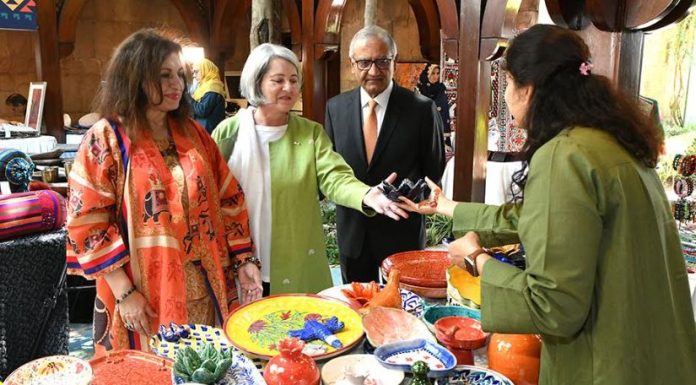
Luxury cars fluttering with country flags, surrounded by body guards and a red carpet welcome; from afar, a life of an ambassador looks too good to be true. Little, one does know how many storms’ this position has weathered in past decades pregnant with personal sacrifices to reach the end of the tunnel.  Istvan Szabo, the Hungarian ambassador to Pakistan is no different.  Ambassador Szabo was posted to Pakistan in 2012 and now after eight fulfilled years, his time has come to hang his boots as he reached his age of suppuration last year.

As we sat in his living room to talk about his stay in Pakistan over a cup of coffee, Ambassador Szabao and his wife Emilia who is also a diplomat by profession and Head of Counselor section in Hungarian embassy, Islamabad boarded the nostalgic bandwagon which took us back to the future. “It was forty years ago, on 1st March 1980 that I joined Foreign Service in Budapest, Hungry where my wife to be was already working” informs the ambassador as we switch the recording button “ON”.

Life was not all bed of roses for the ambassador during his illustrious carrier but lady luck was on his side from the very beginning. His first assignment was United Nations desk at the head office which took him around the world and provided an opportunity to be part and parcel of the discussions, decisions and policies- making; reshaping the world order.

UN General Assembly, New York was the epicenter for the new world order and Ambassador Sazabio was always present at the helm of the affairs. In his mid twenties, traveling around the globe, brushing shoulders with who’s who of the diplomatic community and  drafting MOU’s  was not less than a dream come true for any young Hungarian diplomat at the start of his career, Istvan Szabo was that lucky star.

After initialing spending first four years in Budapest as part of the job requirement, the couple  got their first posting abroad and it was not very good news.  They arrived in Lagos, the capital of Nigeria along with their first born son at a time when the African horn was troublesome news. Armed robberies, street crimes, extreme poverty, military   dictatorship and scarce food supply were the order of the day.

 “It was a hard posting and we had to manage things with great difficulty” adds Emalia.  After spending four years and welcoming their second son into the world while in Lagos, the couple moved back to Budapest and stayed at the head office for two years before being posted out to Cairo, Egypt.  The ambassador narrates fond memories of Cairo. They travelled around the country, digged into ancient Egyptian history and made friends while stationed in   Nile city.

Once back home, ambassador Szabo was assigned a very challenging task. “When I returned to Budapest, at that time Hungry was President of OSCE, (Organization for Security and Co-operation in Europe) and it gave me a good opportunity to travel in Europe and learn about the European polices from a diplomats perspective” he informs with a smile.

It was turning point in the history of Europe. The war in Balkans, Dayton Peace Process, disintegration of Yugoslavia, Europe was the nerve center of the new world order as things were moving with great dynamism between 1994 and 1995” ambassador explains.

Now deeply involved in policy making with  an enriched experience  and so many Accords, MOU’s and bilateral, unilateral agreements under his belt, ambassador Szabo opted for a posting in Brussels, Belgium looking after an important  NATO assignment .” It was a very important position at that time and my experience at UN desk and OSCE make handy.  Nato became an integral part of the process of annexation negotiations and its intervention in Serbia, during Serbian President Slobodan Milosevic rule became part of my resume”, he informs.

After playing a decisive role during the NATO posting, ambassador Szabo wished to opt for a   relatively calmer station and again thank to his lucky stars, he got his first ambassadorial posting in Prague, the Czech Republic. The couple went happily, leaving their two teenage sons in Budapest to continue their higher education. “I wanted a quiet and relaxed position after spending too much time in policy matters so Prague was the best option. It was close to home so we left our now teenaged sons in Budapest to continue their high education and made frequent visits to home” he adds. . In 2008 Ambassador was back home for four years working as Director General Balkans desk.

“It was in 2012 , one  afternoon, the deputy Secretary of State who was my boss called me. He just asked me directly over the phone, what would you say Yes or No on posting to Pakistan as ambassador.  Since I had never been to Asia and my profile was more of a policy issue expert especially during the Balkans, Nato, OSCE Presidency so I asked him to give me a week or so to discuss with my family. He said ok, you have till tomorrow” informs ambassador laughingly.

 “Arriving in Pakistan was a pleasant surprise. I had never served in Asia so I was also excited but at the same time, skeptical. Pakistan in 2012 was griping with democratic form of government after a militarily rule. Terrorism, blasts, no-go areas and restrictions on diplomatic movements was not happy news.  It took us a few years to settle down comfortably as things started to claim down and Pakistan moved into a much peaceful station as years passed by” ambassador informs .

As the couple was inching towards end of their four year posting term, the rules at the Foreign Office, Budapest changed from 4 year posting to five years. The couple got one more year life line in Islamabad.  “My age of retirement was approaching  in two  years time so I requested my boss, that If you are happy with my performance, I would like to stay two more years in Islamabad  and retire from here and they accepted it” he  adds while narrating how 4 years turned into 8 years in Islamabad. You are still short of one year? I asked.  “The last eighth year was an extension” he informs laughingly.

In the last eight years, the diplomatic duo, made many Pakistani friends, they were seen on private dinners, events wedding of Pakistani families.  Travelling was their favorite hobby and northern areas were their Mecca.”We are just spell bound by the beauty of Northern Areas especially Shijar, Khuplo, Dosaei Lands. The landscape is breathtaking” said the mesmerized couple.

Ambassador Szbao extensively travelled for his work assignments and many a times his wife Emilia accompanied him. “I had visited Faisalabad, Sialkot, Gujar Khan and other business hubs to explore opportunities of trade between Hungry and Pakistan. I had even gone up to South Punjab and mystified by the grandeur of Cholistan Desert” he informs.

The couple takes back home, very fond memories of Pakistan with them apart from   truck art furniture and other artifacts. “The cultural values and norms in Pakistani traditions are so well intertwined that it leaves one fogged.  Whenever there is trouble, I see Pakistani people rushing to help each other. There is so much unity and solidarity and willingness to help each other in time of need that is still beyond my imagination.  Having said that the couple also stressed that the country and the government needs to prioritize education facilities in Pakistan. Emila departing note was for the women of the rural areas to learn and educate themselves. “I see many educated women working in offices and private sector companies; I also meet women parliamentarians who are in large number now but when I meet the rural women especially the ones living in northern parts they need attention. They are confined to their houses and do not know a much about the outside world leave alone their rights. This needs to be changed” adds Emilia.

Both Ambassador Szabo and wife Emilia plan to settle down in their ancestral house in Budapest which has been refurbished already once they arrive back. Emilia wants to spend a couple of years in Budapest before accepting her foreign posting.

Shehryar Afridi addresses seminar on Kashmir Accession Day

DNA

ISLAMABAD: JUL 19   —  Pakistan Parliament’s Special Committee on Kashmir Chairman Shehryar Khan Afridi on Sunday strongly denounced the Indian-occupation regime for enacting new laws to enable illegal military cantonments in the disputed area of Indian-occupied Jammu & Kashmir (IoJK) and urged United Nations to take action to stop this illegal process. Addressing a seminar at National Press Club to mark Kashmir Accession Day, Shehryar Afridi said the new laws were a part of Indian plan to bring demographic changes in the IoJK in a bid to artificially turn Muslim dominated Kashmir into Hindu majority territory.

“This is a nefarious design cooked up to violate the United Nations Security Council resolutions. The world needs to act now,” said Afridi.” Under this sinister design, thousands of Indian labourers have been brought for construction near the Army Cantonment. Massive constructions are going around several Indian-occupying Army camps in Kashmir.

Thousands of residential flats are being constructed at transit points in Srinagar for Indian Army troops. This is all in violation of the UN resolutions and its conventions,” he added. He said that India is violating International law by settling Indians in the UN-recognized disputed territory.

The world must take note and warn India of its implications in the region, he demanded. Afridi said the UN must pursue its own resolutions on Kashmir to hold a plebiscite in the occupied territory, failing which it would lead the UN towards the fate of League of Nations.

Afridi also pointed out that thousands of Indians have been granted citizenship rights and being shifted in IoJK. “Over the last few weeks, tens of hundreds of non-natives are being ferried to Kashmir and are being settled in far off areas near Indian-occupying army camps. This has increased the anxiety among Kashmiris,” Afridi added.

He said despite the oppressive occupation by India, Kashmiri people have not given up their desire for accession with Pakistan and Kashmiri people, expressing their love for Pakistan and are still waving Pakistani flags in Indian-occupied Kashmir and raising slogans of “Long live Pakistan”. He said Kashmiris are determined to continue their struggle for the accession with Pakistan and independence from India. “The Government of Pakistan, while upholding its principled position, continues to provide political and diplomatic support to the Kashmiris,” he said.

He demanded from the UN to pursue its incomplete agenda on Kashmir and ensure the right to self-determination (RSD) of Kashmiris. “India is inflicting barbaric atrocities on Kashmiris.  Indian aggression will further strengthen the resolve of Kashmiris.

Eight lakh Indian-occupying troops in occupied Kashmir cannot suppress the struggle of Kashmiris,” he added. He said while Kashmiris on both sides of the Line of Control and around the world are celebrating Pakistan Accession Day today, Indian occupation forces are inflicting innumerable atrocities in the Indian-occupied Kashmir, and the unarmed Kashmiri people are fighting the dangerous weapons of the Indian-occupying army with mere rocks. “Men, women and children are dying, being cut, injured, rotting in prisons for the sake of freedom, just so that the United Nations and the international community can pay attention to their voices.  Like Darfur (South Sudan) and East Timor, Kashmiris should be given the right to vote to decide their political future, as promised by the United Nations.

But the United Nations and the international community continue to turn a blind eye to the Kashmir issue,” Afridi rued. Azad Jammu and Kashmir President Sardar Masood Khan and others also addressed the forum. DNA

==========

AIOU should pay tutors for the fall semester 2019

DNA

ATTOCK, JUL 19 – Allama Iqbal Open University should pay tutors for the fall semester 2019. Tutors of various subjects affiliated to Allama Iqbal Open University told reporters that Allama Iqbal Open University hired them for the fall semester 2019.

We have completed all the work on time but so far the university authorities have not paid the compensation even though the semester of Fall 2020 has been admitted and the advertisement for Fall Semester 2020 has also been placed.

He said that the university is going to introduce online billing system for which software is being developed after which payment of fees will start.

The tutors further said that the university has increased the admission fee in different classes many times but has not increased the tutors ‘compensation which is a gross excess and the compensation is also delayed.

Allama Iqbal Open University officials took notice of the situation and tutors’ problems. Play your part in solving. DNA

==============================

PNCA pays homage to renowned TV Star Tariq Aziz

DNA

ISLAMABAD, JUL 19 – PNCA paid tribute to Tariq Aziz Renowned TV star, writer, intellectual, and philanthropist Tariq Aziz was paid tribute through  online session organized by Pakistan National Council of The Arts. PNCA is working on highlighting the legendary artist as a cultural heritage of the country who have contributed their whole life to the promotion of Pakistani art, culture, and heritage.

Tariq Aziz is one of the icons whose contributions in the field are worth mentioning. His name was an identity for Pakistan Television. He was an academy in himself due to his versatile personality  said Dr, Fauzia Saeed DG PNCA, and host of the program. She highlighted the film career of Tariq Aziz.

He has acted in about 36 films which most of the people does not know. Clips from the films He acted were shared with the audience. A large number of writers, artists, and his fans spoked their heart to recognize the services and contribution of the one and only Tariq Aziz.

Film critique and expert Aijaz gul said Tariq Aziz was having  multidimensional personality. He was  poet, actor, debater, and much more. In a Kisan conference where He was to speak for five minutes, he spoke for 45minutes with Pindrop silence.

His memory was remarkable. Khawaja Najmul Hassan recalled all his settings and work with Tariq Aziz. He also highlighted his spontaneity and command over different areas of working.

Tajdaar Adal said that Tariq Aziz wife has also a great role in making him successful. He was not only an artist but a great philanthropist as well. His philosophy and approach were to work for the uplift of humanity and downtrodden people of the society which is very much reflected from his acting in the one and only the film “Insaniyat”. He has set an example of love and patriotism for motherland by donating all his assets to the state of Pakistan.

Provision of modern medical facilities in rural areas will be ensured: CEO Health

DNA

ATTOCK: JUL 19 – Chief Executive Officer Health Dr. Sohail Ijaz Awan has said that the Punjab government is paying special attention to the provision of modern medical facilities in rural areas and filling of vacancies in the district in the last two years.

The government’s dream of providing basic medical care to the people at their doorsteps through the deployment of majority of male and female medical officers in the headquarters hospitals, RHCs and BHUs of all the tehsils of Attock was shattered.

He was speaking to local journalists on the sidelines of a visit to Tehsil Headquarters Hospital Pindi Gheb. In the last two years, more than two dozen vacancies in Tehsil Headquarters Hospital Pindi Gheb have been filled by medical officers including specialists.Doctors have been deployed, Gaini, ENT and other important medical departments are working hard to deploy permanent specialists, but this is not possible due to problems in remote areas. I appeal to the educated class in this area.

He said that they should inculcate the spirit of service to the area in the minds of their children and after completing their studies, persuade them to provide medical facilities to the people in Pindi Gheb Tehsil itself. The situation will improve.Encourage the provision of facilities.

If the people of the area come forward for service, the medical situation will improve.Encourage the provision of facilities. If the people of the area come forward for service, the medical situation will improve. DNA

==============================

Honor to PML-N District President Saleem Shehzad for the second time

DNA

ATTOCK: JUL 19  –   PML-N District President Muhammad Saleem Shehzad has been re-elected for the second time and the President of Attock District has been honored for the second time. Rana Sanaullah, Sardar Owais Khan Leghari has issued a formal notification of Muhammad Saleem Shehzad for Attock district with the approval of Central President Shahbaz Sharif.

Sheikh Aftab Ahmed, Senior Vice President PML-N Punjab. MNA Malik Sohail, Former Provincial Minister Chaudhry Sher Ali, Jahangir Khanzada, Malik Bahadur Yar Khan, MPA Sardar Iftikhar Ahmed Khan, Former Provincial Assembly Candidate Sheikh Salman Sarwar, Malik Raisat Sadrial, Malik Sher Khan Sadrial, Former Chairman Attock Municipality Nasir Mahmood Sheikh, Former Councilor Sheikh Arif Mahmood, Sheikh Zahoor Elahi, Sheikh Mahmood Elahi, City President Ambassador, Tariq William, Raja Zahid, Javed Iqbal,Sardar Mamriz, Iftikhar Baloch, Malik Rizwan, Abid Shehzad, Dr Mian Rashid Mushtaq, Dr Muhammad Ashraf Butt, Talal Butt, Malik Ansar Khan, Malik Jamil Khan, Haji Ehsan, Sheikh Muhammad Ajmal, Sheikh Awad Safdar, PML-N Appreciating the decision of the Punjab leadership to unanimously nominate Muhammad Saleem Shehzad for the re-election of Attock District, we congratulate Muhammad Saleem Shehzad. DNA

===============================

Embassy of Japan, IICR organized webinar series titled “Knowing Japan”

DNA

ISLAMABAD, JUL 19 – To create better understanding and acquaintance about Japan among the people of Pakistan, the Embassy of Japan in collaboration with the Islamabad Institute of Conflict Resolution (IICR) organized a five-day webinar series from 13 to 17 July which was largely participated by the people hailing from various sections of the Pakistani society.

Mr. Shindo Yusuke, Deputy Head of Mission, Embassy of Japan in Pakistan, presented his lectures during this first-ever webinar series that included the topics Japan – its people, society and tradition, education in Japan-key to Japan’s development, secrets of Japan’s economic development, Japanese culture and Japan-Pakistan relationship.

Mr. Shindo, in his lectures, started from the historic background of Japan and its age-old traditions and culture later explained in detail about the education system in Japan, the secrets Japan’s economic development and the current level of Japan-Pakistan bilateral relations. Mr. Shindo noted that Japan-Pakistan bilateral relations are based on mutual respect, cooperation, and shared interests and these relations are growing further in multi-dimensions.

The participants of the week-long lecture series raised many thought-provoking questions during the question-answer sessions and deliberated upon the modern day Japan and its achievements. Mr. Shindo thanked the participants for their interest in Japan and their exchange of views on important issues.

The webinar was an innovative attempt by the Embassy to continue its mission to promote Japan and its culture and values during this difficult time under COVID-19.*The Embassy will continue to host webinars of interest to our friends in Pakistan. Please let us know if you have topics you’d like us to cover.

COMSATS’ Centres of Excellence collaborate to help prepare its Member States for post-COVID19 era

DNA

ISLAMABAD, JUL 19 –  ‘The post-COVID19 world would be much different as its overall socio-economic impact is yet to be determined. It is expected that the world would be faced with even greater challenges in the form of rising food insecurity, unemployment, poverty, healthcare needs, etc.

The pandemic has enormously affected the tourism, transport, education and agriculture sectors. The Information Technology is expected to play an increasingly important role in our daily lives in the post-COVID19 period through e-learning, e-health, e-agriculture, artificial intelligence, etc. There are, therefore, more reasons for the world to focus on science, technology and innovation.

This was noted by the international participants of the 23rd Meeting of the Coordinating Council of the Commission on Science and Technology for Sustainable Development in the South (COMSATS), which was held virtually due to present-day travel restrictions globally. The meeting had participation of 26 high profile scientists and representatives of 19 Centers of Excellence of COMSATS belonging to Bangladesh, China, Colombia, Egypt, The Gambia, Ghana, Indonesia, Iran, Jamaica, Kazakhstan, Nigeria, Pakistan, Palestine, Sri Lanka, Syria, Tanzania, and Turkey. Beside these Council members, 24 officials of COMSATS also attended the meeting from its Headquarters based in Islamabad.

COMSATS is an international/inter-governmental organization of 27 developing countries based in Islamabad. Its programmes related to South-South and Triangular cooperation in various fields of science and technology are implemented through its Network of Centers of Excellence, currently comprising twenty-four (24) academic, scientific and R&D centers from the developing world. The Heads of these Centers constitute COMSATS Coordinating Council, which meets each year in order to review the ongoing programmes and chalk-out the future work-plan.

In his opening remarks, the Chairperson of COMSATS Coordinating Council, Prof. Dr. Ashraf Shaalan (Egypt) appreciated the efforts made by COMSATS Secretariat for organizing the on-line meeting amid COVID-19 crises. While sympathizing with those who have been affected by COVID-19, Prof. Shaalan hoped that through joint efforts, the world will soon rise above this challenge. Also speaking at the occasion, the Executive Director COMSATS, Dr. S. M. Junaid Zaidi stated that the COVID-19 crisis has solidified the resolve of COMSATS and its Coordinating Council to continue striving for the promotion of South-South and Triangular Cooperation in STI, through all possible means.

During the meeting, the Council deliberated upon the ongoing programmes, including COMSATS Centre for Climate and Sustainability, postgraduate scholarships and post-doctoral fellowships at various Centres of Excellence, capacity building activities, Telehealth programme, activities of International Thematic Research Groups, programmes for achieving SDGs, and publications. Noting with great concern the devastating global impacts of COVID-19, which has affected almost all of the COMSATS’ Member States, the Council members deliberated upon collaborating with one another and pool their expertise, human and technological resources in order to meet the challenges posed by the pandemic. They also considered focusing their collective efforts on those fields that would be relevant in addressing the socio-economic needs and challenges of the Member States in post-COVID19 scenario. The meeting also reviewed the actions taken by COMSATS Secretariat to implement the decisions made during the previous Council meeting held last year in China, as well as other activities and achievements of the organization. The administrative and financial matters of COMSATS also came under review and were considered satisfactory by the Council.

In a communiqué issued at the end of the meeting, the Council appreciated the efforts made by the Executive Director COMSATS and his team for, inter alia, strengthening of COMSATS Network of International S&T Centres of Excellence with the addition of new members; increased interaction, collaboration, and exchange of human and technological resources among the Centres of Excellence; increased opportunities of scholarships and fellowships for the Member States; organization and/or sponsorship of eleven (11) international and fourteen (14) local capacity building events; strengthening of South-South and Triangular Cooperation and conclusion of various MoUs/Agreements; and enhanced interaction with the diplomatic communities of existing and potential Member States.

It was decided that the implementation status of the decisions of this year’s meeting would be reviewed during the next (24th) meeting of the Coordinating Council to be held in Karachi during March 2021.

Stay Connected

64FansLike
60FollowersFollow

Latest Reviews

Exchange Rates

USD - United States Dollar
EUR
1.17
GBP
1.35
AUD
0.71
CAD
0.72




