Home Blog Page 317

German Embassy in Islamabad hosts screening of German Movie

German Embassy

ISLAMABAD, JUN 25 /DNA/ – The German Embassy in Islamabad, in collaboration with the Goethe Institute and the Marriot Hotel Islamabad, hosted a special screening of the famous German film “Lola Rennt” (“Run Lola Run”).

The Chargé d’affaires a. i. of the Embassy, Mr Arno Kirchhof, welcomed the guests and gave them some context about this landmark film of German cinema.

The film tells a story of a young man who urgently needs a big sum of money, otherwise gangsters will kill him. His girlfriend Lola starts running in order to save her beloved. Director Tom Tykwer tells this love story in three different variations. “Run Lola Run” is both a product of experimental cinema and a testimony to what life felt like in the Berlin of the late 1990s.

The screening was attended by a diverse audience, including representatives of the cultural world and civil society, businessmen, journalists and members of the Diplomatic Corps, but first and foremost a curious general public.

FIH invites Pakistan hockey team to participate in 2026 Pro League

FIH invites Pakistan hockey team to participate in 2026 Pro League

New Zealand Withdraws Due to Financial Constraints; Pakistan Gets Opportunity After Impressive Nations Cup Performance

DNA

ISLAMABAD – The International Hockey Federation (FIH) has extended an invitation to the Pakistan men’s hockey team to participate in the prestigious FIH Pro League scheduled for February 2026. Pakistan has been offered the spot after New Zealand, originally invited, declined due to financial constraints.

Pakistan secured this opportunity following their strong performance in the recently concluded FIH Nations Cup, where they finished as runners-up. Their impressive showing has earned them a chance to compete against the world’s top hockey nations in the Pro League, a tournament known for elevating team skills and global rankings.

A Pakistan Hockey Federation (PHF) official confirmed receiving the invitation and stated that the team is likely to accept the offer. “Participating in the Pro League will provide our players with high-level competition and help revive Pakistan’s standing in international hockey,” the official said.

The FIH Pro League features elite teams such as Australia, Belgium, the Netherlands, Germany, and India. Pakistan’s inclusion is seen as a significant step in their efforts to return to the top tier of world hockey.

Further details regarding Pakistan’s participation, including fixtures and preparations, will be announced in the coming months.

FPCCI expresses dismay over anomaly committee’s neglect, demands budgetary changes

High borrowing rate, inflation, oppressive taxation negatively affect business: FPCCI

ISLAMABAD, JUN 25 /DNA/ – The Federation of Pakistan Chambers of Commerce and Industry (FPCCI) has voiced serious concerns over the Federal Board of Revenue (FBR) members’ disregard for the Anomaly Committee’s recommendations and proposals. The FPCCI stated that the committee was not allocated sufficient time for its meetings, and a meeting that was convened lacked the agenda items crucial to its members. Consequently, the members of the Anomaly Committee resigned and transferred all their powers to FPCCI President Atif Ikram Sheikh.

The FPCCI is also demanding the repeal of the controversial 37 Double A provision, which was reinstated based on an old notification. They insist this be scrapped in light of the recent Supreme Court decision.

During an emergency meeting at the FPCCI Capital Office, members of the Anomaly Committee, including FPCCI President Atif Ikram Sheikh, Karachi Chamber of Commerce and Industry President Javed Balwani, Islamabad Chamber President Nasir Qureshi, Sohail Pasha, Abdul Haleem, Sarhad Chamber President Fazal Muqeem Khan, Quetta Chamber President Ayub Mariyani, Faisalabad Chamber President Rehan Naseem Brara, Sialkot Chamber President Ikram-ul-Haq, FPCCI Vice President Tariq Jadon, Capital Office Chairman Karim Aziz Malik, and Coordination Chairman Malik Sohail, among others, expressed their alarm. They highlighted that the government is set to approve the budget on June 27, yet the Anomaly Committee, established to address the business community’s budget-related issues, has not held a single meaningful meeting. This situation is a cause for concern for the entire business community across the country.

The FPCCI put forth several key demands:

 * The tax regime for exporters, which was changed last year, should be reverted to the old system.

 * The one percent advance tax should be abolished.

 * The government’s decision to end tax exemptions for economic zones by 2035 should be withdrawn, as new factories will take four to five years to become operational.

 * The five percent withholding tax on exporters should be removed.

 * The eighteen percent tax on solar panels should be eliminated.

 * The final tax regime should be reinstated.

 * Policies should not be formulated without consultation with the FPCCI.

The meeting’s participants also emphasized that after winning the war against India, the business community now seeks to win the economic war. To achieve this, they stressed the importance of mutual cooperation between the government and the business community to propel the country’s economic direction forward.

Korean ambassador leaving Pakistan

Korean ambassador leaving Pakistan

ISLAMABAD, JUN 25 /DNA/ – Outgoing Ambassador of the Republic of Korea, H.E. Park Kijun, paid a farewell call on the Foreign Secretary. A farewell lunch was also hosted in his honour by Additional Secretary (Asia & Pacific), Mr. Imran Ahmad Siddique.

The Foreign Secretary appreciated Ambassador Park’s efforts in strengthening bilateral ties and expressed hope for continued progress in Pakistan-Korea relations. Additional Secretary Siddiqui also commended the Ambassador’s contribution, expressing confidence that his successor will build on this positive momentum.

CDA Natalie Baker joins direct line call on mining opportunities in Pakistan

CDA Natalie Baker joins direct line call on mining opportunities in Pakistan

ISLAMABAD, JUN 25 /DNA/ – CDA Natalie Baker participated in a key webinar today, co-hosted with Pakistan’s Minister of Energy, Ali Pervaiz Malik, and senior officials. The session highlighted business opportunities for U.S. companies in Pakistan’s critical minerals sector, covering investment prospects, partnerships, and export potential.

The event, held at OGDCL Head Office, showcased Pakistan’s mineral resources and avenues for bilateral cooperation. Baker emphasized the importance of strengthening economic ties between the two nations.

The United States and Pakistan share a long history of economic partnership, and today, we are here to explore new avenues for collaboration in the critical minerals sector.  This sector holds immense potential for both our countries, offering opportunities for growth, innovation, and prosperity.

Today, we will hear from Minister Malik, who will offer a high-level view of the Government of Pakistan’s strategy for transforming its mining sector.  The Director General of Pakistan’s Minerals Wing will then give an in-depth presentation on opportunities for U.S. companies to get involved in new projects under development and leaders from Pakistan’s major mining companies are here to answer any questions you have after the presentation. 

Pakistan’s diverse geological landscape is home to vast mineral deposits, including copper, gold, lithium, and antimony.  The Government of Pakistan has undertaken important steps to improve its business climate that will make it easier for international companies to enter the market.  These reforms will help enable international investors and local communities to benefit from Pakistan’s immense potential for large-scale mining.  

The world-class copper and gold mine under construction at Reko Diq is an important example of this potential.  It also demonstrates the impact of decades of cooperation between the United States and Pakistan:  Beginning with a joint geological survey in 1961 that first discovered the copper and gold deposits in that part of Balochistan, the development of Reko Diq is expected to produce nearly $1 billion of U.S. exports to provide equipment and services and is projected to generate more than $75 billion in profits over the life of the project. 

The U.S. Mission in Pakistan is committed to fostering strong economic ties between our nations.  We believe that by working together, we can unlock the full potential of Pakistan’s critical minerals sector, create new opportunities for American businesses, and contribute to Pakistan’s economic development.  Our Embassy and Consulates are here to support American companies as they navigate the Pakistani market by connecting them with local partners and ensuring they have the resources and information they need to succeed.  We are committed to facilitating investment, promoting trade, and advocating for policies to improve the business environment.

If you have any questions on doing business in Pakistan, such as how to register, managing regulatory issues, and market dynamics – we have experts from the Department of Commerce on the line today from our offices in Washington and across Pakistan who can help you through that process.  

In recent years, we have seen significant progress in our economic relationship. U.S. investors have made substantial contributions to Pakistan’s development, and we are confident that the critical minerals sector will be another area where we can achieve great success together.  There have already been major opportunities at Reko Diq for American engineering firms and mining equipment companies.  The many new projects underway will bring an increased demand for modern geophysical surveys, infrastructure development, and project management that American companies are uniquely positioned to provide.  

As you will hear in a moment, Pakistan’s mining companies are exploring a variety of new, highly prospective license areas, including for copper and gold near Reko Diq and antimony in another part of Pakistan, and seeking partners to unlock the potential of these areas.  I encourage all of you to take advantage of the opportunities presented today. Engage with the experts, ask questions, and explore how your businesses can contribute to and benefit from Pakistan’s critical minerals sector.  The U.S. Mission is here to assist you every step of the way.  

Thank you once again for your participation.  I look forward to a productive discussion and to seeing the positive impact of our collaboration in the years to come.

NATO Summit in The Hague – can it bring peace to Ukraine?

NATO Summit in The Hague – can it bring peace to Ukraine?

The NATO summit in The Hague comes at a critical juncture, with the alliance facing its most significant challenges since the Cold War. The war in Ukraine remains the most pressing issue, and while NATO has stood firm in its support for Kyiv, the question remains: Can this summit provide a real solution, or will it merely reinforce existing divisions?

Nearly two and a half years into Russia’s invasion, Ukraine remains locked in a brutal war of attrition. Despite Western military aid, Kyiv’s counteroffensive has not delivered a decisive victory, and Moscow shows no signs of backing down. The NATO summit is expected to discuss long-term security guarantees for Ukraine, but will it go beyond rhetoric and propose a viable path to peace?

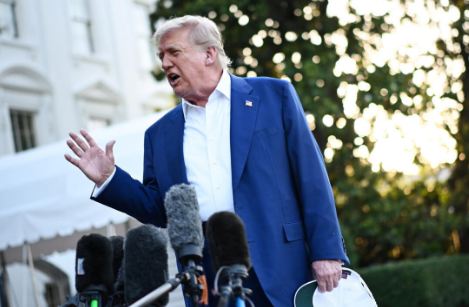
U.S. President Donald Trump, attending the summit, claimed credit for brokering the recent Israel-Iran ceasefire and suggested that a similar deal could be possible between Russia and Ukraine. However, the two conflicts are vastly different. While Israel and Iran had no territorial disputes, Russia is deeply entrenched in occupied Ukrainian land. Would Putin accept a truce without major concessions? Would Ukraine agree to any deal that compromises its sovereignty?

Trump’s assertion that he helped mediate the Israel-Iran truce has raised eyebrows, especially since both sides downplayed U.S. involvement. Still, his presence at the NATO summit adds an unpredictable element. Known for his unconventional diplomacy, Trump has previously claimed he could end the Ukraine war “in 24 hours.” If he re-enters the White House, will he push for a negotiated settlement—even if it means pressuring Ukraine to cede territory?

Some European leaders fear such an approach could reward Russian aggression. Yet, with Western support for Ukraine wavering and U.S. elections looming, NATO must consider all possible avenues—including backchannel diplomacy—to prevent a prolonged and unwinnable war.

The summit also highlights tensions within NATO itself. While Eastern European nations demand stronger commitments to Ukraine, others, like Hungary and Slovakia, oppose further escalation. The alliance must balance military support for Kyiv with the risk of direct confrontation with Russia.

A lasting solution will require more than just weapons—it needs a coherent diplomatic strategy. If NATO can leverage its collective strength to push for credible negotiations, this summit could mark a turning point. If not, the war will drag on, with devastating consequences for Ukraine and global security.

The Hague summit is a test of whether NATO can adapt to today’s geopolitical realities. The alliance must decide whether it is merely a military bulwark or a force for conflict resolution. While a breakthrough on Ukraine seems unlikely now, the groundwork for future talks must begin here. Otherwise, the world may face years more of war—with no end in sight.

Four killed in landmine blast in Upper Kurram district

Four killed in landmine blast in Upper Kurram district

PESHAWAR, Jun 25 (APP/DNA): Four people died and four others were seriously injured when a landmine exploded in the Pewar Sharamkhel area of Upper Kurram district on Wednesday.
According to police, the victims were collecting firewood in the mountains when they accidentally stepped on a landmine planted along their path.
 The injured were rushed to a nearby hospital and were currently receiving treatment.  
One of the survivors said, “We were gathering wood as usual when suddenly there was a loud blast. Everything turned chaotic, people were screaming and running for help.”
District Police Officer (DPO) Habibullah confirmed that initial investigations point to a landmine explosion. Police, bomb disposal experts and district officials have inspected the site and are gathering evidence.  
Local authorities called the incident “a plot to disrupt peace” in the region, while tribal leaders strongly condemned the attack and demanded justice
A search operation has been launched, and further investigations are ongoing.

NSA attends 20th meeting of SCO in Beijing

NSA attends 20th meeting of SCO in Beijing

ISLAMABAD, Jun 25 (DNA): National Security Advisor (NSA) attended the 20th meeting of the secretaries of the Security Council of Shanghai Cooperation Organization (SCO) Member States, being held on 24 June 2025 at Beijing, China.

According to a news release, during the visit, in addition to interacting with Chinese leadership, NSA delivered an important speech reiterating Pakistan’s stance on the global, regional situation and contributions to peace and security, besides meetings with key leadership of SCO countries to enhance bilateral and security cooperation.

As part of his engagements, NSA emphasized on Pakistan’s desire for a stable and peaceful neighborhood and its role as a Net Regional Stabilizer.

Israel-Iran truce – will it hold?

Israel-Iran truce – will it hold?

The recent truce between Israel and Iran, brokered by President Donald Trump, has brought temporary relief to a region on the brink of a devastating conflict. However, accusations of violations from both sides have emerged almost immediately after the ceasefire announcement, casting doubts on its sustainability. While the truce is undoubtedly in the interest of both nations and regional stability, its longevity remains uncertain given the deep-seated hostilities and mutual distrust.

The ceasefire came after a dangerous escalation, with Iran launching a direct attack on Israel and Israel retaliating with strikes on Iranian soil. Both nations claimed victory, but the reality appears more complex. Israel’s targeted strikes on Iranian nuclear sites were downplayed by US media reports, which suggested the facilities were inactive and suffered minimal damage. President Trump dismissed these reports as “fake news,” while Iran itself admitted that its nuclear sites were not completely destroyed, implying that work could resume within months.

This raises questions: Was Israel’s retaliation merely a face-saving move after feeling the heat of Iran’s attacks? Did both sides realize that further escalation would lead to unbearable losses, pushing them toward a truce despite their public posturing? Whatever the truth, the cessation of hostilities is a welcome development—but maintaining it will require more than just temporary restraint.

President Trump played a crucial role in de-escalating tensions, but his administration must now push for a more comprehensive peace effort, particularly in Gaza. Israel’s ongoing military operations have resulted in the deaths of countless innocent Palestinians, further fueling regional anger. If the US is serious about stability, it cannot ignore the Gaza crisis while focusing solely on Israel-Iran tensions.

A sustainable peace requires addressing the root causes of conflict—including Palestinian rights, Iran’s nuclear ambitions, and Israel’s security concerns. The Biden administration, if it returns to power, or a continued Trump presidency must ensure that this truce is not just a pause but a step toward lasting dialogue.

Despite claims of minimal damage, Iran’s nuclear program remains a significant concern. If Tehran can reactivate its facilities within months, the world may soon face the same crisis again. The international community, particularly the US and European powers, must enforce stricter monitoring and push for a verifiable freeze on Iran’s nuclear activities.

At the same time, Washington should avoid provocative rhetoric that could derail diplomacy. Trump’s aggressive stance may have forced Iran to the negotiating table, but only sustained engagement—not threats—will ensure compliance.

The Israel-Iran ceasefire is a fragile but necessary reprieve. Both nations must avoid further violations, and the US must expand its diplomatic efforts to include Gaza and broader regional stability. Another war would be catastrophic—not just for the Middle East, but for global security.

For now, the guns have fallen silent. The challenge is to ensure they stay that way.

Iran and India-Israel Nexus

Iran and India-Israel Nexus

Dr M Ali Hamza

The assassination of Iranian nuclear scientists and military leaders, widely attributed to Israel, suggests deep intelligence leaks within Iran’s security apparatus. Iran’s recent executions of alleged spies confirm internal breaches. While no direct evidence links India to these leaks, Iran’s growing distrust of foreign allies including those having strong ties with Israel, suggests vulnerabilities exploited by Israel. Let’s establish the case.

India has been using Iranian territory to conduct espionage and sabotage operations against Pakistan, particularly in the restive province of Balochistan. One of the most high-profile cases involves Kulbhushan Jadhav, a former Indian Navy officer arrested in Balochistan in 2016 after illegally entering from Iran.

Jadhav confessed to running an Indian spy network from Chabahar, Iran, tasked with destabilizing Pakistan through sabotage, funding separatists, and gathering intelligence on military installations. Jadhav admitted to operating under India’s Research and Analysis Wing (RAW) from Iran, where he established a business as cover.

His activities included recruiting Baloch insurgents and planning attacks on Pakistani infrastructure. In 2025, Pakistan detained another alleged Indian spy, Chakarwedi, near the Iran border. Like Jadhav, he reportedly used Iranian soil to orchestrate covert operations against Pakistan. While India denies these claims, the pattern of arrests and intelligence reports suggests a sustained covert campaign aimed at undermining Pakistan’s security.

It can be reasonably inferred that RAW has established an intelligence network in Iranapparently targeting Pakistan, but likely also gathering sensitive information about Iran and its strategic facilities. Over the past two decades, India’s foreign policy in West Asia has shifted considerably, with a marked deepening of ties with Israel and a more cautious transactional approach toward Iran.

Historically, India managed a careful balance between the two, but its growing strategic, military, and technological alignment with Israel combined with Iran’s increasing isolation under US sanctions and its pivot toward China has fuelled speculation that New Delhi may be sharing intelligence about Tehran with Tel Aviv. What fuels this speculation is the convergence of geopolitical interests and the visible tilt in India’s alliances, raising legitimate concerns about the scope and targets of its intelligence operations in the region.

India and Israel have developed a defence partnership, with Israel emerging as India’s second-largest arms supplier after Russia and India is Israel’s largest weapons buyer. Moreover, Al Jazeera’s investigative report revealed that Indian weapons firms also sold Israel rockets and explosives during the war in Gaza. The relationship extends beyond hardware sales to include joint operations, cyber security collaboration, and intelligence-sharing. Reports suggest that India’s RAW and Israel’s Mossad have a history of intelligence exchanges. Given Mossad’s extensive operations inside Iran, including assassinations of nuclear scientists and sabotage of facilities, it is plausible that India, with its diplomatic presence in Tehran, could provide supplementary intelligence. There are additional reasons that make this case more probable.

Both India and Israel view Iran-backed proxies; e.g., Hamas, Hezbollah, as security threats. India’s concerns about Iran’s influence in Afghanistan via the Taliban and Pakistan via Shia groups align with Israel’s broader regional confrontations with Tehran. India’s reliance on Iranian oil has diminished due to US sanctions, while its investments in Iran’s Chabahar Port have faced delays. Meanwhile, Israel has become indispensable for India’s defence modernization, supplying drones, missile systems, and surveillance technology used in conflicts like the 2019 Balakot airstrike as well as post Pahlgam war with Pakistan, this year.While Iran was once a critical oil supplier, India has diversified its energy imports. In contrast, Israel provides cutting-edge military tech that India cannot easily replace, incentivizing closer alignment.Iran’s growing partnership with China: including a 25-year strategic pact, and Russia has reduced its strategic value for India, which increasingly sees Israel and the US as more reliable partners. Moreover, India has distanced itself from a statement issued by the Shanghai Cooperation Organization (SCO) condemning Israeli airstrikes on Iranian territory. Indian Ministry of External Affairs saying it did not take part in the discussions that led to the joint remarks.

India’s large diaspora and trade ties with Iran could inadvertently facilitate intelligence gathering. Israeli operatives may leverage Indian businesses or contacts for information even without New Delhi’s explicit approval.Israel has a history of recruiting local assets in Iran, including through cyber-espionage and smuggling networks. If Indian nationals; e.g., traders, diplomats, were unknowingly used as sources, it could explain leaks without official complicity.Iran has executed alleged Mossad spies and cracked down on suspected infiltrators, reflecting paranoia about foreign intelligence penetration. While Tehran has not publicly accused India, its state media has framed the 2025 Delhi embassy blast as linked to Israeli-Iranian tensions, hinting at possible distrust of India’s neutrality. Further more, why Iran targeted Haisa in Israel?

India maintains an embassy in Tehran, giving it insights into Iranian activities. If Mossad sought logistical or human intelligence on high-value targets; e.g., nuclear scientists, IRGC movements, India’s diplomatic channels could be an indirect source. While no smoking gun confirms intelligence sharing, the depth of India-Israel collaboration combined with Mossad’s infiltration capabilities and Iran’s isolation makes the scenario plausible. Whether deliberate or incidental, India’s strategic choices may have indirectly aided Israel’s anti-Iran operations, even if official denials persist.This all indicates a possibility that India-Israel nexus has played a role in attacking Iran.

Stay Connected

64FansLike
60FollowersFollow

Latest Reviews

Exchange Rates

USD - United States Dollar
EUR
1.17
GBP
1.34
AUD
0.67
CAD
0.73