Home Blog Page 318

Finance Minister stresses focused reforms, strengthened governance

Finance Minister

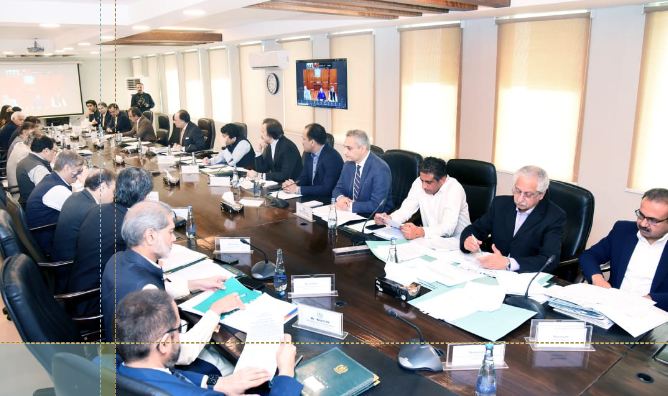
ISLAMABAD, JUN 27 /DNA/ – Federal Minister for Finance and Revenue Senator Muhammad Aurangzeb has reaffirmed the government’s commitment to strengthening the governance, operational efficiency, and financial sustainability of key public sector entities.

Chairing a meeting of the Cabinet Committee on State-Owned Enterprises (CCoSOEs) today, the Finance Minister stressed the importance of aligning business plans with national priorities and addressing operational challenges in a timely and coordinated manner. Federal Minister for Power Sardar Awais Ahmed Khan Leghari, Minister for Maritime Affairs, Muhammad Junaid Anwar Chaudhry, Minister for Science and Technology Khalid Hussain Magsi and senior officials from relevant Ministries and Divisions attended the meeting.

The Committee heard a detailed briefing from the Central Monitoring Unit of the Finance Division on a biannual report on the Federal SOE Performance covering the period from July 2024 to December 2024. The report included a detailed overview of the state of affairs and key challenges confronting State-Owned Enterprises (SOEs), including cumulative losses amounting to Rs 5.8 trillion, with Rs 342 billion incurred in just six months.

The Committee was told that the circular debt in the oil, gas, and power sectors had crossed Rs 4.9 trillion, severely affecting cash flows and asset valuations. The government’s fiscal support to SOEs—through grants, subsidies, loans, and other injections—had also exceeded Rs 600 billion in six months, equivalent to nearly 10% of total revenue receipts. In addition, unfunded pension liabilities in DISCOs and other SOEs, estimated at Rs 1.7 trillion, remain off the books, as do railways’ pension obligations, the meeting was told.

It was also highlighted that government guarantees currently stand at Rs 2.2 trillion, while rollover costs and financial restructuring liabilities further compound fiscal pressures. Governance concerns persist, with low levels of transparency in beneficial interest disclosures under IFRS Section 30 and other compliance gaps. The lack of strategic alignment in business plans and operational inefficiencies across SOEs were identified as critical areas requiring urgent reform.

The Cabinet Committee noted with concern the staggering cumulative losses of SOEs amounting to Rs 5.8 trillion, with Rs 342 billion incurred in just the last six months—equating to a daily loss of Rs 1.9 billion. The Chair emphasized that issues such as inefficiencies in DISCO operations, slow network upgrades by NTDC, unfunded pension liabilities, and low governance standards continue to erode fiscal space and undermine investor confidence.

The Chair also stressed the importance of timely reforms, particularly in the power and energy sectors where circular debt has crossed Rs 4.9 trillion, and reiterated the government’s resolve to bring greater transparency, financial discipline, and accountability to the SOE landscape.

The chair also emphasized the directors representing the government on the boards of State-Owned Enterprises must exercise due diligence and play an active role in safeguarding the financial health and operational performance of these entities through informed and responsible input.

During the meeting, separate summaries submitted by the Power Division for appointment of Chairman on the Quetta Electric Supply Company (QESCO) Board; constitution of the Board of Directors of the Independent System Market Operator (ISMO); appointment of Independent Director/Chairman on the Board of Gujranwala Electric Supply Company (GEPCO) and Independent Director on GENCO Holding Company Limited (GHCL), submitted by the Power Division; and nomination of Independent Directors on the Board of Multan Electric Power Company (MEPCO), Power Information Technology Company (PITC), and constitution of the Board of Energy Infrastructure Development and Management Company (EIDMC), were also discussed and approved.

Additionally, a summary moved by the Ministry of Railways for winding up of three railway companies—RAILCOP, PRACS, and PRFTC was also discussed and approved.
ECC Approves TSGs for Various Projects, Natural Gas Pricing Structure for FY2025-26

ECC Approves TSGs for Various Projects, Natural Gas Pricing Structure for FY2025-26

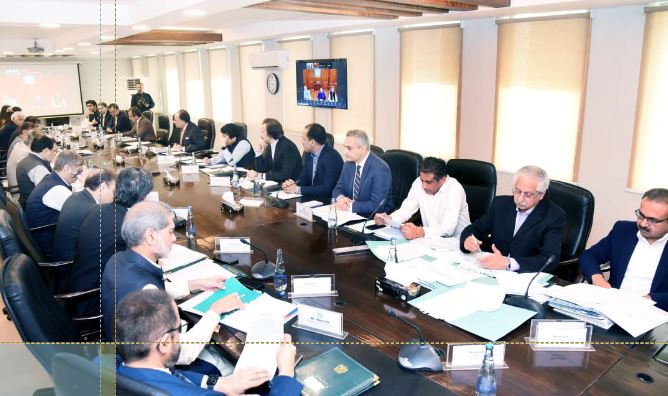
ISLAMABAD, JUN 27 /DNA/ – The Economic Coordination Committee (ECC) of the Cabinet met today under the chairmanship of Federal Minister for Finance and Revenue, Senator Muhammad Aurangzeb.

The meeting was attended by several key federal ministers, including Minister for Power, Sardar Awais Ahmed Khan Leghari, Minister for Petroleum Ali Pervaiz Malik, Special Assistant to the Prime Minister on Industries and Production Haroon Akhtar Khan, and senior officials from various ministries and divisions were also present.

During the meeting, the ECC reviewed and approved several Technical Supplementary Grants (TSGs) to meet the cost of ongoing projects and initiatives from different ministries and divisions during the current financial year 2024-25 as per following details:

Rs 15.839 billion TSG for the Ministry of Defence to cover the shortfall in admissible pay and allowances, in employees-related and non-employees related expenditures and clear the outstanding dues as part of the PM’s Package for the martyrs of the recent Pak-India war.

Rs 63 million TSG for Finance Division to cover the shortfall under unavoidable and mandatory expenditures on account of rent for office and residential buildings of the Department of the Auditor General of Pakistan during the current FY2024-25.

Rs 829.67 billion TSG and Rs. 1,774.20 billion TSG for Finance Division for repayment of domestic debt and for foreign loan repayments respectively.

Rs 100 million TSG for Ministry of Foreign Affairs to meet the expenditure under the Head of Account “Other Delegation Abroad” during the current FY2024-25.

Rs 1.765 billion TSG for Ministry of Interior & Narcotics Control to meet the operational requirements as well as to clear the outstanding/pending liabilities of the Frontier Corps KP (North and South) and Frontier Corps Balochistan (North & South) during the current FY2024-25.

Rs 300 million TSG for Ministry of Interior & Narcotics Control to clear outstanding liabilities under various Heads of Account of the ICT Police during the current FY2024-25.

Rs 100 million TSG for Ministry of Interior & Narcotics Control to clear the outstanding liabilities of various vendors provided services and supplies during the law and order situations in the ICT region during the current FY2024-25.

Rs 52.241 million TSG for Ministry of Interior & Narcotics Control to meet the cost of up-gradation/uplifting and availability of latest investigation equipment and friendly environment at ICT Police stations during the current FY2024-25.

Rs 100 million TSG for Ministry of Interior & Narcotics Control in respect of Frontier Corps KP (North) during the current FY2024-25.

Rs 5.5 billion TSG for Strategic Plans Divisions as rupee cover to Pakistan Space & Upper Atmosphere Research Commission (SUPARCO) during CFY 2024-25.

Rs 117.97 million TSG for Petroleum Division to meet the cost of PSDP project titled ‘Expansion & Up-gradation of Pakistan Petroleum Corehouse during the current FY2024-25.

Rs 254.57 million TSG for Finance Division for onward release to Government of Balochistan in terms of incentive package for PAS/PSP officers posted under it.

Rs. 198 million TSG for Ministry of Interior and Narcotics Control for repair and maintenance of the Executive Building, Islamabad.

Besides the TSGs, the ECC took up a summary submitted by the Petroleum Division, seeking approval for a revised natural gas pricing structure for the fiscal year 2025–26, to take effect from July 1, 2025.

Under the OGRA Ordinance, the federal government is required to notify revised consumer gas prices within 40 days of OGRA’s determination to ensure cost recovery and regulatory compliance. The submission also aligns with structural benchmarks agreed with the International Monetary Fund (IMF), including rationalization of captive power tariffs and a shift from cross-subsidies to direct, targeted support for low-income consumers.

The ECC considered the proposed adjustments in energy sector tariffs and decided to maintain gas prices to protect household consumers with only fixed charges re-adjusted in domestic sector to recover the asset costs. It also allowed price of gas for bulk consumers, power plants operating on natural gas and industry to be increased by an average value of around 10%.

The ECC also considered a proposal brought on by the Ministry of National Food Security and Research (MNFSR) for import of sugar to stabilize the sugar prices. The ECC discussed the summary and approved the proposal of the Ministry for constitution of a 10-member steering committee led by Federal Minister for MNFSR and including Federal Minister for Commerce, SAPM to Ministry of Foreign Affairs, Secretary Finance Division, Chairman FBR and others to come back to the ECC with their recommendations on the matter.

The ECC also discussed a summary by the Finance Division regarding changes in the home remittances incentive schemes, and tasked the State Bank of Pakistan and the Finance Division to propose and present a proper plan by 31st July to ECC, ensuring impact analysis and a roadmap for a properly-managed transition

The Cabinet body also considered a summary by the Finance Division for the launch of a risk coverage scheme for small farmers and under-served areas, and accorded in-principle approval to the proposal with instructions for further fine-tuning and incorporating in it additional safeguards before its planned launch on 14th August 2025. The ECC was told that the scheme would likely bring 750,000 new agricultural borrowers into the formal financial system and generate an incremental credit portfolio of Rs 300 billion during its disbursement tenure of 3 years from FY 26 to FY 28. The budgetary requirement for meeting risk coverage and operational cost of the banks is estimated to be Rs 37.5 billion, spread over FY 27 to FY 31.

Japan donates 92 books to Pakistan’s NUTECH to boost ties

Japan donates 92 books to Pakistan’s NUTECH to boost ties

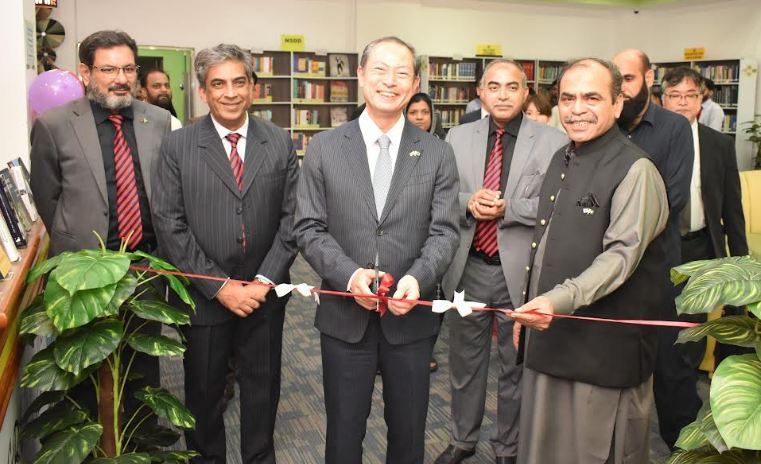
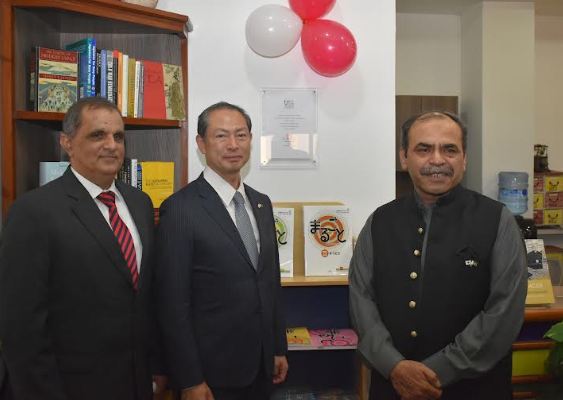
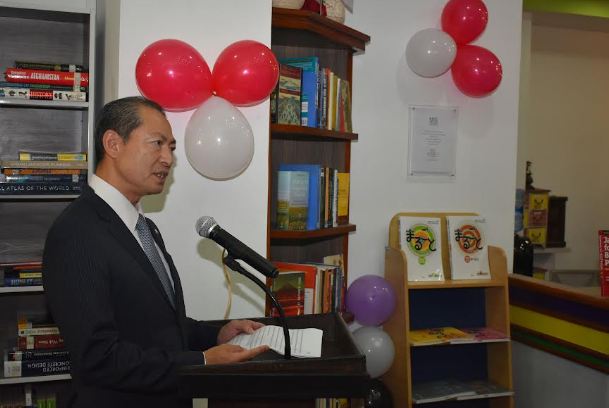
ISLAMABAD, JUN 27 /DNA/ – The Embassy of Japan in Pakistan, in collaboration with the Nippon Foundation, has donated a collection of 92 books on Japan to the National University of Technology (NUTECH) Islamabad as a part of the “Read Japan Project” aimed at fostering a deeper understanding of Japan’s rich culture, politics and economics through books.

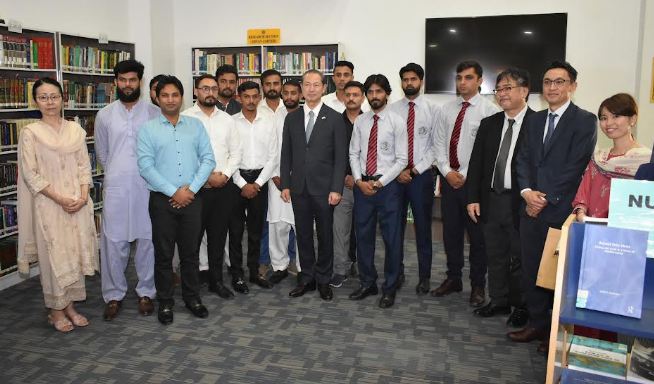
AKAMATSU Shuichi, the Ambassador of Japan to Pakistan, on behalf of the Nippon Foundation, presented the books to Rector NUTECH, Lt. General (Retd) Mr. Moazzam Ejaz at a ceremony held on Friday June27 at the university premises. The 92carefully selected books in English language cover a range of topics related to Japan such as history, politics, economy, security, philosophy, literature, art and culture.

Speaking on the occasion, H.E. Ambassador AKAMATSU congratulated the students and teachers for receiving this valuable gift from the Nippon Foundation and expressed the hope that with these books, students, faculty members, and intellectuals will have more fascinating information on Japan as these books are windows into Japan’s rich history, vibrant culture, advanced technology, and unique values.

The Ambassador appreciated the services rendered by NUTECH for offering not only the degree programs but also vocational training and language courses and has cultivated talented students, contributing to Pakistan’s human capital. He said that NUTECH’s relationship with Japan is noteworthy as it’s a registered organization which is sending interns for Japan’s Technical Intern Training Program (TITP). “I believe that NUTECH is playing a pivotal role in people-to-people exchange between Japan and Pakistan,” said the Ambassador.

In his remarks, the Rector NUTECH Lt. General (Retd) Moazzam Ejaz thanked the Nippon Foundation  and the Embassy of Japan for their generous gift of knowledge, expressing hope that the students will use this opportunity to learn about Japan and strengthen future Japan-Pakistan bilateral relations.

The “READ JAPAN PROJECT” was initiated by the Nippon Foundation in 2008 to promote the understanding of Japan through the donation of Japan related books in English to universities and libraries around the world.

CJCSC visits Australia for 14th Defence, Security Talks

CJCSC

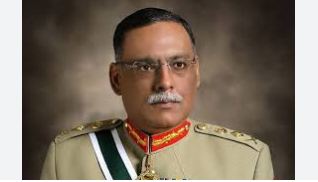
Rawalpindi, JUN 27 /DNA/ – General Sahir Shamshad Mirza, NI (M), Chairman Joint Chiefs of Staff Committee (CJCSC) visited Australia to attend 14th session of Annual Defence and Security Talks.

During the visit, Chairman JCSC met high ranking civilian and military leadership of Australia including Admiral David Johnston, Chief of Defence Forces, Mr Andrew Shearer, Director General Office of National Intelligence (ONI), Lieutenant General Simon Stuart, Chief of Australian Army and Ms Gemma Huggins, Ambassador Counter Terrorism at Department of Foreign Affairs and Trade.

Defence and Security Talks aimed at strengthening mutual understanding and identifying areas for further expanding defence collaboration between the respective militaries. During the meetings, both sides engaged in discussions on wide range of issues including evolving global and regional environment, security challenges and opportunities to enhance existing bilateral military exchanges.
During the visit, CJCSC delivered a lecture in Australian Defence College (ADC) on Pakistan’s Security Perspective and highlighted Pakistan’s contributions to regional peace and stability; and also visited Australian naval ship HMAS Adelaide.
Earlier upon arrival at CDF office, a smartly turned-out tri-services contingent presented guard of honour to CJCSC.

UN Women, Ministry of Hunman Rights inaugurate the renovated shelter home

UN

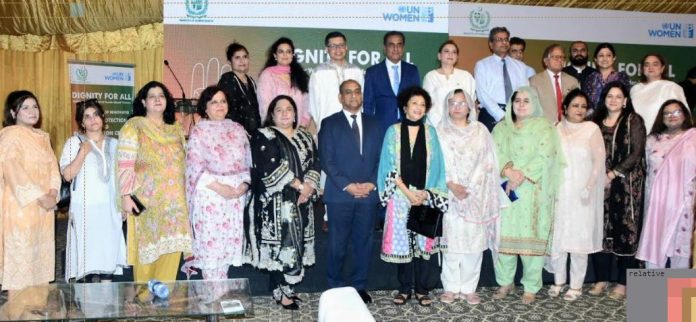
ISLAMABAD, JUN 27 /DNA/ – UN Women, in partnership with the Ministry of Human Rights, has completed the refurbishment of the Family protection and rehabilitation center in Islamabad. This initiative marks a substantial upgrade in the center’s capacity to deliver high-quality, survivor-centered services in a safe, confidential, and dignified environment.

The refurbishment was undertaken under the Essential Services Package (ESP) initiative, with support from the Department of Foreign Affairs and Trade (DFAT), Australia. The ESP aims to provide a coordinated set of essential, multisectoral services to survivors of violence, aligned with international human rights standards and global best practices.

Speaking at the occasion, Mr. Jamshed Kazi, UN Women Country Representative, emphasized the importance of the initiative, “The refurbishment of the Family protection and rehabilitation center is not just about infrastructure, it represents a crucial link in a wider ecosystem of support for survivors of gender-based violence. When combined with legal reforms, institutional capacity building, and community engagement, initiatives like this can catalyze systemic change. Our aim is to ensure that every survivor, regardless of where they are in Pakistan, has access to quality, coordinated services that uphold their dignity and rights.”

The upgraded facility now features improved infrastructure, private consultation rooms, and integrated service delivery including medical care, psychological counseling, legal assistance, and safe referrals—all under one roof. The enhancements aim to ensure survivors are not only supported but also empowered through every stage of recovery and justice-seeking.

Mr. Azam Nazir Tarrar, Federal Minister for Human Rights, underscored the value of strong partnerships in addressing GBV, “We are grateful to UN Women for its continued partnership in strengthening Pakistan’s response to gender-based violence. This initiative reflects our shared commitment to improving essential services for survivors, particularly the most vulnerable. The upgraded Family protection and rehabilitation center will allow us to respond more effectively, ensuring dignity, safety, and support for every woman and child who seeks help

This joint effort is part of a broader strategy to strengthen Pakistan’s national response to GBV, focusing on survivor-sensitive case management, improved coordination among service providers, and building institutional capacity. UN Women continues to work with federal and provincial authorities to scale up access to essential services across the country.

Through this initiative, UN Women and the Ministry of Human Rights reaffirm their commitment to a Pakistan where survivors of GBV are supported, protected, and empowered—with access to justice, healing, and a future free from violence.

Gender-based violence (GBV) remains a critical human rights issue in Pakistan and globally, with nearly one in three women worldwide affected, according to UN Women. In Pakistan, over 63,000 cases were reported between 2020 and 2023, the majority involving domestic violence. These figures likely underrepresent the true scale, as many survivors face stigma, fear of retaliation, and limited access to support. GBV not only endangers lives but also restricts women’s participation in education, employment, and public life. Addressing it requires both legal reform and practical support services. Facilities like the Family protection and rehabilitation Center play a vital role by offering integrated, survivor-focused care—providing safety, dignity, and critical services under one roof to help women and children rebuild their lives.=DNA

============

Iranian envoy thanks Pakistani journalists, columnists for extending supporting during war 

 From our Correspondent

PESHAWAR, June 27: Consul General of Iran in Peshawar, Ali Banafahekhah, expressed his gratitude to Pakistan’s prominent journalists and columnists for their writings in support of Iran. He commended their acknowledgment of Iran’s resilience and steadfast spirit in confronting imperialistic powers.

He expressed these views while talking to a five-member delegation of the Abasin Columnists Association (ACWA) which called on him on Thursday under the leadership of its President, Zia-ul-Haq Sarhadi

The delegation members included General Secretary Abid Akhtar Hassan, Finance Secretary Waseem Shahid, Legal Advisor Sahibzada Talha Saeed Advocate and Member of the Executive Committee Aurangzeb Ahmed.

The delegation extended heartfelt congratulations to the Supreme Leader of Iran, Ayatollah Khamenei, the people and the government of Iran on the recent victory against the economic forces of the Islamic Republic of Iran.

On this occasion, Zia-ul-Haq Sarhadi said that the hearts of the people of Pakistan and Iran beat together, and Iran’s victory is actually the victory of the Muslim Ummah.

Iran’s courage, independence, spirit of martyrdom and services for the exaltation of the religion of Islam are commendable.

The Consul General of the Islamic Republic of Iran said that the way Pakistani writers and penmen have encouraged Iran in recent days, we are deeply grateful to them.

Iran and Pakistan are connected to each other in terms of civilization, values, history and culture. We both have the same goal and that is the exaltation of the clear religion of Islam.

He called the unity, solidarity, brotherhood and sincerity of the Muslim Ummah indispensable and said that the most important requirement of the time is that we unite and organize ourselves to stand firm against imperialistic powers and become an invincible force and make it clear to the world that we are one and will not hesitate to make any sacrifice for our survival and the exaltation of Islam.

The Consul General thanked the delegation and said that this success is the success of the entire Muslim Ummah and especially of this region.

“This war has brought both countries and nations of Pakistan and Iran closer. We are deeply grateful for the bravery with which the Pakistani government and people have expressed solidarity with Iran in this difficult time,” Iranian diplomat added.

Ziaul Haq Sarhadi and the delegation members thanked Consul General Ali Banafahekhah and assured all possible cooperation from their association.

PM urges unity, collective efforts for country’s economic development

PM

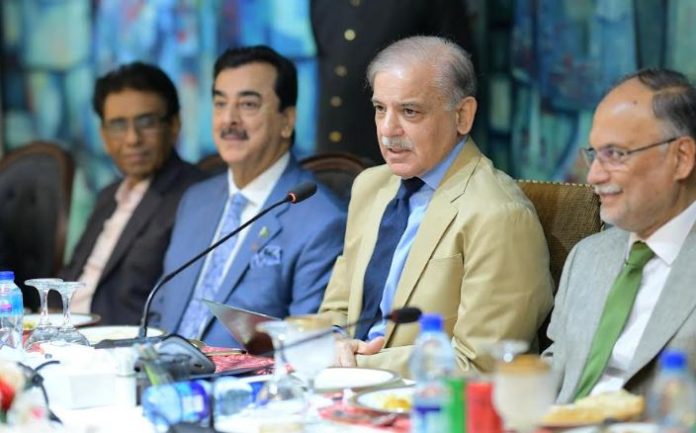
          ISLAMABAD, Jun 27 (DNA): Prime Minister Shehbaz Sharif on Friday appreciating the economic team and the coalition parties for their hard work and support in the passage of annual budget 2025-26 through the parliament, called for replicating a similar exemplary unity and efforts to achieve national economic development.

“Now, we must all work together day and night for Pakistan’s economic progress. I firmly believe that this exemplary unity will ensure Pakistan’s economic uplift,” he said in a meeting with members of the Senate and National Assembly after the approval of budget 2025-26, according to a PM Office press release.

He said the economic team worked tirelessly to prepare a people-friendly budget and also thanked the allied parties whose consultations helped shape a budget as per the public aspirations.

Discussing the regional situation, he said Allah Almighty had granted Pakistan a splendid victory in response to India’s recent unprovoked aggression against Pakistan. 

The Pakistan armed forces, the entire political leadership, the public, civil society, and the media unitedly thwarted the enemy’s evil designs. Pakistan’s victory has elevated its stature among the comity of nations, he added.

He told the parliamentarians that under the leadership of Chairman of Pakistan Peoples Party Bilawal Bhutto Zardari, the diplomatic delegation effectively highlighted Pakistan’s stance and exposed India’s malicious intentions toward Pakistan on the global stage.

He stated that the multi-party delegation was warmly received internationally, and overseas Pakistanis also enthusiastically greeted them, offering heartfelt tributes to the government and Pakistan armed forces over diplomatic and military triumph.

Coming to recent Israel’s aggression against Iran, Prime Minister Shehbaz said that Pakistan expressed solidarity with the Iranian government and its people at every level.

“I was in constant contact with the Iranian leadership, particularly President Dr. Masoud Pezeshkian, during the conflict. The resolution of Israel-Iran conflict will open avenues for peace and prosperity in the region,” he remarked. 

Chairman of Senate Syed Yousuf Raza Gilani, members of the federal cabinet as well as the Senate and National Assembly attended the meeting.=DNA

Naval Chief addresses participants at PN War College Lahore

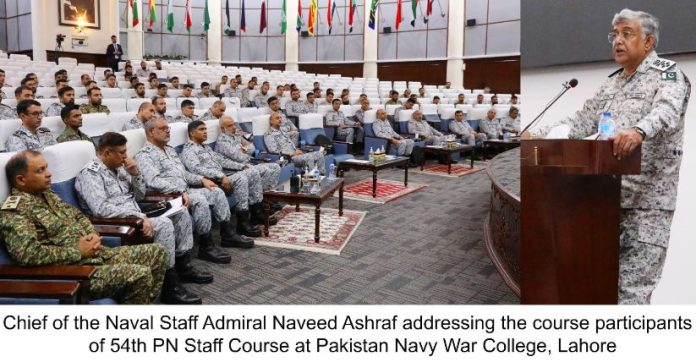
LAHORE, JUN 27 /DNA/ – Chief of the Naval Staff Admiral Naveed Ashraf visited Pakistan Navy War College, Lahore, and addressed the participants of 54th PN Staff Course. While appreciating their efforts, he underscored the importance of understanding the evolving nature of modern warfare and emerging maritime security threats. He emphasized that traditional military strategies must adapt to effectively address the complexities of contemporary security challenges, both traditional and non-traditional.

The Naval Chief, while elaborating on the maritime challenges facing Pakistan and available response options, remarked that the Indian Ocean Region (IOR) remains fluid and contested. He highlighted that new geopolitical realignments and ongoing power rivalries in the region continue to affect security environment in the IOR. The recent crises between Pakistan and India, as well as the 12-day conflict between Iran and Israel, serve as testimony to this dynamic environment. He stated that the conventional, one-dimensional study of warfare is now outdated. Winning future wars demands not only a re-evaluation of legacy warfighting strategies, but also the development and maintenance of a future-ready workforce that is intellectually astute and technologically proficient.

In conclusion, Chief of the Naval Staff congratulated graduating officers on successful completion of the PN Staff Course and encouraged them to be meticulous, analytical, and innovative in their forthcoming appointments.

A Ray of hope for Gaza – but the road ahead demands justice

Gaza

The announcement that the Gaza war may finally end in two weeks, following an agreement brokered between U.S. President Donald Trump and Israeli Prime Minister Benjamin Netanyahu, brings a much-needed sigh of relief. If this holds, it could mark the beginning of the end of one of the most brutal chapters in recent Middle Eastern history. All’s well that ends well, as they say—but only if this ceasefire translates into lasting peace, justice, and dignity for the Palestinian people.

The reported deal, which includes a full cessation of hostilities and a humanitarian pause, is a welcome step. However, past ceasefires have collapsed, and the devil will be in the details. Israel’s insistence on the removal of Hamas from Gaza raises critical questions—how will this be enforced without further bloodshed? Will ordinary Gazans, already displaced and traumatized, face collective punishment under the guise of rooting out militants? The international community, particularly the U.S., must ensure that no Palestinian is forcibly expelled under false pretexts. Gaza’s civilians must not pay the price for political vendettas.

Reports suggest that the United Arab Emirates (UAE) and Egypt may take temporary control of Gaza’s administration. While this could prevent an immediate Israeli reoccupation, it must not become a disguised form of occupation by proxy. Any transitional authority must prioritize Palestinian self-determination, not merely serve as a security arrangement for Israel. The people of Gaza deserve a leadership that represents their aspirations, not another foreign-imposed structure that perpetuates their subjugation.

If Trump truly wants to leave a legacy of peace, the next logical step should be U.S. recognition of Palestine as an independent state. Such a move would not only restore America’s credibility in the Muslim world but also pressure Israel to engage in meaningful negotiations. If achieved, Trump would indeed deserve serious consideration for the Nobel Peace Prize—a recognition that has eluded him despite his earlier Middle East diplomatic efforts.

Interestingly, Trump has previously expressed willingness to mediate on Kashmir, much to India’s discomfort. While internal U.S. political pressures may have deterred him, a successful Gaza deal could embolden him to play a similar role in South Asia. The parallels are striking—both conflicts demand impartial mediation, humanitarian relief, and a commitment to justice. If Trump can break the Gaza deadlock, why not Kashmir?

The coming days will reveal whether this agreement is genuine or merely another temporary lull. The world must ensure that Gaza’s reconstruction begins immediately, that Palestinian rights are upheld, and that no more families are torn apart by war. Trump has a historic opportunity—if he ensures Palestinian freedom, not just a ceasefire, his place in history will be secured.

For now, we can only hope that this is not another false dawn. The people of Gaza have suffered enough. Peace must not just be promised—it must be delivered.

Ethiopia, Italy discuss cooperation

Italy

ISLAMABAD, JUN 27 /DNA/ – The Federal Democratic Republic of Ethiopia (FDRE) and the Republic of Italy have discussed cooperation to engage the leadership of Pakistan for the 2nd United Nations Food Systems Summit Stocktake (UNFSS+4).

The UNFSS+4, co-chaired by Ethiopia and Italy, will take place in Addis Ababa, Ethiopia, from July 27-29, 2025.

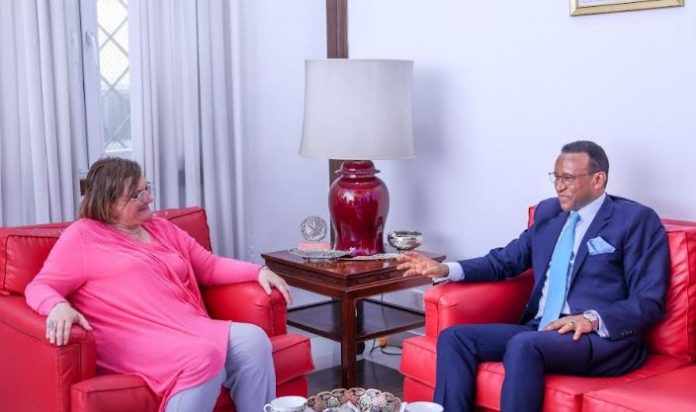
To this end, H.E. Dr. Jemal Beker Abdula, Special Envoy and Ambassador Extraordinary and Plenipotentiary of Ethiopia, met with H.E. Marilina Armellin, Ambassador of Italy in Pakistan, at the Italian Embassy Islamabad.

They discussed matters of mutual interests, including bilateral and multilateral cooperation in trade, investment, food security, energy, and connectivity.

 Both Ambassadors emphasized their shared commitment to transforming food systems for enhanced food security worldwide and in their respective countries as well.

Ambassador Dr. Jemal briefed the Italian Ambassador on the Ethiopian Embassy’s efforts to engage the Government of Pakistan for participation of its leadership in UNFSS+4.

He highlighted that preparations for hosting the summit in Addis Ababa are well underway. “The summit will provide a crucial platform to reflect on past efforts and foster increased collaboration to build robust and transformed food systems,” he remarked.

He also informed the Ambassador about Ethiopia’s commitment to green economic development and food self-sufficiency, citing initiatives like the Green Legacy Initiative, the Grand Ethiopian Renaissance Dam, and the Bounty of Basket program.

The Ambassador of Italy, on the other hand, reiterated the Italian Government’s strong support to the United Nations’ Sustainable Development Goals.

She reiterated Italy’s commitment to strengthen bilateral and multilateral cooperation with Ethiopia, acknowledging significant steps taken by Ethiopia to address climate change, achieve food security, and promoting green economic development.

H.E. Ambassador Marilina Armellin assured H.E. Ambassador Dr. Jemal of her full support in contributing to the success of UNFSS+4.

A day earlier, H.E. Ambassador Dr. Jemal Beker met with H.E. Mr. Mohamed Yahya, Resident Coordinator of the United Nations in Pakistan and discussed cooperation to this end.=DNA

PODA, its partners join hands to spread health, hygiene awareness

PODA

RAWALPINDI, JUN 27 /DNA/ – Thursday, 26 June 2025 – To support a youth-led campaign titled “Her Health, Her Rights,” PODA, in collaboration with the District Population Office Rawalpindi, organized an awareness session for more than 60 male and female students, focusing on female hygiene—particularly menstrual, sexual, and reproductive health. The session was held at the KIOCA Seminar Hall of PMAS Arid Agriculture University, Rawalpindi.

Representing PODA, Nabeela Aslam briefed the participants about PODA’s work for the protection and promotion of the rights of women, youth, persons with disabilities (PWDs), and other marginalized segments of society, with a special focus on the rights of rural women in Pakistan. She highlighted PODA’s flagship Annual Rural Women Leadership Training Conference, which will mark its 18th year of celebration this year. She also shared observations from the ongoing three-year project “Reduce Early Marriages to Enhance Gender Equality,” supported by the Norwegian Embassy in Islamabad. Through this project, a wide range of awareness activities on sexual and reproductive health and rights (SRHR) are being conducted at various levels—from schools to key district government departments, including health, education, population, social welfare, and local government institutions.

During the session, she presented an oral testimony of a Grade 8 student suffering from severe health complications due to early marriage, with her kidneys now on the verge of failure. The girl faced immense physical strain as a result of being married at a young age. Nabeela Aslam also highlighted critical issues related to menstrual hygiene, including the inappropriate use of sanitary pads and unhygienic practices that lead to infections. She pointed out that many girls stop drinking water and avoid bathing during their periods, which further contributes to health problems. She emphasized the increasing cases of urinary tract infections (UTIs) caused by poor menstrual hygiene.

Representing the District Population Office, Dr. Anaam Mushtaq, Women’s Health Officer at the Family Health Clinic, Benazir Bhutto Hospital, Rawalpindi, gave a detailed presentation on urinary tract infections (UTIs) and sexually transmitted infections (STIs). She emphasized the importance of improved hygiene practices, describing them as the foundation of women’s health.

In response to a question about how one can identify reproductive health issues, she explained that it is important to understand your body and be aware of its normal conditions. This self-awareness helps in detecting abnormalities related to reproductive tract infections (RTIs) and breast health.

The participants raised various questions on period-related cramps and pain, irregular menstrual cycles, and infections such as RTIs and UTIs. Dr. Mushtaq explained that if RTIs and UTIs are left untreated for an extended period, they can become more serious, spreading to other reproductive organs and potentially leading to kidney failure. She also clarified that not all RTIs are sexually transmitted infections (STIs).

The speakers emphasized the importance of menstrual hygiene, proper nutrition, and adequate hydration to prevent urinary tract infections (UTIs). They urged participants to drink plenty of water and urinate frequently as key measures to avoid UTIs. Proper hygiene of the private parts was also stressed, including thoroughly washing and cleaning to prevent fecal matter from reaching the vagina. The discussion further included anemia and the role of balanced nutrition in maintaining overall reproductive health.

The group coordinator, Asad Hayat, sought support from the Director of Student Affairs and the Aridian Health Care Society (AHCS) of PMAS Arid Agriculture University. Both warmly welcomed the initiative and actively mobilized their students to participate in the session. Group members included Rohma Rauf, Nisha Ilyas, and Junaid Zahid.

The group received appreciation for their effort to involve men in learning about female reproductive health and the consequences of delayed or inadequate treatment. They explained that through their initiative, “Her Health, Her Right,” they aimed to break the stigma surrounding open discussions on women’s health, particularly menstruation and its management. They emphasized that lack of awareness and proper information can lead to serious health complications for women.=DNA

Stay Connected

64FansLike
60FollowersFollow

Latest Reviews

Exchange Rates

USD - United States Dollar
EUR
1.17
GBP
1.34
AUD
0.67
CAD
0.73