Home Blog Page 316

Morocco: Tourism Sector Revenues Reach $3.7 Billion in 5 Months

Tourism

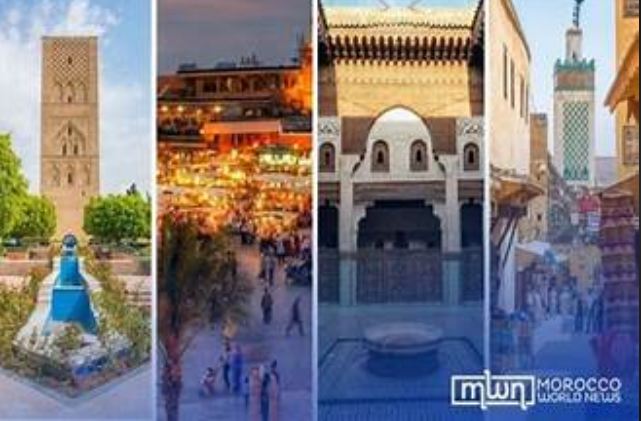
RABAT, JUN 25 (DNA): The Moroccan Ministry of Tourism announced that the tourism sector generated revenues estimated at 34 billion dirhams (about $3.7 billion) during the first five months of this year, an 8 percent increase compared to the same period last year.

Fatima Zahra Ammor, Moroccan Minister of Tourism, Industry, Handicrafts, Social and Solidarity Economy, said that the number of overnight stays during the same period reached 11.8 million, a 13 percent increase, while the number of tourists who visited Morocco during the same period reached 7.2 million, a 22 percent increase compared to last year.

She emphasized that the ministry is continuing work on the strategic roadmap for the tourism sector for 2023-2026, for which a budget of 6 billion dirhams has been allocated.

This is implemented through a number of axes, including promoting and revitalizing air transport, and enhancing investment in tourist accommodation and entertainment.

Why Inclusion Must Be More Than a Promise?

Why Inclusion Must Be More Than a Promise?

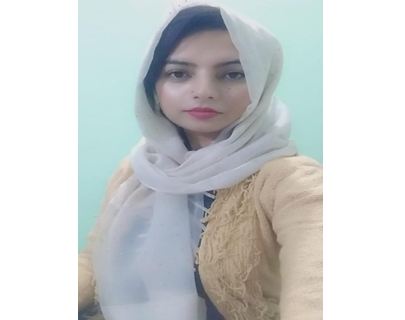
Amina A Ghafoor

Manager Sales Technical & Commercial-BEE, MSPM 

I recently attended a professional development event that brought together a diverse group of attendeesmen and women from a range of industries and backgrounds. At first glance, the gathering appeared to reflect progress: inclusion, diversity, and collaboration. However, what unfolded during the session left me disheartened and frustrated. It served as a reminder that while there is visible respect for women in professional spaces, true inclusivity especially in practice still has a long way to go.

The session, unfortunately, was poorly planned. Although women were part of the audience, every activity, example, and interaction seemed to be designed exclusively with men in mind. From the outset, it was clear that no thought had been given to creating an inclusive environment. As a woman in attendance, I felt not only excluded but deeply uncomfortable. The discomfort didn’t stem from being in the minority, which is a familiar experience for many women in male-dominated fields like engineeringbut from the blatant disregard for gender sensitivity.

Throughout the session, patriarchal jokes were made, often at the expense of women. These jokes were not harmless or funny; they were offensive, tone-deaf, and completely inappropriate for a professional setting. What was more disturbing was the casualness with which they were delivered, and the laughter that followed from the majority of the male participants. The few women present accomplished, experienced professionalswere visibly uneasy, their confidence clearly shaken. Some made efforts to engage, but gradually withdrew as the environment did not foster equal participation. There were a handful of men who noticed the imbalance and tried to advocate for fairness and respect. But they were quickly dismissed or silencedeither directly or indirectlyby the dominant group, which seemed uninterested in examining its behavior. This experience was a powerful and painful reminder of why gender equity remains such a critical and urgent issue in our society, particularly in professional environments.

In sectors like engineering and technology, where women remain significantly underrepresented such experiences can be especially disheartening. They echo the early challenges many women face in their careers: often being the only woman in the room, constantly needing to prove their capabilities, working twice as hard to gain recognition, and confronting biases rooted in gender rather than merit.

There is often hope that things are moving in the right direction, that professional spaces are becoming more inclusive and equitable. Many individuals actively foster such environments by mentoring young women, advocating for diversity, and ensuring that all voices are heard and respected, regardless of gender. Yet, experiences like this serve as a sobering reminder that progress is not as widespread as it may seem. The attitudes encountered are not isolated incidents; they remain deeply ingrained in many areas of professional culture.

What’s most disheartening is recognizing that many young women entering the workforce today continue to face the same challenges that previous generations encountered. Despite progress in certain areas, the underlying structures of bias and inequality remain largely intact. This ongoing reality is not only disappointing, it’s deeply discouraging.

We must understand that the gender gap isn’t something that can be closed through token gestures or one-time diversity initiatives. It requires sustained, systemic change. And the first step toward that change is acknowledging that the problem exists. Too often, we dismiss concerns about gender bias as exaggerated or irrelevant. But those of us who experience it know the reality all too well.

In societies like ours, where patriarchal norms are deeply entrenched, the burden of change cannot rest solely on the shoulders of women. Men, especially those in leadership positions, must become active participants in the movement toward gender equity. They must be willing to listen, to learn, and to challenge the behaviors and attitudes that perpetuate inequality.

Achieving gender equity is not just a matter of social justice, it is an economic imperative. In a country grappling with economic instability, the exclusion of women from key industries and leadership roles is not just unjust, it is inefficient. We cannot afford to ignore the contributions of half our population. When women are empowered to participate fully in the economy, societies thrive. Yet, with such a slow pace of gender awareness and inclusivity, we are stalling our own development.

It is time to move beyond surface-level solutions and commit to deep, meaningful change. Gender awareness and sensitivity must be integrated into every realm of societyespecially in education, industry, and policy. Gender studies should be a compulsory subject from school through university just like our religious studies. Early education plays a critical role in shaping mindsets. Instilling in children the importance of valuing all genders equally helps lay the groundwork for a society that not only upholds equality in principle but actively practices inclusivity and equity in both every day and professional life.

Moving beyond awareness, professional environments must translate intent into action by fostering spaces where women are not just present, but genuinely included and supported. In fields like engineering and IT, where gender disparities remain stark, proactive measures are essential. Creating safe, inclusive, and equitable work environments, where all voices are heard and valued, should be more than a policy statement; it should be a cultural standard embedded in everyday practice.

Of course, it’s important to recognize that progress is being made. There are individuals and organizations that are actively working to close the gender gap, sometimes at great personal and professional cost. These trailblazers women and menare our hope. Their efforts may seem small in the grand scheme, but they matter. They create ripples that eventually lead to waves of change.

And so, while this recent experience was disappointing, it also strengthened my resolve. I am reminded of why we must continue to speak up, even when it’s uncomfortable. Why we must continue to challenge the status quo, even when it resists. And why we must continue to support one anotherespecially women who are just beginning their professional journeys.

One can hope for a future where no woman walks into a room and feels invisible, unheard, or out of place, a future where no young professional is made to question her abilities, shrink her presence, or conform to a space that was never meant to include her. A future where workplaces are not only diverse in numbers but inclusive in culture, where leadership reflects the richness of different perspectives, and where policies are not performative but transformative. One can hope that respect, opportunity, and equity are not things to be demanded, but values inherently upheld. And perhaps one day, voices won’t need to be raised, articles won’t need to be written, and reminders won’t need to be issuedbecause fairness and inclusion will be the norm, not the exception.

Those days are coming. But only if we keep working for them. Change doesn’t just happen. We build it together.

Saudi Crown Prince, Pakistan PM Discuss Regional Peace Efforts

Saudi Crown Prince

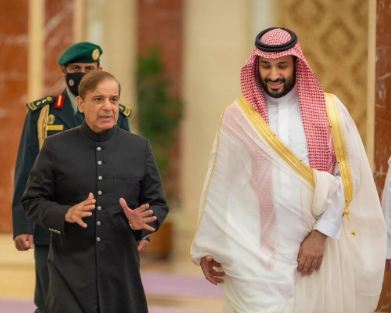
ISLAMABAD, JUN 24 /DNA/ – Prime Minister Muhammad Shehbaz Sharif held a telephone conversation with His Royal Highness Prince Mohammed bin Salman bin Abdulaziz Al Saud, Crown Prince and Prime Minister of the Kingdom of Saudi Arabia, this evening.

During their most warm and cordial conversation, the Prime Minister conveyed his warm regards and profound respects to The Custodian of the two Holy Mosques, His Majesty King Salman bin Abdulaziz Al Saud. He also warmly felicitated His Royal Highness on the successful completion of Hajj this year and thanked the Kingdom for the gracious hospitality extended to the Pakistani pilgrims.

The Prime Minister reiterated profound gratitude for the Kingdom’s steadfast support to Pakistan during the recent standoff with India. He stated that Pakistan was ready to engage in a meaningful dialogue with India on all outstanding issues, including Jammu & Kashmir, water, trade and terrorism.

The two leaders also exchanged views on the rapidly evolving situation in the Middle East. In this regard, the Prime Minister said that Pakistan fully supported the immediate de-escalation of the Iran-Israel conflict, as well as its peaceful resolution through dialogue and diplomacy. While referring to last night’s attacks, he called for adherence to international law and the UN Charter principles by all sides. In this context, the Prime Minister reaffirmed Pakistan’s unwavering support for the Kingdom’s sovereignty and territorial integrity.  

The Prime Minister conveyed deep appreciation to His Royal Highness for his sagacious leadership and commendable efforts to restore peace in the region. This, he added, was reflective of the Kingdom’s remarkable status as a peacemaker at the international stage, as well as its leadership of the Ummah.

His Royal Highness the Crown Prince thanked the Prime Minister for the telephone call and appreciated Pakistan’s expression of solidarity and support for the Kingdom. He acknowledged Pakistan’s constructive role in promoting a peaceful resolution to the Iran-Israel conflict. His Royal Highness said that the Kingdom of Saudi Arabia was fully committed to efforts aimed at fostering lasting peace and stability in the Middle East.

PM Shehbaz urges diplomacy to end Mideast crisis in call with Iranian president

PM Shehbaz

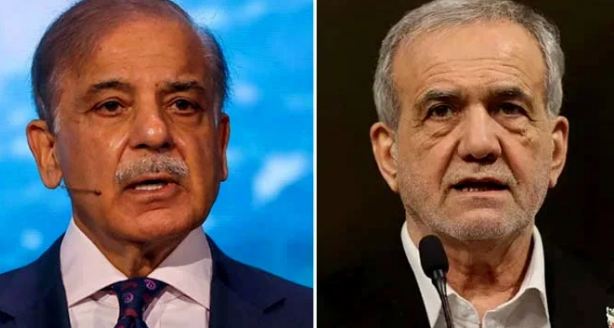
ISLAMABAD, JUN 24: Prime Minister Shehbaz Sharif held a telephonic conversation with Iranian President Masoud Pezeshkian on Tuesday, during which both leaders discussed the evolving situation in the Middle East and stressed the need for a peaceful resolution through dialogue and diplomacy.

According to a statement from the Prime Minister Office (PMO), PM Shehbaz expressed Pakistan’s deep concern over the current regional developments and “emphasised the urgent need to restore calm through diplomatic engagement.”

During the conversation, the prime minister reiterated Pakistan’s steadfast support for Iran on all international platforms, including the United Nations Security Council (UNSC) and the Organisation of Islamic Cooperation (OIC).

He also underscored the importance of upholding international law and the principles enshrined in the UN Charter, the PMO said.

In response, President Pezeshkian thanked PM Shehbaz for the gesture and appreciated Pakistan’s consistent and principled stance in support of Iran during the ongoing crisis.

He also acknowledged Islamabad’s constructive role in promoting peace and preventing further escalation in the region.

Both leaders agreed on the importance of unity in the Muslim world in addressing current geopolitical challenges. They also pledged to maintain close contact and coordination moving forward, the statement read.

Iran-Israel ceasefire
US President Donald Trump announced that Israel and Iran had agreed to a “complete and total ceasefire”, but its status remained unclear as Tel Aviv alleged that Tehran carried out missile attacks in violation of the truce.

However, the US president called the truce effective after berating Israel and Iran for ceasefire violations.

Israel PM’s office said in a statement it refrained from further strikes on Iran after President Trump’s call. Meanwhile, Iran’s top security body says ‘powerful military response forced Israeli regime to halt its aggression unilaterally’.

Trump’s announcement came after Iran launched a limited missile attack Monday on a US military base in Qatar, retaliating for the American bombing of its nuclear sites.

Russia, France, Germany, and Saudi Arabia welcome truce announcement after 12 days of war between Mideast rivals.

In Israel, at least 24 people have been killed and more than 1,000 wounded in the war. Israeli strikes on Iran have killed at least 974 people and wounded 3,458 others, according to the Washington-based group Human Rights Activists.

— With additional input from AFP

Ex-Islamabad Deputy Mayor engages citizens on local issues

Ex-Islamabad Deputy Mayor engages citizens on local issues

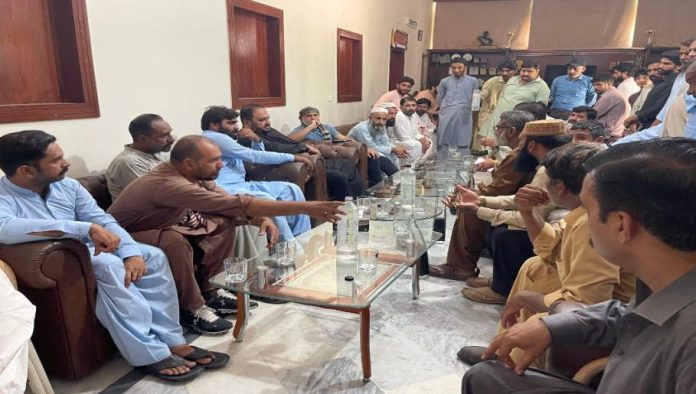
ISLAMABAD, JUN 24 /DNA/ – Former Deputy Mayor of Islamabad and senior leader of Pakistan Muslim League (N), Syed Zeeshan Ali Naqvi, continued his public outreach campaign on Monday with full vigor. During the day, he visited various areas, met with local residents, and listened to their concerns.

The citizens highlighted several local issues including sanitation, drainage, park restoration, street lighting, and other municipal matters. Syed Zeeshan Ali Naqvi attentively listened to the problems and assured immediate coordination with relevant authorities to address them.

Speaking on the occasion, he stated, “Connecting with the public is true service. These interactions help us not only understand people’s concerns firsthand but also provide a platform to collectively find solutions.”

He further added that Pakistan Muslim League (N) believes in serving the people, and every possible effort will be made to resolve public issues on a priority basis.

Major among two soldiers martyred in South Waziristan clash: ISPR

soldiers

Rawalpindi, JUN 24 /DNA/ – Security Forces conducted an intelligence based operation in general area Sararogha, South Waziristan District, on reported presence of Khwarij belonging to Indian Proxy, Fitna al Khwarij.

During the conduct of operation, own troops effectively engaged the khwarij location and resultantly, eleven Indian sponsored khwarij were sent to hell, while seven Khwarij got injured.

However, during the intense fire exchange, Major Syed Moiz Abbas Shah (age: 37 years, resident of District Chakwal), a brave officer who was leading his troops from the front, fought gallantly and paid the ultimate sacrifice along with another brave son of soil Lance Naik Jibran Ullah (age: 27 years, resident of District Bannu). Major Moiz, Shaheed was renowned for his courage and daring actions in numerous operations conducted against the khwarij.

Sanitization operation is being conducted to eliminate any other Indian sponsored Kharji found in the area, as the security forces of Pakistan are determined to wipe out the menace of Indian Sponsored Terrorism from the country and such sacrifices of our brave men further strengthen our resolve.

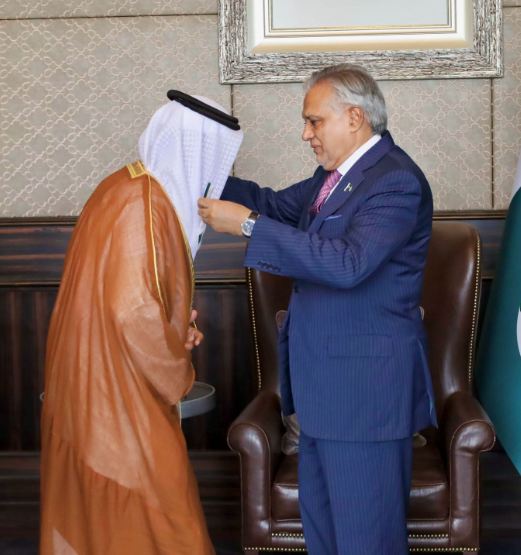
Deputy PM Dar confers high civilian award to UAE’s Mohamed Saif Al Suwaidi

Deputy PM Dar awards Hilal-e-Quaid-e-Azam to UAE’s Mohamed Saif Al Suwaidi

ISLAMABAD, JUN 24 /DNA/ – Deputy Prime Minister/Foreign Minister Senator Mohammad Ishaq Dar presented the award of Hilal-e-Quaid-e-Azam, to Mohamed Saif Al Suwaidi, Director General of the Abu Dhabi Fund for Development (ADFD) today in Abu Dhabi.

The Government of Pakistan conferred the award of Hilal-e-Quaid-e-Azam upon H.E. Mohamed Saif Al Suwaidi in acknowledgment of his exceptional contributions to the promotion of Pakistan-UAE cooperation. Senator Dar presented the award on behalf of the President of Pakistan.

PM Shehbaz vows cooperation with China for CPEC success

PM Shehbaz

ISLAMABAD, JUN 24: Prime Minister Shehbaz Sharif on Tuesday reaffirmed his commitment to continued cooperation with China to ensure the success of the China-Pakistan Economic Corridor (CPEC) projects.

According to details, Chinese Ambassador Jiang Zaidong met the prime minister in Islamabad. On this occasion, PM Shehbaz extended his best wishes to the Chinese president and premier. He also conveyed his goodwill for the Chinese leadership in connection with the upcoming Shanghai Cooperation Organisation (SCO) summit.

PM Shehbaz discussed the ongoing consultations between the two countries concerning his scheduled visit to China in August.

The premier had also discussed efforts to operationalise the Main Line-1 (ML-1) railway project, the Karakoram Highway (KKH) and the Gwadar Port.

The two sides exchanged views on the regional situation, including the latest developments in the Iran-Israel conflict.

Zaidong stated that preparations for the prime minister’s visit to China in August have already begun.

President Zardari fulfills Shaheed Benazir’s vision with launch of Benazir Hunarmand Program: Rubina Khalid

ISLAMABAD, Jun 24 (APP):Chairperson Benazir Income Support Programme (BISP), Senator Rubina Khalid Tuesday said that President Asif Ali Zardari has turned the dream of Shaheed Mohtarma Benazir Bhutto into reality through the launch of the Benazir Hunarmand Program—a milestone that stands as a proud achievement for BISP.

Addressing in a cake-cutting ceremony organized by BISP employees at the BISP Headquarters to mark the 72nd birthday of Shaheed Benazir Bhutto, Senator Rubina Khalid paid rich tributes to the iconic leader, calling her vision and courage a guiding force for the institution.

“Through BISP, we have worked to make the lives of deserving individuals easier. Now, with the Benazir Hunarmand Program, we aim to improve their quality of life and empower them to become self-reliant,” she said.

“If we fulfill this noble mission with sincerity, the gates of heaven will open for us”, she said.

She emphasized the need to instill confidence among the most deserving women of society, ensuring they are not subjected to fear or exploitation. “We must work together to counter negative perceptions, address complaints effectively, and build an environment where no injustice is tolerated,” she asserted.

Calling the BISP team a united family with a shared purpose, she said every initiative—especially the newly launched Hunarmand Program—must be transformed into a success story.

Paying tribute to Pakistan Peoples Party Chairman Bilawal Bhutto Zardari, Senator Rubina Khalid said, “Leaders are not merely made—they are born. Bilawal Bhutto Zardari is a living example of this truth.”

She praised his fearless leadership, global recognition, and powerful representation of Pakistan’s stance on international forums, describing him as a proud reflection of the legacy of both Shaheed Zulfikar Ali Bhutto and Shaheed Mohtarma Benazir Bhutto.

Earlier, Sardar Azmat, President of the BISP Officers Association, and Sardar Shiraz, President of the All Pakistan BISP Employees Welfare Association, also addressed the gathering and shared their thoughts on the occasion.

The event concluded with Senator Rubina Khalid and BISP staff jointly cutting the birthday cake in honour of Shaheed Mohtarma Benazir Bhutto, reaffirming their dedication to her mission of empowerment and social justice.

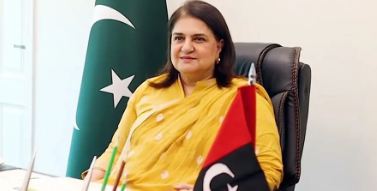
Int’l Day for Women in Diplomacy: Foreign Secretary pays tribute

Foreign Secretary

ISLAMABAD, JUN 24 /DNA/ – On the International Day for Women in Diplomacy, I extend heartfelt greetings to women diplomats worldwide, especially the distinguished women representing Pakistan with dedication and excellence.

This day highlights women’s evolving role in global affairs. Across continents, women lead high-level diplomacy, foster understanding, and drive peace, development, and cooperation.

Women diplomats are shaping foreign policy, leading negotiations, and enriching global dialogue.

Pakistan is proud of its growing cadre of female diplomats—skilled professionals embodying our values with clarity and confidence. Their presence marks progress toward inclusion and gender balance in our Foreign Service.

As Foreign Secretary, I am committed to honoring the legacy of trailblazing women and creating opportunities for future generations by strengthening frameworks for women’s recruitment, retention, and advancement in diplomacy. In a world facing complex challenges, women’s contributions to diplomacy are indispensable.

Let us reaffirm our commitment to gender equity in international relations and celebrate women’s vital role in building a peaceful, just global order.

Stay Connected

64FansLike
60FollowersFollow

Latest Reviews

Exchange Rates

USD - United States Dollar
EUR
1.17
GBP
1.34
AUD
0.67
CAD
0.73