Home Blog Page 315

Ex-Islamabad Deputy Mayor engages citizens on local issues

Ex-Islamabad Deputy Mayor engages citizens on local issues

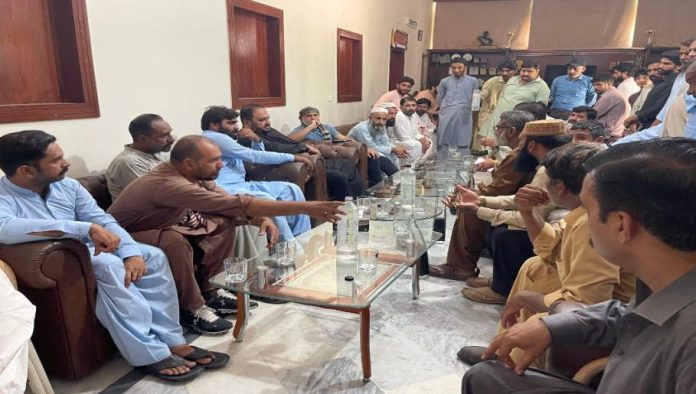
ISLAMABAD, JUN 24 /DNA/ – Former Deputy Mayor of Islamabad and senior leader of Pakistan Muslim League (N), Syed Zeeshan Ali Naqvi, continued his public outreach campaign on Monday with full vigor. During the day, he visited various areas, met with local residents, and listened to their concerns.

The citizens highlighted several local issues including sanitation, drainage, park restoration, street lighting, and other municipal matters. Syed Zeeshan Ali Naqvi attentively listened to the problems and assured immediate coordination with relevant authorities to address them.

Speaking on the occasion, he stated, “Connecting with the public is true service. These interactions help us not only understand people’s concerns firsthand but also provide a platform to collectively find solutions.”

He further added that Pakistan Muslim League (N) believes in serving the people, and every possible effort will be made to resolve public issues on a priority basis.

Major among two soldiers martyred in South Waziristan clash: ISPR

soldiers

Rawalpindi, JUN 24 /DNA/ – Security Forces conducted an intelligence based operation in general area Sararogha, South Waziristan District, on reported presence of Khwarij belonging to Indian Proxy, Fitna al Khwarij.

During the conduct of operation, own troops effectively engaged the khwarij location and resultantly, eleven Indian sponsored khwarij were sent to hell, while seven Khwarij got injured.

However, during the intense fire exchange, Major Syed Moiz Abbas Shah (age: 37 years, resident of District Chakwal), a brave officer who was leading his troops from the front, fought gallantly and paid the ultimate sacrifice along with another brave son of soil Lance Naik Jibran Ullah (age: 27 years, resident of District Bannu). Major Moiz, Shaheed was renowned for his courage and daring actions in numerous operations conducted against the khwarij.

Sanitization operation is being conducted to eliminate any other Indian sponsored Kharji found in the area, as the security forces of Pakistan are determined to wipe out the menace of Indian Sponsored Terrorism from the country and such sacrifices of our brave men further strengthen our resolve.

Deputy PM Dar confers high civilian award to UAE’s Mohamed Saif Al Suwaidi

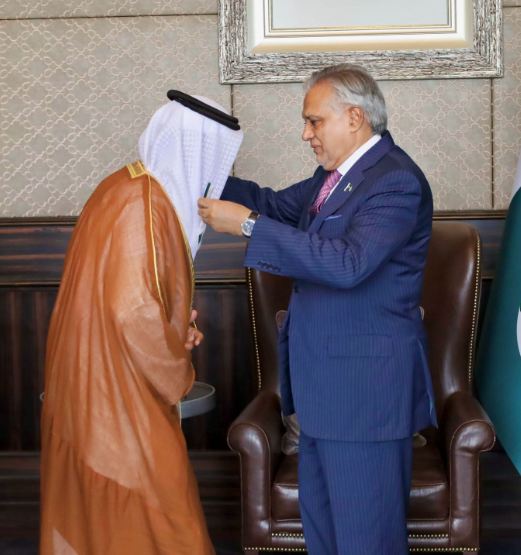
Deputy PM Dar awards Hilal-e-Quaid-e-Azam to UAE’s Mohamed Saif Al Suwaidi

ISLAMABAD, JUN 24 /DNA/ – Deputy Prime Minister/Foreign Minister Senator Mohammad Ishaq Dar presented the award of Hilal-e-Quaid-e-Azam, to Mohamed Saif Al Suwaidi, Director General of the Abu Dhabi Fund for Development (ADFD) today in Abu Dhabi.

The Government of Pakistan conferred the award of Hilal-e-Quaid-e-Azam upon H.E. Mohamed Saif Al Suwaidi in acknowledgment of his exceptional contributions to the promotion of Pakistan-UAE cooperation. Senator Dar presented the award on behalf of the President of Pakistan.

PM Shehbaz vows cooperation with China for CPEC success

PM Shehbaz

ISLAMABAD, JUN 24: Prime Minister Shehbaz Sharif on Tuesday reaffirmed his commitment to continued cooperation with China to ensure the success of the China-Pakistan Economic Corridor (CPEC) projects.

According to details, Chinese Ambassador Jiang Zaidong met the prime minister in Islamabad. On this occasion, PM Shehbaz extended his best wishes to the Chinese president and premier. He also conveyed his goodwill for the Chinese leadership in connection with the upcoming Shanghai Cooperation Organisation (SCO) summit.

PM Shehbaz discussed the ongoing consultations between the two countries concerning his scheduled visit to China in August.

The premier had also discussed efforts to operationalise the Main Line-1 (ML-1) railway project, the Karakoram Highway (KKH) and the Gwadar Port.

The two sides exchanged views on the regional situation, including the latest developments in the Iran-Israel conflict.

Zaidong stated that preparations for the prime minister’s visit to China in August have already begun.

President Zardari fulfills Shaheed Benazir’s vision with launch of Benazir Hunarmand Program: Rubina Khalid

ISLAMABAD, Jun 24 (APP):Chairperson Benazir Income Support Programme (BISP), Senator Rubina Khalid Tuesday said that President Asif Ali Zardari has turned the dream of Shaheed Mohtarma Benazir Bhutto into reality through the launch of the Benazir Hunarmand Program—a milestone that stands as a proud achievement for BISP.

Addressing in a cake-cutting ceremony organized by BISP employees at the BISP Headquarters to mark the 72nd birthday of Shaheed Benazir Bhutto, Senator Rubina Khalid paid rich tributes to the iconic leader, calling her vision and courage a guiding force for the institution.

“Through BISP, we have worked to make the lives of deserving individuals easier. Now, with the Benazir Hunarmand Program, we aim to improve their quality of life and empower them to become self-reliant,” she said.

“If we fulfill this noble mission with sincerity, the gates of heaven will open for us”, she said.

She emphasized the need to instill confidence among the most deserving women of society, ensuring they are not subjected to fear or exploitation. “We must work together to counter negative perceptions, address complaints effectively, and build an environment where no injustice is tolerated,” she asserted.

Calling the BISP team a united family with a shared purpose, she said every initiative—especially the newly launched Hunarmand Program—must be transformed into a success story.

Paying tribute to Pakistan Peoples Party Chairman Bilawal Bhutto Zardari, Senator Rubina Khalid said, “Leaders are not merely made—they are born. Bilawal Bhutto Zardari is a living example of this truth.”

She praised his fearless leadership, global recognition, and powerful representation of Pakistan’s stance on international forums, describing him as a proud reflection of the legacy of both Shaheed Zulfikar Ali Bhutto and Shaheed Mohtarma Benazir Bhutto.

Earlier, Sardar Azmat, President of the BISP Officers Association, and Sardar Shiraz, President of the All Pakistan BISP Employees Welfare Association, also addressed the gathering and shared their thoughts on the occasion.

The event concluded with Senator Rubina Khalid and BISP staff jointly cutting the birthday cake in honour of Shaheed Mohtarma Benazir Bhutto, reaffirming their dedication to her mission of empowerment and social justice.

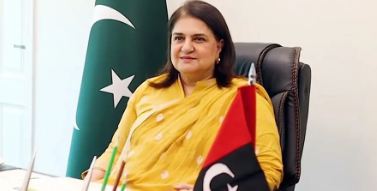
Int’l Day for Women in Diplomacy: Foreign Secretary pays tribute

Foreign Secretary

ISLAMABAD, JUN 24 /DNA/ – On the International Day for Women in Diplomacy, I extend heartfelt greetings to women diplomats worldwide, especially the distinguished women representing Pakistan with dedication and excellence.

This day highlights women’s evolving role in global affairs. Across continents, women lead high-level diplomacy, foster understanding, and drive peace, development, and cooperation.

Women diplomats are shaping foreign policy, leading negotiations, and enriching global dialogue.

Pakistan is proud of its growing cadre of female diplomats—skilled professionals embodying our values with clarity and confidence. Their presence marks progress toward inclusion and gender balance in our Foreign Service.

As Foreign Secretary, I am committed to honoring the legacy of trailblazing women and creating opportunities for future generations by strengthening frameworks for women’s recruitment, retention, and advancement in diplomacy. In a world facing complex challenges, women’s contributions to diplomacy are indispensable.

Let us reaffirm our commitment to gender equity in international relations and celebrate women’s vital role in building a peaceful, just global order.

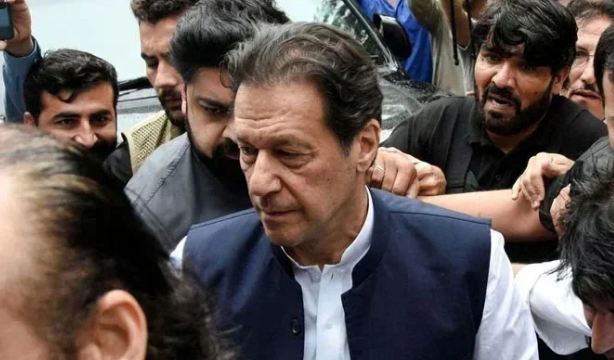
LHC rejects Imran Khan’s bail pleas in May 9 cases

Imran Khan

Lahore, JUN 24: The Lahore High Court (LHC) rejected on Tuesday bail pleas of former prime minister and Pakistan Tehreek-e-Insaf (PTI) founder Imran Khan in eight May 9 cases including the one related to the attack on Jinnah House.

A two-member bench, headed by Justice Shahbaz Ali Rizvi, announced the reserved verdict after hearing arguments from both the prosecution and the defence.

Imran Khan had filed bail applications in connection with multiple cases registered against him following the violent protests that erupted across the country on May 9, 2023, after his arrest.

Previously, on November 27, 2024, the ATC had dismissed Imran’s bail pleas in these eight cases.

May 9 mayhem

A large number of workers and supporters of PTI staged almost countrywide demonstrations on May 9, 2023 — when the PTI founding chairman was arrested by paramilitary troops on the directions of the National Accountability Bureau (NAB) in connection with an alleged corruption case.

The demonstrators destroyed public and private properties, attacked military installations — the General Headquarters (GHQ) in Rawalpindi and the Lahore Corps Commander’s House (Jinnah House) — and ransacked relics of martyrs.

Following the incidents, the civil and military leadership resolved to give exemplary punishment under the relevant laws including Army Act to all those involved in hooliganism, arson, ransacking of public and private properties, attacking sensitive military installations and desecration of martyrs’ monuments on May 9.

The deposed prime minister, who was ousted from power via the opposition’s no-confidence motion in April 2022, has been facing a slew of charges ranging from corruption to terrorism since his removal as premier.

Imran Khan has been behind bars since August 2023 after he was sentenced in multiple cases ahead of the February 8 elections.

Ceasefire: A Pause or a Strategic Reset by India?

Ceasefire: A Pause or a Strategic Reset by India?

by: Dr Air Commodore Naveed Khaliq Ansaree (Retd)

The May 2025 failed Indian military intimidation of Pakistan that lasted four days, ended in a US-brokered and uncomfortable ceasefire at the request of India. In a volatile region like South Asia, the term ceasefire can be construed not just a diplomatic nicety or delicacy; it can be a chess move too. Following the high-tension clash of military forces, which saw the Indian Air Force (IAF) not only face setbacks at all levels of the conflict but also ground in the narrative and dialectic of opposing wills. The hasty de-escalation between India and Pakistan has prompted both respite and incredulity. Was this ceasefire a calculated step toward stability in the region, or is it a strategic-pause that IAF needed to regroup, recalibrate, and reclaim the honour that it had lost in the skies of South Asia?
The four-day conflict wasn’t just a tactical and operational failure, rather it was a dark chapter and symbolic blow to the IAF, a force that had spent almost a decade modernising fleets, integrating Artificial Intelligence (AI), and projecting itself as a modern air power and net-security-provider in the region. It revealed that hardware and media-highlights do not replace doctrinal-tenets, operational-cohesion and battlefield-precision. The military volley of shock and awe cost India loss of professional pride in the comity of modern air forces. Having lost six of IAF’s combat aircraft including three flagship Rafales, theS-400 air defence system, multimillion dollar Israeli drones, and control over the skies, India was unable to withstand the might, discipline and tactical brilliance of PAF’s full-spectrum Multi Domain Operations as indoctrinated by the Chief of the Air Staff Pakistan Air Force, Air Chief Marshal Zaheer Ahmed Baber Sidhu.
The ceasefire may not hold long. Unfortunately, in its attempt to teach Pakistan a lesson, India ended up introducing an undesired new normal for the application of military instrument, and precariously lowering the threshold of a hot war with Pakistan. A small false-flag, foreign-sponsored or home-grown terrorist incident could act as a trigger point for an all-out war between the two nuclear neighbours. And also, on the pretext of a small terrorist incident, India may get incited to seize the opportunity to reclaim the lost honour.
Against this backdrop, the ceasefire agreement renewed between India and Pakistan in June 2025 is riddled with strategic ambiguity. There were no major peace talks, no back-channel diplomacy, no India’s renunciation of unilateral suspension of the Indus Water Treaty that had stood the test of several full-fledged wars and eye-ball to eye-ball military standoffs. For Pakistan, the rationale for accepting the ceasefire is clearer: genuine desire to promote peace, a fragile economy, and securing good-will in the international community particularly with the key allies like China and the Gulf states. But for India, particularly its military establishment, the motivation to accept discomforting ceasefire from the position of weakness is more layered. Could this ceasefire be less about the peace and more about time; a recouping space for the IAF to step back, evaluate the lost air battle, fix doctrinal and training fault lines, and silently prepare for the next round with a firmer grip to reclaim the lost pride?
Honour in the military sense isn’t only about pride; it includes competence, credibility, and public perception. The IAF, despite being one of the most professionally-skilled air forces in the region, knows the weight of negative perception. The post-Pulwama embarrassment had set a high bar for the IAF for the operational performance and strategic messaging that led to the trumpeted induction of flagship fighter aircraft “Rafales”; the post-Phalgam debacle delivered confusion adding insult to the professional injury. Since then, intelligence and surveillance suggest that the IAF has been working inaudibly on several areas: enhancing real-time battlefield data links, fixing command chain disruptions, hurried induction of military equipment and refining jointness with other services. There is also talk of reassessing doctrinal flexibility, and extending tactical commanders a greater freedom of decision-making in a dynamic battlespace.
In my opinion, the shadow of the next crisis is still looming large over South Asia. That next moment of truth may come in the form of another terror attack, a drone incursion, or a Ukrainian style sabotage action. When the moment arrives, the real test will be whether the IAF’s current period of silence was indeed a strategic pause or merely a retreat from embarrassment. Ceasefires are rarely about peace in South Asia; they are about repositioning and silence before the storm. The IAF may have lost a battle for narrative-control in May 2025, it hasn’t loss the will. IAF may use the time-out to reflect, reform, or re-strategise; proving this ceasefire wasn’t a guised-surrender, but the prelude to the restoration and reclamation of the pride lost in the skies of South Asia.

The writer, Dr Air Commodore Naveed Khaliq Ansaree (Retd), is a Director at the Centre for Aerospace & Security Studies (CASS), Lahore. He can be reached at [email protected]

Minister recognizes Uzbekistan’s Potential in various sectors

Uzbekistan
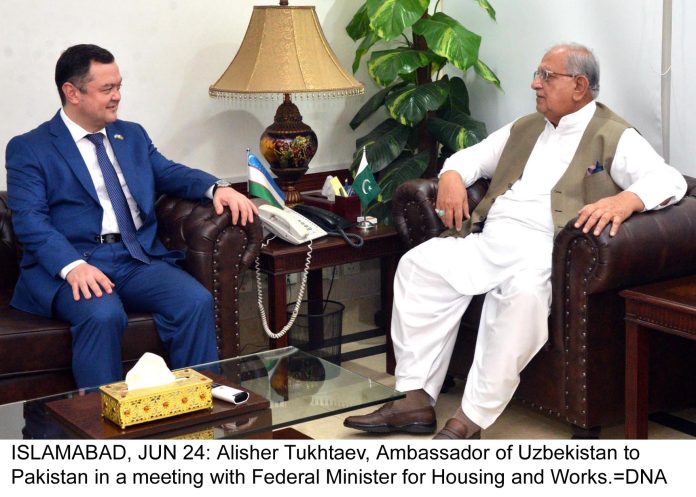
ISLAMABAD, JUN 24: Alisher Tukhtaev, Ambassador of Uzbekistan to Pakistan in a meeting with Federal Minister for Housing and Works.=DNA

Ambassador Tukhtaev highlighted the deep-rooted cultural, religious, and historical ties between Pakistan and Uzbekistan, and underscored Uzbekistan’s expertise in areas critical to urban development

ISLAMBAD, JUN 24 /DNA/ – Alisher Tukhtaev, Ambassador of the Republic of Uzbekistan to Pakistan, called on Federal Minister for Housing and Works Mian Riaz Hussain Pirzada today at the Ministry of Housing and Works in Islamabad. During the meeting, both sides engaged in constructive dialogue to explore potential avenues for collaboration in housing, communal development, and sustainable urban growth.

Minister Pirzada welcomed the Ambassador and appreciated Uzbekistan’s fast-growing economy, acknowledging the potential for mutually beneficial cooperation, especially in view of Pakistan’s rising housing needs and increasing water scarcity. He stressed the importance of adopting innovative and sustainable solutions, such as recycling, green construction practices, and resource-efficient urban development models.

Ambassador Tukhtaev highlighted the deep-rooted cultural, religious, and historical ties between Pakistan and Uzbekistan, and underscored Uzbekistan’s expertise in areas critical to urban development. He noted that one of the key outcomes of the Tashkent meetings held in February 2025 was the establishment of a Joint Working Group on Housing and Communal Services.

The Ambassador elaborated on Uzbekistan’s economic reforms, a notable increase in Foreign Direct Investment, and the ongoing transformation of its housing and construction sector. He expressed readiness to cooperate in training and capacity-building initiatives in housing development, water recycling, green housing, and social infrastructure.

He also offered Uzbekistan’s support in sharing models and experiences related to rainwater harvesting, high-rise construction, smart and green housing, and affordable housing for low-income groups.

Furthermore, ambassador proposed policy collaboration and knowledge exchange in public procurement, legal and institutional reforms, and emerging construction trends, emphasizing Uzbekistan’s willingness to share its technical expertise during a period of construction sector growth.

Both sides reaffirmed their commitment to enhancing bilateral cooperation, with a shared resolve to translate their longstanding diplomatic relations into practical economic and industrial partnerships in the housing and urban development sectors.

Pak urges Afghanistan not to become terrorists’ safe haven

Pak urges Afghanistan not to become terrorists' safe haven

Terrorism emanating from Afghanistan remains a serious threat to its neighbours, particularly Pakistan,” Ambassador Asim Iftikhar Ahmad, permanent representative of Pakistan to the UN, said in an address

UNITED NATIONS, Jun 24 (DNA): A senior Pakistani diplomat has told the UN Security Council that the 6,000-strong Tehrik-e-Taliban Pakistan (TTP),  the largest UN-designated terrorist group operating from Afghan soil, posed a direct threat to Pakistan’s national security.

“Terrorism emanating from Afghanistan remains a serious threat to its neighbours, particularly Pakistan,” Ambassador Asim Iftikhar Ahmad, permanent representative of Pakistan to the UN, said in an address to the 15-member Council, pointing out that TTP has safe havens close to the Pakistani border.

Speaking in a debate on the situation in Afghanistan, the Pakistani envoy also voiced concern over the potential destabilizing impact of the situation in Iran following unprovoked Israeli attacks. “A refugee exodus into neighbouring countries—including Afghanistan and Pakistan—could pose significant new challenges,” he said, adding that it might imperil the already fragile conditions in the war-torn country..

Elaborating on the threat to Pakistan, Ambassador Asim Iftikhar said that  terrorist entities—including Al-Qaeda, the TTP, and the Baloch militant groups—continue to operate from ungoverned spaces in Afghanistan.

As part of its defensive measures, he said Pakistan has confiscated a significant cache of modern weapons originally left behind by international forces in Afghanistan when they departed after the Taliban captured Kabul four years ago.

In April, he said, 54 TTP terrorists attempting to infiltrate Pakistan were neutralized by the Pakistani security forces, an incident underscoring the scale and seriousness of the threat.

“We also have credible evidence of collaboration between the TTP and other groups, such as the BLA and its Majeed Brigade, aimed at disrupting strategic infrastructure and economic development projects in Pakistan,” Ambassador Asim Iftikhar said.

Noting that Afghanistan’s internal challenges continue to spill over into the region, he said Pakistan has hosted millions of Afghans for decades. Since August 2021, an additional one million undocumented individuals have crossed into Pakistan, creating among other issues, law-and-order concerns, snd called on the  international community to share this burden more equitably.

At the outset, the UN’s top envoy in Afghanistan said that the country was already grappling with immense humanitarian and economic challenges and growing instability in the wider region following airstrikes by Israel and the United States in Iran is compounding the situation.

Roza Otunbayeva, the Secretary-General’s Special Representative and head of the UN Assistance Mission in Afghanistan (UNAMA), said the ongoing missile attacks between Iran and Israel are already having a tangible impact.

“This conflict is already having an effect in Afghanistan, disrupting trade and increasing the prices of basic goods and fuel, and prompting the return of additional Afghans from Iran,” she said, echoing the Secretary-General’s urgent call for de-escalation.

More than 600,000 Afghans have returned from neighbouring Pakistan and Iran this year, and Ms. Otunbayeva said UN agencies are preparing for potential cross-border movements from Iran considering the “concerning developments” in the region.

“Returns from Iran alone in the past few days have been over 10,000 per day,” she said.

Local communities and the de facto Taliban authorities “have made efforts to absorb returnees, the UN envoy added.

In his remarks, Asim Iftikhar, the Pakistani envoy, also said Islamabad supports efforts to stabilize Afghanistan’s economy, revive its banking system, and explore mechanisms for unfreezing Afghan financial assets.

 “Despite our own constraints, Pakistan remains committed to pragmatic engagement—in expanding trade and pursuing key regional connectivity initiatives…” and has sustained high-level engagement with the de facto authorities throughout the year, citing Deputy Prime Minister and Foreign Minister, Senator Mohammad Ishaq Dar’s efforts in this regard, he said.

Pakistan, he added, also welcomes UN efforts, including the Doha Process, aimed at structured engagement with the de facto authorities. “A comprehensive and inclusive framework is now urgently needed—one that also addresses regional concerns, as identified in the independent assessment report.”

The de facto authorities must fulfill their international obligations, expressing concern about the continued restrictions on women and girls, which are inconsistent with both international norms and Islamic traditions.

Pakistan continues to support educational opportunities for Afghan youth, he said, pointing out that the third phase of Allama Iqbal Scholarship Programme is currently underway, benefitting 4,500 Afghan students—one-third of whom are women.

Pakistan, he said,  desires a stable, peaceful, and prosperous Afghanistan, and remain ready to support international engagement with the de facto authorities—such engagement must be based on clear objectives, reciprocal steps and a realistic roadmap, sensitive to Afghanistan’s unique social and political fabric after more than four decades of conflict.

“As two immediate neighbours bound by history, geography, ethnicity, language, faith, and culture, our destinies are deeply intertwined,” he said, emphasizing dialogue and diplomacy for viable pathways to peace and progress.

“Pakistan stands committed to playing a constructive and proactive role in helping Afghanistan achieve lasting peace and stability,”Ambassador Asim Iftikhar added.

Stay Connected

64FansLike
60FollowersFollow

Latest Reviews

Exchange Rates

USD - United States Dollar
EUR
1.17
GBP
1.34
AUD
0.67
CAD
0.73