Home Blog Page 314

Pakistan’s Diplomatic Gambit: A Nobel Bid for Donald Trump

Qamar Bashir

By Qamar Bashir

Pakistan has announced its decision to nominate former U.S. President Donald Trump for the 2026 Nobel Peace Prize, citing his critical role in brokering a ceasefire between India and Pakistan during their recent four-day conflict. According to Islamabad, Trump’s diplomatic intervention prevented what could have been a devastating war between two nuclear-armed nations, whose combined population nears 1.7 billion people. The risk of escalation was not merely regional—it threatened global catastrophe. A full-blown nuclear exchange between India and Pakistan would have killed millions instantly, left countless more suffering from radiation poisoning, and potentially polluted vast areas of the planet with radioactive fallout.

In the eyes of Pakistani leadership, the ceasefire was not a result of bilateral understanding alone, but rather the outcome of behind-the-scenes pressure from Washington, led by Trump himself. His influence, they argue, tipped the strategic balance in Pakistan’s favor. The fact that India has not made a similar nomination, nor endorsed Pakistan’s proposal, suggests New Delhi may have been compelled by external pressure to agree to de-escalation—an arm-twisting it now hesitates to acknowledge. Pakistan, by contrast, sees Trump’s role as decisive, crediting him for giving diplomacy a chance and stabilizing one of the world’s most volatile flashpoints.

For Trump, this marks yet another moment where he seeks to define himself as a peacemaker. Since returning to office, he has claimed involvement in a range of peace efforts, including attempting to defuse tensions between Russia and Ukraine, proposing controversial solutions to the Israeli-Palestinian conflict, and more recently, trying to mediate between Israel and Iran as hostilities in the Middle East escalate. In each of these cases, Trump has framed himself as a man of peace rather than war, a statesman who prefers deals over destruction.

However, the Nobel Peace Prize is governed by very specific criteria outlined in Alfred Nobel’s will. The prize is intended for those who have, in the preceding year, contributed most to fostering fraternity between nations, advancing disarmament or the abolition of standing armies, or organizing peace congresses. While Pakistan’s government is qualified to make the nomination, the question remains whether Trump’s actions align sufficiently with these core requirements.

Trump’s role in halting the India-Pakistan conflict may well qualify under the category of fostering fraternity between nations, at least in the narrow sense of preventing immediate escalation. However, critics argue that his interventions tend to be tactical rather than structural. The ceasefire, while significant, did not involve formal peace talks, demilitarization, or the establishment of long-term conflict-resolution mechanisms. It was a pause in hostilities, not a transformation of the underlying tensions. Similarly, his other diplomatic efforts have often lacked follow-through, institutions, or treaties that would make peace durable.

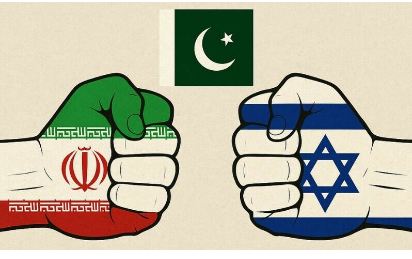
Still, Trump’s posture as a peacemaker has found fresh ground in the Middle East. As the war between Israel and Iran escalated in June 2025, Trump initiated a series of back-channel efforts to contain the conflict. He publicly called for calm, pressured both sides to explore negotiation, and sought Turkish mediation to open discreet dialogue with Iranian officials. Though Tehran initially refused to participate unless Israel halted its bombing campaign, Trump remained hopeful that diplomacy could still win the day. At the G7 summit, he reiterated his plea for restraint, urging both parties to “make a deal” and avoid dragging the region into a full-scale war.

Unlike many past U.S. presidents, Trump has taken a nuanced stance on NATO, pushing European allies to shoulder more financial responsibility. His reduced emphasis on U.S. military interventionism is consistent with his larger strategy of avoiding entanglements while leveraging diplomatic pressure. Whether this is pragmatism or isolationism is open to debate, but Pakistan clearly sees in Trump a leader who intervenes only when strategic interests and peace align.

Yet Trump’s foreign policy record is fraught with contradictions. While positioning himself as a man of peace in one region, he has actively emboldened militarism and expansionism in others. His unwavering support for Israel, despite the humanitarian catastrophe in Gaza and the West Bank, has been widely condemned.

His administration’s backing of Israeli military operations—framed by many as acts of genocide against Palestinians—has undermined his peace credentials. Furthermore, his support for Israel’s continued assault on Iran and refusal to condemn aggressive preemptive strikes has placed the United States squarely on one side of an increasingly dangerous regional war.

Beyond the Middle East, Trump’s assertions to annex Canada as the 51st state, his plan to rebrand the Gulf of Mexico under American identity, his proposal to take over Greenland from Denmark, and his ambitions to militarize and control the Panama Canal and adjacent lake regions signal an aggressive geopolitical posture. These positions paint him not as a global peacemaker but as an opportunistic expansionist, eager to rewrite borders and extend American dominance through threats, deals, or force.

Despite these criticisms, Trump’s ability to stall a potential war between India and Pakistan gives him a strong talking point in the context of Nobel nominations. It adds weight to his self-characterization as a statesman who, even if unconventional, gets results. Whether the Nobel Committee shares that view is far from certain. Historically, the committee has favored leaders whose efforts culminate in formal agreements, institutional reforms, or significant steps toward disarmament—criteria that Trump has yet to meet fully.

There is, of course, a deeply political dimension to Pakistan’s nomination. By recognizing Trump in this way, Islamabad gains soft power leverage and potentially earns goodwill from one of the most powerful and polarizing leaders on the global stage. In contrast, India—smarting from what many see as a military setback—has remained diplomatically muted. Its reluctance to echo Pakistan’s praise of Trump may be born out of resentment or embarrassment. By moving first, Pakistan has repositioned itself as a diplomatic ally to the United States under Trump’s leadership, while casting India in a defensive, unresponsive role.

In conclusion, Pakistan’s nomination of Donald Trump for the Nobel Peace Prize is both a diplomatic strategy and a symbolic gesture. It serves to highlight Trump’s influence in regional stability and underscores Pakistan’s gratitude for averting a disastrous conflict. While the nomination is procedurally sound, whether it gains traction with the Nobel Committee depends on how they interpret Trump’s peace initiatives. If short-term conflict prevention is deemed sufficient, Trump could emerge as a serious contender. If the bar remains high—demanding enduring peace through institutions, disarmament, and treaties—then his efforts may fall short. Regardless of the outcome, the move places Pakistan on Trump’s radar and subtly shifts the narrative of South Asia’s security calculus in Islamabad’s favor.

By Qamar Bashir

 Press Secretary to the President (Rtd)

 Former Press Minister, Embassy of Pakistan to France

 Former MD, SRBC | Macomb, Michigan, USA

The Iran War: US and Israel Face Global and Domestic Backlash

Qamar Bashir

By Qamar Bashir

On June 13, 2025, the world witnessed a dangerous escalation in the Middle East when Israel launched an unprovoked and unilateral strike on Iran, using its advanced F-35 stealth aircraft to bomb high-profile military and civilian targets in Tehran. The attack claimed the lives of senior Iranian commanders, nuclear scientists, professors, and innocent civilians—including women, children, and the elderly. The justification? A vague and baseless accusation that Iran was imminently developing a nuclear weapon.

However, that claim collapsed swiftly. In a decisive response, the Director General of the International Atomic Energy Agency (IAEA) clarified that the attack bore no relation to any IAEA findings. He categorically stated that Iran had not violated its obligations under the Non-Proliferation Treaty (NPT), and that there was no evidence of uranium enrichment reaching weapons-grade levels or any sign of Iran building a nuclear bomb. While acknowledging transparency issues, he emphasized they were not extraordinary when compared to inspections in other countries. The IAEA ultimately declared the Israeli assault a political decision devoid of nuclear justification.

This revelation stripped away the mask. Israel’s motive was never disarmament—it was strategic domination. By dismantling Iran’s infrastructure and decapitating its command structure, Israel aims to replicate Gaza’s plight: a nation crippled, isolated, and humiliated. With unwavering backing from President Donald Trump, Israel seeks to erase Iran as a regional counterbalance once and for all.

President Trump’s role has been duplicitous. His public messaging fluctuates between boasts of “winning with Israel” and threats demanding Iran’s surrender within two weeks—or face annihilation. This erratic behavior is a textbook case of psychological warfare, meant to sow confusion and pressure Iran’s leadership into submission.

Yet no article of the UN Charter, no principle of international law, and no precedent in diplomacy legitimizes one sovereign nation threatening another with total destruction unless it complies. Trump’s threats are not merely provocative—they are imperial commands cloaked in strategic language, a stark violation of international norms.

In stark contrast, the European Union has opted for diplomacy. The UK, France, and Germany have engaged in discussions with Iran’s Foreign Minister, seeking a peaceful exit from the crisis. Iran, however, has drawn a firm red line: negotiations are off the table until Israel halts its aggression. Until then, Tehran vows to defend its sovereignty, dignity, and freedom with full force.

This divergence in response reflects a broader shift—power is no longer concentrated in Washington alone. New centers of global influence are emerging, and not all are aligned with U.S. militarism.

Russia, long a traditional ally of Iran, has opted for neutrality. Preoccupied with its prolonged war in Ukraine—a conflict sustained by NATO and U.S. support—Moscow cited the absence of any formal military pact with Iran as the reason for abstaining. This silence is significant: even Russia refuses to be dragged into a conflict ignited by Tel Aviv and fanned by Washington.

Meanwhile, China is executing a more calculated strategy. From Iraq to Libya, Syria to Afghanistan, Beijing has observed that every U.S.-led war depletes American economic, political, and military capital. The more America bleeds, the more China surges. Beijing’s neutrality is not weakness—it is strategic wisdom. Let Washington entangle itself in yet another endless war while China accelerates its rise as a global superpower.

In this unfolding geopolitical drama, China quietly emerges as the silent victor—building trade alliances, fostering diplomacy, and projecting power without firing a single shot.

In a significant yet understated development, President Trump held a closed-door meeting with Pakistan’s Army Chief, Field Marshal Asim Munir, bypassing civilian leadership. While the official statement was vague and devoid of substance, the timing speaks volumes. With the conflict expected to escalate, the U.S. may seek Pakistani cooperation—covertly or overtly—for ground operations in the region. Though deeply unpopular among Pakistanis, such decisions often lie with military and intelligence agencies, not public will. This potential alignment poses grave risks for Pakistan, as any role against Iran could invite retaliatory strikes on major Pakistani cities. In this context, it is Pakistan—not just the U.S.—that must tread with extreme caution.

Domestically both Israel and USA are faced with severe public backlash. Ironically, as Israel claims to be acting in the interest of Jewish security, many Jews around the world now feel that jews are more safe in rest of the world than in Israel. A prominent Jewish leader in the UK declared recently that he had always felt safe in Britain, but now views Israel as one of the most dangerous places on Earth for Jews.

Across American social media platforms—from X to Facebook to TikTok—citizens are loudly protesting the use of their tax dollars and military lives for what they perceive as an Israeli war, not an American one. There is no congressional consensus, no popular mandate, no NATO support, and no UN resolution. This war is unauthorized, unmandated, and unsupported.

Europe too has shown restraint. Its citizens are weary of endless wars waged under U.S. pressure and driven by Israeli regional ambitions. Governments across the continent are resisting involvement, recognizing the immense human, economic, and moral costs of yet another Middle Eastern quagmire.

As the fog of war thickens, one truth becomes undeniable: Israel and the United States are isolated. Trump’s reckless foreign policy has alienated Canada, fractured Europe, weakened U.S. credibility at the UN, and emboldened adversaries. Meanwhile, China remains the calm observer—watching America deplete itself in yet another unwinnable military adventure.

In a world where legitimacy hinges on law, consensus, and multilateral cooperation, this war has none. It is an illegal act of aggression, risking widespread destabilization across the Middle East and further eroding America’s standing on the global stage.

Let us hope against hope that sanity might still prevail. History is replete with lessons—lessons the United States seems determined to ignore. It invaded Afghanistan in 2001 to overthrow the Taliban and impose its own governance. After two decades of war, trillions of dollars spent, and thousands of lives lost, the U.S. withdrew—only to hand the reins back to the same Taliban it once ousted, departing in humiliation and disgrace.

If the U.S. and Israel now place their boots on Iranian soil, the result will be no different. Even after years—perhaps centuries—of warfare, the endgame will be the same: the Islamic Revolutionary Government will remain. The only difference will be the price paid. America and Israel will have lost more than just a war—they will have squandered legitimacy, global respect, and whatever moral authority they still possess. And with each such misadventure, they grow weaker, while those they sought to destroy grow more resilient.

By Qamar Bashir

 Press Secretary to the President (Rtd)

 Former Press Minister, Embassy of Pakistan to France

 Former MD, SRBC | Macomb, Michigan, USA

The Fall of False Giants

A Sip of Democracy: Tradition Meets Innovation in the National Assembly

by Muhammad Mohsin Iqbal

War, in its essence, is a tragic manifestation of human failure—failure to resolve differences through dialogue, failure to respect boundaries, and failure to uphold justice. It unleashes horrors upon the innocent and tarnishes civilizations with the blood of the undeserving. Yet, there are rare moments in history when the flames of war, though undesirable, illuminate truths long buried under arrogance, deceit, and unchecked aggression. The months of May and June this year bore witness to such moments—when two long-oppressed regions, South Asia and the Middle East, saw the masks fall off powerful aggressors, and the world stood astonished by the reversal of long-standing myths.

For many decades, India has positioned itself as a regional giant in South Asia, supported by international alliances and a growing sense of militaristic self-righteousness. It has used its influence to intimidate its neighbors, particularly Pakistan, engaging in diplomatic brinkmanship, covert destabilization, and an unending campaign of misinformation. However, on the 7th of May, by the grace of Almighty Allah, Pakistan responded with a swiftness and precision that shook the very foundation of India’s inflated self-image. What transpired on that single day was not merely a military maneuver—it was a moral rebuke, a strategic checkmate, and a divine balancing of the scales.

The Indian establishment had perhaps grown too comfortable in its assumptions. Years of unchecked narratives, exaggerated claims of superiority, and a false sense of invulnerability had clouded their judgment. But Pakistan’s resolve, born not just from military strength but from a deep-rooted sense of justice and faith, delivered a blow that reminded the world—and India itself—that arrogance has a price. Since that day, an unusual silence has prevailed across the border, a quiet not of peace-loving reflection, but of stunned recalibration. Yet, those familiar with history know well that old habits die hard. India may momentarily pause, but the patterns of provocation will likely continue. Still, May 7 has become a date engraved in memory—a day when truth, preparedness, and divine help intersected.

Equally astonishing has been the parallel unfolding in the Middle East. For decades, Israel has operated with impunity, shielded by powerful allies and international double standards. Its actions in Gaza and across the Palestinian territories have often been brutal, unchecked, and in violation of every principle of human dignity. Yet, it has rarely faced retaliation of equal magnitude. That changed when Iran, often vilified, isolated, and under tremendous economic and strategic pressure, responded in a manner that startled even its staunchest critics.

In a stunning display of resilience and strategy, Iran pierced through the layers of defense and struck the heart of Israel—Tel Aviv and other cities—bringing the war to the very streets from which oppression had long been dispatched. The world, accustomed to seeing Gaza in ruins, now witnessed images from within Israel that were indistinguishable from those usually reserved for occupied Palestinian land. For the first time in recent history, the line between aggressor and victim was blurred on Israeli soil.

This was not merely a retaliatory strike—it was a moment of reckoning. Iran, by the mercy of Allah, overcame not only its external enemies but also internal constraints and regional challenges to deliver a response that will be studied in strategic circles for years to come. It has, so far, emerged as a nation that refused to be bowed, demonstrating to the world that no matter how isolated a country may be, if it is rooted in belief and driven by justice, it can rewrite the rules of engagement.

It is crucial to understand that this is not a glorification of war. No person of conscience celebrates bloodshed. The loss of life—on any side—is a tragedy. Yet, what deserves recognition is the rare assertion of justice against long-standing oppression. These events have shown that power, when misused, can be challenged; that no state, however militarily powerful or diplomatically protected, can claim eternal exemption from consequences.

Both Pakistan and Iran, in their respective theatres of conflict, stood not as aggressors but as defenders—of their people, their dignity, and their right to exist in peace. Their actions were not fueled by hatred, but by necessity. And in doing so, they restored a sense of balance to a world that had for too long tilted in favor of tyranny.

These developments in May and June will be remembered—not because they brought pain, but because they brought clarity. They reminded us that faith still matters, that justice is not dead, and that divine will, when it intervenes, can reverse even the most entrenched injustices. Future generations will look back at these days not just as moments of conflict, but as moments of awakening—when the oppressed spoke, and the oppressors were forced to listen.

May Allah continue to protect the innocent, guide the unjust toward truth, and grant peace with honor to all nations. For real victory lies not in destroying others, but in upholding justice and living in dignity. And when justice prevails, even through the path of fire, it leaves behind not ashes—but light.

Nominating the wrong man at the worst time

Trump remains a polarizing figure internationally, with a legacy in South Asia deeply entangled in transactional diplomacy and broken promises. To nominate him now, in the wake of the Israel-Gaza atrocities, escalating U.S.-Iran tensions, and Trump’s own mounting legal and political controversies, is not just bad diplomacy; it is disastrously timed, further isolating Pakistan from both moral credibility and regional relevance.

Abdul Waheed

Politics may often be transactional, strategic, and cold. It calculates in currencies of power and speaks in the sterile language of interests. But our perception, what we remember, what we judge, is rooted in conscience. It lives in the moral weight of human suffering. It hears the screams buried beneath rubble, sees the broken bodies of children, and refuses to forget what politics wants us to ignore.

We may not control the strategies of states or the closed-door deals of empires, but we reserve the right to judge. To name violence when it is masked as diplomacy. To expose cruelty when it is celebrated as strength. And we reserve the right to speak when justice is mocked by those who claim its name.

To propose the nomination of Donald Trump for the Nobel Peace Prize is not just a moral error, it is an obscene betrayal. It is to reduce a once-sacred recognition of peace into a transactional prize for brute power.

Trump is not a man of silence or neutrality. He did not merely look away from Israel’s mass slaughter of civilians in Gaza, but actively endorsed it. He justified the bombings of hospitals, apartment blocks, and refugee camps. He offered Israel unconditional support, regardless of the death toll. Under his leadership, U.S. military aid surged, UN ceasefire resolutions were vetoed, and American power was used to shield and enable a campaign that many now recognize as genocide.

On Iran, Trump crossed every red line of diplomacy. His language was not the rhetoric of de-escalation or negotiation. It was the rhetoric of annihilation. He openly threatened the Iranian people, called for the evacuation of Tehran, and urged regime surrender under the looming shadow of destruction. These are not the acts of a peacemaker. They are the brutal footprints of a global warmonger, someone who normalized

ethnic cleansing, empowered occupation, and weaponized fear.

And now, the world has seen Trump’s direct hand in war. Under his presidency, the United States has launched full-scale military strikes on Iran, bombing nuclear facilities at Fordow, Natanz, and Isfahan. Trump confirmed the operations himself, calling them a “success,” and bringing the United States into open participation in the Iran-Israel war. This is formal, declared war with rising civilian and military casualties on both sides, and the region inching toward collapse.

Pakistan’s decision to propose Trump for the Nobel Peace Prize was not only diplomatically immature but deeply discrediting. At a moment when the Muslim world watches Gaza’s children buried under rubble and Iranian cities under siege and strikes, Islamabad chose low level of over principle. There were other, wiser paths, economic engagement, regional diplomacy, strategic restraint, but instead it chose to applaud the very hand that fuels war and chaos.

To nominate Trump is to mock the suffering of Gaza’s children, to legitimize the destruction of Palestinian lives and homes, to silence the agony of displaced families, and to erase the moral boundary that once separated peace from brutality. If such conduct is considered worthy of a peace prize, then one must ask: What would be the signs of a world-class butcher?

At a time when the world watches with concern the rise of authoritarian populism, growing instability in the Middle East, and renewed scrutiny of past U.S. foreign policies, Islamabad’s move feels less like a principled gesture and more like a desperate plea for favor. Trump remains a polarizing figure internationally, with a legacy in South Asia deeply entangled in transactional diplomacy and broken promises. To nominate him now, in the wake of the Israel-Gaza atrocities, escalating U.S.-Iran tensions, and Trump’s own mounting legal and political controversies, is not just bad diplomacy; it is disastrously timed, further isolating Pakistan from both moral credibility and regional relevance.

Pakistan’s diplomatic efforts overshadowed by global conflicts

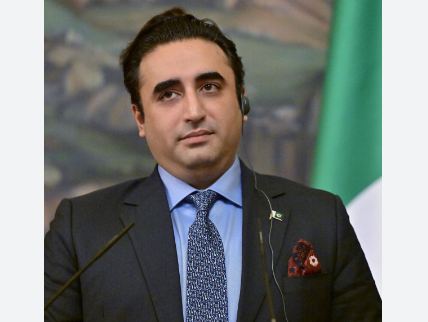
Chairman Bilawal strongly condemns terror attack in Khuzdar, Balochistan

The recent diplomatic tour by Pakistan’s delegation, led by former Foreign Minister Bilawal Bhutto Zardari, across Europe and America was aimed at presenting Pakistan’s stance on regional tensions, particularly highlighting what it terms as Indian aggression. The delegation claims success in convincing the international community of its viewpoint, yet the timing of the visit—coinciding with the escalating Israel-Iran conflict—meant that global attention remained largely diverted. While Pakistan sought to spotlight Kashmir and bilateral disputes with India, the world’s focus was elsewhere, raising questions about the effectiveness of such diplomatic missions in an increasingly distracted geopolitical landscape.

Bilawal Bhutto Zardari’s assertion that Pakistan effectively “unmasked” India’s actions may resonate domestically, but the reality is that such high-profile tours often yield limited tangible outcomes. India, too, has been actively engaging with foreign capitals, countering Pakistan’s narrative. This back-and-forth diplomacy, while necessary for both nations to present their cases, ultimately does little to resolve the core issues. The Kashmir dispute, cross-border tensions, and historical mistrust cannot be settled in international forums alone—they require direct, sustained dialogue between Islamabad and New Delhi.

The overshadowing of Pakistan’s diplomatic efforts by the Israel-Iran conflict underscores a harsh truth: in a world preoccupied with multiple crises, the South Asian rivalry is no longer a top priority for global powers. The West remains more concerned with Middle Eastern instability, the Ukraine war, and great-power competition than with mediating between India and Pakistan. This is not to say that Pakistan’s concerns are insignificant, but rather that the international community’s bandwidth for South Asia’s disputes is limited unless they escalate into a full-blown crisis.

Moreover, the parallel diplomatic campaigns by India and Pakistan risk becoming exercises in futility. No amount of lobbying in foreign capitals can substitute for bilateral engagement. History has shown that breakthroughs in Indo-Pak relations—however fleeting—have come through direct talks, not through third-party interventions. The Shimla Agreement, the Lahore Declaration, and even the short-lived ceasefire of 2021 were the result of backchannel and Track-II diplomacy, not international pressure.

Pakistan and India must recognize that while presenting their cases globally has symbolic value, the real solution lies in sustained dialogue. The world may offer rhetorical support or occasional mediation, but the responsibility to mend ties rests solely on the two nations. The Kashmir issue, terrorism concerns, and trade disputes will remain unresolved unless both sides move beyond point-scoring diplomacy and engage in substantive negotiations.

In the end, no amount of international advocacy can replace the hard work of compromise and confidence-building at home. If Pakistan and India are serious about peace, they must stop treating diplomacy as a zero-sum game and start investing in dialogue—away from the glare of global distractions.

The transformative potential of Uzbekistan-Pakistan rail links

Uzbekistan

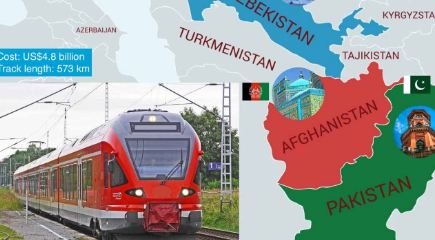
The recent commitment by Pakistan and Uzbekistan to enhance connectivity through rail links via Afghanistan marks a significant step toward regional economic integration. Such infrastructure projects have the potential to unlock vast trade opportunities, spur economic growth, and foster deeper people-to-people ties between Central and South Asia. With both nations already taking concrete steps—such as initiating direct flights—the proposed rail corridor could be a game-changer, transforming not just bilateral relations but also the broader regional economic landscape.

Central Asia, rich in natural resources and energy, has long sought efficient trade routes to access global markets. Pakistan, with its strategic location and Gwadar Port, offers a viable gateway. A rail link connecting Uzbekistan to Pakistan through Afghanistan would drastically reduce transportation costs and time, making regional trade more competitive. Uzbekistan exports cotton, textiles, and minerals, while Pakistan can supply agricultural goods, pharmaceuticals, and manufactured products. Enhanced connectivity would allow both nations to diversify their trade portfolios and integrate into larger supply chains, benefiting industries on both sides.

Moreover, this rail link would complement the existing China-Pakistan Economic Corridor (CPEC), extending its reach into Central Asia. By linking Tashkent to Karachi via Peshawar, the corridor could become a vital artery for Eurasian trade, attracting investment and boosting economic activity across the region.

Beyond commerce, improved rail connectivity would facilitate cultural and educational exchanges. Central Asia and Pakistan share deep historical and civilizational ties, from the Silk Road to the spread of Islamic scholarship. Easier travel would encourage tourism, academic collaboration, and cultural interactions, fostering mutual understanding. Pilgrims, students, and entrepreneurs would benefit from seamless movement, helping to build lasting relationships beyond government-level engagements.

The biggest obstacle to this vision remains Afghanistan’s stability. Security concerns and political uncertainties have long hindered transnational infrastructure projects. However, with the Taliban expressing support for regional connectivity, there is cautious optimism. Both Pakistan and Uzbekistan must engage with Afghan authorities to ensure the safe and efficient operation of the rail link. Additionally, international backing—particularly from China and Russia, which have vested interests in Eurasian connectivity—could provide the necessary impetus.

The recent introduction of direct flights between Tashkent and Islamabad demonstrates both nations’ seriousness in deepening ties. The next logical step is to translate this commitment into tangible rail infrastructure. Multilateral platforms like the Economic Cooperation Organization (ECO) and the Shanghai Cooperation Organization (SCO) should be leveraged to garner broader support.

The Uzbekistan-Pakistan rail link is more than just a transportation project—it is a bridge between regions, economies, and civilizations. If realized, it could redefine trade dynamics, create jobs, and bring distant communities closer. While challenges remain, the political will displayed by both nations is encouraging. The time is ripe for bold, collaborative action to turn this vision into reality, ensuring prosperity for future generations across Central and South Asia.

Uzbekistan and Pakistan strategic partnership deepens, says envoy

Uzbekistan

Exclusive

Ansar Mahmood Bhatti

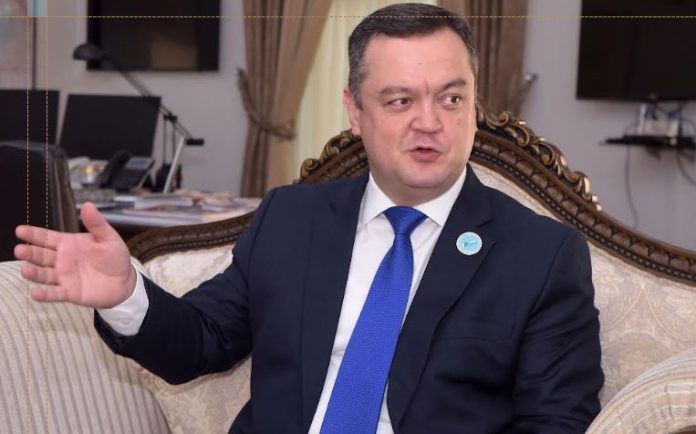
ISLAMABAD, /DNA/  – In an exclusive interview with Islamabad POST and Centreline magazine, His Excellency Alisher Tukhtaev, Ambassador of Uzbekistan to Pakistan, emphasized the deep-rooted cultural, historical, and religious bonds between Uzbekistan and Pakistan. He highlighted the shared heritage of the two nations, which has laid a strong foundation for enhanced cooperation in tourism, agriculture, and strategic diplomacy.

The first part of the interview was published in this newspaper on June 11,2025.

The ambassador’s remarks underscored Uzbekistan’s commitment to strengthening bilateral relations with Pakistan, focusing on economic collaboration, people-to-people exchanges, and regional connectivity.

Ambassador Tukhtaev noted that both Uzbekistan and Pakistan are home to some of the most revered Islamic scholars, architects, and cultural landmarks, making them ideal destinations for spiritual and heritage tourism.

“Uzbekistan and Pakistan share a unique cultural and historical heritage, which holds great significance not only for our peoples but also for the entire Muslim world,” he said. “The fact that both countries are the birthplace of outstanding Islamic scholars, architects, and cultural figures provides a strong foundation for the development of spiritual and cultural tourism.”

In recent years, there has been a surge in Pakistani tourists visiting Uzbekistan, particularly the historic cities of Bukhara, Samarkand, Tashkent, and Khiva—renowned for their stunning Islamic architecture and rich history. Similarly, Uzbek travelers are increasingly drawn to Pakistan’s cultural hubs, including Lahore, Karachi, and Taxila.

To facilitate travel, Uzbekistan has simplified visa procedures for Pakistani citizens starting September 2024. Additionally, direct flights between Tashkent and Lahore operate twice a week, and Tashkent- Islamabad once a week with discussions underway to expand air connectivity to other cities.

The ambassador also revealed plans for joint ziyorat (pilgrimage) tourism initiatives, including guided tours to holy sites. Both nations are exploring the creation of cultural and historical routes tracing the footsteps of great Muslim scholars and leaders.

“We are considering the creation of cultural and tourist routes tracing the footsteps of our great ancestors and Muslim scholars,” he said. “We are also working on programs for tourist exchanges, participation in exhibitions, festivals, and fairs.”

The Uzbek Embassy in Pakistan is actively promoting tourism through information campaigns, exhibitions, and collaborations with Pakistani tour operators.

“We are confident that the activation of tourism will not only contribute to economic cooperation but also strengthen the friendship and mutual understanding between our peoples,” Ambassador Tukhtaev added.

Agriculture remains a cornerstone of both Uzbekistan’s and Pakistan’s economies, contributing significantly to employment, food security, and exports. Given their similar climatic conditions, the two countries have immense potential for collaboration in agri-tech, irrigation, and crop production.

The ambassador outlined several initiatives aimed at boosting agricultural cooperation:

•             Joint ventures in agro-processing – Enhancing value addition for crops such as cotton, fruits, and grains.

•             Modern irrigation techniques – Introducing drip irrigation and water-efficient farming methods.

•             Seed production and logistics – Sharing expertise in high-yield seed varieties and cold storage solutions.

•             Digital agriculture – Leveraging technology for precision farming and data-driven agriculture.

“Uzbekistan is interested in joint production of agricultural machinery, technologies for product storage and processing, as well as learning from Pakistan’s experience in growing certain crops, including rice and vegetables,” the ambassador stated.

To facilitate knowledge sharing, both nations plan to organize joint agro-forums, exhibitions, and academic exchanges between agricultural universities and research institutes.

“In the long term, we aim to create a platform for the systematic exchange of best practices, specialist training, and the promotion of sustainable agriculture,” he said.

Such collaborations are expected to enhance food security in the region while boosting rural economies in both countries.

As Uzbekistan’s top envoy to Pakistan, Ambassador Tukhtaev outlined his key priorities for strengthening bilateral ties in the coming years.

Economic collaboration remains a top priority, with a focus on:

•             Increasing bilateral trade volume.

•             Implementing large-scale infrastructure projects, including the Uzbekistan-Afghanistan-Pakistan (UAP) railway, which will enhance regional connectivity.

•             Establishing logistics hubs to facilitate trade between Central and South Asia.

“We aim to expand the volume of bilateral trade, implement large-scale investment and infrastructure projects, and enhance business contacts between the entrepreneurs of the two countries,” he said.

The ambassador emphasized the importance of high-level diplomatic engagements, including:

•             Regular visits by government and parliamentary delegations.

•             Enhanced cooperation within international organizations such as the Shanghai Cooperation Organization (SCO) and the Organization of Islamic Cooperation (OIC).

Given regional security challenges, both nations are committed to:

•             Counterterrorism efforts.

•             Combating extremism and transnational crime.

•             Intelligence-sharing and joint training programs.

“We continue the dialogue and exchange of experience on issues of regional stability, combating terrorism, extremism, and transnational crime,” he stated.

People-to-people connections remain vital for long-term friendship. Key initiatives include:

•             Student exchange programs between Uzbek and Pakistani universities.

•             Cultural festivals showcasing music, art, and cuisine.

•             Youth engagement programs to foster mutual understanding.

“It is crucial for our peoples, especially the youth, to get to know each other better—this is the foundation for strong friendship and sustainable interaction,” the ambassador remarked.

Ambassador Tukhtaev expressed optimism about the future of Uzbekistan-Pakistan relations, citing strong political will and public support.

“I am confident that with the support of the leadership of Uzbekistan and Pakistan, and thanks to the friendly sentiments between our peoples, we will be able to elevate bilateral relations to a qualitatively new level,” he concluded.

As both nations move forward, the focus remains on enhancing connectivity, boosting trade, and fostering cultural exchanges—ensuring a prosperous and mutually beneficial partnership for years to come.

Utopia and fragile democracy at Art Basel fair

Utopia

BASEL, SWITZERLAND, JUN 22 (AFP/APP):This year’s Art Basel, the world’s top contemporary art fair, paints a portrait of a troubled planet, with works embodying the relentless pursuit of happiness and the fragility of democracies.

The four-day event in the northern Swiss border city of Basel, which closes on Sunday, features more than 280 galleries presenting works by around 4,000 artists.

   The monumental works section features an 85-metre-long installation entitled “The Voyage — A March To Utopia”.

Created by the studio of Dutch artist Joep van Lieshout, it features 80 large sculptures forming a procession of absurd objects, where “everybody walks in the same direction… on their way to a happy place”, the artist told AFP.

The journey begins with a team of oxen, followed by all means of getting to that better world, including a walking stick, a cart, a toilet on wheels, a wheelchair and a mobile surgical theatre for those struggling to keep up.

Next come objects representing everything the convoy is carrying, followed by sculptures of ghosts symbolising those who didn’t make it to the end.

It ends with machines set to destroy the road behind them, so that “there’s no going back”, the artist explained.

– Flag of logs –

A stone’s throw away, Spanish artist Jaume Plensa presents a work composed of 21 aluminium doors engraved with the articles of the Universal Declaration of Human Rights adopted by the United Nations General Assembly in 1948.

Entitled “Forgotten Dreams”, it invites viewers to contemplate collective aspirations and not forget the horrors of the past.

Vietnam-born Danish artist Danh Vo has installed a huge US flag made from hundreds of logs and 13 steel stars, referencing the first version of the flag from 1777.

Reconstructed at Art Basel, “In God We Trust” was first created in 2020, during the presidential election campaign between Donald Trump and Joe Biden.

The logs were removed one by one and burned in fireplaces, gradually causing the flag to disappear.

The work serves as an allegory of the fragility of US democracy.

– Go-go dancers –

Art Basel is above all a commercial event, where artists and galleries come to meet wealthy collectors.

But the fair is also very popular with art lovers who come for the simple pleasure of browsing the works on show.

Its “Unlimited” section brings together monumental pieces intended for museums and major collections.

It includes recent as well as older works, including a performance created in 1991 by Felix Gonzalez-Torres, a US artist from Cuba who died of AIDS in 1996.

Called “‘Untitled’ (Go-Go Dancing Platform)”, it features a man dressed in silver shorts dancing on a podium for a few minutes, twice a day.

“It’s an interesting moment to revisit it,” said the “Unlimited” section’s curator, Giovanni Carmine, recalling that the artist created the performance shortly after the death of his partner from AIDS, “in a context that was also very reactionary”.

Gonzalez-Torres responded with “a very political gesture” with a performance that is “a celebration of life”.

Important Fact-Check/Facts Regarding the Israel-Iran War and Pakistan’s Principled Stance

Israel-Iran War

DNA

ISLAMABAD: The Pakistani authorities on Sunday made it clear that, Pakistan has not allowed and will never allow the United States or Israel to use its airspace, land, or naval territory for any attack against Iran.

🔰 Pakistan has condemned the U.S. attack on Iranian nuclear facilities on the night of June 21/22. The Ministry of Foreign Affairs has issued a clear statement in this regard.

🔰 Pakistan has repeatedly and unequivocally condemned Israeli attacks on Iran on various international forums and has boldly expressed full political, moral, and diplomatic support for Iran against Israeli aggression.

🔰 Pakistan will not participate in any other country’s war, bloc politics, or military conflicts, nor will it become a party to them.

🔰 Pakistan has maintained a principled stance from day one: Iran has every right to defend itself, and Pakistan will never compromise on its sovereignty and territorial integrity.

🔰 Pakistan has always maintained active engagement with all relevant parties and stakeholders and will continue to do so to end aggression as soon as possible and give peace a chance through mutual dialogue—a peace that is sustainable, honorable, and based on mutually acceptable terms. The aim is to avoid serious risks such as escalation of tensions and regional instability.

🔰 Pakistan believes that every conflict ultimately ends through dialogue and engagement, and it is the shared responsibility of all parties to seek a peaceful solution without delay.

Clean water – A necessity for healthy life

Clean water

By Fakhar-e-Alam

PESHAWAR, JUN 22 (APP/DNA): As the early morning sun casts a golden hue over Peshawar’s dusty roads, the 40-year-old rickshaw driver from Lala Kala village loads six large tanks of clean drinking water from Chamkani, hauling them back home for his extended family of 15.

For many might be taking it as a burden, but Abdul Waheed had been beginning his day with this practice for the past three years, to provide clean drinking water for his family as a necessity of life.

“My brother died of cardiac arrest in 2022, and I took it upon myself to provide clean water for both of our families,” Waheed shared, wiping beads of sweat trailing down his face. “Our local water has turned toxic. And it is not just about thirst anymore but about our survival.”

Waheed is not alone in this struggle. Thousands of residents from Peshawar’s peripheral villages including Tarnab, Akbarpura, Taru, Amankot, Khuderzai, Babay Jadeed, Tarkha, Korvi and Khushmaqam face similar struggles daily in sizzling heat.

Contaminated water is resulting in diseases like cholera, hepatitis A and diarrhea in areas where untreated human and industrial waste and agricultural runoff seep into groundwater supplies and water courses.

The 2022 floods dealt a lasting blow to Khyber Pakhtunkhwa’s water systems, altering water tables and contaminating wells. Today, nearly 90% of Peshawar’s population reportedly relies on unfiltered water, exposing them to a range of serious health risks.

Even in affluent urban areas like Hayatabad and University Town, clean water is hard to come by. Despite paying municipal taxes, many residents resort to purchasing water from private tankers due to outdated infrastructure and rusted pipelines—some of which haven’t been replaced in decades.

In 2020, KP passed the Water Act to regulate water management and resource allocation. But according to experts, the lack of an operational Water Resources Regulatory Authority and red tapism have hindered its enforcement.

“Clean drinking water has emerged as a major crisis in Peshawar these days,” said Dr. Naeemur Rehman Khattak, former Chairman Economics Department at University of Peshawar. “Despite legislation, poor implementation and weak institutional capacity in KP have turned availability of clean water a daily life challenge.”

Citing declining rainfall, over-extraction by car wash centers, and poor planning as compounding factors, he said, “we’ve seen Pakistan’s per capita water availability falling from 5,260 cubic meters in 1951 to barely 1,000 today. This is water scarcity, plain and simple.”

Amidst this grim scenario where clean drinking water and overall per capita water availability continues to be a challenge, he said new water storage and energy projects are now offering a glimmer of hope for people.

Construction on the Mohmand Dam, one of the largest hydropower projects in Pakistan, is well underway. This 213 meters high dam to be completed by 2027-28 is poised to store 1.29 million acre-feet water, irrigate 18,233 acres of new land and support 160,000 acres of existing farmland. Critically, it will provide 300 million gallons of clean drinking water per day to Peshawar, a game-changer for the city’s residents.

“This dam would not just provide water and power—it will protect districts like Charsadda and Nowshera from floods. It is a lifeline,” said Engr Zahoor, Director at WAPDA.

In tandem with Mohmand Dam, the provincial government is pushing forward with multiple small and medium-sized dam projects to address water and energy woes of the people.

According to Engr Tariq Sadozai, Special Assistant to the Chief Minister on Energy, 56 small dams have already been completed in KP with a total storage capacity of 281,410 acre-feet, irrigating over 300,000 acres of land.

“Unlike mega dams, small dams can be constructed within two to three years and are ideal for the topography of KP,” Sadozai explained. “We are targeting areas like Kohat, Karak, Lakki Marwat, Swabi and Nowshera with 30 more small dams projects, many in the final stages.”

The push for renewable energy is also gaining ground. Eight hydroelectric projects have been completed, generating 172 MW of power and earning the province over Rs five billion annually.

Projects like 84 MW Gorkin Matiltan in Swat and 40.8 MW Koto HPP in Dir are expected to come online this year, contributing to KP’s clean energy goals and providing revenue to fund further water infrastructure.

Despite this progress on the water and energy front, experts caution against viewing dams as a silver bullet. “New storage projects must be environmentally sustainable,” warned Dr. Naeem. “Sedimentation, displacement of communities, and water rights must be addressed carefully.”

Others highlight the need for regulatory enforcement and public education on water conservation. “If unchecked car wash centers and illegal groundwater extraction continue, even our best infrastructure efforts may fall short,” said Dr Nafees Ahmad, Chairman Environmental Sciences Department, Peshawar University.

For now, he hoped that a blend of large-scale infrastructure, community-level interventions, and better governance will steer KP out of its water crisis.

But for people like Abdul Waheed, every rickshaw ride is a reminder of continued struggles that underpin Pakistan’s looming water emergency.

“We need clean water like we need clean air,” Waheed said. “It is not a luxury but a necessity for healthy life.”

Stay Connected

64FansLike
60FollowersFollow

Latest Reviews

Exchange Rates

USD - United States Dollar
EUR
1.17
GBP
1.34
AUD
0.67
CAD
0.73