Home Blog Page 313

G7 summit and the Israel-Iran crisis

Israel’s strike on Iran – a dangerous escalation

The recently concluded G7 Summit in Canada, held amid rising global tensions, took on an unexpectedly urgent tone as the Israel-Iran conflict cast a long shadow over the agenda. Originally scheduled to address climate change, economic growth, and global trade, the summit was quickly overtaken by concerns about a potential war spiraling out of control in the Middle East.

After intense negotiations, the G7 countries issued a joint statement calling for an immediate ceasefire between Israel and Iran, warning of devastating consequences should the hostilities continue. Interestingly, the statement almost never saw the light of day. U.S. President Donald Trump, who attended the summit in a controversial return to the global stage, initially refused to endorse the draft communique. He reportedly objected to language he considered too critical of Israel, with whom he has maintained a strong political alliance.

Eventually, after the text was modified to emphasize “de-escalation by all parties” rather than solely calling on Israel to exercise restraint, Trump agreed to sign the final statement. However, his departure from the summit halfway through — rushing back to Washington reportedly at the behest of Israeli officials alarmed by looming Iranian retaliatory strikes — left many wondering if the spirit of the summit’s unity was already fraying at the seams.

The G7, composed of Canada, France, Germany, Italy, Japan, the United Kingdom, and the United States, remains one of the most influential blocs in global politics. Yet its response to the growing Middle East crisis must now go beyond words. As a collective, the G7 must assume the moral and diplomatic responsibility of preventing another all-out war in a region already fractured by decades of conflict, displacements, and economic hardship.

The G7’s relevance has often been questioned in a rapidly multipolar world, with China, Russia, and regional blocs like BRICS gaining prominence. But its ability to still shape economic narratives and geopolitical decisions remains undeniable. A unified G7 approach to the Israel-Iran conflict — particularly if backed by meaningful diplomatic and economic initiatives — can act as a powerful deterrent to further escalation.

This is not merely a matter of regional stability. A full-scale war between Iran and Israel would not remain confined to their borders. The risk of spillover into Lebanon, Syria, Iraq, and even the broader Gulf region is immense. Such a conflict could choke global energy supplies, disrupt trade routes, spark refugee crises, and fuel extremism. The world, already grappling with post-pandemic recovery and climate challenges, simply cannot afford another war.

President Trump’s controversial stance during the summit should not be ignored. His close ties to Israel’s leadership are no secret. During his presidency, he recognized Jerusalem as Israel’s capital, brokered the Abraham Accords, and withdrew from the Iran nuclear deal. His presence at the G7 was always going to be polarizing.

By resisting the initial draft, Trump once again signaled his unwavering support for Israel — a stance that may serve him politically among certain voter bases at home but complicates international diplomacy. His abrupt departure also raises questions about behind-the-scenes coordination with Tel Aviv, especially as reports emerge that Israeli officials requested urgent U.S. support in anticipation of retaliatory strikes from Tehran.

If Trump seeks to portray himself as a global peacemaker — a claim he has made repeatedly — this is the moment to prove it. He has the channels, the relationships, and the spotlight. But peace requires more than posturing. It demands a commitment to balanced diplomacy, respect for international law, and empathy for civilian lives on both sides of the divide.

Adding to the complexity, China has issued a travel advisory asking its citizens in Israel to leave the country immediately. This is no routine measure. Beijing’s warning suggests serious concern over a rapidly deteriorating security environment. More significantly, it may hint at China’s potential involvement — whether diplomatically, economically, or even militarily — should the conflict spiral further.

China has significant economic stakes in the Middle East, particularly in Iran through the China-Iran Comprehensive Strategic Partnership. Its Belt and Road Initiative (BRI) also crosses through many conflict-prone zones. If Israel continues to act unilaterally and ignores international appeals, Beijing may feel compelled to take a more assertive role, not out of ideological alignment, but to protect its strategic interests.

Should China choose to engage more directly — even if only through stronger diplomatic mediation — it would mark a significant shift in the geopolitical dynamic of the region, potentially sidelining Western-led efforts. That, in turn, would further erode U.S. influence and potentially increase tensions between major powers.

Beyond diplomacy, the human cost of continued violence must not be forgotten. Iran has suffered major losses, with reports confirming the deaths of several top military officials, including its army chief and prominent nuclear scientists. Israel, meanwhile, is preparing for potential retaliatory strikes, and its civilian population remains under constant threat.

The conflict has also intensified the debate about whether Israel’s intelligence and security apparatus is operating without sufficient oversight. While its ability to conduct precise, high-impact strikes is undisputed, the question arises — is Israel’s aggression inviting broader instability and backlash? Is it creating more enemies than it can handle?

On the other hand, Iran too has to reflect on its own choices. Its involvement with proxy groups and its anti-Israel rhetoric has often been counterproductive. While Tehran now seeks global sympathy in the face of Israeli aggression, it must also demonstrate a willingness to de-escalate and engage with the international community in good faith.

The G7’s statement, though late and diluted, is a starting point. But real peace cannot come from communiqués alone. It requires action. The G7 nations must urgently set up a mediation platform that includes regional stakeholders — including Saudi Arabia, the UAE, Turkey, and Egypt — and work in concert with the United Nations and other global bodies.

Israel, for its part, must realize that military dominance does not equate to long-term security. It needs to heed calls from allies like France, Germany, and now even Russia, to halt operations that could trigger a regional war. At the same time, Iran must tone down its militant rhetoric and focus on diplomacy, especially given its internal vulnerabilities.

Most importantly, world powers — especially the United States — need to step out of partisan shadows and prioritize peace over politics. Former President Trump has repeatedly claimed he can “broker peace.” Now is his opportunity. If he, along with the G7, can prevent a devastating war, that would be a legacy worth leaving.

The G7 Summit in Canada has once again highlighted how fragile global peace truly is — and how urgently world leaders must act to preserve it. The time for half-measures is over. The world needs statesmanship, not showmanship. As the drums of war beat louder, it falls on the shoulders of the powerful to ensure that reason, diplomacy, and humanity prevail.
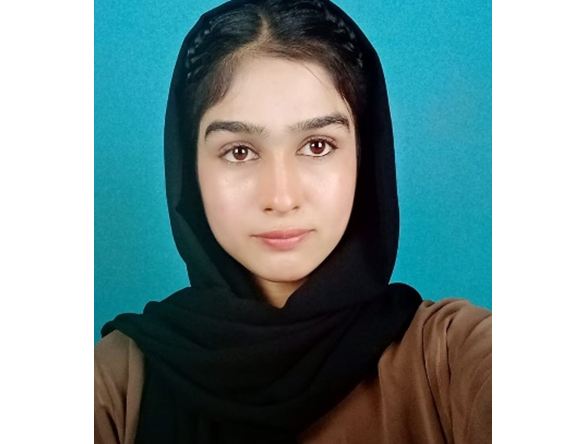
Depalpur: An Ancient Kingdom

Depalpur: An Ancient Kingdom

Afshan Kanwal

Student BS BBIT University of Okara

Depalpur is one of the most ancient cities in present-day Pakistan, located approximately 25 kilometers from the district headquarters of Okara in the Punjab province. It holds significant historical importance, with records and archaeological evidence pointing to its continuous habitation from ancient times to the present day. The city’s origins are traced back to approximately 200 BCE, placing its foundation contemporaneously with the declining phase of ancient Egyptian civilization.

According to local tradition, the original settlement was established by a figure named Seri Chand, who named it “Srinagar.” Legend holds that Seri Chand was initially childless and it was only after his spiritual guide, Jandarmani, performed a prolonged ascetic ritual—standing on one leg for five months and twenty-seven days—that he was blessed with two sons, Bheem and Lalu Jarai. Seri Chand brought them to the region now known as Depalpur. The current name of the city is attributed to Raja Depal, a Rajput prince and the son of Raja Salwa Han, who is believed to have reconstructed the city, bestowing upon it the name Depalpur.The antiquity of Depalpur is further attested by ancient Indian texts such as the Rigveda, wherein the city is recognized as one of the oldest continuously inhabited urban centers in the Indian subcontinent. Over the centuries, despite suffering repeated devastation, the city was consistently rebuilt upon its ruins, retaining its historical and cultural vibrancy. Historically, the fortified area of the city spanned approximately 100 acres.

Depalpur was situated within the region known as Sapta Sindhu, or “the land of seven rivers”—Ravi, Sutlej, Chenab, Jhelum, Indus, Beas and Kabul—a term used to describe the fertile territory where the early Aryan settlements took root. Alongside cities such as Ajodhan (modern-day Pakpattan) and Qabula, Depalpur was a prominent urban center of that era. The strategic importance of Depalpur became particularly pronounced during the 14th century CE, when it served as a critical defensive outpost for the Delhi Sultanate against Mongol invasions. It was considered the last fortified city between the Khyber Pass and Delhi. Throughout the reigns of the Tughlaqs, Mughals, Sikhs and eventually the British, the city remained on the principal route connecting Delhi and Lahore. Notably, during the reign of Emperor Akbar in the 16th century, the Mughal sovereign halted at Depalpur Fort en route to Pakpattan to pay homage at the shrine of Baba Farid.

During the era of Sikh dominance, Depalpur functioned as a taluqa (an administrative unit). The fort of Depalpur, characterized by rare red-brick walls as wide as 25 feet, still bears remnants of its former grandeur. Its defensive infrastructure included guard posts and a large water-filled moat, which served as an effective barrier against invasions.

In the 13th century, Ghiyas-ud-Din Tughlaq, who was then the governor of Depalpur, defended the fort from Tatar incursions. The fort sustained damages during the siege, but restoration was undertaken in 1244 under Ghiyas-ud-Din’s command. In 1526, during his conquest of the Indian subcontinent, Babur encountered stiff resistance at Depalpur Fort, an event he mentioned in his memoirs, Tuzk-e-Babri. Earlier military campaigns by Muhammad bin Qasim were also said to have reached Depalpur, albeit without success. Sultan Balban utilized the city as a strategic point to halt Mongol advances and it was during this period that the celebrated poet Amir Khusrau was briefly imprisoned in the fort.

When the conqueror Tamerlane invaded the region, Depalpur was noted for its eighty-four towers, eighty-four mosques and eighty-four wells a symbol of its architectural and cultural prominence. Uniquely among regional forts, Depalpur was constructed on a high elevation, rising approximately 300 feet above the surrounding plains. The fort was accessible through four main gates, each named according to its orientation: Delhi Gate (east), Multani Gate (west), Lahori Gate (north) and Bikaneri Gate (south). Today, only the eastern and western gates survive; the others have succumbed to time.Within the fort, a remarkable tunnel was constructed with provisions for air and light, reportedly wide enough for two horses to pass side by side. A royal mosque, still standing, also exists within the fort’s boundaries. In the Lalu Jarai colony, traces of a former Hindu temple remain. Prior to the partition of India and the creation of Pakistan in 1947, members of the Khatri Hindu community used to frequent this temple for traditional head-shaving rituals. Local lore recounts the story of a child named Lalu who, according to legend, sank into the earth due to his mother’s curse; the temple was erected at this site. Although the temple structure no longer stands, a small stone marker still commemorates the location.

Nearby, the sealed entrance of a tunnel, allegedly constructed by Firoz Shah Tughlaq, still exists. Firoz Shah, appointed governor of Depalpur by Muhammad bin Tughlaq, implemented several administrative reforms but is also remembered for his authoritarian rule. Local folklore narrates his unrequited love for the daughter of Raja Raman of Talwandi. Following her rejection, he imposed harsh taxes that caused widespread migration. Eventually, the princess accepted his proposal to alleviate her people’s suffering. Due to this controversial episode, he is still referred to in oral tradition as Nait Moluba man who coerced love through power. Firoz Shah was the last significant ruler to renovate Depalpur Fort.Portions of the fort’s sarai (inn) are still intact, with some rooms occupied by local inhabitants while others remain sealed. The area once contained several Hindu temples visited by pilgrims from across India. However, following the demolition of the Babri Masjid in 1992, local retaliatory sentiment led to the destruction of these temples and the sites were repurposed for residential use.

In contemporary times, Depalpur has evolved into a populous and administratively significant region. With a population estimated at around 1.4 million, it stands as one of the largest tehsils in Pakistan and comprises five union councils. Besides its immense historical value, the region is agriculturally rich and fertile. There is an urgent need for government and heritage conservation authorities to take active measures to preserve and restore the fort of Depalpur, its remaining temples, Haveli Lakha, Bloom Shah’s shrine and other cultural landmarks to safeguard their architectural and historical legacy for future generations.In the last, I would like to express my heartfelt gratitude to Dr. Muhammad AkramZaheer for his invaluable support and encouragement in guiding me to write an insightful write-up about Okara Cantonment. His unwavering motivation, constructive feedback and deep understanding of the subject matter played a vital role in shaping my ideas and strengthening my research. It was through his mentorship that I found the confidence to explore this topic with depth and originality. I am truly thankful for his generous help and academic inspiration

[email protected]

SOS call to the PM over budget wreckage, FTR removal, EFS distortion

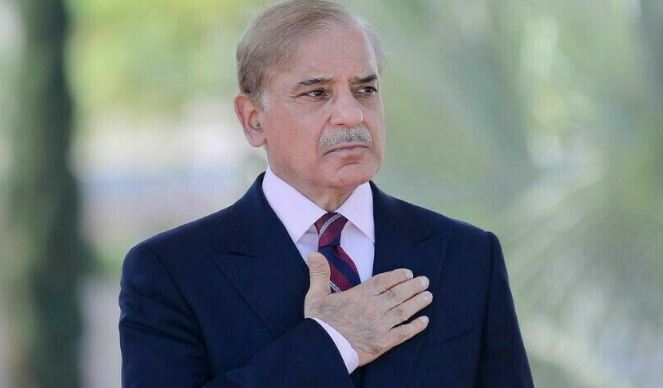
Shehbaz Sharif

LAHORE, JUN 17 /DNA/ – Pakistan’s $11 billion value-added export-oriented industry—contributing nearly one-third of the country’s total exports—has issued a strong SOS appeal to Prime Minister Shehbaz Sharif, warning that recent budgetary measures are set to derail the export-oriented sectors at a critical time.

In a joint statement, Pakistan Readymade Garments Manufacturers and Exporters Association (PRGMEA), in collaboration with the top export-oriented associations including PHMA, SIMAP, PSGMEA, PGMEA, PLGMEA, PCSUMEA and Sialkot Chamber of Commerce, demanded the immediate revival of the Final Tax Regime (FTR) and restoration of the Export Facilitation Scheme (EFS) to its original structure.

The appeal was endorsed by industry stalwarts including PRGMEA Chairman Dr. Muhammad Ayyaz Uddin and former Central Chairman Sohail A. Sheikh, Sialkot Chamber of Commerce and Industry (SCCI) President Ikram ul Haq, PSGMEA Chairman Khawaja Masud Akhtar—whose company’s footballs are used in FIFA World Cup tournaments — SIMAP Chairman Zeeshan Tariq, PLGMEA Chairman Syed Ahtisham Mazhar, PHMA Chairman Abdul Hameed and former chairman Khawaja Mushraf, PGMEA Chairman Annas Raheel Barlas, PCSUMEA Chairman Muhammad Jamal Bhutta, Majid Bhutta, Ansar Aziz Puri, Sheikh Luqman Amin and other prominent exporters and business leaders.

They expressed deep concern that despite government slogan of “export-led growth,” the reality on the ground is entirely opposite. The Government always talks about promoting exports, but in practice, no department seems to be on board.

They pointed out that in the entire budget speech, the finance minister uttered the word “export” only once — and that too in a negative context while imposing duties on imported yarn under EFS.

Addressing the Prime Minister directly, the joint statement said: “Honourable Prime Minister, we urge you to intervene immediately. Please convene an emergent meeting with the leading export associations and the Sialkot Chamber before this budget is passed. If this situation persists, Pakistan’s most reliable foreign exchange earning sector will suffer irreparable damage.” They stressed that in such a policy environment, the government’s vision “URAAN PAKISTAN” of taking exports to $100 billion is simply not possible.

The industry leaders were clear: “We’re not asking subsidies, exemptions, or special treatment—just a level playing field to compete globally. Unfortunately, the current policies have drastically raised the cost of doing business and severely impacted ease of doing business.

Work must begin on a war footing to restore confidence and streamline processes. International buyers are actively seeking long-term clarity and stability in the EFS framework, as Pakistan stands at a strategic moment to attract business being diverted from China. This opportunity must not be missed.

They said the abolition of FTR and the breakdown of EFS have created chaos in the industry. The Final Tax Regime, which once offered a simple and predictable tax mechanism, has now been replaced by complex procedures, audits, and refund hurdles, particularly hurting small and medium (SMEs) exporters.

Meanwhile, the EFS—once a vital mechanism for importing essential raw materials not produced locally, or required by buyers to use their nominated suppliers to meet international quality standards, such as specialized materials and technical fabrics — has been bogged down by unnecessary conditions, limiting access to critical inputs and undermining export competitiveness. Business leaders emphasize that it is time for Pakistan to strategically move beyond cotton and adopt a more diversified, innovation-driven approach to value-added apparel exports.

“We don’t have time for delays and paperwork when international buyers are waiting. These policy changes are making us uncompetitive, increasing costs, and pushing us out of global markets,” they said. The result, they warned, will be cancelled export orders, closed factories, and mass unemployment.

The exporters reiterated that restoring the original FTR and EFS mechanisms will not cost the government anything but will directly help grow exports and attract more foreign exchange. This is not just about industry survival—it’s about Pakistan’s economic stability. We stand united and ready to engage, but we need urgent and serious action from the government.

“Pakistan is at a crossroads. With the right policy support, our exporters can help drive growth, jobs, and stability. But the clock is ticking—and the damage is already being felt.”=DNA

==========

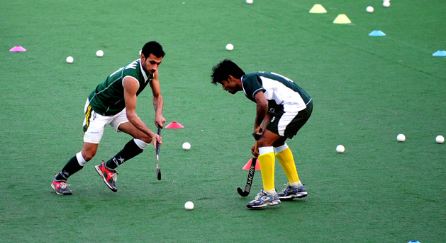
PSB increases Bunda hockey ground fee by 300%

PSB increases Bunda hockey ground fee by 300%

The clubs emphasized that this move directly contradicts the government’s declared commitment—especially by Prime Minister Shehbaz Sharif, Minister Sanaullah, and Secretary Mohyuddin Wani—to promote and revive hockey at the grassroots level

By our correspondent

ISLAMABAD, JUN 17 /DNA/ – The government’s ongoing efforts to revive Pakistan’s national sport, hockey, have taken a major hit as the Pakistan Sports Board (PSB) has sharply increased usage charges for the Naseer Bunda Hockey Stadium—shifting focus from athlete development to revenue generation.

According to details, the PSB has raised the daily usage fee for the stadium in Islamabad from Rs. 1,500 to Rs. 5,700—a staggering hike of nearly 300%—affecting registered hockey clubs in the federal capital.

In response, affiliated clubs under the Islamabad Hockey Association (IHA) have written to the Advisor to Prime Minister for Inter-Provincial Coordination (IPC) Rana Sanaullah and IPC Secretary Mohyuddin Wani, urging them to intervene and reverse the increase. They warned that the steep fees pose a serious financial burden on young players and grassroots training programs.

The clubs emphasized that this move directly contradicts the government’s declared commitment—especially by Prime Minister Shehbaz Sharif, Minister Sanaullah, and Secretary Mohyuddin Wani—to promote and revive hockey at the grassroots level.

 The Rising Stars Hockey Club along with other clubs, have been actively promoting hockey by offering free training sessions for schools and colleges boys and girls over the past several years. The club stressed that such initiatives are crucial for youth development and for rebuilding Pakistan’s legacy in international hockey.

“The youth are the future of Pakistan,” the letter stated, “and engaging them in structured, healthy activities like hockey is essential—not just for personal growth but also for restoring the sport’s national pride.”

The letter concluded with a plea for immediate action, stressing that easing the financial burden on local clubs is key to sustaining the momentum for a national hockey revival.

“The facility should ideally be free or heavily subsidized,” said a former international player. “The government should invest in the sport instead of commercializing it to the point of extinction.”

The Pakistan Hockey Federation (PHF) is also being urged to take up the matter with PSB officials, advocating on behalf of players who rely on regular training sessions to maintain form and fitness.=DNA

=========

G 14/1: Landowners seek NAB intervention against FGEHA

G 14/1: Landowners seek NAB intervention against FGEHA

As the matter now lands on NAB’s table, all eyes will be on whether the accountability watchdog can uncover the truth behind the alleged manipulation of compensation mechanisms — and if justice can finally be delivered to the rightful stakeholders of Islamabad’s evolving urban landscape

ISLAMABAD, JUN 17 /DNA/ – As the Federal Government Employees Housing Authority (FGEHA) moves forward with settling compensation claims in Sector G-14/1 — one of Islamabad’s oldest localities encompassing the villages of Chellow and Jhangi Syedan — a wave of discontent has emerged among local landowners, who have now approached the National Accountability Bureau (NAB) over alleged irregularities in the process.

Established initially as a cell under the Ministry of Housing and Works in 1989, the Federal Government Employees Housing Foundation (FGEHF) was elevated to the status of an authority through a presidential ordinance in July 2019. This transformation was subsequently formalized by the passage of the Federal Government Employees Housing Authority Act in January 2020.

Although development work in Sector G-14 began more than 15 years ago, the authority only recently initiated work in G-14/1. The sector, like others in the capital, is divided into four sub-sectors: G-14/1, G-14/2, G-14/3, and G-14/4. Development in the first three has progressed steadily, but G-14/1 lagged behind, primarily due to land acquisition disputes.

The FGEHA has now reportedly disbursed compensation cheques totaling Rs518.98 million across 32 property assessments. However, local residents claim that a majority of these payments were made to non-resident investors rather than to original landowners who have lived in the area for decades.

Several individuals received multiple cheques, and in some cases, multiple recipients belonged to the same family. In addition to cash payments, plots valued between Rs25 million to Rs30 million were also allotted to these beneficiaries.

This perceived favoritism has sparked outrage among around 300 local landowners, who allege they were unfairly excluded from the compensation process. Many claim that investors — in collusion with FGEHA officials — purchased claims from original landowners at nominal rates and later profited massively through a flawed compensation mechanism.

A local landowner, stated:

“This is not the first time the FGEHA has marginalized genuine locals. Time and again, we see a pattern where outside investors are given preferential treatment.”

He added that these practices compelled local landowners to file a formal complaint with NAB, demanding a full investigation. They have also submitted grievances to the FGEHA, seeking redressal.

When approached for comment, FGEHA Director (Land) Ihsan Ilahi confirmed receiving applications from aggrieved parties. However, he noted that the matter primarily falls under the jurisdiction of the Land Acquisition Collector and thus referred the complainants to the appropriate authority.

Meanwhile, FGEHA spokesperson Nasir Mahmood defended the authority’s actions, asserting that compensation was awarded strictly on merit and in accordance with established criteria.

“The allegations of cherry-picking are entirely baseless,” he said.

Nonetheless, the controversy has drawn the attention of the National Assembly’s subcommittee on housing and development, headed by local MNA Anjum Aqeel Khan. Khan acknowledged the discontent among local landowners and vowed to address their concerns in the committee’s next session.

“The villagers of Chellow and Jhangi Syedan have lived here for generations and deserve fair and transparent treatment. We will question FGEHA officials, including the Director General, in the upcoming meeting,” said MNA Khan.

He also congratulated the Ministry of Information, under the leadership of Federal Minister Attaullah Tarar, for its effective role in projecting Pakistan’s stance during the recent armed skirmishes with India, but emphasized that domestic accountability must remain a priority.

This latest episode adds to the long-standing concerns about transparency and equity in Islamabad’s urban expansion. While authorities claim to operate within legal frameworks, repeated grievances from genuine landowners highlight the need for enhanced oversight and stronger institutional checks.

As the matter now lands on NAB’s table, all eyes will be on whether the accountability watchdog can uncover the truth behind the alleged manipulation of compensation mechanisms — and if justice can finally be delivered to the rightful stakeholders of Islamabad’s evolving urban landscape.=DNA

=============

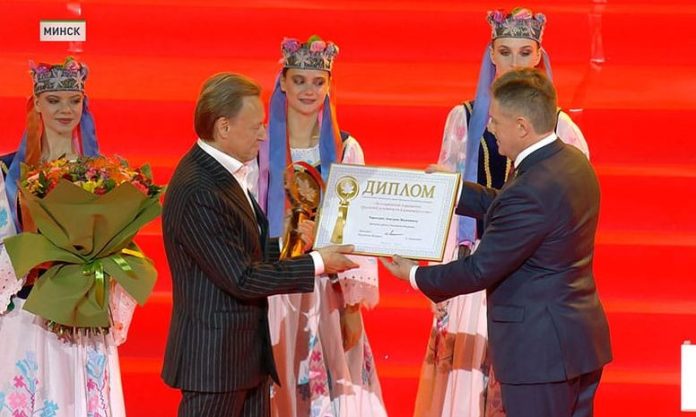
XXXI Minsk Int’l Film Festival Listapad will be held from Oct 31 to Nov 7

Minsk

DNA

MINSK: The organizers are the Ministry of Culture of the Republic of Belarus, the Minsk City Executive Committee and the National Film Studio Belarusfilm.

Every year, the film forum brings together famous cultural figures, film industry professionals, and film lovers from many countries around the world.


The main goal of the film festival is to develop and strengthen creative contacts, exchange experiences and ideas between cinematographers from its participating countries.

The program includes not only film contests, but also out-of-competition and retrospective screenings, meetings with famous filmmakers, press conferences, workshops, exhibitions and presentations.

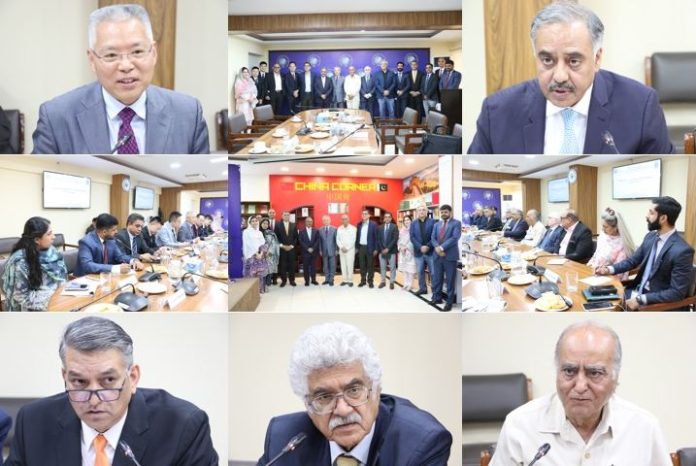
ISSI hosts high-level Chinese communist party delegation

ISSI hosts high-level Chinese communist party delegation

ISLAMABAD, JUN 16 /DNA/ – The Institute of Strategic Studies Islamabad (ISSI) hosted Roundtable with Chinese delegation comprising senior officials from the International Department of the Central Committee of the Communist Party of China (IDCPC). The participants from Pakistan side included eminent practitioners and academics. The discussion focused on the evolving global order, regional developments, China’s role in the Global South, and ways to advance CPEC and further strengthen the Pakistan-China ‘All-weather Strategic Cooperative Partnership’. It also highlighted the importance of forging robust people-to-people ties through enhanced engagement with the youth, media, and academia, and the optimal utilisation of social media platforms.

The Chinese delegation was led by Mr. Hu Zhaoming, Spokesperson of the IDCPC & Director General of the Information and Communication Bureau of the IDCPC. He was accompanied by Mr. Hu Xiaodong, Division Director of the Information and Communication Bureau of the IDCPC, Mr. Fan Shilian, Third Secretary of the Information and Communication Bureau of the IDCPC, Mr. Li Zishuo, Attache of the Information and Communication Bureau of the IDCPC, Mr. Wang Shengjie, Political Counselor, Chinese Embassy in Islamabad and Mr. Zhang Duo, Attache, Chinese Emassy in Islamabad.

On the ISSI side, participants included: Ambassador Zamir Akram, Ambassador Masood Khalid, Ambassador Babar Amin, Dr. Hassan Daud Butt, Mr. Farrukh Pitafi, Dr. Salma Malik, Ms. Nabila Jaffar, Dr. Tahir Mumtaz Awan, and Faizan Taimoor Saqib.

In his welcome remarks, Director General ISSI Ambassador Sohail Mahmood warmly welcomed the Chinese delegation and appreciated the role of IDCPC Minister Liu Jianchao in fortifying bilateral cooperation. Highlighting the unmatched nature of Pakistan-China relations, he reaffirmed that the relationship—rooted in strategic mutual trust and mutual support on all issues of core interest—remains the cornerstone of Pakistan’s foreign policy. Ambassador Sohail Mahmood underscored CPEC’s transformative impact and lauded China’s peaceful rise under President Xi Jinping’s visionary leadership. Emphasizing the importance of strategic stability, enhanced coordination, and people-to-people exchanges, he called for stronger media collaboration and continued support for shared goals. Ambassador Sohail Mahmood reiterated Pakistan’s commitment that no third-party factor would affect this all-weather strategic cooperative partnership.

In his remarks, Mr. Hu Zhaoming shared deep insights into the evolving trajectory of China’s foreign policy. He emphasized high-quality development and Chinese-style modernization. Highlighting the importance of President Xi Jinping’s key thoughts, including foreign policy and cultural rejuvenation, he underscored China’s commitment to peace, cooperation, and shared progress. Mr. Hu noted that today’s global transformations—described by President Xi as “great changes unseen in a century”—are largely influenced by China’s peaceful rise. He reaffirmed that China remains firmly aligned with the ‘Global South’ and is determined to deepen partnerships, especially with Pakistan.

During the in-depth discussion, participants exchanged views and perspectives on a wide range of topics, including China’s role in promoting regional stability, enhancing CPEC, people-to-people exchanges, and China’s growing role in the Global South. It was agreed that both countries must work together to counter any motivated misperceptions, deepen strategic communication, and expand opportunities for collaboration at all levels—governmental, academic, and societal. The discussions also reflected a strong mutual desire to ensure that the next phase of Pakistan-China cooperation is also dynamic, inclusive, and future-oriented.

In his concluding remarks, Ambassador Khalid Mahmood, Chairman BoG, ISSI, emphasized the importance of enhancing cultural and people-to-people ties to further enrich the Pakistan China friendship. He reaffirmed that China-Pakistan relationship is a valuable legacy to be preserved and passed on to future generations.

PM launches PIMEC 2025 to boost Pakistan’s maritime economy

PM launches PIMEC 2025 to boost Pakistan’s maritime economy

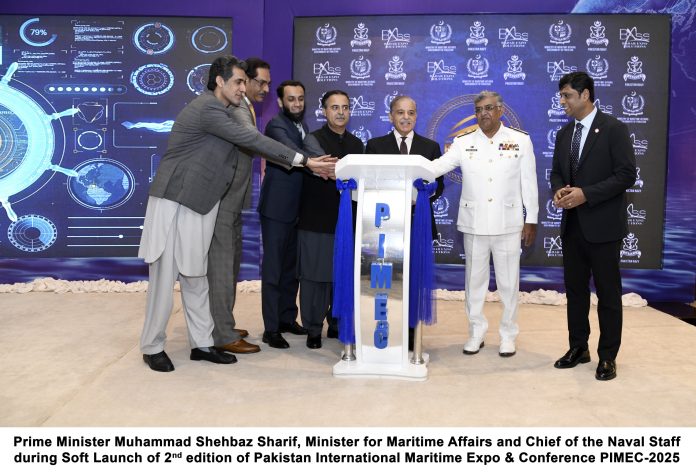
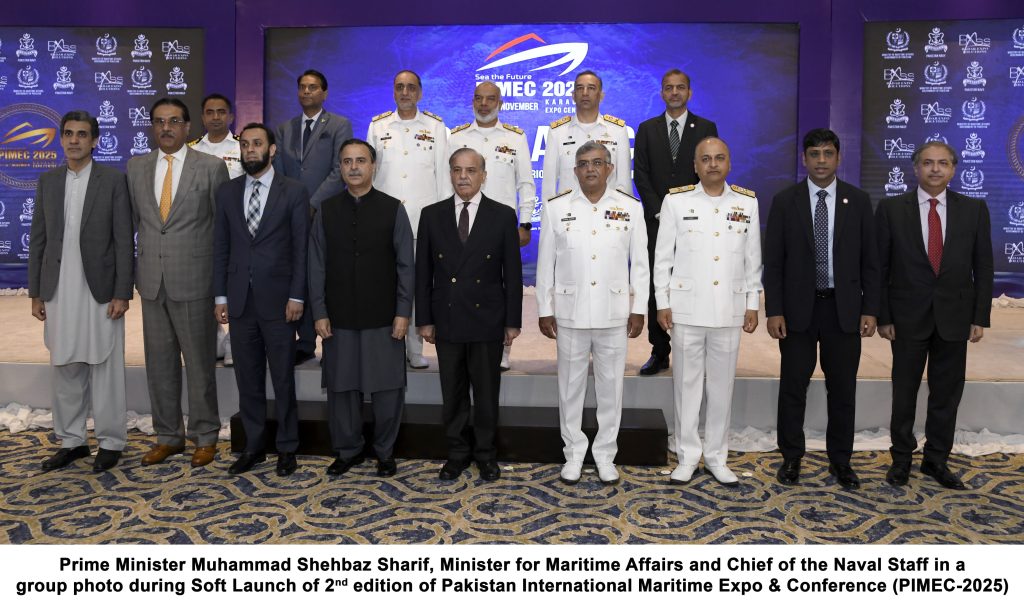
ISLAMABAD, JUN 16 /DNA/ – Soft launch of 2nd edition of Pakistan International Maritime Expo & Conference (PIMEC) was held at Islamabad. Prime Minister of Islamic Republic of Pakistan Muhammad Shehbaz Sharif was the Chief Guest on the occasion. Upon arrival, Chief of the Naval Staff Admiral Naveed Ashraf received the Chief Guest. PIMEC-2025 is scheduled to be held from 3-6 November 2025 at Karachi Expo Centre.

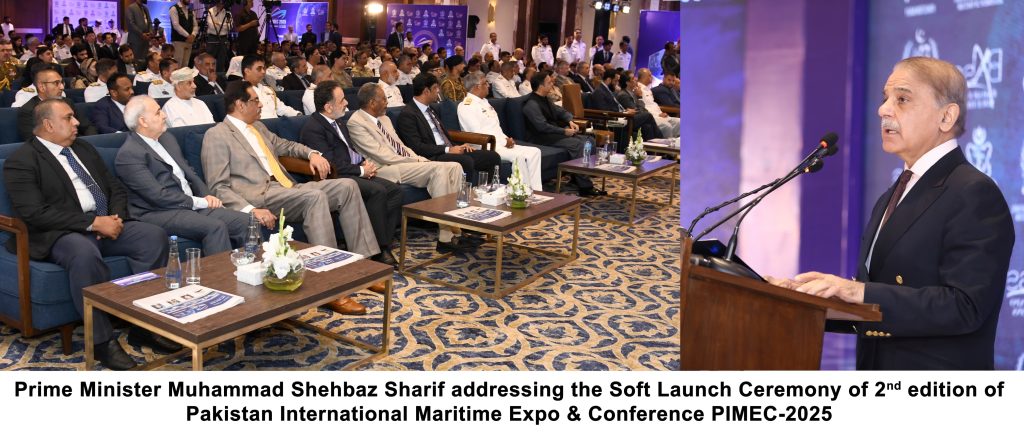
While addressing at the ceremony, the Chief Guest appreciated Pakistan Navy for taking initiative to exhibit potential of Pakistan’s maritime sector through PIMEC. He said that Pakistan offers enormous opportunities for profitable investments, joint ventures and trade in the maritime sector. He highlighted that oceans bring the nations closer and therefore, there is a need to make them a safer place through collaborative efforts of all stakeholders. Pakistan, as a responsible state, is committed to playing its role for international peace, stability and order, and this transcends to the maritime domain as well. He also acknowledged the efforts of Pakistan Navy for being at its best both when it comes to defending our sea frontiers as witnessed in MARKA-E-HAQ and promoting Pakistan’s maritime interests.

He underscored that Pakistan is blessed with a maritime potential that can contribute hugely to the national economy. Development of efficient ship-breaking industry, trans-shipment ports, fisheries industry, coastal tourism, water sports and aqua culture are few of the areas which deserve special focus. The Prime Minister emphasized on the integration of public–private partnership amongst maritime industry to achieve optimum results. He further added that the potential of academic and R&D organizations must be incorporated for enhancing efficiency and productivity of our maritime sector. He assured that the government will continue to create a business and investment friendly environment. The Chief Guest hoped that avenues generated through PIMEC will grow and bring Pakistan closer to the cherished goals of realizing regional peace and shared prosperity through collaborative efforts.

Earlier, Minister for Maritime Affairs, Muhammad Junaid Anwar expressed his sincere gratitude to the Chief Guest, Chief of the Naval Staff and all worthy guests for gracing this event. He emphasized that PIMEC is a flagship event of Pakistan which will open avenues for demonstrating latest technology of national and international maritime industry.

The soft launch was attended by Federal Ministers, Senior Armed Forces Officers, Ambassadors, and distinguished guests from all walks of life.

GB Chief Minister highlights peace, investment potential to UBG

GB Chief Minister highlights peace, investment potential to UBG

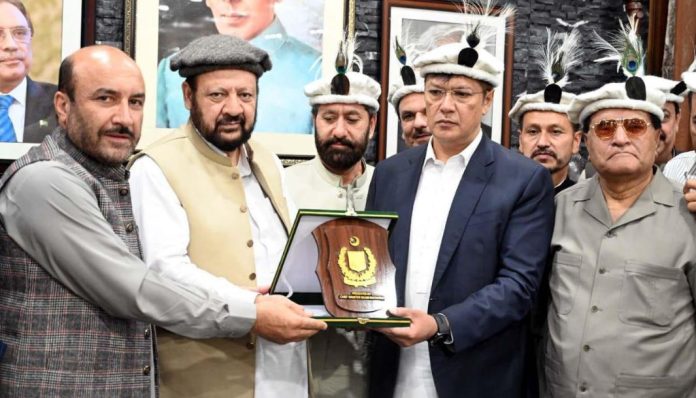
ISLAMABAD, JUN 16 /DNA/ – Chief Minister of Gilgit-Baltistan, Haji Gulbar Khan, has stated that Gilgit-Baltistan is an ideal region for investment compared to other areas of the country. It is the most peaceful region in Pakistan.

There are vast opportunities for investment in key sectors such as power, minerals, agriculture, and tourism. He made these remarks during a meeting yesterday with a delegation of the United Business Group (UBG) led by S.M. Tanveer.

He said the government is providing every possible support to investors and has undertaken special reforms to promote investment. A Board of Investment has been established, and the Public-Private Partnership law has been passed.He added that work is progressing rapidly on the establishment of industrial and economic zones. A one-window facility for investors will be introduced soon.

Major infrastructure projects are under construction to improve transportation, including the Gilgit-Chitral Expressway, Skardu-Astore Road, and Darail-Tangir Expressway. To permanently resolve the power crisis in the province, short-term and long-term policies are being implemented. He said that efforts are being made to complete the Prime Minister’s announced 100-megawatt solar power project in a short period. In addition, several other mega power projects are also under construction.

The construction of an international airport in Skardu has led to a significant increase in both domestic and international tourism to Baltistan. The government is also striving to construct an international airport in Gilgit and is inviting major investors in this regard. On this occasion, Special Assistant to the Chief Minister of Gilgit-Baltistan for Information Technology Muhammad Ali Quaid, Chairman Board of Investment Fatehullah Khan, Provincial Secretary Tourism, Provincial Secretary Agriculture and Additional Secretary Minerals gave a briefing on investment opportunities in Gilgit-Baltistan. Speaking on the occasion, UB Chief Minister SM Tanveer said that the vision of the Chief Minister Gilgit-Baltistan regarding investment is commendable.

The future of Gilgit-Baltistan looks bright. He said that due to the steps taken by the provincial government to attract investors, big investors will turn to Gilgit-Baltistan in the future. UBG will play its role in the construction of an international airport in Gilgit. Land reforms by the provincial government are a very important initiative that will remove obstacles to investment. Speaking on the occasion, Secretary General UBG Zafar Bakhtawari said that the expansion and modernization of Gilgit Airport has been declared essential for the development and promotion of investment in Gilgit-Baltistan.He stated that due to the limited number of flights and frequent cancellations at Gilgit Airport, investors are hesitant to invest in the region.

If Gilgit Airport is upgraded to accommodate larger aircraft, similar to Skardu, it would not only boost tourism but also strengthen the local economy. Zafar Bakhtawari cited the example of the Sialkot Chamber of Commerce, which successfully established its own airport and airline through a public-private partnership. He said this model could also be replicated in Gilgit-Baltistan.

He urged both the government and the private sector to work together to improve Gilgit Airport in order to promote investment and tourism in the region. He further mentioned that during Ahsan Bakhtawari’s tenure as president of the chamber, he led a large delegation to Gilgit-Baltistan, which significantly boosted tourism in the area.=DNA

UK appoints first woman head of MI6 spy service

UK appoints first woman head of MI6 spy service

Appointment of Blaise Metreweli comes at time when work of our intelligence services has never been more vital, says Starmer

LONDON, JUN 16 – The UK government has appointed the first-ever woman to head its MI6 spy service as the country faces “threats on an unprecedented scale”, Prime Minister Keir Starmer announced on Sunday.

The MI6 Secret Intelligence Service (SIS) achieved global fame through Ian Fleming’s fictional agent James Bond.

Blaise Metreweli will be the 18th head of the service, Starmer’s Downing Street office said in a statement.

“The historic appointment of Blaise Metreweli comes at a time when the work of our intelligence services has never been more vital,” Starmer said.

“The United Kingdom is facing threats on an unprecedented scale — be it aggressors who send their spy ships to our waters or hackers whose sophisticated cyber plots seek to disrupt our public services,” he added.

The MI6 chief is the only publicly named member of the organisation and reports directly to the Foreign Secretary.

The person in the post is referred to as “C” — not “M” as in the James Bond franchise, which already had a woman, played by Judi Dench, in the role.

Metreweli will take over from outgoing MI6 head Richard Moore in the autumn.

Currently, she is MI6’s Director General  known as — “Q” — with responsiblity for technology and innovation at the service, the statement said.

She is described as a career intelligence officer who joined the service in 1999 having studied anthropology at Cambridge University.

Metreweli held senior roles at both MI6 and the MI5 domestic intelligence service and spent most of her career in “operational roles in the Middle East and Europe”, the statement added, without giving further biographical details.

The appointment comes over three decades after MI5 appointed its first female chief.

Stella Rimington held the position from 1992-1996, followed by Eliza Manningham-Buller from 2002-2007.

The UK intelligence and security organisation GCHQ appointed its first woman chief, Anne Keast-Butler, in 2023.

Stay Connected

64FansLike
60FollowersFollow

Latest Reviews

Exchange Rates

USD - United States Dollar
EUR
1.17
GBP
1.34
AUD
0.67
CAD
0.73