Home Blog Page 3032

AIOU signs MoU with Hazara University for cooperation

ISLAMABAD, Dec 07 (DNA): Allama Iqbal Open University (AIOU) is exclusively focusing on raising the quality standards in both academic and research fields through collaborating with national and international universities as well as expanding its network across the distant geographical regions of the country.

This was stated by Prof Dr Zia Ul Qayyum, Vice Chancellor, AIOU while addressing MOU signing ceremony between AIOU and Hazara University.

According to the MoU, both the universities will collaborate in teachers and students exchange program, joint academic and research projects as well other programs of mutual interest. Prof. Dr. Zia Ul-Qayyum, further, said that within the limited time period of two years, AIOU has raised the standards of quality education by incorporating the use of latest ICT and provided educational facilities to the distant regions of the country and specially to underprivileged segments of the society by expanding its regional network system. He extended support to Hazara university by providing access to utilize AIOU regional centers’ facilities.

While addressing the ceremony, Prof Dr Jamil Ahmad, Vice Chancellor, AIOU said that his university is primarily focusing on collaborating with different universities to enhance quality of education by providing latest facilities to its students. He, further, said that it is a matter of great pride for Hazara university to sign MoU with AIOU which is a prestigious national institute of international recognition and fame specially in mass education.

This cooperation would be fruitful to the students of Hazara university in all respects. Dr Latif Gondal, Director, ORIC described the aims and objectives of the MoU. Both the Vice Chancellors signed MoU from their respective universities. Deans of all four faculties, Registrar and faculty members were present at the occasion. DNA

========

Pak welcomes peace efforts in Gulf

Ansar Bhatti

ISLAMABAD: Pakistan on Monday welcomed the reported progress towards resolution of the rift in the Gulf region. The spokesman said, “We particularly appreciate Kuwait’s sincere efforts for helping to bridge differences and promoting reconciliation among the countries in the dispute’.

Pakistan hopes that enhanced confidence and understanding among these countries will foster durable peace and prosperity in the region.

Massive absenteeism of young people to vote. What does the percentage look like?

More than 4.6 million young people aged between 18 and 34 are on the permanent lists of the BEC. Of these, only 1.18 million voted on Sunday, December 6th.

This means that only 25.39% of them got to vote. Therefore, 3,478,386 young people did not come to vote in Romania. The number of young voters represents 20.43% of the total number of those who voted in the country on Sunday, writes.

83,120 young people voted in the diaspora, representing about a third of the total number of voters from abroad.

It is the lowest turnout of young people in the country in the last four years, with five elections. Attendance at the Parliament is traditionally low, but the turnout of young people has been 6% lower than at the 2016 Parliament.

Compared to the September local elections, where there were 1.8 million young people , 620 thousand of them were absent from this election.

The presence of young people between 18-34 years old, broken down by sex, shows that women were more absent from voting than men, if we refer to the permanent electoral lists. Specifically, only 562,841 women came to the polls, out of the 2.2 million registered. That means 24.79%.

By age groups, at national level, young people who have not yet reached the age of 25 were 80% absent: out of 1,606,921 people, only 443,223 (20.06%) voted.

And between 25 and 34 years old, only 24.24% participated in the vote.

Most young people voted in the Capital and the counties with university cities, Iași, Cluj, Timiș, on the last places of the list being the counties of Brăila, Ialomița, Covasna and Tulcea.

Pakistan in talks with China, Russia to get vaccines

ISLAMABAD, DEC 7 – Health authorities are negotiating with China and Russia, among others, to procure coronavirus vaccines, an official said on Monday.

“We are in talks with China, Russia and some other countries for procurement of the [Covid-19] vaccine after narrowing down our priority list,” Dr Faisal Sultan, special assistant to the prime minister on health, told Anadolu Agency.

The vaccine, he said, would be available in Pakistan sometime between January and March next year, and administered to health workers and senior citizens in the first phase.

“There is nothing final yet; however, I can tell you that we have to rely on more than one source,” the adviser said. “We will procure the vaccine only after its efficacy and safety is proven.”

While Russia has started the distribution of its Sputnik V Covid-19 shot nationwide, China is testing its vaccines in many countries, and supply deals are being signed.

Other vaccines seeking emergency use authorisation are produced by Pfizer-BioNTech, Moderna and Oxford-AstraZeneca.

Islamabad has already earmarked an initial sum of $150 million to purchases the doses. In a press conference earlier this month, Dr Sultan had said that the authorities will request the government to approve more funds if required.

Last week, Nausheen Hamid, the parliamentary secretary for health, said all citizens would be administered Covid-19 vaccines free of charge, and the drive will begin in the second quarter of 2021.

According to Dr Sultan, the vaccine will be administered to the Pakistani population in stages: frontline healthcare workers will be the first priority; in the second stage, the elderly and at risk-population, in addition to other healthcare workers, will get the vaccine; and the common public will receive the vaccine in the third stage.

Pakistan has witnessed a spike in Covid-19 cases and deaths in recent weeks. The country recorded 3,795 new infections today, the highest single-day tally since July 3.

The total caseload in the country of 220 million people has reached 420,294, including 8,398 related deaths. Pakistan has tested about 5.8 million people for the virus to date.

England-South Africa ODI series called off after Covid-19 cases

England’s One-day International series against South Africa has been cancelled after reported breaches of the teams’ bio-secure environment in Cape Town, reported on Monday.

One South Africa player and two hotel staff are confirmed Covid-19 cases from within the bio-secure hotel, while England said on Sunday that they had two “unconfirmed positive results” among their touring party.

The news will be a massive financial blow to embattled Cricket South Africa (CSA) and also casts doubt on their ability to host future tours, with Sri Lanka, Pakistan and Australia all set to play in the country in the coming months.

The South Africa team and Vineyard Hotel management said they had investigated how the coronavirus may have been contracted within the bio-secure environment without success, though they denied any players or staff had left the venue without authorisation.

It is a disappointing end to what was supposed to be a welcome, money-spinning return to international cricket for South Africa, who had been inactive since March when they cut short a limited overs tour to India.

Since then they have seen tours to Sri Lanka and West Indies postponed, placing enormous financial pressure on CSA.

They did manage to play three matches in a home Twenty20 series against England prior to the ODI series that were all won by the tourists.

But the 50-over series, which was due to start on Friday, was at first postponed to Sunday when an unnamed South Africa player tested positive and now has been scrapped altogether as concerns over the bio-secure environment grow.

Balance of power through Pak-China defense cooperation!

Attiya Munawar

Pakistan and China are bound in everlasting ties of love and friendship. The long lasting, deep and strong fraternal ties between the two countries are based on mutual trust, confidence and respect, so the changes that have taken place at the international level have never had an effect, but the relationship has improved over time. Pak-China relations are paramount in every field. In recent years, China has turned its attention to investing in Pakistan and also several Chinese companies are operating in different sectors in Pakistan.

China has always strived to make Pakistan one of the developed nations and is always ready to work side by side in all areas including, economic, energy and defense. From cooperation in aviation from Pakistan to the exchange of delegations in trade and cultural fields, the two countries have not only grown closer, but these contacts have been very helpful in getting acquainted with each other’s culture and civilization.

And now on the occasion of the Chinese Defense Minister’s visit to Pakistan, it has been agreed to increase defense cooperation. Due to India’s aggressive demeanor, Pakistan is on the path of invincibility while maintaining its defense resources, and China is fully cooperating in making Pakistan’s defense invincible.

In the current objective situation, Pak-China relations are important. India is buying state-of-the-art military weapons from all over the world; its main target is Pakistan. Where India is invading Pakistani borders, it is also challenging China. In this context, Pakistan and China have come closer. Strategic ties between Pakistan and China are important for peace, stability and development in the region, so both sides reaffirm their commitment to further strengthen the everlasting Pak-China Strategic Cooperative Partnership to build a community with a common future in the new era.

In this regard, CPEC is a major transformational project in the region. Completion of CPEC projects will not only open new doors of development and prosperity for the people of Pakistan, but will also create more opportunities for expansion in China’s economy. The civil and military leadership of Pakistan is hopeful for the success of CPEC, which will prove to be a milestone in Pak-China friendship and the completion of this project will bring immense economic benefits to both the countries.

There is no doubt that the CPEC project will pave the way for prosperity and development in the region, but India is working hard to sabotage such an important project. The United States is backing India in light of the changing situation in the region, while China and Pakistan have welcomed the signing of a peace agreement between the United States and the Taliban in Afghanistan, both hoping that the international community will now fully support Afghanistan’s post-conflict reconstruction and economic development. The United States and India signed a defense agreement two months ago to provide sensitive satellite data in response to efforts by Pakistan and China to save the region from armed conflict. The agreement was reached at a time when India’s border dispute with China was at its height, and with the help of this sensitive data, India will be able to accurately and precisely target missiles, drones and other targets. India has apparently done the deal for China in the US interest, but its real target is Pakistan, which is why the Indian Prime Minister has started openly threatening his neighbors. It is not possible for Pakistan in such a situation to watch the deteriorating defense balance hand in hand, Pakistan will have to meetthe need for latest technology.

India is preparing to impose a regular war on Pakistan intoxicated with modern nuclear weapons obtained from various countries including the United States, France, Germany and Britain. So, any major tragedy could happen tomorrow at his hands, but the international community is silent in the guise of its own interests.OIC, the representative body of the Muslim world, in its meeting focused on the ongoing Indian fanaticism in occupied Kashmir,urged India to restore the constitutional status of Kashmir and resolve the Kashmir issue on the basis of Security Council resolutions. The Indian leadership is on fire and is trying to escalate the atmosphere of provocation by making awkward statements against Pakistan. If its expansionist ambitions are not curtailed, the peace and security of the region will be at stake.

Undoubtedly, the world is not ready to stop India’s fanatics, even though they are aware of their extremist ambitions, because their interests stand in the way. In view of the emerging situation on the world stage, Pakistan will have to seriously consider its options and make decisions in the context of national interest. Pakistan has long been an ally of the United States. But now in the changing circumstances, the United States has made India the focus of its hopes in the region. Pakistan needs the CPEC project and Chinese investment to secure its economic future. While the CPEC project is a means of further strengthening friendship with China, it has also distanced itself from the United States. The growing conflict between China and the United States will definitely increase the diplomatic pressure on Pakistan. Pakistan has to do its best to avoid falling into the trap of competition between the two major powers. However, Pakistan and China need a new balance of power in the region. Pak-China bilateral defense relations can help maintain the balance of power.

Written by

Attiya Munawer

Twitter: @AttiyaMunawer

Email- [email protected]

Real Spirits of Uzbekistan’s Constitution

Dr. Mehmood Ul Hassan Khan

Constitution is the Bible” of modern democratic political system. It regulates functions of the different organs of the State”. It upholds “checks & balances”. It strengthens “separation of powers” It protects the basic right of the people. Constitution of the Republic of Uzbekistan is the ideal combination of all the golden principles of modern political system based on participatory democracy, accountability, respect for people’s will, people’s friendly and above all “custodian” of common people’s socio-economic prosperity and political association.

Constitution of Uzbekistan was promulgated in 1992 which reflected the collective political wisdom of its political parties and people alike. It stood for fair play, equal rights, social justice and above all democratic principles.

It guarantees basic civil rights, freedom of press and association and last but not least, rights of the minorities in the country. It provides “blue print” to a newly independent country, Uzbekistan to move forward to achieve the desired goals of socio-economic prosperity, reduction in poverty, high exports, empowerment of women through Small and Medium Enterprises(SMEs), and last but not least, political stability.

The constitution of Uzbekistan now stands as a viable legal framework in providing spiritual, social and political progress, and most importantly, sustainable economic development and welfare of the people.

The rich historical path of development of the Uzbek statehood, modern ideas of constitutional development, universal democratic principles, as well as advanced constitutional experience of developed countries were taken into account in developing the Basic Law in the constitution. It is the basis for stable and sustained development of the country on the path of democratic development, the implementation of the principle ‘From a Strong State to a Strong Civil Society’.

Its preamble says the people of the Republic of Uzbekistan, solemnly declaring their commitment to human rights and the principles of state sovereignty, aware of their ultimate responsibility to the present and the future generations, relying on historical experience in the development of Uzbek statehood.

It affirms their commitment to the ideals of democracy and social justice, recognizing priority of the generally accepted norms of the international law, aspiring to a worthy life for the citizens of the Republic. It sets forth the task of creating a humane and democratic rule of law, aiming to ensure civil peace and national accord, represented by their plenipotentiary deputies adopts the present Constitution of the Republic of Uzbekistan.

Uzbekistan’s constitution is forward looking and pragmatic. It has been played an important role in the overall socio-economic and geo-political transformation since its inception. It regulates the most important public relations among citizens, society and the state. It establishes the foundations of the constitutional system and the principles of organization of state power. It is the foundation upon which rests the legal and political system, the system of the protection of the rights, freedoms and lawful interests of individuals.

It has six parts and 26 chapters covering all aspects of politicization and democratization, protection of basic human rights, concept of citizenship, salient features of foreign policy, equitable division of different organs of the state, political, social and economic rights, decentralization of local bodies, defence and security etc.

According to its constitution, Uzbekistan is a presidential democracy with a bicameral i.e. two elected houses of parliament (Oliy Majlis, and Senate). The Main Law has laid the foundation for human rights and freedoms, peace and harmony in the society, which allows the constructive work in political, economic and social spheres. The Constitution also defines the parameters of political and legal system, public authorities and development of civil society institutions.

The President of the Republic of Uzbekistan H.E. Shavkat Mirziyoev signed the Law “On introducing amendments and additions to the Constitution of the Republic of Uzbekistan” on 6 April 2017. The document was adopted by the Legislative chamber on March 17 and approved by the Senate on March 28, 2017.

Amendments to the Basic Law were promulgated in accordance with the presidential decrees dated October 21, 2016 “On measures for further reforming the judicial-legal system, strengthening guarantees of protection of the rights and freedoms of citizens” and dated February 21, 2017 “On measures to radically improve the structure and efficiency of the judicial system of the Republic of Uzbekistan”.

The main purpose of the said amendment was to improve and increase the efficiency of the judicial system, further strengthening the judiciary and ensuring genuine independence of the judiciary in the Republic of Uzbekistan. It contained fundamental provisions on the implementation of the tasks defined in the Action strategy of five priority directions of development of the Republic of Uzbekistan in 2017-2021, where the extension of the guarantees of reliable protection of the rights and freedoms of citizens, increasing their access to justice, efficiency and quality of judicial processes, further improving the system of selection of candidates and appointment of judges have been secured as the key areas of reforms in judicial-legal sphere.

Right from the beginning it incorporated the fundamental provisions of the Universal Declaration of Human Rights and other fundamental international instruments, the Constitution preserves the priority of human rights, interests and freedoms over state interests and defined by its main essence to create decent living conditions for the people and proclaimed the social justice principles. Its constitution is the continuation of its centuries-old traditions based on democracy, humanism, freedom, tranquility, equality and above all respect for minorities. It is ideal combination of east-west in terms of golden traditions of Uzbekistan and modernity of the west i.e. democratic principles.

Right from the beginning, radical reforms were promulgated and implemented to liberalize the legal system. The independence of the judiciary and specialization of courts were institutionalized, turning it into a truly independent institution reliably protecting human rights and freedoms. More than 16 codes and more than 600 laws have yet been adopted, and over 80 international human rights documents were ratified.

The Constitution has also cemented the principles of the national, multi-structured economy, set the priority of private property by establishing conditions for a decisive transition from unjustified, bankrupt, centralized, command-and-distribution system to a free market economy. President H.E. Shavkat Mirziyoev introduced many meaningful reforms in the country which has actually revolutionized its macro-economy, further strengthened independence of judiciary, empowerment of parliament, further strengthening the spirits of accountability and the last but not the least, people’s friendly policies.

Now, Uzbekistan is politically more strong and stable. It is economically more sustainable. It is societally more open and interactive. It is administratively more people’s friendly. It has now more profitable propositions for regional as well as international investors to invest in the country most importantly small business and private entrepreneurship have turned into crucial sector of country’s gross domestic product structure, covering the majority of the socially active population. SMEs share in GDP is now more than 55.8 percent and 75 percent of its population engages in SMEs sector.

High social development is the resultant of its constitution. Poverty has been reduced and marginalized. Now, it has enterprising “middle class” in the region which personal and private rights are protected. Immense social development has further strengthened the politicization and democratization process in the country.  Currently, the GDP of Uzbekistan, compared with 2000 has increased by more than 3.5 times, per capita more than 3.0times, the volume of exports by 4.4 times, nominal wages in comparable prices by 22 times, the average pension 12.7 times, while real income per capita 8.4 times. Uzbekistan is among the few countries worldwide which managed to ensure for the last 5 years the GDP growth on average of 8.3 percent, and in this year it will be around 8.1 percent. Furthermore, recently “free-floating” of its national currency has achieved more financial and banking stability in the country.

New President Mirziyoyev issued decrees aiming at the improvement of the business climate in Uzbekistan. The creation of four new free economic zones was announced In November 2016.  New tax reforms have been announced as well as decisions to invest in a modern IT infrastructure and a national “Silicon Valley.”

The “Strategy for the further development of Uzbekistan in 2017-2021” has been announced in February 2017. It stressed the need to improve the efficiency of the state to enhance people’s trust. Reforms of the law enforcement system particularly the police have been set up, and an anti-corruption program has been launched.

Constitutional amendments introduced a Supreme Judicial Council and expanded the powers of the Constitutional Court. The newly created “virtual receptions” of the president and other offices became very popular, serving as “public complaint boxes.”

Uzbekistan has been taking leading role in introducing and implementing different legal reforms in the country in the CIS. Its constitution reflects the collective wisdom of its rulers and people alike. It promises the basic necessities of life. It assures free education, health and life. It is anti-discriminatory. It is people’s friendly. It is business and investment friendly. It guides all the organs of the state and strengthens democratic transition in the country. It portrays inspirations of its people. It guarantees the fulfillment of all the dreams of its people.

The Economist (2019) named “UZBEKISTAN COUNTRY OF THE YEAR”. Child labor has now been eradicated. Brain-drain has been reversed. It has no political prisoner. Contributory role in the socio-economic growth of Afghanistan has further strengthened its regional and extra regional diplomatic posturing.

Uzbekistan has become the world’s number one exporter of gold and the recent increase in the metal’s value owing to the Covid-related increase in global demand has led to a remarkable indicator of its economic health due to which Uzbekistan was the almost unique country not to record a recession during the Covid crisis. The government of Uzbekistan has now achieved optimal level of diversification of national economy  i.e. metamorphose from exporting raw materials to manufacturing products and launching a hi-tech sector.

Constitution of Uzbekistan guarantees the FDIs and domestic funds. It encourages private sector participation, transparency, productivity and increased privatization of state industries. It has now joined the accepted indexes such as FTSE and MSCI.

Being prominent regional expert of Uzbekistan & CIS I uphold that the constitution of the Republic of Uzbekistan has great significance in terms of political stability, creation of absolutely new national statehood, forming of political and economic system based on democratic principles and last but not least, legal framework to move forward after independence. Uzbekistan succeeded to maintain unmatched political stability in the CIS and South Caucasus and continuation of economic reforms because of the constitution and consistent implementation of laws adopted on its basis.

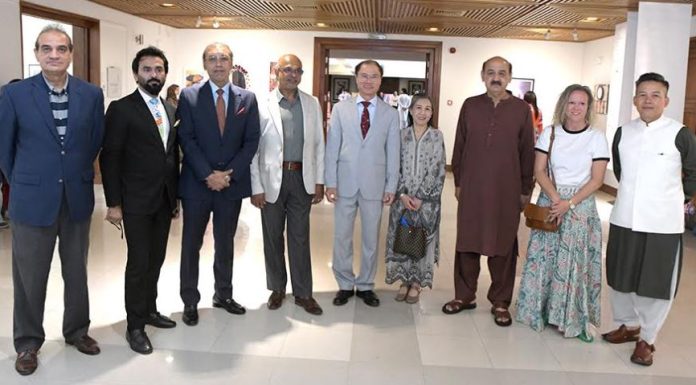
Afghan Legal system fails to protect women’s rights: UN Report

DNA

KABUL – Afghan women and girls are being failed by the country’s justice system as their access to justice for crimes of violence is shaky, a new report released on Monday by the UN Assistance Mission in Afghanistan (UNAMA) and the UN Human Rights Office stated.

 
The report, titled, “In Search of Justice for Crimes of Violence Against Women and Girls,” examines the response of the justice system and assistance provided to survivors in reported cases of violence against women and girls in the period between September 2018 and February 2020.

 
The report acknowledging the response by the justice system to violence against women and girls continues to improve but stated that progress has been limited. “UNAMA found that only half of the reported crimes reached a primary court, with perpetrators convicted in around 40 per cent of all documented cases, a statement issued by the UN read. “The stark reality is that too many women and girls still fail to see justice for the violence they experience, and impunity remains far too common,” said Deborah Lyons, the Secretary-General’s Special Representative for Afghanistan.

 
According to the report, one in every five women in cases documented by UNAMA decided not to pursue their case through justice channels by either not filing a complaint or later withdrawing it. “The failure by State authorities to pursue crimes in such cases is particularly disturbing in cases of child marriage, as victims are unlikely to be able to independently seek recourse from the system,” UNAMA stated.
The mission stated that “UNAMA monitoring underscores how many women resort to self-immolation or suicide due to violence, suggesting they feel that the justice system does not offer a realistic path to escape.”
According to the report, the findings have raised multiple concerns about the justice system’s treatment of women and girls, such as low rates of conviction for so-called “honour killings” – just 23 per cent as compared to a conviction rate of 51 per cent for murders unrelated to “honour”. Other issues raised in the report include the problematic handling of rape cases and the ongoing detention of women for “running away”.
“Far too many times, the justice system re-victimizes survivors instead of working on their behalf. This trend must stop. Serious efforts must continue to enable women and girls to access justice and to ensure that they are treated with dignity by the justice system,” said Fiona Frazer, UNAMA’s Human Rights Chief and Representative of the UN High Commissioner for Human Rights in Afghanistan. UNAMA has meanwhile called for the Elimination of Violence Against Women Law (EVAW Law) to be amended to expand the powers of the authorities to investigate and prosecute all crimes in the Law and to strengthen institutional responses to crimes of violence against women and girls.
In addition, the UN in Afghanistan has called on all Afghans, including national, provincial and local authorities, community and religious leaders, and individual Afghans, to increase efforts to prevent and reform violence against women and girls. “This is particularly important in the context of the outbreak of COVID-19, where ongoing monitoring by UNAMA suggests that violence against women and girls has increased, as have difficulties for victims to report crimes and access safety and justice,” the statement read. UNAMA Human Rights has been documenting incidents of violence against women and girls since 2010 and monitoring government efforts to address such incidents, particularly through the implementation of the EVAW Law, 2009.

Pakistan values ties with Belarus

Outgoing Belarus ambassador meets President Alvi; thanks him for support

Naveed Miraj

ISLAMABAD: President Dr Arif Alvi has said that Pakistan highly values its ties with Belarus and wants to further enhance bilateral relations with Belarus in all fields of mutual interest, including trade and investment, science and technology, culture and defense. He stated this while talking to the outgoing Ambassador of the Republic of Belarus, Mr Andrei Ermolovich, who paid a farewell call on him, at Aiwan-e-Sadr, today. Talking to the Ambassador, the President said that Pakistan was keen to promote trade and cultural cooperation with Belarus.

He highlighted that Pakistan offered promising opportunities for joint ventures and investment and would welcome Belarusian investment in Pakistan. The President remarked that both countries had great potential for cooperation in the areas of culture, tourism and pharmaceuticals and emphasized the need for increasing cooperation in these areas for the mutual benefit of the two countries.

The President expressed the hope that the Memorandum of Understanding (MOU), signed by the two countries on cooperation in the field of education, would greatly help in strengthening cultural linkages. He congratulated Mr Andrei Ermolovich on the successful completion of his tenure as Ambassador and expressed the hope that he would continue to promote Pakistan-Belarus relations.

Labour court hears PSM CEO plea seeking termination of more workers

KARACHI: The Labour court in Karachi on Monday adjourned the hearing of a plea seeking more terminations from the Pakistan Steel Mills (PSM) until January 6.

Hearing the plea filed by the chief executive officer (CEO) Pakistan Steel Mills for more terminations from the PSM, the court said the mills was regarded as the backbone of the country.

The plea was filed under section 11-A of the West Pakistan Industries Act.
The court has to see that is it possible to layoff workers in huge numbers in the current situation of the pandemic. “Can PSM file the case in the Labour court”, the judge remarked.

During the hearing, the workers of the PSM made hue and cry. The court while ordering the counsel of the PSM to convince the court about the questions raised, adjourned the hearing till January 6.

CEO Pakistan Steel Mills has stated that it is not possible to run the mills as it has become a burden over the national exchequer. “The government has decided to privatized the mills and for that more lay-offs are the need of the hour.”

The applicant has pleaded with the court to allow for more termination of the employees from the mills.

Last month, the Pakistan Steel Mills (PSM) had sacked its 4,544 employees and sent their termination letters via post.

The PSM spokesman had said that they had prepared a list of the employees who had been sacked and included from separate cadres including teachers, drivers, firemen, operators, health and security staffers, SEDGMs, managers and others.

Meanwhile, a workers group named Stakeholders Group had rejected the decision and said that it seems that the state has become irrelevant in the PSM matter.

Stay Connected

64FansLike
60FollowersFollow

Latest Reviews

Exchange Rates

USD - United States Dollar
EUR
1.17
GBP
1.35
AUD
0.72
CAD
0.73




