Home Blog Page 3031

ICCI for extending PM’s construction package to uplift the economy

DNA

ISLAMABAD, DEC 8 – Sardar Yasir Ilyas Khan, President, Islamabad Chamber of Commerce and Industry (ICCI) said that the real estate and construction sector has the potential to uplift the economy and put Pakistan on the path of sustainable economic growth, therefore, he urged that government should further extend PM’s construction for another year that would attract maximum investment to Pakistan and bring a revolution in the construction industry.

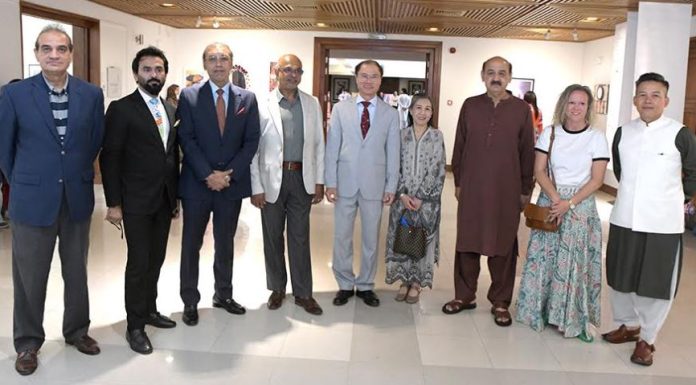
He said this while addressing as chief guest the inauguration ceremony of Asasa Real Estate and Builders launched by Ms. Attiya Liaqat CEO, the first female entrepreneurs who launched a real estate company in Gulberg Green, Islamabad. Ali Nawaz Awan MNA and SAPM on CDA Affairs, Sheikh Amir Waheed former President ICCI, Sardar Tahir Mehmood President Federation of Realtors, Muhammad Naveed Malik former Senior Vice President ICCI, Najeeb Malik President Gulberg Estate Agents Association, former MNA Dr. Azhar Jadoon, Ch. Nadeem ud Din Gujjar, Irfan Mew, Rana Qaiser, Umair Khan, Malik Shaher Amir, Adeel Chaudhry, Rao Bilal Anwar and others were present at the occasion.

Sardar Yasir Ilyas Khan said that housing demand was on the rise in Pakistan due to rapidly increasing population as the country needed to build around 12 million houses per year to bridge the huge gap and added that extension in construction package for one more year would facilitate the construction of more houses across the country, especially for the low income segments of the society. He said that over 70 allied industries were associated with the construction sector and boom in construction activities would boost the business of allied industries besides creating plenty of new jobs.

He said that the real estate and construction sector played key roles in the economic development of a country and the government should provide more incentives to this sector for achieving better economic growth and employment generation. He congratulated Ms. Attiya Liaqat, CEO, Asasa Estate and Builders for launching her career in real estate and wished her great success. He stressed that the government should make more conducive policies for economic empowerment of women so that they could play a more effective role in the economic development of the country.

Speaking at the occasion, Ali Nawaz Awan, MNA and SAPM on CDA Affairs said that the government has set the economy in the right direction and the country would emerge as a strong economy of the region in a few years. He said that after 40-50 years, Pakistan has got the opportunity to accelerate the industrialization process as the government was giving key priority to promote businesses and industries. He said that Pakistan was endowed with plenty of resources and great human talent and the current leadership was focused on harnessing the actual potential of the country for achieving rapid economic growth. He said that the government would encourage women through policy measures to come forward and play an enhanced role in nation building.

National team arrives in Queenstown for training, intra-squad matches

Karachi : Pakistan squad has arrived in Queenstown from Christchurch for training and intra-squad matches.

The 52-member squad reached Queenstown by air while one member joined the squad from Auckland.

Upon arrival in Queenstown, the national cricket team and Pakistan Shaheens squads reached their respective hotels. Both squads are scheduled to start training tomorrow.

It must be noted New Zealand public health officials cleared almost the entire Pakistan cricket squad to leave their managed isolation facilities.

One unidentified member of the 53-strong squad, however, would stay in the facility after he tested positive on day six of their mandatory 14-day isolation.

Pakistan Shaheens are scheduled to play a one-off four-day match against New Zealand ‘A’ from December 17 while the national team will play their first T20I against BlackCaps on December 18.

President Shavkat Mirziyoyev’s Greeting Remark on Constitution Day

Esteemed compatriots!

I sincerely congratulate you on a remarkable holiday – the 28th anniversary of the Constitution of the Republic of Uzbekistan, and express my deep respect and the best of wishes.

Dear friends!

Unfortunately, this year, due to the coronavirus pandemic, we are not able to hold large-scale celebrations occasioned to the Constitution Day. Yet despite this, with all our hearts do we feel the joy and splendor of this holiday. It is marked with special enthusiasm in work teams, educational institutions and mahallas.

Four years ago, relying on the provisions and principles of our Basic Law, we adopted the Actions Strategy and started delivering on extensive, accelerated democratic reforms. They have been built on the 7 amendments made to the Constitution, 5 codes and about 250 laws as the legal foundation.

Over the past brief span of time, our society, the mindset of people has radically changed in political, legal and socio-economic terms, and every one of our fellow countrymen and women makes a commendable input into the advancement of our nation. All this is indicative of the vitality and tremendous potential of our Basic Law.

Today, relying on this enormous power, our people courageously overcome hard trials and selflessly work for the sake of building a new Uzbekistan – a free, comfortable and prosperous life in the country.

Today, the phrase New Uzbekistan is perceived of in the international arena not just as a new notion, but also as a reflection of reality.

Indisputably, these achievements, themselves an outcome of the extensive legal opportunities enshrined in our Constitution, make us all feel specially proud.

Dear compatriots!

On the basis of the constitutional norm “The people are the sole source of state power”, an effective and sustainable system is being formed to ensure the supremacy of the Constitution and laws, whereby it is not the people who serve government bodies, but the latter serve the former.

Amid the current intricate times when the world has been changing rapidly, the system I have just mentioned, built on the norms of the Constitution, has fully justified itself in overcoming diverse trials and addressing new threats, the pandemic in particular, and in eliminating the consequences of natural and man-made disasters that took place earlier in the year in Bukhara and Syrdarya regions.

We have been implementing systemic democratic reforms that are irreversible and designed to ensure the principles of power of the people, social justice and humanism our Constitution is imbued with.

First of all, our every effort is aimed to secure and realize every person’s rights guaranteed by the Basic Law to receive qualified medical services and robust social protection.

During the pandemic, priority is placed on protecting public health, helping out citizens who lost their jobs, and entrepreneurs. The established Anti-Crisis Fund has raised 10 trillion soums, which is directed at providing financial support for the healthcare system, social infrastructure, population and enterprises.

During the passing year, more than 500 thousand entrepreneurs and over 8 million citizens have been provided with benefits in the amount of about 34 trillion soums, an additional 2.6 trillion soums were assigned to augment the size of social benefits, material assistance and boost employment.

Within the framework of the Affordable Housing State Program, once the most pressing social problem, more than 13 thousand of our compatriots were granted keys to new apartments this year alone.

In addition, a beautiful and modern town with multi-storey buildings and social infrastructure has been built for the families affected by the disaster at Sardoba reservoir.

Imbursement of initial payments for housing for more than 1,000 women who find themselves in difficult life situations is also among the kind actions.

In the course of spearheading proactive gender policy, accelerated work continues to improve the social and political status of women.

All of this helps to mitigate the negative impact of the pandemic and the resulting economic and social crisis, as well as to bolster the confidence of our citizens in the future.

Dear compatriots!

Extensive efforts are undertaken to ensure in practice the constitutional principle of justice. Thus, in order to reduce poverty, new effective mechanisms of social support are being introduced.

In accordance with home visit studies conducted to enquire into the problems the people have to endure, 840 billion soums were allocated to support more than 2.5 million members of over 590 thousand families. The needs, life problems of women and young people in every family were studied, employment has been provided for able-bodied members of almost 300 thousand families.

Crucially, people develop the experience and skills to get out of poverty through self-employment, business skills and entrepreneurship.

Another vivid manifestation of humanism was the national movement Compassion and Support, set up during hard days for the nation by the business community, farmers and kindhearted citizens. As part of this movement, the categories of the population in need of social support received assistance in the amount of 204 billion soums.

On the basis of the principle “New Uzbekistan starts from the threshold of school”, great attention is paid to radically reforming the education system. Large-scale work is underway to promote science, culture, arts, literature, sports, and swell the effectiveness of spiritual enlightenment activities, identify the abilities and talents of young people, especially girls.

All this serves to create foundation for the Third Renaissance in our country – a new era of our national development.

Profound reforms are in progress in accordance with another important constitutional provision – ensuring human rights and interests in all walks of life, especially in the judicial and legal realm. This is confirmed by the fact that over the past four years, 2,600 citizens were acquitted, 2,400 were released from the courtroom, the number of judicial instances reduced from 7 to 3, the judicial system is formed on the basis of the principle of “one court – one instance”.

The National Human Rights Strategy is being implemented steadily.

Work continues on the application of the institution of clemency. During the year 2020 alone, more than 300 persons who have committed crimes out of ignorance and sincerely repented of their deeds have been pardoned and released from penal institutions; for 200 persons, sentences have been reduced.

People who did not have citizenship for a long time have now become full-fledged citizens of the Republic of Uzbekistan. If over the past twenty-five years, citizenship was granted to only 482 persons, then this year alone, more than 8 thousand people received the right to be citizens of our country.

Thanks to the elimination of restrictions related to the acquisition of real estate in the city of Tashkent and the Tashkent region, more than 40 thousand citizens were able to register housing purchased in the capital region under their name.

Dear compatriots!

A consistent policy aimed at furthering the democratic reforms in Uzbekistan, ensuring human rights and freedoms, improving the wellbeing of the population is widely acknowledged by the world community.

When one talks about this, notable is the international support for a number of global and regional initiatives and specific proposals put forward by Uzbekistan in September this year at the 75th session of the United Nations General Assembly.

For the first time in the history of our nation, in October this year, Uzbekistan was elected member of the Human Rights Council – one of the principal bodies of the UN.

This is another great accomplishment of our open and proactive foreign policy.

Owing to the improvement of the investment and business environment in the country, growth in tourism and export potential, the active implementation of standards and norms of the International Labor Organization, Uzbekistan’s positions in international ratings are strengthening.

Despite various obstacles and problems caused by the coronavirus pandemic and the global economic crisis, our external relations have not been interrupted. Ties with neighboring states and partner countries in the political, trade, economic, humanitarian spheres are developing.

Our people are well aware that concrete measures have been taken this year to promptly and positively resolve the problems of Uzbek citizens abroad, provide them with legal assistance and bring them back home. Thus, amid the pandemic, more than 500 thousand of our citizens returned to the native land. Assistance of various kinds was provided to almost 100 thousand compatriots who found themselves in a tricky situation outside the country.

Humanitarian activities continue to return our citizens, mainly women and children, who, falling on false promises, left the country and today are left face-to-face with difficulties in the Middle East, in the region caught under armed conflicts.

In this regard, I would like to emphasize again: the citizens of Uzbekistan will always be under the protection of their state and the Constitution, and we will continue to firmly adhere to this principle.

Dear friends!

We are all well aware that our achievements over the past four years are only the first steps towards the big goals we have set. On this path, we have to address very important tasks.

First, today life itself requires perfection of the Constitution and laws. In particular, it is necessary to adopt laws that will serve the interests of the people, liberalize all spheres of our life, abolish legislative acts that do not meet the requirements of the time, optimize the regulatory framework, and reduce unnecessary norms regarding the regulation of business activities.

I think the political parties and civil society institutions will participate even more actively in the implementation of these tasks.

Second, it is essential to devise and apply effective mechanisms to prevent and combat corruption, the principal enemy of our development.

The urgency of this issue is confirmed by the fact that over the past two years, a total of 1,986 officials have been brought to justice for crimes related to corruption, who by their illegal actions caused damage to the state in the amount of 2 trillion soums.

To systemically and comprehensively continue work in this direction, we are elaborating a National Anti-Corruption Strategy for 2021–2025.

I want to stress once again: this remains the most critical and priority objective for us. After all, corruption is an extremely dangerous challenge that destroys the state from within and damages our national security, and an uncompromising fight against this phenomenon is the duty of every one of us.

Third, we need to amplify attention to the issues of consolidating the peace, tranquility, interethnic harmony and interreligious tolerance, the protection of public order in the country. For the practical provision of the principle “The law is above everything, punishment for crime is inevitable”, all the forces and capabilities of the law enforcement agencies will be mobilized.

Fourth, our priority task will continue to be to ensure the vital interests of our veterans, respected women and motivated youth, to strengthen the atmosphere of peace and cohesion in families, mahallas and in our multiethnic nation in general, where we all live as one family.

Fifth, we will step up efforts to ensure freedom of speech and press, independence of the media, and the establishment of public control over the activities of government authorities.

Every one of us must clearly understand that the processes of openness and transparency, pluralism of opinion and democratic renewal in our society have become as irreversible as the reforms carried out in all areas, and we will resolutely continue with this course.

Dear compatriots!

To steadily uplift the level and quality of life of our people, make it even more thriving and affluent so that every person in the country, regardless of ethnic origin, language and religion, feels the attention and care of the state and society is our key task.

I am convinced that all our compatriots, uniting on the path to this noble goal, will become active builders of a new Uzbekistan.

Once again, I sincerely congratulate you on the Constitution Day, I wish you all a sound health, happiness, great success in life and activities for the benefit of society.

May peace and harmony always reign in our homes, in our beautiful country!

May all our good dreams and aspirations come true!

Maryam Nawaz leaves for Islamabad to attend PDM meeting

LAHORE : PML-N vice-president Maryam Nawaz on Tuesday left for Islamabad from Jati Umra to attend the high-level meeting of the Pakistan Democratic Movement (PDM) today at the party’s secretariat.

The meeting will be chaired by PDM chief Maulana Fazlur Rehman and attended by former premier Nawaz Sharif and ex-president Asif Ali Zardari via video-link.

Bilawal Bhutto Zardari, who ended self-isolation after recovering from the coronavirus over the weekend, is also expected to attend the meeting.

The top PDM leadership will dwell on future strategies, including resignations from the Parliament, according to sources. They will also discuss the upcoming jalsa in Lahore on December 13.

“Do not want to respond to govt spokesperson”

Speaking to media at Jati Umra, Maryam said the government was “so scared” that it had lodged “thousands” of first information report (FIRs) in anticipation of the December 13 jalsa.

The PML-N vice-president said it does not suit the ruling party to talk on the Constitution and law and refused to respond to statements issued by the government spokesperson.

Maryam said the movement was of the people and by the people. “Masses stricken with inflation and unemployment look towards PDM and Nawaz Sharif. The movement will never stop.”

Maryam said today’s meeting was important as the leaders would discuss options regarding future strategies.

IHC restores suspended licence of pilot

ISLAMABAD : The Islamabad High Court (IHC) has nullified the suspension of licence of a pilot by the Civil Aviation Authority (CAA).

The plea of pilot Saqlain Akhtar against the suspension of his licence was taken up by the IHC Chief Justice Athar Minallah.Secretary CAA Hassan Nasir Jafferi appeared before the court. Justice Minhallah asked that who finalised the report of pilots having fake licences. The CAA lawyer said that out of 250 pilots having suspicious credentials, licences of 50 were canceled and 32 were suspended.

The IHC top judge said that an important regulator body is nonfunctional for the last two years and remarked that the federal government cannot give additional charge of DG CAA to the CAA secretary.

The court after hearing arguments from both sides declared the July 14 verdict regarding the suspension of licence of pilot Saqlain Akhtar as null and void.

Aviation Minister Ghulam Sarwar Khan had announced in June that 262 airline pilots, whose credentials may have been falsified, would be grounded at once.

Among these pilots are 141 from Pakistan International Airlines, nine from Air Blue and 10 from Serene Air, he said, adding that the remaining were affiliated with flying clubs, chartered plane services or foreign airlines.

Universal Declaration of Human Rights Day

Justice (r) Ali Nawaz Chowhan

Human Rights Day is annually celebrated on 10th December every year. The High Commissioner for Human Rights, as the main United Nations official and his office plays a major role in coordinating efforts for the yearly observation of Human Rights. Every year a theme is given the latest being “Stand up for the Human Rights”.

In its proclamation on 10th December 1948, of the Universal Declaration of Human Rights (UDHR), The General Assembly enunciated the Universal Declaration of Human Rights as a common standard of achievement for all peoples and all nations, to the end that every individual and every organ of society, keeping this Declaration constantly in mind, shall strive by teaching and education to promote respect for these rights and freedoms and by progressive measures, national and international, to secure their universal and effective recognition and observance, both among the peoples of Member States themselves and among the peoples of territories under their jurisdiction.

We are celebrating this day for the second year without the National Commission for the Human Rights. A functional body which has been made dysfunctional. Perhaps with a design. And we now see manipulations for the inductions of new incumbent of choice.

On this day as we stand up for the Human Rights we have to think of those who are placed below the poverty line in Pakistan and elsewhere. COVID-19 has added to their miseries. One of the main purposes for the creation of Pakistan and reflected in the letters of Allama Iqbal to Quaid was to remove poverty among the Muslims. In this context we have as yet to decrease our population living below the poverty lineThe mother of all evils.

The main minorities’ communities in Pakistan complain of forced conversions in Punjab and Sindh. On the global gender gap index, Pakistan was ranked 151 out of 153 by the World Economic Forum. At least 2846 cases of child abuse were documented, this includes Gang Rapes. About 162 mine related deaths took place last year.

There is no evidence of progress in implementation of safety and health standards in the mine sector. The countries expenditure on health is still less than 1% of its GDP against the required standard of 6%. The journalists complain about curbs on freedom on opinion and expression besides, harassment.

There was an excessive and arbitrary use of Exact Control List. The Supreme Court of Pakistan was unhappy on the performance of the National Accountability Bureau (NAB). The senate of Pakistan has already moved a privilege motion against NAB. The Dawn editorial on NAB performance dated 1st December is a charge sheet against NAB. There is also spike in the Cyber Crime and Online Harassment across Pakistan. Prisons in Pakistan remain over crowded with occupancy rate of 134%. In Punjab about 187 prisoners on death row suffer from mental illness, seventeen people are convicted of Blasphemy. This includes Junaid Hafeez of Bahauddin Zakariya University. There are about 10,000 Pakistanis incarcerated in overseas Prisons.

The Supreme Court had observed that the “Jirgas” and “Panchayat” was in violation of the constitution, but these continue to function. The process of induction of Judges for the special courts also needs a review as we hear of allegation of misconduct against some. Once special judges are inducted they are out of sight of the High Court. The quality of the judgment of some of the special courts is questionable. I wonder why we can’t have a unique Court system in the interest of Justice.

There is decadence in respect of Criminal Justice. It has been reported that the Supreme Court overturned the death penalty in large no of judgments between 2010-2018. The Supreme Court is burdened with more and more cases because of defective investigations, poor judgments of the courts below including service tribunals. The whole process before the plenary courts takes years to conclude. This is impairing confidence in the judicial system as people are taking Law into their own hands. A report on pending cases in Punjab subordinate judiciary counts these at number 1,12,000, While in the Lahore High Court these were 1,65,000 cases. In case of Peshawar, over 1,97,000 cases were pending with the District Judiciary. 40,700 cases were pending before Peshawar High Court. In case of Baluchistan, over 4,800 cases were pending before the High Court and about 13,000 cases were pending before District Judiciary.

The Islamabad High Court had about 16,000 cases pending. In case of Sindh, There were 83,920 cases pending in the High Court and 1,78,000 cases pending before the District Judiciary. Justice delayed is Justice denied. Delayed justice is a denial of fundamental Human Rights guaranteed by the constitution and thus violation of basic Human Rights. Therefore there is a need for streamlining the system and case management. The Judicial Academies are best places for training of Judges in this context.

The UN Human Rights committee was not satisfied with the report on the covenant of Civil and Political Rights, specifically in the context of extra judicial killing, enforced disappearances and the use of the death penalty. I’m of the view that we put a moratorium on death penalty until we are able to streamline our criminal justice system. There has also been increase in women trafficking, over 600 women were trafficked as brides to a neighboring country.

The child protection laws are still to be implemented in areas of Domestic labor and Child Marriage. Violence against Transgender community continues unabated, same is the case with Ahmadiyya community as we hear of murders in KPK and Punjab. A large number of people were found HIV-Positive, about 80% were below the age of 15 Years. So there is no protection. According to the world Air Quality Report for 2019, Pakistan is ranked amongst the worlds most polluted countries. There is acute water shortage problems in Karachi. The cases of hate speech continue to rise.

The NGO’s also suffered the indiscriminate brunt. There is a need for improving our performance in the 28 Human Rights treaties. These are being implemented by the Treaty Cell headed by the Attorney General because of the inability and lack of capacity of the Ministry of Human Rights to handle treaty matters. It is hoped that the Human Rights violations now rampant will be systematically checked through advocacy, awareness and adjudication of now many hundred cases pending before the National Commission as it is dysfunctional. This is a pure judicial function. How can we protect fundamental rights and Human Rights without a robust and dynamic judicial system?

The Author is a former International Judge of the UN at The Hague, Chief Justice of the Gambia, First Chairman of National Commission for the Human Rights Pakistan, Judge of the superior judiciary, Co-Chair Person UNESCO, Professor of International Law etc.

Adjusting to digital life

Muhammad Omar Iftikhar

The world has been using the Internet for well over two decades and applications on smartphones for over a decade. Their importance and usability were greatly admired when lockdowns were imposed in March across the world’s cities in the wake of the Covid-19 pandemic. These digital applications used on laptops, desktops, and cell phones have aided us in completing our daily tasks with ease. Whether it is typing a document and checking errors in it, connecting through video calls, purchasing products, ordering food, booking a ride, or conducting classes for that matter. Such applications have enabled us to continue with our life’s activities despite being under a lockdown. Millennials were the most attuned to using such applications and they adapted to this change without any hassle. They had been connecting with friends and classmates over such applications and social media tools and had an idea of how to use them when they went into isolation. The problem, however, was for the adults and senior citizens to adapt to using such technologies. Although many adults already had a smartphone, they were not properly utilizing its features as compared to the younger generation. They had to learn the basic concepts of using digital media applications. Such was the case with senior employees who had to participate in virtual meetings or faculty members who had to take online classes. The need of the hour was and will be to keep learning, unlearning, and relearning how to use digital media technology for effective results. With the Covid-19’s second wave upon us and most of the offices and all of the educational institutes working online, we must keep updating our knowledge by knowing more about the latest digital media technologies and how to incorporate them in our lives.

Pakistan records 89 deaths, over 2800 infections within 24 hours

ISLAMABAD : Pakistan has recorded 89 deaths and 2,885 new cases due to the COVID-19 in the last 24 hours.

In the past 24 hours, 89 more people succumbed to the disease, taking the death toll to 8,487. 13,932 patients have recovered from the virus during the last 24 hours and 2,486 patients are in critical condition.

The total count of active cases is 44,218 and the positivity rate of COVID-19 cases reaches up to 8.58 per cent.
According to the National Command and Operation Centre (NCOC), with fresh inclusion of the infections in the country the national tally of cases now currently stands at 423,179.

A total of 33,610 tests were conducted across the country during this period. Overall 370,474 people have recovered from the deadly disease so far while 5,827,852 samples have been tested thus far.

Earlier on Monday, the National Command and Operation Centre (NCOC) had been told that the provincial authorities are implementing strict measures to curb the spread of COVID-19 pandemic by the imposition of fines and seizing properties of violators of the standard operating procedures (SOPs).

According to statistics, the positivity rate of coronavirus pandemic in Sindh is 15.83, 11.93 pc in Azad Jammu and Kashmir (AJK) region, 11.61 pc in Balochistan, 2.89 pc in Gilgit-Baltistan (GB), 8.20 pc Islamabad and 8.22 in Punjab.

The officials had stated that more than 40,000 coronavirus detection tests are being conducted on a daily basis since last two weeks and 81 per cent COVID-19 positive patients were belonging to the major cities.

With regards to the ongoing detection tests across the country, they said that 40 per cent of tests were conducted on the basis of contact tracing in the last week.

Smart lockdown imposed at 4,503 spots with a population of around 150 million across the country, said the officials, adding that strict steps are being taken to curb the virus spread in provinces besides enforcement of SOPs.

“CPEC is a transformational Project”, says Foreign Secretary

DNA

ISLAMABAD, DEC 7  – “CPEC is a transformational project. There is a complete national consensus on CPEC’s indispensability for our national development efforts. Pakistan and China are firmly committed to the timely completion of CPEC projects and making it a High-Quality Demonstration Project of BRI”, this was underscored by Foreign Secretary Sohail Mahmood in a meeting with Chairman CPEC Authority, General (R) Asim Salim Bajwa.

Reviewing the progress of CPEC projects, Foreign Secretary maintained that CPEC energy and infrastructure projects had created thousands of jobs and had boosted industrial growth and productivity. It testified to the fact that CPEC’s contribution to strengthen Pakistan’s economic landscape has been real and substantial, he emphasized.

The Foreign Secretary underlined that Pakistan’s focus in the next Phase of CPEC was on industrialization and socio-economic development, areas that will create vast job and growth opportunities for the common people. Three out of the nine CPEC SEZs, namely Rashakai, Dhabeji and Allama Iqbal, have been prioritized and Pakistan would welcome foreign direct investment in those projects.

General (R) Asim Salim Bajwa underscored that the CPEC Authority was committed to ensuring that CPEC projects were completed on time. He hoped that the 10th JCC, likely to be held in the near future, will create more economic opportunities and contribute to further expansion of CPEC projects. He reaffirmed that Pakistan would welcome relocation of industry from China and in that regard will institute a regime that could encourage inflow of Chinese investments to Pakistan.

The Foreign Secretary underlined that the Government was particularly focused on strengthening agricultural cooperation between Pakistan and China. In that regard, a Plan of Action, detailing the contours of this collaboration, was already being discussed between the two governments. The Foreign Secretary hoped that the Plan of Action will be expeditiously implemented.

It was reaffirmed in the meeting that post-COVID-19, through collective efforts of China and Pakistan, CPEC would become the hub for the regional trade and connectivity and will deepen people-to-people exchanges at a wider level.

Stay Connected

64FansLike
60FollowersFollow

Latest Reviews

Exchange Rates

USD - United States Dollar
EUR
1.17
GBP
1.35
AUD
0.72
CAD
0.73