Home Blog Page 301

The Sound of Silence

The Sound of Silence

Amina A Ghafoor

I recently attended a professional development event that brought together a diverse group of attendeesmen and women from various industries and backgrounds. At first glance, the gathering appeared to reflect progress: inclusion, diversity, and collaboration. However, what unfolded during the session left me disheartened and frustrated. It served as a reminder that while there is a visible respect for women in professional spaces, true inclusivity especially in practice still has a long way to go.

Unfortunately, the session was poorly planned. Although women were present in the audience, every activity, example, and interaction seemed designed exclusively with men in mind. From the outset, it was clear that no consideration had been given to creating an inclusive environment. As a woman in attendance, I felt not only excluded but deeply uncomfortable. The discomfort did not stem from being in the minority a familiar experience for many women in male-dominated fields like engineering but from the blatant disregard for gender sensitivity.

Throughout the session, patriarchal jokes were made, often at the expense of women. These were neither harmless nor humorous; they were offensive, tone-deaf, and entirely inappropriate for a professional setting. Even more disturbing was the casual manner in which they were delivered—and the laughter that followed from most of the male participants. The few women present—accomplished, experienced professionalswere visibly uneasy, their confidence evidently shaken. Some made efforts to engage, but gradually withdrew as the environment failed to foster equal participation. A handful of men noticed the imbalance and attempted to advocate for fairness and respect, but the dominant group, which appeared unwilling to examine its own behavior, quickly dismissed them directly or indirectly.

This experience was a powerful and painful reminder of why gender equity remains such a critical and urgent issue in our society, particularly in professional environments. In sectors like engineering and technology, where women remain significantly underrepresented, such experiences can be especially disheartening. They echo the early challenges many women face in their careers: often being the only woman in the room, constantly needing to prove their capabilities, working twice as hard for recognition, and confronting biases rooted not in merit, but in gender.

There is often hope that things are moving in the right direction that professional spaces are becoming more inclusive and equitable. Many individuals do actively foster such environments by mentoring young women, advocating for diversity, and ensuring all voices are heard and respected, regardless of gender. Yet, experiences like this serve as sobering reminders that progress is not as widespread as it may appear. The attitudes encountered are not isolated; they remain deeply embedded in professional culture.

What is most disheartening is realizing that many young women entering the workforce today continue to face the same challenges that previous generations encountered. Despite some areas of progress, the underlying structures of bias and inequality remain largely intact. This persistent reality is not only disappointing it is deeply discouraging.

We must understand that the gender gap cannot be closed through token gestures or one-time diversity initiatives. It requires sustained, systemic change. The first step toward that change is acknowledging the problem. Too often, concerns about gender bias are dismissed as exaggerated or irrelevant. But those of us who experience it know the reality all too well.

In societies like ours, where patriarchal norms are deeply entrenched, the burden of change cannot fall solely on women’s shoulders. Men especially those in leadership positions must become active participants in the movement toward gender equity. They must be willing to listen, to learn, and to challenge the behaviors and mindsets that perpetuate inequality.

Achieving gender equity is not just a matter of social justice it is an economic imperative. In a country grappling with economic instability, the exclusion of women from key industries and leadership roles is not only unjust but also inefficient. We cannot afford to overlook the contributions of half our population. When women are empowered to participate fully in the economy, societies thrive. Yet with the current slow pace of gender awareness and inclusivity, we are hindering our own development.

It is time to move beyond surface-level solutions and commit to deep, meaningful change. Gender awareness and sensitivity must be integrated across all sectors especially education, industry, and policy. Gender studies should be made a compulsory subject from school through university, just like religious studies. Early education plays a crucial role in shaping mindsets. Teaching children to value all genders equally helps lay the foundation for a society that not only upholds equality in principle but actively practices inclusivity and equity in everyday and professional life.

Beyond awareness, professional environments must turn intention into action by creating spaces where women are not only present but are genuinely included and supported. In fields like engineering and IT where gender disparities remain stark proactive measures are essential. Creating safe, inclusive, and equitable work environments, where all voices are heard and respected, should not be a mere policy statement it must become a cultural standard embedded in daily practice.

Of course, it is important to recognize that progress is being made. There are individuals and organizations actively working to close the gender gap, sometimes at great personal and professional cost. These trailblazers both women and men are our hope. Their efforts, though they may seem small in the grand scheme, matter. They create ripples that can eventually lead to waves of transformative change.And so, while this recent experience was disappointing, it also strengthened my resolve. I am reminded of why we must continue to speak up, even when it is uncomfortable. Why we must challenge the status quo, even when it resists. And why we must support one anotherespecially women just beginning their professional journeys.

One can hope for a future where no woman walks into a room and feels invisible, unheard, or out of place. A future where no young professional is made to question her abilities, diminish her presence, or conform to a space never designed to include her. A future where workplaces are not only diverse in numbers but inclusive in culture where leadership reflects the richness of different perspectives, and where policies are not performative but truly transformative. A future where respect, opportunity, and equity are not demands, but values inherently upheld.Those days are coming but only if we continue working toward them. Change doesn’t just happen. We build it together.

Amina A Ghafoor

Manager Sales Technical & Commercial-BEE, MSPM 

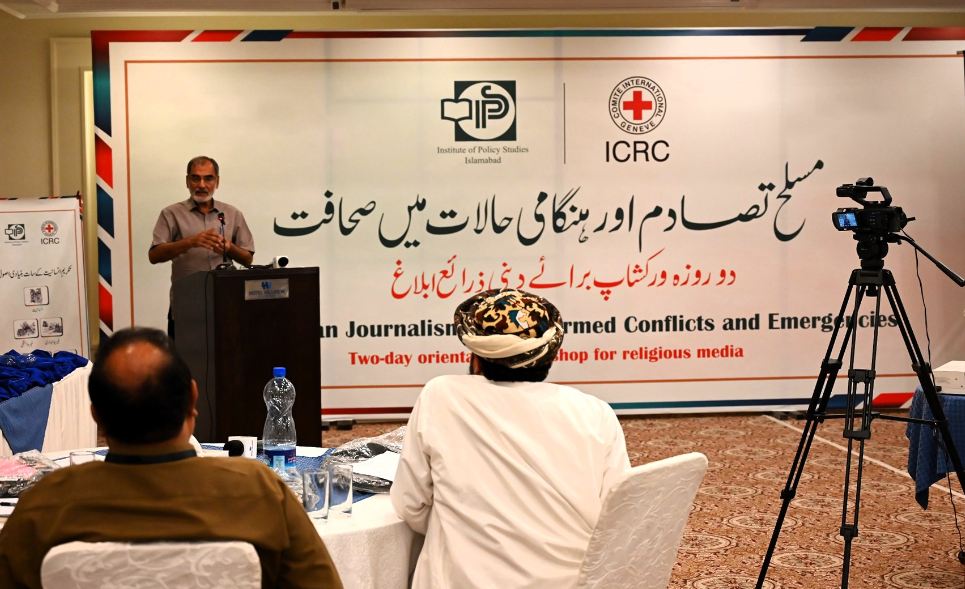
IPS, ICRC host workshop on humanitarian journalism in Islamabad

IPS

ISLAMABAD, JUL 7 /DNA/ – Journalists play a critical role during emergencies, serving as both the eyes and ears of the public and the government. In times of natural disasters or violent conflicts, the dissemination of accurate and timely information can be life-saving. Journalists help guide humanitarian efforts, identify urgent needs, and monitor irregularities. To avoid misinformation during periods of chaos and uncertainty, it is essential for reporters and analysts to have a deep understanding of emergency dynamics.

These points were emphasized during a two-day regional workshop for editors of religious journals and digital content creators. This media workshop was jointly organized by the Institute of Policy Studies (IPS), Islamabad, and the International Committee of the Red Cross (ICRC). The workshop aimed to equip participants with the knowledge and tools needed for effective reporting and analysis in the context of armed conflicts and humanitarian emergencies.

The sessions were led by Syed Nadeem Farhat, IPS research fellow, Dr. Ziaullah Rahmani, ICRC regional adviser, Dr. Yasir Riaz, a humanitarian officer at the United Nations, Muhammad Waqar Bhatti, senior health journalist, and Dr. Saqib Jawad, legal expert. The workshop concluded with remarks from ICRC Head of Delegation Christoph Sutter and IPS Chairman Khalid Rahman.

On the first day, the workshop focused on building the capacities of journalists and editors by introducing them to key aspects of humanitarian work. Topics included the evolving nature of human tragedies in the context of climate change and technological progress, the role of philanthropy and humanitarian organizations, relevant international laws, information-gathering strategies, and various types of crises. Drawing from personal field experiences, speakers stressed the importance of caution and empathy when reporting on human suffering and humanitarian emergencies.

The second day explored the core principles guiding humanitarian organizations – humanity, impartiality, neutrality, independence, volunteerism, universality, and unity. Through interactive sessions, including study circles and scenario-based role-playing exercises, participants received practical training on how to responsibly engage with humanitarian issues and play a constructive role in times of crisis.

In his closing remarks, Khalid Rahman highlighted the significant contributions of religiously motivated humanitarian workers during times of crisis. He noted, however, that a deeper understanding of the global humanitarian framework is essential for them to operate effectively within broader systems of aid and support.

Christoph Sutter emphasized the ICRC’s commitment to continue assisting the government and people of Pakistan in times of humanitarian crises and emergencies by equipping relevant stakeholders.

Will the Trump-Netanyahu meeting bring peace

Will the Trump-Netanyahu meeting bring peace

The recent meeting between U.S. President Donald Trump and Israeli Prime Minister Benjamin Netanyahu has once again brought the Israeli-Palestinian conflict into the global spotlight. With the ongoing war in Gaza, thousands of civilian casualties, and a fragile ceasefire hanging in the balance, the world is watching closely to see whether this high-profile discussion will lead to meaningful progress or further escalation. The critical questions remain: Will this meeting contribute to lasting peace? Can the ceasefire hold? And what must both sides do to prevent more bloodshed?

Trump’s presidency was marked by a strong pro-Israel stance, including the controversial recognition of Jerusalem as Israel’s capital and the brokering of the Abraham Accords, which normalized relations between Israel and some Arab states. However, these moves largely sidelined the Palestinians, deepening their sense of abandonment. Netanyahu, meanwhile, has consistently pursued hardline policies, including expanding settlements in the West Bank and rejecting the two-state solution.

Given this history, the latest Trump-Netanyahu meeting raises skepticism. While both leaders may seek to project an image of strength and diplomacy, past actions suggest that their approach risks further alienating Palestinians rather than fostering genuine dialogue. Without addressing the root causes of the conflict—Palestinian statehood, illegal settlements, and the humanitarian crisis in Gaza—any discussions risk being superficial.

The current ceasefire is fragile. Hamas and Israel have engaged in multiple wars, each followed by temporary truces that eventually collapse. For any ceasefire to last, several factors must be addressed:

The U.S. remains the most influential mediator in this conflict. However, its credibility is damaged if it is seen as unconditionally supporting Israel. A balanced approach—pressuring Israel to moderate its policies while ensuring Hamas is held accountable—is crucial. The international community must also step up, providing not just aid but diplomatic pressure to enforce peace.

What Both Sides Must Do to Avoid More Casualties

1:     Halt Settlement Expansion – Continued construction in the West Bank undermines any possibility of a future Palestinian state.

2:     End Indiscriminate Bombing – While Israel has the right to defend itself, the scale of civilian deaths in Gaza is unacceptable. 3:    Precision strikes, rather than blanket bombardment, must be prioritized.

4:     Engage in Direct Talks – Refusing to negotiate with Palestinian representatives only prolongs the conflict.

Hamas and Palestinian Leadership’s Responsibilities:

1:     Stop Rocket Attacks – Indiscriminate firing at Israeli civilians only invites devastating retaliation.

2:     Reject Extremism – Hamas must move away from its charter calling for Israel’s destruction and accept a two-state solution.

3:     Reform Governance – Corruption and infighting within Palestinian leadership have weakened their position. Unity and transparency are essential for credible negotiations.

The Trump-Netanyahu meeting could either reignite stalled peace efforts or become another missed opportunity. If both leaders are serious about peace, they must push for immediate humanitarian measures, enforce the ceasefire, and commit to long-term political solutions. Otherwise, this meeting will be just another photo-op—while civilians on both sides continue to pay the price.

The choice is clear: pursue a just and lasting peace, or condemn another generation to war. The world is watching.

Interior Minister inaugurates two new boats for coast guards

Interior Minister inaugurates two new boats for coast guards

KARACHI, JUL 7 /DNA/ – Federal Interior Minister Mohsin Naqvi attended the ceremony of inclusion of two new boats in Pakistan Coast Guards as Chief Guest in Karachi. Director General Pakistan Coast Guards Major General Jawad Riaz welcomed the Minister upon his arrival. The ceremony was also attended by senior military and civil officials, as well as foreign diplomats. Director General Anti-Narcotics Force Major General Abdul Mueed was also present on the occasion .

Interior Minister Mohsin Naqvi inspected the newly inducted boats and took a ride on one of them. He appreciated the initiative to strengthen the Coast Guards with modern boats. DG Coast Guards Major General Jawad Riaz briefed the Minister on the advanced features of the boats .

Interior Minister also addressed the ceremony. While commending the professional capabilities of the Pakistan Coast Guards he said that Pakistan Coast Guards is recognized as a important and vital force in the country. He added that the Pakistan Coast Guards have ensured the enforcement of law against smuggling, illegal immigration, and anti-trawling fishing. In particular, they have shown outstanding performance in combating smuggling, narcotics, and human trafficking, he added.

The Interior Minister said that the induction of two new RHIB (Rigid Hulled Inflatable Boats) into the Coast Guards fleet will enhance the operational capacity of the force.

Federal Interior Minister Mohsin Naqvi also distributed certificates of appreciation among officers and personnel of the Pakistan Coast Guards for their outstanding performance. Moreover, Guard of Honour was also presented to the Minister on this occasion.

Court summons issued through public notice in Khulah Suit

Court summons issued through public notice in Khulah Suit

JHELUM, JUL 7 /DNA/ – In the Court of Naeem Shahbaz, Senior Civil Judge (Family Division), Jhelum, a suit for Dissolution of Marriage on the basis of Khulah has been filed by Nighat Maimuna against Muhammad Muneeb Sultan, son of Muhammad Siddique, a resident of Mohal, Post Office Dina, Tehsil Dina, District Jhelum, currently residing abroad.

Due to the unavailability of the defendant for personal service of summons, the Court has ordered a proclamation to be published in the newspaper in lieu of summons. The defendant, Muhammad Muneeb Sultan, is hereby directed to appear before the court on July 17, 2025, at 08:00 AM.

Failure to appear before the court on the specified date and time will result in ex-parte proceedings against the defendant in accordance with the law.

This notice is issued as per the direction of the Honorable Court.

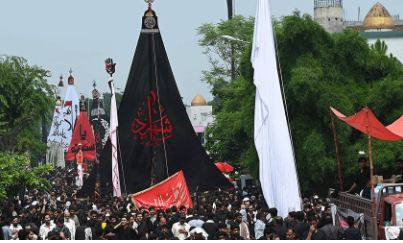
Ashura processions conclude peacefully across Pakistan amid strict security arrangements

Pakistan observes 9th Muharram with devotion amid tight security

ISLAMABAD, JUL 6: Ashura processions held across Pakistan on Sunday concluded peacefully as mourners across all provinces and regions paid tribute to the supreme sacrifice of Hazrat Imam Hussain (RA) and his loyal companions.

In Lahore, the main procession emerged from Nisar Haveli inside Mochi Gate and culminated at Karbala Gamay Shah. Karachi’s central Ashura procession began at 10am from Nishtar Park and ended at Imam Bargah Hussainia Iranian in Kharadar after passing through designated routes.

In Rohri, the historic No Dhala Taazia procession travelled a long distance, with halts at Mando Khabar and Karbala Maidan, and concluded at the Shuhada Graveyard on Station Road. The procession had started from Imam Bargah Shah Iraq on the night between 8th and 9th Muharram after the traditional candlelight ceremony.

In Hyderabad, the central Ashura procession moved from Qadam Gah Mola Ali to Karbala Dadan Shah. Commemorations were also held in Mirpurkhas, Badin, Jacobabad, Thatta, Larkana, Nawabshah, Dadu, Khairpur, and other towns across Sindh.

In Multan, the main procession originated from Imam Bargah Hira Haiderya and ended at the shrine of Shah Shams Tabrez. Traditional ustad and shagird taazia processions were also carried out. Faisalabad’s main procession ended at Imam Bargah Azakhana Shabbir Dhobi Ghat, where mourners paid homage to the martyrs of Karbala.

Processions in Gujranwala, Bahawalpur, Bahawalnagar, Rajanpur, Jhang, Sargodha, Lodhran, Dera Ghazi Khan, Vehari, Jhelum, and Narowal also reached their respective destinations.

In Khyber Pakhtunkhwa, mourners in Parachinar, Nowshera, Mansehra, Dera Ismail Khan, Kohat, Bannu, Mardan, and Tank paid tribute to Imam Hussain (RA) and his companions through processions.

In Gilgit, the main procession concluded at the central Imamia Mosque after passing along its traditional route. Ashura processions in Skardu, Ghanche, Kharmang, Shigar, and Astore followed their customary paths before concluding at their final locations.

In Azad Kashmir, Muzaffarabad’s main procession concluded at Imam Bargah Pir Alam Shah Bukhari, while similar processions were carried out in Mirpur, Bhimber, and other districts.

In Quetta, the main Ashura procession began from Alamdar Road. During the procession, mobile phone and internet services were suspended, and pillion riding was banned.

Security arrangements — including suspension of cellular services —were heightened nationwide, especially in major cities such as Karachi, Lahore, Peshawar, and Quetta, where mobile services were disrupted and double riding was restricted.

President, PM pay tribute to Imam Hussain (RA)

President Asif Ali Zardari and Prime Minister Shehbaz, in their messages on 10th Muharram, paid rich tribute to the sacrifice of Hazrat Imam Hussain (RA) and his companions, saying that the day of Ashur gives us a message of sacrifice, truthfulness, sincere determination, and standing up for the truth.

Commemorating this historic day, President Zardari called upon the nation to follow the path of Imam Hussain (RA) and not only reform itself but also base the governance system, social attitudes and national priorities on honesty, decency and public welfare.

“The Day of Ashur is a bright and immortal chapter in Islamic history, which gives us a message of sacrifice, truthfulness and sincere determination”.

He said: “This day reminds us of the great martyrdom of the grandson of the Prophet Muhammad (PBUH), Hazrat Imam Hussain (RA) and his devoted companions. This day is a symbol of an eternal struggle against falsehood.”

“Not only a war was fought on the land of Karbala, but there was a test of conscience, character and the true spirit of religion. Imam Hussain (RA) and his companions, by accepting the severity of hunger, thirst and death, gave a lesson to the history of humanity that time can never forget.” he added.

“Their message is still alive today and it is a profound message of standing firm on principles, not bowing down to oppression and coercion and making every sacrifice for the sake of truth,” the president remarked.

“We have to pledge today that we will make Pakistan a manifestation of Imam Hussain (RA)’s message of freedom and justice and promote brotherhood, love, tolerance and national unity,” he added.

Meanwhile, PM Shehbaz Sharif, in his message, urged the nation to take guidance from the life and character of Imam Hussain (RA) to overcome internal and external challenges and keep Pakistan on the path of peace, unity and progress.

“Ashura is a profound and instructive day in the history of Islam, which gives us the great lesson of patience, sacrifice and standing firm on principles. This day will continue to illuminate the conscience of humanity till the Day of Judgment,” he said.

“The battle that took place on the battlefield of Karbala on the 10th of Muharram is not an ordinary battle, but an eternal message for the entire world,” he remarked.

“This great sacrifice of his reminds us that protecting principles and standing firm on the truth requires great courage and unwavering faith,” he asserted.

The prime minister said: “The incident of Karbala teaches us that although the path of truth is difficult, it is the path that leads to the pleasure of Allah Almighty, satisfaction of hearts and eternal welfare. The message of the Supreme Imam is not limited to his time, but is a universal message, which even today convinces us that a Muslim stands for the truth, supports the oppressed, and supports justice in all circumstances.”

“We have to adopt qualities such as honesty, tolerance, patience, sacrifice and principledness in our national life. From individual attitudes to state policies, if we chart our course in the light of Karbala, Pakistan can become a welfare, just and self-reliant state that not only represents the aspirations of its people but also sets an example for the world,” he remarked.

“I pray that Allah Almighty keeps Pakistan on the path of peace, unity and progress, and protects Pakistan from internal and external tribulations and grants it stability, and gives us the knowledge and wisdom with which we can move towards a bright and dignified future. Amen,” he concluded.


— With additional input from APP

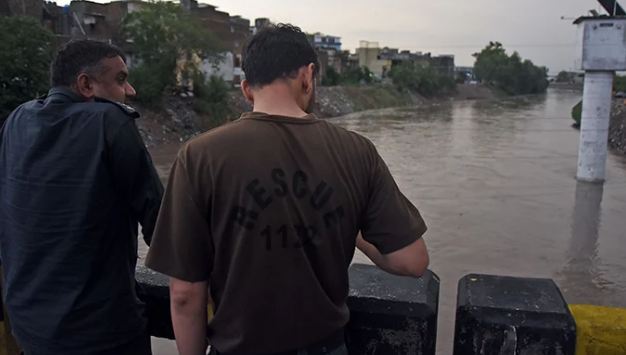
Monsoon rains, flash floods claim over 70 lives across Pakistan in 10 days

Monsoon rains

ISLAMABAD, JUL 6: At least 72 people lost their lives and 130 nationals sustained injuries across Pakistan in separate incidents that occurred due to flash floods and heavy rains this monsoon season, the National Disaster Management Authority (NDMA) stated in its 10-day data.

The statistics showed the increasing number of fatalities from June 26 to July 6, with the highest number of deaths recorded in Khyber Pakhtunkhwa.

In the last 10 days, KP recorded 28 deaths, followed by 22 in Punjab, 15 in Sindh, seven in Balochistan, and four in Azad Jammu & Kashmir (AJK).


It included six rain-related deaths in the past 24 hours, including four from KP and two from Sindh, whereas a total of 3 people were injured in separate incidents of flash floods, house collapse, lightning, and drowning.

At least 161 houses were damaged and 91 livestock were swept away in the monsoon spells. During this period, the emergency response agency conducted 19 rescue operations and rescued 233 persons, besides distributing essential items to the affected nationals.

As monsoon activity is expected to intensify across the country, the NDMA’s National Emergency Operation Centre (NEOC) issued an alert regarding heavy rains and potential floods till July 10.

The alert highlighted potential river and stream overflows across multiple regions, including Punjab, Sindh, Balochistan, Khyber Pakhtunkhwa, AJK, and Gilgit-Baltistan. In particular, low-level flooding is expected at Marala and Qadirabad points on the Chenab River.

Major rivers, including Indus, Chenab, Swat, Panjkora, Chitral, Hunza, and various local waterways, may witness rising water levels, the NDMA stated, adding that flash floods are also feared in northeastern Punjab, especially in streams originating from the Pir Panjal mountain range.

In AJK, the Jhelum River and its tributaries may be flooded, while Gilgit-Baltistan may witness increased water flow in the Hunza River and surrounding streams.

In southern Balochistan, flood risks are associated with streams flowing from the Kirthar mountain range, with particular concern for Awaran, Khuzdar, Jhal Magsi, Qila Saifullah, and Musakhel districts.

UK envoy expresses deep sorrow over Lyari building collapse

UK envoy expresses deep sorrow over Lyari building collapse

ISLAMABAD, JUL 6: British High Commissioner Jane Marriott expressed on Sunday deep sorrow and condolences over the tragic building collapse in the Lyari area of Karachi.

In a message shared on the social media platform X, Ms Marriott said she was deeply saddened by the loss of life in the incident and extended her heartfelt sympathies to the affected families.

She also paid tribute to the bravery of the rescue workers involved in the operation. “My thoughts are with the families and brave rescue workers who have worked tirelessly in the most difficult conditions,” she added.

A recent building collapse in Lyari has not only claimed precious lives but also rendered dozens of drivers unemployed as 35 rickshaws parked in the parking stand were completely destroyed.

Affected drivers stated that their stoves have remained cold for the past four days, as they are facing severe financial hardship.

CDA chief monitors relief efforts after Islamabad rainstorm

CDA chief monitors relief efforts after Islamabad rainstorm

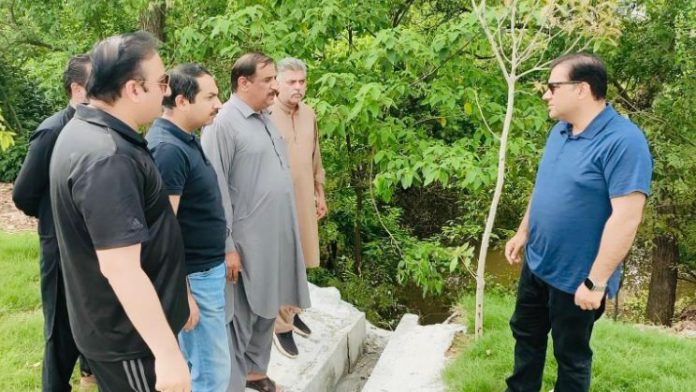
ISLAMABAD, JUL 6 /DNA/ – Chairman CDA, Chief Commissioner Islamabad and DG Civil Defence, Muhammad Ali Randhawa visited the various areas of Islamabad to personally monitor the joint operations carried out by the CDA District Administration and MCI in Islamabad in response to the recent heavy rainfall and hailstorm in Islamabad.

All field teams of CDA, District Administration and MCI were mobilised immediately after the heavy rainfall, with clear instructions to provide maximum relief and assistance to citizens with best of their abilities and resources.

Pursuing the instructions of Chairman CDA, the Emergency & Disaster Management Directorate, along with the Sanitation, Environment Wing, Building Control, Islamabad Water Agency, Road and Maintenance Wing, CDA carried out to swiftly remove fallen trees, debris and other obstructions from all major roads in Islamabad.

During the visit, Chairman CDA further directed to expedite efforts for remaining road cleaning, clearing of water and restore normal traffic flow on priority basis.

The staff and machinery from the Sanitation, Environment and Engineering Wings had already been deployed to clear blockages in the city’s drains, waterways and underpasses. A special monitoring mechanism was activated to ensure effective drainage in low-lying areas, underpasses and key roads.

Chairman CDA, Chief Commissioner Islamabad and DG Civil Defence Muhammad Ali Randhawa personally monitored the joint operation and efforts of all formations of CDA, District Administration and MCI and traffic police personnel in order to clear all road immediately and ensure flow of traffic. The citizens of Islamabad have appreciated prompt and effective measures under the leadership of Chairman CDA, Chief Commissioner Islamabad and DG Civil Defence for swiftly removing fallen trees, clearing all roads thus ensuring smooth flow of traffic inspite of heaving rain and thunderstorm in Islamabad.

JI stalwart Zafar passes away

JI stalwart Zafar passes away

LAHORE, JUL 6: Former Jamaat-e-Islami (JI) South Punjab chapter emir Rao Muhammad Zafar passed away on Sunday due to protracted illness.

According to details, Zafar had also served the Alkhidmat Foundation as its Punjab president.

The funeral prayers for Zafar will be held today at 8:00 pm.

Also Read: Former Jamaat-e-Islami deputy chief Prof Khurshid Ahmad passes away in Leicester

Earlier in April, JI former deputy chief Professor Khurshid Ahmad passed away in Leicester, United Kingdom at the age of 93.

Professor Khurshid Ahmad was born on 23 March 1932 in Delhi. He completed his graduation with a focus on legal studies and obtained master’s degrees in Economics and Islamic Studies from the University of Karachi.

The University of Karachi later conferred upon him an honorary degree in Education for his outstanding contributions in the academic domain.

Stay Connected

64FansLike
60FollowersFollow

Latest Reviews

Exchange Rates

USD - United States Dollar
EUR
1.17
GBP
1.34
AUD
0.67
CAD
0.73