Home Blog Page 300

British HC empowers Pakistani media amid monsoon devastation

British HC empowers Pakistani media amid monsoon devastation

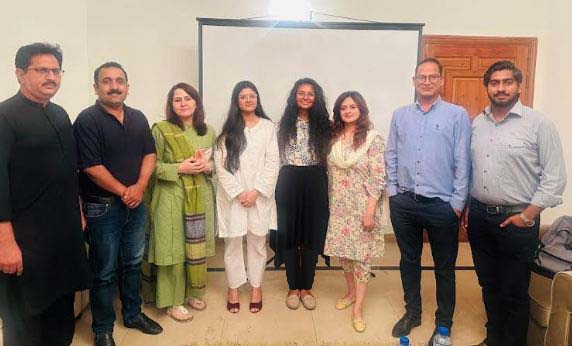
ISLAMABAD, JUL 8 /DNA/ – As Pakistan grapples with deadly monsoon floods and a projected $1.2 trillion cost of climate inaction, the British High Commission has launched a nationwide climate journalism training initiative to empower media professionals to drive awareness and action.

The training will spotlight the crucial role journalists play in encouraging climate action. Journalists can spotlight climate change solutions, encourage climate action, and can help their readers and viewers to understand how climate change affects them.

Deputy Director of Communications and Public Diplomacy, Sneha Lala, said:

The cost of inaction on climate change in Pakistan is $1.2 trillion by 2050. Within that figure is countless lives lost, countless numbers of people pushed into poverty, and countless livelihoods lost. It can be a bleak picture, but climate journalism is at the heart of showing us that there is another option. Climate journalism can incentivise action, spotlight solutions, and create change. I look forward to seeing the stories journalists go on to produce.

Having delivered trainings to the Express Group (Express Tribune, Express News and Daily Express), Geo News, Daily Jang, The News, The Nation and Nawa-e-Waqt in Islamabad, the High Commission will now travel to Lahore and Karachi, to continue their training programme.

British High Commission will be joined by a number of Chevening alumni, who honed their climate expertise through the prestigious scholarship where they studied a master’s qualification in the UK. This includes Syed Muhammad Abubakar, Environmental Journalist and PhD Scholar at George Mason University, U.S; Hammad Naqi Khan, Director General WWF Pakistan; and Sana Munir, Director of Local Government Audit.

They will also be joined by Muhammad Talal, senior sub-editor of Samaa digital, and Muhammad Asim Siddique, General Manager Samaa digital, both alumni of the High Commission’s Chevening climate mentorship programme. They have been supported by Adil Shahzeb, who has shared his insights on integrating climate stories into Dawn’s primetime show, ‘Live with Adil Shahzeb’.

Leo Hickman, editor and director of the Carbon Brief, is supporting the training programme. The High Commission will run a competition for all training participants. Journalists will submit their best climate story, and the winner will receive mentorship from Hickman.

PIDE refutes ‘Poverty Explosion’ as statistical illusion

PIDE

ISLAMABAD, JUL 8 /DNA/ – Amid the flood of headlines claiming a sharp rise in poverty in Pakistan, the Pakistan Institute of Development Economics (PIDE) has stepped forward to clarify the situation with its latest report, “The Poverty Illusion: When Numbers Distort Reality.” The findings challenge the widely circulated narrative of a nationwide poverty explosion, revealing that the rise in poverty statistics is primarily due to global metric recalibration rather than a sudden economic collapse. In response to sensational poverty headlines,

Dr. Nadeem Javaid, Vice Chancellor of PIDE and Member of the Planning Commission of Pakistan, stated, “Policymaking must be grounded in facts, not fear. These revised figures reflect changes in how poverty is measured globally, not a dramatic decline in the livelihoods of Pakistanis.”

The report, authored by Dr. Nasir Iqbal, PIDE’s Registrar and Associate Professor, critically examines the World Bank’s revised global poverty lines. The new $4.20 per day threshold, which replaced the former $3.20, has led to an increase in poverty statistics from 39.8% to 44.7%. However, Dr. Iqbal points out that more than 80% of this increase is the result of shifting global poverty benchmarks, not a collapse in household conditions. Inflation and other factors account for just 18% of the increase.

Key insights from PIDE’s analysis include the strength of the informal economy, which supports over 60% of Pakistan’s workforce, absorbing economic shocks and offering resilience during crises. Social protection programs such as the Ehsaas Program and the Benazir Income Support Program (BISP) have played significant roles in mitigating poverty. Additionally, remittances from overseas Pakistanis continue to provide vital support, cushioning households and bolstering the economy during times of distress. Even amidst major economic shocks like the COVID-19 pandemic and the 2022 floods, PIDE estimates the poverty rate in 2025 to be between 23% and 25%, with food-based poverty pegged at just 6.2%, signaling consistent, long-term improvement.

In light of these findings, PIDE has proposed a series of actions to address poverty with a data-driven approach. These include reinstating the Household Integrated Economic Survey (HIES) to update data, refining BISP to link cash transfers with measurable outcomes like education, employment, and asset growth, and developing a National Poverty Reduction Strategy integrated with the Sustainable Development Goals (SDGs) to ensure inclusive economic reforms. Additionally, PIDE calls for leveraging the informal economy through the creation of Village Economic Zones (VEZs) to boost rural employment and productivity via local value chains and agri-tech innovations.

VC PIDE emphasized, “This is not a time for panic, but for rational, evidence-based policymaking that can turn perceived crises into opportunities for structural economic reform.”

President notifies appointment of chief justices for all four high courts

President

ISLAMABAD, JUL 7: The Ministry of Law and Justice has issued notifications for the permanent appointment of chief justices to all four high courts of the country, following the approval of President Asif Ali Zardari.

According to the notification, Justice Sarfraz Dogar has been appointed as the chief justice of the Islamabad High Court. Justice Junaid Ghaffar has been named as the chief justice of the Sindh High Court.

In Balochistan, Justice Rozi Khan Bareech has been appointed as the chief justice of the Balochistan High Court, while Justice Atiq Shah has been notified as the chief justice of the Peshawar High Court.

The development came a week after the Judicial Commission of Pakistan (JCP) nominated permanent chief justices for four high courts.

In February, five IHC judges had moved the apex court against the appointment of Justice Dogar as the acting chief justice of IHC, as well as the transfer of three high court judges to their court.

The plea was filed by Justice Mohsin Akhtar Kiyani, Justice Tariq Mehmood Jahangiri, Justice Babar Sattar, Justice Sardar Ejaz Ishaq Khan and Justice Saman Riffat Imtiaz.

However, the top court, on June 19, dismissed pleas filed against the transfer of judges and ruled that Justice Dogar could continue to work as IHC’s acting chief justice.

Later on, Pre­sident Asif Ali Zardari formally decla­red Justice Dogar the “senior-most judge” of the IHC, following the issuance of a revised seniority list by the Ministry of Law and Justice.

It is pertinent to know that the five IHC judges filed an intra-court appeal (ICA) against the SC’s June 19 verdict.

In their plea, the judges urged that the Constitutional Bench’s order should be “recalled and set aside […] in the interest of justice”.

“During the pendency of the instant appeal, this Hon’ble Court may graciously grant interim relief as prayed for in the accompanying interim relief application. Any other relief that this Hon’ble Court may deem fit and proper may also be granted,” the petition stated.

Pakistan Hosts Inaugural Round of Additional-Secretary Talks Between Pakistan and Afghanistan

Pakistan

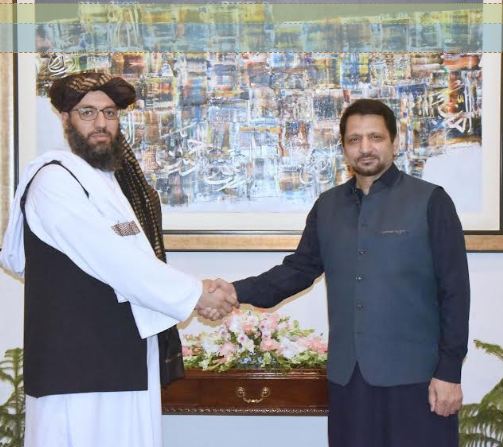
ISLAMABAD, JUL 7 /DNA/ – The inaugural round of the Additional Secretary-Level Mechanism between the Foreign Ministries of Pakistan and Afghanistan was held today in Islamabad pursuant to decisions reached during the visit of the Deputy Prime Minister/Foreign Minister of Pakistan to Kabul, Afghanistan, on 19 April 2025. 
 
Pakistan side was led by Additional Secretary (Afghanistan & West Asia), Ambassador Syed Ali Asad Gillani, while the Afghan side was led by Director General, First Political Division at the Ministry of Foreign Affairs of Afghanistan, Mufti Noor Ahmad Noor.
 
Discussions covered key areas of bilateral interest, including trade and transit cooperation, security, and connectivity. 
 
Both sides recognized terrorism as a serious threat to regional peace and security. The Pakistani side emphasized the need for concrete actions against terrorist groups operating on Afghan soil, noting that such groups undermine Pakistan’s security and hinder regional development.
 
The two sides exchanged views on deepening trade and transit cooperation. They reviewed the implementation status of measures announced during the visit of Deputy Prime Minister/Foreign Minister of Pakistan to Kabul for facilitating Afghan transit trade, including the removal of a 10% processing fee, provision of an insurance guarantee, reduction in scanning and examination, and operationalisation of the track and trace system.
 
They underlined the importance of enhanced regional connectivity as a catalyst for sustainable growth and shared prosperity. Noting the strategic significance of the Uzbekistan-Afghanistan-Pakistan Railway in that regard, they agreed to make concerted efforts towards the early finalisation of the Framework Agreement.
 
The two sides also discussed matters related to the repatriation of Afghan nationals. Pakistan side shared an overview of its efforts to facilitate documented travel from Afghanistan, notably through the issuance of over 500,000 visas since January 2024 to date across a range of categories such as medical, tourist, business, and study. Both sides agreed to work together to further strengthen the legal movement of individuals across borders.
 
Both sides reaffirmed their support for sustained engagement to address mutual challenges. They recognised lasting security as a cornerstone, for both the region’s optimal development as well as for further advancement of bilateral relations.
 
They decided to convene the next round of the Additional-Secretary talks at mutually convenient dates.

Karachi Tragedy—a reflection of national apathy

Karachi Tragedy—a reflection of national apathy

Opinion

Ansar Mahmood Bhatti

On July 4, 2025, another tragedy has Karachi—a city that never sleeps, yet never seems to awaken from the nightmare of misgovernance and human suffering. People were yet trying to recover from the Swat River tragedy that also took many precious lives, the news came that a five-storey residential building collapsed like a house of cards, reducing concrete and steel to dust, and with it, burying precious human lives under the rubble. Mothers, children, elderly residents—people with dreams, memories, and hopes—were mercilessly crushed. And once again, all we are left with are rescue sirens, news flashes, hollow statements of sorrow, and the same old promise of “strict action” against those responsible.

This isn’t just the story of a building collapse; it’s the story of a system collapse. A collapse of values, governance, justice, and above all—humanity. This heart-wrenching incident speaks volumes for the sheer apathy of the concerned quarters. It screams of the poverty that shackles millions of Pakistanis, forcing them to live in crumbling, unlivable structures because they simply do not have a choice.

The truth is bitter and painful: People don’t live in such dangerous buildings by choice—they do so because poverty has left them with no options. They cannot afford repairs, renovations, or even relocation. Their rooms, their so-called homes, are more like ticking time bombs. And yet, nobody cares. There are no jobs. No opportunities. The wealth of this country remains concentrated in the hands of a select few, while the rest are left to struggle, to suffer, and to perish.

The Sindh government, as usual, remains absent when needed most. Corruption continues to rot the roots of every institution in the province. Reports abound of public funds being misused, siphoned off into the pockets of the powerful, leaving behind a trail of broken roads, overflowing gutters, and unsafe buildings. Accountability is a joke. Inspections are either never done, or signed off without a second glance. Everything is available for a price—even human life, it seems.

But let us not limit this tragedy to Sindh alone. This is the state of governance across the country. Pakistan as a whole is grappling with a systemic collapse. There is no mechanism in place to protect the common citizen. No one to listen to the cries of the poor. No government department that takes its duty as sacred. The entire structure of the state has been hijacked by individuals who are more interested in filling their own coffers than serving the people who elected them.

This country was meant to be a welfare state. An Islamic Republic, where the principles of justice, equality, and compassion were supposed to guide every policy and law. But look around—where is that vision? Where is the care for the weak, the protection for the vulnerable, the support for the broken?

In Pakistan today, the poor have no right to live, let alone dream. Their lives are expendable, their deaths mere statistics. If you are not part of the elite, the powerful, or the connected, then this country is not meant for you. It suits only the bigwigs—the untouchables who roam freely in their bulletproof vehicles, while the common man lies buried under concrete slabs.

We hear stories every day—of parents committing suicide after killing their own children because they can no longer feed them. Is this the land our founding fathers envisioned? Is this the state that was supposed to uphold the values of Islam, where helping the oppressed is a divine duty, and serving the people is an act of worship?

And yet, nobody fears God anymore. Nobody fears accountability—not in this life, nor the hereafter. Especially those in power. They act with impunity, as if they will live forever, as if there is no Day of Judgment. But there will be a day. A Day of Reckoning where each misdeed, each stolen rupee, each ignored cry for help will be brought to account. But for now, they continue to live in denial, mocking not just the people, but the very God they claim to serve.

For how long will this continue? For how long will the poor continue to suffer in silence? For how long will the corrupt thrive, while the helpless are buried under the weight of injustice? For how long will injustice be the rule and not the exception?

This tragedy in Karachi is not an isolated incident—it is a symptom of a much deeper disease. It reflects the moral decay of a nation that has forgotten its soul. A nation where human life has no value, and where suffering is just another news headline.

What we need is not just mourning and condemnation. We need a revolution of conscience. We need the rulers to remember their purpose—not to rule, but to serve. We need institutions that value human life. We need a media that doesn’t move on to the next story, but keeps asking the hard questions. And above all, we need citizens who hold the powerful accountable, who remember that silence in the face of injustice is complicity.

To the families who lost their loved ones in this tragedy, no words can ease your pain. But let this not be just another forgotten incident. Let this be a wake-up call. Let this be the moment where we as a nation say: Enough is enough.

Because if we continue to let the poor die like this—unnoticed, unprotected, uncared for—then we are all complicit in the crime. And we too, will have to answer one day—not just to history, but to God.

May God have mercy on the souls we lost. And may He awaken the dead conscience of those who still rule over the living.

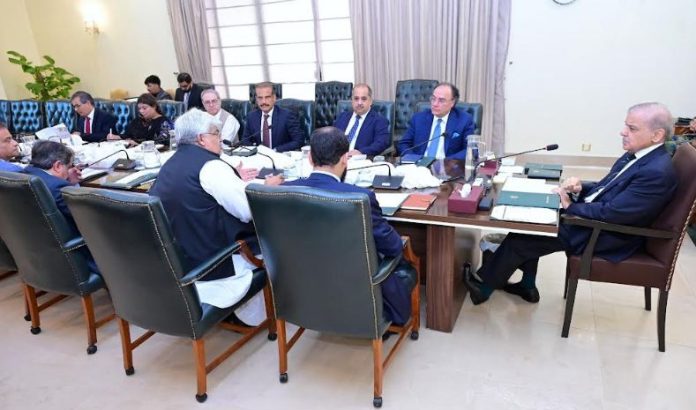
PM directs NDMA, rescue teams to stay high alert

PM

Saifullah Ansar

ISLAMABAD, Prime Minister Muhammad Shehbaz Sharif on Monday directed the National Disaster Management Authority (NDMA), rescue agencies, and administrative authorities to remain on high alert during the recent heavy rains and any potential emergency situations.

In anticipation of possible flooding in areas along the Indus River and other rivers, the prime minister has instructed the NDMA, rescue agencies, and administrative bodies to immediately implement safety measures and precautionary actions.

The prime minister directed the NDMA to strengthen coordination with the Provincial Disaster Management Authorities (PDMAs) for effectively dealing with the flood situation.

The NDMA has also been instructed to strengthen close coordination with provincial governments and other relevant institutions, a press statement issued by the PM Office said..

The prime minister directed the Pakistan Telecommunication Authority (PTA) to keep the public informed using all available means, providing accurate and real-time information.

He expressed concern that the operation of the Tarbela Dam spillways may increase flooding in the lower districts along the Indus River.

All provincial administrations have been directed to continue effective public awareness campaigns in view of the potential flood situation.

The National Emergency Operations Center (NEOC) has also been instructed to identify and clarify through the media, the areas that are vulnerable or less protected, where there is a risk of high, medium, or low-level flooding, so that the public can be warned in a timely manner.

The prime minister further directed that provincial administrations must be fully prepared in advance for any situation, and that the NDMA should ensure this preparedness.

Islamabad, Baghdad set to become sister cities as Iraq envoy meets CDA chairman

Baghdad

ISLAMABAD, Jul 07 (DNA): The Republic of Iraq and Pakistan are moving to formalize a sister city relationship between Baghdad and Islamabad in a step toward strengthening bilateral ties and fostering urban cooperation.

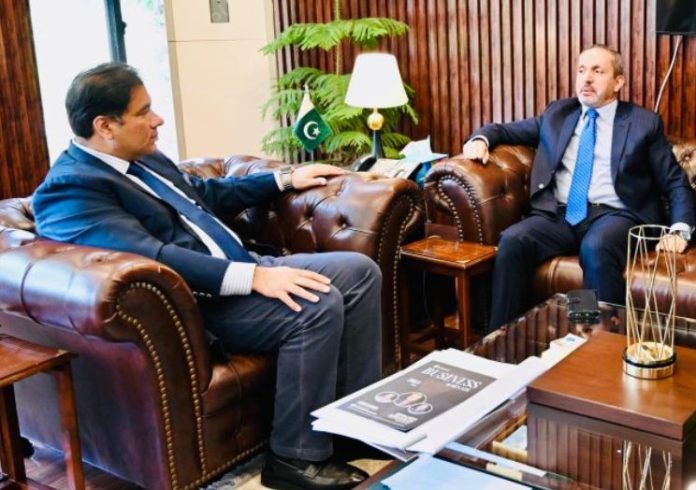
The announcement came during a meeting between Abdul Qadir Suleiman Al-Himeiri, Head of Mission at the Iraqi Embassy, and Muhammad Ali Randhawa, Chairman of the Capital Development Authority (CDA), and Chief Commissioner Islamabad on Monday.

Held at the CDA Headquarters, the meeting centered on enhancing collaboration in urban development, cultural exchange, and sustainable city planning.

The two sides agreed to sign a Memorandum of Understanding (MoU) to establish Baghdad and Islamabad as sister cities, paving the way for long-term cooperation in municipal management, infrastructure development, heritage conservation, and beautification of public spaces.

“This twinning arrangement is a significant step to deepen our cultural and urban linkages,” said  Abdul Qadir Suleiman Al-Himeiri. “We are eager to share knowledge and explore joint initiatives that can strengthen economic, cultural, and tourism connections between Iraq and Pakistan.”

Chairman CDA Muhammad Ali Randhawa briefed the Iraqi envoy on Islamabad’s recent development initiatives, particularly the upgradation of the Diplomatic Enclave. “On the directions of Federal Interior Minister Mohsin Naqvi, we are working to modernize the enclave to meet international standards, transforming it into a secure and vibrant diplomatic hub,” Randhawa stated.

He added that renowned architects and landscaping professionals are being brought in to ensure the area reflects global standards of design and functionality.

The Iraqi ambassador commended these efforts and expressed his appreciation for the CDA’s commitment to enhancing the capital’s urban landscape.

The meeting, described as cordial and forward-looking, concluded with both sides reaffirming their intent to deepen institutional ties.

Randhawa presented a commemorative souvenir to Ambassador Al-Himeiri as a token of friendship, symbolizing the shared ambition of building a lasting partnership between the two nations.

“This initiative reflects Pakistan’s commitment to international cooperation rooted in mutual respect and shared goals,” Randhawa said, expressing optimism about the future of Islamabad-Baghdad collaboration.

Uzbekistan, Azerbaijan submit joint bid to host the FIFA U-20 World Cup

Uzbekistan

Uzbekistan and Azerbaijan have jointly submitted a bid to host the 2027 FIFA U-20 World Cup.

Tashkent, JUL 7 /DNA/ – According to the Uzbekistan Football Association, FIFA has officially begun reviewing bids for the hosting rights of the FIFA U-20 World Cup 2027. Taking into account the recent football reforms, infrastructure development, and growing international reputation of Turkic-speaking nations, the football associations of Uzbekistan and Azerbaijan have submitted a joint candidacy, expressing strong confidence in their ability to stage the tournament at the highest level.

Today, alongside Azerbaijan, Uzbekistan is fully prepared to host this prestigious tournament. In recent years, stadiums across the country have been upgraded to meet international standards. Additionally, the experience gained from hosting the AFC U-20 and U-23 tournaments, as well as the first-ever Futsal World Cup held in Central Asia, has laid a solid foundation. This futsal tournament was recognized by FIFA President Gianni Infantino as one of the best editions in the competition’s history.

As always, our nation stands ready to capture the world’s attention through its renowned hospitality, professional organization, deep passion for football, and, of course, the unwavering support of our dedicated.

COAS Munir dismisses India’s claim of Chinese war involvement

Complete independence impossible without economic stability: COAS

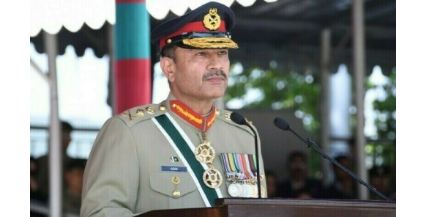
RAWALPINDI, JUL 7 /DNA/ – Chief of Army Staff (COAS) Field Marshal Asim Munir has dismissed India’s claim of Chinese assistance to Pakistan during the recent armed conflict between Islamabad and New Delhi as a “shoddy attempt at playing camp politics”.

“Naming other states as participants in the purely bilateral military conflagration is also a shoddy attempt at playing camp politics and desperately trying that India remains the beneficiary of larger geopolitical contestation as the so-called net security provider in a region,” COAS Munir said while addressing the graduating officers of the National Security and War Course at the National Defence University (NDU).

The army chief’s remark refers to claims made by the deputy chief of India’s army, who said that Beijing gave Islamabad “live inputs” on key Indian positions during the deadly conflict between two nuclear-armed neighbours in May.

India fought two adversaries during the conflict, with Pakistan being the “front face” while China provided “all possible support”, Lieutenant General Rahul Singh claimed at a defence industry event in New Delhi.

“When the DGMO (director general of military operations) level talks were going on, Pakistan … said that we know that your such and such important vector is primed and it is ready for action […] he was getting live inputs from China,” he claimed.

Regarding the possibility of China providing satellite imagery or other real-time intelligence, India’s chief of defence staff had said such imagery was commercially available and could have been procured from China or elsewhere.

Pakistani officials have previously dismissed allegations of receiving active support from China in the conflict.

His statement referred to the conflict that saw both countries using missiles, drones, and artillery fire during the four-day fighting —their worst in decades — triggered by an attack in April on Hindu tourists in Indian Illegally Occupied Jammu and Kashmir (IIOJK) that New Delhi blamed on Islamabad, before agreeing to a ceasefire. Pakistan has denied involvement in the attack.

Meanwhile in his address today, the field marshal noted that India’s inability to achieve its stated military objectives during Operation Sindoor — and the subsequent attempt to rationalize this shortfall through convoluted logic — speaks volumes about its lack of operational readiness and strategic foresight”.

“Insinuations regarding external support in Pakistan’s successful Operation Bunyan-um-Marsoos are irresponsible and factually incorrect and reflect a chronic reluctance to acknowledge indigenous capability and institutional resilience developed over decades of strategic prudence,” he added.

Highlighting India’s strategic behaviour resting on parochial self-alignment, the COAS stressed that Pakistan has forged lasting partnerships based on principled diplomacy, anchored in mutual respect and peace, establishing itself to be a stabilizer in the region.

He also retierated Islamabad’s “principled stance that any misadventure or attempts to undermine Pakistan’s sovereignty or violation of territorial integrity will continue to be reflexively met with a swift, and resolute response without any constraints or inhibitions”.

“Any attempt to target our population centres, military bases, economic hubs and ports will instantly invoke a ‘deeply hurting and more than reciprocal response,’ the army chief warned, adding: “The onus of escalation will squarely lie on the strategically blind arrogant aggressor who fails to see the grave repercussions of such provocative actions against a sovereign nuclear state”.

The army chief further remarked that wars are not won through media rhetoric, imported fancy hardware, or political sloganeering, but through faith, professional competence, operational clarity, institutional strength and national resolve.

Furthermore, highlighting the evolving character of warfare, he underscored the centrality of mental preparedness, operational clarity, and institutional professionalism in navigating complex strategic issues and lauded lauded the role of premier institutions like NDU in enhancing civil-military synergy and nurturing future leadership capable of mitigating hybrid, conventional, and sub-conventional threats with poise and resolve.

Urging the graduating officers to remain steadfast in the values of integrity, selfless service, and unwavering commitment to the nation, Field Marshal Munir expressed full confidence in the professionalism, morale, and readiness of the country’s battle hardened armed forces.

‘Rs40bn corruption’ revealed at NICVD

corruption

Two-member committee formed to probe audit report within 15 days

Monitoring Desk

KARACHI: A major financial irregularity worth Rs40 billion has been unearthed at the National Institute of Cardiovascular Diseases (NICVD) Karachi, according to the audit report of the Sindh Directorate General of Audit for the fiscal year 2023–24.

The report revealed alleged corruption at the prominent cardiac institute, prompting Sindh Health Minister Dr Azra Pechuho to take immediate notice, .

In response, she has ordered a formal inquiry and constituted a two-member committee to investigate the matter.

According to the official notification, the inquiry committee includes the Additional Secretary and Deputy Secretary of Health. The committee is tasked with submitting its findings within 15 days.

Meanwhile, the NICVD spokesperson has downplayed the development, saying that audit paras are a routine part of review processes for all government institutions.

“Observational reports from the Auditor General are standard and meant to improve financial transparency,” the spokesperson said.

Declaring these observations as conclusive evidence of corruption is premature, misleading, and contrary to facts, the spokesperson said, adding that presenting audit points without investigation or due process as financial misconduct is irresponsible.

The spokesperson further clarified that many of the audit observations in the 2023–24 report pertain to appointments and other issues from the years 2017 to 2018 — well before the current Executive Director assumed office in November 2023.

Stay Connected

64FansLike
60FollowersFollow

Latest Reviews

Exchange Rates

USD - United States Dollar
EUR
1.17
GBP
1.34
AUD
0.67
CAD
0.73