Home Blog Page 2979

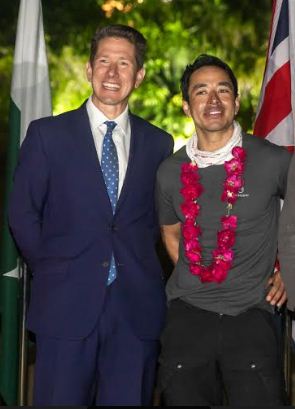
British HC marks success of Nepal climbing team

ISLAMABAD, JAN 23 (DNA) – The British High Commission has held a reception in Islamabad to recognise the incredible achievement of the ten Nepalese climbers who became the first expedition in winter to reach the summit of Pakistan’s K2, the world’s second-highest mountain at 8,611 meters (28,251 feet).

The achievement comes in a year when the UK is hosting the UN’s climate change conference, COP26, in November 2021, and the reception was told that the UK will be using its presidency to ensure the priorities of the most vulnerable are acted on.

The reception included senior representatives from the Government of Pakistan, the Deputy Ambassador of Nepal, the Canadian High Commissioner, the EU Ambassador, media, climate change and the mountaineering community.

DNA 23-3

The Nepalese team made their historic ascent on Saturday 16th January. The climbing team included Nirmal Purja, MBE who had a distinguished 16-year military career, of which he spent 6 years as a Ghurka and 10 years with the UK Special Forces. In 2009 he became the first ever Gurkha to join the UK Special Boat Service (SBS).

Nirmal Purja MBE from the climbing team said: “The whole team is extremely happy to have summited the hardest, last and greatest mountaineering feat. We’re very humbled that we have received such a welcoming and grand reception from everyone here in Pakistan. We’re grateful that the British High Commission reached out to join in our celebration of this successful summit.”

The British High Commissioner, Dr Christian Turner, CMG, said: “The extraordinary achievement of the Nepalese climbers has shone a spotlight on Pakistan’s outstanding natural beauty – and how fragile it is due to climate change.

“To quote the great poet Allama Iqbal – Tu shaheen hai basera kar paharon ki chatanon mein.

“The UK is a world leader in tackling climate change and as the climbers have shown, we can conquer and move mountains, if we work together.”=DNA

===================

Increase in provincial share in revenue critical for sustainable investment in HD: experts

ISLAMABAD, JAN 23 (DNA) – The experts in taxation and economy have highlighted that tax-collection by provinces is critical to ensure sustainable investments in human development. The speakers from diverse backgrounds shared this viewpoint at the webinar ‘Towards a more innovative, effective and enabling provincial sales tax regime’, jointly organized by the Sustainable Development Policy Institute (SDPI) and Sub National Governance (SNG) here on Saturday.

Chairman, Punjab Revenue Authority (PRA), Mr Zain Sahi, said that the primary reason for non-compliance in Punjab has been high rates of taxes. Therefore, in addition to nudge techniques, fiscal incentives were also introduced including reduction in rates. He highlighted that data from external sources is needed to identify taxpayers outside tax nets, but data analysis capabilities in the public sector also need improvements. Therefore, PRA is willing to share its data with others government entities on reciprocal basis.

Mr Usman Khan, Innovation Lead, SNG Program, informed the participants that the Sub-National Governance (SNG) Programme worked closely with PRA to deploy an intelligent system. It aims to make integration of all government data on tax-payers easier and other data commercial available in the public domain, and thus, to use cross-referencing to identify new taxpayers. It would also make the audit process of existing tax-payers smarter and more efficient. The system will use smart data techniques to identify the audit scope rather than a random selection, he added.

Dr Vaqar Ahmed, Joint Executive Director, SDPI, was of view that to sustain investments in human development and enabling infrastructure, own revenues of provinces must grow by almost 20 percent per annum in the medium term – a point also stressed in Punjab Growth Strategy. He said that this target can be achieved through having and using better data and evidence on tax avoidance and evasion, a structured sector-specific dialogue with private sector.

“This dialogue is important to help reduce the trust deficit between taxpayers and tax authorities as well as improving overall capacities for evidence-use in tax bodies, Dr Ahmed said. He added further that the provinces are facing uncertainties related to federal transfers and reduction in development program in turn threatening the sustainability of the medium-term fiscal framework. If pandemic outlook prolongs, greater efforts towards provincial revenue mobilization would be required to sustain relief and recovery.

Public Sector Specialist, World Bank, Ms Irum Toqeer, was of view that the expansion of tax base and improved compliance will be challenging if tax authorities do not address limited use of existing taxpayers’ data, ICT constraints, and incomplete data automation within and across authorities. Mr Naveed Aziz, Governance Adviser, Foreign, Commonwealth and Development Office (FCDO), informed the participants that FCDO has been working with both the federal and provincial govts, but any work done by donors has to be institutionalized for any change to materialize.

Ms Claire Hutchings, Senior Portfolio Leader, Oxford Policy Management (OPM), on the occasion opined that incentives and motivations of all actors in the system need to be understood by revenue authorities to devise strategies for tax compliance through behavioural nudge techniques.

Ms Gulalai Khan, Communications and Social Impact Adviser, SNG Program, earlier shared various dynamics of the topic and highlighted the importance of discourse on tax revenue mobilization by provinces.=DNA

==========================

Accident Prevention: Airbag Jeans Ready For Motorcyclists

A Swedish designer has developed jeans for motorcyclists that are fitted with airbags and will help protect motorcyclists by immediately blowing in the event of an accident.According to the website UPI, founder Shahriar has developed these jeans, he has already made a jacket for motorcyclists with an airbag which is being used all over the world. Thanks to this, in case of an accident, the rider’s neck, both arms, back, chest and spine are protected.

Referring to his invention, the founder says: “Although the jacket is very useful, the need was felt that the legs of bikers would be badly affected in any accident, and with that in mind, they used airbags.” Started on jeans.

 “Jeans with airbags will be introduced to the general market by 2022,” he said.

The founder has also shared a report on this gene on his YouTube channel.
According to the founder, “a motorcyclist’s rope is tied to the motorcycle and in case of an accident, when the rope is pulled, airbags are immediately inflated over the rider’s legs and he is protected from injury.”

Although airbag jeans are currently only available in Sweden, the founders are hopeful that they will soon be available in other countries as well. In this regard, they are working to bring it in line with EU health and safety standards.

CDA to plant saplings along Metro bus route

DNA

ISLAMABAD, JAN 23 – The Capital Development Authority (CDA) has decided to plant saplings in March on greenbelts on both sides of the Rawalpindi-Islamabad Metro Bus, which fall within the limits of the federal capital.

The CDA’s Director General (Environment) inspected the greenbelts on Metro Bus route along with the Director National Highway Authority (NHA) and discussed the plan to plant trees in upcoming plantation drive.

CDA official told that climate change ministry would also provide its financial and technical assistance in the plantation drive to ensure maximum survival rate.

According to the CDA official, the buses plying on the metro route emit greenhouse gases but plantation on both sides would help mitigate their impacts to a satisfactory level.

The Pakistan Environmental Protection Agency (Pak-EPA) has time and again warned against rising air pollution in Islamabad especially due to increasing vehicular traffic on roads.

According to Islamabad Traffic Police (ITP), around 500,000 vehicles, including vans, trucks, buses and other heavy transport vehicles are presently plying on the roads of the capital.

Pak-China OFC Project Phase II gets approved

BEIJING, Jan. 23 (DNA): Pakistan’s key decision-making body, the Executive Committee of the National Economic Council (ECNEC), approved Rs 37.9 billion worth Pak-China Optical Fiber Cable (OFC) Project Phase II.

According to a report published by Gwadar Pro, the project will pave the way for establishment of Cross-Border OFC Network (Khunjerab-Karachi) Along China Pakistan Economic Corridor (CPEC) Routes.

The project will provide alternate path for international connectivity through Northern Border of Pakistan with China and would transform Pakistan as a Digital Gateway of regional connectivity.

The COVID-19 response and other Natural Calamities Control Program was approved by the ECNEC at the cost of Rs 70 billion as federal share.

The project includes National Health upgradation program, National program for Water and Sanitation and Hygiene (WASH), COVID-19 interventions for less developed areas.

The ECNEC also approved the Project for “Dualization and Improvement of Old Bannu Road” at the total cost of Rs 17,230 million from federal Public Sector Development Programme (2020-21).

The project envisages dualization of existing 02-lane old Bannu road measuring 83 km in length from Gaandi Chowk to Sarai Naurang (8km) and Domail to Krapa on N-55 (75-kilometre) to 4 lanes, with 7.3 metres wide carriageway on either side.

The scope of work also includes extension of existing culverts & bridges, construction of retaining walls along with drainage / erosion works and allied facilities. NHA shall execute the project.

ECNEC considered and approved a summary regarding construction of Gwadar-Ratodero Road Project (M-8) sponsored by the Ministry of Communication and executed by National Highway Authority (NHA) at a rationalized cost of Rs 38,026.28 million.

It also approved the project in view of its strategic importance as it will facilitate connectivity for China-Pakistan Economic Corridor (CPEC) projects through improved road linkages.

A summary was presented before ECNEC regarding provision of Advanced Skills Development through International Scholarship Phase-1 for Master and Doctor of Philosophy (PhD) programs to be executed by the Higher Education Commission (HEC).

The project is part of a Prime Minister Knowledge Economy Task Force Initiative which will enable our youth to access higher education opportunities in well-reputed international universities. ECNEC approved the project at a rationalized cost of Rs. 13.361 billion.

A summary regarding Greater Karachi Water Supply Scheme (K-IV) 260 Million Gallon a Day (phase-1) was presented before ECNEC.

The project would provide additional 260 MGD water to Karachi at the total cost of Rs. 25,551.77 million. The expected period of completion is 04 years, said the statement.

ECNEC approved the project for provision of environment friendly water sanitation and waste management infrastructure / facilities to residents of Karachi.

Similarly, a project titled ‘Solid Waste Emergency and Efficiency Project (SWEEP)’ was presented before the Committee sponsored by the Local government, Housing and Town Planning Department, Government of Sindh with total cost of Rs 16,800 million including International Bank for Reconstruction and Development-World Bank loan of Rs 16,000 million.

The project is designed to mitigate the risk of widespread flooding caused by inadequate solid and liquid waste management during monsoon season and to improve the Solid Waste Management (SWM) infrastructure and service delivery with a view to transform Karachi into an eco-friendly city in the long run.

It has been financed by the World Bank/IDA. The Project is envisioned to upgrade basic education infrastructure in the districts of Peshawar, Haripur, Noshera and Swabi of the Khyber Pakhtunkhwa Province.

The project for the “Construction of 100 Dams in Balochistan- Package IV (23 Dams)” was approved by ECNEC at the total cost of Rs 13,512.725 million. Irrigation Department, government of Balochistan will execute the project and it will be completed in three years.

Realizing the water scarcity in the Province of Balochistan, the project is designed to harness flood flows for direct irrigation, ground water recharge and agricultural development through construction of small dams throughout the Province.=DNA

======================

Educated Pakistan promises prosperous and peaceful Pakistan: Zia Ul Qayyum

ISLAMABAD, JAN 23 (DNA) – ‘Pakistan is celebrating International Day of Education today in line with the rest of the nations of the world.

This day reminds us that without inclusive and equitable quality education and lifelong opportunities for all, countries will not succeed in breaking the cycle of poverty and to advance sustainable development and  providing lifelong learning opportunities for all’, said Prof Dr Zia ul Qayyum, VC, AIOU in a message released on celebration of International Day of Education today.

He stressed the youth of Pakistan to serve the nation after seeking education and play their due role in the progress and development of the country.

He highlighted the role of AIOU in promoting education and enhancing rate of literacy by initiating various key projects targeting under privileged and marginalized segments of the society.

He, further, added that within the limited time period of two years, he has expanded the regional network of the university by establishing ten new regional centers.

He said that AIOU is providing free education to the people of Baluchistan, KPK, GB and former FATA. He concluded that AIOU will strive to promote learning to empower people, protect the planet, build shared prosperity and foster peace by providing quality educational services to the remotest and distant regions of the country and by focusing on education of every individual in the country.=DNA

=================

PDM a dead horse now, opposition suffered defeat, failure: Shibli

ISLAMABAD, JAN 23 (DNA) – Minister for Information and Broadcasting Senator Shibli Faraz on Saturday said Pakistan Democratic Movement (PDM) was a dead horse and the opposition was left with only disappointment, failure and defeat.

In a statement issued here, Shibli Faraz said those who wanted to overthrow the elected government fell out of favor of the people.

He said Pakistan Muslim League- Nawaz  (PML-N) leaders were confused, adding that the Broadsheet issue had exposed the politics of the National Reconciliation Ordinance, and it would be Panama II for them.

“When Imran Khan was building cancer hospital and universities for the poor, Nawaz Sharif and Asif Zardari were robbing the poor and building palaces in Avonfield and Surrey”,  Shibli Faraz said.

He said PML-N leaders could not mislead and misguide people by telling lies.

Imran Khan was known for his determination and steadfastness, he said adding that the corrupt mafia which looted wealth of the nation must be held accountable.=DNA

=====================

COMSTECH Int’l workshop on viral diseases begins on JAN 25

ISLAMABAD, JAN 23 (DNA) – COMSTECH International Workshop on “Fundamental Techniques in Viral Diseases Diagnostics” is going to kick off on Monday, January 25, 2021 at COMSTECH.

The three-day workshop consists upon four technical sessions. Experts from Germany, China, Sweden and Pakistan will give lectures on different aspects of viral diseases.

Prof. Dr. S. M. Wasim Jafri, Professor of Medicine, Aga Khan University, Pakistan is the keynote speaker in the inaugural session.

Viral diseases’ global clinical impact, diagnosis, treatment, prevention; virus genomics and evolution; Introduction to coronaviruses and development of test system for the detection of SARS-CoV-2 antibodies; SARS-CoV-2 spike a major determinant of viral infectivity and spread; developing methods for rapid detection of emerging viruses and insights into SARS-CoV-2 polymerase catalysis and Remdesivir intervention are the some of the topics of the lectures to be delivered during the workshop.

More than one hundred national and international scholars/researchers and scientists have got registered to attend this three-day workshop to be held during 25 to 27 Jan. 2021.=DNA

==================

Conference explores economic cooperation between Pakistan, Xinjiang

DNA

BEIJING, JAN 23 – Speakers at the online conference for the Promotion of Economic and Trade Cooperation of Xinjiang, China — Pakistan Session underlined that Pakistan and Xinjiang have achieved fruitful cooperation results, and it is believed that it’s time for both sides to make joint efforts to further strengthen the depth of development in the fields of mechanized agriculture, food processing, agricultural tourism, textile technology transfer and skills upgrading.

The conference was held by the Commerce Department of Xinjiang Uygur Autonomous Region of China the other day, China Economic Net (CEN) reported.

Khashih ur Rehman, Additional Secretary/Executive Director, Board of Investment, Pakistan said on the occasion that textiles and agriculture are two high priority areas for the development of the China-Pakistan Economic Corridor (CPEC) in mutual cooperation.

“The Pakistani government has set up a separate joint working group under the framework of CPEC agreement to promote agricultural development, and cooperation among leading enterprises has made great progress. The textile and clothing industry is the largest manufacturing industry in Pakistan. Pakistan has a complete textile value chain in which Chinese enterprises are quite welcome to invest.”

Xie Guoxiang, Minister Counsellor of the Chinese Embassy in Pakistan underlined that Xinjiang Autonomous region is located at the forefront of China and Pakistan and has great geographical advantages in bilateral cooperation. He said that in recent years, Xinjiang has actively developed modern industrial systems such as deep processing of agricultural products, textile and clothing equipment manufacturing, energy and tourism, made significant progress in related industries, and created more cooperation opportunities with Pakistani partners. Because of Xinjiang’s special geographical location and diversified industrial layout, the prospect of cooperation between Xinjiang and Pakistan will be amazing and bright.

Badar uz Zaman, Commercial Counsellor of the Pakistani Embassy in China stated that urban development and cooperation is the fulcrum and support of the China-Pakistan Economic Corridor and the core project of connectivity.

Rising China and the burgeoning industrial cooperation

By Hassan Daud

China’s strength as the factory of the world and the key driver of global economic growth is visible as the world enters 2021 with new hope to combat the pandemic challenge through vaccine and bring growth and prosperity. In a country where per capita income has considerably increased and the New Year speech of President Xi echoed these sentiments when he said “In 2020, China made the historic achievement of establishing a moderately prosperous society in all respects and achieved decisive success in eradicating extreme poverty”.

In the post pandemic time, China has also taken the lead in achieving an economic regrowth with the World Bank and IMF forecasting GDP growth by 7.9 percent in 2021. According to the new 5 year plan starting in 2021,China will be able to eradicate extreme poverty, accelerate technology and high quality growth, invest sizable share of its GDP on culture and sports development and encourage Chinese companies to internationalize and pursue global expansion. Most interestingly, experts believe that by 2030 (the planned completion time of CPEC projects), China will have 6G around 1000 times the speed which is available today and with that level of connectivity and high speed transportation across all modes through which China will be able to replenish goods, works and services with far more sustainable speed and unprecedented scale. The main sectors and industries benefiting this economic transformation include high-speed railways, electric and hybrid cars, renewable energy generation, movie Production, online gaming, high-end Communication , quantum computing, 5G revolutions in agriculture, high-end logistics and transaction services, health care , traditional Chinese medicine, biomedical, telecommunications, energy, robotics, digitalization,  Renewable Electricity Producers and several more avenues.

According to World Bank’s report, China’s next transformation is well under way, and a “New Economy” is emerging, all set to make global impact through innovations and economic initiatives leveraging its demographic and economic diversity. China’s GDP is $14.3 trillion and these numbers in them self gives us a reason to promote trade and Industrial linkages with China through CPEC or any opportunity that exists outside the great initiative as the important phase leading to 2030 is likely to be transformational for the industrial Growth, development of Gwadar, regional trade, industrial and investment landscape in Pakistan. Through CPEC development, it is also expected that by 2025 processing and manufacturing industries will be developed including setting up of the priority SEZs and by 2030, ML-1 close to being fully operational and the endogenous mechanism for sustainable economic growth will be in place.

While there is a high level of misunderstanding and lack of knowledge of China in the West there is some dearth in our understanding of how China is growing and will shape up by 2030 and why we need to attract Chinese FDI fast and increase level of business to business interaction especially in the areas of e-commerce, technology, real estate, hospitality, health care, low-cost housing, media & entertainment and telecommunications.  For that to happen and for us to address the challenges and harnessing the opportunities and set the future directions to attract FDI, it requires a new industrial and investment development path that promotes complementarity, consistency and high level of coordination at all levels. This path is not going to be easy considering the hard work and dedication like China where the entire generation exhibited in their pursuit to prosperity. Therefore, we need to open our imagination and interact with Chinese business community, academia and Government officials and discuss possibilities for Pakistan’s industrial development in the Chinese growth.

The recovery of global FDI will probably start to happen by end of 2021 opening opportunities for investment and development and giving us time to prepare suitable investment promotion strategy charting a sustainable path to attract multinationals which may look to diversify and relocate to mitigate. We therefore need to address the challenges and harnessing the opportunities that are likely to arise from the future directions of global FDI through novelty in our investment strategy to attract Chinese and other investment.  As a stepping stone our standing of EODB has witnessed improvement and the Government including provincial governments is crafting policies favorable to market transactions, to attract foreign direct investment, protecting property rights to encourage entrepreneurship and promoting sustainable knowledge investment. Following the same, Government of Khyber Pakhtunkhwa has recently approved its “Industrial Policy 2020” and Trade & Commerce Strategy, which will pave the path for sustainable industrialization in Rashakai SEZ and other areas and will generate economic activity. These policies and strategies make an attempt to prioritize and incentivize trade and investment in industrial sectors and create a “Pull Factor” for investors to form joint ventures with local investors, invest in utilizing indigenous natural resources, bring new technology, invest export oriented industries, and add value to local products.

In order to accrue desired outcome fast,  the  Industrial cooperation under CPEC needs to remain consistent and in line with national agenda of economic growth, employment generation, regional connectivity and rapid industry and trade development leading to more sustainable investment in the green and blue economy. The Special Economic Zones (SEZs) and its development activity corridors are essential elements of the logistics system. Therefore, in these crucial times, we also need to expedite the push for improving business environment in an effort to spur economic development and for this, we need to target specific sectors with improving efficiencies, establish one window (at Federal and Provincial BoIs) and promote market competition by crafting attractive policies that are flexible for any novel business venture through a government-industry dialogue as complicated institutional arrangement is often interpreted as commercial risk. Secondly, accelerate country’s efforts to strengthen our human capital to prepare them for supporting the labour seeking investment by increasing annual per capita expenditure on education and vocational training to address the CPEC Project and its industrial cooperation. Empirical data shows that when China started its path to attract foreign direct investment under the leadership of visionary Deng Xiaoping the main factor was the low wage yet efficient labor.  Thirdly, bring an unambiguous regulatory framework through investment law. Fourthly, start a 5 year agricultural cooperation action plan with China involving provinces. Fifthly, conduct joint road shows in China and at trade capitals and lastly, accelerate an innovation and research drive by developing  China- Pak academia linkages and perhaps going the Deng’s way when he said in his speech, “Emancipate the mind, seek truth from fact, and unite as one to face the future.”

About the writer: Mr. Hassan Daud Butt is a Projects’ Management specialist and is a faculty member of Projects Management Dept. at various institutes/universities. He can be reached at [email protected]

Stay Connected

64FansLike
60FollowersFollow

Latest Reviews

Exchange Rates

USD - United States Dollar
EUR
1.17
GBP
1.35
AUD
0.72
CAD
0.73