Home Blog Page 2917

G-10 Markaz traders demand development works in market

ISLAMABAD, FEB 23 (DNA) – Sardar Yasir Ilyas Khan, President, Islamabad Chamber of Commerce and Industry (ICCI) said that business activities could be better revived by organizing trade fairs and festivals. He said that the Covid-19 pandemic has badly affected the business activities and ICCI was planning to hold a mega shopping festival in near future in the federal capital in collaboration with market associations for speedy revival of business activities.

He expressed these views while addressing a delegation of newly elected Office Bearers of Traders Welfare Association G-10 Markaz, Islamabad during their visit to Islamabad Chamber of Commerce and Industry.

Sardar Yasir Ilyas Khan congratulated the newly elected market association of  G-10 Markaz and expressed the hope that they would play an effective role in resolving the issues of traders in their market. He said that he was visiting various markets along with CDA Chairman Amir Ali Ahmed to identify the problems of the trading community so that they could be resolved with joint efforts.

Speaking at the occasion, the newly elected President of Traders Welfare Association G-10 Markaz Abid Abbasi and Chairman Syed Kamran Kakakhel said that ICCI was playing an important role in resolving the problems of the business community and assured that their market association would fully cooperate with the Chamber in such efforts.

They said that no development work was done in the markets for the last several years and stressed that ICCI should cooperate for the provision of basic facilities in all major markets including G-10 Markaz.

Abdul Rehman Khan Vice President ICCI, Ajmal Baloch President All Pakistan Anjuman-e-Tijaran, PTI Traders Coordinator Chaudhry Nadeem ud Din, Khalid Chaudhry, Azhar Amin, Ashfaq Chatha, Chaudhry Irfan and others also expressed their views on the occasion and emphasized the need to early resolution of the key issues of trading community to facilitate the growth of trade activities.=DNA

=====================

Khojaly Genocide from Grief to Shining Azerbaijan

Dr. Mehmood Ul Hassan Khan

Unfortunately, The Republic of Azerbaijan faced severer genocides in the last two centuries which was indeed heartbreaking and bleeding wounds. Genocide was crime against humanity and humans/Azerbaijanis. It was act of state terrorism. It was act of ethnic cleansing. The “Khojaly genocide” was action of inconceivable cruelty during which inhuman punitive methods was used. Armenians chauvinists and their supportive forces violated the rights of Azerbaijani people, created the obstacles to get the education in native language and exerted a strong pressure upon them. The historical names of Azerbaijani villages were changed.

History of human evolution and civilization has been swinging between the pendulum of evilness and search of genuine equality, unlimited tragedies and tranquilities,     barbarism and vivid reflection of best human qualities, genocides and generosities, discriminations and diversities.

In this regard, Khojaly tragedy showcased momentum of evil energies whereas, The Center of Global & Strategic Studies, Islamabad is the hub of positive energy, channelizing human spirits towards greater resolution, infinite voyage of peace, harmony, dignity and development. We arranged this event “Cooperative Perspectives between Azerbaijani & Pakistani Youth Diaspora to the international recognition of Khojaly” to move forward from grief to greater socio-economic development, regional connectivity and above all qualitative life because human spirits are die-hard to conquer.

Azerbaijani population was repeatedly subjected to the gross human rights violations, ethnic cleansing and deportation accompanied by inhuman and degrading treatment by Armenian nationalists (in 1905-1907, 1918-1920, 1948-1953, 1988-1993). The most horrible one of such tragedies against the Azerbaijanis is the genocide committed 100 years ago, on March 31, 1918, and it differs for its severe atrocities. Since March of 1918, thousands of the Azerbaijani civilians have been killed on the ground of their nationality; people were burned alive; rare historical monuments, schools, hospitals, mosques were ruined.

It completely targeted the people of Azerbaijan and represented a barbarian act. The Khojaly genocide the tragedy of the 20th century was a result of Armenian aggressive and criminal policy. The Khojaly genocide was one of the most terrible and tragic pages of Azerbaijan history. Merciless and cruel genocide was the most dreadful mass terror act in the history of humankind. It was one of the most serious crimes not only against the people of Azerbaijan, but humanity as a whole. The Khojaly genocide is comparable to the genocides in Khatin, Hiroshima, Nagasaki and Songmi.

Khojaly reflected the history and traditions of Azerbaijan since the ancient times. Its culture is classified as Khojaly-Gadabay in the Azerbaijani history. Cromlechs, dolmens, Cyclops, tumulus’s of Khojaly, as well as different housing wares are the patterns of material culture that reflect the dynamics of social development. The destruction of all these material culture monuments and Khojaly graveyard one of the most ancient cemeteries in history after the Armenian occupation is are obvious examples of Armenian barbarism and aggression against the world culture.

Armenian military forces committed genocides in the town of Khojaly with the population of seven thousand people on February 26 1992. There were three thousand people in the town at the time of Armenian military forces’ attack. 613 people were killed, 1000 peaceful people of different age became invalid during Khojaly genocide. 106 women, 63 children, 70 old men were killed. 8 families were completely annihilated, 130 children lost one parents, while 25 both of them. 1275 peace residents were taken hostages the fate of 150 of them is still unknown.

Azerbaijan has had been victim of planned ethnic cleansing and genocide by Armenian for 200 years. The people of Azerbaijan were deported from their historical lands and became refugees and internally displaced persons (IDPs) because of

Armenian illegal occupation. Azerbaijanis were also forced from their historical lands during the Soviet period. 150,000 Azerbaijanis were deported from Armenia and placed in the Kur-Araz plain from1948-1953.  250,000 Azerbaijanis were forced from their historical territories in 1988 and Armenia became a mono-ethnical state. The Daghlig Garabagh events, which started in 1988 along with continuous efforts to implement the Armenian desire of building a state from sea to sea, led to the destruction of towns and villages, murder of thousands of innocent people, as well as the exile of hundreds of thousands of Azerbaijanis from their native lands.

To achieve dreams of great Armenian its nationalists expanded their illegal activities in the early 20th century. It was coined by the Dashnaktsutyun Party which systematically expelled Azerbaijanis from their historical lands and native homes and embarked on a policy of ethnic cleansing and genocide. For example, in 1905-1906 the Armenians committed massacres against Azerbaijani civilians in Baku, Ganja, Karabakh, Irevan, Nakhchivan, Ordubad, Sharur-Daralayaz, Tiflis, Zangezur, Gazakh and other places, perpetrated ruthless massacres against the local population, burned and destroyed cities and villages. Armenian armed forces destroyed more than 200 Azerbaijani villages in Shusha, Zangezur and Jabrayil region, Irevan and Ganja provinces, expelling tens of thousands of Azerbaijanis from their homes

Human bloods were everywhere and beasts were in search of innocent Azerbaijanis. Bloody events soon spread out covering the entire territory of Azerbaijan. In March-April 1918, about 8,000 civilians were slaughtered in Shamakhi. Armenian gangs stormed the city, setting houses on fire. Those who were trying to escape from the fire were shot. The majority of Muslim monuments of culture, including the Friday Mosque of Shamakhi, were set on fire and burnt to the ground with elderly, women and children hiding in it. People were buried alive, while some were brutally tortured before being killed.

Moreover, Armenian nationalists killed with utmost cruelty more than 16,000 people in Guba, the “valley of blood” in the first five months of 1918. The facts of mass extermination of the Azerbaijanis of Guba by Armenian-Dashnak gangs were proven again in the 21st century the discovery in 2007 of mass graves in Guba is a fact confirming the Armenian brutality. The study of the burial site revealed that people were subjected to unprecedented violence and killed with cruelty during the Armenian armed attack on Guba in 1918.

A ruthless massacre of the Azerbaijanis was also perpetrated in Shusha, Irevan, Zangezur, Karabakh, Nakhchivan, Kars and other regions. When committing these atrocities on historical Azerbaijani lands, the Armenians burned schools and mosques and destroyed samples of material culture of Azerbaijanis.

During genocides humanity was “bleed” and “beasts” were everywhere in different cities of Azerbaijan but it could not strike-down the true spirits of interfaith harmony, patriotism, national pride and communal unity and people having diversity of faith, belief and origin stood fast to fight against all odds. Cities were sieged and darkness was everywhere. Men were arrested. Media was blocked and the people were deprived of the right to access information. There was complete chaos. Azerbaijanis were determined to protect their territorial integrity and did not step back, showing their sacrifice and vigor for the national freedom.
Genocides against Azerbaijanis also uphold “grief” which has enduring human befitting propositions. It united the people of Azerbaijan despite ethnic diversity and strengthened their resolve to achieve that independence. Ultimately, it sustained values of faith, courage, and the strength of human spirits which are universal and everlasting.  It was act of perseverance and will to move on and move forward with a better life, a life of freedom, fairness, tolerance and peace and it had also left an even stronger and even greater impression in daily lives of people to centralization of command to national politics to the regional geopolitics.

To conclude, genocides against Azerbaijan achieved nothing but widespread condemnation. Rather it fueled concepts of self-defense, self-reliance, economic sustainability, protection of national pride, safety of heritage and unbending passions for territorial sovereignty.

Khojaly grief shadows has been converted into shining Azerbaijan due to which it has now achieved and secured a miraculous victory and de-occupied Nagorno karabakh and others areas from Armenia after 30 years.

Let us pray for all the martyrs of Khojaly because our survival is dividend of their sacrifices. Long live Azerbaijan and Pakistan friendship and brotherhood.

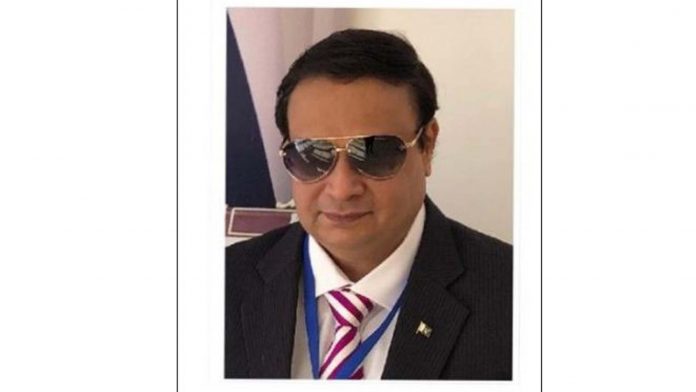
Hamid Asghar Khan elected Vice President of ICDT

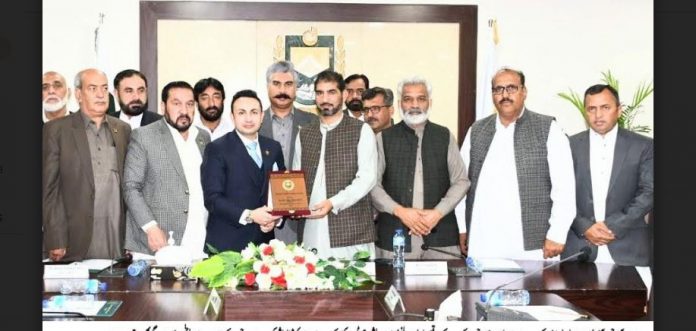
ISLAMABAD, FEB 23 (DNA) – Ambassador Hamid Asghar Khan of Pakistan elected Vice President of the Islamic Center for Development of Trade, Casablanca at the Annual Board of Directors meeting held on 23 February  2021.

Pakistan will host OIC Trade Fair with ICDT to be attended by over 35 countries in 2022 at Karachi.

Mofa, M/O Commerce and TDAP will work together to ensure success of this mega event.

DG ICDT to visit Pakistan to meet with FM, Advisor Commerce,Secretary Foreign Affairs, Commerce and Chairman TDAP. =DNA

=========================

Political parties reject policy of interference in other affairs

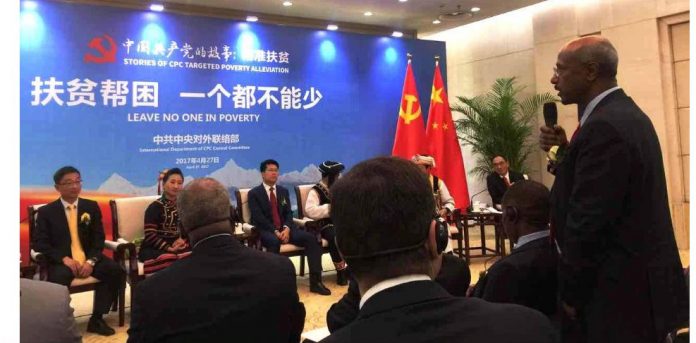
BEIJING, Feb. 23 (DNA): Political parties from around the World have strongly reacted against some Western countries’ policy of interfering in other countries’ internal affairs under the pretext of human rights.

They opposed the policy while participating in an event, arranged here by the International Department of the CPC Central Committee (IDCPC) and the CPC Xinjiang Uygur Autonomous Regional

A total of over 310 leaders and prominent personages representing more than 190 political parties and organisations from 80 plus countries participated in an in-depth discussion on the theme of “A Better Life for All” and reached broad consensus.

All parties were of the view that it is the common goal and responsibility of political parties of all countries to work towards a better life for the overwhelming majority of the people.

They stressed that political parties of all countries should take the improvement of people’s wellbeing as their mission and strive to uplift the sense of fulfilment, happiness, and security thereof.

They have noted that COVID-19 has hit over 200 countries and regions, affected more than 7 billion people around the world and claimed over 2 million lives.

They urged all countries to continue to put the lives, safety and health of the people above everything else by deploying medical expertise and critical supplies to places where they are needed the most, saving lives with all might and main, and further promoting global joint epidemic response so that the pandemic is brought under control at an earliest possible date and the vision of building a global community of health for all appears on the horizon.

They noted that COVID-19 has plunged over 200 million people globally into extreme poverty and inflicted serious impact on the economic and social development of most countries, casting a dark shadow on the prospects of the United Nations 2030 Agenda for Sustainable Development.

They called on all countries to continue to strengthen coordination on macroeconomic policies, remain steadfast in maintaining the stability of the global financial market as well as that of industrial and supply chains, and to take measures to reduce debts and boost the flow of trade, so that the world economy could soon recover and grow, which will help bring global poverty reduction back on the right track as speedily as possible.

While subscribing to the protection and development of human rights, they pointed out that the right to subsistence and the right to development are principal and fundamental. Poverty constitutes the chief obstacle to the realisation of human rights.

They emphasised that the interests of the people should be placed in the paramount position and development should deliver greater benefit to the entire population in a more equitable manner.

They added, as there is no one-size-fits-all model to advance and protect human rights, the diversity in the path of human rights development should be respected and any attempt to politicise human rights, apply double standards thereof, or to interfere in the internal affairs of other countries under the pretext of human rights should be opposed.

They called for the concerted efforts of all countries to promote the establishment of a global governance architecture on human rights that is more equitable, just and inclusive.

They acknowledged that the Thematic Briefing has enabled them to acquire a comprehensive and in-depth understanding of China’s system of regional ethnic autonomy and the development of areas with large ethnic minority populations, including the actual situation in Xinjiang, where social stability as well as equality and unity among various ethnic groups prevail, people’s livelihood keeps improving and the economy develops constantly.

They expressed appreciation of what the Chinese government has done to promote economic and social development of areas with large ethnic minority populations, and to respect and protect the right of people of all ethnic groups to freedom of religious belief and to use their own spoken and written languages.

They firmly opposed the odious behaviour of a crumb of individuals from certain countries in misleading the international perception and smearing other countries with distorted and fabricated facts and disinformation of cooked-up rumours of so-called China’s “ethnic cleansing” in Xinjiang.

Extending their best wishes to the CPC and the Chinese people on the eve of the centenary of the CPC, they applaud the CPC for its commitment to the original aspiration and founding mission of seeking happiness for the people and rejuvenation for the nation, for its leadership under which the Chinese people have created the miracle of rapid economic development together with the miracle of long-term social stability, and most recently, the major achievements in both COVID response and economic and social development.

They commended the important help China has offered to the global fight against the virus, in particular the honouring of its commitment to make vaccines a global public good.

They expressed their willingness to strengthen exchanges and mutual learning with the CPC on governance experience, and to promote the deepening of mutually beneficial cooperation among countries towards the building of a community with a shared future for mankind.

Pakistan needs Joint Inter-Services Cyber Command to counter hybrid war: Mushahid

Mushahid at IRS Conference on Indian Disinformation: India has a clear Pakistan policy of destabilising & disinformation, Pakistan needs Joint Inter-Services Cyber Command to counter hybrid war

DNA

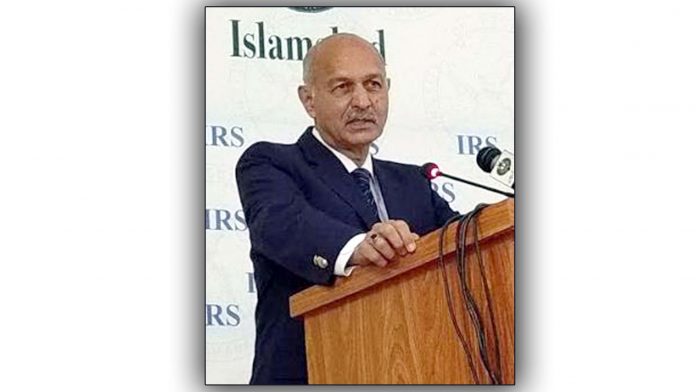
ISLAMABAD, FEB 23 – Chairman of Senate Foreign Affairs Committee, Senator Mushahid Hussain, has said India has a clear Pakistan policy, in which disinformation and destabilisation are key components, while Pakistan needs clarity in its India policy to respond effectively.

He made these remarks at a Conference on ‘Disinformation as a Tool of Strategic Warfare’ organised by the Institute of Regional Studies.

Senator Mushahid Hussain chaired the panel on “India’s Disinformation Campaign against Pakistan and its Impact”. He referred to American scholar Dr Noam Chomsky’s landmark study on propaganda, ‘Manufacturing Consent’, where he talks of a nexus between Media Ownership, Advertisers and Media Elites, which act in concert to demonise the ‘enemy’. Senator Mushahid Hussain said that the Indian approach to disinformation is an example of this model, referring also to the tapes of Indian journalist Arnab Goswami and distortions by Indian media of the Senator’s own statement on Pulwama.

Senator Mushahid Hussain said it was a myth that propaganda was a prerogative of only dictatorships, in fact, democracies like India, Israel and US, too engaged in disinformation and India’s propaganda against Pakistan is unique for three reasons.

First, it is the only example of a neighbour to wage such systematic information warfare against a neighbour in peacetime, belying claims it wants good neighbourly ties. Second, it predates Modi, as this campaign started in 2005.

Third, it was the ‘largest network ever exposed’ of falsehood, lies and disinformation, spread over 750 fake sites, over 10 UN-accredited NGOs, a number of think tanks, using an Indian news agency, ANI, to disseminate disinformation. The scale and sustained nature of of such disinformation is staggering and unprecedented, said the Senator.

And the purpose of this multi-million dollar effort was one: ‘to discredit Pakistan internationally’, as the EU DisinfoLab rightly put it.

Senator Mushahid Hussain also quoted from a recent tweet of Indian defence analyst, Pravin Sawhney, who linked India military’s  withdrawal from the Line of Actual Control with China, to Indian government’s desire ‘to go back to its chosen enemy -Pakistan’ as ‘China was distracting the extremists from their core mission’.

Given this context, Senator Mushahid Hussain proposed the immediate establishment of a Joint Cyber Inter-Services Command to play a pivotal role in the emerging threat of an undeclared hybrid war by India against Pakistan.

He said, for Pakistan, ‘truth is the best weapon’ against India, adding that The Economist had a cover story on ‘Intolerant India’, while The New York Times carried Indian writer Arundhati Roy’s article in which she rightly said ‘RSS is the State in today’s India’ and ‘an architecture of fascism is being erected in India’. These themes reflect the reality of Modi’s India.

There was an animated discussion, including questions and comments, and Senator Mushahid Hussain thanked IRS President, Ambassador Nadeem Riyaz, for reviving the IRS as the preeminent Pakistani think tank on India and South Asia.

Ambassador lauds PM Khan’s initiative of establishing Japanese style Miyawaki forests in Pakistan

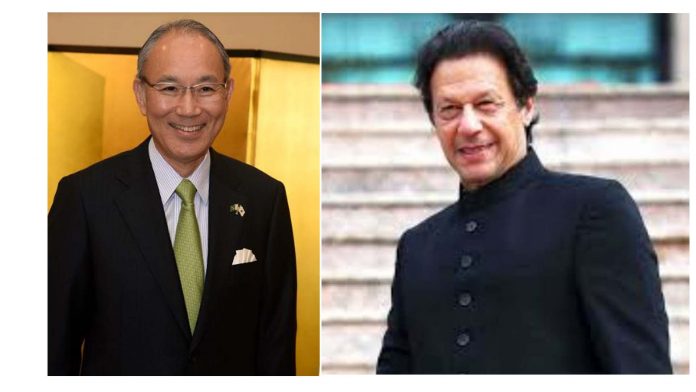
ISLAMABAD, FEB 23 (DNA) – Matsuda Kuninori, Ambassador of Japan to Pakistan, has expressed his deep appreciation for Prime Minister Imran Khan’s initiative of adopting the Japanese Miyawaki planting technique in the country’s urban localities to fight environmental pollution.

The Ambassador, while lauding the PM Khan’s vision for Green Pakistan, in a statement on Tuesday, said that he highly values this very fruitful initiative by the Pakistani PM of using Japanese style Miyawaki technique,which is uniqueand was pioneered by Dr. MIYAWAKI Akira, aJapanese botanist and expert in plant ecology who advocated the value of natural forests.

“Combating environmental challenges is one of the priority areas for Japan and we appreciate the Government of Pakistan and Prime Minister Imran Khan’s vision for creating a pure, green and healthy environment for the people,” said the Ambassador.

It is pertinent to mention here that under the Japanese Miyawaki approach, dozens of species that suit the environment are planted in the same area, close to each other, which ensures that theygrow in a competitive environment, allowing the trees to grow faster compared to normal plantation.

The Ambassador expressed the resolve that Japan supportsPM Khan’s vision of green Pakistan as this spirit was demonstrated by the Embassy of Japan in Islamabad by planting many trees in the compoundof the Embassy as well as in the Islamabad Japanese Garden recently.=DNA

=============

Pakistan wants to play role in IGAD region: Ambassador Shozab

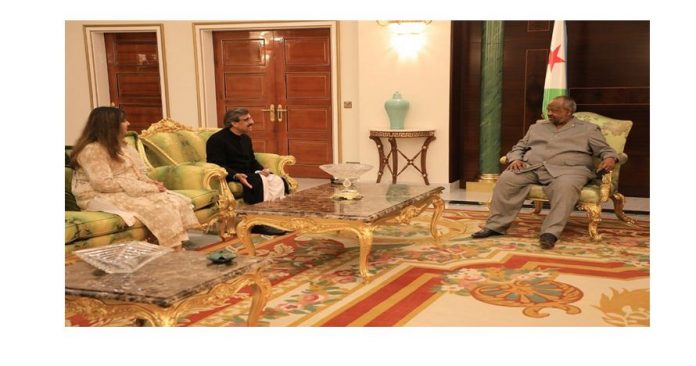
ETHIOPIA (DNA) – The Ambassador of Pakistan to Ethiopia, concurrently accredited to Republic of Djibouti Shozab Abbas, presented his credentials to Ismail Omar Guelleh, President of the Republic of Djibouti.

During the bilateral meeting, the President welcomed the Ambassador and expressed his strong desire to build closer partnership with Pakistan including security, trade and science & technology sectors.

The Ambassador highlighted Pakistan’s “Engage Africa Policy” and informed that the Government of Pakistan has decided to open five new Embassies in Africa, the first being in Djibouti, which is reflective of Pakistan’s intention to build bridges of cooperation with Djibouti

The Ambassador emphasized the need to further expand economic, commercial and naval ties between #Pakistan and #Djibouti. Both expressed agreement to bolstering high level political interactions, Parliamentary exchanges and promoting Blue Economy in Arabian Sea region

The Ambassador underscored the desire of the Government of Pakistan to play an important role in IGAD region to promote partnership in all realms of life including agriculture, science & technology, maritime safety and climate change sectors and specifically to mitigate poverty in the region. The Ambassador briefed the President about #CPEC and highlighted that CPEC is instrumental in solidifying our relations with China. The Ambassador also wished to expand Pakistani frontiers of trade with African states.

On Jammu & Kashmir issue, the Ambassador also highlighted the growing atrocities by the Indian government and military in violation of international law and their nefarious efforts to change the geography and demography of #IIOJK.

The President welcomed the laying of undersea Pakistan-East Africa Cable Express (PEACE), linking, at the first stage, Gwadar to Djibouti.

President Ismail Omar Guelleh also appreciated Ambassador’s diplomatic goals and assured his full support for the advancement of friendly relations between the two brotherly countries.

Rashid Khan leaves PSL 6 for national duty, hopes to return next year

Karachi: Afghanistan’s leg-spinner Rashid Khan has left the Pakistan Super League (PSL) season six as he is due to join his national team.

The 22-year-old Rashid who was representing Lahore Qalandars thanked fans for the love and support. He is confident of playing the tournament again next year.

“Too soon leaving but have to attend National duty. Thank you Lahore Qalandars and to all the fans for the great support and love,” he tweeted.

The mystery spinner played two matches for Qalandars, bowling economical spells of 0/14 and 1/30. He scored valuable 15-ball 27* in Qalandars’ first win of the tournament.

17,300-year-old kangaroo identified as Australia’s oldest rock painting

SYDNEY, Feb. 23  : A two-meter-long painting of a kangaroo in Western Australia’s Kimberley region has been recognized as Australia’s oldest intact rock painting, dating back 17,300 years.

Naturalistic depictions of animals are a common subject for the world’s oldest dated rock art. In a paper published in Nature Human Behavior on Tuesday, a research team led by the University of Melbourne used the radiocarbon dating of 27 mud wasp nests from 16 similar paintings in Kimberley to identify the one that features kangaroo as the oldest dated in-situ rock painting so far.

First author, Dr. Damien Finch from the University of Melbourne, said it was rare to find mud wasp nests overlying and underlying a single painting, which helps to establish the minimum and maximum age for the artwork.

“We radiocarbon dated three wasp nests underlying the painting and three nests built over it to determine, confidently, that the painting is between 17,500 and 17,100 years old, most likely 17,300 years old,” said Finch.

“This makes the painting Australia’s oldest known in-situ painting.”

Finch said this is a significant find which provides insights into the world these ancient artists lived in, “the Naturalistic period extended back into the Last Ice Age, so the environment was cooler and drier than today.”

Dr. Sven Ouzman from the University of Western Australia said the rock painting would unlock further understanding of Indigenous cultural history.

“This iconic kangaroo image is visually similar to rock paintings from islands in South East Asia dated to more than 40,000 years ago, suggesting a cultural link – and hinting at still older rock art in Australia,” Ouzman said.

In the future, the researcher team plans to date further wasp nests to develop a time scale for Aboriginal rock art in the Kimberley.

‘Rehmatul-lil-Alameen’ scholarship programme to emulate Madina like welfare state: Firdous

ISLAMABAD, Feb 23  : Special Assistant to the Chief Minister on Information and Culture Dr Firdous Ashiq Awan Tuesday said Punjab government had launched a special merit-based scholarship programme ‘Rehmatul-lil-Alameen’ for underprivileged students to transform Pakistan on the model of state of Madina.

Talking to a private news channel, she termed the scholarship programme as a giant step towards uplifting the social and economic conditions of the deserving students, with ample opportunities to excel in life and serve the nation and country.

The Pakistan Tehreek-e-Insaf (PTI) government under the leadership of Prime Minister Imran Khan was working on the agenda of making Pakistan a prosperous Islamic welfare nation on the pattern of state of Madina.

Under this scholarship programme, 14,891 students of Intermediate and BS (Hons) programme would be given scholarships worth Rs417 million and the amount will be expanded to Rs1 billion in the next budget, she explained.

Firdous said the scope of this scholarship would further be expanded to other professional degrees as 50 percent scholarship would be given on merit while the rest of the amount would be earmarked for needy and deserving students.

She said Rehmat-ul-Lil Alameen Chair would also be established in every district’s university along with the provision of PhD scholarships to highlight different aspects of the most blessed and revered personality and character of Holy Prophet Muhammad Peace Be Upon Him.

Replying a question, she said the government was working on introducing uniform curriculum to overcome discrimination in field of education.

Talking about Daska elections, Firdous condemned Pakistan Muslim League-Nawaz (PML-N) Vice President Maryam Nawaz for doing propaganda against the government just to make the Daska election controversial.

She further criticized that the ‘Queen of Lairs’ (Maryam Nawaz) was just selling lies and misleading the innocent public.

Maryum Nawaz would not be allowed to go abroad for her ‘thyroid surgery’ as she was making excuses to travel abroad for her minor surgeries, she replied a question.

She alleged that PML-N Punjab president Rana Sanaullah, who was the mastermind of Model Town tragedy, had planned that the Daska election should bleed that led to the death of two political workers.

The PML-N was not habitual to accept its defeat in elections and in Daska, the PML-N workers under Rana Sanaullah leadership had badly harassed the people which was shameful for party leaders, she added.

Stay Connected

64FansLike
60FollowersFollow

Latest Reviews

Exchange Rates

USD - United States Dollar
EUR
1.14
GBP
1.34
AUD
0.69
CAD
0.70