Home Blog Page 2898

Shehbaz, Asif get court nod to vote in Senate polls

LAHORE : An accountability court on Tuesday permitted incarcerated PML-N president Shehbaz Sharif and MNA Khawaja Asif to take part in the Senate elections slated for tomorrow.

The jail authorities approached the court seeking its permission to take Shehbaz Sharif to Islamabad to enable him to cast his ballot in the elections for the upper house of Parliament. They said the Election Commission of Pakistan (ECP) has called for bringing him to the National Assembly for the purpose.

After an initial hearing, the court permitted the opposition leader to be taken to Islamabad to partake in the polls.

Separately, the court also approved a similar plea, allowing Khawaja Asif to travel to the federal capital to cast his vote.

Polling for 37 Senate seats – excluding Punjab where senators got elected unopposed, will take place on March 3 as an election campaign for the upcoming Upper House ended last night.

The members of the three provincial legislatures – Sindh, KP and Balochistan, and the members of the National Assembly will cast their votes to elect members of the upper house.

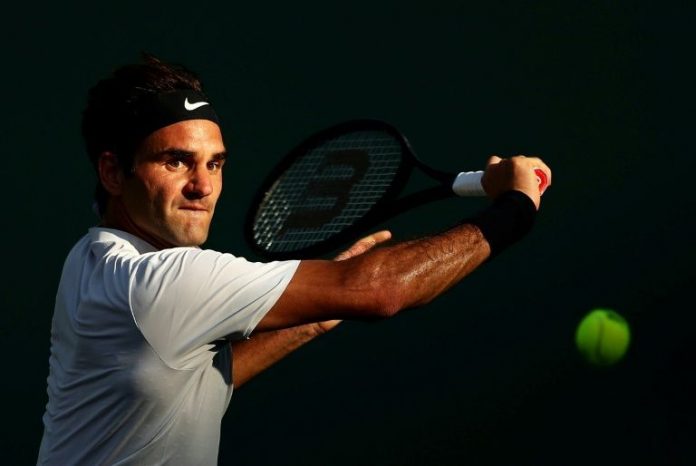
Federer pulls out of Miami Open: report

Miami, March 2  : Defending champion Roger Federer has withdrawn from this month’s Miami Open as he works his way back to full fitness following surgeries to repair his right knee.

The 39-year-old Swiss star, who has not played since losing in the semi-finals of last year’s Australian Open, is due to make his return from a year-long layoff at the Qatar Open in Doha next week.

However the Miami Herald cited Federer’s agent Tony Godsick as saying on Monday that the 20-time Grand Slam singles champion had opted to skip the Miami tournament for scheduling reasons.

The Herald said Federer could play in Dubai after Doha but would then take a training break.

Federer’s withdrawal is a blow to organizers of the Miami tournament, who were forced to cancel last year’s event as Covid-19 chaos left sport in North America at a standstill.

The pandemic has already impacted the 2021 calendar, delaying the Australian Open and forcing the Indian Wells tournament in California — the traditional lead-in to the Miami Open — out of its usual slot in March.

Miami is still expected to feature a strong field despite Federer’s withdrawal, with world number one Novak Djokovic and 20-time Grand Slam-winner Rafael Nadal confirmed for the men’s draw.

Serena Williams and newly minted Australian Open champion Naomi Osaka are also slated to appear in the women’s draw.

COVID-19 claims 42 lives, infects 1,163 more people

ISLAMABAD, Mar 02  : The national tally on Tuesday of total active COVID-19 cases recorded 22,184 with 1,163 more people tested positive for the deadly virus and 1,035 people recovered from the disease during the last 24 hours.

Forty two corona patients have died during past 24 hours, 41 of them were under treatment in hospital and one in their respective quarantines and homes on Monday, according to the latest update issued by the National Command and Operation Centre (NCOC).

Out of the total 42 deaths, 12 people had died under treatment on ventilators.

During the last 24 hours most of the deaths had occurred in the Punjab followed by Khyber Pakhtunkhwa.

The maximum ventilators were occupied in four major areas including Multan 18 percent, Islamabad Capital Territory (ICT) 30 percent, Peshawar 20 percent and Lahore 34 percent.

The maximum Oxygen beds (alternate oxygen providing facility other than ventilator administered as per medical requirement of COVID patient) was also occupied in Four major areas of Gujrat 94 percent, Peshawar 38 percent, Lahore 24 percent and ICT 23 percent.

Around 210 ventilators were occupied elsewhere in the country while no COVID affected person was on ventilator in Azad Jammu and Kashmir (AJK), Gilgit Baltistan (GB) and Balochistan.

Some 31,948 tests were conducted across the country on Monday, including 7,315 in Sindh, 13,616 in Punjab, 6,021 in Khyber Pakhtunkhwa (KP), 3,836 in Islamabad Capital Territory (ICT), 369 in Balochistan, 315 in GB, and 476 in AJK.

Around 547,406 people have recovered from the disease so far across Pakistan making it a significant count with over 90 percent recovery ratio of the affected patients.

Since the pandemic outbreak, a total of 582,528 cases were detected that also included the perished, recovered and under treatment COVID-19 patients so far, including AJK 10,280, Balochistan 19,066, GB 4,956, ICT 44,516, KP 72,615, Punjab 172,683 and Sindh 258,412.

About 12,938 deaths were recorded in country since the eruption of the contagion. Around 4,353 perished in Sindh among three of them died during past 24 hours. Two in the hospital and one out of the hospital.

5,391 in Punjab had died with 28 deaths in past 24 hours occurred in the hospital. 2,085 in KP where six of them died in hospital on Monday, 501 in ICT,  200 in Balochistan, 102 in GB and 306 in AJK among five of them succumbed to the deadly virus in hospital on Monday.

A total of 9,022,124 corona tests have been conducted so far, while 631 hospitals are equipped with COVID facilities. Some 1,973 corona patients were admitted in hospitals across the country.

One in four people will have hearing problems by 2050: WHO

Geneva, March 2  : One in four of the world’s population will suffer from hearing problems by 2050, the World Health Organization warned Tuesday, calling for extra investment in prevention and treatment.

The first-ever global report on hearing said that the causes of many of the problems — such as infections, diseases, birth defects, noise exposure and lifestyle choices — could be prevented.

The report proposed a package of measures, which it calculated would cost $1.33 per person per year.

Against that, it set the figure of nearly a trillion US dollars lost every year because the issue was not being properly addressed.

“Failure to act will be costly in terms of the health and well-being of those affected, and the financial losses arising from their exclusion from communication, education and employment,” said the report.

One in five people worldwide have hearing problems currently, it said.

But the report warned: “The number of people with hearing loss may increase more than 1.5-fold during the next three decades” to 2.5 billion people — up from 1.6 billion in 2019.

Of the 2.5 billion, 700 million would in 2050 have a serious enough condition to require some kind of treatment, it added — up from 430 million in 2019.

Much of the expected rise is due to demographic and population trends, it added.

– Poor access to treatment –

A major contributor to hearing problems is a lack of access to care, which is particularly striking in low-income countries where there are far fewer professionals available to treat them.

Since nearly 80 percent of people with hearing loss live in such countries, most are not getting the help they need.

Even in richer countries with better facilities, access to care is often uneven, said the report.

And a lack of accurate information and the stigma surrounding ear disease and hearing loss also prevents people getting the care they need.

“Even among health-care providers, knowledge relevant to prevention, early identification and management of hearing loss and ear diseases is commonly lacking,” it noted.

The report proposed a package of measures, including public health initiatives from reducing noise in public spaces to increasing vaccinations for diseases such as meningitis that can cause hearing loss.

It also recommended systematic screening to identify the problem at key points in people’s lives.

Among children, it said, hearing loss could be prevented in 60 percent of cases.

“An estimated one trillion US dollars is lost each year due to our collective failure to adequately address hearing loss,” WHO director-general Tedros Adhanom Ghebreyesus said in the report.

“While the financial burden is enormous, what cannot be quantified is the distress caused by the loss of communication, education and social interaction that accompanies unaddressed hearing loss.”

Amazon accused of race-gender bias in workplace

Washington, March 2  : A lawsuit filed in US federal court on Monday accused Amazon of keeping women and Black employees down while publicly talking up the need for diversity and social justice.

Charlotte Newman, who is Black and heads Underrepresented Founder Startup Business Development at Amazon Web Services, said in the suit she has been harassed, sexually assaulted, and kept from advancing to positions she deserved in the corporation.

“Like so many other Black and female employees at Amazon, Charlotte Newman was confronted with a systemic pattern of insurmountable discrimination based upon the color of her skin and her gender,” attorneys argued in the lawsuit.

Newman is asking for her case to be heard by a jury, and to be awarded unspecified cash damages.

“Amazon works hard to foster a diverse, equitable, and inclusive culture, and these allegations do not reflect those efforts or our values,”

“We do not tolerate discrimination or harassment of any kind and thoroughly investigate all claims and take appropriate action.”

Amazon is digging into allegations made in the lawsuit, the spokeswoman added.

Newman said she was hired as a public policy manager at Amazon four years ago, quickly doing work typically assigned to higher level employees and paid less than white co-workers.

In June of last year she filed a written complaint about harassment by a male executive and “discriminatory attitudes” expressed by managers at Amazon, according to the suit.

Later that year, she filed a complaint with the Office of Human Rights in Washington, DC, the filing said.

Practices at Amazon include putting Black employees into lower paying jobs at levels beneath their qualifications and skills, and then making them wait longer for promotions, the suit contended.

A number of Black women at Amazon, and particularly its cloud services division, have spoken of having their hair touched without consent or being criticized for not being friendly enough, according to the suit.

“Racial and sexual discrimination exists in Amazon’s corporate corridors, not just its warehouses – it simply takes a different form,” the lawsuit charged.

“Amazon has failed to seriously grapple with these issues among its management.”

NHPC to hold one-month long camp for elite cricketers

Lahore : The High-Performance department of the Pakistan Cricket Board will hold a month-long camp for elite cricketers from today.

The players who are not featuring in the ongoing Pakistan Super League (PSL) 2021 or knocking at the doors of international cricket or recently lost their places in the national side will be part of the camp.

The High Performance coaches will work on various technical and physical aspects of the elite cricketers.

The objective of this camp is three-fold:

To help the elite cricketers in identifying, working and overcoming their technical flaws so that they can be back in contention for reclaiming their places in the national side

To keep the players who are not participating in the Pakistan Super League 2021 remain connected and involved with the game so that they are ready and prepared for the April series in South Africa and Zimbabwe

To reward and encourage players who have impressed in the domestic circuit so that they can do better in the next season.

National High Performance Centre’s world-class coaches, including Atiq-uz-Zaman, Mohammad Yousuf, Mohsin Kamal, Saqlain Mushtaq, Umar Rasheed, will work with these elite cricketers according to a robust program.

Players invited for the camp are:

Abdullah Shafique, Abid Ali, Ahmad Bashir, Asad Shafiq, Azhar Ali, Bismillah Khan, Fawad Alam, Hammad Azam, Haris Sohail, Hasan Khan, Imran Butt, Irfanullah, Kamran Ghulam, Khurram Shahzad, Mohammad Abbas, Nauman Ali, Rehan Afridi, Sajid Khan, Salman Irshad, Saud Shakeel, Tabish Khan, Taj Wali, Usman Salahuddin, Umar Khan and Yasir Shah

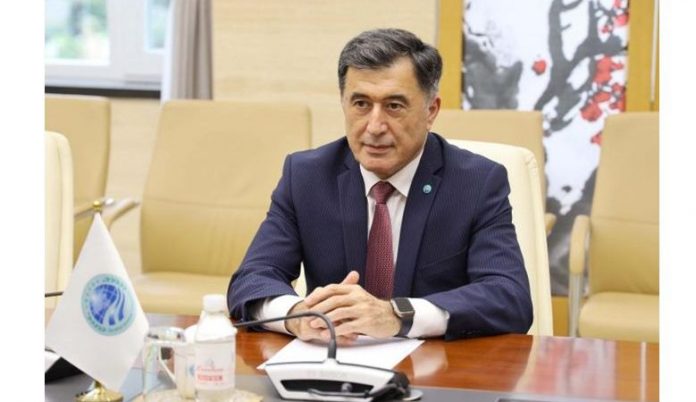
SCO countries have made significant progress in achieving gender equality, SCO Secretary-General V. Norov

International Women’s Day, 8 March, is celebrated in many countries around the world.

The UN Charter was the first international document proclaiming equality between men and women as a fundamental human right.

On March 8, 1975, on the International Women’s Year, the UN celebrated its first official International Women’s Day, which has acquired a new global dimension.

Thereafter, the international women’s movement was strengthened by the four UN World Conferences on Women, which gave great impetus to the coordination of efforts to achieve gender equality and the elimination of all forms of discrimination against women.

The founding documents of the UN in this direction were the Beijing Declaration and Platform for Action, adopted in 1995 at the end of the 4thUN World Conference on Women, which was a truly historic event, bringing together 17,000 delegates from 189 countries.

The Beijing Platform for Action identified equality between women and men as an aspect of human rights and a condition for social justice.

The Platform called on the international community to take strategic measures to improve the situation in specific areas of concern: inequalities in education, health care, unequal rights of women in economic and political structures, in the division of power and decision-making at all levels, discrimination against girls and the violation of their rights, etc.

Since Beijing, the UN has been guided by these areas of concern, driving positive change around the world. The UN Commission on the Status of Women and UN Women have worked hard over the years to promote gender equality and women’s economic empowerment.

According to experts, in the 25 years since the adoption of the Beijing Declaration, the general opinion of the importance of gender equality has been strengthened in many countries. In 143 countries of the world laws have been passed that ensure gender equality, and obstacles to women’s participation in political and economic activities have been eliminated at the legislative level.

At the same time in several countries and regions of the world, there is still an imbalance in the level of development of women. Out of 800 million people in the world living in poverty, more than half are women. Different forms of discrimination against women still exist in the world.All of which shows that a huge joint effort is still needed to implement gender equality.

According to UN Secretary-General António Guterres, achieving gender equality and empowering women and girls is the unfinished task of our time and the greatest human rights challenge in the world today.

According to experts, the quarantine measures and economic crisis caused by the COVID-19 pandemic have affected women the most. According to a UN study, rates of domestic violence in various countries during the pandemic increased by up to 33%.

A technical review by the United Nations Population Fund (UNFPA) notes that women make up 70 percent of the workforce in the health and social sectors worldwide.

In this regard, UN Women has called on the world’s governments to take five specific actions:

First, address the needs of nurses and female doctors who are involved in the fight against the pandemic.

Second, ensure uninterrupted hotlines and access to services that must remain open to assist all victims of domestic violence.

Third, crisis economic assistance packages envisioned by national governments must include funds to provide social protection tailored to women’s specific circumstances and consider the specifics of the domestic economy, including caregiving for family members.

Fourth, leaders must find ways to include women in decision making about the response and the subsequent recovery whether decisions are made at the local, municipal, or national level, women’s participation will invariably lead to the most positive outcomes.

Fifth, policymakers must take into account family dynamics and promote equal sharing of the burden of care and domestic responsibilities between women and men.

At the same time, the pandemic has exposed and aggravated the growing “digital divide” both within and between developed and developing countries, especially in terms of the availability, accessibility, and degree of use of information and communication technologies and access to the Internet, deepening existing inequalities. Approximately 60 percent of the world’s population, mostly women in emerging and developing countries, still do not have computers or access to the Internet.

These recommendations by UN Women are relevant to all countries of the world, including the SCO states, in determining and implementing a set of measures to overcome the consequences of the pandemic.

As for the SCO countries, it can be noted that the member states have achieved significant success in achieving gender equality during the 20 years of our organization’s activity. All SCO countries have ratified and implementing the Convention on the Elimination of All Forms of Discrimination against Women as well as other international conventions on human rights, women, and children, in addition, to the national legal framework for achieving gender equality has been established.

It should be emphasized that the goals and objectives of the SCO Development Strategy 2025 and the UN Sustainable Development Goals 2030 have much in common, regarding ensuring gender equality, access to the full range of services and basic components of human activity.

Today, the SCO is a steadily developing region of the world that occupies more than 60 percent of Eurasia with a population of over 3.2 billion people, more than half of whom are members of the beautiful half of humanity.

Equality and full participation of women in political and socio-economic tasks is a prerequisite for the stable development of SCO countries. It is gratifying that today women in the SCO countries are in-charge of almost all professional heights, and therefore, it is difficult to imagine the development of the SCO countries without the creative contribution of women.

During the fight against the pandemic coronavirus in the SCO countries, female doctors, and nurses, despite the numerous problems and challenges they faced in the difficult times of the pandemic, saved the lives of millions of people, and today continue to treat people with dedication and continuity of care. For their example of courage, heroism, and resilience in the fight against coronaviruses, women doctors and nurses in all SCO member countries have been awarded the highest state decorations. In addition, all medical workers have been provided with comprehensive material support and the necessary conditions to ensure their safety have been created.

At present the share of employment of women in the SCO countries and the level of their participation in various spheres of the economy is on average 49%. They are mainly involved in healthcare, education, agriculture, and trade. For example, in China 55% of those employed in digital trade are women.

The level of women’s representation in politics is increasing. For example, the proportion of women parliamentarians is almost 20%, and ministerial-level leaders are about 10%.

This clearly demonstrates the commitment of the SCO countries to the UN Sustainable Development Goals, to ensuring effective gender equality and the empowerment of women.

In this regard, the priorities of gender equality being an integral part of society of our states in all spheres, can serve as an effective platform for the consolidation of women’s potential of the SCO countries.

In recent years, efforts have been made within the SCO to develop a “women’s” line of cooperation. At the initiative of the All-China Women’s Federation, the 1stSCO Women’s Forum was held in May 2018 in the city of Beijing on the theme of “Joining Forces of Women to Promote Joint Development.” As part of the forum, a series of plenary sessions on “Women and Innovative Development,” “Women and the Beautiful World,” and “Women and Mutually Beneficial Cooperation” were held, which in general resulted on “strengthening exchanges and cooperation in the SCO space in women-related fields.” The Forum demonstrated women’s interest in consolidating efforts to help promote regional cooperation and strengthen the “Shanghai spirit.

The Second SCO Women’s Forum was held in May 2019 in Bishkek with the participation of delegates from 12 countries, who exchanged views on the gender aspects of SCO cooperation in the context of the Beijing+25 regional review and implementation of the 2030 Sustainable Development Agenda, as well as the participation of women in inclusive economic development in the region, investments in health and education, and equality of opportunity in the age of digitalization.

The main outcome of the Forum was the unanimous opinion of the participants on the need to establish cooperation on gender issues within the SCO.

The Republic of Tajikistan is planning to hold the next SCO Women’s Forum on June 10, 2021, in Dushanbe under the SCO Chairmanship.

At the initiative of Tajikistan, the coordination of the draft Memorandum on Cooperation in the Field of Gender Equality between Authorized Bodies of the SCO Member States has started, where special attention is given to protection of the rights of women and girls, status of women in the society, development of women entrepreneurship, participation of women in business management in the field of ICT, impact of migration on women, situation of women in villages, etc.

I am confident that the introduction of gender development issues into the SCO Agenda will facilitate the exchange of experience between women’s organizations of our countries. In this regard, it seems important to establish a specific cooperation mechanism for the systematic and effective work and active participation of women in SCO activities.

In general, much has been done at the global and regional levels to improve the status of women, but more needs to be done to create conditions for the development of women and girls in accordance with the new realities of the present time – the age of globalization, interconnectedness, and information technology; in addition, the impact of the coronavirus pandemic on women and children must be considered.

Still issues of gender inequality and unemployment with a woman’s face persist, so it is particularly important to ensure the participation of women in the social, economic, and political development of the countries of the organization.

I believe that International Women’s Day – March 8 this year will be celebrated in the world on a more positive note and will be an additional reason to pay tribute to the beautiful half of humanity.

ECP decides to conduct Senate polls as per ‘past practice’

ISLAMABAD : The Election Commission of Pakistan (ECP) on Tuesday has decided to conduct the Senate elections scheduled on March 3, 2021, through secret ballot due to time constrain.

While announcing its decision after considering various proposals, the commission has clarified that the polls will be held ‘as provided in the Constitution and Law as per past practice’.

According to an official notification, a meeting was held under the chairmanship of Chief Election Commissioner (CEC) Sikandar Sultan Raja which was also attended by ECP members Justice (r) Altaf Ibrahim Qureshi, Justice (r) Mrs Irshad Qasir, Shah Muhammad Jatoi and Nisar Ahmed Durrani.

The commission is taking all the possible steps and measures to fulfill its constitutional duty to check that corrupt practices in the Senate polls are guarded against, it stated.

In the light of Supreme Court’s (SC) opinion on presidential reference regarding the polls in the upper house of the Parliament, the ECP is of the view that input may be taken from different professional and technical organizations which may help to conclude upon it. The commission had decided to constitute a committee in this regard which will prepare recommendations regarding use of technology within a period of four weeks, tehn otification further read.

The development came day after SC, in its opinion on the presidential reference on open vote, had said that Senate elections will be held through secret ballot under the article 226 of the Constitution of Pakistan.

The apex court had also directed ECP to use latest technologies to stop corrupt practices, adding that he secrecy of the ballot papers was “not absolute”.

It is to be mentioned here that a total of 170 candidates had filed their nomination papers in the ECP for the polls on 48 seats in the upper house of the Parliament. 29 candidates from Punjab, 39 from Sindh, 51 from Khyber Pakhtunkhwa (KP), 41 from Balochistan and 10 from the federal capital Islamabad had submitted their details.

Polling for Senate elections will be held on March 3 at the Parliament house in Islamabad and the four provincial assemblies.

1,163 new infections, 42 coronavirus-related deaths reported in 24 hours

ISLAMABAD : Pakistan has recorded 42 more coronavirus-related deaths in the past 24 hours, taking the overall death toll to 12,938.

According to the latest statistics of the National Command and Operation Centre (NCOC), the COVID-19 has claimed 42 more lives and 1,163 fresh infections were reported during the said period.The total count of active cases is 22,184 and the positivity rate stands at 3.64 per cent.

In the past 24 hours, as many as 1,035 patients have recovered from the virus in a day and 1,529 patients are still in critical condition.

According to the National Command and Operation Centre (NCOC), with the fresh inclusion of the infections in the country the national tally of cases now currently stands at 582,528.

A total of 31,948 tests were conducted across the country during this period. Overall 547,406 people have recovered from the deadly disease so far while 9,022,124 samples have been tested thus far.

As many as 258,412 COVID-19 cases have been reported in Sindh so far, 172,683 in Punjab, overall 72,615 cases have been detected in Khyber Pakhtunkhwa, 44,516 in Islamabad, 19,066 in Balochistan, 10,280 cases in Azad Jammu and Kashmir and 4,956 have been reported in Gilgit-Baltistan, so far.

Remarks by the SCO Secretary-General Addresses at opening of SCO Friendship and Cooperation Center in Tajikistan

Vladimir Norov the Secretary-General of the Shanghai Cooperation Organisation took part in the opening ceremony of the SCO Friendship and Cooperation Centre in Tajikistan.

In his welcome address, the SCO Secretary General Vladimir Norov praised the decision of Tajik President H.E. EmomaliRahmon to opening the center aimedto develop cooperation and friendship among member states, and to strengthen centuries-old traditions of harmonious co-existence between different nationalities and religions.

Speaking on the fundamental meaning of such notions as friendship and cooperation, the Secretary General stated that the SCO nations are united by many objective factors which has laid down a solid foundation for successful development of mutually beneficial relations.

“Our countries and peoples share a common history, culture, centuries-old rich traditions, customs, cultural heritage, spiritual, ethno-confessional affinity, similarity of languages, and good neighborly relations that are strong and inseparable.

Today’s realities unequivocally confirm the need for joint efforts of the government and public organizations of the countries to preserve the SCO space for future generations as a stable, secure, and prosperous region.

The Development Strategy of the SCO till 2025 specifically says that the SCO Member States will promote cultural and humanitarian contacts among non-governmental organizations, non-commercial associations and citizens of the Member States, development of dialogue among civilizations with involvement of observer states and SCO dialogue partners”, noted V. Norov.

At that it was stressed that creation of Committees of Good Neighborhood, Friendship and Cooperation or other mechanisms with similar functions in the SCO region would promote this process.

  1. Norov reminded that, in the Moscow Declaration adopted at the SCO Summit on November 10, 2020, the Member States stressed “importance of public diplomacy in building public trust, strengthening mutual understanding and expansion of cultural and humanitarian ties within the SCO”. In the document the parties noted the activities of the Chinese Committee on Good Neighborhood, Friendship and Cooperation and the SCO Center of People’s Diplomacy in Tashkent, as well as the initiative of the Kyrgyz Republic to establish the SCO Cultural Integration Center”.

In this regard, according to the SCO Secretary General, establishing practical interaction between similar structures in Tashkent, Dushanbe, Beijing, Bishkek and other capitals will have a great synergistic effect which would strengthen the institutional framework of cultural and humanitarian cooperation within the SCO, as the largest regional organization in the world which will undoubtedly serve to strengthen mutual trust, international and interfaith accord, friendship and good neighborliness between our countries and nations, as well as expand interaction between the peoples of the SCO.

Emphasis was placed on the relevance and symbolic significance of the establishment of the Center in Tajikistan.

The SCO Secretary-General particularly noted that the current third presidency of Tajikistan of the Organization coincides with the 20thanniversary of SCO, which will be marked under the motto “20 Years of SCO: Cooperation for Stability and Prosperity”. The launch of the Center as a new platform for cultural and humanitarian cooperation entirely reflects the intention of the Tajik Chairmanship to make a worthy contribution to the development SCO architecture.

Mr. Norov emphasized that the opening of the Center in the Year of SCO’s anniversary is also a landmark contribution of the Republic of Tajikistan to the development of cultural and humanitarian cooperation, which will enable to make maximum use of the richest cultural, historical, spiritual, moral, and artistic-aesthetic potential and heritage of our countries and peoples.

According to the Secretary-General, the pandemic has shown that the coronavirus knows no state borders and is a common enemy of all peoples across the world. In this regard, he expressed confidence that there is no alternative to joint international cooperation based on the principles of friendship, mutual assistance, and good neighborliness in organizing an effective fight against the pandemic.

In conclusion, having expressed confidence that the work of the SCO Friendship and Cooperation Centre in Tajikistan will be rich, and the ideas and projects initiated will be interesting, useful, and meaningful, the Secretary General expressed the SCO Secretariat’s readiness to provide all possible assistance in fulfilling the objectives set for the newly established institution.

The head of the SCO Center for Public Diplomacy in Uzbekistan,KabuljonSabirov also spoke at the opening ceremony. In his address, he noted that the initiative to create this important mechanism within the Shanghai Cooperation Organization is quite relevant and is in the interests of sustainable and sustained socio-economic development of the SCO nations. Today the SCO countries, relying on the principles of “Shanghai spirit”, take an active part in further development of inter-civilization and inter-religious dialogue.

  1. Sabirov expressed hope that the activity of the SCO Friendship and Cooperation Center in Tajikistan will promote further development of multifaceted interaction among the member countries, strengthen the spirit of mutual trust, friendship and good neighborliness, and interethnic and interfaith accord.

The parties expressed readiness to participate in the development and implementation of joint projects and scientific and educational activities.

In her turn, Zhen Wei, Secretary General of the SCO China Committee for Good Neighborhood, Friendship and Cooperation, also congratulated the Tajik side on the opening of the SCO Friendship and Cooperation Center.

She noted that Tajikistan made an important contribution to strengthening friendship among nations, deepening good-neighbourliness and friendship among peoples of the SCO countries by establishing the Centre.

The SCO Secretary-General expressed readiness to develop cooperation with the Centre and jointly organize events such as SCO People’s Diplomacy Forum, SCO Traditional Medicine Forum, SCO Children’s Drawings and Books Exhibition, SCO Films Festival, SCO Think Tank Seminar, SCO Youth Artificial Intelligence Competition, International Marathon and Yoga and Tai-Chi Events.

It is convinced that close interaction between the institutions in Tashkent, Dushanbe and the Committee in Beijing will strengthen the foundation of friendship and mutual understanding for continuous development of the SCO and building a stronger united destiny of the SCO community.

“Strength in Cohesion. The doors to cooperation on people-to-people diplomacy are open to all SCO countries. We invite all parties to cooperate closely and develop together,” said Zhen Wei.

Assistant to the President of the Republic of Tajikistan Latifzod, SCO Ambassadors to Tajikistan and representatives of the Tajik Foreign Ministry also attended the event.

Other participants of the opening ceremony also noted the importance of establishing the Centre and expressed readiness to develop cooperation with the SCO Secretariat and the Centre for the benefit of the peoples of the SCO countries and jointly strengthen the “Shanghai spirit”.

Stay Connected

64FansLike
60FollowersFollow

Latest Reviews

Exchange Rates

USD - United States Dollar
EUR
1.14
GBP
1.34
AUD
0.69
CAD
0.70