Home Blog Page 2876

Cuban Biotech Companies want to make investment in Pakistan

ISLAMABAD, MAR 10 (DNA) – Cuba was very strong in biotechnology and many Cuban Biotech companies wanted to explore JVs and investment in Pakistan with technology transfer to meet the needs of Pakistani market and export their pharmaceutical products to Iran, China, Central Asian States, Europe, Malaysia, Indonesia, and other countries.

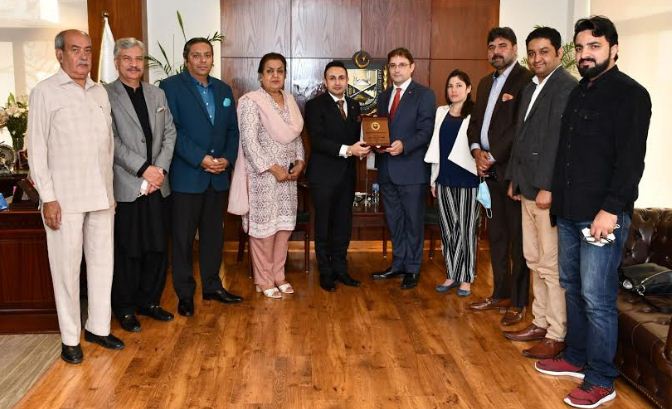
This was observed by Zener J. Caro Gonzalez, Ambassador of Cuba while addressing the business community during his visit to Islamabad Chamber of Commerce & Industry. Mrs. Darfene Herrera Naranjo, Third Secretary of Cuban Embassy also accompanied him at the occasion.

The Ambassador said that Cuban pharmaceutical companies were looking for credible partners in Pakistan for supply of their products in Pakistani market and later on they wanted to set up manufacturing plants in Pakistan to produce pharma products.

He said that Covid vaccine of Cuba would soon reach Pakistani market followed by vaccines for diabetes patients in Pakistan. He said that he would work for promoting Pakistani exports to Cuba including rice, textiles products, surgical instruments and others.

He said that promoting linkages between the private sectors of Cuba and Pakistan and people-to-people contacts between both countries would be key focus on his efforts in Pakistan. He said that Pakistani investors could also export their products to the USA, South & North America, Caribbean and other markets by investing in Cuba.

Speaking at the occasion, Sardar Yasir Ilyas Khan, President, Islamabad Chamber of Commerce & Industry (ICCI) briefed the Ambassador about the potential opportunities of JVs and investment for Cuban investors in various sectors of Pakistan’s economy.

He said that Pakistan enjoyed a strategic location for investors while the government was setting up many SEZs in Pakistan that offered great incentives to local and foreign investors. Therefore, Cuban investors should capitalize on these benefits by investing in Pakistan.

He identified tourism, IT, agriculture, construction, health and education as other potential areas of mutual cooperation between Pakistan and Cuba. He said that ICCI would organize industrial and property expos in coming months and invited Cuban investors to visit these expos to explore JVs and investment.

He thanked Cuba for its offer to train Pakistani medical professionals including nurses free of cost and hoped that it would enable them to provide better health services to our people.

Fatma Azim Senior Vice President ICCI informed the Ambassador about export potential of Pakistani fruits including mangoes, kinnows, dairy products to Cuba. Aslam Khokar, Muhammad Saeed Khan, Naveed Malik, Khalid Chaudhry and others were also present at the occasion.

Both sides discussed the proposal of signing an MoU between Cuban Chamber of Commerce & Industry and ICCI for promoting business linkages between the two countries through exchange of trade delegations and participation in each other country’s exhibitions and trade fairs.=DNA

=======================
Uzbek foreign minister meets PM Imran

DNA

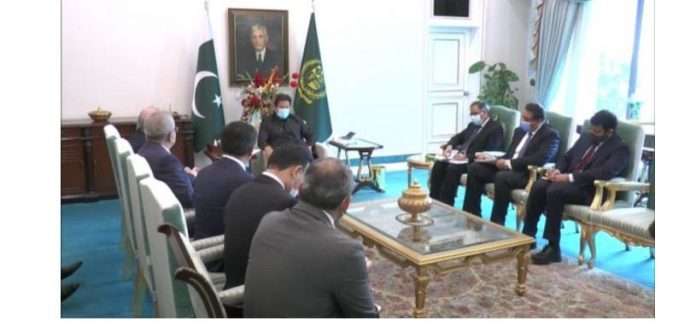
ISLAMABAD, MAR 10: The Foreign Minister of the Republic of Uzbekistan, Dr. Abdulaziz Kamilov, called on Prime Minister Imran Khan, on Wednesday. Foreign Minister Kamilov conveyed cordial greetings of President Shavkat Mirziyoyev and reiterated Uzbekistan’s commitment to expand bilateral cooperation with Pakistan in diverse fields.

Prime Minister Imran Khan fondly recalled his interactions with President Mirziyoyev in Beijing and Bishkek and reiterated his invitation to the Uzbek President to visit Pakistan at the earliest convenience.

Underlining the historic and civilizational links between the two countries, the Prime Minister underlined that Pakistan highly valued its close fraternal ties with Uzbekistan and wished to deepen bilateral cooperation in all areas. The Prime Minister particularly emphasized that enhanced trade and regional connectivity were the cornerstones of economic growth and development.The Prime Minister underlined Pakistan’s resolve to forge closer ties with Central Asia, covering trade, investments, energy, and people-to-people exchanges.The Prime Minister expressed appreciation for the proposed Trans-Afghan railway project between Pakistan, Uzbekistan and Afghanistan.

He underscored Pakistan’s commitment to support all efforts for the earliest realization of this important connectivity project.The Prime Minister highlighted that Pakistan offered the shortest route to international seas to all Central Asian Republics through Karachi and Gwadar ports and could be the gateway to landlocked Central Asia. He reaffirmed the resolve to facilitate Uzbekistan’s access to Pakistani ports.Foreign Minister Dr. Kamilov handed over a letter from President Mirziyoyev addressed to Prime Minister Imran Khan, inviting him to participate in a Central Asia-South Asia Connectivity Conference in Tashkent in July 2021.

The Prime Minister thanked for the invitation and mentioned that he was looking forward to visiting Uzbekistan.The Prime Minister reaffirmed Pakistan’s steadfast support to the Afghan peace process, stressing the imperative of negotiated political solution. The Prime Minister expressed the hope that the Afghan sides will seize this historic opportunity to work together constructively and secure an inclusive, broad-based and comprehensive negotiated political settlement.In the context of South Asia, the Prime Minister underscored that durable peace and economic development in the region hinged on peaceful resolution of long-standing unresolved disputes.

CPEC is not a debt trap: Ishrat Hussain

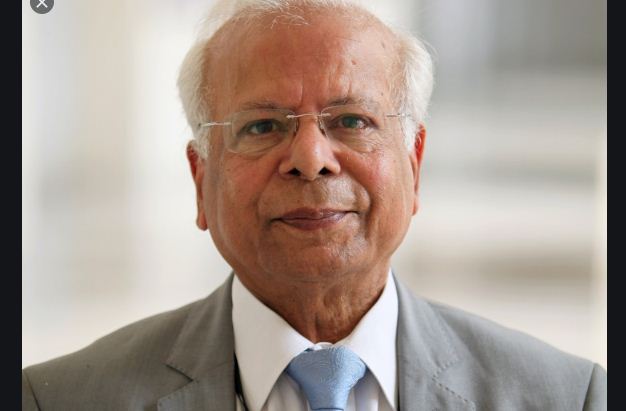
ISLAMABAD, MAR 10 (DNA) – “CPEC is not a debt trap. All CPEC projects in the energy sector are investments and loans constitute only a small proportion of the overall CPEC portfolio,” said Dr Ishrat Hussain, Adviser to the Prime Minister on Institutional Reforms and Austerity with a status of a Federal Minister.

He was speaking at a seminar titled “Upscaling the Economic Activities of CPEC: Opportunities and Challenges” organized by the Institute of Regional Studies (IRS) here on Wednesday. He further added that the Chinese loans were on concessional rates of 2.34 percent.

Dr Ishrat Hussain shared that completed CPEC energy projects had already added 5,320 MW to the power generation capacity in Pakistan with an investment of $7.9 billion. He added that a capacity of another 4,440 MW would be added through an investment of another $9.55 billion. He also shared details of the various infrastructure projects under CPEC and said that the total tally of all projects under CPEC was around $52 billion. He added that plans for upgrading the transmission and distribution networks were already in the pipeline.

Dr Hussain shared that the Multan-Sukkur Highway had reduced the travel time from Islamabad to Karachi by six hours and with the completion of the Sukkru-Hyderabad section, it would be reduced by another three hours. He was of the view that the construction of the planned ML-1 railway line from Peshawar to Karachi would revolutionize the railways sector in Pakistan. He called for dispelling myths and suppositions about CPEC through an understanding of the ground realities.

Director General China at the Ministry of Foreign Affairs Mr Muhammad Mudassir Tipu termed CPEC as a truly transformational project the real dividends of which would only be realized in the long term. He added that with the increase in the power generation capacity, power outages in the country had already decreased substantially. Mr Tipu shed light on the various coordination mechanisms between China and Pakistan with regard to CPEC and highlighted the complete transparency in the process.

Executive Director of Sustainable Development Policy Institute (SDPI) Mr Abid Qaiyum Sulehri urged the government to save the Special Economic Zones (SEZs) from becoming what he called real estate zones without any operational industrial activity. Citing some implementation issues with regard to the operationalization of the Gwadar SEZ, he highlighted the need for fast-tracking government decision-making with regard to SEZs. He also called for greater focus on technological transfer and research and development collaboration between Pakistan and China in the agriculture sector, electric cars, and digitalization.

Mr Hassan Daud Butt, the CEO of the KP Board of Investment and Trade, highlighted the need for countering misperceptions about CPEC. “As soon as the JCC [Joint Coordination Committee] meeting nears, naysayers become active,” he said. He called for learning from the Chinese experiences in China and elsewhere on fast-tracking the industrial process. He called for emulating the ink spot development model of China in which development is first concentrated in a few areas and allowed to stretch from those over a period of time. Mr Butt said that the inflow of investment would depend on the investment climate in the country and the ease of doing business.

International development and public policy professional Mr Hassaan Khawar was of the view that the challenges to the upscaling of CPEC could be summarized in the four Cs of capacity, context, consistency, and communication. Elaborating on the four Cs, Mr Khawar said that public sector capacity in terms of facilitating business was essential for attracting investment. He added that one also needed to understand the context in which the economy of Pakistan was operating, such as the national context of IMF conditionalities putting limitions on Pakistan. He said the regional context of the Regional Comprehensive Economic Partnership (RCEP) and its impact on CPEC also needed to be understood. He added that since a corridor could not become an economic corridor all on its own, consistency in policies that, according to him, ‘spoke to each other’ was essential for benefitting from full dividends of CPEC. Lastly, he called for effective communication to counter propaganda about CPEC.

President IRS Amb Nadeem Riyaz said that CPEC was destined to bring prosperity not only to Pakistan but also to the whole region.

Dalits Under Attack in India

Sajjad Shaukat

Although Indian Constitution declares India to be a secular and democratic state, which safeguards the rights of religious minorities, yet in practice, its subsequent regimes continued undemocratic practices by targeting, Muslims, Sikhs, Christians and even lower-caste Dalits with impunity.

India’s Constitution abolished the practice of untouchability. But, the Dalits still face discrimination, segregation and violence.

Under the fanatic government of the Indian Prime Minister Narendra Modi-the leader of the biased ruling party BJP, persecution of the Dalit community has been accelerated by the extremist Hindus in connivance with the BJP and other prejudiced outfits.

In this regard, numerous incidents of intimidation, harassment, assaults and violence—including sexual rape and custodial deaths against the Dalits have come to the limelight.

A lawyer couple of the Dalit community from Telangana was hacked to death on February 17, this year, as the couple had last year filed a PIL about the alleged custodial death of a Dalit man, Seelam Rangaiah, who was found hanging in the toilet of the Manthani police station.

BBC reported on October 14, 2020, “Dalit women are among the most oppressed in the world…a 19-year-old Dalit woman was gang raped and assaulted by a group of upper caste men in Uttar Pradesh state. The news shone the spotlight again on the rampant sexual violence faced by India’s 80 million Dalit women, who like their male counterparts languish at the bottom of India’s unbending and harsh caste hierarchy…when a Dalit woman is attacked: police are slow to register a complaint; investigations are tardy; officials raise doubts there was a rape…authorities appear to be complicit in siding with the upper caste perpetrators of violence…After the alleged rape in Uttar Pradesh, which is ruled by an upper caste politician belonging to the ruling BJP party…barred the media and opposition politicians from visiting the victim’s family…Despite a 1989 law to prevent atrocities against the community, there was no let-up in violence against Dalit women. They continue to be stalked, abused, molested, raped and murdered with impunity….Ten Dalit women were raped every day in India last year….The Centre for Dalit Rights group examined 100 incidents of sexual violence against Dalit women and girls across 16 districts in India between 2004 and 2013.

India’s National Crime Records Bureau reports that more than 700 Dalits were killed in attacks in 2014, the last year for which data is available.

In this respect Archeen Kaur wrote, “A recent report by a rights body against custodial torture across the world reveals a disturbing scenario in India –1,731 people died in custody in 2019, mostly from vulnerable communities, Dalits and Muslims. Of this, 1,606 people died in judicial custody and 125 people in police custody. The report also highlights some of the most horrifying torture methods. When law enforcement agencies become perpetrators of violence, it becomes an ominous case of abuse of authority and discrimination against caste and religious minorities under the privilege of impunity–all backed by a silent state.”

Reports suggest, every day, newspapers are awash with stories of injustices against Dalits and their oppression by upper-caste Hindus. In July 20, 2016 file photo, Members of India’s low-caste Dalit community block traffic and shout slogans in Ahmadabad, India. Among the attacks on Dalits in the past month: a 13-year-old girl who was beaten up for drinking from a temple water pump; a Dalit team in the traditional Indian sport of kabaddi attacked by a rival upper-caste squad for winning a match; an impoverished Dalit couple hacked to death following a disagreement with an upper-caste shopkeeper over a debt of 15 rupees.

Social scientists and Dalit activists say, “Dalits-formerly known as “untouchables” are still victims of thousands of attacks each year despite laws put in place.”

Beena Pallickal of the National Campaign on Dalit Human Rights stated, “The Dalit community will no longer stay silent. We will rise in protest against all forms of prejudice.”

Besides, an emerging class of educated Dalits has begun demanding an end to caste bigotry and discrimination.

Chandra Bhan Prasad, a Dalit writer, remarks “This new generation of Dalits cannot tolerate humiliation. Nor will they accept it…their subjugation at the hands of upper-caste Hindus…Dalits, as the lowest caste in the occupational hierarchy, have been assigned the most demeaning jobs, such as skinning dead animals or cleaning public toilets and sewers. In many cities, Dalits are not allowed to own apartments in upper-caste neighborhoods…Dalits are not accepted socially.”

Regarding Indian caste system, modern scholars point out in light of ground realities that persons belonging to the caste of “Brahims have been held in the greatest esteem in India” and “they have considered themselves superior to the people of other castes.”

In this context, Kallie Szczepanski wrote in his article on June 13 in 2017, “A Brahmin is a member of the highest caste or varna in Hinduism. The Brahmins are the caste from which Hindu priests are drawn, and are responsible for teaching and maintaining sacred knowledge. The other major castes, from highest to lowest, are the Kshatriya (warriors and princes), Vaisya (farmers or merchants) and Shudra (servants and sharecroppers)…Today, the Brahmins comprise about 5% of the total population of India.”

However, BJP-led government of the Prime Minister Modi controls all internal policies of India in accordance with the radicalized agenda of the BJP and the RSS. Hence, under his fanatic regime the Dalits are continuously under attack.

Sajjad Shaukat writes on international affairs and is author of the book: US vs Islamic Militants, Invisible Balance of Power: Dangerous Shift in International Relations

Email: [email protected]

Ways to Promote Women’s Rights through Unified Approach

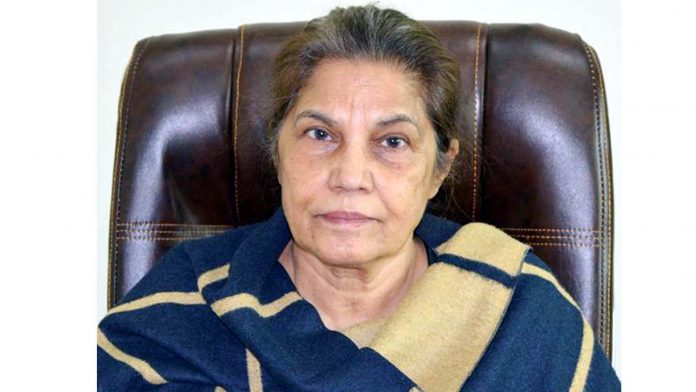
Ambassador (retd) Fauzia Nasreen

Every year on 8 March International Women’s Day is celebrated to renew the global commitment to empower women and uphold their rights safeguarded in a number of conventions and covenants. In 2021 8th March is being celebrated under the shadow of the COVID-19 pandemic and very aptly the theme is “Women in Leadership: Achieving an equal future in a Covid-19 world”. It reflects the realities of the current environment hugely influenced by the COVID-19 pandemic.

The spirits however, have not been dampened amid hopes for a better recovery. The rapid response by the scientists and medical community has rekindled aspirations for moving beyond the COVID-19 environment building the post COVID-19 world on the pillar of international solidarity. In this women and girls are equal partners aspiring to enjoy the support of all stake holders.

In the struggle against the pandemic women and girls have been at the forefront and at the same time they have been impacted in multiple ways. Women have shouldered the responsibility as health workers, caregivers, innovators and community leaders. They have risen to the call of duty and shown exceptional dedication which has been recognized and commended worldwide.  Women leaders have demonstrated exceptional leadership qualities as heads of state and governments and as professionals. The imperative of their integration and mainstreaming has been reinforced. It presents an opportunity to explore ways to promote their rights as equal contributors to growth and development.

Transformative gender equality has become critical under the current conditions now more than ever before. The 2030 Sustainable Development agenda cannot be achieved without an equitable participation of women in the entire spectrum of development; political, economic, socio-cultural, security, science and technology. Since gender equality and the empowerment of women is the core of the Sustainable Development Goals (SDGs) almost all the goals and targets touch upon this aspect in a substantial way. Women participation and leadership is essential together with a consensual approach towards issues pertaining to the rights of women and girls in different spheres. Unified approach that would help achieve women’s rights rests on participation and decision making as well as supportive legislative or legal framework. Rationale for such a unified approach is that

  • Full political participation in public life ensures that voice of women is heard on all issues affecting the lives of women.
  • In order for them to play an active part in public and private sectors their capability matters immensely. Hence their health and wellbeing, solid nutrition along with quality education and skills would be necessary.
  • Education matters for gender equality. We are all familiar with the close link between a girl’s education and social and economic development. Societal commitment to upholding women and girls’ right to education would go a long way in building their capacities.
  • Women participation in economic and commercial activities has twofold benefits; first it gives financial independence to women and more importantly it boosts the overall economic growth of the state and society. Creating an enabling environment would be a step in the direction of promoting smart economy.
  • Poverty eradication measures need to ensure equal access to financial and other resources of the state and society which includes agriculture productivity and entrepreneurial assets.

In our efforts towards securing the rights of women and girls, society has an important role to play. Without that support and general understanding the task becomes arduous. Most importantly as SDG 5 calls for ending “all forms of discrimination against all women and girls everywhere” as well as ending “all forms of violence against all women and girls in the public and private spheres…” In order to bring about a transformative shift the entire notion and regressive ideas associated with women would be required. Transition to a more conducive structural paradigm would be necessary-along way to go but the new normal does create an opportunity to do so. This opportunity can be capitalized within the context of post COVID-19 recovery.

The Constitution of Pakistan guarantees rights for all. There are a number of laws that have been passed over the last several decades. However, it is the enforcement and implementation of the laws which is deficient. For this structural adjustments and changes are needed bringing about a transformative change in approaches towards women issues. Pakistan will stand to gain by moving along the global paradigms on development, growth and gender equality. SDGs do provide space for accommodation of national priorities and local environment. But for our own sake that environment must be made sustainable by pro-women rights-based approach

The author served as Ambassador of Pakistan in different countries of the world. Lastly, she remained posted as Advisor COMSATS Secretariat on SDGs.

Schools in seven Punjab cities to remain closed until March 28: NCOC

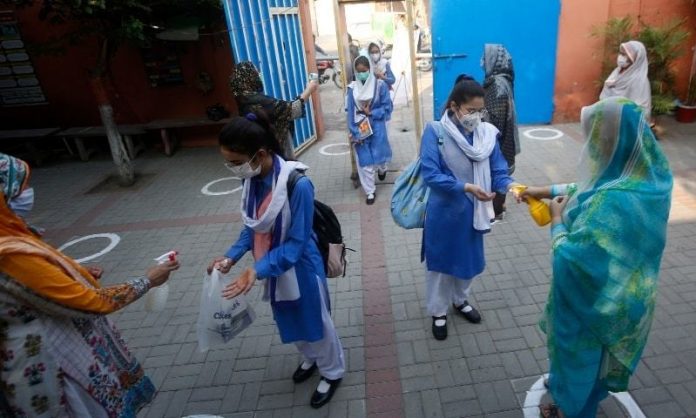
ISLAMABAD, March 10 : The National Command and Operation Centre (NCOC) on Wednesday announced the closure of schools in seven Punjab cities from coming Monday (March 15) until March 28 after a rising number of coronavirus cases.

The announcement was made by Education Minister Shafqat Mahmood while addressing a press conference flanked by SAPM on Health Dr Faisal Sultan following a crucial meeting of the NCOC summoned to review the coronavirus situation.

“Schools in Lahore, Rawalpindi, Sialkot, Multan, Faisalabad, Gujranwala and Gujrat will remain close until March 28.”

Shafqat Mahmood said that the ban will not be applicable to schools that are already conducting the examinations.

Apart from the closure of schools in seven Punjab districts, the educational activities will continue in other parts of the province with 50 per cent attendance of the students, the minister said.

The minister declaring the situation in Sindh and Balochistan almost satisfactory said that educational institutions will continue their activities with 50 per cent of the attendance.

Speaking on the occasion, SAPM Faisal Sultan said that coronavirus cases are increasing in the country and urged administrative departments to enforce Standard Operating Procedures (SOPs) regarding coronavirus.

The SAPM further said that all recreational parks will close at 6pm while indoor dining will not be allowed in restaurants and eateries can only provide outdoor sitting and takeaway service.

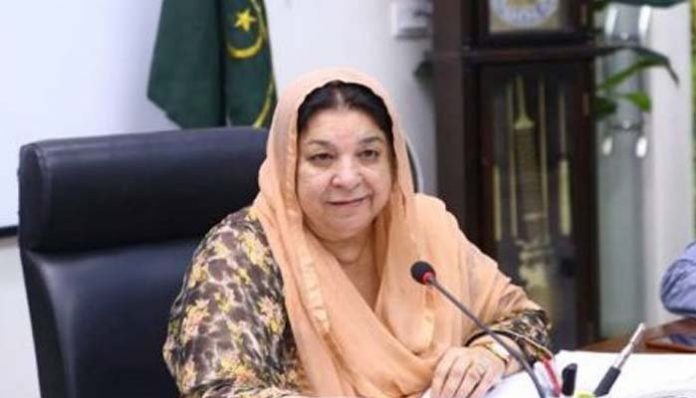
Ignoring Covid-19 safety measures may lead to smart lock-down: Yasmin Rashid

ISLAMABAD, Mar 10  : Punjab Health Minister Yasmin Rashid on Wednesday warned that disregarding Covid-19 safety measures will further lead to a jump in infection rates and urged the public to wear face masks, particularly in situations where social distancing is not possible.

she said non-compliance with coronavirus standard operating procedures (SOPs) in letter and spirit could push the government to impose another smart lock-down that would largely affect businesses and people would not be able to earn their bread and butter.

She stressed the spread of Covid-19 can be reduced when masks are used along with other preventive measures, including social distancing, frequent hand-washing, and cleaning and disinfecting frequently touched surfaces.

“We are ensuring that the ‘masks on’ policy is strictly implemented in the province so that local population should be safe,” she added.

She said citizens should wear masks in offices, schools, grocery stores, banks, and other facilities.

Yasmin Rashid also said Covid-19 vaccines are our best hope to beat this battle, adding, Pakistan has started second phase of vaccination drive for elderly people aged above 60 against the deadly coronavirus.

She urged that all elderly to come forward for vaccination doses and send their NADRA ID card number on 1166.

Second phase of COVID-19 vaccination drive for above 60 starts: Nausheen Hamid

ISLAMABAD, Mar 10  : Parliamentary Secretary for National Health Services, Dr Nausheen Hamid on Wednesday said that the second phase of COVID-19 vaccination drive for above the age of 60 started at many government hospitals.

Talking to a private news channel, she said that most senior citizens who have registered for vaccination will receive an SMS with instructions on their mobile phones and the oldest persons will be vaccinated first.

“The senior most citizens will be the first ones to receive the doses of COVID-19 vaccine,” she added.

Nausheen said that country’s daily vaccination program would be monitored and further information on the vaccination program will be shared in the coming days as efforts progress.

She said the vaccination shots would be distributed fairly, in three stages and citizens should not have any doubt about the vaccination as the vaccine has been proven safe.

She said the people above 60 should quickly sign up for the vaccination to help the government speed up the immunisation process to curb the spread of the virus.

She said within next few days the registration process for people above 50 would also begins in Pakistan, adding till the end of September government would try to get its fixed targets for vaccine.

Replying a Question, she said our goal is to protect as many people as possible, adding, Pakistan is also one of the first countries that plans to allow the private sector to conduct vaccinations and its drug regulator issued guidelines for private companies to set up centers to administer COVID-19 vaccines.

She said government was also formulating further mechanize to fixed the prices of vaccine for private sectors.

Russian retailer launches facial recognition payment system

Moscow, March 10 : Russia’s X5 group, the country’s leading food retailer, announced Wednesday the launch of a facial recognition payment system, the latest expansion of a technology that has sparked privacy and security concerns.

To launch its facial recognition payment system the X5 group, which owns the Pyaterochka convenience stores and the Perekrestok supermarket chain, has joined forces with the Visa payment system and Russia’s state giant Sberbank that is striving to become an IT company.

The service has rolled out in 52 Perekrestok supermarkets and will expand to a total of 150 by the end of the month, X5 innovation director Ivan Melnik adding that the system will also be available in 30 Pyaterochka stores by the end of April.

He said some 3,000 stores across Russia will feature facial recognition payment systems by the end of the year.

At a Moscow supermarket on Tuesday, the service appeared to be winning the support of younger customers.

“It’s great because the 21st century is the era of technology,” said 28-year-old banker Andrei Epifanov.

But he added that he thinks older people may not trust the new technology.

The service will only be available at self-service checkouts for Sberbank customers after the bank recently allowed its users to set up facial recognition to pay from their accounts.

To complete the transaction in the pandemic era, customers will need to remove their facemasks “for a second and look into the camera”, the companies behind the payment system said in a statement.

“This is convenient for customers since they don’t have to carry a wallet or take their phone out of their pocket,” Melnik said.

“They can just use a button and pay with their face.”

He said the system also ensures that facial recognition transactions are “encrypted and protected” and identity theft attempts are prevented by a 3D camera that measures the depth of a user’s face.

Facial recognition is rapidly developing in Russia, raising the concerns of activists over state surveillance.

At the start of the pandemic Moscow used its tens of thousands of surveillance cameras to monitor compliance with lockdown measures.

The Roskomsvoboda digital rights NGO launched a campaign last year against the mass use of facial recognition by the authorities, highlighting abuses of the system, data leaks and lack of consent.

PCB invites applications for clubs registration

LAHORE, Mar 10 : The Pakistan Cricket Board on Wednesday initiated the process for the registration of cricket clubs across the country.

The clubs can apply for registration through an online form 24 March.

The fee for the registration, which has been kept at PKR 5,000/-, can be deposited online at any branch of Faysal Bank or MCB Bank.

Only the president of the club can apply for registration, holding a valid CNIC and a functional e-mail address of the club.

Upon successful verification of the applications, the presidents will receive another online link on the registered e-mail address through which they will enter the remaining data relating to categories of membership and players. The clubs whose applications fail the verification process will also be notified with reasons.

Hard copy of the club data will be submitted to the Chairperson of the First Board of relevant Cricket Association (CA) for further verification and scrutiny. The club registration will be confirmed after the scrutiny by a PCB-nominated inspection team.

In the first phase only those clubs who have participated in either of the Fazal Mehmood club tournaments organized by the PCB in 2017-18 and 2018-19 seasons and fulfil the requisite criteria, will be awarded voting rights. Remaining clubs will be considered for voting rights after the second scrutiny.

There are three membership categories: Affiliate, Associate and Full, with the last two having voting rights for their respective City Cricket Associations.

Stay Connected

64FansLike
60FollowersFollow

Latest Reviews

Exchange Rates

USD - United States Dollar
EUR
1.14
GBP
1.34
AUD
0.69
CAD
0.70