Home Blog Page 2846

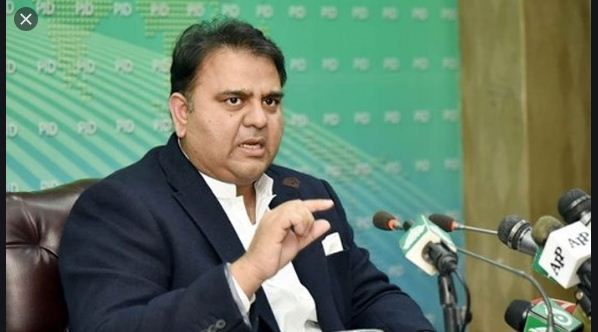
FAWAD REITERATES OFFER FOR POLITICAL DIALOGUE ON ELECTORAL REFORMS

ISLAMABAD, MAR 24 (DNA) – Minister for Science and Technology Chaudhry Fawad Hussain Wednesday again invited the opposition parties for holding a meaningful dialogue on the much-needed electoral reforms.

Talking to media persons after signing ceremony of a Memorandum of Understanding between Pakistan Engineering Council (PEC) and Chinese Shenzhen University, he said “I once again invite the two parties, Pakistan Peoples Party and Pakistan Muslim League-Nawaz, to sit with the government on electoral reforms, so no one can cast doubt on the fairness of the elections in future.”

On directions of Prime Minister Imran Khan, he said, National Assembly Speaker Asad Qaiser had constituted a parliamentary committee on electoral reforms.

He said the government wanted to move seriously for the electoral reforms in the best interest of the county.

Fawad Chaudhry said the opposition should avoid undermining the parliament. He was of the view that if the political parties had not taken the offer of the government seriously it would be harmful to the country. “Our interests are linked with the interest of the country,” he added.

He termed the politics of PML-N ‘immature’ that wanted to derail the parliament. “If parliament and democracy are derailed, it will be a failure of the people of the country,” he added.

The minister said how these parties would do politics when the parliament was undermined in the country. He said that two national parties had become the provincial level entities as the PML-N was limited to Punjab while PPP to Sindh only due to their poor political practices.

On Pakistan Democratic Movement (PDM), Fawad Chaudhry said he had earlier predicted that this was an unnatural alliance and its affairs would not run for a longer period.

He said that it was a good sign that Maryam Nawaz had chosen legal way and applied for the bail, while her party had otherwise history.

The minister recalled that leadership of the PML-N had attacked the judges of the Supreme Court in the past. About COVID-19, Fawad Chaudhry said the government had already announced free vaccinations for all the citizens of the country.

He said millions of people could be vaccinated systematically. He said private imports were allowed so that those who do not want to be lined up, pay and get vaccinated.

About the Memorandum of Understanding signed between Pakistan Engineering Council (PEC) and Chinese Shenzhen University, he said, the government would attain an advantage in the field of technology by the experience of China.

Under the MoU, he said, the Chinese would establish laboratories in Pakistan and PEC will closely coordinate for the transformation of technology. He expressed the hope that recommendations of the ministry would be incorporated in the upcoming budget for the promotion of electronic vehicles in the country.

As per the minister as many 2.2 million electronic vehicles were operating in Pakistan in 2020, now this number had reached to 40 million. He was of the view that Electronic vehicles were the future of the country. = DNA

=======================
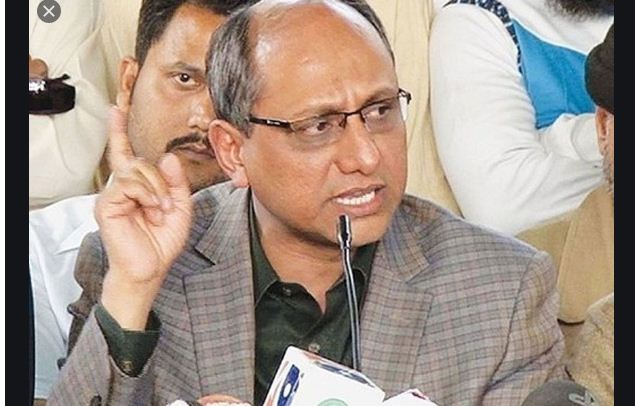
EDUCATIONAL INSTITUTIONS IN SINDH TO REMAIN OPEN: SAEED GHANI

KARACHI, MAR 24 (DNA) – Sindh Education Minister Saeed Ghani on Wednesday said that all educational institutions in the province will remain open under strict coronavirus related Standard Operating Procedures (SOPs).

The education minister said that schools can remain open with only 50 percent attendance and if a coronavirus case is found in a school, only that institution will be sealed. He further announced that all examinations will be held as per the schedule.

He added that all private and public schools will follow government orders and warned that a strict action will be taken against institutions as well as individuals found violating the official guidelines.

Earlier, Federal Minister for Education and Professional Training Shafqat Mehmood announced to keep all educational institutions in nine districts of Punjab closed till April 11 as third wave of coronavirus grips Pakistan, especially Punjab.

The announcement is for Lahore, Rawalpindi, Gujranwala, Gujrat, Multan, Faisalabad, Sialkot, Sargodha, and Sheikhupura. The remaining districts will be open on previous schedule. The minister further said that all institutions in Islamabad will also remain close as coronavirus situation in the federal capital is also worrisome.

Shafqat Mehmood further said that the exams of all educational boards will be held in late May as per the schedule and a meeting will also be held with Cambridge to discuss its exams and an announcement in this regard will be made soon. He warned that any educational institution found violating the government orders will be sealed.  = DNA

=======================

IHC DISMISSES GILANI’S PETITION AGAINST SENATE CHAIRMAN’S ELECTION

ISLAMABAD, MAR 24 (DNA) – The Islamabad High Court has dismissed a petition filed by PPP leader Yousaf Raza Gilani against the election of Sadiq Sanjrani as the Senate chairman.

IHC Chief Justice Athar Minallah declared that Sadiq Sanjrani will remain the Senate chairman as the petition is not maintainable.  In its 13-page written verdict, the IHC Chief Justice dismissed Gilani’s petition as not maintainable.

Announcing the reserved verdict, Chief Justice Islamabad High Court (IHC) hoped that the supremacy of Parliament will be ensured and parliament’s issues would be resolved in parliament.

The verdict further stated that the court cannot intervene in the parliamentary affairs under Article 69 of the constitution. Earlier, the IHC Chief Justice reserved the verdict on the maintainability of the petition challenging the Senate chairman’s election.

The petition was filed by PPP’s Syed Yousaf Raza Gilani against the outcome of the Senate chairman election.   The former prime minister’s lawyer Farooq H Naek, in his arguments, told the court that his client received 49 votes but seven votes were rejected.

 When asked, Naek told the court that they have challenged the Senate election, not its procedure.  “Parliament’s business or procedure were not part of the March 12 Senate chairman’s election,” he added. On the court’s inquiry, it was informed that the Senate chairman can be removed through a no-confidence motion. 

The court remarked “If Yousaf Raza think that he has the support of more members then why does he not table a no-trust move against the chairman.” Naek responded that the PPP had not yet accepted Sadiq Sanjrani as the Senate chairman. Sadiq Sanjrani was elected Senate chairman after securing 48 votes on March 12.

The PPP leader received 42 votes but seven votes in his favour were rejected during the counting process. The petition said that Gilani should be declared Senate chairman as seven votes in his favour were rejected illegally. The notification issued on March 12 should be suspended. = DNA

=======================

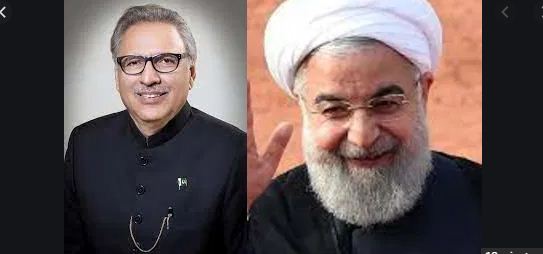
IRANIAN PRESIDENT SENDS NOWRUZ GREETINGS TO PRESIDENT ALVI

ISLAMABAD, Ma 24 – Iran’s President Hassan Rouhani has sent greetings to President Dr Arif Alvi on the advent of Nowruz, the new Iranian calendar year.


“I would like to extend my heartfelt congratulations to Your Excellency and also your great nation on the arrival of the ancient-old Nowruz, spring of nature and beginning of the year 1400 solar AH,” the Iranian president said in a a letter addressed to President Alvi.

President Rouhani wrote, “Like an adept painter, Spring infuses spirit of freshness and liveliness into the heart and soul of the earth, through making impressions on nature’s canvass to spread images and patterns of refreshment and flourishing across the globe.”

Following the example of nature and with renewal of season, he said, the humans could introduce a new spring into their hearts and well-being into their bodies.


The Iranian president mentioned that the world experienced the COVID-19 pandemic with its numerous social and economic challenges.


“I hope that in the New Year and through further engagement and cooperation between our countries as also containing the COVID-19 virus, Nowruz ushers in a new era for our people while happiness, bounties and calm are restored to the entire world,” he said.


President Rouhani prayed to bestow ever-growing success and good health to President Alvi and the happy times upon the noble people of Pakistan.

EDUCATION INSTITUTES TO REMAIN CLOSED TILL APRIL 11 IN COVID HOTSPOTS: SHAFQAT

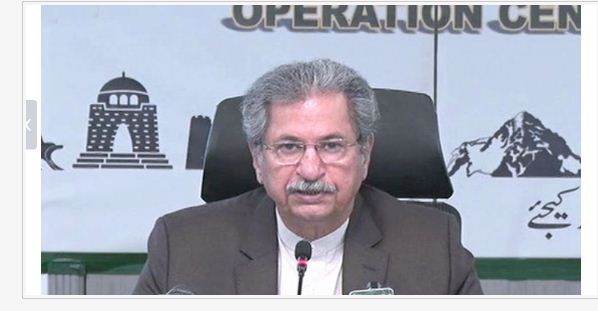
ISLAMABAD, MAR 24 – Federal Minister for Education and Professional Training Shafqat Mahmood announced on Wednesday that educational institutes in areas with a high incidence of Covid-19, including Islamabad, will remain closed till April 11.

He made the announcement at a press conference after chairing a meeting at the National Command and Operation Centre (NCOC). The meeting was also attended by senior officials from the health and education department, and provincial education ministers.

Earlier this month, the NCOC had decided on a two-week spring vacation in educational institutions in 10 cities of Punjab, Khyber Pakhtunkhwa, Azad Kashmir and Islamabad from March 15 till March 28.

Shortly after today’s meeting ended, the provinces announced the areas where schools will remain closed.

Sindh announced that its schools will remain open as usual, with 50 per cent student attendance allowed.

Areas other than Islamabad where schools will remain closed:

Punjab

  • Lahore
  • Rawalpindi
  • Gujranwala
  • Gujrat
  • Multan
  • Faisalabad
  • Sialkot
  • Sargodha
  • Sheikhupura

KP

  • Peshawar
  • Mardan
  • Charsadda
  • Swabi
  • Kohat
  • Lower Dir
  • Malakand
  • Swat
  • Nowshera
  • Buner

During the press conference, Mahmood said that the forum noted the high incidence of coronavirus cases in several districts of Punjab, KP and Azad Jammu and Kashmir. “However, the number of cases in Sindh, Balochistan and Gilgit-Baltistan is relatively low.

“Therefore, it was decided that educational institutions in selected areas, where restrictions were imposed previously, will continue to be closed till April 11,” he said, adding that this applied to schools, colleges, academies and universities alike.

Mahmood stated that the provincial governments will also decide if schools need to be closed down in other areas.

“As you know there were nine districts in Punjab [where schools were closed down], then another was added. We closed them in Peshawar and then eight other districts were added.”

He said that the provincial governments will take the necessary steps based on the numbers. “If they wish to call teachers and administrative staff, they can do so.”

The minister said that the forum will continue to review the country’s coronavirus outbreak. “We know that closing down schools has caused harm to children’s education, but we can’t risk their health.”

He reiterated that the provincial government will decide the areas where educational institutions will be closed, adding that the closure will last till April 11.

He said that board examinations will take place according to their timetable as giving students the “baseline” grade was no longer an option.

“We will also have a meeting with the Cambridge education board to see if we can move the exams forward,” he said, but refrained from making any further comments before the meeting.

On Sunday, Mahmood had said that the third wave was serious and required careful review, adding that the health of students, teachers and staff was the “primary consideration”.https://platform.twitter.com/embed/Tweet.html?dnt=false&embedId=twitter-widget-1&frame=false&hideCard=false&hideThread=false&id=1373674742847246337&lang=en&origin=https%3A%2F%2Fwww.dawn.com%2Fnews%2F1614325&siteScreenName=dawn_com&theme=light&widgetsVersion=e1ffbdb%3A1614796141937&width=550px

Pakistan’s Covid-19 cases have drastically risen in recent weeks, with the country reporting more than 3,000 virus cases for the past seven days straight. On Wednesday, 3,301 cases and 30 deaths were reported in the country.

Educational institutions in Sindh to remain open

Meanwhile, Sindh Education Minister Saeed Ghani said that all educational institutions across the province will remain open as usual.

“At present, the situation of coronavirus in Sindh is under control but if SOPs are not implemented, problems may arise,” a statement quoted him as saying.

Ghani said it was agreed in the NCOC meeting that no student would be promoted to any level without examinations this year.

He noted the number of coronavirus patients in Sindh was less than in Punjab and KP.

“Given the situation, we have decided that all educational institutions across Sindh will remain open as usual, but only 50 per cent children will be invited under SOPs,” he said.

He said all private and public educational institutions would be bound to fully implement SOPs and if any case of coronavirus was found in any institution, the school or college would be closed.

Regarding the schedule of examinations in the province, Ghani said all the examinations in Sindh would be conducted on time as per the decision and schedule of the steering committee of the education department.

10 cities placed under lockdown

On Monday, the NCOC had imposed further restrictions which will remain in force till April 11.

The NCOC, at its meeting, decided to impose broader lockdowns, with no mobility except for emergencies, in 10 cities where the positivity ratio was over 8pc. These cities included Islamabad, Lahore, Multan, Rawalpindi, Faisalabad, Bahawalpur, Hyderabad, Peshawar, Swat and Muzaffarabad.

According to the new policy, residents of the areas concerned will be informed about the duration of lockdown and will be suggested to store edible items. People will not be able to move freely, except for emergencies. Edible items will be provided at their doorstep, through online services.

These decisions will be reviewed during the centre’s next meeting on April 7.

The NCOC decided to close commercial activities by 8pm and ban all types of indoor gatherings — cultural, musical and religious. Two safe days per week will also be observed.

Inter-city public transport will operate at 50pc and rail service at 70pc capacity. Complete closure of amusement parks will be ensured and reduced presence will be observed in courts (city, district, high courts and Supreme Court). Stringent protocols for tourism will also be followed in Gilgit-Baltistan, Khyber Pakhtunkhwa, Azad Kashmir and other tourist places.

CGSS, ISRS orgnaiez conference on “Regional Connectivity Strategy: Pakistan & Uzbekistan-A New Regional Commitment”

DNA

ISLAMABAD, MAR 24 – The online conference was commenced with the welcome remarks by AybekArif Usmanov, Ambassador of the Republic of Uzbekistan to Pakistan. He appreciated the initiative of organizing the conference & expressed his gratitude to the institutions for their participation in enhancing bilateral ties between Uzbekistan & Pakistan. His Excellency also mentioned that this conference will identify new areas of cooperation between Pakistan and Uzbekistan and also suggest the role of both countries in the Afghanistan peace process.

In his opening remarks, Mr. Khalid Taimur Akram, Executive Director, Center for Global & Strategic Studies (CGSS), Islamabadstated that Regional connectivity is the key catchword in today’s political and economic discourse. Pakistan has a cultural and religious affinity with the Central Asian Region and in this aspect, Pakistan-Uzbekistan bilateral relations have significantly improved in recent times. He emphasized that it is the need of the hour to effectively implement and execute the practical aspects of joint projects that interconnect all regional partners.

Mr. AkramjonNematov, First Deputy Director of the Institute for Strategic and Regional Studies under the President of the Republic of Uzbekistanalso shared his point of view. He highlighted that Pakistan and Uzbekistan must support bilateral dialogue for the Afghan peace process. This support should also be extended and highlighted on all international platforms as well.

This will initiate a new paradigm of international trade, regional connectivity, and economic cooperation in the region. Furthermore, it will become a pathway for sustainable development and progressive economic growth in Afghanistan. He appreciated Pakistan’s vision for building and developing bilateral ties between Pakistan and Uzbekistan to maximize benefits and to capitalize on the geographical importance of this region.

Prof. Dr. Shabir Ahmad Khan, Director of Area Study Centre (Russia, China & Central Asia), University of Peshawar highlighted that For Pakistan connectivity with Uzbekistan means connectivity with all other CARs. Pakistan is naturally facing Central Asia and considers itself part of the process of regionalism reinvigorated by President ShavkatMirziyoyev in Central Asia. He also mentioned that it is also important to harmonize and coordinate cross-border policies for smooth border crossing between Uzbekistan, Afghanistan, and Pakistan. It will result in Pakistan and Uzbekistan maximally benefit from the regional integration plans like CAREC, BRI, Eurasian Union, and ECO due to their significant geographies in respective regions.

He suggested faculty/scholar exchanges, cultural exhibitions, book fairs, movies, plays and sports, and direct flights between the two countries for a positive impact on overall relations.

Mr. AlisherKadirov, Head of the Department of the Institute for Strategic and Regional Studies under the President of the Republic of Uzbekistan discussed possibilities of Uzbekistan and Pakistan cooperation for the peace process in Afghanistan. He emphasized that Uzbekistan has always wished for peace and stability in Afghanistan. Economic and regional cooperation between Central Asia and South Asia is important for peace and stability in Afghanistan and the entire region.

He also emphasized that there are significant cultural ties between Uzbekistan and Pakistan. These cultural ties must be explored and highlighted by initiating cultural exchange programs between both countries. He also briefly discussed the positive impacts of the Mazar-e-Sharif – Kabul – Peshawar rail route and its potential role in the economic development of the region.

Mr. TimurRakhimov, Head of Department of the International Institute of Central Asiasuggested measures for the Afghanistan peace process. He was of the view that first and foremost, dialogues and negotiations must take place on a national and regional level. The International community and neighbors of Afghanistan can play a significant and crucial role in the smooth peace process for Afghanistan.

He emphasized that the people of Central Asia and Afghanistan share a mutual bond based on culture, religion, and traditions. Today, Afghanistan is seen as the key element for enhanced international transport that will eventually connect Central Asia and South Asia. Furthermore, the implementation of the Mazar-e-Sharif – Kabul – Peshawar rail route will provide an opportunity for mutually beneficial partnerships.

Dr. Mehmood Ul Hassan Khan, Member Board of Experts, Center for Global & Strategic Studies (CGSS), Islamabad and Regional Geopolitical Analyststated that Uzbekistan-Pakistan bilateral relations have been further strengthened during recent times because of the better political understanding, improvement in bilateral trade, phenomenal rise to tourism and joint efforts to bring peace and harmony in the region especially in Afghanistan.

Pakistan and Uzbekistan have been jointly working to achieve sustainable regional connectivity by avoiding spillover repercussions of the end game in Afghanistan. Both countries have been pursuing an Afghan own & Afghan-led solution for the future of Afghanistan, especially after the US withdrawal.

He emphasized that Afghanistan has been a stumbling factor for greater regional connectivity which must be now resolved for greater regional integration, prosperity, and poverty eradication for which Pakistan and Uzbekistan have been jointly playing important roles.

Mr. RustamKhuramov, Head of the Department of the Institute for Strategic and Regional Studies under the President of the Republic of Uzbekistanhighlighted that Afghanistan is becoming a symbol of cooperation in the region. From the point of view of Central Asia, many opportunities must be explored. He highlighted that South Asia is one of the fastest-growing regions in the world when it comes to its international cooperation, GDP growth, and contribution to the global economy.

He further highlighted the positive aspects of the Mazar-e-Sharif – Kabul – Peshawar rail route and stated that the establishment of many new industries, creation of job opportunities, reduced travel time between Uzbekistan, Pakistan, and Afghanistan will be achieved. Roadside infrastructure, trade opportunities, and a significant contribution to regional stability and security will also be a result of this train route.

Dr. Azmat Hayat Khan, Former Vice-Chancellor, University of Peshawarhighlighted that Bukhara has a rich historical and cultural background. Business caravans, many scholars, and traders utilized this region for their trade and economic activities. He also emphasized that even today, Uzbekistan is rich in minerals and natural resources.

Dr. Azmat Hayat Khan was of the view that the year of geopolitics is gone and now is the age of geo-economy. Diplomacy is now done based on economic ties and partnerships. Furthermore, Pakistan’s future lies with Asia and its neighbors. He also mentioned that if Uzbekistan and Pakistan are connected with the rail route it will benefit Afghanistan and the entire region. The rail route will open trade opportunities. The products of Afghanistan and Uzbekistan will have a global reach. He specifically mentioned the cotton, fruits, and vegetables produced by Uzbekistan that can be exported to the Gulf countries. Infrastructure and industrial development is also an important aspect that will create job opportunities for the people of Afghanistan, proving to be a positive step towards economic stability.

The conference was moderated by Mr. SanjarValiyev, Deputy Director of the Institute for Strategic and Regional Studies under the President of the Republic of Uzbekistan, and was attended by 50 participants including students and subject experts from Pakistan and Uzbekistan. It was also viewed live on social media platforms by 100 viewers.

Myanmar junta frees hundreds held for anti-coup protests

Myanmar freed more than 600 coup detainees from prison on Wednesday, amid fresh outrage at the junta’s brutal crackdown on protesters.

The regime has unleashed a deadly wave of violence as it struggles to quell nationwide protests against the February 1 ouster and arrest of Suu Kyi.

The 75-year-old Nobel laureate was due to have a court hearing on Wednesday in Myanmar’s capital Naypyidaw, on criminal charges that could see her permanently barred from political office.

But her lawyer Khin Maung Zaw said the hearing was adjourned until April 1 because of problems with video conferencing caused by a junta-imposed internet shutdown.

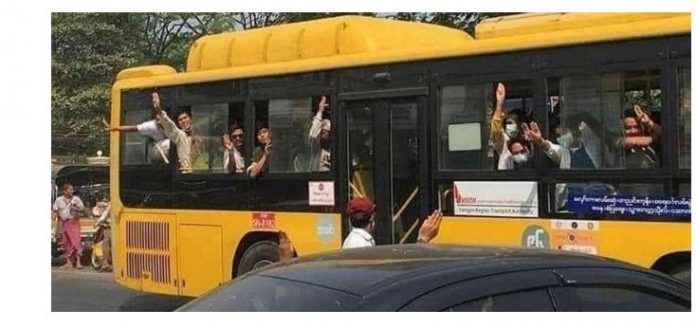
In commercial hub Yangon more than 600 people held for protesting against the coup were released on Wednesday from Insein prison.

“We released 360 men and 268 women from Insein prison today,” a senior prison official told AFP on condition of anonymity.

Lawyer Khin Maung Myint, who was at Insein prison for the hearing of two other clients, said 16 busloads of people left the jail at 10 am local (0400 GMT).

“They were sent to related police stations to go back home… Some clients called me (after) informing me of their release,” he told AFP.

Local media showed images of the prisoners on the buses flashing the three-fingered salute — a sign of resistance for the anti-coup movement — as people waiting outside the prison waved at them and returned the gesture.

Activists called for a nationwide “Silent Strike” on Wednesday, and streets were bare in the cities of Yangon and Naypyidaw.

In the southern city of Myeik, rows of dolls were set up along roads, holding up tiny signs reading “We need democracy” and “We wish for Mother Suu to be healthy.”

AT LEAST 20 CHILDREN KILLED

There was chaos overnight in Mandalay with barricades burning, arrests, homes raided by security forces, beatings and machine guns ringing out over multiple neighbourhoods, local media reported.

Three people were killed on Tuesday including seven-year-old girl Khin Myo Chit, shot dead at her home in Mandalay, according to the Assistance Association for Political Prisoners (AAPP), a local monitoring group.

AFP has yet to independently verify the girl’s death.

Aid group Save the Children and AAPP both say that at least 20 people aged under 18 have been killed in the crackdown.

“We are horrified that children continue to be among the targets of these fatal attacks on peaceful protestors,” Save the Children said in a statement.

“The safety of children must be protected under all circumstances and we once again call on security forces to end these deadly attacks against protesters immediately.”

The charity said it was also extremely worried about “hundreds of young people” being held in detention.

Myanmar’s junta on Tuesday defended its seven-week crackdown, insisting it would not tolerate “anarchy”.

AAPP has verified 275 deaths since the coup, but warns the toll could be higher, and says more than 2,800 people have been detained.

Junta spokesman Zaw Min Tun put the death toll lower at 164, and branded the victims “violent terrorist people” at a Tuesday news conference in the capital Naypyidaw.

SUU KYI GRAFT CLAIMS

Suu Kyi’s lawyer said that on Wednesday morning there was a large police presence outside the court gates and lawyers were not being allowed into the building.

Khin Maung Zaw said he has still not been able to speak to his client privately.

Suu Kyi faces several criminal charges, including for owning unlicensed walkie-talkies and violating coronavirus restrictions by staging a campaign event in 2020.

She is also being investigated for corruption allegations.

The military junta alleges the detained chief minister of Yangon confessed to giving Suu Kyi $600,000 in cash, along with more than 11 kilograms ($680,000 worth) of gold.

The junta has also been targeting the media.

Thein Zaw, a photographer for Associated Press, who has been charged with “spreading false news” is also due for a second legal hearing at a court in Yangon’s notorious Insein prison on Wednesday.

If convicted he faces up to three years jail.

He was arrested while covering a protest late last month alongside other reporters.

More than 40 journalists and photographers have been arrested since the coup last month, according to a local monitoring group.

UN, US, Russia and EU meet virtually on Israel, Palestinians

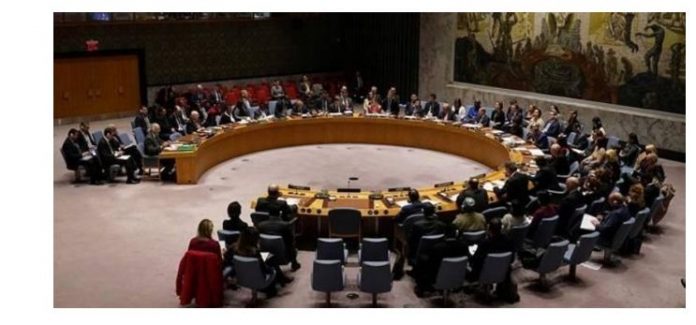
NEW YORK, MAR 24 – The United Nations, United States, Russia and the European Union met virtually Tuesday to discuss relaunching their long-stalled effort to get Israel and the Palestinians to negotiate a two-state solution to their decades-old conflict.

A brief statement from the four Mideast mediators, known as the Quartet, said envoys discussed returning “to meaningful negotiations that will lead to a two-state solution, including tangible steps to advance freedom, security and prosperity for Palestinians and Israelis, which is important in its own right.”

There have been no substantive peace talks between Israel and the Palestinians since 2014, and the two sides are fiercely divided over the core issues of the conflict.

The United Nations sent out the statement on the Quartet discussion after polls closed in Tuesday’s Israeli election. Exit polls indicated there was no clear winner, leaving Prime Minister Benjamin Netanyahu’s fate uncertain and signaling continued political deadlock in Israel.

In late January, U.N. Secretary-General Antonio Guterres said there were “reasons to hope” for progress toward ending the Israeli-Palestinian conflict after years of inaction. He said the United Nations would explore all initiatives to facilitate “a true peace process” based on the two-state solution.

Clearly referring to the former U.S. administration, without naming then president Donald Trump, Guterres said “we were completely locked down in a situation in which there was no progress visible.”

The Trump administration provided unprecedented support to Israel, recognizing Jerusalem as Israel’s capital, moving the U.S. Embassy from Tel Aviv, slashing financial assistance for the Palestinians and reversing course on the illegitimacy of Israeli settlements on land claimed by the Palestinians.

For more than three decades, the Palestinians have sought an independent state in the West Bank, Gaza and east Jerusalem, territories seized by Israel in the 1967 war. Israel withdrew from Gaza in 2005 but imposed a crippling blockade when the Palestinian militant group Hamas seized power from Palestinian President Mahmoud Abbas’ forces in 2007.

Israel has annexed east Jerusalem — a step that is not internationally recognized — and has said it has no intention of dismantling any of its West Bank settlements, which the United Nations says are illegal under international humanitarian law. Nearly 500,000 Israelis live in the West Bank, in addition to more than 200,000 in east Jerusalem.

The peace plan unveiled by Trump in February 2020 envisioned a disjointed Palestinian state that turned over key parts of the West Bank to Israel, siding with Israel on key contentious issues including borders and the status of Jerusalem and Jewish settlements. It was vehemently rejected by the Palestinians.

Soon after U.S. President Joe Biden was inaugurated on Jan. 20, his administration announced that it was restoring relations with the Palestinians and renewing aid to Palestinian refugees, a reversal of Trump’s cutoff and a key element of its new support for a two-state solution.

Secretary-General Guterres made clear in January that Biden’s more even-handed approach opened the possibility of Quartet meetings previously blocked by the U.S., as well as broader peace efforts.

The Quartet was established in 2002 and has been criticized for its failure to get either Israel or the Palestinian Authority to change their policies and negotiate an end to their conflict.

Tuesday’s statement by the Quartet envoys did not mention any future steps.

It did say the envoys discussed “the situation on the ground, in particular the COVID-19 pandemic, the unsustainable disparity in economic development between Israelis and Palestinians, and the need for the parties to refrain from unilateral actions that make a two-state solution more difficult to achieve.”

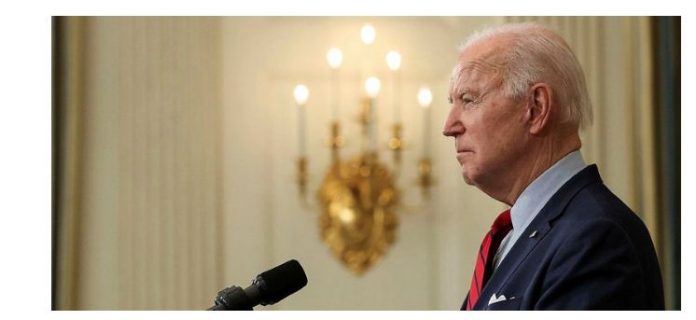
Biden urges new gun control laws after Colorado mass shooting

A shooting at a supermarket in Colorado on Monday left 10 victims dead, including a police officer who was the first to respond to a call of shots fired.

Biden made particular mention of two bills that have cleared the Democratic-controlled House of Representatives earlier this month that seek to close loopholes in the US’s background check system for firearms purchases.

One bill seeks to end longstanding loopholes that allow people to buy firearms at gun shows and on the internet without first being subject to a background check, while another seeks to halt what is known as the “Charleston loophole.”

It currently allows a gun sale to proceed if the check has not been completed within three business days. The time-frame envisioned by the bill increases the number to 10 days.

The loophole’s name comes after Dylann Roof was able to buy a gun after the current time frame expired, ultimately using it to carry out a massacre at a Black church in Charleston, South Carolina in 2015 in which nine parishioners were killed.

Biden said the bills are “common sense steps that will save lives in the future,” urging lawmakers in the Senate to quickly pass the legislation and send them to his desk to be signed into law.

“This is not, and should not be, a partisan issue. This is an American issue. It will save lives, American lives, and we have to act,” said Biden.

He urged lawmakers to again ban assault rifles and high-capacity magazines after a 10-year ban expired in 2004.

“It was law for the longest time, and it brought down these mass killings. We should do it again,” the president said.

Biden’s plea comes after authorities in Colorado identified the suspect in Monday’s grocery store shooting as 21-year-old Ahmad Alissa. He has been charged with 10 counts of first-degree murder.

Authorities have not established a motive in the shootings, and Biden said he would not opine on the matter as “a great deal remains unknown.”

“Ten lives have been lost, and more families have been shattered by gun violence in the state of Colorado,” Biden said. “Less than a week after the horrific murders of eight people, and the assault on the AAPI community in Georgia, while the flag was still flying half-staff for the tragedy another American city has been scarred by gun violence, and resulting trauma.”

Biden was referring to last week’s shooting in the Atlanta, Georgia area that left eight dead, most of whom were from the Asian-American Pacific Islander community.

KAZAKHSTAN’S GOVERNMENT DETERMINED TO ENHANCE ENGAGEMENT WITH CIVIL SOCIETY

By UsenSuleimen

This year Kazakhstan is marking its 30th anniversary as an independent state. We have come a long way over the last three decades. Our economy has greatly expanded and our political processes are unrecognisable compared to when we just gained our independence from the Soviet Union.

A critical element of Kazakhstan’s development has been the growth of our civil society, especially the increase in the number of non-governmental organisations (NGOs). It is hard to believe that in the early 1990s there were only approximately 400 NGOs in Kazakhstan. The story is much different today. By now, the number of active registered NGOs in Kazakhstan has increased 40-fold to around 16,000. Many operate in the sphere of support for socially vulnerable segments of the population or issues related to the protection of the rights and legal interests of citizens and organisations.

This dynamic is of course most welcome. A developed civil society is the foundation of any modern and thriving state. It provides an effective dialogue platform, as well as a communication bridge between representatives of the government and the public.

Therefore, the government of Kazakhstan has continued to support actively NGOs, including financially. In 2020, grants were provided worth 1.8 billion tenge (over 4.3 million US dollars). Most of the funding went towards supporting the projects related to the welfare and development of children and young people. Approximately 305.4 million tenge ($740,000) was allocated to promote directly the development of civil society, including increasing the efficiency of the activities of non-governmental organisations.

While substantial progress has been made, we are of course aware of the need to continue to develop the space for NGOs to thrive.

For this reason, the government takes active interest in this endeavour. Since 2003, a Civil Forum, which serves as a platform for ensuring a dialogue between the state and NGOs, is regularly organised in our capital. The ninth Civil Forum held last November offered 12 virtual meetings between heads of ministries and representatives of NGOs. The participants discussed the main directions of the new concept for the development of civil society, citizen participation in decision-making, and mechanisms and opportunities for public scrutiny of government work, as well as other topics.

Another important tool for effective engagement between government and civil society is the Consultative and Advisory Body “Dialogue Platform for the Human Dimension”, which was set up at the initiative of the Ministry of Foreign Affairs of Kazakhstan in 2013 to further consolidate opportunities for the NGOs to engage in direct dialogue with representatives of the Government and Parliament on the issues of human rights and democratic reforms.

Meetings are held once a quarter under my chairmanship, with the participation of representatives of NGOs, members of parliament, representatives of the Human Rights Commission under the President of Kazakhstan, the Supreme Court, the Constitutional Council and relevant ministries, as well as representatives of our international partners, including the UN Development Programme, Office of the High Commissioner for Human Rights, OSCE, the European Union, foreign diplomatic missions, USAID, Penal Reform International, etc.

The relevance of this platform increased considerably with the announcement by Kazakhstan’s President Kassym-JomartTokayev of the concept of a “listening state”, implying stronger focus on the government’s engagement with the civil society, and implementation since 2019 of three packages of reforms in the field of human rights and further democratisation of political processes in the country.

Through open and transparent discussion, the activities of the platform have been vital to identifying systemic problems, as well as working together with Kazakh and international NGOs to find joint solutions. Our meetings provide a useful arrangement to discuss recommendations of the UN convention committees on Kazakhstan’s implementation of international obligations to protect human rights.

Let me also give you two examples of issues, which had been closely reviewed by the Dialogue Platform and resulted in adoption of new legislative acts.  One is the updated law on peaceful assemblies in Kazakhstan. The key change is that since last year NGOs or other groups that want to hold such a meeting need only to notify the local authorities about it five days before the actual event instead of applying for a permit.  Another example is that last year the Article 130 of the country’s Criminal Code, namely on libel, was, at last, decriminalised.  Both these topics had been regularly and vigorously discussed at the Dialogue Platform’s meetings.

The necessity for such a platform became especially clear earlier this year, when members of the Kazakh civil society raised the issue of the suspension of a few NGOs following inspections by the tax authorities. It was recommended at the meeting held on 26th January 2021 that the suspended organisations should apply to the higher tax authorities and appeal the decision. Deputy Prime Minister and Foreign Minister of Kazakhstan, Mukhtar Tileuberdi, assured that he would take this issue under his control.

Following a thorough review with the tax authorities, only a week later, on 3 February, all charges against the affected NGOs were dropped and the decision to suspend their activities was annulled. This situation has demonstrated why it is so important for the government and the civil society to have clear lines of communication. Without the Dialogue Platform for the Human Dimension and the open conversations between civil society and Kazakh government, the issue of the suspension of NGOs may not have been resolved so efficiently. Undoubtedly, lessons need to be learned following this case, but I believe I can say with some confidence that the engagement between civil society and our government is currently tangible and practical.

Of course, we will not stop here.

Last year, the President approved the Concept for the Development of Civil Society in Kazakhstan until 2025 last year. Its aim is to strengthen the system of partnership between the state, business, and civil society, as well as to facilitate further political transformation and modernisation in Kazakhstan. I believe we have a solid foundation to move steadily in this direction.

UsenSuleimen is the Ambassador at Large of the Ministry of Foreign Affairs of Kazakhstan

Stay Connected

64FansLike
60FollowersFollow

Latest Reviews

Exchange Rates

USD - United States Dollar
EUR
1.14
GBP
1.34
AUD
0.69
CAD
0.71