Home Blog Page 2738

Pakistan, Turkey, Palestine will jointly move UN against Israeli aggression: FM Qureshi

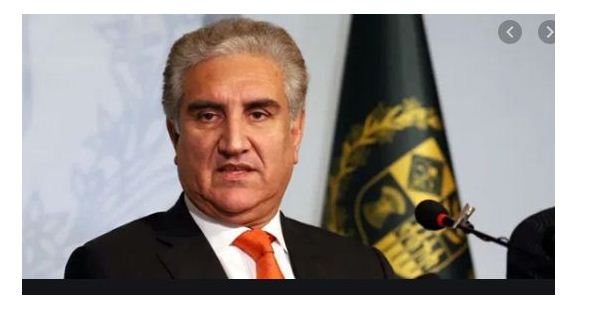
ISLAMABAD, May 17 (DNA): Foreign Minister Shah Mahmood Qureshi on Monday announced that Pakistan, Turkey, Sudan and Palestine will jointly move the United Nations against Israel’s military aggression in Gaza.

Addressing the National Assembly session today, Shah Mahmood Qureshi said that the four countries would jointly demand to convene UN General Assembly meeting on the Palestine issue. The foreign minister said that he would leave for turkey today where he would meet with his counterparts and will discuss the grave situation in Palestine.

People in western counties were also staging rallies in solidarity with the Palestinians, he said and hoped that the European Union will also raise its voice against Israeli brutalities in Palestine.

Earlier today, Opposition leader of Pakistan Shahbaz Sharif had spoken over the Palestine issue in the National Assembly session, as the middle eastern country continues to suffer massacre led by the Israeli occupation force, calling on the Organisation of Islamic Cooperation (OIC) and Arab League to soon commence a meeting on the matter.

He had said that while the people of the whole world, including non-Muslims, protest against Israeli atrocities, the international media was not reporting on it and the heads of European states were silent. God forbid, he had said, if it were any Muslim country doing the modicum of what Israel had been doing, it would have meant war.

The only crime of Palestinians, which had silenced the international community, was that they are Muslims, he had asserted.

Thousands in US stage protest in solidarity with Palestine

NEW YORK, MAY 17 (DNA) – Thousands of people across the United States staged protests this weekend to stand in solidarity with Palestinians in Gaza and demand an end to Israel airstrikes that have killed upwards of 192 civilians, according to media reports.

Protests extended as far as Los Angeles to New York on Saturday, the 73rd anniversary of al-Nakba, meaning “catastrophe,” so named for the 1948 expulsion of more than 700,000 Palestinians from their home in East Jerusalem.

Several hundred people turned out in the Bay Ridge area of Brooklyn, New York, chanting “Free, free Palestine” and “From the river to the sea, Palestine will be free.” They waved Palestinian flags and held placards that read “End Israeli Apartheid” and “Freedom for Gaza.”

Many protesters wore black and white, and red and white, keffiyeh scarves, while drivers sounded car horns and motorcyclists revved their engines as the sun beat down.

They also criticized the Biden administration for it’s support to Israel whose military has been unleashing a barrage of attacks on Gaza, with progressive US lawmakers, Palestine advocates and rights groups urging the US president to pressure the Jewish state to end its military offensive.

The Israeli military began bombing the Gaza Strip last Monday after Israel’s plan to forcibly displace Palestinian families from occupied East Jerusalem and its attacks on Palestinian worshippers at the Al-Aqsa Mosque compound spurred widespread protests in Jerusalem, the occupied West Bank and inside Israel.

Israeli air raids on Gaza have killed scores, destroyed roads, and flattened buildings, including a tower that housed the offices of Al Jazeera and The Associated Press.

In a call with Israeli Prime Minister Benjamin Netanyahu on Saturday, Biden “reaffirmed his strong support for Israel’s right to defend itself against rocket attacks from Hamas and other terrorist groups in Gaza”, the White House said in a statement.

“He condemned these indiscriminate attacks against towns and cities across Israel,” the read-out also stated. But the Israeli prime minister on Sunday remained adamant, saying the offensive was “continuing in full force” and “will take time”, the Reuters news agency reported.

A day earlier, Netanyahu thanked Biden for his “unequivocal support of Israel’s right to defend itself”. In Louisville, Kentucky, a student organizer from the university there told The Courier-Journal that this year’s commemoration is especially important.

“This is not just a Palestinian issue; it’s a human rights issue,” said the student, who did not want to be named out of concern for her Palestinian family’s safety. “This is a humanitarian thing, and as Americans, we do have a duty to speak up about this because our own tax dollars are funding the Israeli military.”

Further west, a rally in Phoenix saw hundreds gather at the Capitol to stand in solidarity with Palestinians. Jamil Naser with the Arizona Palestine Solidarity Alliance said at the rally that protesters gathered to “reaffirm our commitment to the Palestinian people’s struggle, for justice, return and liberation.”

“On this day, we need to understand that Palestinians are not in a conflict, they are in a struggle for liberation,” Naser said. “A big reason why that struggle seems insurmountable is because the outside support Israel receives from all corners of the world, but at the end of the day, there’s no bigger culprit than the government of the United States.”

Naser, echoed by other speakers, said the US aids and helps Israel’s militarily “while looking the other way and offering cover for Israel while they commit countless human rights violations against Palestinian people.”

Amid warnings of a ‘full scale war,’ Biden administration dispatches envoy to Middle East. On Sunday, a massive rally of 4,000 in the streets of Paterson, New Jersey, marched and shouted chants of “Free Palestine” and “Occupation has to go.”

Organizers in one of the largest Arab and Palestinian communities in the United States asked people to call their elected officials to demand that they speak out for Palestinian rights and end unconditional aid to Israel.

US officials should recognize that the cause of unrest “is inhumane, unjust and oppressive” policies toward Palestinians, said Sayel Kayed, chairman of the New Jersey chapter of American Muslims for Palestine.

In Memphis, Tennessee, chants of “Occupation is a crime from Memphis to Palestine” and “From the river to the sea, Palestine will be free” rang through the air as a big group of marched to the National Civil Rights Museum.

Sheikh Anwar Arafat spoke to supporters in the Memphis crowd, telling them that his family in Gaza had to evacuate their housing and that he received a text from his aunt that he thought would be the last.

“(Palestinians) know that you’re here, and your presence gives them strength,” Arafat said. “You should be proud.” Traffic was at a standstill as nearly two thousand demonstrators marched in Dearborn, a suburb of Detroit.

“This didn’t just happen in the last two weeks in Jerusalem and Gaza, this has been going on since 1948,” said Amer Zahr, president of New Generation for Palestine at the rally. “They use words on TV like ‘eviction’ and ‘clashes,’ that’s not true. (They say) it’s a conflict, no it’s not. It’s an occupation, it is apartheid and it is ethnic cleansing and it’s been going on for 73 years.”

The rallies come as Israelis and Palestinians experience the most violent outburst of conflict since 2014, following escalating tensions due to Israeli raids of Al-Aqsa Mosque in the final week of the Muslim holy month of Ramazan and pending home evictions of Palestinians in east Jerusalem by Israeli settler groups

On Sunday, Israeli airstrikes in Gaza City flattened three buildings and killed at least 42 people, according to media reports, making it the deadliest single attack since heavy fighting broke out between Israel and the territory’s militant Hamas rulers nearly a week ago.

The assault has displaced some 34,000 Palestinians from their homes, U.N. Mideast envoy Tor Wennesland told an emergency meeting of the U.N. Security Council, where eight foreign ministers spoke about the conflict.

Efforts by China, Norway and Tunisia to get the 15-member Council to issue a statement, including a call for the cessation of hostilities, have been blocked by the United States, on the ground that it could interfere with diplomatic efforts to stop the violence. = DNA

=======================

EU ENVOY LAUDS PAKISTAN’S SINCERE EFFORTS FOR BRINGING PEACE

DNA

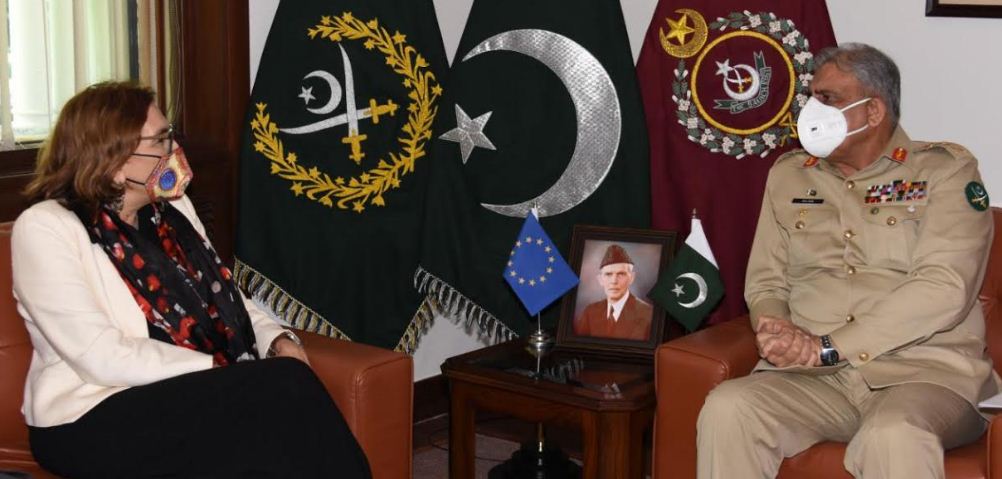
RAWALPINDI, MAY 17 – Androulla Kaminara, Ambassador of European Union called on General Qamar Javed Bajwa, Chief of Army Staff (COAS) at GHQ.

During the meeting matters of mutual interest, regional security situation including recent developments in Afghan Peace Process were discussed.

COAS said that Pakistan values its relations with EU and we earnestly look forward to enhance mutually beneficial multi-domain relations based on common interests.

Visiting dignitary appreciated Pakistan’s sincere efforts for bringing peace and stability in the region, especially the Afghan Peace Process.

Pakistan calls on UNSC to hold Israel accountable for ‘war crimes’

ISLAMABAD, MAY 17 – Pakistan on Monday urged the UN Security Council (UNSC) to immediately initiate steps to hold Israel accountable for its war crimes and crimes against humanity as Israel violated the council resolutions.

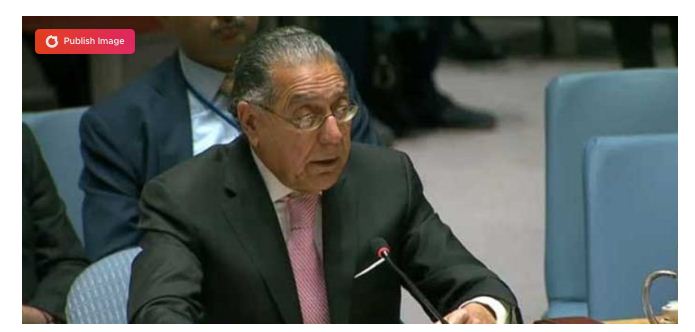
Speaking at the UNSC open debate on the situation in the Middle East, Pakistan’s permanent representative to the UN, Ambassador Munir Akram, welcomed the council open meeting and said the situation in the occupied Palestinian territory and Jerusalem was “extremely grave.”

“In the grim backdrop of the deteriorating situation in the region, we urge the Security Council to fulfill its Charter obligations, to call for an immediate halt to Israel’s use of disproportionate and arbitrary force; to offer protections to the Palestinian civilians who are bearing the brunt of the Israeli attacks,” said Akram.

Akram urged the council to initiate steps to hold Israel accountable for its war crimes and crimes against humanity as Israel violated the council resolutions.

“Pakistan condemns Israel’s use of indiscriminate and disproportionate force, including aerial bombing, resulting in the deaths of nearly 200 Palestinians, including dozens of women and children, as well as the destruction of civilian infrastructure,” he said.

“These Israel’s actions are unacceptable and are in contravention of the norms of international law. They violate UN Security Council and General Assembly resolutions and have grave implications for the maintenance of peace and security in the region and beyond.”

The Pakistani envoy while welcoming the open debate in the UNSC on the current situation in the Middle East also expressed his disappointment over the council for its failure to take action and halt Israeli aggression for so long.

“It is regrettable that despite the daily loss of lives due to Israel’s aggressive actions, the Security Council has failed to demand that Israel halt its indiscriminate and disproportionate use of force against the defenseless and beleaguered Palestinian people in Jerusalem, in the occupied West Bank and in the besieged Gaza,” he said, adding: “It is regrettable that such actions by the Council have been prevented by those who proclaim their strong adherence to the principles of human rights and the international rule of law.”

Akram also urged the council to ask Israel to stop all unilateral and illegal steps, including settlements and attempts to change the status of Jerusalem.

PAKISTANI FOREIGN MINISTER MEETS PALESTINIAN ENVOY

Meanwhile, Pakistan’s Foreign Minister Shah Mahmood Qureshi on Monday has received Ambassador of Palestine Ahmed Jawad A.A. Rabaei at his office in the capital Islamabad and strongly condemned violence by the Israeli forces “against innocent worshippers at Al-Aqsa Mosque” during the holy month of Ramadan.

In a statement, issued by the Foreign Ministry, Qureshi conveyed his deepest sorrow and condolences for the innocent victims of lethal attacks by the Israeli Defense Forces (IDF) in Gaza and the West Bank.

“He (Qureshi) categorically condemned IDF’s continuous and indiscriminate attacks that had resulted in the martyrdom of more than 140 Palestinians, including 39 children, and 22 women, and injured more than 1,000,” the statement added.

Qureshi also briefed Rabaei over his outreach to foreign ministers of important regional partners and reassured him of his country’s ongoing efforts.

The Palestinian ambassador expressed his gratitude for Pakistan’s unwavering support and steadfast policy on Palestine and apprised Qureshi about the latest situation on the ground, which was already dreadful due to COVID-19, and the ensuing humanitarian suffering.

CHAIRMAN NAB FOR TRANSPARENT, MERIT BASED PROBE OF RAWALPINDI RING ROAD PROJECT

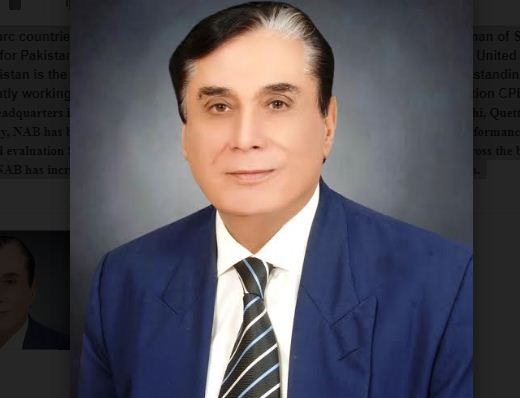
ISLAMABAD, MAY 17 (DNA) – Justice (RETD) Javed Iqbal, Chairman NAB has directed DG NAB Rawalpindi to conduct transparent, merit based and indiscriminate probe of Rawalpindi Ring Road project in which billion of rupee corruption, irregularities  and illegal land acquisition has been reported.

Taking notice of the scam, the Chairman NAB has directed NAB Rawalpindi to cover all aspects of the project in the probe so that responsibility could be fixed against all those who are allegedly involved in corruption and corrupt practices and culprits may be brought to justice as per law.

Chairman NAB said that NAB’s faith is corruption free Pakistan. NAB is strictly adhered to the accountability for all policy.

He said that the bureau has concrete evidence of billion of rupees money laundering, fake bank accounts, assets beyond means, looting national exchequer by abuse of authority, and looting billion of rupees in illegal and fake housing societies cases.

NAB has recovered record Rs. 490 billion directly or indirectly from corrupt elements in the last three years. While the bureau had recovered whopping Rs. 790 billion since its inception.

NAB has no affiliation with any political party, group or individual, but state of Pakistan. NAB is determined to take the cases of those who looted billion of rupees of this nation to logical conclusion as per law.=DNA

==================

Working 55 hours a week increases risk of death: UN

Working more than 55 hours a week increases the risk of death from heart disease and stroke, according to a United Nations study out Monday.

The report by the UN’s World Health Organization and International Labor Organization agencies comes as the Covid-19 pandemic accelerates workplace changes that could reinforce the tendency to work longer hours.

The WHO-ILO study, published in the journal Environment International, is the first global analysis of the risks to life and health associated with working long hours.

It does not focus on the pandemic but on the preceding years. The authors synthesised data from dozens of studies involving hundreds of thousands of participants.

“Working 55 hours or more per week is a serious health hazard,” said Maria Neira, director of the WHO’s environment, climate change and health department.

“It’s time that we all — governments, employers, and employees — wake up to the fact that long working hours can lead to premature death.”

The study concluded that working 55 hours or more per week was associated with an estimated 35% increase in the risk of suffering a stroke, and a 17% rise in the risk of dying from ischemic heart disease, compared to working 35 to 40 hours.

Pandemic increased working hours

The WHO and the ILO estimated that in 2016, 398,000 people died from a stroke and 347,000 from heart disease after working at least 55 hours per week.

Between 2000 and 2016, the number of deaths due to heart disease linked to long working hours increased by 42%, while the figure for strokes went up by 19%.

Most of the recorded deaths were among people aged 60 to 79, who had worked 55 hours or more per week when they were between 45 and 74 years old.

“With working long hours now known to be responsible for about one-third of the total estimated work-related burden of disease, it is established as the risk factor with the largest occupational disease burden,” the WHO said.

The organisation also said that the coronavirus crisis was speeding up developments that could feed the trend towards increased working time.

“The Covid-19 pandemic has significantly changed the way many people work,” said WHO director-general Dr Tedros Adhanom Ghebreyesus.

“Teleworking has become the norm in many industries, often blurring the boundaries between home and work. In addition, many businesses have been forced to scale back or shut down operations to save money, and people who are still on the payroll end up working longer hours.

“No job is worth the risk of stroke or heart disease. Governments, employers and workers need to work together to agree on limits to protect the health of workers.”

“CRYPTO CURRENCY AS AN ECONOMY BOOSTER FOR PAKISTAN”

Qurat-Ul-Ain Fasih

Digital money is an advanced resource that is made and moved with the assistance of cryptographic strategies for the most part dependent on block chain. Coins are delivered in advanced structure as per certain numerical computations. Consequently, advanced monetary standards can be perceived as ones that have no actual structure however the term ‘cryptographic money’ had been basically utilized in 2011 in the ‘Forbes’ magazine.

Headway of innovation isn’t just improving the way of life of individual, yet it is likewise advancing the monetary framework. Cryptographic money is the cash arrangement of computerized time which give shared, decentralized arrangement of economy. It may not replace the fiat money, yet it will change the communication of web associated worldwide market. The obscurity given by cryptographic money is the significant obstacle looked by legitimate experts for its guideline. State Bank of Pakistan forced restriction on crypto currency and Federal Investigation Agency acted against digital currency client. A computerized money framework won’t just influence the monetary arrangement of a general public, however it likewise impacts the social way of life, thinking and business arrangement of a general public. By authorizing digital money in Pakistan its belongings would be extraordinary. It will change the network protection framework give computerized mindfulness and business arrangement of Pakistan.

Numerous individuals in Pakistan search about different crypto currency and how they can get it. For example initially individuals search about how to purchase Bit coin in Pakistan they look for changed computerized monetary standards wallets and above all they get some information about how they can exchange for these crypto currency in Pakistan. There is just one trade which is working in Pakistan and individuals can utilize it to purchase crypto currency like Bitcoin in Pakistan. Localbitcoins.com is the solitary stage where you can purchase and sell bitcoins in Pakistan. To exchange bitcoins utilizing localbitcoins.com you need to make a record on their site.

As mindfulness spreads about bitcoin, it has cleared its way into Pakistan too. Individuals here in Pakistan are utilizing bitcoins differently, for example, getting it online just as building mining rigs. Using crypto currency can bring lots of opportunities in Pakistan.

Pakistan comes at the 3rd number when it comes to freelancing a worldwide local area of in excess of 20 million consultants. Pakistan’s future in this area looks quite bright without a doubt. By utilizing bitcoins in outsourcing it would bring down the expenses and furthermore increment their pay by 2 to 5 percent. So being a high settlement market, an expected independent industry and membership to very good quality web broadband administrations, bitcoin can track down a home market in Pakistan. By authorizing crypto currency in Pakistan global exchange of cash will be significantly simpler and it won’t need any administrations of outsider. It will likewise emphatically influence our picture in worldwide market that we are not hesitant to acknowledge new innovation and will make Pakistan free of any outsider assistance. As an Islamic Republic of Pakistan, the Islamic guidelines and points of view have incredible significance in our approach making and way of life. A few groups should think about its acknowledgment in the light of Islamic law. Concerning of crypto currency Islamic standards think about it as exchanging gold. All things considered “Halal” to purchase gold and sell it after some time when the cost of gold increases and get benefit. Also, the crypto currency is a resource which is purchased by an individual and saved it for some time and stands by until its cost increase and offers it to get benefit. The biggest advantage of computerized cash is that every single monetary exchange is monitored and the specialists may follow who pays cash to whom and for what reason. Government workplaces can likewise use the computerized money for making installments among various services, by the government to organizations and by the governments to nearby and region organizations and other government offices. The digital money would generally profit Pakistan regarding expanding coordination among financial and monetary approaches adding that the electronic cash would likewise assist the country with pulling in new unfamiliar ventures. The record guarantees that all exchanges between “digital wallets” can ascertain a precise equilibrium. All exchanges are checked to ensure that the coins utilized are possessed by the current spender. This public record is additionally referred to as an “exchange block chain”. Block chain innovation guarantees secure advanced exchanges through encryption that make the element practically unhackable and of misrepresentation. With security like this block chain innovation is ready to affect virtually every section of our life.

Very much like each innovation crypto currency have passed early reception stage. It is received globally and developing with time and develop enough to embrace it. Cryptographic money likewise carries different advances with itself i.e., block chain and it is a development innovation which offer different types of assistance. It gives possible answer for numerous monetary issues looked by Pakistan. In the event that it is embraced in current age than it will be not difficult to refresh our framework with time however after some time, we will require help from outer

sources to refresh our computerized framework. It will likewise open the gateway of advancement in field of digital system. It might likewise support the new companies and assist Pakistan with making its own Silicon Valley.

The writer is student at SZABIST ISLAMABAD

REUNION WITH KSA: EFFORTS OFF THE MARK

Dr M Ali Hamza

Under the Pan-Islamic ideology, Pakistan has always shouldered KSA (Kingdom of Saudi Arabia) as guardian against any external threat. Therefore, since the 1970s, Pakistani soldiers have been stationed in Saudi Arabia to protect the Kingdom.During the Iran–Iraq War in 1980’s around 20,000 Pakistani soldiers were stationed in the kingdom.Fighter Pilots of the Pakistan Air Force flew aircraft of the Royal Saudi Air Force to repel an incursion from South Yemen in 1969 and Pakistan Army Corps of Engineers built Saudi fortifications along its border with Yemen.

In 1979, during the siege of Mecca, Pakistani SSG commandos carried out the operation to rescue the pilgrims and captured the insurgents.  Saudi Arabia is the largest importer of Pakistani arms, and has purchased small and medium conventional weaponry worth millions of US Dollars. In 2016, Pakistan Ordnance Factories (POF) has secured export order worth 81 million US$ to Saudi Arabia. Moreover since 2017 GenralRaheel Sharif (Ex- Pakistan Army Chief) is the first supreme commander of Islamic Military Counter Terrorism Coalition, also known as Muslims’ NATO. There are reportedly around70,000 Pakistani servicemen serving in the Military of Saudi Arabia.Though our bilateral relations have been historically close and friendly, even when KSA kept building business deals with India and we kept floating away from Iran.

Apparently we have commercial, cultural, political, and strategic relations with KSA since the establishment of Pakistan in 1947, but our religious ties seem to be of utmost importance, therefore KSA has generously infused its finances into our Mudrasas (schools of theological teaching), and extended gifts in form of mosques.

It is to be noted that Saudi Arabia and Pakistan are leading members of the Organization of Islamic Cooperation (OIC);however Saudi Arabia is one of the strongest supporters of India during Pakistan’s wars with India, especially in the creation of Bangladesh from Pakistan’s eastern wing in 1971.Moreover Saudi Arabia supports India’s stance on the Kashmir conflict, and opposes the Pakistan’s position in the Indo-Pakistan peace process.

In a recent history; August 2019, when IOK’s special autonomous status was challenged and Narendra Modi passed a bill revoking Article 370 of the constitution and Indian occupied Jammu and Kashmir lost its freedom to design and enact its own laws regarding foreign affairs, defense, finance, and communications: a harsh downgrade from a state to a union territory.

Pakistan condemned the move and folded its relations; removing ambassador and stopping trade. Pakistan also brought the matter to the OIC which represents 57 Muslim-majority countries around the world; dominantly manipulated by Arab countries. In the same month of 2019, Pakistan categorically asked not to invite the then Indian minister of external affairs Ms Sushma Swaraj in the upcoming OIC meeting, to convey the annoyance caused by Indian action. But we witnessed her welcome.

The response of OIC was lukewarm.Besides, Saudi Arabia gave Pakistan a $3 billion loan and a $3.2 billion oil credit facility in late 2018. After Islamabad sought Riyadh’s support over alleged human rights violations by India in the disputed territory of Kashmir, Saudi Arabia has pushed Pakistan to repay the loan.Pakistan returned $1 billion to Saudi Arabia and for a second installment of a $3 billion soft loan Islamabad reached out to Beijing for a commercial loan to help it offset pressure to repay another $1 billion to Riyadh next month.

With the $1 billion flowing out, Pakistan, which has $13.3 billion in central bank foreign reserves, could face a balance of payments issue after clearing the next Saudi installment.In such an upsettingstate of affairs, who helped us? No country from OIC indeed and no Arab billionaire king, rather ‘China has come to our rescue’. And if it is a Chinese debt trap; as many friends of KSA in west propagate it, then who pushed us in the trap? Our very own Prince Salman also known as MBS!.

In early 2019 on his visit, MBS offered India $100bn investment for infrastructure and agrees to help fight extremism and terrorism. In a same visit to the region MBS offered only $20 investment to Pakistan; that has not yet been started flowing.  KSA is a home to more than 2.7 million Indian expatriates; the largest community of expatriates in Saudi Arabia, that never had stress or threat to getexpelled. The kingdom is India’s fourth-largest trading partner, with bilateral trade worth $28bn,supplying 20 percent of its crude oil to India.

Besides all economic and social ties with India KSA was never given an access to inject financial funding for religious schools.Rather senior Indian diplomats are found blaming KSA funding religious schools and organizations that contribute to extremism in South Asia (U.S. diplomatic cable accessed by The Hindu through WikiLeaks in 2009). Point of the matter is to realize who is who by recalling the undeniable historical memory to stop efforts that have well established and proven to go off the mark.

Slope planting technology in China to help Pakistan tea planting

ISLAMABAD, May 17 (DNA): Slope planting technology in China to help Pakistan enhancing its tea production, accoding to a report published by Gwadar Pro.

“The biggest challenges that Pakistan tea industry faces is that the price of fresh tea leaves is too low compared with other countries,” said Dr. Abdul Waheed, Director of National Tea and High-Value Crops Research Institute (NTHRI).

“It takes around 6 to 7 years for tea trees to grow and start its yield. The farmers cannot wait for that long, they need earnings for their daily living. 

Secondly, our farmers have less amount of landholding. They just have 3 to 4 kanals of land. We should increase the price so that the farmers can happily process tea and supply it to our factories.”

thinks that Pakistan should make a special area for tea planting. “All the countries that have grown tea like Kenya, Sri Lanka, Uganda, Brondi or other countries have fixed a special area for tea. In Kenya, they called the army to protect that land. 

They did not let anyone cultivate other crops there other than tea. We have had a meeting on this with the government but haven’t got the final approval is still left. This time, we are introducing a cluster-based system, in which we have 121 clusters.”

“Right now, the tea produced in our country is not enough for the domestic requirement. If we establish a Tea Board, we can use the forest and hilly areas for growing tea.” Naeem Ahmed, Assistant Technical Officer suggested. “Government should get involved in the process of commercialization and makes policies. 

Like in Turkey, they have a state reserved for only growing tea. Due to a large number of cultivation fields, they also get lots of revenue. We also need machinery for tea cultivation.”

“China is a huge country that exports tea and it has more experience. If there can be a collaboration at the government level or some Ministry like Ministry of Agriculture and Food, we can get machinery and experience from them.” 

Naeem believes that cooperation with China can help enhance Pakistan tea production. “People working here should be trained in China so that their work capacity increases. And people from China also should come to Pakistan.”

Chinese technologies in tea production also interest Abdul, especially the slope land agriculture technology. “All of our hilly areas are like a slope. The technology will help us to manage this and allow us to irrigate it. 

If people start planting tea, it will help us de-salt and fertilize the land. The CPEC project passes near our office. I wish that the containers that come from China should return with loads of tea instead of going empty.”=DNA

=======

CHINA TO LAUNCH PAKISTAN AS PILOT COUNTRY FOR HEALTH SILK ROAD

ISLAMABAD, May 17 (DNA): China will invest in human development infrastructure under CPEC by launching Pakistan as a pilot country for the Health Silk Road (HSR), says Pakistan’s Economic Haroon Sharif in an article published by Gwadar Pro.

He recalled in May 24, 2020, Wang Yi, China’s Foreign Minister said China will work with other countries along the Belt and Road to vigorously promote cooperation on the Health Silk Road (HSR) as after the epidemic, the need for cooperation in the field of public health will increase significantly. China’s commitment to BRI projects remained unchanged.

The article added, Chinese President Xi Jinping pledged that a Covid-19 vaccine from China will be made a “global public good”. Following this, the Chinese government also announced that the vaccines will be made available in an equitable manner and at a fair and reasonable price.

Unlike the United States, China has joined COVAX partnership to ensure timely and affordable availability of Covid-19 vaccine to poor countries.

China’s National Biotech Group, a subsidiary of Sinopharm, is conducting third phase trials in several partner countries including Argentina, Bahrain, Egypt, Jordan, Morocco, Pakistan and UAE.

Many of these partner countries have entered in to agreements with China for procurement and local production of Covid-19 vaccines. Pakistan has received over one million vaccines dosages from China so far and more shipments are being procured. It will a major development if China and Pakistan announce joint production of vaccine under CPEC.

While China has already donated Personal Protection Equipment (PPE) and hospital supplies to Pakistan, perhaps the time has come to scale up investments in the healthcare sector through the proposed “Health Silk Road” with CPEC being its pilot corridor. Like in the rest of the world, the current crisis has exposed serious shortcomings in Pakistan’s public healthcare capacities.

There is every possibility that when both China and Pakistan talk about infrastructure during their next Joint Coordination Committee (JCC) meeting, they will discuss hospitals and laboratories along with other ports and highways.

With China’s plans to develop its western regions, Pakistan’s skilled labor force could be a major advantage for both countries. For China, this will be an opportunity to step into a very large healthcare market which could expand to the rest of South and West Asia.

The health sector offers huge and sustainable opportunities with both social and commercial returns in most places.

According to the World Health Organization, Pakistan is ranked 66th amongst the high-burden-of-disease countries. Despite its heavy burden of communicable as well as non-communicable diseases, Pakistan’s expenditure on public health is only 0.91 percent of its Gross Domestic Product.

The country has one doctor for 957 people and one hospital bed for 1,580. The government run hospitals can only cater to 30 percent of population and the private healthcare facilities cover the rest.

China’s investments can help with the capacity of large hospitals, pharmaceutical production, research and distribution pharmacy chains.

There has been a discussion about trickling down benefits of CPEC investments on the livelihoods and wellbeing of people. Health sector initiatives will strengthen and widen the ownership of CPEC as a transformational initiative among general public in Pakistan.

Strategically, it will be a brilliant signal to the western world which has been constantly raising questions about debt trap, environmental impact and lack of transparency in CPEC.

Pakistan’s National Command Operation Centre (NCOC) leads on the country’s Covid-19 response and is chaired by the Planning Minister who is also leading on CPEC.

While NCOC is busy with dealing with the potential spread of the disease, the Ministry of Planning should start work on a major health sector upgradation plan with the help of private sector experts.

This plan should underpin the next meeting of JCC to determine post pandemic priorities for CPEC. A substantial improvement in health indicators of a young population will have a far-reaching impact on productivity enhancement and shared regional prosperity.

Haroon Sharif is currently a visiting fellow at Institute of Development Studies (IDS) at the University of Sussex, UK. He is also a Senior Advisor to the UN on Finance for Development. He remained Pakistan’s Minister of State for Investment in 2018-19 and led the Industrial Cooperation partnership under CPEC.=DNA

==============

Stay Connected

64FansLike
60FollowersFollow

Latest Reviews

Exchange Rates

USD - United States Dollar
EUR
1.14
GBP
1.34
AUD
0.70
CAD
0.71