Home Blog Page 2661

Gold prices rise Rs 800 to Rs 110,100 per tola

KARACHI, JUN 23 (DNA) – The price of 24 karat per tola gold increased by Rs 800 and was sold at Rs110,100 on Wednesday against its sale at Rs109,300 the previous day, Karachi Sarafa and Jewellers Group reported.

The price of 10 gram 24 karat also increased by Rs 686 and was sold at Rs 94,393 against its sale at Rs 93,707 while the prices of 10 gram 22 Karat gold went up to Rs 86,527 against Rs 85,898.

The price of per tola and ten gram silver remained unchanged at Rs1420 and Rs1217.42 respectively. The price of gold in international market remained unchanged at $1785. = DNA

=======================

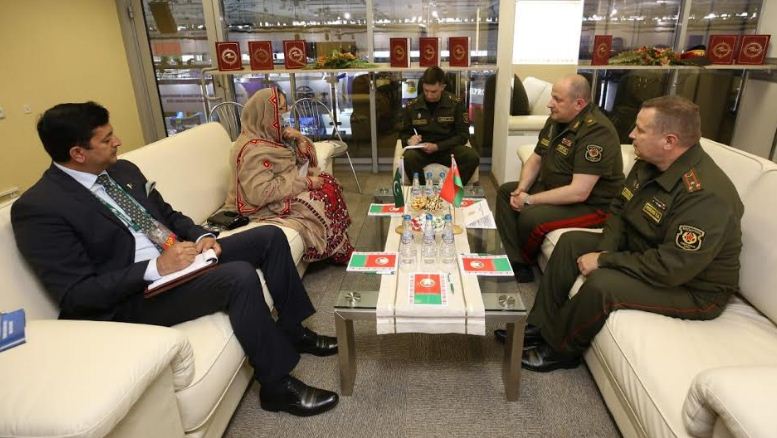
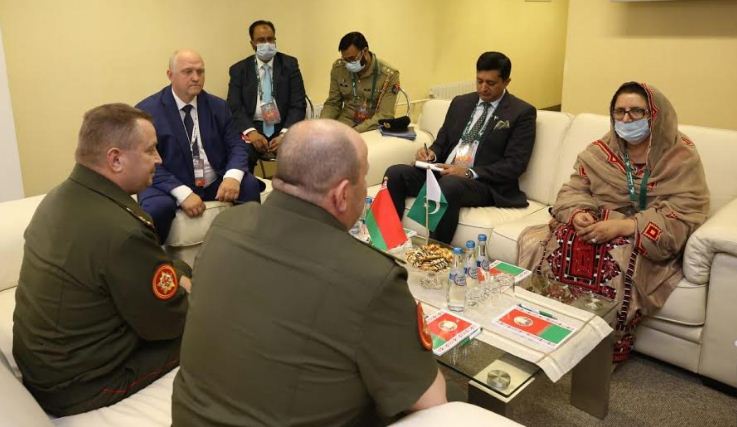
Minister of Defence Production of Pakistan attends MILEX-2021 Exhibition in Minsk

DNA

MINSK, JUN 23 – Zobaida Jalal, Federal Minister for Defence Production of Pakistan attended the opening ceremony of International Defense Technology Expo (MILEX-2021) in Minsk. Ambassador of Pakistan to Belarus Sajjad Haider Khan accompanied the Minister. The event was opened by the Prime Minister of Belarus Mr. Roman Golovchenko, which will continue till 26 June. 

Subsequent to the opening ceremony, the honourbale Minister visited a few stalls in the expo pavilion and received briefings on the displayed products.

She also held bilateral meetings with Mr. Andrei Zhuk, Acting Minister of Defense of the Republic of Belarus and Mr. Anatoli Akaronka, Director General of “Beltechexport” Company at the expo venue. During these interactions, the Minister appreciated the quality of products on display at the exhibition and also expressed Pakistan’s desire to promote mutually beneficial friendly ties with Belarus in all domain including economic, trade and defence sectors.

MILEX 2021 is featuring over 300 samples of cutting-edge weapons, military hardware, and special hardware of Belarusian make alone. As many as 177 of them are showcased for the first time while eighty-eight products are upgraded versions.

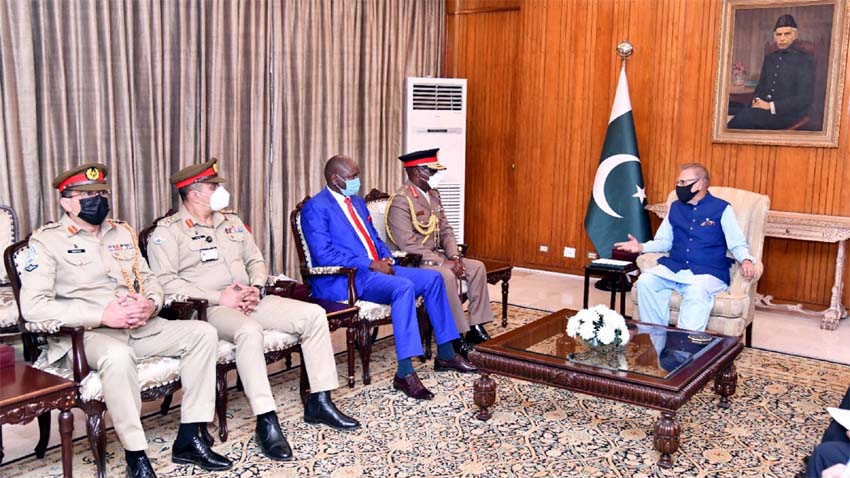
Pakistan highly values its relations with Kenya: President

ISLAMABAD: President Dr Arif Alvi says Pakistan highly values its relations with Kenya and wants to further enhance bilateral cooperation in the areas of trade, economy and defence for the mutual benefit of two countries.

He was talking to Chief of Defence Forces of Kenya, General Robert Kariuki Kibochi in Islamabad today (Wednesday).

Dr Arif Alvi underlined the need for enhanced engagements at high political and military levels to further boost mutual cooperation.

The President said under Pakistan’s ”Look Africa Policy”, Kenya is deemed as an important East-African country.

He desired to develop close relations with Kenya in different fields.

Dr Arif Alvi said Pakistan’s contribution towards African stability is exemplary as Pakistan Army is the highest contributor of troops in UN Missions for Africa.

General Robert Kariuki Kibochi appreciated the capability of defence industry of Pakistan and professionalism of Pakistan’s Armed Forces, particularly their role in maintaining peace and security in Africa.

He underscored the need for increasing cooperation in the area of military training and called for increasing in the field of defense.

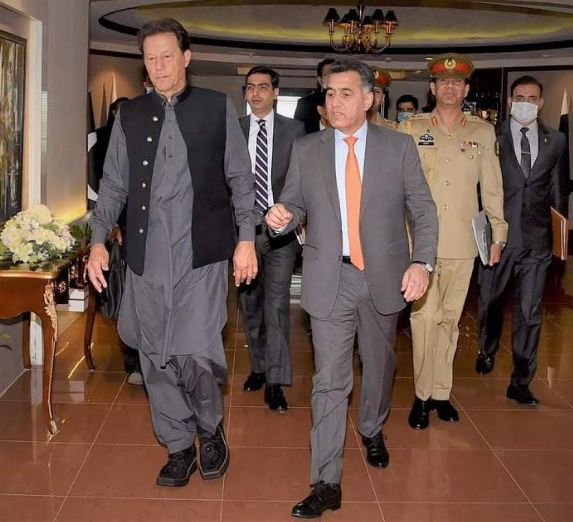
PM Imran chairs NICC meeting at ISI Secretariat

DNA

ISLAMABAD, JUN 23 – A special meeting of recently established “National Intelligence Coordination Committee” was chaired by Prime Minister Imran Khan at Inter Services Intelligence Secretariat Islamabad.

Lieutenant General Faiz Hamid, Director General Inter Services Intelligence welcomed the Prime Minister and Federal Ministers. National Intelligence Coordination Committee, “a platform for Intelligence Coordination/ Cooperation for unified and wholesome National Intelligence Assessment was notified by Government on 22 January 2021”. 

Meeting was attended by Mr Sheikh Rasheed Ahmed, Interior Minister, Mr Fawad Chaudhary, Minister of Information and Broadcasting, Heads of Services’ Intelligence Agencies, Intelligence Bureau and Federal Investigation Agency.

 A comprehensive briefing followed by discussion on enhanced intelligence cooperation was held. Prime Minister appreciated the ongoing efforts and expressed satisfaction over the performance of National Intelligence Coordination Committee.

British-Palestinian delegation meets Pakistan High Commissioner in London

DNA

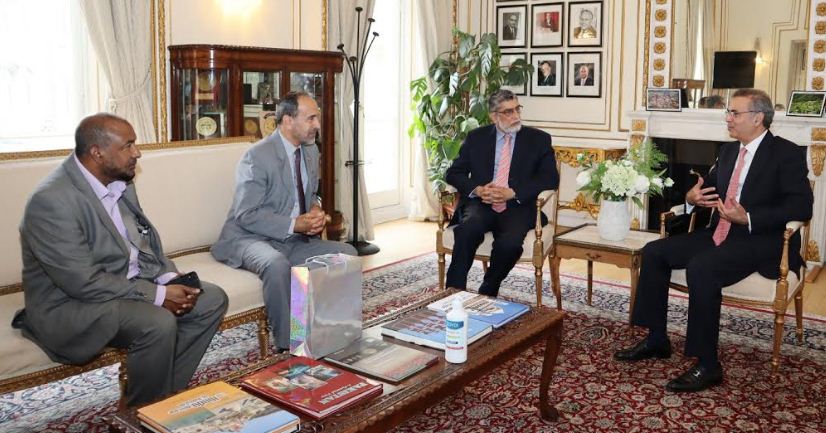
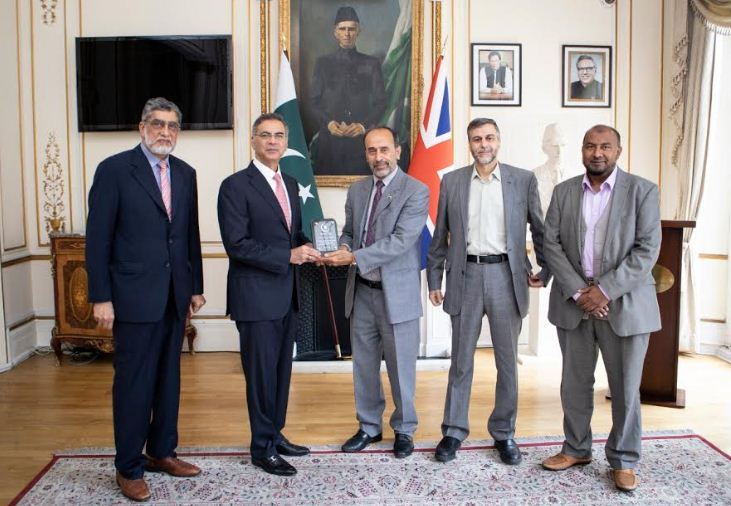
LONDON, JUN 23 – High Commissioner Moazzam Ahmad Khan received a delegation of the leaders of British-Palestinian/Muslim communities, led by Mr. Zaher Birawi at the High Commission on 22 June 2021.

On behalf of the Palestinian Forum in Britain, the delegation expressed its gratitude to the leadership, government and people of Pakistan for their principled stance and support to the cause of Palestine, and stated that Pakistan’s unwavering commitment to the Palestinian issue was greatly appreciated.

The High Commissioner reaffirmed Pakistan’s long-standing position that an independent, viable and contiguous Palestinian State, with pre-1967 borders and Al-Quds Al-Sharif as its capital, was the only just, comprehensive and lasting solution of the Palestine issue.

He reiterated Pakistan’s commitment to continue to stand in solidarity with its Palestinian brethren until the fruition of their just struggle. 

Pension regime needs comprehensive reforms: Report

DNA

Islamabad: Additional Secretary Finance, Government of Khyber Pakhtunkhwa,Safeer Ahmed, has said that Khyber Pakhtunkwa is the first province to revise the retirement age to properly manage pension liabilities.

The provincial government in this regard has introduced a contributory scheme for new employees to address the growing pension expenditure. He said this while addressing the launching ceremony of a report on ’Government pensions and future fiscal sustainability,’ organized by Sustainable Development Policy Institute (SDPI), in collaboration with Sustainable Energy and Economic Development (SEED) here on Wednesday.

Safeer Ahmed said that the future plans are in the pipeline for remaining employees to include an amount from their basic pay towards pensions. This is also in line with the practice in other countries.

Team Lead SEED Programme in Khyber Pakhtunkhwa, Hassan Khawar, was of the view that with the current growth rate of pensions and salaries payments, the government will run out of finance to carry out development expenditures in near future.

“All the provinces in Pakistan have unfunded pension liabilities while the world is managing pensions through contributory pension system,”  Khawar added saying that the transition towards defined contribution, however, is a difficult process. KP has taken the lead to change the pension rules and is also increasing pension for widows. From July onward, new employees will be engaged in defined contributory pension model, he concluded.

Dr Vaqar Ahmed, Joint Executive Director SDPI, presented a detailed note of the report furnished by SDPI and SEED and said that it is focusing on how public sector pension expenditures are endangering fiscal sustainability of the Government of Khyber Pakhtunkhwa while all the provinces are facing the same dilemma.

He explained that fiscal space available to the Government of Khyber Pakhtunkhwa for financing public investment is decreasing due to increasing pension liabilities that are large and unsustainable. He said that provincial tax revenues are not enough to fill the gap emerging from the decrease in federal transfers to the Government of Khyber Pakhtunkhwa.  Moreover, the provincial government is taking effective steps to address the growing pension liabilities which include extending the minimum age for superannuation & early retirement; actuarial assessments to quantify current and future liabilities, automation of pension records and introducing the contributory pension programme for new employees.

The report recommended that through earmarking assets and transferring their return into a pension fund, having independent law to govern all aspects of the pension system, indexing of the pensions to revenue growth, giving an option to government employees to accept immediate partial payments in lieu of full future benefits, and simplification of the pension structure to reduce administrative costs would be some key steps to relieve fiscal pressures on the provincial government.

Aquil Raza Khoja, Member, Federal Pay and Pension Commission, appreciated the suggestions presented in the report and said that the effort could lead to a comprehensive financial pension reform effort across the country.

No justification to keep Pak in FATF grey list after compliance of 26 points

ISLAMABAD, JUN 23 (DNA) – Foreign Minister Shah Mahmood Qureshi on Wednesday said as Pakistan had fulfilled 26 out of 27 action items of the Financial Action Task Force (FATF), there was no justification to keep the country in the grey list.

The foreign minister in a statement mentioned that Pakistan had fulfilled maximum technical requirements regarding FATF. The five-day virtual meeting of the FATF began on June 21 in Paris, France and will public its findings on June 25.

Qureshi said India was making attempts to misuse the forum of FATF for political purposes and doing continuous propaganda against Pakistan. He said Pakistan took concrete steps to curb money-laundering and terrorist financing in national interest.

He pointed out that Pakistan “inherited” the problem of FATF Grey-listing from the previous government. However, he said, the government of Prime Minister Imran Khan did its best to get Pakistan out of the Grey list.

The foreign minister said the world was acknowledging Pakistan’s efforts in implementation of the FATF Action Plan. The steps taken by Pakistan included promulgation of strict laws against money laundering, and freezing the assets and filing of cases against banned organizations.

Resultantly, the Asia Pacific Group on Money Laundering improved Pakistan’s rating against money laundering and terror financing. Also, the Pakistan European Union Joint Commission welcomed Pakistan’s progress in implementation of FATF points.

The FATF is being employed by some of its member countries as a political coercion tool against Pakistan. Despite solid evidence of money laundering and terrorist funding being rampant in countries like India and Afghanistan, they are being spared due to political reasons.

The experts believe that due to geopolitical interests of FATF member countries, the platform is ignoring India’s money laundering activities including its expansive illegal money laundering network in the form of “hawala”.

Several Indian companies have been providing material support to ISIS, as per the UK-based Conflict Armament Research. According to the United State government’s Financial Crimes Enforcement Network (FinCEN), the Indian state-owned banks are involved in money laundering and financing acts of terrorism.

The situation at present demands from the international bodies such as the United Nation to look into misuse of the FATF platform and take India into account for money laundering and terror financing besides manipulating the FATF against Pakistan. = DNA

=======================

Turkey praises Pak army positive role for regional peace and stability

DNA

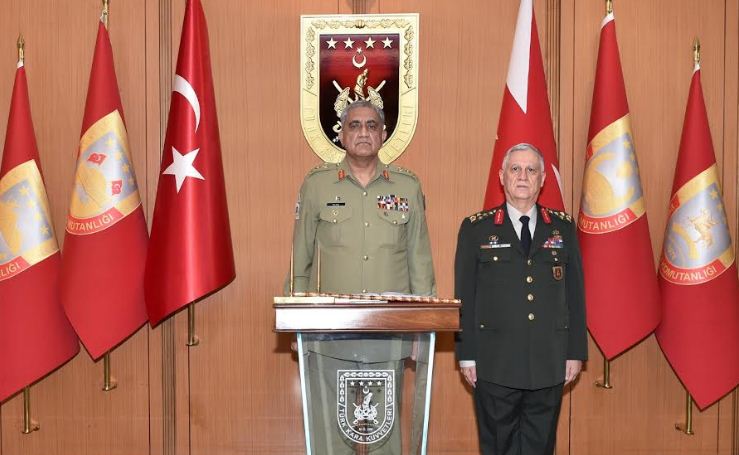
ANKARA – General Qamar Javed Bajwa, Chief of Army Staff (COAS) on a day long official visit to the Republic of Turkey called on General Hulusi Akar (Retired), Minister of National Defence of the Republic of Turkey, wherein General Yasar Guler, Commander Turkish General Staff and His Excellency General Umit Dundar, Commander of the Turkish Land Forces were also present.

During the meeting, matters of mutual interests, regional security situation including recent developments in Afghan Peace Process and bilateral defence and security cooperation in various fields were discussed.

COAS acknowledged the Turkish engagements with Pakistan especially the ongoing efforts for continuing the positivity for peace in the region. He also reiterated that Turkey is one of the key Muslim countries in the region and that enhanced Pakistan-Turkey cooperation will have positive impact on regional peace and stability.

The dignitaries appreciated Pakistan’s positive role for regional peace and stability, especially the Afghan peace process and pledged to continue working for better relations between two brotherly countries. Earlier on arrival, COAS was also presented with a Guard of Honour by a smartly turned out military contingent.

NSA Dr. Moeed attends SCO meeting in Dushanbe

DNA

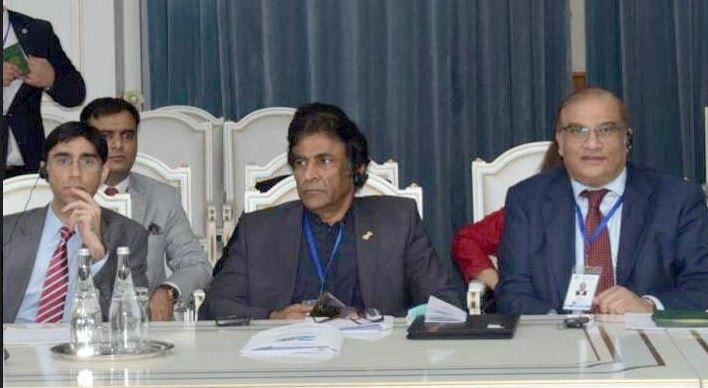
Dushanbe, JUN 23 – National Security Advisor, Dr. Moeed Yusuf attended the 16th meeting of the National Security Advisers of the Shanghai Cooperation Organization held from 22-23 June 2021 at Dushanbe.

Member states, which include Pakistan and India, issued a joint protocol signed by all the NSAs at the of the meeting.

In his formal statement at the summit, Dr. Yusuf said that Pakistan’s main priority of generating greater economic activity, and reducing un-employment  and poverty alleviation were completely in sync with the SCO’s direction. He apprised  them about Pakistan’s success in fighting Covid 19 pandemic. He stressed the need to counter pandemic’s negative economic impact and highlighted Prime Minister Imran Khan’s efforts to champion the Global Initiative for Debt Relief.

Dr. Yusuf said that the vision of the transformed Pakistan was centered on economic security, adding that the country’s emphasis had shifted from geo-politics to geo-economics.

Dr. Moeed said that failure to attain peace in Afghanistan was the most immediate challenge facing SCO today. As a country historically most affected by developments within Afghanistan, Pakistan is fully committed to supporting a stable, peaceful, sovereign, and united Afghanistan at peace with itself and with the neighbors. “It is our firm view that a negotiated political settlement that is Afghan led and Afghan owned is the only way to achieve this desired outcome”, he added. He cautioned against spoilers, both within and outside Afghanistan, adding that unfortunately, not everyone in the region who professes to prefer peace in Afghanistan does so in reality. He added that Pakistan cannot allow Afghan soil to be used against it.

Dr. Yusuf said that Pakistan condemns terrorism in all its forms and manifestations, including state terrorism against people under illegal occupation. Pakistan has been a victim of terrorism planned, supported and sponsored from across our borders which unfortunately remains a reality even today and has at its roots actors who may present themselves as advocates of global cooperation against terrorism but in reality perpetuate it to create instability in our country and the region, he added. “Terrorism cannot and should not be associated with any race, religion, nationality, civilization or ethnic group”, he further said.

The NSA said that Pakistan does not wish to be part of any camp politics or geopolitical confrontation. “Pakistan’s vision for itself was that of a melting pot for positive global interests”, he stated

Dr. Yusuf also informed his counterparts about Pakistan’s efforts in the area of Climate Change. He said that Pakistan was a low carbon emitting country but one of the most vulnerable to climate change. “Prime Imran Khan has made Climate Change his top priority and has emerged as one of the leaders of the Global South on environment”, he added.

Earlier in the day, the NSA held an important bilateral meeting with his Russian counterpart, Secretary of the Security Council of the Russian Federation, Mr. Nikolai Platonovich extended a special invitation to Dr. Yusuf to hold a full scale bilateral NSAs dialogue. During the meeting, the two discussed issues of mutual interest and expressed satisfaction on the progress of Pakistan-Russia bilateral relations, while sharing serious concern about the evolving situation in Afghanistan.


IMPACT OF CLIMATE CHANGE ON COASTAL AREAS OF SINDH IS GRAVE, SAY CLIMATE EXPERTS

DNA

Islamabad: How the climate change is threating the coastal belt of Sindh was the subject under discussion in the webinar organized by the Institute of Regional Studies, Islamabad in collaboration with the Centre of Coastal & Deltaic Studies (CCD), Thatta, and Centre for Environmental Sciences (CES), Jamshoro of University of Sindh.

In his opening remarks President IRS Ambassador Nadeem Riyaz stressed the need to rationalize our approach to deal effectively with the climate challenge so that we could minimize the harmful impacts of environmental changes particularly in the coastal areas of Sindh.

Ms. Aisha Khan, CEO, Civil Society Coalition for Climate Change (CSCCC), has called for a greater understanding of climate change vulnerabilities and their impact on coastal areas. While highlighting the causes of increasing coastal vulnerabilities, she underscored hydrological changes due to global warming as well as the changes in atmospheric pressure that resulted in frequent storms and cyclones, as the leading cause of rapid degradation of coastal belts. The situation is alarming as 10 percent of total population of Sindh is living in the vicinity of coastal areas along with heavy presence of industry that is around 40 percent, said Ms. Khan. Sindh’s coastal areas are more prone to cyclones as compared to Baluchistan, she added. She called for a holistic strategic plan that must include costal land reforms along with other important elements of coastal resilience such as increasing community capacity, and preserving nature. 

Dr. Mukhtar Ahmed Mahar, Director at CCD was of the view that climate change has brought a significant change in the coastline morphology of Sindh’s coastal belts. Dr. Mahar added that reduction in sediments, wave activity, rise in the sea level, pollution & over exploitation of coastal resources and wind erosions were causing rapid degeneration of Deltas. He cautioned further decrease in agricultural activities, livestock and fisheries due to increase in sea intrusions which he said would ultimately impact upon the livelihood of the people living in and around the coastal belts. He urged scientific intervention, and enhanced collaboration between the stakeholders to mitigate the adverse of effect of climate change.

Dr. Amanullah, Asst. Professor at CES, apprised the audience that increased in the use of fossil fuels, and the deforestation was primarily causing the environmental changes in Pakistan. Though, country’s share in the rising global greenhouse gas emissions is minimal yet its impact is extremely consequential, he added. Sea intrusions, cyclones and coastal pollution were also echoed by Dr. Amanullah as the leading cause of coastal degradation along with the reduction in environmental flows, and exploitation of coastal resources. In his closing remarks, Dr. Amanullah called for strict compliance of national climate change policy introduced in the year 2012. Also, urged government, and NGOs to join hands for rehabilitation of ‘environmental refugees in Pakistan.

Stay Connected

64FansLike
60FollowersFollow

Latest Reviews

Exchange Rates

USD - United States Dollar
EUR
1.14
GBP
1.34
AUD
0.70
CAD
0.71