Home Blog Page 2594

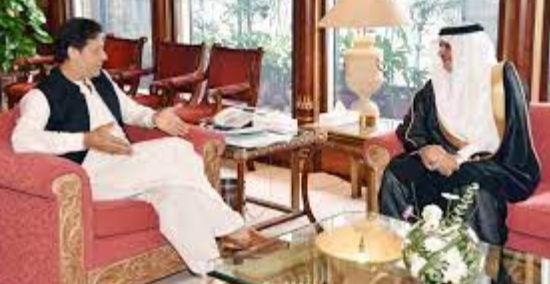
SAUDI ENVOY MEETS PM IMRAN KHAN

ISLAMABAD, JUL 30 –DNA- The Ambassador of the Kingdom of Saudi Arabia, H.E. Nawaf bin Saeed Ahmad Al-Malkiy, called on Prime Minister Imran Khan.

The Saudi Ambassador presented a formal invitation to the Prime Minister, extended by His Royal Highness Crown Prince Mohammed bin Salman, for participation in a Summit focusing on the “Middle East Green Initiative” to be hosted by the Kingdom in October 2021. The Prime Minister graciously accepted the invitation.

It may be recalled that the initiatives of the Saudi Crown Prince, announced earlier this year, align closely with the Prime Minister’s climate change initiatives – “Clean and Green Pakistan” and “10 Billion Tree Tsunami”.

Pakistan and Saudi Arabia are also collaborating closely to develop synergies in their climate-change related strategies.

The invitation extended to the Prime Minister is an acknowledgement of Pakistan’s leading role in combating climate change.

AMBASSADOR JANJUA HOLDS VIRTUAL KHULI KATCHERY FOR DIASPORA IN BELGIUM

ISLAMABAD: Ambassador of Pakistan to the European Union, Belgium, and Luxembourg, Zaheer A. Janjua, held the 7th monthly Khuli Katchery in a virtual format with Pakistani Diaspora in Belgium and Luxembourg on Thursday.

Speaking on the occasion, Ambassador Janjua highlighted that a group of 5 Belgian climbers are undertaking a mountaineering expedition in Pakistan, with the facilitation of the Embassy.

He conveyed his felicitation to the Belgian climbers on successful ascent of K2 and Broad Peak, the world’s 2nd and 12th highest peaks, respectively.

The Ambassador announced that due to relaxation of COVID-19 restrictions by the local authorities, the Independence Day ceremony on 14th August will be held physically at the Chancery.

He said that the ceremony can be attended by all Pakistanis living in Belgium and Luxembourg by registration.

Referring to the recent devastating floods in Belgium and Luxembourg which caused severe damage to the lives and livelihoods of the people, Ambassador Janjua offered his condolences to the victims.

He encouraged the Pakistani community members to assist the flood-affected people in their time of hardship.

Ambassador Janjua also briefed the Diaspora about the facilities being provided by Government of Pakistan for overseas Pakistanis including Vehicle Gift Scheme.

He invited qualified overseas Pakistanis to apply for various high-level professional vacancies that are available in various institutions of the country.

The Khuli Katchery was organized in line with the vision of Prime Minister Imran Khan, to maintain close engagement with the Pakistani Diaspora and to extend seamless service delivery.

The virtual interaction was attended by a large number of Diaspora members from different walks of life, including students, business, social services, and media.

The community members appreciated the Embassy’s outreach efforts and provision of efficient consular services.

MOROCCAN KING’S LANDMARK STEPS TO HELP THE LEAST DEVELOPED COUNTRIES

Morocco’s solidarity cooperation with LDCs is structured by bilateral or triangular conventions in various fields, such as agriculture, fishing, health, drinking water and energy, which are translated into practical cooperation and sharing of Moroccan expertise through technical assistance

RABAT: His Majesty King Mohammed VI has, since His Enthronement, made the Kingdom’s active solidarity in favor of the least developed countries (LDCs), a central axis of his African policy. This commitment has found a new concrete translation in the context of the health crisis. The initiative of the Sovereign to deliver aid in medicines and equipment, protection and prevention products to some twenty African countries has greatly benefited the fraternal countries of the Continent which are part of the LDCs.

Morocco’s solidarity cooperation with LDCs is structured by bilateral or triangular conventions in various fields, such as agriculture, fishing, health, drinking water and energy, which are translated into practical cooperation and sharing of Moroccan expertise through technical assistance.https://googleads.g.doubleclick.net/pagead/ads?client=ca-pub-7078513716629609&output=html&h=280&adk=1604791696&adf=1738859770&pi=t.aa~a.2356292401~i.10~rp.4&w=696&fwrn=4&fwrnh=100&lmt=1627641114&num_ads=1&rafmt=1&armr=3&sem=mc&pwprc=2527759049&psa=1&ad_type=text_image&format=696×280&url=https%3A%2F%2Fislamabadpost.com.pk%2Fmoroccan-kings-landmark-steps-to-help-the-least-developed-countries%2F&flash=0&fwr=0&pra=3&rh=174&rw=696&rpe=1&resp_fmts=3&wgl=1&fa=27&uach=WyJXaW5kb3dzIiwiNi4xIiwieDg2IiwiIiwiOTIuMC40NTE1LjEwNyIsW10sbnVsbCxudWxsLG51bGxd&tt_state=W3siaXNzdWVyT3JpZ2luIjoiaHR0cHM6Ly9hdHRlc3RhdGlvbi5hbmRyb2lkLmNvbSIsInN0YXRlIjo3fV0.&dt=1627641114260&bpp=8&bdt=3313&idt=-M&shv=r20210728&mjsv=m202107290101&ptt=9&saldr=aa&abxe=1&cookie=ID%3D2cab8dd1d7a97507-2251d758ada700c6%3AT%3D1619371132%3ART%3D1619371132%3AS%3DALNI_MbCWjL6fpbAI7C_Q4Gb9OcZB0P5kA&prev_fmts=0x0&nras=2&correlator=7553422164450&frm=20&pv=1&ga_vid=2056182510.1627641113&ga_sid=1627641113&ga_hid=1979912858&ga_fc=0&u_tz=300&u_his=6&u_java=0&u_h=768&u_w=1366&u_ah=728&u_aw=1366&u_cd=24&u_nplug=3&u_nmime=4&adx=141&ady=1470&biw=1349&bih=657&scr_x=0&scr_y=0&eid=42530672%2C21066429%2C20211866%2C21067496&oid=2&pvsid=1839962623263727&pem=180&eae=0&fc=1408&brdim=0%2C0%2C0%2C0%2C1366%2C0%2C1366%2C728%2C1366%2C657&vis=1&rsz=%7C%7Cs%7C&abl=NS&fu=128&bc=31&ifi=2&uci=a!2&btvi=1&fsb=1&xpc=On2f7WDSnX&p=https%3A//islamabadpost.com.pk&dtd=131

This cooperation is also supported by several concrete initiatives, including in particular the cancellation of the debt of the least developed African countries, access to the Moroccan market for products from certain African LDCs without customs duties, the granting of scholarships, the implementation of infrastructure projects, particularly in the education, health and water sectors, and the establishment of a migration policy that has made it possible to regularize the situation of around 50,000 nationals of fraternal African countries, since 2014.

This solidarity-based cooperation is also being deployed through Morocco’s regional and international initiatives in the area of climate change, as an example the operationalization of the three Climate Commissions, launched by His Majesty the King on the occasion of the African Action Summit, organized by Morocco in 2016, on the sidelines of COP-22 and the “Triple A” Initiative for the Adaptation of African Agriculture.

The “Triple S” Initiative to promote Sustainability, Stability and Security in Africa and the Universal Access to Sustainable Energy Initiative and the Climate Hub for African Youth, launched on the occasion of the 2019 Climate Action Summit.

It is with this plural, united and dynamic vision that Morocco works tirelessly to use its experience and know-how for the promotion of cooperation with the LDCs The Kingdom will continue its action through a commitment to remain in line with the strategy of cooperation and partnership with the LDCs, in particular within the framework of the new Doha process, which promises solidarity and concrete action for the achievement of sustainable development for all Least Developed Countries.https://googleads.g.doubleclick.net/pagead/ads?client=ca-pub-7078513716629609&output=html&h=280&adk=1604791696&adf=3520249379&pi=t.aa~a.2356292401~i.18~rp.4&w=696&fwrn=4&fwrnh=100&lmt=1627641114&num_ads=1&rafmt=1&armr=3&sem=mc&pwprc=2527759049&psa=1&ad_type=text_image&format=696×280&url=https%3A%2F%2Fislamabadpost.com.pk%2Fmoroccan-kings-landmark-steps-to-help-the-least-developed-countries%2F&flash=0&fwr=0&pra=3&rh=174&rw=696&rpe=1&resp_fmts=3&wgl=1&fa=27&uach=WyJXaW5kb3dzIiwiNi4xIiwieDg2IiwiIiwiOTIuMC40NTE1LjEwNyIsW10sbnVsbCxudWxsLG51bGxd&tt_state=W3siaXNzdWVyT3JpZ2luIjoiaHR0cHM6Ly9hdHRlc3RhdGlvbi5hbmRyb2lkLmNvbSIsInN0YXRlIjo3fV0.&dt=1627641114260&bpp=4&bdt=3313&idt=-M&shv=r20210728&mjsv=m202107290101&ptt=9&saldr=aa&abxe=1&cookie=ID%3D2cab8dd1d7a97507-2251d758ada700c6%3AT%3D1619371132%3ART%3D1619371132%3AS%3DALNI_MbCWjL6fpbAI7C_Q4Gb9OcZB0P5kA&prev_fmts=0x0%2C696x280&nras=3&correlator=7553422164450&frm=20&pv=1&ga_vid=2056182510.1627641113&ga_sid=1627641113&ga_hid=1979912858&ga_fc=0&u_tz=300&u_his=6&u_java=0&u_h=768&u_w=1366&u_ah=728&u_aw=1366&u_cd=24&u_nplug=3&u_nmime=4&adx=141&ady=2400&biw=1349&bih=657&scr_x=0&scr_y=0&eid=42530672%2C21066429%2C20211866%2C21067496&oid=2&pvsid=1839962623263727&pem=180&eae=0&fc=1408&brdim=0%2C0%2C0%2C0%2C1366%2C0%2C1366%2C728%2C1366%2C657&vis=1&rsz=%7C%7Cs%7C&abl=NS&fu=128&bc=31&ifi=3&uci=a!3&btvi=2&fsb=1&xpc=dbBbHCQQrk&p=https%3A//islamabadpost.com.pk&dtd=389

This trend reflects the development efforts of LDCs. Indeed, 6 countries have left the category of LDCs and sixteen other countries currently meet the criteria to follow suit.

“We have reason to worry about the sustainability of this undeniable progress”, since the Covid-19 pandemic has impacted the socio-economic situation and worsened the vulnerabilities of the least developed countries, with particular acuity.

However, this context of health crisis can also be transformed into an opportunity to give new impetus to cooperation in favor of LDCs. It is indeed an opportunity to provide innovative, concrete and realistic solutions, the structural and exogenous constraints encountered by LDCs. The pooling of efforts and daring innovations to promote the sustainable development of LDCs, which is the key to a dignified and united response has to be implemented.

The international community is called upon to design a package of measures, targeted and specific, around 4 priorities, including the urgency of guaranteeing LDCs affordable and equitable access to vaccines, so that the post-Covid economic recovery is no more difficult than ‘it isn’t already.

Among these priorities, we can cite the Sustainable Development Goals (SDGs) which should be at the center of international cooperation, stressing the need to help LDCs strengthen their health systems and promote sustainable and inclusive development.https://googleads.g.doubleclick.net/pagead/ads?client=ca-pub-7078513716629609&output=html&h=280&adk=1604791696&adf=3552294392&pi=t.aa~a.2356292401~i.28~rp.4&w=696&fwrn=4&fwrnh=100&lmt=1627641129&num_ads=1&rafmt=1&armr=3&sem=mc&pwprc=2527759049&psa=1&ad_type=text_image&format=696×280&url=https%3A%2F%2Fislamabadpost.com.pk%2Fmoroccan-kings-landmark-steps-to-help-the-least-developed-countries%2F&flash=0&fwr=0&pra=3&rh=174&rw=696&rpe=1&resp_fmts=3&wgl=1&fa=27&adsid=ChEI8MaOiAYQ3JPs6Y2Whr-SARJIAKM-afKhKLU6fvSa1xftFt4sU9_O8HVx6YXcFQm1jhWw3H_nlqED9zXVHbMjVfyqzJ1xIWEuxnvkufwL3bhDnUm53MWmraJw&uach=WyJXaW5kb3dzIiwiNi4xIiwieDg2IiwiIiwiOTIuMC40NTE1LjEwNyIsW10sbnVsbCxudWxsLG51bGxd&tt_state=W3siaXNzdWVyT3JpZ2luIjoiaHR0cHM6Ly9hdHRlc3RhdGlvbi5hbmRyb2lkLmNvbSIsInN0YXRlIjo3fV0.&dt=1627641114203&bpp=12&bdt=3256&idt=12&shv=r20210728&mjsv=m202107290101&ptt=9&saldr=aa&abxe=1&cookie=ID%3D2cab8dd1d7a97507-2251d758ada700c6%3AT%3D1619371132%3ART%3D1619371132%3AS%3DALNI_MbCWjL6fpbAI7C_Q4Gb9OcZB0P5kA&prev_fmts=0x0%2C696x280%2C696x280%2C324x250%2C324x250&nras=6&correlator=7553422164450&frm=20&pv=1&ga_vid=2056182510.1627641113&ga_sid=1627641113&ga_hid=1979912858&ga_fc=0&u_tz=300&u_his=6&u_java=0&u_h=768&u_w=1366&u_ah=728&u_aw=1366&u_cd=24&u_nplug=3&u_nmime=4&adx=141&ady=2718&biw=1349&bih=657&scr_x=0&scr_y=146&eid=42530672%2C21066429%2C20211866%2C21067496&oid=2&pvsid=1839962623263727&pem=180&eae=0&fc=1408&brdim=0%2C0%2C0%2C0%2C1366%2C0%2C1366%2C728%2C1366%2C657&vis=1&rsz=%7C%7Cs%7C&abl=NS&fu=128&bc=31&jar=2021-07-30-10&ifi=4&uci=a!4&btvi=5&fsb=1&xpc=zZo0V23isd&p=https%3A//islamabadpost.com.pk&dtd=15046

It is necessary to establish agile, predictable financing mechanisms adapted to the specific needs of LDCs, because the economic recovery depends on it, especially since the pandemic has worsened the specter of over-indebtedness in many countries.

It is essential to ensure the countries exiting the list of LDCs a safe and smooth transition, since reclassification unfortunately does not provide insurance against vulnerabilities – especially exogenous ones – which can hurt the economies of LDCs.

It is therefore essential to provide innovative and united solutions to enable these countries to make their transition lasting.

THE AFGHAN IMBROGLIO, REGIONAL INTEGRATION AND PAKISTAN

Uzbekistan’s initiative for Termiz-Kabul-Peshawar Railway line will be a milestone for developing Termiz-Peshawar Corridor. This Termiz-Kabul-Peshawar corridor in turn will serve as a backbone for Central and South Asian connectivity

Prof Shabir Ahmad Khan

Afghanistan holds the key to enhanced regional connectivity and economic integration. Stability in Afghanistan will expedite economic rise of the entire region while instability ensures a double jeopardy i.e. threatening regional security and risking regional economic rise.

 Smooth implementation of almost all Regional Integration Arrangements (RIAs) and connectivity plans of ECO, SCO, BRI, CAREC and CPEC, directly depends on the stability of Afghanistan. The three Central Asian Republics bordering Afghanistan have concrete plans in coordination with Pakistan to develop Pipelines, Railways and Electricity transportation and other communications links via Afghanistan. These plans will restore Afghanistan to its historical role as a transit hub between Central and South Asia and beyond.

Stability in Afghanistan will materialize the Pakistan-Afghanistan-Central Asia Corridor supplementing CPEC for generating immense socio-economic development for the entire region. The Tashkent International Conference entitled “Central and South Asia: Regional Connectivity. Challenges and Opportunities” on July 15 2021 has been an excellent effort for regional integration on the part of the dynamic leadership of Uzbekistan. The President of Uzbekistan, the Prime Minister of Pakistan, the Foreign Policy chief of European Union and the President of Afghanistan addressed the inaugural session attended by Foreign Ministers, experts and heads of economic, political, research and educational institutions of more than 25 countries.

 Getting together hundreds of participants for exchange of views and contact details laid the foundation for enhanced regional and inter-regional connectivity through people to people contacts. Uzbekistan’s initiative for Termiz-Kabul-Peshawar Railway line will be a milestone for developing Termiz-Peshawar Corridor. This Termiz-Kabul-Peshawar corridor in turn will serve as a backbone for Central and South Asian connectivity. Indeed it has been the Major Powers’ desire to have control over Afghanistan in order to have control over Central and South Asian integration process. This desire has generated Major Powers’ conflicting interference in Afghanistan historically; at least for the last four decades.

In this regard control over Afghanistan was denied to Soviets by USA and other rivals while in post 9/11 same has been denied to USA. However the global and regional geo-political configuration has changed a lot in terms of regional countries’ political and economic consolidation. The present scenario of Afghanistan and ongoing peace process demand immediate international as well as regional attention as the situation is worsening day by day.

The Britain have been relocating Afghans who have served and assisted British during the last two decades fearing instability, Australia has hinted on the closure of its mission in Kabul due to uncertainty while America continues its phase wise withdrawal. The present and future of Afghanistan has been analyzed from three dimensions. (i) Local/ Afghan National (ii) Regional and (iii) Global.

Local Afghan Scenario:

 Afghanistan has been at war with itself due to internal ethnic, tribal, sectarian, ideological and regional divisions. The internal divisions have always exposed Afghanistan to external conflicting geo-politics. Decades of wars have devastated the state structure, institutions resulting in lack of rule of law. Currently the two main groups or forces in Afghanistan the incumbent Kabul Regime and Afghan Taliban are in conflict and negotiations simultaneously. The incumbent government desires to maintain the status quo and prolong their rule. The Afghan Taliban striving to topple the government and takeover Kabul. If the two groups could not reach a consensus on power sharing the current instability in Afghanistan may engulf the entire region and resultantly stalled regional connectivity. In addition, different Afghan groups will find support from different corners of the regions on ethnic and political basis giving birth to regional suspicions and lack of regional cooperation.

If Afghan Taliban mainstreamed through a negotiated settlement it will have positive impact on lasting peace in Afghanistan. However, if Taliban takeovers Kabul through fighting, it will have impact on the future Behaviour of Afghan Taliban also. Therefore, it is imperative that both the groups pressurized by International and regional powers/states to work towards the success of peace process by making compromises.

Regional Dimension:

 There is a realization in the region that without peace in Afghanistan the economic rise of the region and regional integration plans will remain a dream. The neighbours of Afghanistan seem decided to encourage various Afghan groups towards sustainable peace to expedite the process of regional connectivity for a win-win situation. One has to acknowledge that the regional politics have been absorbed by politics at the global level due to the major power direct intervention in regional security complex. It has put limitations on the regional states to effectively intervene in the peace process and play a decisive role. USA is party to the deal, its financial aid and assistance can work either way i.e. to encourage and push the incumbent government to continue resistance while can also link aid to culminate the peace process into a logical conclusion through compromises. Currently it seems that Kabul Regime has been encouraged to continue resistance. Similarly the regional support of Islamabad, Beijing, Tashkent, Tehran and Moscow can pressurize Taliban to make compromises and reach a consensus on power sharing.

Global Dimension:

There seems divergent and competing interests of major powers in Afghanistan which need to be harmonized for a win-win situation. USA has declared China and Russia as strategic competitors. USA desires and plan to counter China’s rise by impeding BRI and 5 aggravating situation in Xingjian. It makes the regional situation complicated and lack of cooperation on Afghanistan. However USA cannot blame any other country for its unnecessary prolonged war in Afghanistan. It has spent trillions of dollars but cannot blame others for this misadventure. For USA there are dozens of ways to engage the region positively by contributing to regional integration through its New Silk Road plan.

This will have dividends for US companies by investing in various regional integration arrangements. USA has to realize that by physically stationing in Afghanistan, it could not stabilize the country, how it can do it by having military bases in the region outside Afghanistan? Further the Moscow Format, Istanbul Process, the Quadrilateral Cooperation Group, SCO Contact Group on Afghanistan need to support and coordinate their efforts with Doha Peace Process to make long lasting peace a reality.

Pakistan’s Role :

Historically Pakistan did recognize whichever government came to Kabul. Pakistan has been advocating a negotiated political settlement and inclusive setup in Afghanistan since long. Pakistan has welcomed every effort for peace and stability in Afghanistan and played its positive role in each endeavor ranging from Quadrilateral Cooperation Group, Moscow Format, Kabul Process I and II, SCO Contact Group, International Contact Group on Afghanistan, Six Party talks, Regional Economic Cooperation Conference on Afghanistan and last but not the least in the Doha process. Pakistan played role in bringing various parties to the table under the Doha process. However it must be realized that Pakistan has limitations, Pakistan cannot negotiate for Afghans and it is up to the Afghans to reach a consensus on power sharing and chose the future setup for their country. It must also be realized that bringing peace and stability to Afghanistan is a 6 shared responsibility and beyond the capacity of a single state or two. Pakistan has been in contact with all the regional states on the issue of Afghanistan. Pakistan realizes that the immediate neighbors of Afghanistan are the real stakeholders in the peace of Afghanistan and aims to contribute to the socio-economic development of Afghanistan by making it a transit hub between Central Asia, Pakistan and beyond by developing transport and communication links. Conclusion:

 The future of regional connectivity and socio-economic rise is closely linked to the peace and stability of Afghanistan while the future stability of Afghanistan is closely linked to the ongoing peace process. The Central and South Asian integration via Afghanistan will enable the regional countries to capitalize on and maximally benefit from their comparative advantages. This integration will also generate immense revenue for Afghanistan to reduce its dependence on foreign aid. The extra-regional powers have interests in Afghanistan but the neighbours of Afghanistan have stakes involved. There must be a coordinated approach at the regional as well as global level to make grounds for Afghan national reconciliation towards unity and peace. Pakistan’s path to regional integration passes through Afghanistan and therefore Pakistan fully supports the ongoing peace process towards a logical conclusion. The failure of peace process will be tantamount to the failure of the entire region.

The writer is the Director Area Study Centre (Russia, China & Central Asia)

University of Peshawar

Rs649.908 million released for 13 petroleum sector projects

ISLAMABAD, Jul 30 :

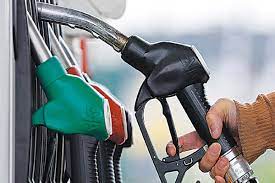
ISLAMABAD, Jul 30 :The government has so far released an amount of Rs649.908 million to execute seven ongoing and six new petroleum-related projects under the Public Sector Development Programme (PSDP 2021-22) aimed at accelerating oil and gas exploration activities and achieving self-sufficiency in the energy sector.

 According to the official data as of July 16, an amount of Rs 649.908 million has been authorized/disbursed out of  the total allocation of Rs 3,249.54 million for 13 petroleum sector projects.

As per the PSDP document, funds amounting to Rs1,473.683 million had been earmarked for seven ongoing schemes, out of which Rs 263 million were meant for establishment of National Minerals Data Centre (NMDC), Rs345.321 for Expansion and Up-gradation of Pakistan Petroleum Core House (PETCORE), Rs30 million for Geological Mapping on 50 Toposheets, out of 354 unmapped Toposheets of Outcrop Area of Balochistan Province, Rs385.336 million for strengthening and up-gradation of Karachi Laboratories Complex (KLC) at HDIP Operations Office, Karachi, Rs 76.580 million for the supply of 13.5 MMCFD gas at Doorstep (Zero Point) of Dhabeji Special Economic Zone (SEZ) Sindh, Rs 230 million for the supply of 30 MMCFD gas at Doorstep (Zero Point) of Rashakai Special Economic Zone (SEZ) and Rs143.446 million for up-gradation of POL testing facilities of HDIP at Islamabad, Lahore, Multan, Peshawar, Quetta and ISO Certification of Petroleum Testing Laboratory at Islamabad.

Similarly, for six new schemes, the government had earmarked Rs1,775.857 in the PSDP, out of which Rs40 million were kept for development of Strategic Underground Gas Storage (SUGS) – hiring of consultancy services for Bankable feasibility study and transaction advisory services (PC-II), Rs30 million for Legal Consultancy Services for drafting of Model Mineral Agreement and updating of Regulatory Framework (Federal and Provincial Minerals/Coal Departments) prepared by Mineral Wing, Petroleum Division, Rs40 million for Pakistan National Research Programme on Geological Hazards (Earthquakes and Landslides) – Data Acquisition along Active Faults and Identification of Potential Landslides Hotspot Zones, Rs73.447 million for the supply of 10 MMCFD RLNG to Bostan Special Economic Zone, Rs149.410 million for the supply of 13 MMCFD RLNG to Bin Qasim Industrial Park and Rs785 million for the supply of 40 MMCFD gas/RLNG to Allama Iqbal Industrial City Special Economic Zone (SEZ), Faisalabad.

Tour de France champion Pogacar extends UAE contract until 2027: team

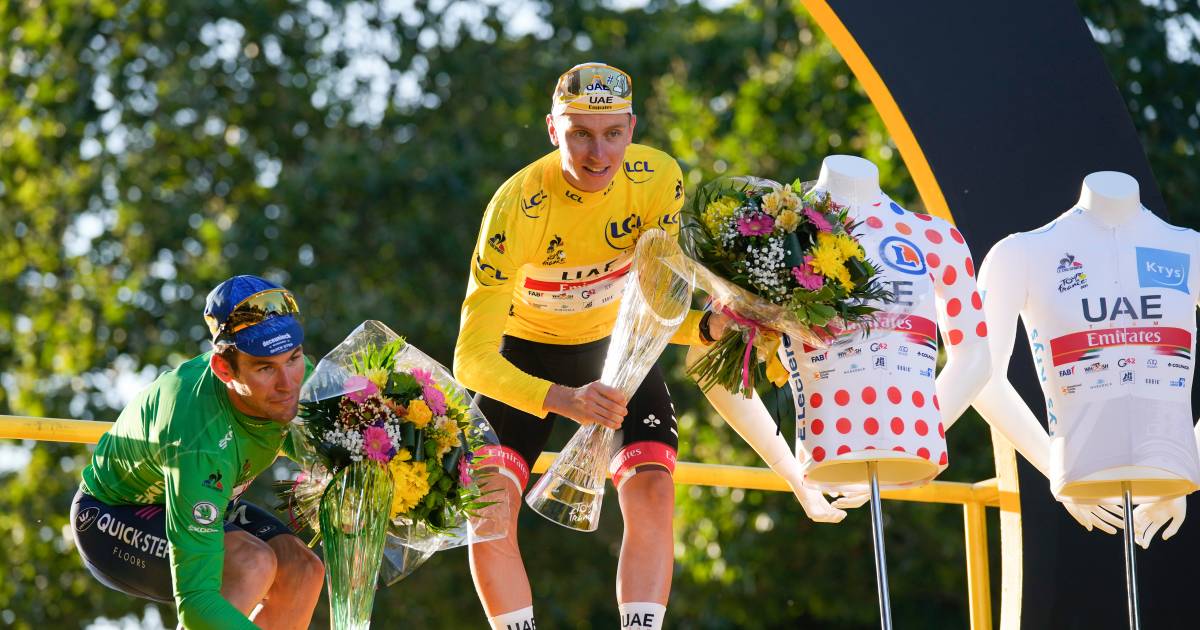
Paris, July 30 :Tadej Pogacar, who won the Tour de France this year for the second time, has extended his contract with UAE Emirates until 2027, the team said on Friday.

The 22-year-old Slovenian, who recently also won a bronze medal at the Tokyo Olympics has signed “one of the longest contracts in the history of professional cycling,” it said in a statement.

“I’m really happy to be able to commit my future to the team and stay here for the next years,” Pogacar said in the team statement.

 “I feel at home here, it feels like a big family. This team is a really good fit for me and I am fortunate to say that I have not only found colleagues but friends.”

 “I’m excited for the years ahead and what they will bring, hopefully more success for me and for the team. I hope we are inspiring lots of kids to ride bikes.”

 Pogacar first signed with the team in 2019 and Friday’s announcement marks his third extension. In 2020 he extended his contract until 2024 and in early 2021 he extended for another two years.

UNODC committed to bring human traffickers to justice: Jeremy Milsom World Day against Trafficking in Persons observed

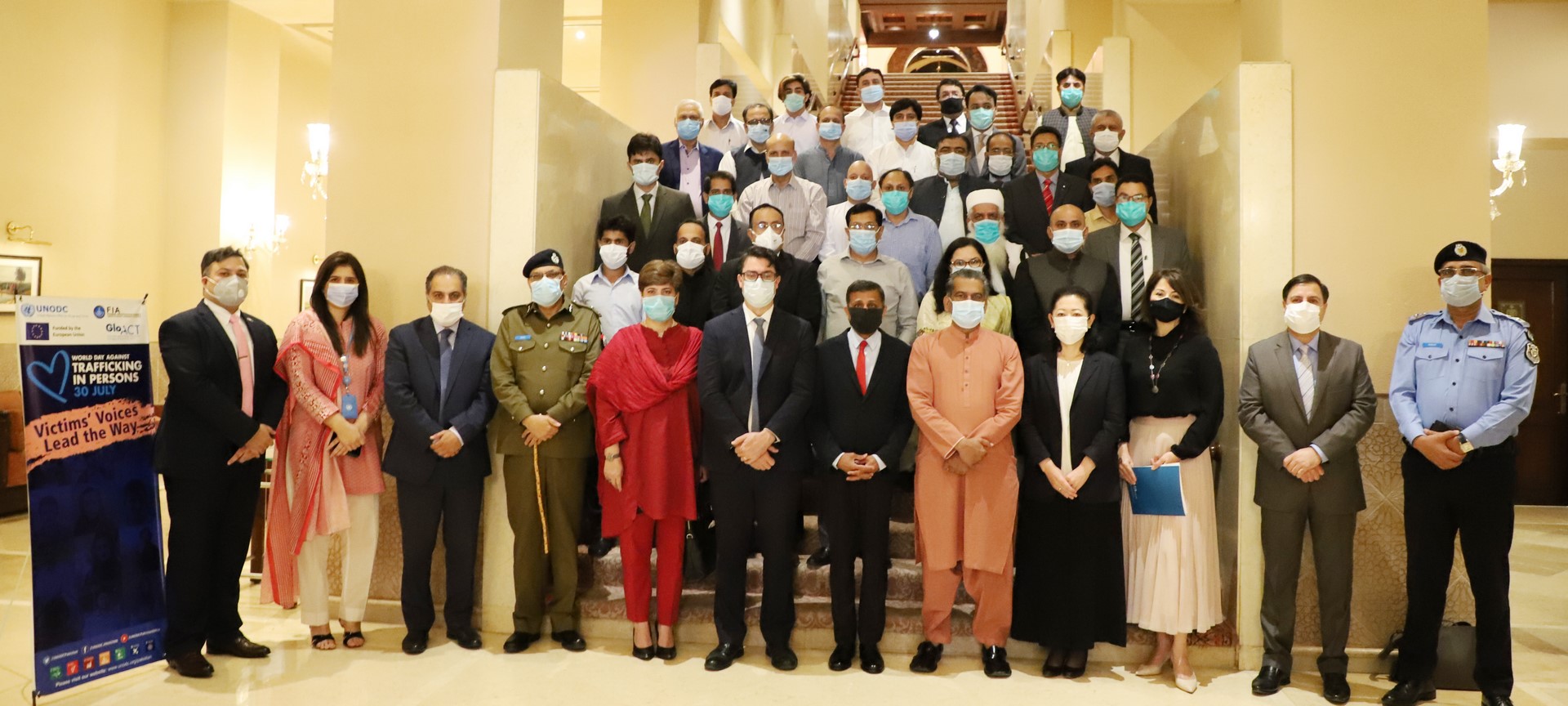
ISLAMABAD: Under the EU funded Global Action to Address Trafficking in Persons and the Smuggling of Migrants (GLO.ACT – Asia and the Middle East), the United Nations Office on Drugs and Crime (UNODC),  commemorated World Day against Trafficking in Persons (TIP) in collaboration with the Federal Investigation Agency during a seminar held on Friday.

“Victim’s Voices Lead the Way” is this year’s World Day against TIP theme. It’s a theme that puts victims of human trafficking at the centre and highlights the importance of listening to and learning from survivors of human trafficking and the crucial role they play in establishing effective measures to prevent this crime, identify and rescue victims and support them on their road to rehabilitation.

During the commemoration seminar, key messages from survivors of trafficking and other relevant stakeholders were highlighted. The event also presented the National Action Plan to combat human trafficking and migrant smuggling (2021-2025) adopted by the Government which provides a comprehensive coordination framework for all stakeholders tasked with addressing Trafficking in Persons.

During his welcome remarks, Dr. Jeremy Milsom, Representative UNODC Country Office Pakistan said that, “The United Nations Office on Drugs and Crime is committed to advancing action to bring traffickers to justice while protecting and supporting their victims.  The rights of victims must come first – be they the victims of traffickers, smugglers, or of modern forms of slavery or exploitation”. 

He further said that: “Almost every country has national human trafficking laws, yet people continue to be trafficked – most of them, women, and girls. We welcome the progress made by Pakistan, in particular the Federal Investigation Agency, in tackling human trafficking, through implementing the Prevention of Trafficking in Persons Act 2018 and its rules, and the National Action Plan to combat human trafficking and migrants smuggling (2021-2025)”.

The Director General FIA, Sanaullah Abbasi, during his speech said that: “FIA and UNODC have been partners for more than a decade to curb human trafficking and migrants smuggling.  Through this partnership we have achieved many goals including the enactment of laws on TIP and Smuggling of Migrants in 2018. The partnership will further help FIA to build its capacity to fight the menace of human trafficking”.

The seminar was attended by the senior representatives of FIA, UNODC, the European Union, Provincial Social Welfare and Labour departments, provincial police, representatives from federal ministries including the Ministry of Interior, Ministry of Overseas Pakistanis and Human Resource Development and ICMPD.

 The Global Action against Trafficking in Persons and the Smuggling of Migrants – Asia and the Middle East (GLO.ACT-Asia and the Middle East) is a four-year (2018-2022), €12 million joint initiative by the European Union (EU) and the United Nations Office on Drugs

and Crime (UNODC) being implemented in partnership with the International Organization for Migration (IOM) in up to five countries: Islamic Republic of Afghanistan (Afghanistan), Islamic Republic of Iran (I.R. of Iran), Republic of Iraq (Iraq), Islamic Republic of Pakistan (Pakistan). GLO.ACT-Bangladesh is a parallel initiative also financed by the EU and implemented with IOM.

The project builds on a global community of practice set in motion in GLO.ACT 2015-2019 and assists governmental authorities and civil society organizations in targeted, innovative, and demand-driven interventions: sustaining effective strategy and policy development, legislative review and harmonization, capability development, and regional and trans-regional cooperation. The project also provides direct assistance to victims of human trafficking and vulnerable migrants through the strengthening of identification, referral, and protection mechanisms. The project is fully committed to mainstreaming Human Rights and Gender Equality  considerations across all of its activities.

COVID-19 claims 68 more in Cuba

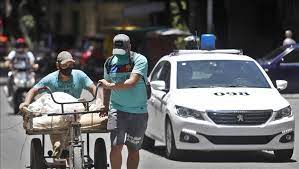
BOGOTA, Colombia :Coronavirus claimed 68 people in the last 24 hours in the island nation of Cuba, officials said on Friday.

The Cuban Health Ministry said the latest fatalities pushed the death toll from coronavirus up to 2,628.

The number of confirmed COVID-19 cases in the country grew by 8,607 in the last 24 hours to 366,985, the ministry said.

Meanwhile, more than 3 million Cubans have received at least one dose of coronavirus vaccines.

Cuba also announced that its homegrown coronavirus vaccine Abdala will be administered to pregnant women across the country.

Small but proud’: San Marino shooter makes Olympic history in Tokyo

Tokyo, July 30 :A tearful Alessandra Perilli described San Marino as “a small country but very proud” after the shooter won its first Olympic medal ever with bronze in Tokyo.

With a population of about 34,000, the independent micro-state surrounded by Italy is the smallest Olympic member to bag a Games medal.

The 33-year-old Perilli is the woman who made history for San Marino, whose first Games was back in 1960, after she finished third in the trap final.

 “I am very proud because we worked to get here,” said Perilli, who wept tears of joy after receiving her bronze.

Perilli, who was born in the Italian city of Rimini but became a citizen of San Marino at 18, was already San Marino’s most successful Olympian with her fourth-placed finish at the London 2012 Games.

“In London we got near the medal, but not on the podium. Now we have reached the podium,” she said.

“This is not my first Olympics but this is the first medal for me and for my country.

 “We are a small country but very proud.”

 Perilli said that she expects wild celebrations back home in San Marino, which has four other athletes in Tokyo and is better known for its tourism industry than its sporting prowess.

 “They are for sure going crazy, crying,” she said.

 On Tuesday, Flora Duffy won the women’s triathlon for Bermuda, making the island the smallest territory or nation in terms of population ever to win a gold medal at a Summer Games.

Three killed, seven injured in Khanewal road accident

KHANEWAL, Jul 30 :At least three persons including a minor girl were killed and seven others sustained injuries in a collision between passenger van and trailer near Makhdoom Pur

Interchange on Motorway (M-4) on Friday.

According to rescue officials, a passenger van was going to Karachi from Swabi it collided with a trailer near Makhdoom Pur Interchange Kabirwala area, as a result three persons namely Shabana Saleem, Ahmad and one-year-old Noor Fatima died on the spot.

Rescue 1122 shifted the dead bodies and injured to Civil hospital. The injured were identified as Iqra Farooq, Faria, Ghazala, Kiran, Kanwal, Jan Muhammad and Abdul Qudus. The all passengers were belonging to Karachi

Stay Connected

64FansLike
60FollowersFollow

Latest Reviews

Exchange Rates

USD - United States Dollar
EUR
1.14
GBP
1.34
AUD
0.70
CAD
0.71