Home Blog Page 2539

TURKEY AIM TO KEEP UP GREAT START TO WORLD CUP QUALS

ANKARA, MAR 26 – The Turkish national team will meet Norway in their second match of the European Qualifiers for the 2022 FIFA World Cup.

After starting the qualifiers with a 4-2 win over the Netherlands at home, the Turkish national football team now looks to seal their second win in the group against Norway, which defeated Gibraltar 3-0 in their opening game.

The Group G game will kick off at the La Rosaleda stadium in Spain’s Malaga over travel restrictions in Norway amid the novel coronavirus, starting at 8 p.m local time (1700 GMT) on Saturday.

In the other Group G games, Latvia will face the Netherlands, while Montenegro will take on Gibraltar.

Turkey have 223 victories, 140 draws and 224 defeats in 587 matches so far.

Having scored a total of 779 goals, Turkey conceded 839 goals in these games.

Turkey squad:

Goalkeepers: Mert Gunok (Medipol Basaksehir), Ugurcan Cakir (Trabzonspor), Altay Bayindir (Fenerbahce), Gokhan Akkan (Caykur Rizespor)

Defenders: Zeki Celik (Lille), Abdulkerim Bardakcı (Ittifak Holding Konyaspor) Caner Erkin (Fenerbahce), Merih Demiral (Juventus), Ozan Kabak (Liverpool), Mert Muldur, Kaan Ayhan (Sassuolo), Caglar Soyuncu (Leicester City), Umut Meras (Le Havre)

Midfielders: Okay Yokuslu (West Bromwich Albion), Taylan Antalyali, Emre Kilinc (Galatasaray), Dorukhan Tokoz (Besiktas), Ozan Tufan (Fenerbahce), Orkun Kokcu (Feyenoord), Yusuf Yazici (Lille), Halil Akbunar (Goztepe), Hakan Calhanoglu (AC Milan), Deniz Turuc (Medipol Basaksehir)

Forwards: Burak Yilmaz (Lille), Enes Unal (Getafe), Kenan Karaman (Fortuna Dusseldorf), Cenk Tosun (Besiktas)

52 TESTED POSITIVE IN ATTOCK

ATTOCK, MAR 26 (DNA) – 52 new confirmed positive cases of Covid-19 were reported in
the district Attock on Friday raising the tally to 1520.

According to health authorities, it was the highest tally of positive
cases in a single day since the first case was reported in the
district during the month of March last year.

According to health authorities, front line health workers as well as
teachers and students of different government institutions including
colleges, boys and girls schools are among the new victims of the
virus.

Chief executive, district health authority Dr Jawad Ellahi while
giving the details has said that among these new cases, as many as 32
belongs to Attock city while 10 to Hazro, 4 to Fatehjang, 3 to
Hassanabdal, two to Jand while one to Pindigheab.

He added that it is also a single day highest reported cases from
Attock city during the last two years.

He further said that the number of active patients in the district
also surged to record number in the history of the district as 185 in
which 183 are home isolated while two other are hospitalized.

He said that as many as five suspected COVID-19 patients are also
admitted in district headquarters hospital in which three are on
ventilators.

Responding to another question, he said that the number of suspected
cases in the district are 27,671 while screening of as many as 30,923
persons have also been carried out so far.

He said that the result of as many as 95 suspected patients of the
area is still awaited while as many as 26,056 are tested negative so
far across the district. He said that so far safe burial of 91 of
patients died due to virus has performed in the district.

Responding to another question, he said 1305 patients are recovered
from this deadly virus so far.=DNA

===========

TACKLING ENERGY, ENVIRONMENT CRISES ARE IMPORTANT TO ENSURE NATIONAL SECURITY: SPEAKERS

ISLAMABAD, MAR 26 (DNA) – The speakers at a webinar on “Non-traditional security challenges- energy and environment crises’ organized by the Sustainable Development Policy Institute (SDPI) urged the need to give an equal importance to country’s non-traditional security challenges such as energy and environment crises to ensure our national security.

They were of the view that traditional security challenges are being well tackled by our security apparatus appropriately. Now by tackling energy and environment crises as non-traditional security challenges as a nation, we may boost our overall national security paradigm.

Shafqat Kakakhel said that the nexus among climate change, energy and security is very well established. The non-traditional challenges- energy and environment crises- may troll the development. Since the industrial revolution, it brought revolution from rural to urban, from artesian based industry to big industries, from very difficult life conditions in Europe and North America where winters were seen as a punishment but energy conquered the harsh weather and also helped in improving health conditions.

Initially there was a tremendous happiness and everyday efforts were made to create more sources of energy but then somewhere in the 1980s, climatologists realized that there were changes in the climate pattern (global warming) induced by humans and use of fossil fuels

He highlighted that the efforts of scientist and different meteorological organizations, UNEP, eventually led to a political consensus on the need for actions and cooperation to handle climate change as a new threat to the international community.

Right from the beginning, the nexus between the energy and security was recognized and the emphasis was put on cleaner energy.  He said the non-traditional security threat in terms of climate change can be countered if we go for renewable and clean energy which will also address the energy shortages in Pakistan which we have been experiencing since 2008.

Thousands of factories had to be closed, schools and hospitals could not function and life became very difficult and the government had to resort to desperate moves including the use of coal-based energy.

But we have begun to realize that the solution of the environmental and climate change crises is in not abandoning energy but in developing and deploying clean and renewable energy, he added.

Ambassador Kakakhel said that the governments efforts over past several decades, particularly the clean energy and renewable energy policy of 2006 and now more recently the new energy policy, will change the entire system of how energy projects are agreed, decided and financed. The Prime minister of Pakistan while addressing the climate ambition summit had already promised that in a few decades Pakistan will get 60% of its energy from clean sources.

The government is planning to introduce electric vehicles/public transport which needs high efforts to translate it practically.

Mr Irfan Tariq, DG Environment/Climate Change said that the non-traditional security threats were there but they were neglected or not seen through policy lenses. We see the threats being imposed by climate change and environment very clearly.

I hope everyone can understand the linkage between development and nature. COVID-19, Dengue and GLOF proved that we have disrupted nature and we need to bring it back in its natural form. We face a very serious threat because the sources we use are highly impacted by climate change and when we talk about hydro, it not only threats our energy security but also poses serious threat to water and food security.

So, I would consider climate change a security threat to our energy security and that’s why we have vision and plans to move to renewable energy and it will hopefully lead us to energy security, he added. He said the government has an articulated climate action agenda in terms of the Ten Billion Tsunami Plantation Project.

He shared that the National Adaption Plan is also in place to face the climate and other non-traditional security threats to the country.

Dr Abid Qayyum Suleri emphasized the need for efforts to deal with energy crisis in a manner that would also help in addressing climate change crisis as both are intertwined and add to non-traditional security challenges which also include food security, human security and other spectrum of non-traditional security.

He was of the view that the government is giving priority to energy and environmental crises and what it needs to do is the improvement of transmission and distribution system of energy. There is a need to introduce small hydro and solar energy in the remote areas where there is energy shortage.

He said the government by strengthening institutional mechanism on energy and environmental challenges, well thought out adaptation plan and introduction of clean technologies can add value to the efforts in combating the non-traditional security challenges.

Ms. Ermeena Malik, the World Bank Consultant, discussed the general framework adopted throughout the world to measure the modern energy system. 

The three main factors of the matrix are availability of energy, affordability of energy and sustainability of energy. She said that all energy projects and assessments are basically based on these matrixes and they play a fundamental role in and becomes a sort of strategic objectives for energy supply systems in countries across the world.

Anything impacting these three components compromises the country’s energy security and if we look at each individual element, they have very close linkages. She said it is not just good enough that you have enough energy or that you are able to supply it at suitable cost but also that it is sustainable and from resources that are renewable in the long turn.

It is important to work on the transmission grid, transmission infrastructure, increasing transmission capacity. Regions like Baluchistan have the potential of renewables but are less or not exploited yet but in Sindh wind resources have been exploited to some extent. It is important to pay attention to transmission system of the country.

Mirza Sadaqat Huda called for regional cooperation in tackling energy crises and making it available for development by using renewable resources. Dr Hina Alam urged the need to addressing energy and environment crises in view of the ongoing human security challenges.=DNA

=================

ICCI CALLS FOR WITHDRAWAL OF AMENDMENTS IN TAX LAWS


ISLAMABAD, MAR 26 (DNA) – 
The Islamabad Chamber of Commerce & Industry (ICCI) has  called upon the government to withdraw amendments in tax introduced through Ordinance to meet the conditions of IMF as it would prove a death blow for businesses & investment and cause collapse of the overall economy.

Sardar Yasir Ilyas Khan, President ICCI said that the amendments in tax laws envisaged withdrawal of tax exemptions of Rs.140 billion from various sectors besides imposition of fine of Rs.5000 on shop owners for not displaying NTN or Business Cards and another fine of Rs.5000 for not filing of tax returns or wealth statements.

He said that these amendments have created a lot of concerns in the business community as they would give more powers to FBR officers and create an environment of harassment for the business community.

He said that at the one hand, the Prime Minister was focusing on elimination of direct interaction between taxpayers and tax collectors through promotion of automation in FBR systems, but on the other hand, bureaucracy was introducing amendments in tax laws that would thwart the vision and intentions of the PM for policy reforms in FBR.

Sardar Yasir Ilyas Khan further said that the Prime Minister had announced an attractive package for the construction industry due to which mega construction projects have started across the country.

However, now the government has unilaterally registered all tax returns-filing real estate dealers as Designated Non-Financial Business and Professions (DNFBPs) under pressure from FATF requirements and directed them to provide full details of their clients and property transactions by completing a four-page questionnaire within 7-days, otherwise, face action.

He said that this move would discourage new investment in the construction sector and kill the construction package of the Prime Minister. Therefore, he urged that such anti-business and anti-investment measures should be withdrawn to save the economy from plunging into deep troubles.

ICCI President said that the government was preparing to put an additional burden of more than Rs700 billion on the power consumers by granting more autonomy to NEPRA.

He said that such autonomy to NEPRA would make energy costs unviable for businesses and industries as a result of which a large number of businesses and industries would face closure.

Therefore, he emphasized that the government should withdraw this move in the larger national interest.

He said that the business community was the main stakeholder of the economy and the government should make all important economic decisions after thorough consultation with them so that the business sector could be saved from their negative impact.=DNA

===============

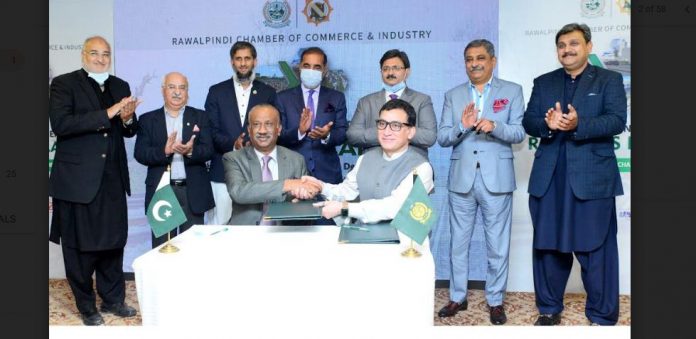
RCCI ORGANIZES INVESTOR CONFERENCE ON RAILWAYS LAND

RAWALPINDI, MAR 26 (DNA) – Federal Minister for Railways Azam Khan Swati while addressing a conference on investment in  Railways Land organized by Rawalpindi Chamber of Commerce and Industry (RCCI) through video link said that unfortunately Railways has been in disrepute for the last 70 years.

I want to send a message to all developers and investors to invest with security in railways land. The investment will be under a public-private partnership. You will have the full support of my team, he added.

The legal process in this regard will be completed by April 30. He lauded RCCI for making this conference possible. The Railway Minister further said that we all have to lift the railways together. There is no place for a corrupt officer in the railways. Professional officers are a source of pride for me.

This is an important opportunity for the business community to take advantage of this opportunity and start thinking for joint ventures on railway land.

DG Land & Property, gave a detailed presentation on the traditional method of leasing railway land and the initiatives taken under the new program, Public Private Partnership.

Earlier in his address, RCCI President Nasir Mirza said that the aim of the conference was to provide a platform for investors to get maximum information on investing opportunities in railway land. He said that Railways is an important sector in Pakistan’s economy.

Group leader Sohail Altaf said the railways would have to work to boost investor confidence. Steps will have to be taken to attract local and foreign investors.

Senior Vice President Osman Ashraf, former presidents, members of the executive committee, chairman regional trade Khurshid Berlas, officials from Pakistan Railways and investors attended the conference.=DNA

=======================

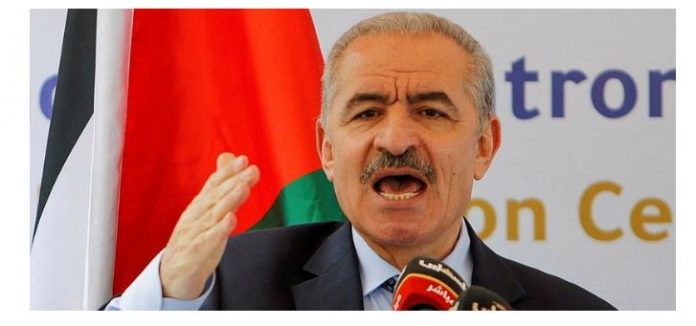
Palestine welcomes resumption of US aid

Palestine on Friday welcomed Washington’s announcement that it will resume providing aid to the West Bank and Gaza Strip.

Prime Minister Mohammad Shtayyeh described the US move as “an important step in the right direction” towards restructuring the US-Palestine relations.

The aid was halted during the administration of former US President Donald Trump “due to his stances on the Palestinian issue” which, he said in a statement, were “contrary to international legitimacy decisions.”

On Thursday, the US announced it will provide humanitarian aid to the poorest Palestinians in the West Bank and Gaza Strip for the first time since it was cut under the Trump administration.

Linda Thomas-Greenfield, Washington’s ambassador to the UN, said Thursday that the US is concerned that the coronavirus pandemic has put a strain on the economic and humanitarian needs of Palestinians.

Stressing that US President Joe Biden is restoring assistance programs for economic development and humanitarian aid for Palestinians, she said the US announced $15 million in humanitarian support to the most vulnerable communities in the West Bank and Gaza.

Under Trump, the US gradually cut off financial aid that had been earmarked for Palestinians in the US budget for decades, including stopping funding for the United Nations Relief and Works Agency (UNRWA), and cutting financial aid allocated to the Palestinian Authority.

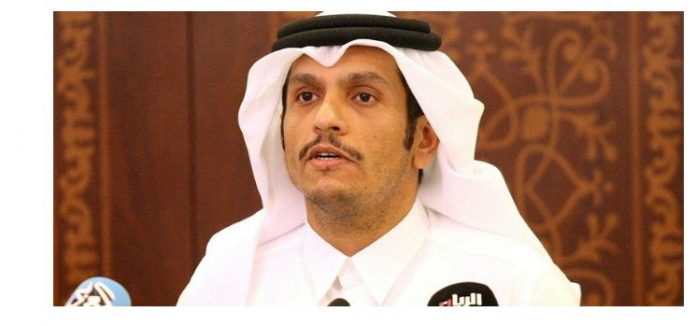
QATAR HAILS SAUDI INITIATIVE TO ENSURE PEACE IN YEMEN

DOHA, MAR 26: Qatar on Thursday welcomed Saudi Arabia‘s initiative to end nearly six years of war in Yemen. “Qatar welcomes the peace initiative launched by Saudi Arabia to establish a cease-fire in Yemen and Saudi efforts to find a political solution that will end the suffering of the brotherly Yemeni people,” Foreign Minister Mohammed bin Abdulrahman Al-Thani said on Twitter after speaking by phone with his Saudi counterpart Faisal bin Farhan.

The top Saudi diplomat on Monday suggested a UN-supervised cease-fire between Yemen’s Saudi-backed government and Houthi rebels, who are supported by Iran, the reopening of Sana’a International Airport and the start of negotiations.

Yemen has been ravaged by violence and instability since 2014, when Houthi rebels captured much of the country, including the capital Sana’a.

Saudi-led coalition aimed at reinstating the Yemeni government worsened the situation, causing one of the world’s worst man-made humanitarian crises, with 30 million people accounting for 80% of the population needing humanitarian assistance and protection.

SELLING 49% SHARES OF CASH-BLEEDING SOES SHOULD BE THE FIRST STEP TOWARDS STRUCTURED ECONOMIC REFORMS

DNA

KARACHI, MAR 26 – Pakistan Businesses Forum (PBF) said on Friday that State Owned Entities (SOEs) are state assets as long as they are profitable, but some of the Pakistan’s SOEs have turned liabilities and have reached a point of no return. In the best interest of the state and the public money, these SOEs may be privatised.


PBF Vice President Ahmad Jawad said Pakistan is a struggling economy; it cannot make swift economic moves carrying such baggage. Privatising state entities doesn’t mean giving up on an economic mission or accepting a defeat, it’s more about making the right choices timely, Raja added. The time is ripe to make economic reforms on all fronts, government may continue its economic agenda by curtailing the losses in State Owned Enterprises (SOE’s). Therefore, cash bleeding SOEs need to be privatized with the ratio of 49% shares including management on priority basis. Government should retain maximum share but private sector must be engaged for independent and smooth operations these state owned entities.


As per the report of the finance division, the top 10 loss-making Public Sector Enterprises included National Highway Authority (NHA) Rs173 billion, then PIA Rs56 billion, QESCO Rs36.8 billion, LESCO Rs36.6 billion, PESCO Rs29.2 billion, MEPCO Rs22.7 billion, Zarai Taraqiati Bank (ZTBL) Rs18.1 billion, Pakistan Steel Mills Rs16.5 billion, SEPCO Rs10.9 billion, and Pakistan Post Offices Rs9.13 billion in the fiscal year 2019. Pakistan’s State-Owned Enterprises (SOEs) continued to face accumulated cash bleeding in the last two fiscal years (the FY2018 and FY2019) to the tune of Rs429 billion. Considering the current economic conditions in the country, this amount is almost equal to an annual budget of a provincial government. This Rs429 billion could be utilized for Ehsaas Program, Naya Pakistan Housing Authority for low income groups or could even be spent for facilitation of industrial sector, he added.


On the SBP autonmy proposed bill, Jawad viewed State Bank of Pakistan is the institution whose decisions can change the business environment and impact crucial economic indicators like unemployment, budget deficit, speed of accumulation of debt and progress towards many of the Sustainable Development Goals. Therefore it is imperative relevant check and balance must be there on SBP and it’s policies because ultimately government is accountable infront of public in the democracies.

NAVTTC INTRODUCES ONLINE COMPLAINT READDRESSAL SYSTEM

DNA

ISLAMABAD, MAR 26: National Vocational and Technical Training Commission ensures maximum facilitation of Pakistani skilled workforce working abroad. In this context, NAVTTC has established online complaint handling mechanism available on its website i.e. www.navttc.gov.pk to resolve the issues of Pakistani workforce expeditiously and swiftly.  Any Pakistani working abroad faced with difficulty in verification of certificate of any kind he may submit certificate and particulars through online portal. After due consideration NAVTTC will resolve the issue online without any cost.  

NAVTTC is perusing the policy of extending maximum support to Pakistani skilled workforce working abroad. The instant initiative is of NAVTTC’s effort to resolve the problems faced by workforce employed abroad.  A number of countries where Pakistani skilled workforce goes for employment have recently introduced changes in their registration regimes of foreign skilled workforce. In these countries the Pakistani workforce is increasingly facing the issues of verification of their skills and certification. To resolve such issues NAVTTC has introduced this online complaint readdressal system to reduce the problems faced by Pakistanis working abroad.

NAVTTC is also working on a plan to establish Recognition of Prior Learning (RPL) Centers in different countries where Pakistanis seek employment. In such centers Pakistanis who have the skills but lack certification can certify their skills by appearing for competency based trade testing.

CHIEF OF NAVAL STAFF VISITS PAF AIR WAR COLLEGE INSTITUTE

DNA

ISLAMABAD, MAR 26 – Admiral Muhammad Amjad Khan Niazi, Chief of the Naval Staff visited PAF Air War College Institute, Faisal today. On his arrival he was received by Air Vice Marshal Zulfiqar Ahmed, President Air War College Institute. The Chief Guest congratulated the AWCI team for achieving the educational standards worthy of an institute of the highest caliber as the college was formally conferred the status of an Independent Degree Awarding Institute by the President of Pakistan, On 20 Jan, 2021. 

Addressing the Air War Course participants, CNS said that we must keep abreast of the emerging trends and make endeavors to deal with complex and dynamic security environment facing the world today. He added that jointness remained central to the modern concept of military operations as no force could achieve success in today’s warfare single handedly. Later on, the Naval Chief also met foreign officers undergoing course at the premier institution. 

PAF Air War College Institute is the prestigious institution of Pakistan Air Force, where mid level officers of Pakistan Armed Forces and friendly countries are prepared for assumption of key Command and Staff appointments. During the course the course participants are exposed to over a hundred subject matter experts including: Civil & Military Professionals, Diplomats, Scholars / Academicians, Lawyers, Industrialists, Scientists, Economists and Media Personnel. Exclusive Interaction with foreign faculty and strategists is also ensured to provide depth and academic rigor to the course.

Stay Connected

64FansLike
60FollowersFollow

Latest Reviews

Exchange Rates

USD - United States Dollar
EUR
1.16
GBP
1.34
AUD
0.67
CAD
0.72