Home Blog Page 2514

GLOBAL COMMUNITY CAN AVERT HUMANITARIAN CRISES IN AFGHANISTAN: EXPERTS

ISLAMABAD, SEPT 3 /DNA/ – The war torn Afghanistan needs attention of the global community to play their role to avert humanitarian crises, and help people stabilize, recure livelihood and food and come out of extreme poverty, said the experts from diverse backgrounds while speaking at the webinar ‘Humanitarian Situation in Afghanistan Post US Evacuation’ organized by Sustainable Development Policy Institute (SDPI).   

The humanitarian institutions are warning against influx of the would-be Afghan refugees if their needs are not met within the country and circumstances force them to flee. Ms Tammi Sharpe, Deputy Representative UNHCR Pakistan, highlighted that currently, there are 1.4 million Afghans refugees in Pakistan and the number goes up to 3 million if we include unregistered refugees. Pakistan has been very generous in accepting the Afghan refugees. She said the situation related to displacement of the population continues to change and UNHCR is closely observing it to take right measures. It depends on how Taliban will act; will they be able to maintain peace and ensure protection of human rights of common people? She said that UNHCR is concerned about human right violations and thus, we need to see what is actually happening in the country in the post US withdrawal scenario.  

Senior Journalist and analyst Mr Zahid Hussain was of the view that people are focusing on what the Taliban will do, but we need to focus on Afghanistan in the context of alarming poverty and displacement of people. He said that the western countries should open their borders for these refugees. He emphasized that financial aid to Afghanistan must be continued as the people of Afghanistan will suffer otherwise.  Almost 70% of the population of the country is living below the poverty line and about 90% people live under 2 dollars per day. Therefore, if the international community pushes further without addressing the real issue, the situation will get worse and eventually will lead to another war.  

Dr Abid Qaiyum Suleri, Executive Director, SDPI, earlier stressed that instead of seeing the situation through the lens of just emotions, we need to analyse ground realities as well to understand the real picture of Afghanistan today. “No study has been even done on the situation of COVID-19 in Afghanistan and the situation of food security is also does not seem to be under any focused discussion,” he said adding that all these questions are critical to ascertain what has to be done to help people of Afghanistan.  

The Parliamentary Secretary for Foreign Affairs, Ms Andleeb Abbas, was of the view that peaceful takeover by Taliban by averting civil war has been a positive thing in Afghanistan. However, since the international community is still at the back foot, the economic situation may get worse and that must be avoided. She said that Pakistan has extended all assistance to aid providing authorities because the fate of both countries is tied together. This can be an opportunity to rebuild Afghanistan if international community does not shy away from its responsibilities.   

Senior Analyst, Brig (r) Mahmood Shah, highlighted that Afghanistan is a multi-ethnic country, and all these ethnicities should be included in the government. Taliban have already shown willingness to respect human rights, particularly women rights, which provide much needed optimism about the future stability of the country. However, measures should be taken to stop brain drain from Afghanistan.  
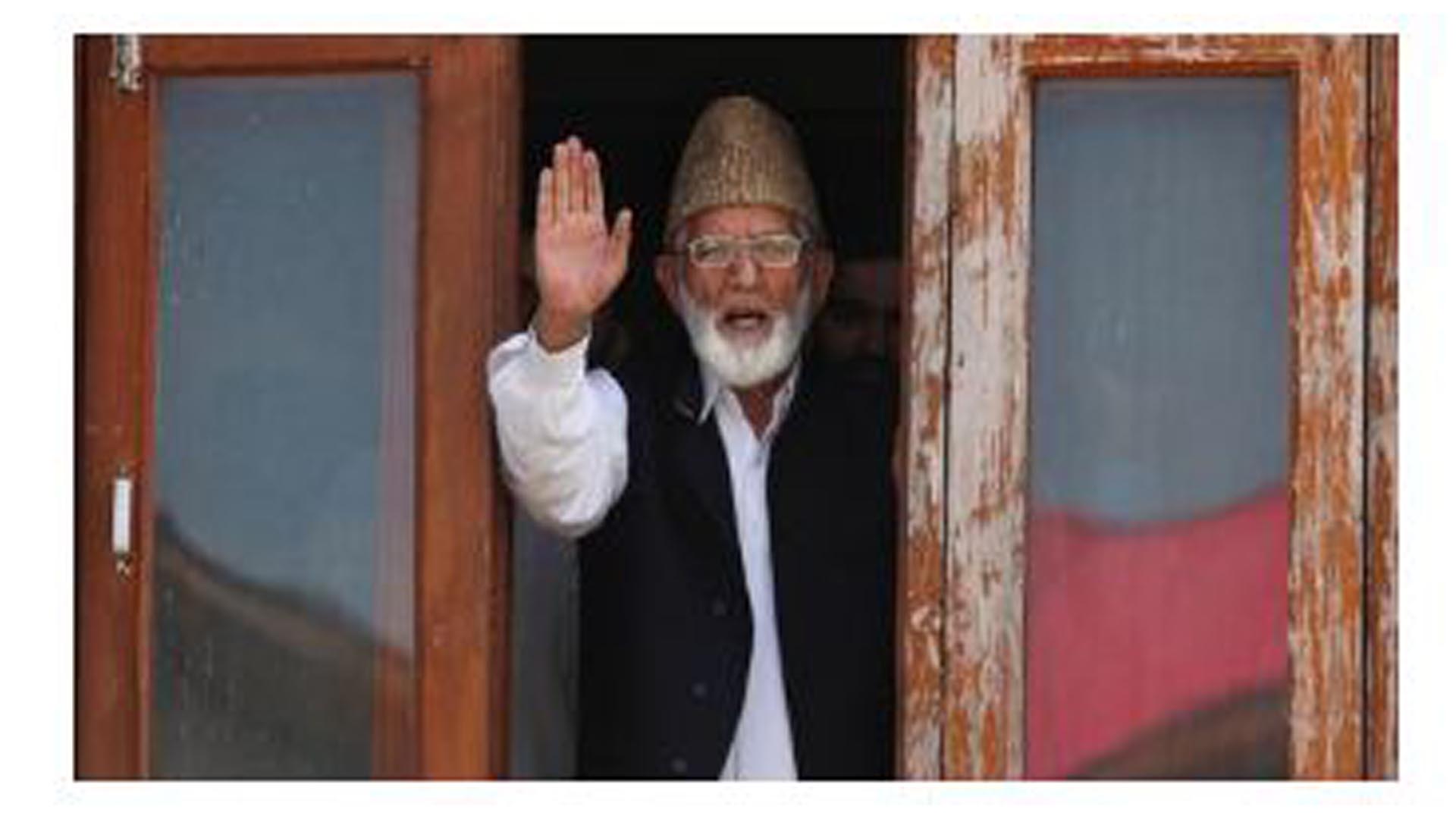
Geelani leaves a legacy of unflinching commitment to the Kashmir cause

Until his last breath, he refused to compromise on the 72-year-old UN-sanctioned plebiscite, which was never held in Kashmir. And for that, he spent the last decade under house arrest.

A few years ago, a video went viral in Kashmir in which an old man is seen banging a steel gate with both fists. Through a small, rectangular opening in the gate, he is heard telling a policeman on the other side, in chaste Urdu, ‘open the gate, your democracy is dead, its funeral is underway’.

The old man was Syed Ali Geelani, the most defiant face of the Kashmiri resistance to the Indian rule, who passed away on Wednesday night at his residence in Srinagar, the capital of Indian administered Jammu and Kashmir. He was 91.

For the better part of the past decade, he was never allowed to step out of the gate, not even for specialised treatment in hospitals outside Kashmir, nor for the brief winter stay he would make in the warmer Indian capital for health reasons. He wasn’t allowed to address the media.

Only his family members and a few associates were let inside the residence by a posse of policemen and paramilitary soldiers who stood outside the gate around the clock in a vehicle, or vehicles, depending upon the political atmosphere.

After August 2019, when the Hindu nationalist Indian government scrapped the disputed region’s autonomy, Geelani had virtually become a Twitter account that was operated by a nominated leader who lives in Pakistan. 

The account was named Syed Ali Geelani (Official). The last tweet was the announcement of his death and his will to be buried in the Martyrs Graveyard.

Another tweet said the “shameless” local government and police were trying to pressurise the family into burying the leader in the dead of the night at some obscure place. 

Hundreds of policemen and paramilitary soldiers were deployed in the area to prevent demonstrations. The police chief of Kashmir announced restrictions would be imposed and the internet would be suspended.

A few days ago, a military drill in northern Kashmir that people said appeared like a routine search operation Indian forces carried out in the region, triggered speculations that the authorities were readying themselves for the aftermath of Geelani’s death.

Why did Geelani scare the Indian state, both in life and death? The answer probably lies in a slogan with which people would greet his presence in both small and mammoth anti-India demonstrations: na jhukney wala, the one who doesn’t bend.

Implicit in the slogan was the indictment that there were many who had succumbed to the machinations of the Indian state in the past and there were others to follow suit.

After all, the once hugely popular Sheikh Muhammad Abdullah, had his grave guarded by policemen lest Kashmiris would defile it for his capitulation before the Indian government. 

Whenever Geelani appealed to the people to boycott elections for the local assembly of Indian parliament, reasoning that India showcased them abroad as an acknowledgment of its rule over Kashmir, his critics reminded him of the several elections he had fought under the rubric of the Indian Constitution.

His answer, which had a poetic flourish, was: azmaye huwe ko kya azmana, nothing will come out of trusting the one who has betrayed you. 

After all, he had been a lawmaker thrice. His stint in the Indian electoral system had witnessed the gradual disempowerment of a semi-sovereign Jammu and Kashmir, with its own constitution, prime minister and a flag, into a political backwater that India would hold onto with military might, constitutional frauds, installation of puppet regimes and subversion of any fledgling democratic system.

Born into a poor rural family in Sopore, a place famous for apples, Geelani rose in the ranks to become one of the most outspoken members of Jamaat-e-Islami, the largest religio-political organisation in Kashmir. 

The largest Kashmiri militant organisation, Hizbul Mujahideen, was widely seen as an armed extension of Jamaat, which was banned by the Indian state last year.

When relentless persecution of its members forced the Jamaat to distance itself from the armed insurgency, Geelani formed his own party, Tehreek-e-Hurriyat. He was also the chief of a faction of an alliance of pro-freedom parties, Hurriyat Conference, until last year when he stepped down citing differences with the constituents.  

Right from the eruption of the anti-India insurgency in 1990, Geelani was branded as a ‘hardliner’ for his refusal to engage with the Indian government. 

It was not an outright refusal. For him, no engagement was meaningful until the Indian state recognised Kashmir as a disputed region in the spirit of a raft of UN Security Council Resolutions. 

The insistence on this point annoyed even his associates in the pro-freedom alliance. He had warned about India’s designs to reduce Kashmir’s Muslim-majority into a powerless minority. 

His most often prescribed method of resistance, the strike, would sometimes evoke public ridicule but he would counter his critics by asking them to suggest alternatives.

Jamaat, a proponent of political Islam, had shaped his political outlook. But he aligned with those whose idea of a free Kashmir was completely different from that of his ideological forebears. When an academic recommended to him to separate the accounts of his political and private lives in his multi-volume biography, he wrote:

“When you separate the soul from the body, the burden of the body cannot be tolerated for long. My entire life has revolved around the orbit of Islam and freedom. These two are therefore central to my autobiography too.”  He denounced Daesh (Islamic State) as inimical to Kashmiri struggle for right to self-determination.

He remained a votary of Pakistan but, surprisingly, was the only top leader to oppose former Pakistan President Parvez Musharraf’s now famous four-point formula for resolution of Kashmir. 

And for all his ‘rigidity’ and religious moorings, the majority of his press releases were addressed to the United Nations.

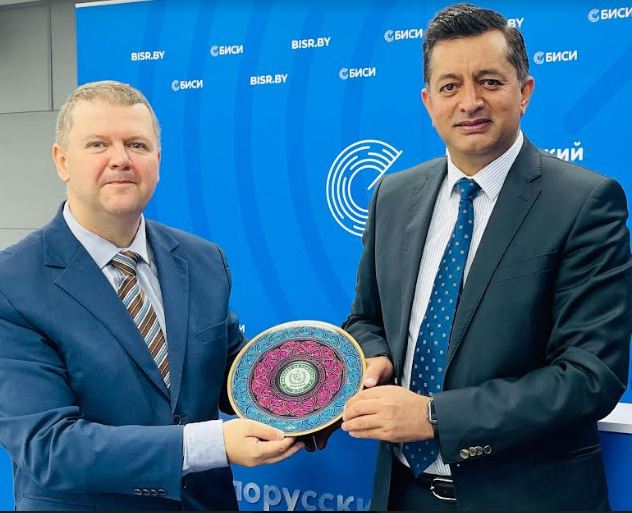
AMBASSADOR SAJJAD HOLDS MEETING WITH DIRECTOR BELARUSIAN INSTITUTE FOR STRATEGIC RESEARCH (BISR)

MINSK, Sept 3: /DNA/ Ambassador Sajjad Haider Khan met with the Director of the Belarusian Institute for Strategic Research (BISR), Mr. Oleg Makarov. The meeting was also attended by Deputy Director, Vitaly Stakhovsky, and Expert, Mr. Yury Yarmolinsky. 
During the meeting, the two sides discussed the possibilities of cooperation between the leading think tanks and research centers of Pakistan with BISR. The Ambassador confirmed his readiness to contribute to the establishment of stronger ties between the think tanks of Belarus and Pakistan and the possibility of his personal further participation in round tables and events organized by the experts of the Institute.

International, Domestic Flight Schedule Disrupted After Rains, Caa Says

KARACHI : After the heavy rains lashed parts of Sindh with Jinnah Terminal amongst Karachi regions to receive heaviest rains, the flights arriving and departing both have suffered disruption of schedule.

Civil Aviation Authority has confirmed the flights scheduled to fly today have been delayed due to heavy rains while those arriving in the city have suffered difficulties in the landing.

CAA has circulated an alert across all airports of Pakistan that only after the weather has stabilized that the flight operation will fully restore.

All international and domestic flights will see or have seen two- to -four-hour delays, CAA said.

The notification has been sent to all the airlines, including Pakistan International Airlines, private local airlines and international ones, too. All the planes are to be parked in a safe space, CAA cautioned airlines.

Relevant to note that the monsoon spell currently spanning over Sindh will have intermittent heavy rains continuing for hours on Friday due to an activated storm cell in the atmosphere, Pakistan Meteorological Department said.

The series of episodic rains will continue across Sindh due to the active storm cell in the system, the Met Office said.

Some Karachi areas will receive light to moderate showers while some will get heavy pours, said the Met officials.

Taliban co-founder Baradar to lead new Afghanistan government: sources

KABUL, SEPT 3 -Taliban co-founder Mullah Baradar will lead a new Afghan government that could be announced soon, sources in the group said on Friday, as it battled rebel fighters while striving to ward off economic collapse.

Baradar, who heads the Taliban’s political office, will be joined by Mullah Mohammad Yaqoob, the son of late Taliban founder Mullah Omar, and Sher Mohammad Abbas Stanekzai, in senior positions in the government, three sources said.

“All the top leaders have arrived in Kabul, where preparations are in final stages to announce the new government,” one Taliban official told Reuters, on condition of anonymity.

The Taliban, which seized Kabul on Aug. 15 after sweeping across most of the country, have faced resistance in the Panjshir Valley, north of the capital, with reports of heavy fighting and casualties.

Several thousand fighters of regional militias and remnants of the government’s armed forces have massed in the rugged valley under the leadership of Ahmad Massoud, the son of former Mujahideen commander Ahmad Shah Massoud.

Efforts to negotiate a settlement appear to have broken down, with each side blaming the other for the failure.

HUMANITARIAN CATASTROPHE

The government’s legitimacy in the eyes of international donors and investors will be crucial for an economy grappling with drought and the ravages of a conflict that killed an estimated 240,000 Afghans.

Humanitarian groups have warned of impending catastrophe and the economy, reliant for years on many millions of dollars of foreign aid, is close to collapse.

Many Afghans were struggling to feed their families amid severe drought well before the Taliban took power and millions may now face starvation, aid agencies say.

“Since August 15, we have seen the crisis accelerate and magnify, with the imminent economic collapse that is coming this country’s way,” Mary-Ellen McGroarty, the director of the World Food Programme in Afghanistan, told Reuters from Kabul.

The administration of U.S. President Joe Biden has no plans to release billions in Afghan gold, investments and foreign currency reserves parked in the United States that it froze after the Taliban’s takeover.

In a positive development, a senior executive of Western Union Co said the firm was resuming money-transfer services to Afghanistan in line with a U.S. push to keep up humanitarian work.

RECOGNITION

The Taliban enforced a radical form of sharia, when it ruled from 1996 to 2001.

But this time around, the movement has tried to present a more moderate face to the world, promising to protect human rights and refrain from reprisals against old enemies.

The United States, the European Union and others have cast doubt on such assurances, saying formal recognition of the new government, and the resultant flow of economic aid, was contingent on action.

The Taliban have promised safe passage out of the country for any foreigners or Afghans left behind by the huge airlift that ended when U.S. troops withdrew ahead of an Aug 31 deadline. But, with Kabul airport still closed, many were seeking to flee over land.

Thousands of Afghans, some without documents, others with pending U.S. visa applications or whose families have mixed immigration status, also wait in “transit hubs” in third countries.

ENDING FEAR, UNCERTAINTY, BIGGEST GOVERNANCE CHALLENGE FOR IEA IN AFGHANISTAN

ISLAMABAD, SEPT 3 /DNA/ -In the wake of complete US withdrawal, brain drain from Afghanistan is posing a serious threat to a return to normalcy as skilled and educated people, facing an uncertain future, are leaving their country in desperation. This warrants some immediate action by the Taliban’s Islamic Emirate of Afghanistan to ensure predictability in governance so that the prevailing chaos engulfing the lives of millions of common Afghans can come to an end.
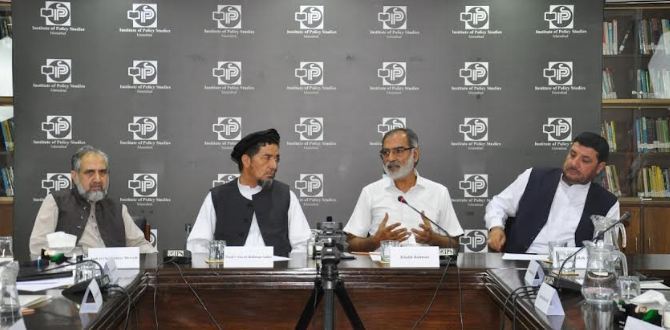
This sentiment resonated at a roundtable titled ‘Afghanistan: Post-US Withdrawal – Present and Future Challenges’ which was organized by Institute of Policy Studies, Islamabad (IPS).
The roundtable was attended by academics, intellectuals, journalists, students, members of Pak-Afghan Youth Forum (PAYF), and Afghan delegates comprising politicians, former Afghan government officials and journalists.
The Afghan delegates included Maulvi Ataa-ur-Rehman Saleem, deputy chairman of National Peace Council, Ahmadullah Alizai, former governor of Kabul, Husani Mubarak Azizi, minister of transport, and Jamaluddin Badr, former governor of Nuristan province.  
Khalid Rahman, IPS chairman, Ambassador (r) Syed Abrar Hussain, IPS vice chairman, Brigadier Said Nazir, strategic affairs expert, Juma Khan Sufi, author and Afghan affairs expert, Mahmood Jaan Babar, journalist, Dr Tughral Yamin, dean Center of International Peace and Stability, NUST, Dr Mohammad Iqbal Khalil, chairman Institute of Regional Studies, Peshawar, Dr Haroon Khatibi, director, Centre for Strategic and Regional Studies (CSRS), and Salman Javed, DG PAYF participated in the roundtable deliberations. 
The speakers were of the view that the Taliban are a reality and acceptance of this can help in chalking out a pragmatic future line of action guaranteeing prosperity of Afghanistan. To achieve this, all Afghan factions representing different political and ethnic shades need to sit together and engage with each other for the formation of an inclusive government.
It was also felt at the session that the vacuum of a government structure in the existing scenario has given birth to political instability and uncertainty, resulting in fears and apprehensions among Afghans who want peace and stability so that business activities can resume and skilled people can find job opportunities.
Stressing the need for looking at the current situation in Afghanistan through the prism of humanitarian crisis, the delegation urged Pakistan and other regional countries to come forward to help Afghans who are in dire need of food and economic assistance.
They also requested neighboring countries, especially Pakistan, to open their borders to accommodate stranded Afghan refugees in their hour of need.
Strong cultural, religious, ethnic, academic and historic ties between Pakistan and Afghanistan were also discussed at the roundtable. The discussants maintained that 90% of Afghan religious clerics received their education in Pakistani madrasas and many senior government officials completed their higher education during their stay in Pakistan as refugees.
The speakers lamented the prevailing uncertainty which is also taking its toll on Afghan students who are unsure about their academic future post US withdrawal. They urged academia in Pakistan to step up efforts to facilitate Afghan students access better education. This will also improve bilateral people-to-people contacts between both the nations.
Concluding the session, Khalid Rahman opined that the Taliban should be given some time to form a government and demonstrate their governance and normalize the situation in Afghanistan. 
He cautioned against enemies of both Afghanistan and Pakistan who continue portraying a sorry picture of the state of affairs in Afghanistan and sabotage Pak-Afghan bilateral relations for their vested interests by spreading hate and misinformation.

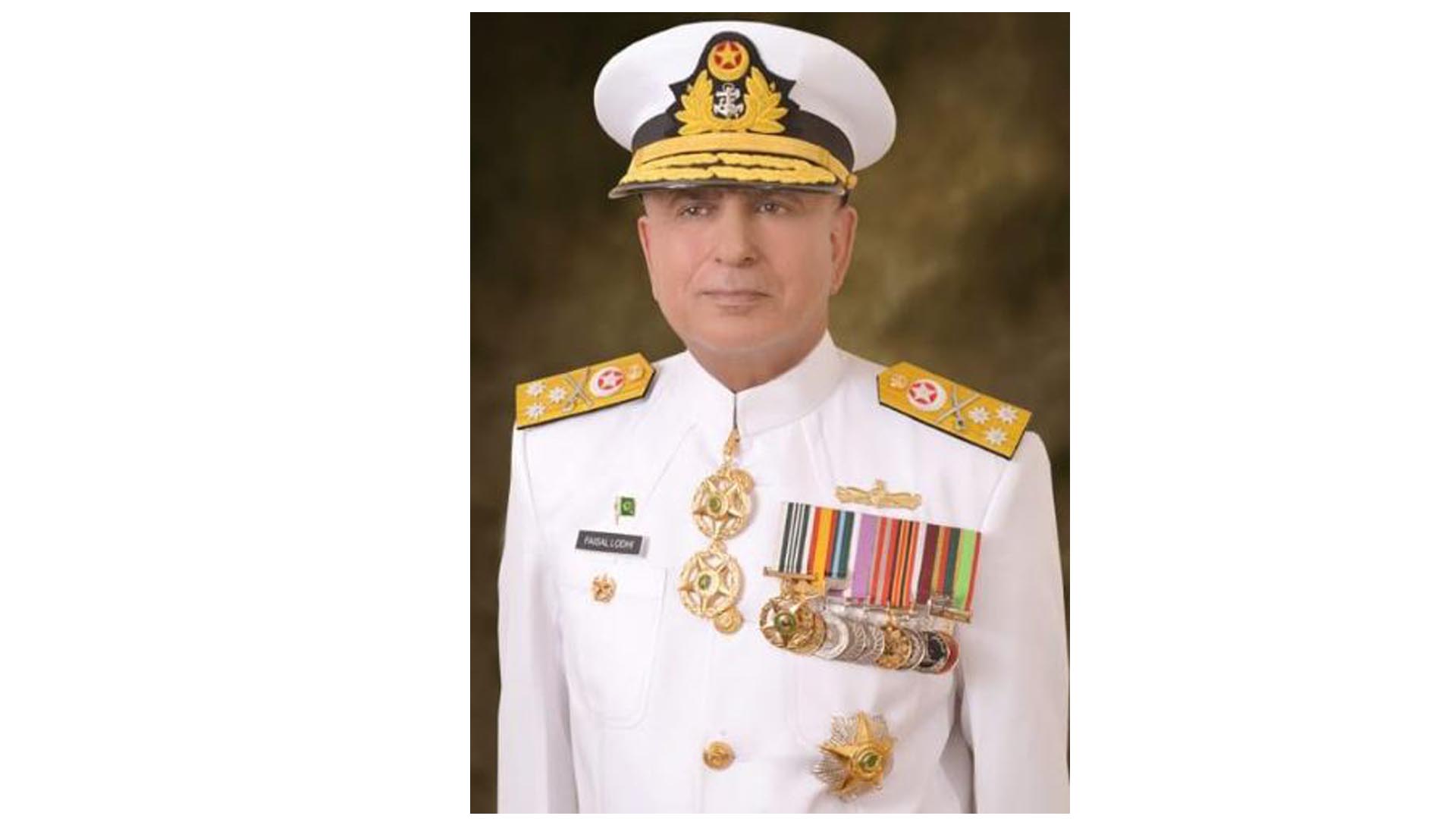
VICE ADMIRAL FAISAL RASUL LODHI APPOINTED AS VICE CHIEF OF NAVAL STAFF

ISLAMABAD, SEPT 3 /DNA/ -Vice Admiral Faisal Rasul Lodhi has been appointed as Vice Chief of the Naval Staff (VCNS). Vice Admiral Faisal Rasul Lodhi was commissioned in Operations Branch of Pakistan Navy in 1986. Admiral has an illustrious career with wide ranging Command and Staff appointments.

His major Command appointments include Commanding Officer PNS TARIQ, Director Pakistan Navy Tactical School, Flag Officer Sea Training, Commander Coast and Commander Karachi. His major Staff appointments include Directing Staff at Pakistan Navy War college, Director Naval Warfare & Operational Plans at Naval Headquarters, Fleet Operation officer, Chief Staff Officer to Commander Pakistan Fleet, Liaison Officer US CENTCOM USA and Naval Secretary.

Lately, he has been appointed as Deputy Chief of Naval Staff (Operations) and Chief of Staff at Naval Headquarters, Islamabad. The Admiral has also performed duties as Additional Secretary-III in Ministry of Defence.

Vice Admiral Faisal Rasul Lodhi is a graduate of Pakistan Navy War College Lahore, National Defence University Islamabad, Royal College of Defence Studies UK and Naval Command & Staff College Philippines. He also holds Master’s Degree in International Security & Strategic studies from United Kingdom. In recognition of his meritorious services, the Admiral has been awarded Hilal-i-Imtiaz (Military).

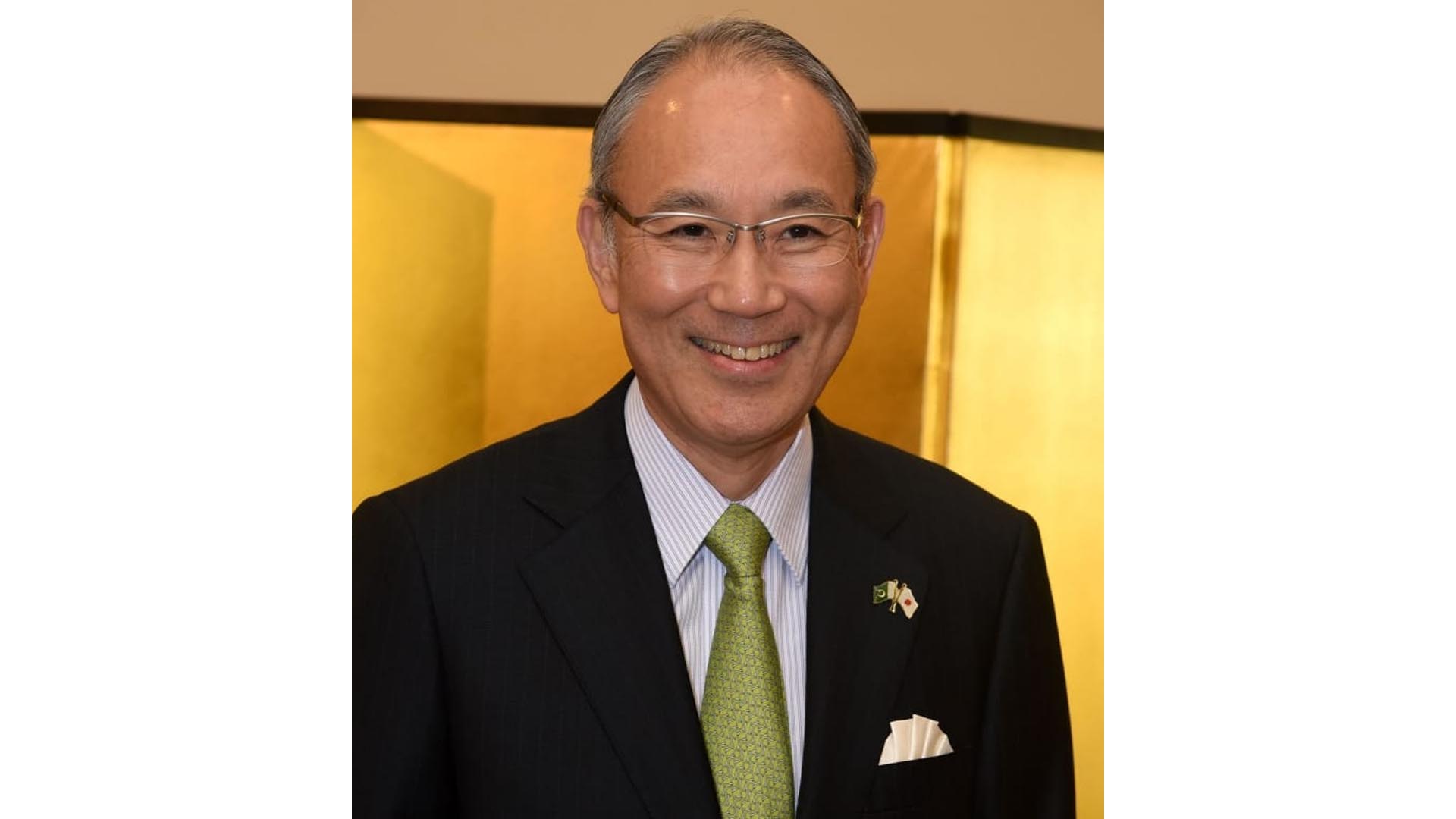
TOKYO PARALYMPICS: AMBASSADOR MATSUDA GREETS HAIDER ALI IN DISCUS THROW

ISLAMABAD, SEPT 3 /DNA/ – Ambassador MATSUDA Kuninori extends congratulations to Mr. Haider Ali, Pakistan’s premier para-athlete, for showing his great talent by winning the Gold Medal in the final of men’s Discus throw (F37) competition in the Tokyo Paralympics and conveys best wishes for his future endeavors.
“ I am truly delighted to see Pakistani athlete’s success in the Tokyo Paralympics.  My sincere congratulations to Haider Ali, his family and the people of Pakistan for this amazing success to achieve the Gold Medal.  I believe that you have made your country proud and won many hearts back home for your brilliant performance in the world’s mega event. ”, said the Ambassador.
Haider Ali secured the Gold Medal in men’s Discus throw (F37) with a throw of 55.26m, which also was his personal best score.

Sc Orders Agp To Conduct Audit Of Pr’s Old Gulf Club

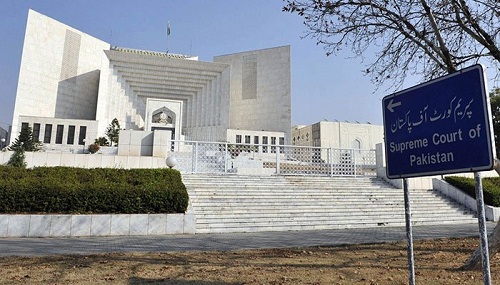
ISLAMABAD: The Supreme Court (SC) on Friday directed the auditor general of Pakistan (AGP) to conduct audit of the Old Gulf Club, owned by Pakistan Railways.

A three-member bench of SC headed by the acting chief justice of Pakistan while showing the resentment over the non-issuance of the tender for the lease of the Old Gulf Club remarked why the authorities have failed in releasing the tender despite the passage of two and half years.

Justice Ijazul Ahsan asked the railway authorities how long it will take to release the lease tender for the Gulf Club. He further remarked that the advisor to the railways’ minister has started looting the national assets soon after his appointment.

New staff has been recruited in the Gulf Club by expelling the old one while the advisor is also giving honorary membership of the club, Justice Ahsan asked.

“Where are the international investors who were roaming along with briefcases” he was quoted as saying during the hearing.

Later, the SC directed the private company to complete its ongoing audit soon also directed the AGP to initiate an audit of the Old Gulf Club.

The hearing was adjourned for an indefinite period.

Following the orders of the Supreme Court (SC), last month, the Interior Ministry had placed Shahrukh Khan, advisor and head of the Royal Palm Golf and Country Club, owned by the Pakistan Railways (PR) on the Exit Control List (ECL), citing well-informed sources.

ITALIAN FM TO ARRIVE ON SUNDAY

DNA

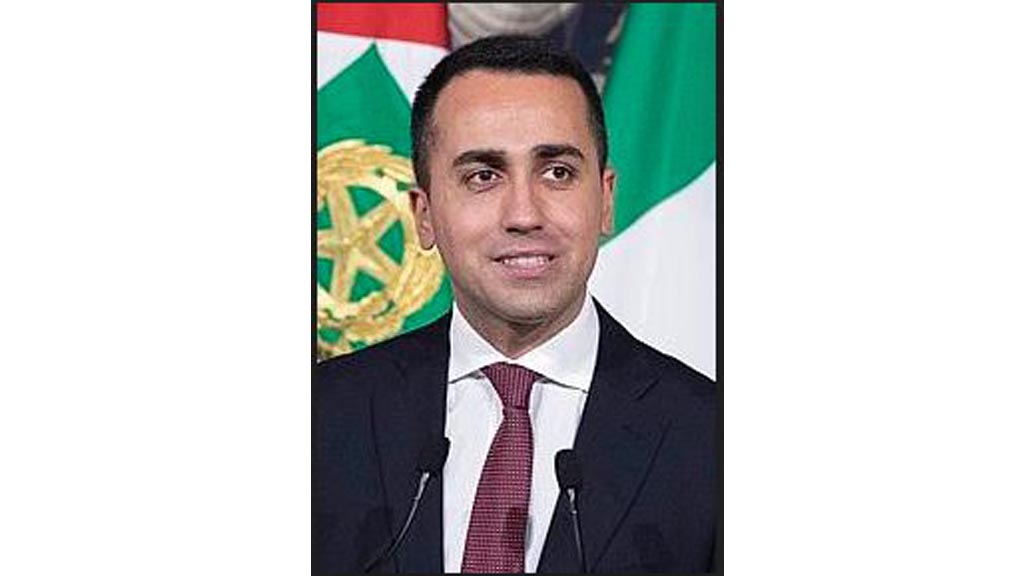
ISLAMABAD: Italian Foreign Minister Luigi Di Maio is expected to arrive in Pakistan on Sunday for bilateral talks. The Italian foreign minister during his visit is scheduled to meet with the high level Pakistani officials.

The Italian minister’s visit takes place in wake of recent developments in Afghanistan. The minister will ostensibly discuss the emerging Afghan scenario with the Pakistani authorities. The visit of the foreign minister will further strengthen bilateral relations between Pakistan and Italy.

Stay Connected

64FansLike
60FollowersFollow

Latest Reviews

Exchange Rates

USD - United States Dollar
EUR
1.15
GBP
1.34
AUD
0.70
CAD
0.71