Home Blog Page 1535

Local printing industry key to employment generation: Murtaza

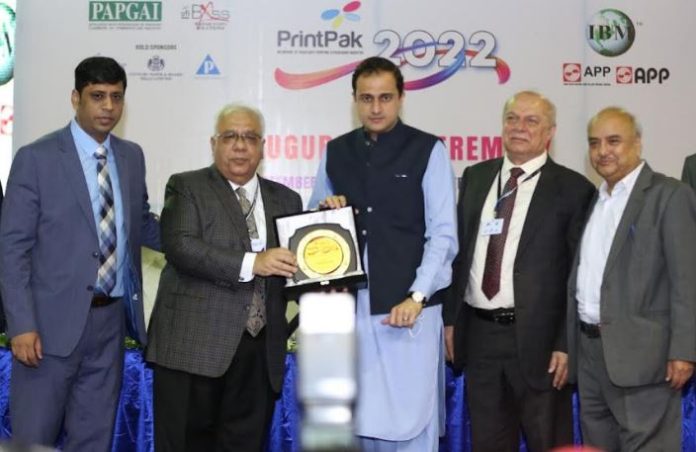
Karachi, Sept 3 /DNA/ – Administrator Karachi Murtaza Wahab has said that printing industry is a key industry in today’s world the country’s industry is contributing heavily towards employment generation.

Murtaza stated this while inaugurating PrintPak, which is the country’s biggest printing graphic arts and packaging exhibition, at Karachi Expo Center on Saturday.

He said that Karachi Metropolitan Corporation will provide land to the local paper industry under public private partnership for establishing training institutes for skill development of our youth.

Chairman Pakistan Association of Printing and Graphic Arts Industry (PAPGAI) Aziz Khalid in his speech said that this industry is one of the largest after the textile sector with the employment of over a million workforce.

“This industry serves as a backbone for sectors like FMCG, Textile, Publication Houses, Confectionery, Pharmaceuticals, and many others. Pakistan is manufacturing top quality printed products to cater to the ever growing domestic and international demand,” said Khalid.  

Hence, he added, the industry has witnessed investments in new machinery and technology from current and new players as the industry foresees an increase in demand domestically given the increasing retail landscape along with export opportunities for the sector.

He added that the association has also provided a platform to State Bank of Pakistan to disseminate information regarding SME schemes among its members as it will not only help the industry glow but will also provide a fair opportunity for SMEs to contribute their share towards the national economy.

President Karachi Chamber of Commerce and Industries (KCCI) M Idrees in his speech said that this industry is a significant contributor to the economy in the form of taxes, provision of employment opportunities, to both skilled and unskilled, and skill development of people associated with the industry.

“I hope that these efforts by industry in general and PAPGAI in particular will continue to gather pace for the betterment and efficiency,” said M Idrees.

Convener PAPGAI Basit Zaidi said that support from the government through fair policies would help Pakistan to tap the potential of the export market worth $8-16 billion for the printing sector only.

“Given the cost effectiveness of operations backed by talented pool of human resource, Pakistan’s printing industry has a comparative advantage to penetrate and create a footprint in the export market. It has a clear advantage over countries like China and Malaysia where the labor cost is relatively high,” said Zaidi.

In the end, Zohair Naseer MD Badar Expo Solutions and Aziz Khaild Chairman PAPGAI gave away Mementos to the Chief Guest.

Anjum Nisar says initial economic losses from floods to surpass $10-12b

ISLAMABAD, /DNA/ -The Federation of Pakistan Chambers of Commerce and Industry’s Businessmen Panel (BMP) has warned that a food crisis could be imminent followed by the floods, which have caused widespread devastation, calling the world to work with the government to mobilize resources for immediate response to support the country’s relief efforts.

FPCCI former president and BMP Chairman Mian Anjum Nisar said that the initial economic losses from floods in Pakistan could surpass $10-12 billion, as unprecedented flash floods caused by abnormal monsoon rains have washed away crops, infrastructure and bridges, killing thousands and affecting more than 30 millions.

He asked the government to identify priority needs, including food security, agriculture and livestock, health, water, sanitation, hygiene, shelter, and nonfood items.

The country’s agricultural sector, especially in Sindh and Balochistan, has been hit the hardest with the finance ministry also recently warning that production of major crops would be affected due to the floods. He said 100% of the cotton crop in Sindh, which accounts for30% of the crop in Pakistan, has been destroyed, which amounts to losses of at least $1 billion, which will cascade through the economy, he said.

He said it might take five years to rebuild and rehabilitate the South Asian nation of 200 million people, which will be facing an acute challenge of food shortage.

We need to work continuously with federal and provincial authorities to identify how we can help financing the growing needs as the extent of the disaster evolves, and mobilize further finding for the large relief, rehabilitation and reconstruction efforts that are to come in the recovery phase.

Presently, country needs billions grant to support the government of Pakistan’s emergency relief efforts amid widespread floods across the country.

He said that the whole business community stands with the people of Pakistan during these difficult times, as we are committed to working with the government and other development partners to help Pakistan overcome the devastating impact of this natural disaster and provide immediate relief to affected families.

We require teams to also help assess the damage caused by floods to draw up plans to support longer term rehabilitation efforts and strengthen communities’ climate resilience, he said.

Heavy rains across Pakistan have triggered flash floods, landslides, and glacial lake outbursts. In July, the country received more than 60 percent of average annual monsoon rainfall in just three weeks. Over 30 million people are estimated to have been affected by the floods with more than 1100 deaths reported while almost half a million people are currently in relief camps. Pakistan has been ravaged by torrential rains resulting in flash floods from north to south, causing large-scale infrastructure damage, as 20% of the sugarcane crop in Sindh has been damaged, which makes up 10% of the entire country’s sugarcane production, he said. More than half of Sindh’s onion and tomato crop has been destroyed and 80% of the rice crop has also been destroyed, which will adversely affect farmers in the province.

He said that over 800,000 livestock perished due to floods, mostly in Balochistan.

He said that already inflation rate in August has jumped to a 47-years-high level of 27.3% due to the government’s decision to increase prices of electricity and fuel, as it burdens consumers of the petrol even more than what is required under a deal with the International Monetary Fund. Quoting the Pakistan Bureau of Statistics he said that the year-on-year inflation rate remained at 27.3% in August, the highest rate since May of 1975 when the reading had been recorded at 27.8%.

Transport group inflation rate was recorded over 63% on the back of petrol prices that saw an 84% increase, followed by one-third average increase in prices of perishable food items. The cost of electricity also went up by 123% in August compared to a year ago due to increase in tariffs on account of annual tariff adjustment and monthly fuel price adjustment, severely hitting the budget of the middle-income group.

The adverse impacts of the floods and consequent disruption in food supplies will be visible in the inflation reading for the month of September, which may push the rate far higher than that of August.

He said that Pakistan has been facing a boom-and-bust cycle every now and then. The country’s taxation system is import-based, as 52% of the collection is through ports in customs duties, sales tax etc.

British High Commissioner visits flood relief camp in Nowshera

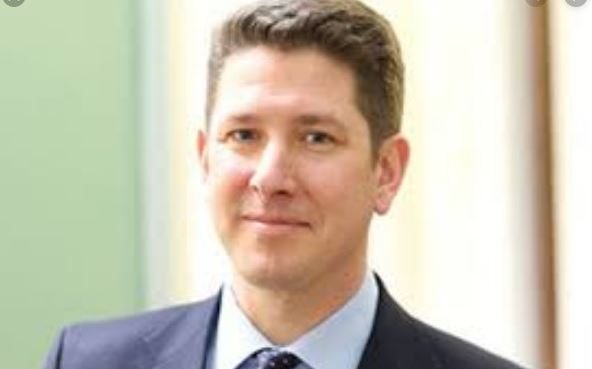
ISLAMABAD, SEP 3: /DNA/ – Days after the UK announced an additional £15 million to help affected communities, British High Commissioner Christian Turner visited flood hit villages in Nowshera on Saturday where a UK charity Islamic Relief is providing lifesaving aid to those affected.

This money will be spent for urgent life-saving support and go towards water and sanitation, shelter and home repairs, and primary healthcare, especially for women and girls. 

Accompanied by Islamic Relief Worldwide’s CEO Waseem Ahmad and Islamic Relief Pakistan’s Country Director Asif Sherazi, the High Commissioner witnessed first-hand the devastating impact of the climate catastrophe. Expressing solidarity with the people at the camp, the British High Commissioner reaffirmed the UK’s commitment to Pakistan and observed the challenges faced by the community along with efforts to support those affected.

Islamic Relief is a member of the Disasters Emergency Committee (DEC) that launched the Pakistan Floods Appeal to collect funds for relief efforts; the UK government has announced it will match pound for pound the first £5 million of public donations, as part of the total £15 million pledge. 

The High Commissioner also visited village Kakol Abad and met with affected communities. He expressed his sorrow at the losses incurred during the flooding and assured them of UK’s continued support

British High Commissioner Christian Turner said:

“The people I have met today are strong and will rebuild. But they need urgent support with water, sanitation and shelter. The UK is helping provide that. The standard you walk past is the standard you accept.”

Islamic Relief Country Director Asif Sherazi said: 

“The situation is worsening with every passing day and in terms of damages, it is surpassing the floods of 2010. We are on ground since 3rd August meeting the needs of the affected across the country with shelters, clean drinking water, cash grants, food and hygiene items. Till now we have reached 30,000 people with lifesaving aid that will be doubled in the next week. The aim is to support half a million under our emergency response. Since the needs are huge and dire, we really appreciate the UK’s increased support for the humanitarian response and the DEC appeal, and we urge the UK government and other countries for increased funding for the recovery phase too.”

Gulf security is perilous with or without a revived Iran nuclear accord

With the fate hanging in the balance of the 2015 international agreement that curbed Iran’s nuclear program, prospects for greater security and stability in the Middle East are meagre with or without a deal.

Undoubtedly, the region will be better off with a revival of the accord from which the United States walked away in 2018 than without a US and Iranian recommitment to the deal.

A recommitment could be only days away if European Union foreign policy chief Josep Borrell is right. Adding to the anticipation, US National Security Council spokesman John Kirby said the United States was also “cautiously optimistic.”

Even so, the impact of a revival is likely to be limited.

It is safe to assume that the covert war between Israel, bitterly opposed to a revival of the agreement, and Iran will continue irrespective of whether Iran and the United States recommit to the deal.

The war is being fought not only on Iranian and Israeli territory and cyberspace but also in other parts of the Middle East, including Syria, Iraq, Lebanon, Gaza, and potentially Yemen.

“Most leaders and senior officials in Israel’s current government believe that while Iran’s acquisition of such (nuclear) weapons will pose very serious security challenges, Israel is a regional power possessing a wide range of options for dealing with such challenges. Among these many options is a more explicit deterrence posture, utilizing the country’s alleged ‘nuclear option.’ Thus, in a recent event at Israel’s Atomic Energy Commission (AEC), (Israeli Prime Minister Yair) Lapid made reference to his country’s ’other capabilities,’ praising the AEC’s ranks and leadership for insuring Israel’s survival,” noted Israel scholar Shai Feldman.

Israel is, so far, the Middle East’s only nuclear state, even though it has never acknowledged its possession of nuclear weapons or signed the Non-Proliferation Treaty (NPT).

Gulf states share Israel’s concern that the agreement, at best, slows Iranian progress towards becoming a nuclear power and does nothing to halt Iranian support for allied non-state actors like Hezbollah in Lebanon, pro-Iranian forces in Iraq, Islamic Jihad in Gaza, and Houthi rebels in Yemen or Iran’s ballistic missiles program.

However, Iran has so far refused to discuss those issues. That could change if they were considered part of a holistic discussion of regional security. That, in turn, would have to involve all parties, including Israel and Turkey, and potentially be linked to security in the Eastern Mediterranean, the Caucasus, and South Asia.

Adding to the limited impact of a revival of the nuclear deal is uncertainty about the sustainability of the dialling down of tensions in the Middle East between Israel, Gulf states, Egypt, Turkey, and Iran.

The fragility of some of these relationships is evident in the slow progress of efforts to renew ties between Saudi Arabia and Iran; Turkey and Egypt; and differences and rivalries between various Middle Eastern players, including Turkey, Israel and Iran, and the United Arab Emirates and Qatar as they play out in countries like Afghanistan, Syria, Yemen, Libya, and Iraqi Kurdistan.

The fragility is evident in the lack of confidence complicating Russian-mediated efforts to achieve a rapprochement between Turkey and Syrian President Bashar al-Assad. Moreover, the Russian attempt reverberates in the Gulf, where Qatar and Saudi Arabia oppose UAE endeavors to return Mr. Al-Assad to the Arab fold, 11 years after Syrian membership in the Arab League was suspended because of the civil war.

Add to that the proxy war between Iran, Turkey, and Israel fought over the backs of Iraqi Kurds and Iraqi-Turkish tensions because of Turkey’s military operations in northern Iraq that target Turkish Kurdish rebels.

Recent rocket attacks on a UAE-owned oil field in northern Iraq persuaded US contractors to abandon the project for a second time. Nobody has claimed responsibility for the attacks.

Mitigating in favour of a firmer grounding of the reduction of regional tension is the fact that it is driven not only by economic factors such as the economic transition in the Gulf and the economic crisis in Turkey, Iran, and Egypt but also by geopolitics.

China and Russia have spelled out that they would only entertain the possibility of greater engagement in regional security if Middle Eastern players take greater responsibility for managing regional conflicts, reducing tensions, and their own defense.

Rhetoric aside, that is not different from what the United States, the provider of the Middle East’ security umbrella, is looking for in its attempts to rejigger its commitment to security in the Gulf.

The implication is that a transition is inevitable in the longer term to a multilateral regional security architecture that could still have the US as its military backbone.

The trend towards multilateralism will be driven as much by the strategic US focus on Asia, the effort to reduce European reliance on Russian energy in the wake of the invasion of Ukraine, and, ultimately, Chinese unwillingness to be dependent on a hostile US for its energy security.

The understandings and agreements between all regional states, including those that do not have diplomatic relations, such as Israel, Iran, and Saudi Arabia, needed to introduce a multilateral security arrangement would be paradigm-shifting and tectonic.

The sea change would have to be based on three principles enunciated this week by Indian foreign minister S. Jaishankar regarding his country’s relations with China that are equally applicable in the Middle East: mutual sensitivity, mutual respect, and mutual interest.

The understandings and agreements would have to involve credible abandonment of notions of regime change; recognition of the internationally recognized borders of all regional states, including Israel; non-aggression pacts; conflict management and conflict resolution mechanisms; arms control; a resolution of the Israeli-Palestinian conflict; and a nuclear free zone, to name the most difficult and seemingly utopian ones.

Given its ambition to play a more prominent role, India could significantly enhance its influence in the Middle East and set the tone if it were willing to join the admittedly troublednon-proliferation pact.

That would have to involve Pakistan also joining the NPT on the back of a genuine effort by both countries to resolve their differences and a halt to discriminatory anti-Muslim policies of the government of Indian Prime Minister Narendra Modi – steps that seem as impossible as the moves that Middle Eastern states would need to make.

The NPT’s shortcomings, beyond the refusal of nuclear states like Israel, India, Pakistan, and North Korea to join the treaty, were highlighted when signatories disagreed on a review of the 50-year-old pact last month.

Even so, a recent opinion poll in Saudi Arabia showed that India has some way to go in convincing the Middle East of its relevance compared to the United States, Russia, China, and Europe. Only 37 per cent of those surveyed believed ties to India were important to the kingdom.

India signalled its ambition to project power and membership in an elite club of nations with the commissioning this week of its first domestically built aircraft carrier, the INS Vikrant.

The biggest obstacle to a more stable regional security architecture is the deep-seated hostility and distrust between Israel and Iran against the backdrop of a seemingly inevitable nuclear arms race in which Saudi Arabia and Turkey would strive to obtain capabilities of their own.

That race will be accelerated if efforts to revive the Iran nuclear deal fail but will not be definitively thwarted if Iran and the United States recommit to the agreement.

The fact that the fate of Iran’s nuclear program is the switch at a Middle Eastern crossroads underscores the need to tackle sensitive issues head-on rather than kick the can down the road for opportunistic domestic political reasons.

It also highlights the need for a concerted regional and international effort and confidence-building measures inspired by the concessions they would entail. That, in turn, would require the political will to revisit issues without the debilitating lens of ideology, preconception, and prejudice.

Iran’s nuclear program is a case in point.

In the 1980s, Iran’s leaders revived the country’s nuclear program as a result of the Iran-Iraq war. The program was originally initiated in the 1960s by the Shah and initially put on hold in the wake of the 1979 Islamic revolution.

However, the war persuaded Iran’s leader that the program could be a deterrence against perceived US efforts to change the regime In Tehran. The conviction that the United States and the Gulf were seeking to topple the Islamic regime was cemented by their support for Iraq’s eight-year war in which Saddam Hussein, a no-less brutal leader than Iran’s revolutionaries, deployed chemical weapons.

The Gulf war also sparked the Islamic republic’s ballistic missile program and its interest in developing a chemical weapons capability. Iranian leaders’ willingness to work with Israelis suggested they were not picky in choosing whom to cooperate with to achieve their goals.

To be sure, the knife cuts both ways. Iran’s declared ambition to export the revolution, coupled with the 444-day occupation in 1979 and 1980 of the US embassy in Tehran, was destined to provoke a response.

Yet, when Iranian leader Ayatollah Ruhollah Khomeini in 1988 swallowed the “poison” of agreeing to a ceasefire with Iraq in a war that Iran had not started, nationalism had largely replaced revolutionary zeal.

The subsequent emergence of pro-Iranian militias in various Arab countries was part of a defense and security strategy designed to take the fight to Iran’s detractors and an effort to ensure Iranian regional influence rather than export the revolution per se.

There is no guarantee that less US, European, and Gulf support for Iraq’s war effort and a more evenhanded approach to the conflict would have set the Islamic republic and the Middle East on a different course. But, by the same token, there is no guarantee that the region would be worse off had the international community attempted to do so.

Whatever the case, the reality is that Iran today is at the very least close to becoming a nuclear threshold state and will be one with or without a revival of the nuclear accord. That does not mean that the agreement has become irrelevant. On the contrary, its fate, no matter how flawed or problematic the agreement may be, will shape regional security in the foreseeable future.

It will determine the environment in which confidence can or cannot be built, and understandings can be achieved on sensitive issues without which any attempted multilateral security architecture will either be impossible to construct or if created, likely to collapse if it is not stillborn from the outset.

A realistic assessment of what is possible could help kickstart a process to create a more sustainable basis for a dialling down of regional tensions.

One such assessment would be a realistic evaluation of military options to halt Iran’s nuclear program.

Respected Israeli national security journalist Yossi Melman argues that Israel lacks the military capabilities to destroy Iran’s decentralised program despite claims to the contrary, partly because the US has not sold its bunker-busting bombs.

“The United States is the only country with a military option against Iran. But…(has) eschewed that route,” Mr. Melman noted.

Similarly, Iran and its detractors risk being blinded by their perceptions of the other, which become a self-fulfilling prophecy reinforced by mutual demonization.

Mr. Melman notes that countries like Israel, India, Pakistan, and North Korea determined to develop nuclear weapons did so within five to seven years. Iran revived its nuclear program more than three decades ago.

“How can we explain that 35 years after it launched its efforts, Iran still doesn’t have a bomb and hasn’t even passed the nuclear threshold?” Mr. Melman asked in a recent analysis.

Dr. James M. Dorsey is an award-winning journalist and scholar, an Adjunct Senior Fellow at Nanyang Technological University’s S. Rajaratnam School of International Studies, and the author of the syndicated column and blog, The Turbulent World of Middle East Soccer.

2022 China Tourism and Culture Week to kick off in Pakistan

China Cultural Center in Pakistan has launch a series of online activities to celebrate “2022 China Tourism and Culture Week” in September

DNA

Islamabad, SEP 3: China Cultural Center in Pakistan has launched a series of online activities to celebrate the global “2022 China Tourism and Culture Week” in September.

The officially launch ceremony of “2022 Chinese Tourism Culture Week” is scheduled to be held in Beijing on 6th September. Minister of Culture and Tourism H.E Hu Heping will attend and address the event. In conjunction with the launch ceremony, the 2022 China Tourism and Culture Week will start from September and end on September 15.

2022 China Tourism and Culture Week is jointly hosted by Bureau of International Exchange and Cooperation, Department of Intangible Cultural Heritage, Ministry of Culture and Tourism and People’s Daily Online, and organized by Overseas China Cultural Center and Overseas China National Tourism Office.

The event intends to promote Tourism and Culture on six themed topics including “City Constructions”, “Intangible Cultural Heritage for Poverty Reduction”, “Yellow River Culture”, “The Silk Road”, “Rural Revitalization” and “China Travel Course”.

The Silk Road series of documentaries aim to promote tourism and culture aspects of cities along the Silk Road. The playlist includes documentaries on “Cultural Heritage of Xinjiang”, “Xinjiang is a Wonderful Place”, “Dunhuang, a Cultural Sanctuary of Mankind”,  “All’s well in Gansu”, “Root & Soul”, “A Glimpse of Ningxia”, “Qinghai, the Province of Grand Beauty”, “Intangible Cultural Heritage of Qinghai”, “Shaanxi Culture”, “The Tibetan New Year” and “New Tourism in Xizang” .

City Construction aims to promote tourism resources in different cities across China such as Enshui, Hebei, Xijiang Qianhu Miao Village, Guizhou, Xi’an Shaanxi, Luoyang Henan, Dunhuang Gansu. 

Documentaries focusing Intangible Cultural Heritage on Xizang, Jiangxi, Guangdong and Beijing aims to portray the role intangible cultural heritage is playing in poverty reduction across China.  

Yellow River series of documentaries highlight the beautiful cultural and tourism resources of cities along the Yellow river, and “Rural Revitalization” series documentaries fully demonstrate the tourism and cultural aspects of villages across China. 

A week full of Cultural and Tourism enrich activities will provide a cultural and tourism feast for the viewers across Pakistan. So join us online to appreciate and experience China’s magnificent natural scenery, colorful cultural deposits, rapid urban and rural development, and the beautiful visualization of people living and working in peace and contentment.

In the following weeks, China Cultural Center in Pakistan will be sharing a variety of interesting virtual and online activities through short videos, trailers and posters covering performance, culture, cultural heritage, cuisine, beautiful landscapes and more.

For more details on upcoming exciting events, stay tuned and follow China Cultural Center in Pakistan on social media platforms, including facebook, Official Wechat account and Wechat Channels!

China’s global economic cooperation role model for world: Ambassador Haque

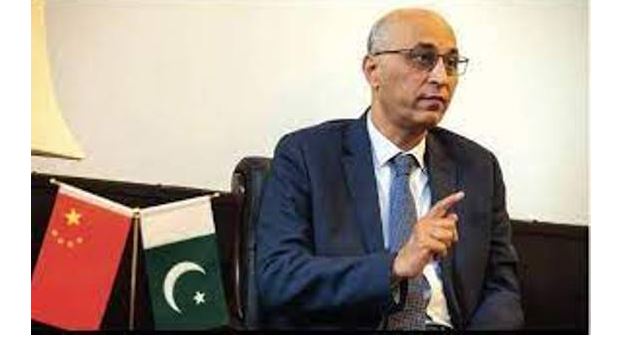
BEIJING, Sept 3 (DNA): Pakistani Ambassador to China, Moin ul Haque said that China is a role model for international cooperation and the global community should follow China’s example and make concerted efforts for greater international economic cooperation and regional connectivity, according to China Economic Net (CEN).
Addressing a forum titled “Beijing Day and Invest in Beijing Summit” at the China International Fair for Trade in Services (CIFTIS), Pakistani ambassador said, “Beijing’s development is injecting new impetus into the local economy, easing capital inflows and foreign investment to spurred industry and innovation.””China is committed to working with different countries for promoting multilateralism, inclusiveness, and cooperation in all fields.  
China is Pakistan’s largest trading partner and we are making our bilateral trade double by using China-Pakistan Free Trade Agreement”, Moin added.
Moin ul Haque further said that the China-Pakistan Economic Corridor (CPEC) the flagship project of the Belt and Road Initiative, provides another useful platform for concrete and mutually beneficial cooperation, added that in the second phase of CPEC, Pakistan is focusing on agricultural modernization, innovation, and technologies and Chinese investors should get benefit from these opportunities that exist in Pakistan today.
“I would like to take this opportunity to express special gratitude from the government and the people of Pakistan to the Chinese government and people for their very generous and timely support to Pakistan in these difficult times that we are facing because of the floods. 
This is a concrete example of our long-standing tradition of supporting each other whenever we face difficulties and national disasters” he mentioned.
“Let’s join hands to shape a community of shared destiny of our two countries rooted in mutual trust, strategic vision, and closer economic engagement for the future prosperity of our two countries,” he added.

75th anniversary of Pakistan : British Council partners with Lahore Biennale Foundation for Virtual Museum

75th anniversary of Pakistan

British Council partners with Lahore Biennale Foundation for Virtual Museum

DNA

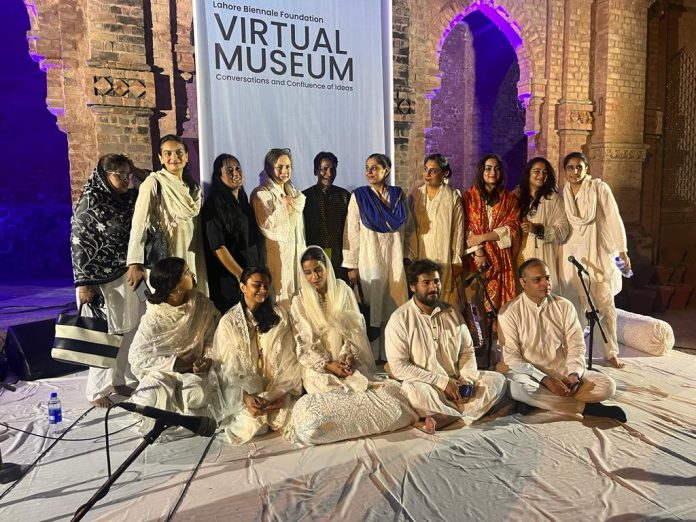
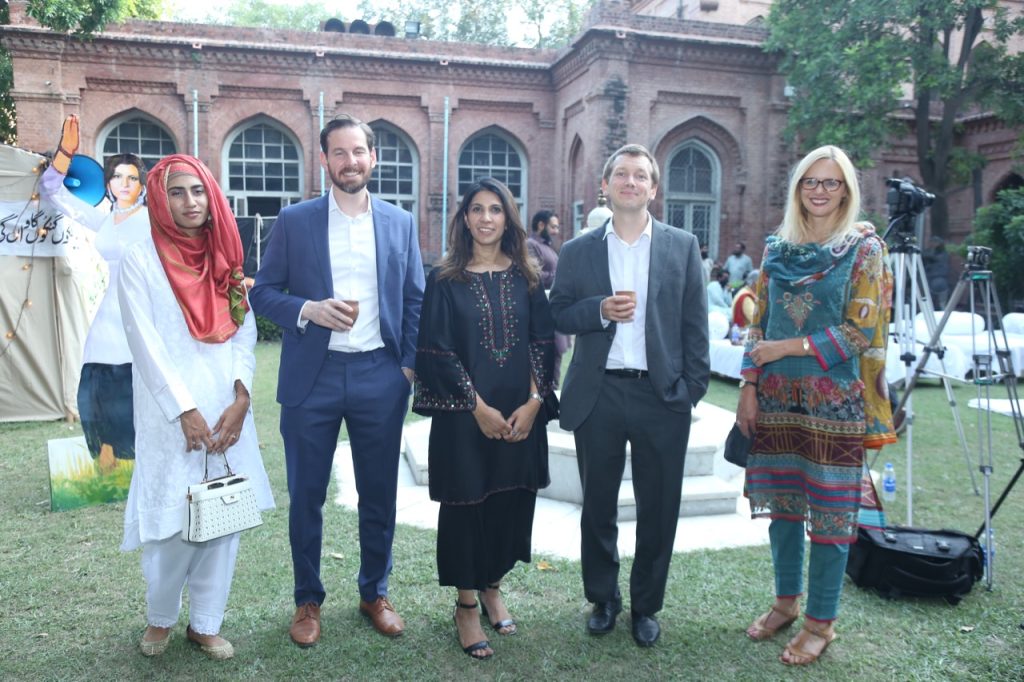
Lahore, Friday 2 September:The British Council and Lahore Biennale Foundation (LBF) havepartnered to launch the Lahore Biennale Foundation Virtual Museum project at the National College of Arts, Lahore. The virtual museum is a digital platform for artists, academics and creative practitioners to re-examine our shared cultural language and artistic legacy. The launch event was attended by senior members of the arts community as well as representatives from the British Council and the British High Commission. The project is part of the British Council’s Pakistan-UK Season: New Perspectives programme to mark the 75th anniversary of Pakistan.

The project invited a diverse group of curators, collaborators and artists across the board to respond and contribute to 75 years of Pakistan’s rich, multifaceted history and culture post-independence. The aim is to facilitate broader socio-cultural changes in public interaction which has led to the need of providing people with a virtual space to reconnect with their cultural heritage. The project also questions the role of the “traditional forms of museum making” and builds on the global reality of virtual connectivity despite physical borders, making cyberspace an ideal platform for local and global conversations – transcending boundaries by making knowledge production an accessible and open-ended reality. The LBF’s Virtual Museum engages in new forms of museum making, overcomes physical boundaries, and functions as an enduring online resource.

Kate Joyce, Business Director Cultural Engagement, British Council South Asia, said: “The Virtual Museum is an innovative way to use art and heritage in community building in an inclusive and impactful way. This formed part of our programme of activity for Pakistan/UK: New Perspectives programme. I look forward to many young artists and curators contributing to this space and meaningfully sharing ideas that pave the way for an inclusive and sustainable future. The tragic recent events in Pakistan with the floods underline the importance of working together to tackle global challenges.”

The curators and themes for the project are Dastaan-I-Urdu, curated by Ali Usman Qasmi (Co Curator: Mahmood Ul Hasan); The Body and Beyond: Women’s Movements in Pakistan, curated by Farida Batool; Taos Chaman – Post-Colonial Identity in Artistic Practices in South Asia, curated by Masooma Syed; Manduva: Exploring What We Won’t Like to Call ‘Lollywood’, curated by Sarmad Sultan Khoosat; Ilm-e-Mosiqui: Classical Legacies, Folk Music and Contemporary Classics, curated by Sarah Zaman and Architecture through Space and Time: Conversations with the first generation of Pakistani Architects, curated by Tanvir Hasan. All these themes respond to a different aspect of our country’s shared history, cultural language and artistic legacy.

RTIS

Qudsia Rahim, Executive Director at the Lahore Biennale Foundation, said: “The Lahore Biennale Foundation Virtual Museum is a unique form of archiving, knowledge making and exhibition discourse in response to the global socio-cultural changes in museum practice and public perception. Curated by a collaboration of leading local artists and academics (and not with a Western lens), it represents our shared history and heritage, and hopes to build upon the research as presented by local practitioners. With the current climate crisis in the country, it is now more crucial than ever, to come together, collaborate and help each other.”

UNHCR hands over 7,000 tents, thousands of emergency relief items to KP govt

From Our Correspondent, 

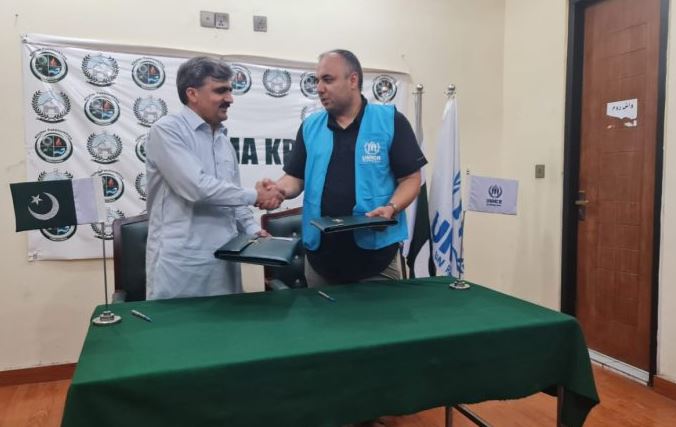
PESHAWAR, 2 Sept: UNHCR, the UN Refugee Agency has handed over 7,000 tents, and thousands of other emergency relief items to the Provincial Disaster Management Authority in Khyber Pakhtunkhwa after flooding devastated homes in a number of the Province’s districts. 
The assistance will benefit tens of thousands of flood affected people in coming days. Among the items provided, 133,244 blankets, 80,000 mosquito nets, 35,347 jerrycans, 23,898 kitchen sets, plastic tarpaulins, buckets, and solar lamps, and other support.
UNHCR’s Head of Sub-Office in Peshawar and the Director General of the Provincial Disaster Management Authority (PDMA) in Khyber Pakhtunkhwa signed a memorandum to handover the items for immediate distribution to people affected by the floods.
Welcoming the UNHCR contribution, the Director General of PDMA, Sharif Hussain, said UNHCR’s support was timely and important and greatly help the efforts of the authorities to assist the people of Khyber Pakhtunkhwa at this critical time.
Gayrat Ahmadshoev, UNHCR’s Head of Sub-Office in Peshawar expressed his commitment to support Khyber Pakhtunkhwa’s efforts and its people.
“Our teams have been out to visit flood affected communities and provide our emergency support, adding to the ongoing effort of Pakistan’s authorities. We are working closely with the Provincial Disaster Management Authority and we will do everything we can at this time to help and stand by the people of the province.” 
UNHCR has been part of the monsoon response since July when the agency started to provide relief items and assistance for refugees and host communities. In addition, UNHCR directly provided tents to the flood affected refugees and host communities through its partners. 
“Shelter is very important in responding to the needs of people whose houses have been destroyed and washed away. More needs to be done and UNHCR is committed as much as we can to continue to support. International solidarity is vital right now,” Ahmadshoev added.
UNHCR is leading protection efforts as part of the UN’s support to the monsoon response. Relief items provided in Khyber Pakhtunkhwa includes sanitary kits for women and girls, and emergency reproductive and clinical delivery health kits. This will help provide important support for 420,000 women’s protection, health and dignity over three months.
Khyber Pakhtunkhwa support over 670,000 Afghan refugees, who along with Pakistani communities have also been affected by the monsoon and floods.

Vietnam National Day celebrated

DNA

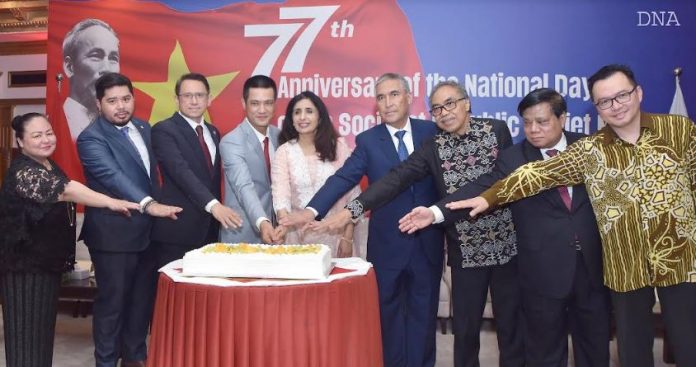
ISLAMABAD: Ambassador of Vietnam Nguyen Tien Phong hosted a reception to celebrate the 77th Anniversary of the National Day of Socialist Republic of Vietnam. Additional Secretary Ministry of Foreign Affairs Zara Mumtaz Baloch was the chief guest. All ASEAN ambassadors shared the stage with the chief guest and host to celebrate the event in a befitting manner.-DNA

Pakistan condemns terrorist attack in Herat

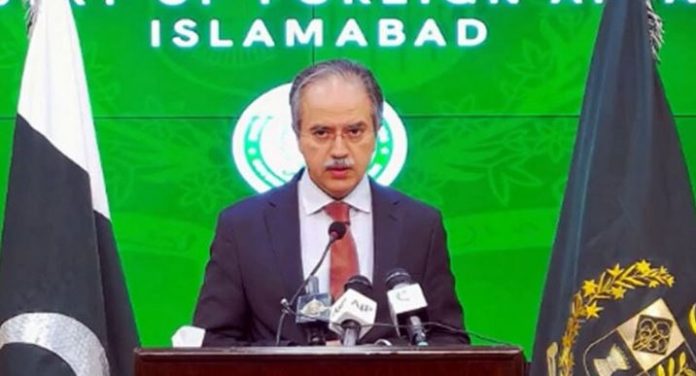
ISLAMABAD, /DNA/ – Pakistan strongly condemns the heinous terrorist attack on Guzargah Mosque in Herat, Afghanistan on Friday 02 September 2022 in which many precious lives of innocent people have been lost with several injuries.

The Government and people of Pakistan extend deepest sympathies and sincere condolences to the bereaved families, and pray for the early recovery of those injured.

Pakistan condemns terrorism in all its forms and manifestations. The people of Pakistan stand with their Afghan brothers and sisters in this time of sorrow and grief.

Stay Connected

64FansLike
60FollowersFollow

Latest Reviews

Exchange Rates

USD - United States Dollar
EUR
1.17
GBP
1.34
AUD
0.67
CAD
0.73