Home Blog Page 1522

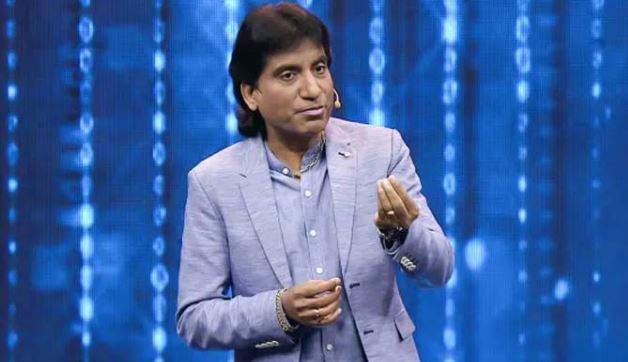
Popular Indian comedian Raju Srivastava dies aged 58

DELHI – Popular Indian comedian Raju Srivastava has died aged 58, his family has confirmed. Srivastava was being treated at a hospital in the capital, Delhi, following a heart attack on 10 August.

The comedian had been taken to hospital and put on life-support after experiencing chest pain and collapsing while working out at the gym.

Last week, his family had said that Srivastav was recovering slowly but remained on ventilator.

Srivastava joined the entertainment industry in the 1980s as an actor in Hindi films.

He shot to fame in 2005 after participating in The Great Indian Laughter Challenge, a reality show for stand-up comedy.

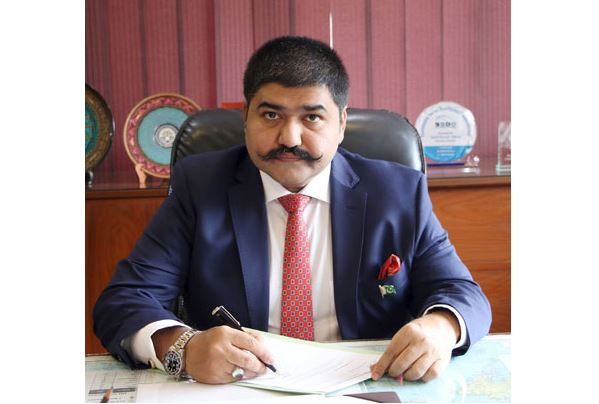
PRCS Chairman Sardar Shahid Ahmed Laghari visits NDMA

ISLAMABAD, SEP 21: /DNA/ – Chairman National Disaster Management Authority (NDMA) Lieutenant General Akhtar Nawaz has said that  the affected families in the flood-ravaged areas of the country, have been provided with medical facilities, clean drinking water, household items and psychological support but there is a lot that needs to be done in mitigating the sufferings of vulnerable people as we are facing the worst disaster in history adding that he said Red Crescent services in flood-hit areas are highly commendable, he expressed these views on the ocassion of arrival of Chairman PRCS Sardar Shahid Ahmed Laghari to NDMA. 

Lt. Gen. Akhtar Nawaz congratulated Sardar Shahid Ahmad Laghari on assuming the leadership of the Red Crescent and said that the two organizations will jointly take adequate measures for the flood victims.

On this occasion, Sardar Shahid Ahmad Laghari informed N4DMA Chairman about his recent visit to the flood-affected areas of Sindh, Balochistan, South Punjab and Khyber Pakhtunkhwa and gave detailed information about the provision of relief materials to the victims.

He said that provision of medical camp, food and drink items for flood victims by Pakistan Army, Pakistan Navy is also enviable. The two leaders agreed on joint measures in the coming days and said that every affected person will be fully supported and both organisation will play their full role in the reconstruction and rehabilitation phase.

Pakistan values ties with UAE in potential sectors: Naveed

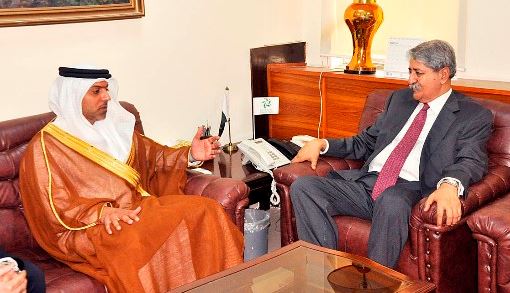
ISLAMABAD, SEP 21 (DNA) — United Arab Emirates (UAE) Ambassador to Pakistan Hamad Obaid Ibrahim Saleem Al Zaabi called on Federal Minister for Commerce Syed Naveed Qamar to discuss measures promoting bilateral trade and enhancing mutual cooperation in the corporate sector.

Speaking on the occasion, the Federal Minister said Pakistan’s relations with the UAE are built on strong foundations based on mutual love and respect. He said Pakistan values its ties with the UAE in various fields, as there is lot of potential in agriculture, health, readymade garments and solar sectors.

Syed Naveed Qamar urged to enhance exchange of trade delegations between the two countries which would bolster trade and economic relations.

UAE Ambassador Hamad Obaid said Pakistani business community is playing important role in the economy and development of the UAE for years, however he is willing to enrich them through bilateral comprehensive agreements.

Appreciating the government policies, the UAE envoy stated that for the first time it could be seen that the government, especially Prime Minister Shehbaz Sharif are “keen to do something while establishing relationships globally”.

Showing deep concerns and sympathies with people of flood hit areas, he assured full support from the UAE government and said they are with Pakistani brothers in this hour of trail. =DNA

Ahsan Iqbal Underlines Significance of Education for Peace

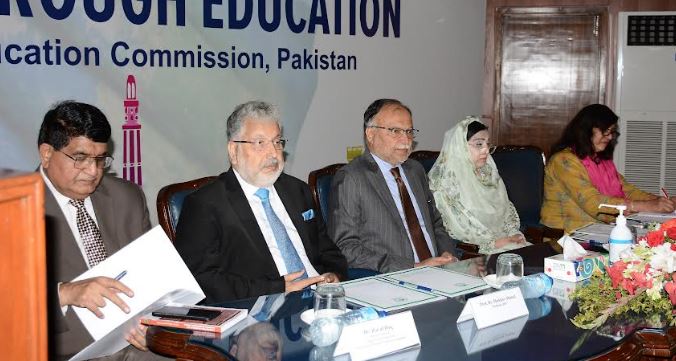
Islamabad, Sep 21: /DNA/ – Federal Minister for Planning, Development and Special Initiatives Ahsan Iqbal has stressed the crucial need for bringing a behavioral change in the Higher Education Institutions (HEIs) to counter lack of tolerance in the society.

The Minister mentioned that over 3 million students are currently enrolled in HEIs in Pakistan whose potential should be used to eradicate extreme polarization and radicalization in the society.

He was addressing a ceremony held to mark International Day of Peace at Higher Education Commission (HEC) Secretariat on Wednesday. The event was attended by the Chairman HEC Dr. Mukhtar Ahmad, Executive Director HEC Dr. Shaista Sohail, vice chancellors, university students and faculty.

Sharing a personal incident, Mr. Iqbal said, “On May 6, 2018, I faced an attempt to murder and the bullet from that attack is still inside my body. It reminds me every day of the importance of bringing a positive change in our youth so as to use their potential productively.”

The Minister mentioned the establishment of Young Peace and Development Corps in universities during his previous tenure and said that those societies served as a platform to promote peace and development at grassroot level. He requested the Chairman HEC to revive these societies so Pakistan can advance towards prosperity. He emphasized that it is also our religious responsibility to work towards peace.

He also used the opportunity to raise awareness regarding the floods in Pakistan and sought HEC’s support to activate at least 2 million out of the total 3 million of our student body and urge them to raise donations and send off one food bag each to ensure that none of the flood victims sleeps hungry.

Chairman HEC enlightened the students about the history of International Peace Day. He said, “The International Day of Peace was established in 1981 by the United Nations General Assembly. Two decades later, in 2001, the General Assembly unanimously voted to designate the Day as a period of non-violence and cease-fire.” 

He also quoted Nelson Mandela to highlight the importance of education in establishing peace. “Education is the most powerful weapon which you can use to change the world, says Mandela and I agree with him.”

Dr. Mukhtar Ahmad urged the students to act as a peace ambassador in their daily lives and strive for establishing peace wherever they can.

Dr. Zia ul Haq, Director General, Islamic Research Institute, International Islamic University pointed out that “Al-Salam is one of Allah’s names and our religion Islam is also named after it. Both these words signify peace, but it is worrisome that our society does not reflect it.”

Dr. Saima Ashraf Kayani, Assistant Professor, Fatima Jinnah Women University enlightened the audience with Martin Luther King Jr’s definition of peace. “Peace is not merely the absence of war but the presence of justice, of law, of order,” she said, adding that “It is sad that Pakistan ranks at 159 out of 163 counties in Global Peace Index and we must do something to improve it.”

The students appreciated HEC’s efforts for raising awareness regarding the International Peace Day.

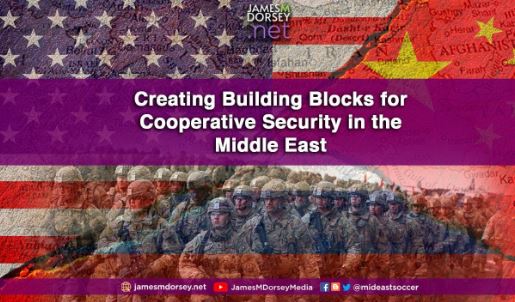
Creating Building Blocks for Cooperative Security in the Middle East

Fading hopes for a revival of the 2015 international agreement that curbed Iran’s nuclear program potentially puts one more nail in the coffin of a regional security architecture that would include rather than target the Islamic republic.

The potential demise of the nuclear agreement, coupled with America redefining its commitment to Middle Eastern security as it concentrates on rivalry with Russia and China, spotlights the need for a regional security forum that would facilitate confidence-building measures, including common approaches to transnational threats such as climate change, food security, maritime security, migration, and public health.

Mitigating in favour of a firmer grounding of the reduction of regional tension is the fact that it is driven not only by economic factors such as the economic transition in the Gulf and the economic crisis in Turkey, Iran, and Egypt but also by big-power geopolitics.

China and Russia have spelled out that they would entertain the possibility of greater engagement in regional security if Middle Eastern players take greater responsibility for managing regional conflicts, reducing tensions, and their own defense.

Rhetoric aside, that is not different from what the United States, the provider of the Middle East’s security umbrella, is looking for in its attempts to rejigger its commitment to security in the Gulf.

In addition to the emerging, albeit tentative, unspoken, macro-level big power consensus on a more inclusive, multilateral approach, efforts by the major regional powers – Saudi Arabia, the UAE, Turkey, Israel, and Iran, except for as it regards ties between the Jewish state and the Islamic republics — to reduce tensions and put relations on a more even keel, contribute to an environment potentially conducive to discussion of a more broad-based security architecture.

The need to focus on conflict prevention and improved communication between regional rivals alongside more robust defense cooperation is evident irrespective of whether the Iran nuclear accord is brought back from the dead, given that the covert war between Israel and Iran will continue no matter what happens.

Israeli officials this month warned that an Israel airstrike against Syria’s Aleppo airport was a warning to President Bashar al-Assad that his country’s air transport infrastructure would be at risk if he continues to allow “planes whose purpose is to encourage terrorism to land,” a reference to flights operated on behalf of the Iranian military and Revolutionary Guards.

Even so, the Biden administration remains focused on broadening responsibility for a regional security architecture that targets Iran rather than an inclusive structure that would give all parties a stake, seek to address root problems, and stymie an evolving arms race.

The administration has encouraged security cooperation between Israel, the United Arab Emirates and Bahrain, the two Arab states that two years ago established diplomatic relations with Israel, and Saudi Arabia, which has changed its long-standing hostile attitudes towards the Jewish state but refuses to formalise relations in the absence of a resolution of the Palestinian problem.

The year’s move of Israel from the US military’s European to its Central Command (CENTCOM) that covers the Middle East facilitates coordination between regional militaries. In a first, Israel this year participated in a US-led naval exercise alongside Saudi Arabia, Oman, Comoros, Djibouti, Somalia, Yemen, and Pakistan, countries with which it has no diplomatic relations, as well as the UAE and Bahrain.

In March, top military officers from Israel, Saudi Arabia, Qatar, Jordan, and Egypt met in the Egyptian resort town of Sharm el-Sheikh to discuss the contours of potential military cooperation.

Similarly, the US, the UAE, Bahrain, and Saudi Arabia are attempting to create a regional air defense alliance. In June, Israeli Defense Minister Benny Gantz claimed the partnership had already thwarted Iranian attacks.

Similarly, the United States, Saudi Arabia, and Israel are working on a fleet of naval drones to monitor Gulf waters and ward off Iranian threats.

Furthermore, CENTCOM plans to open a testing facility in Saudi Arabia to develop and assess integrated air and missile defense capabilities.

Scholar Dalia Dassa Kaye argues that focusing on confidence-building aspects of cooperative security involving a dialogue that aims to find common ground to prevent or mitigate conflict rather than collective security that seeks to counter a specific threat is one way of breaking the Middle East’s vicious circle.

The Association of Southeast Asian Nations’ (ASEAN) patchwork of security structures, alliances between external powers and individual association members, and inclusive regional forums demonstrate that the two security approaches are not mutually exclusive.

The ASEAN model also suggests that, at least initially, a less centralized and institutionalized approach may be the best way to kickstart moves towards regional cooperative security in the Middle East.

Negotiating an agreement on principles guiding regional conduct on the back of exchanges between scholars, experts, and analysts, as well as informal, unofficial encounters of officials, could be a first step.

To be sure, Iran’s refusal to recognize Israel and its perceived goal of destroying the Jewish state likely constitutes the foremost obstacle to initiating an inclusive, cooperative security process.

The carrot for Iran will have to be credible assurances that the United States, Saudi Arabia, and Israel will not pursue regime change in Tehran and recognize that Iran’s security concerns are as legitimate as those of others in the region. However, even that could prove to be a tall order, particularly if the negotiations to revive the nuclear accord fail.

Nevertheless, that may be the only realistic way of putting Iran’s support for militants in various Arab countries, including Lebanon’s Hezbollah Shiite militia, various pro-Iranian paramilitary groups in Iraq, and Houthi rebels in Yemen, as well as the Islamic republic’s ballistic missiles program – the two major concerns of Israel and the Gulf states — on an agenda to which Iran is a participating party.

Ms. Kaye argues that “despite these serious obstacles, it is important to present a vision and pathway for an inclusive, cooperative process when a political opening emerges, or when a crisis erupts of such severe magnitude that even bitter adversaries may consider options that were previously unthinkable.”

Dr. James M. Dorsey is an award-winning journalist and scholar, an Adjunct Senior Fellow at Nanyang Technological University’s S. Rajaratnam School of International Studies, and the author of the syndicated column and blog, The Turbulent World of Middle East Soccer.

CM Mahmood Khan approved modern policing

From Our Correspondent 
PESHAWAR: Chief Minister Khyber Pakhtunkhwa Mahmood Khan has principally approved the project for promotion of Modern Policing through introduction of Drone Technology adding that IT based reforms are essential in every sector to ensure efficient services delivery.

The Chief Minister directed the concerned authorities to work out the necessary modalities within 15 days adding that initially the project will be implemented in the Police and PDMA followed by its implementation in Mining and Agriculture sectors. Chairing a meeting regarding the introduction of Drone Technology in Police, PDMA, Mining and Agriculture sectors, Mahmood Khan clarified that the initiative will not only act as a force multiplier but will also make Khyber Pakhtunkhwa as pioneer in use of modern technology.

The meeting was informed that the introduction of drone technology will be carried out in Divisional Headquarters initially which is expected to help in attaining better vantage point during operations, easy & safe monitoring of crime scenes, observance of active threats, delivery of weapons, operational surveillance, traffic control and handling of Mob and Processions surveillance. Apart from its use in policing, the initiative will also help in Fire/Flood surveillance, rescue operations, Public announcements, and delivery of rescue items.  

According to details, the project is expected to incur Rs 500 Million, including but not limited to development of skill training & drones squad, establishment of repair and modification workshop, purchase of drones for operational use, traffic control, Mob surveillance, weaponized drones, thermal/Night vision/ infrared drones, lightweight transportation drones and drones for announcements. It was informed in the meeting that an institutionalized approach would be adopted in promoting drone technology in the province for which proper structure has been proposed.

 The Chief Minister directed that preparation of legal framework for successful implementation of the project, identification of areas for implementation of the technology and preparation of PC-1 for the project be completed within the specified timelines adding that use of drone technology has become indispensable keeping in view the growing population, urbanization and access to hilly terrains in Khyber Pakhtunkhwa. The Chief Minister directed to constitute a working group headed by the Additional Chief Secretary to work out other areas and sectors for possible use of drone technology. The meeting was attended by Chief Secretary Shehzad Khan Bangash, Additional Chief Secretary Shahab Ali Shah, Secretary Home & Tribal Affairs Department, Secretary Finance and other officials. 

INS VIKRANT: Too little, Too late

Jawad Falak

With much fanfare and aplomb, the Indian Government unveiled its purported indigenous aircraft carrier INS VIKRANT on 2 September. The opportunity was used by both the Indian Government and its subservient media to showcase Indian prowess as a major defense products powerhouse. However, a closer look will instead substantiate that the Vikrant is actually a negation of all grandiose claims about the strength of the Indian defense industry and more of an emblem of its weaknesses.

First of all the term indigenous may not be at all suitable to be used for VIKRANT. As per Indian claims, 80-85% of the carrier is indigenous but that is more by weight than by value. The 15-20% of the rest could be called the technological core or the essence of the Carrier consisting of weaponry such as guns & missiles, sensors, data/information fusion, navigation and other paraphernalia enhancing situational awareness which actually make up most of the costs are of foreign origin and have been imported. According to the Indian media website The Wire, 50% of the equipment relevant to the propulsion aspect of the Carrier while 70% equipment relating to the fighting capability is imported.

Secondly, meeting time deadlines and being cost effective is one of the essential requirements of an efficient defense industry but the Indian defense setup seems to be highly lacking in this regard. Taking the case of INS VIKRANT, it has been delayed by nearly seven years and afflicted with a six times increase in its costs,from its original 2003 projected cost of Rs 3,216 Crores to over Rs 20,000 Crores currently. This is not the only project inflicted with time delay and cost overrun. The Light Combat Aircraft Tejas, another so-called indigenous product but also filled with imported parts, took more than 30 years to reach operationalisation. Another Indian defense program, the Arjun Tank also took a whopping 30 years plus for development. Even then in all cases, the end product left a lot to be desired.

The LCA Tejas was derided by both the Indian Air Force and Indian Navy while the Arjun Tank’s feasibility led to the Indian military only inducting just 124 tanks into service by mid-2018 which have continued to face severe technical issues leaving 75 percent of the units totally non operational. VIKRANT also seems to be not far different in this regard, it has been launched without its Aviation Flight Complex (AFC) that is critical to operating its combat air arm. The AFC, which is the electronic suite Vikrant uses to detect and manage the Ship’s aircraft when in the air, has been designed by the Russian (again negating the indigenous claim) is unlikely to be fully installed and functional till the end of 2023. This too is also a pre-Ukraine war estimate as the current sanctions on Russia will further complicate the delivery of the AFC which raises further questions about VIKRANT’s battle worthiness in the future.

But one of the most glaring drawbacks of VIKRANT is its complement of aircraft or more correctly, the lack of it. VIKRANT is making do with 12-15 MiG-29K/KUBs until the Indian Navy finally decides on whether to acquire new foriegn off the shelf platforms (Rafale or F18) or make a naval version of the Tejas. The MiG29K in service are notorious as per Indian sources for being “operationally inefficient, with an appallingly low serviceability rate and the inability to deliver specified payloads to their declared ranges with a full fuel load”. Furthermore, VIKRANT is equipped with a ski-jump system which forces its jets to launch using their own power which further restricts the amount of fuel, missiles and bombs they can carry into combat. Another drawback observed during sea trials is that VIKRANT experienced heavy pitching in high seas.The said factor will not only affect speed and stability of VIKRANT but will also increase difficulty in take off and landing ofCarrier based aircraft.

The whole VIKRANT project itself is under question by Indian intellectuals even if one ignores the drawbacks of the program. Bharat Karnad who is an emeritus professor in National Security Studies at the Centre for Policy Research, Delhi has stated that “ the Indian aircraft carrier-making capability is coming to fruition just when the age of the large ships is coming to a close”. Indian critics have highlighted that INS VIKRANT is likely to become a headache for Indian maritime security as not only will it necessitate more and more funds for maintenance but also require additional assets for protection as it will become a lucrative target for hostile elements. These assets will have to be diverted from other responsibilities which will lead to gaps in Indian defenses.

At the end, it can be stated that the INS VIKRANT seems to be more of a vanity project that has tried to portray failure as a sign of national pride. However the end result seems to be more detrimental to the country’s stature rather than being beneficial. 

The author is a M.Phil from National Defence University (NDU) Islamabad in International Relations and routinely writes on current affairs.

Kenyan HC visits RCCI, urges for enhancing bilateral trade

DNA

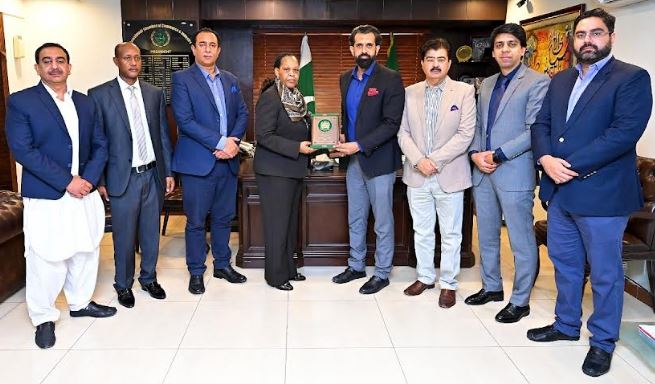
Rawalpindi: Kenya is a gateway for Pakistani investors to enter the big market of 38 African states, which are landlocked to Kenya that has the international seaport of Mombasa. Kenya will fully support Pakistani investors in exploring potential areas of investment and trade in various areas including Tourism, Agriculture, IT, Mining and Machinery.

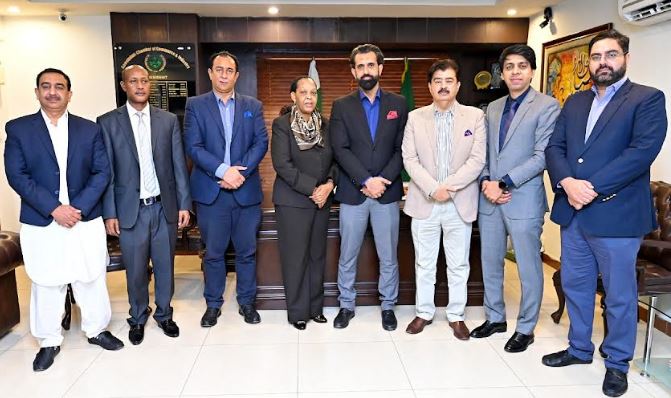
Kenyan High Commissioner, Mary Nyambura Kamau expressed these views during her visit to the Rawalpindi Chamber of Commerce and Industry (RCCI) here on Wednesday. Boru Diba Roba, Commercial Attache, was also accompanying her during the visit.

RCCI President Nadeem Rauf, Senior Vice President Asim Malik, Vice President Tallat Awan and newly elected office bearers, Saqib Rafiq and Hamza Sarosh were also present on the occasion.

She advised the business and industrial community of Rawalpindi to focus on diversifying their exports to Kenya in order to improve the existing trade volume between the two countries. She said that rice and tea were two main commodities which were traditionally being traded between the two countries but there were many other Pakistani products which can not only be introduced in the Kenyan market but also to many other African nations via Kenya.

 Earlier, Nadeem Rauf, President RCCI gave a short briefing on the chamber’s current activities and future programs. The President of the Chamber told the High Commissioner that under the Look Africa Policy, African countries, especially Kenya, are considered important countries for the promotion of trade. In this regard, the Rawalpindi Chamber has organized the Business Africa Forum.

The Chamber will take a trade delegation to Kenya and explore the possibility of holding a Business Opportunities Conference there, he added. He demanded that direct flights should be launched between the two countries. There is a need to increase cooperation in non-traditional sectors especially pharma, IT, education, food machinery, handicrafts and sports goods, he said.

Pursuing Doha agreement must for bringing peace to Afghanistan

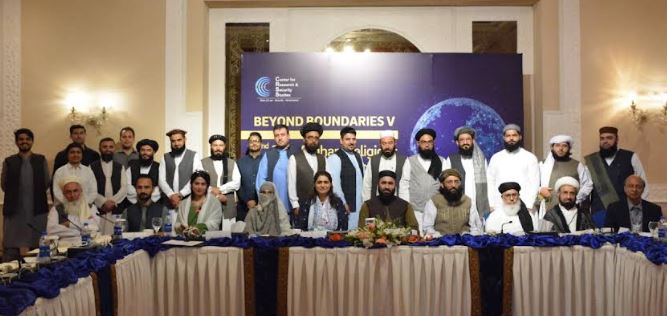
Islamabad, Sept.21 /DNA/ – The need for Taliban’s compliance with Doha Agreement – as a mitigation against denial of their international recognition – figured prominently during the 2ndPak-Afghan Religious Scholars Conference held by Center for Research and Security Studies (CRSS) as part of its track 1.5/2 initiative Beyond Boundaries. The participating Afghan and Pakistan religious scholars stressed that compliance is important for all parties to the agreement, as much as it is for Taliban.Bilateral violation of the Doha agreement is the root cause of Afghanistan’s tribulations.

A diverse group of religious scholars, hailing from different provinces of Pakistan and Afghanistan, representing different schools of thought and sects, attended the two-day dialogue with the agenda focused on girls’ education and women’s rights in Afghanistan, the state of peace and security, and the inclusion of all ethnic groups in the government led by the Taliban. 

Dr. Huma Baqai, an international relations expert, presented on one year of Taliban rule in Afghanistan, giving a critical insight into the developments occurred since August 15, 2021, the impediments in the way of recognition, the regressive policies adopted by the Taliban, such as the girls’ school ban and restricted mobility and lack of livelihood opportunities for women, and the impact of parochialism on the future of the country and its social fabric.

Conference chair, Mr. Mansoor Ahmad Khan, Pakistan’s Former Ambassador to Afghanistan, stated in his keynote address that the Taliban have restored peace in the country and armed resistance has weakened since they assumed power, but the presence of certain terrorist groups on Afghan soil poses a threat to regional peace and stability, so the Taliban must concretely tackle the issue, and that they need to take further steps to ensure their government gets the due recognition. He further said that Afghan institutions with a public consensus should develop a legislative and social system that ensures the safety and welfare of all individuals and ethnicities at par with international standards. “However, the responsibility lies on the international community as well. They must continue engaging with the Taliban, so the country takes necessary and measured steps toward recognition. In the contemporary era, no state/country should be left isolated.” he said.

Scholars from both sides opined that deviation from Doha Agreement is detrimental to the Afghan cause, and the Taliban would lose clout in the international arena if they do not follow it in letter and practice, but, the United States and other countries also need to be mindful of Afghanistan’s sovereignty and adopt a policy of non-interference. They also said that an authoritarian approach cannot help Afghanistan, but introspection and inclusive and prudent decision-making can. It was also suggested that the Taliban should make peace with their own people by initiating legislation that ensures equal participation and agency for all ethnic and religious groups of the country, and, to take the country out of the crisis, they must appoint technocrats so the current setup can sustain.

Strong emphasis was made on the issue of girls’ education. Mr. Imtiaz Gul, Executive Director of CRSS, said that the Taliban have a weak government and are currently under massive international pressure, amidst all this, they should first address the issue of the girls’ school ban and the international community also should stick to this demand as education is the essence of a prosperous nation. “Without an educated lot, Afghanistan cannot move forward. The immediacy of the matter calls for urgent and positive action i.e., to reopen girls’ schools for grades 6-12 or chalk out alternative ways such as homeschooling, distant/virtual learning, etc.”, said Mr. Gul.

All scholars agreed that sanctions on Afghanistan would not harm the Afghan elite, but the common masses. Hence, the Taliban need to provide relief and earn the confidence of their people by addressing the vexing issues first. The two-day conference concluded with a set of recommendations underpinning the need for an improved state of security in Afghanistan and a zero-tolerance policy by the Taliban against terrorism, immediate reopening of girls’ schools, an all-encompassing system of governance representing all ethnic groups, and an increase in the frequency of track 1.5/2 diplomacy dialogues between the religious stakeholders from Pakistan and Afghanistan.

Youth depict ‘End Racism Build Peace’ in paintings

DNA

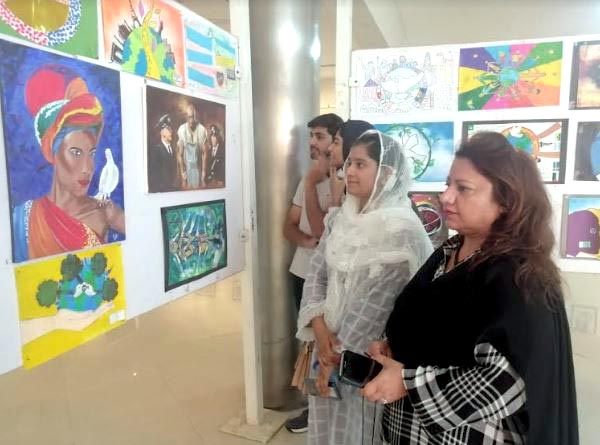
Rawalpindi – As many as 54 paintings and posters by the youth were put on display at the Punjab Arts Council Rawalpindi to commemorate the United Nations International Day for Peace on Wednesday. The exhibits are an outcome of the art competition organized by the Devcom-Pakistan (Development Communications Network) to mark another significant day of the UN. Islamabad Crescent Lion Club supported the event.

The young artists used various symbols to reflect the message of the day. A dove with a branch of an olive tree remains the main element to depict the peace messages in different colours and designs. The participants of the competition also highlighted the impact of wars and bloodshed in their paintings. A couple of creative works reflected the atrocities in different parts of the world. The climate impact creating conflicts and disturbing peace remained a focus of some participants.

Senator Fawzia Arshad generations flourish in peaceful societies and every individual plays its role in it. We shall educate our children and yoth to tolerate each other’s opinion and philosophy of life.

Riffat Ara Baig, Head of Art and Design section at the Westminster School, was the chief jury on the occasion. While announcing the names of the winners, she said the students have reflected the much desired messages of peace. Creative pursuits are the best way of educating people. The images remain in our minds forever.

The winners included

Devcom-Pakistan Executive Director Munir Ahmed was the guest of honour. Speaking on the occasion, he urged the authorities, educational institutions and civil society organizations and social groups to engage all the people of any age in creative art therapies. “Engagement in art gives peace of mind and an undefined ultimate pleasure. Our politicians, hardliners and vulnerable communities need them the most. Our artists shall come up to engage them for a tolerant society.”

Munir Ahmed said quoting the UN Secretary-General António Guterres: Each year the International Day of Peace is observed around the world on 21 September. The UN General Assembly has declared this as a day devoted to strengthening the ideals of peace, through observing 24 hours of non-violence and cease-fire. But achieving true peace entails much more than laying down arms.  It requires the building of societies where all members feel that they can flourish. It involves creating a world in which people are treated equally, regardless of their race.

Punjab Arts Council Rawalpindi Director Waqar Ahmed said youth is an important and largest component of our society. Engaging them for a harmonized multicultural society is very crucial. The Punjab Arts Council has been putting several activities to engage youth and other segments of society to create harmony and peace. 

Stay Connected

64FansLike
60FollowersFollow

Latest Reviews

Exchange Rates

USD - United States Dollar
EUR
1.17
GBP
1.36
AUD
0.67
CAD
0.73