Home Blog Page 1520

Experts call for learning from past foreign, security policy mistakes

DNA

Peshawar, Sep 23: Former ambassador and veteran statesman Rustam Shah Mohmand has stressed that Pakistan needs to play a proactive role in the region vis-à-vis Afghanistan as it was evident that stability or instability in Afghanistan resonate with Pakistan in parallel. Instead of making further policy dichotomies, Pakistan needs to develop a robust policy concerning Afghanistan. For Pakistan, it is a time to pause, reflect, assess, and consider the dangers that loom on the horizon if Afghanistan remains unstable for a longer time.

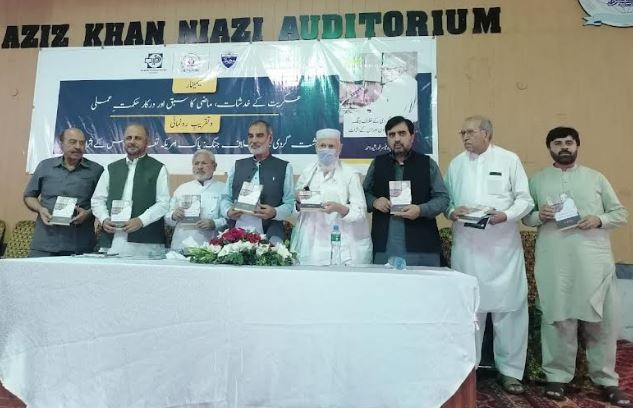
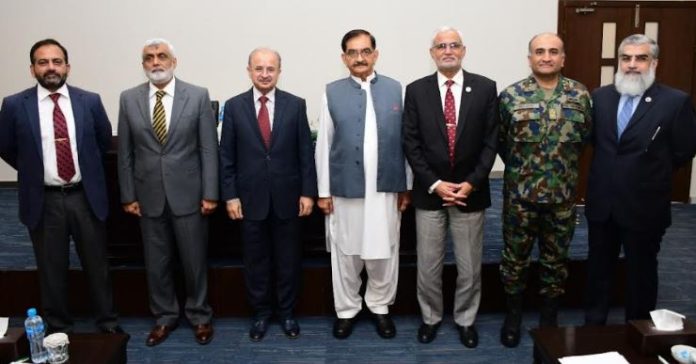
He was addressing a seminar titled Askariyat Kay Khadshaat, Mazi Ka Sabaq Aur Darkar Hikmat-e-Amli (Fears of Re-emergence of Militancy; Lesson from the Past and Required Strategy) combined with the book launch of Dehshat Gardi Kay Khilaf Jang: Pak Amrika Ta’awun Aur Is Kay Asarat (War Against Terrorism: Pak-US Relations and its Impacts), the ninth book of the ‘Armughan-e-Khurshid Series’ recently published in two volumes, which compiles the writings and speeches of Prof. Khurshid Ahmad, a veteran politician, eminent scholar, economist, founder and patron-in-chief of Institute of Policy Studies (IPS) on a variety of subjects of national significance.

The seminar, hosted by Qurtuba University, Peshawar and co-chaired by Khalid Rahman, chairman IPS, and Dr. Muhammad Azhar Khan Niyazi, chairman, Qurtuba Education System, was also addressed by Professor Dr. Fakhr-ul-Islam, director, Pakistan Study Center, Peshawar University, Mahmood Jan Babar, journalist and columnist, Dr. Shahzad Iqbal Sham, senior research fellow at IPS, and Prof. Dr. Muhammad Riaz Khan, dean, Qurtuba University.

While sharing his insights about the changing situation of Afghanistan amidst global and regional scenarios, Rustam Shah Mohmand said that though Afghanistan was supposed to be entering into a new era of peace and stability after more than four decades of civil strife, foreign invasions, war and militarization, it was, unfortunately, not going to happen soon. A lack of robust Afghan diplomacy at the international and regional level, financial isolation, and illogical policy preferences like banning of girls’ education have only intensified the deplorable situation in Afghanistan.

While quoting several anecdotes from Prof. Khurshid’s book, Dr. Fakhr-ul-Islam apprised the audience of the work and struggle of Professor Khurshid Ahmad and stated that the two-volume book is a historical source for researchers on legislative debates and parliamentary business about foreign and security policy imperatives of Pakistan vis-à-vis the ‘War on Terror’.

He underscored the recommendations mentioned in one of the chapters of the book that the foreign policy of Pakistan should be owned and formulated by the foreign office under the guidance of experts and relevant policy stakeholders, which was, unfortunately, not the case so far.

Khalid Rahman stressed that, whatever is the threat, one must find the underlying cause of it to mitigate and solve it. The same is the case with terrorism, which has yet no universally agreed definition. Despite this, such a large-scale policy was formulated against terrorism resulting in dangerous implications with no apparent outcome or solution. To find solutions to such issues, it is necessary to dig down the dynamics of the phenomenon, while giving due attention to overriding factors.

He further pointed out that terrorism has multifold dynamics, including operators, facilitators, and masterminds, at the core of the phenomenon. To deal with terrorism, it is necessary to identify and deal with the mastermind. Lastly, any policy to deal with it must include all stakeholders for it to be fair and successful.

While commenting on Pakistan’s policy to join the war on terrorism under the US, Azhar Khan Niazi highlighted that Pakistan has once bitterly tested the ambiguity of the US policy, it now must formulate its foreign policy and Pak-US relation on the win-win principle, while keeping national interests a priority.

While revisiting the history and Pakistan’s experiences of militancy, Mahmood Jan Babar was of the view that the policymakers need to learn from their past mistakes and defeat external and internal forces that are working to create instability through resurgence of militancy in Pakistan.
“Significance of Airpower in Future Indo-Pak Conflict”

DNA

ISLAMABAD, SEP 23: ‘Air Power has virtually become an instrument of choice in the hands of political as well as military commanders for achieving their politico-military objectives alone as well as in synergy with other instruments of military application.’

This was the key message of the seminar on ‘Significance of Airpower in Future Indo-Pak Conflict’ organised by the Centre for Aerospace & Security Studies (CASS) in Islamabad.

Eminent speakers included Air Vice Marshal Nasser ul Haq Wyne (Retd), Advisor at Air Headquarters, Pakistan Air Force; Air Vice Marshal Faaiz Amir (Retd), former Vice Chancellor, Air University; and Air Marshal Farooq Habib (Retd), Senior Director at CASS. President CASS Air Marshal Farhat Hussain Khan (Retd) delivered the Concluding Remarks, while Air Vice Marshal Faheem Ullah Malik (Retd) moderated the proceedings.

Discussing the employment of airpower in the subcontinent from a strategic perspective, Air Vice Marshal Nasser ul Haq Wyne highlighted the importance of airpower and stressed the need for developing ‘air mindedness’ amongst all segments of society, especially within the political and military leadership. Going over the history of Indo-Pak air engagements, he outlined how air power had contributed to either deter war, or to meet national objectives in wartime as well during peace; and opined that the new conflict scenario could be termed as ‘Air Cold Start.’ He concluded that although PAF’s response in all the conflicts had remained exceedingly well, yet, there was a need to adopt a wholesome approach towards any future conflict/war, which would not be possible without a politically stable Pakistan; steady economy; and professional defence forces, including an Air Force second to none.

On the subject of ‘Evolving Geostrategic Environment and Induction of New Technologies: Impact on Airpower Balance in South Asia,’ Air Vice Marshal Faaiz Amir emphasised that change in the world order would not be a simple change of leadership, rather it would mean a deep, significant, and critical transformation of the entire world system. Such a transition to a new balance of power would mean turbulence and conflict. Sharing examples from history, he opined that reconfiguring of power balance often occurred in the least stable regions. ‘Pakistan will have to take measure to not only ensure its sovereignty but also bring prosperity to its downtrodden populace,’ he said. AVM Amir cautioned that the need to watch conflict drivers in the region had never been greater.

Speaking on the employment of airpower in Indo-Pakistan context, Air Marshal Farooq Habib (Retd), highlighted that existing Full Spectrum Deterrence, had successfully foreclosed options of full-scale wars as well as limited conflicts between India and Pakistan. Even the Cold Start Doctrine, which India had crafted after 2001-02 stand-off, was redundant in the wake of Pakistan’s conventional and nuclear deterrence regimes. He further elaborated that India had thus, resorted to hybrid war against Pakistan at sub conventional level. Within this context, at times India could opt for an aerial strike to draw political mileage domestically. In such cases Pakistan Air Force, he  said, was fully geared up to respond with impunity through a quid pro quo plus approach, as shown amply in February 2019.

While delivering the Concluding Remarks, Air Marshal Farhat Hussain Khan (Retd),             thanked the speakers for their in-depth analysis. He agreed that air power, being technology intensive, had evolved at an exponential speed vis-a-vis other instruments of military power. Air Marshal Khan highlighted that induction of force multipliers in 21st Century had helped both operators and air planners, plan higher duration missions, enabled them with better situation awareness, enhanced combat effectiveness without adding to the fleet size. This has allowed greater economy, he shared. He further pointed out that non-kinetic means of warfare and induction of emerging technologies like AI, cyber, space, and quantum computing in South Asia, were bound to evolve the nature of air war in terms its duration, severity, surprise, and lethality. ‘Therefore, future Indo-Pak war, if any, with air power alone is likely to be fast, destructive and of short duration.’ He recommended that Pakistan needed to formulate a comprehensive indigenisation strategy to develop its own technologies in avionics, weapons and more so in non-kinetic means of warfare. Mastering the developed technologies, knowledge-based trainings, research and development to get best quality human resource, is the need of the hour, he stressed.

War veterans of the 1965 and 1971 war, senior serving and retired PAF military officers attended the seminar and participated in the interactive Question and Answer session. CASS’ flagship publication ‘Journal of Aerospace & Security Studies’ was also launched at the seminar by ’65 & ’71 war veteran Squadron Leader Ghani Akbar, SJ.

Asad Qaiser says PTI can return to NA if PM offers election date

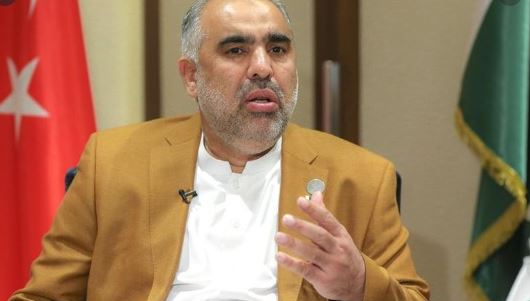
ISLAMABAD: Senior PTI leader and former National Assembly speaker Asad Qaiser has said that the party could return to the lower house of parliament if Prime Minister Shehbaz Sharif announced a date for general elections.

The statement comes after Chief Justice of Pakistan Umar Ata Bandial suggested the PTI should ask its legislators to return to parliament since voters had elected them for five years.

Speaking on Thursday night, Qaiser said the party had not thought about or deliberated on returning to the NA.

“We only think that it is not in the country’s interest for the current government to remain in power.”

Questioning the anchor, Qaiser asked him whether he could bear to pay the current electricity bills. “Life is getting harder. The main reason for that is that they don’t have the mandate, they are weak.”

He went on to say that the biggest challenge at the moment was the country’s economy. Even if you negotiated a deal with the International Monetary Fund (IMF), look at where the dollar is going, he said, adding that petrol prices were also increasing.

Qaiser said that returning to parliament was an “option”. But for that, the prime minister has to make the offer himself and he should commit to announcing a date for elections.

The former speaker said the party could consider rejoining the NA if there was a need for legislating or passing amendment regarding election reforms, stressing that PTI chief Imran Khan was also of the same view.

“I am telling you about the party policy. But first they need to decide on [a date] for elections and dissolving the assemblies,” he said, reiterating that the PTI was “ready” for electoral reforms.

“But the date of elections must not be too long.”

Talking about the calls for the PTI to dissolve the provincial assemblies of Khyber Pakhtunkhwa and Punjab, Qaiser said the option was “still alive”.

“That option is being debated upon […] some party members think it should be taken, some are against it but deliberations are under way and it was there on the table,” he maintained.

Shedding light on a possible march of PTI, he said whatever would be done would be within the constitutional limits.

He took on the government saying despite going into an agreement with the IMF, the economy was in a “shambles”. “They were known for their performance but the delivery is zero, look at the economy and where the dollar is headed. Petroleum products were going down globally but they were increasing it here,” he said.

The former speaker said the government was “too weak” due to the multiparty alliance to face the disaster of the economy, floods and other issues. “They have to deliberate over every decision they are about to take,” he said.

Chinese, Pak universities to build research centre on food security 

BEIJING, Sept 23 (DNA): A Chinese research university and a Pakistani university are to jointly build a research centre on food security and plant biotechnology, sai Dr Wang Depeng, professor at the College of Life Science of China’s Linyi University, in an interview with China Economic Net (CEN). 

The research centre is part of the Memorandum of Understanding (MoU) to be signed between Linyi University and Pakistan’s Abdul Wali Khan University, Dr Wang told CEN.

Under the MoU, the research centre and laboratories, which will be established at Linyi University, will focus on the disciplines of biotechnology, agronomy and food sciences. 

Both sides will also recruit researchers from respective universities to work in the research centre and supervise student researchers, says the agreement.

Two joint research groups will be formed, states the MoU, to conduct research of mutual interests and a joint training programme of M.Phil and PhD students will also be offered. 

In recent years, a growing number of Chinese and Pakistani researchers have jointly conducted research projects to mitigate the effects of worsening climate change.

Last year, Dr Wang together with Pakistani and Turkish scientists published four English monographs on climate-smart agriculture and climate-resilient crops as the world is struggling to maintain and increase agriculture production.

Four publications co-edited by Chinese, Pakistani and Turkish researchers “Recently, I have introduced two Pakistani professors to Chinese universities,” Dr Wang said, adding that more such cooperation is also in the pipeline. 

Pakistan: European Parliament Members call for action to tackle human rights challenges

Members conclude visit to Pakistan, where they assessed the country’s human rights situation.

On 19-21 September, MEPs from the European Parliament’s Subcommittee on Human Rights (DROI) visited Pakistan, which in recent weeks experienced devastating flooding. On behalf of Parliament, the members expressed their condolences for victims and their families, and their solidarity with the people of Pakistan.

During their visit, the MEPs were briefed on Pakistan’s emergency response, relief activities and its vulnerability to climate disasters. They underlined that the international community must increase its efforts to reduce global carbon emissions and help the countries suffering the most from climate change.

In other meetings, MEPs focused on the human rights situation, against the backdrop of the final round of EU monitoring of Pakistan’s preferential trade access to the EU market under the “GSP+” scheme for 2014-2033 and its preparations for an application to the next GSP system to be determined in 2024.

The EU is Pakistan’s most important export market and as a major “GSP+” country, it has committed to ratifying and complying with 27 international conventions on human rights, labour rights, sustainable development and good governance. MEPs discussed a wide range of human rights topics in their meetings with the Speaker and members of Pakistan’s National Assembly, as well as with the Chairman and members of the Senate. They also held meetings with the Minister of Human Rights, the Minister of Law and Justice and the Chairwoman of the National Commission on Human Rights. The delegation met with civil society organisations, women human rights activists and media. In these discussions, they talked about the criminal justice system, torture and the death penalty, economic and social rights, prevention of domestic violence, and the freedoms of religion and belief and the freedom of expression both online and offline.

MEPs said it was important for Pakistan to undertake timely reforms and legislative changes on human rights issues, and translating them into concrete improvements. They called for determined and structured action, including the swift adoption of laws against torture and enforced disappearances, steps to substantially reduce the number of crimes carrying the death penalty and to apply the new procedures for mercy petitions. Laws protecting journalists, eliminating obstacles to the work of civil society organisations and media, and the rights to collective bargaining and unionisation should be implemented. The delegation raised the need to prevent the misuse of blasphemy laws, by applying safeguards against false accusations. The members and Pakistani senators committed to sending a joint letter to Pakistan’s Supreme Court judges, requesting the court system, particularly at lower levels, speed up its processing of blasphemy cases. MEPs also called for decisive actions to prevent domestic violence, child labour and child marriage.

Alongside these meetings, MEPs also visited an Afghan refugee community in Kheshgi (Nowshera District), which was affected by the flooding, talking with residents about their livelihood and challenges.

PM Shehbaz apprises world leaders of flood crisis in Pak on sidelines of UNGA session

New York: Prime Minister Shehbaz Sharif, during his meetings with world leaders on the sidelines of the 77th session of the United National General Assembly (UNGA) in New York, apprised them of the flood crisis in Pakistan, it emerged on Wednesday.

The premier highlighted the need for collective action to deal with climate change. “I also told them that Pakistan is keen to build partnerships in the realms of trader and economy,” he said in a tweet. Among the leaders the prime minister met was US Special Envoy for Climate Change John Kerry.

The two leaders discussed the devastating floods in Pakistan, the $55 million provided by the US in assistance so far, and the “urgent need to work together” to fight the climate crisis and prevent future tragedies, Kerry said in a tweet.

“My heart goes out to the affected communities and the Pakistani people,” he added. The prime minister also met International Monetary Fund Managing Director Kristalina Georgieva who expressed deep sympathy for Pakistan and its people.

“The IMF will continue to support Pakistan under the current program to help ease the pain of the Pakistani people,” Georgieva said in a tweet.

Later in the day, PM Shehbaz held a meeting with World Bank President David Malpass and told him about the climate crises in Pakistan.

Indonesian Culinary Workshop opened at College of Tourism & Hotel Management

DNA

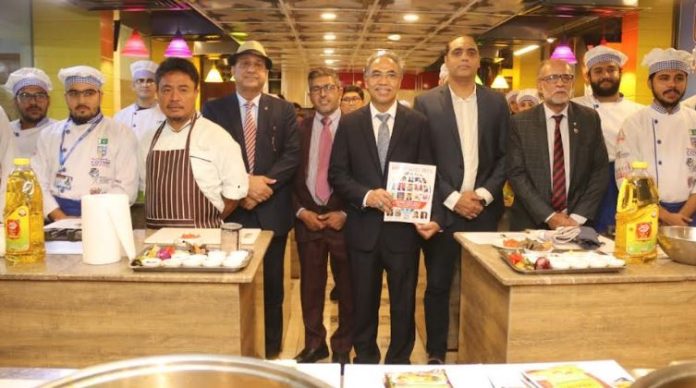
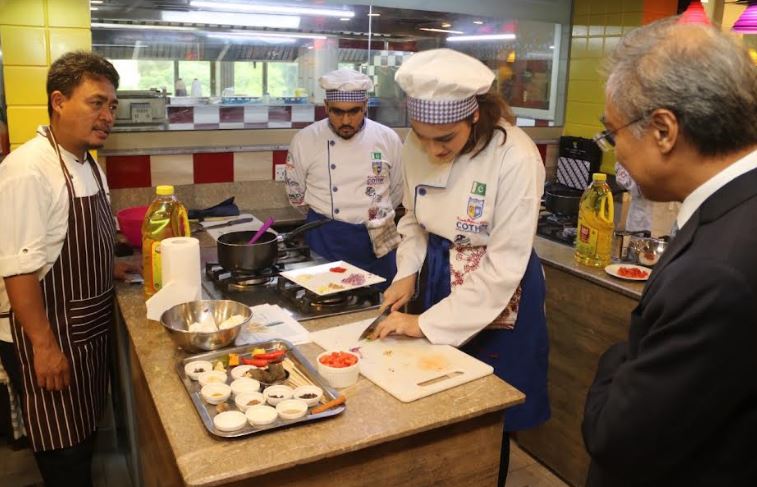
ISLAMABAD, SEP 21: The Indonesian Ambassador to Islamabad, Adam M. Tugio opened the Indonesian Culinary Workshop at the College of Tourism & Hotel Management (COTHM) Islamabad, on 20 September 2022.

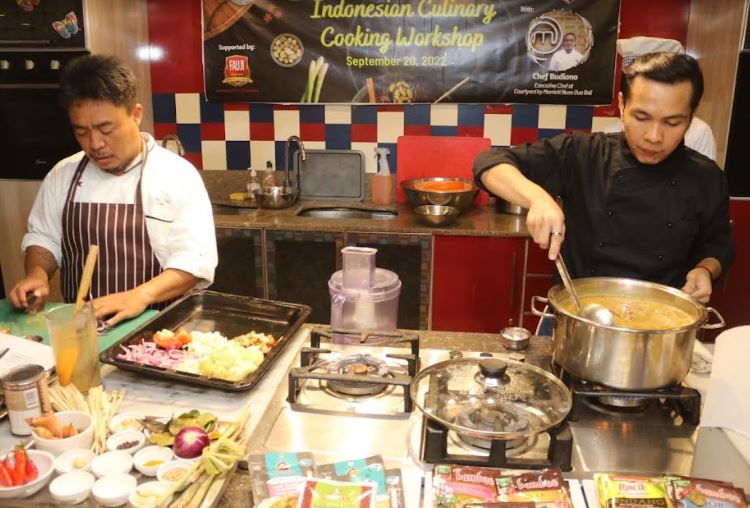
The Indonesian Culinary Workshop presented Chef Budiono from Courtyard by Marriott Nusa Dua Bali to introduce two famous Indonesian cuisines: Sate Lilit Ayam and Beef Curry.

Twenty students from COTHM Culinary Arts Management Department enthusiastically participated in the workshop.

CEO of COTHM, Ahmad Shafiq expressed his appreciation to the Indonesian Embassy in Islamabad for giving students the opportunity to learn about Indonesian culinary, and expressed hope to build cooperation between COTHM & Indonesian vocational institutions in the hospitality and service sector.

The Indonesian Culinary Workshop event was held as a part of the Indonesia Spice Up the World, a program to raise awareness of the potential of Indonesian spices through culinary and economic diplomacy activities. The workshop was a success in collaboration with Fauzi Supreme Cooking Oil and Banaspati.

Imran announces to launch ‘Haqeeqi Azadi’ movement on Saturday

Fears Sri Lanka-like situation developing in Pakistan

Staff Report

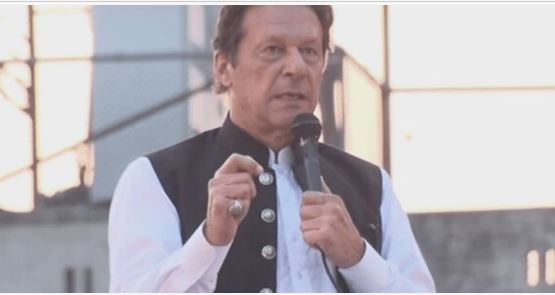
LAHORE: Pakistan Tehreek-e-Insaf (PTI) Chairman Imran Khan announced that he would start his “Haqeeqi Azaadi” on Saturday to get the country rid of the cabal of thieves and corrupt rulers, as he called on supporters to get ready for his call.

Speaking at a lawyer’s convention here on Wednesday, PTI Chairman said that he would give a call and they would get their country liberated in real terms.

“You have to stand up for law and governance in this country. I need the lawyers’ community for my country,” he added.

He said that Pakistan cannot make progress until the justice system is established. Imran maintained that the country cannot come out of the current crisis until the rule of law be established, adding that the country needs supremacy of law for development and prosperity.

Imran Khan said that those issuing threats from unknown numbers should be threatened back and should tell them that constitution guarantee them right to freedom of speech.

Imran said that he will soon give a call for long march to Islamabad, urging the nation and lawyers to support him. “Together we will establish the rule of law in this country and bring real freedom to Pakistan,” he added.

He lashed out at the government for its flawed economic policies, saying the rupee had greatly depreciated against the dollar and caused inflation and unemployment to soar, adding that the economy cannot improve until the justice system is improved.

PTI Chairman said that the inflation is the highest in Pakistan s 50-year history and his party will steer the country out of this slack.

He alleged that while the poor people were suffering, the wealth of those in the government was increasing. Imran stated that Pakistan was reeling under worst crisis in terms of food insecurity but the current rulers were busy to get rid of their corruption cases through NAB law tweaks.

He said that no one in the West has the courage to illegally occupy land, while no one is allowed to commit violence like Shahbaz Gill but in Pakistan, cases are being lodged against journalists.

“The law enforcement agencies whose job it is to implement the rule of law are the ones breaking the law and committing injustice against the people,” he added.

He said that in a country where there is no rule of law, the money flows from abroad and hence it does not have an ideology.

He further urged the public to never ever vote for those political parties whose leaders have vested interests lying outside the country, as it was a conflict of interest. Imran Khan went on to say that the absence of rule of law led to investments drying up and boosted the corruption.

“If we want to get Pakistan out of this quicksand, then we must establish rule of law in the country. Until that happens, our economy will continue to suffer,” he added. Imran said that the difference between rich and poor countries was rule of law.

“In poor countries, there is law but not justice, while in rich countries rule of law exists. The society in which there is no rule of law gets destroyed,” he further said.

PTI Chairman urged lawyers when he called them, they must come out for a prosperous Pakistan, as he would give Pakistan real freedom.

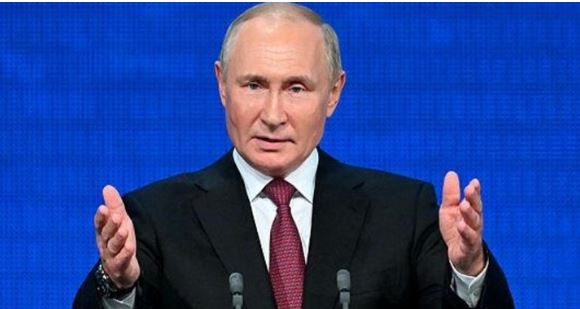
EU calls on Russian leader Putin to stop “reckless” nuclear gamble

The European Union executive on Wednesday accused Russian President Vladimir Putin of a “very dangerous nuclear gamble” and said the international community had to put pressure on him to “stop such reckless behavior.”

A foreign policy spokesman for the European Commission, Peter Stano, also told a news conference, the “sham, illegal referenda” Moscow backed in Ukrainian regions it occupies would not be recognised.

“Putin is doing a nuclear gamble. He’s using the nuclear element as part of his arsenal of terror, it’s unaceptable,” Stano said.

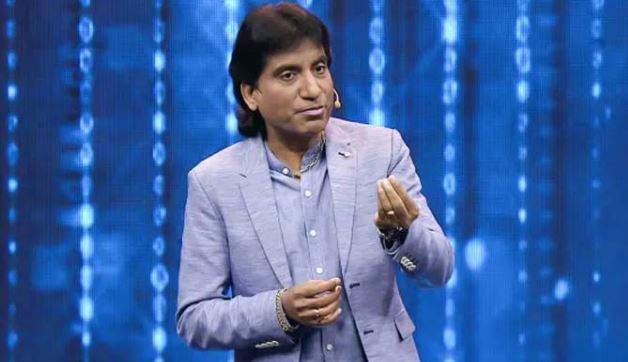
Popular Indian comedian Raju Srivastava dies aged 58

DELHI – Popular Indian comedian Raju Srivastava has died aged 58, his family has confirmed. Srivastava was being treated at a hospital in the capital, Delhi, following a heart attack on 10 August.

The comedian had been taken to hospital and put on life-support after experiencing chest pain and collapsing while working out at the gym.

Last week, his family had said that Srivastav was recovering slowly but remained on ventilator.

Srivastava joined the entertainment industry in the 1980s as an actor in Hindi films.

He shot to fame in 2005 after participating in The Great Indian Laughter Challenge, a reality show for stand-up comedy.

Stay Connected

64FansLike
60FollowersFollow

Latest Reviews

Exchange Rates

USD - United States Dollar
EUR
1.17
GBP
1.35
AUD
0.67
CAD
0.73