Home Blog Page 1423

Int’l Anti-Corruption Day to be marked on Dec 9

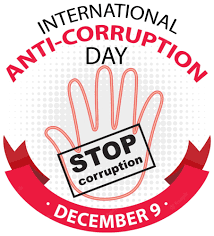
                ISLAMABAD, Dec 5 (APP):International Anti-Corruption Day will be marked on Dec 9 (Friday) across the globe including Pakistan which aimed to raise public awareness against corruption and its harmful effects on the country’s economy.

Musicals, plays, keynote speeches, and other activities that focus on the theme of fighting against corruption help promote International Anti-Corruption Day.

International Anti-Corruption Day is a time for political leaders, governments, legal bodies, and lobby groups to work together against corruption work by promoting the day and the issues that surround this event. On this day anti-corruption advocates organize events to engage the general public to effectively fight against corruption and fraud in communities. Other activities that promote the day include:

Musicals and plays to publicize the message of fighting against corruption. Keynote speeches by those who were victims of corruption or fought against it. Essay competitions on issues surrounding the topic of corruption. The dissemination of posters, flyers, and other material to increase awareness levels on corruption.

Some organizations hold special recognition ceremonies to pay tribute to people and projects that assist nations and communities in the battle against corruption.

Corruption is an issue that affects all countries around the world. It can refer to the destruction of one’s honesty or loyalty through undermining moral integrity or acting in a way that shows a lack of integrity or honesty.

 It also refers to those who use a position of power or trust for dishonest gain. Corruption undermines democracy, creates unstable governments, and sets countries back economically. Corruption comes in various forms such as bribery, law-breaking without dealing with the consequences in a fair manner, unfairly amending election processes and results, and covering mistakes or silencing whistleblowers (those who expose corruption in hope that justice would be served).

By resolution 58/4 of October 31, 2003, the UN General Assembly designated December 9 as International Anti-Corruption Day. This decision aimed to raise people’s awareness of corruption and of the role of the United Nations Convention against Corruption in combating and preventing it.

The assembly urged all states and competent regional economic integration organizations to sign and ratify the United Nations Convention against Corruption (UNCAC) to ensure its rapid entry into force. UNCAC is the first legally binding, international anti-corruption instrument that provides a chance to mount a global response to corruption.

Govt releases Rs494.97 mln for 15 aviation sector projects

                ISLAMABAD, Dec 5 (APP):The government has so far released funds amounting to Rs 494.97 million, under the Public Sector Development Programme (PSDP 2022-23) against total allocation of Rs2.484 billion to execute 15 different projects and schemes aimed at ensuring improved aviation sector services in the country.

Out of the total authorization/disbursement of Rs 494.97 million, around Rs360.48 million have been spent on the aviation sector projects during a four-month period (July-October) of the current fiscal year, according to official data available with APP.

As per the PSDP document, an amount of Rs 2.303 billion had been allocated for 10 ongoing schemes, out of which Rs 60 million were meant for construction of Airport Security Force Camp at Islamabad International Airport, Rs 29.871 million for building barrack accommodation for ASP personnel along with Mess and allied facilities, ladies rest room, MT, Store, Kote Magazine, Quarterguard and OC accommodation/room at Skardu Airport, Rs4 million for  construction of Barrack accommodation for ASF personnel along with Mess and allied facilities, MT, Store, Visitors Room, Ladies Rest Room, Kote Magazine, Quarter Guard, and OC accommodation/Room at Chitral Airport, Rs 5 million for construction of double storey Barracks for ASF at Faisalabad Airport, Rs 5 million for construction of Rain Water Harvesting Kasana Dam at Islamabad International Airport, Rs 25 million for for installation of Weather Surveillance Radar at Karachi, Rs580 million for installation of Weather Surveillance Radar at Multan, Rs 10 million for installation of Weather Surveillance Radar at Sukkur, Rs 2 billion for new Gwadar International Airport (NGIA project), Rs 150 million for up-gradation of ASF Academy, Karachi and Rs 15 million for up-gradation of ASF Academy, Karachi (Feasibility & Supervision).

Similarly, Rs 181 million had been earmarked for five new schemes,  out of  which Rs 61 million had been specified for construction of ASF (Airport Security Force) Accommodation at Turbat Airport, Rs10 million for construction of Kote Quarter Guard & Magazine at Panjgur Airport, Rs 5 million for establishment of Basic Aerodrome Facilities at Mansehra  –  Acquisition of Land for Construction/Establishment of Airport at Mansehra, Rs 5 million for establishment of New Meteorological Observatory at Naran and Hostel for Operational Staff at Balakot and Rs100 million for extension/up-gradation of Bannu Airport for A320/B737 or equivalent Aircraft Operation Phase-I (Land Acquisition).

/395

British HC Turner leaving Pakistan

DNA

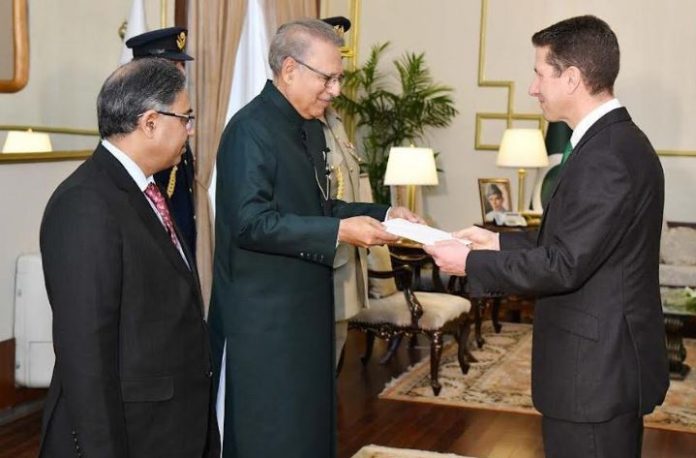
ISLAMABAD, DEC 5: The British Foreign Secretary, The Rt. Hon. James Cleverly MP, has announced the appointment of Dr Christian Turner CMG to a senior diplomatic position in London as Director General Geopolitical (Political Director) at the UK’s Foreign Commonwealth and Development Office (FCDO). This is a position equivalent to Under Secretary of State.

Currently serving as the British High Commissioner to Pakistan, a position he has held since December 2019, Christian Turner is expected to depart the country and take up his new role in London by mid-January 2023. This follows the end of a standard three year diplomatic posting.

Over his three years as High Commissioner, Christian Turner oversaw the UK’s COVID-19 repatriation efforts, welcomed a UK Foreign Secretary visit, lobbied for and secured direct flights from the UK to Pakistan, initiated a drive to double UK-Pakistan trade by 2025, ensured that the UK was at the forefront of the international Pakistan flood crisis response and played a pivotal role in the promotion of sports diplomacy and the return of the England Men’s cricket team to Pakistan following a 17 year absence.

The British High Commissioner, Christian Turner, said the following:

“The last three years have been some of the most rewarding of my life, both professionally and personally. I will continue closely to follow Pakistan’s future in my new role in London.”

Notes to editors:

1.     Prior to his appointment as High Commissioner to Pakistan, Dr Christian Turner CMG was the Prime Minister’s International Affairs Adviser and Deputy National Security Adviser from April 2017 to July 2019. He previously served as the Director General, Political (Acting) and Director General for the Middle East and Africa, leading the UK organisation of the London Syria Conference in February 2016. From 2012 to 2015 he was British High Commissioner to Kenya; and from 2009 to 2012 he was FCO’s Director for the Middle East and North Africa. Between 1997 and 2008 he held various positions in the Foreign Office, the Cabinet Office and 10 Downing Street, including as Private Secretary to the Prime Minister, in the Prime Minister’s Strategy Unit, as Secretary to the Economic & Domestic Committees of Cabinet, and as First Secretary in the British Embassy in Washington from 2002-2006. Before joining government, he made television documentaries, following the completion of his PhD. He is married with two children.

2.     The position of Political Director is traditionally seen as the UK’s second most senior diplomat. They are responsible for bringing together the UK government’s cross-cutting geopolitical work on security, international architecture and alliances, as well as UK values.

3.     No announcement has been made regarding the appointment of a new High Commissioner to Pakistan. The Deputy High Commissioner, Andrew Dalgleish, will take on the role of chargé d’affaires to cover an expected interim gap until a new High Commissioner arrives.

Friends of embassies family gala celebration at Indonesian embassy

ISLAMABAD, DEC 5 /DNA/ – The embassy of the Republic of Indonesia organized a “Family Gala” at the Indonesian Embassy.

The event was attended by the families of diplomatic corps, government officials, journalists, and business communities.

Family Gala featured a diverse programs that included musical performances, fun games and stall of handicrafts from women entrepreneurs of Pakistan.

Ambassador Adam M. Tugio appreciated the efforts and teamwork of the organizers for making the event so festive. “It was exclusively dedicated to the families and friends of embassies and also to observe Animal Rights Day”, added the envoy.

 The Chief guest of the event, Chairperson of The National Commission on the Rights of Child (NCRC), Ms. Afshan Tehseen praised the warm gesture by the Indonesian Embassy for organizing the cultural gathering to strengthen the fraternal bonds among two Muslim brotherly countries. She stated in her remarks, “Through such event we hope to instill in people the importance of caring for animal in the same way we care for human”.

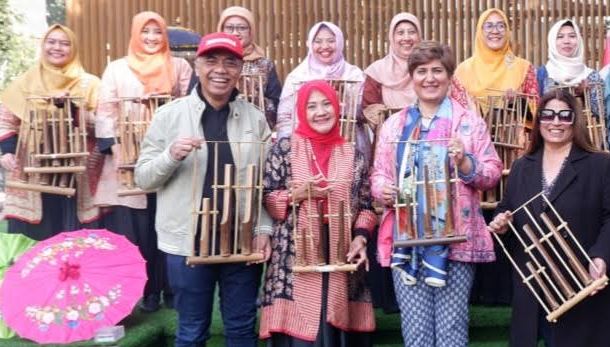
The event also displayed the envoy’s truck arts painted official car. The car is decorated with famous cultural landmarks of Indonesia and Pakistan. Ladies of the Indonesian Embassy mesmerized the audience with “Angklung” performance on Dil-Dil Pakistan. Angklung is an Indonesian musical instrument consisting of two to four bamboo tubes suspended in a bamboo frame, bound with rattan cords. Since each Angklung only generates one note or chord several players must work together in order to play melodies. Angklung captures the spirit of cooperation and togetherness of diverse Indonesian society.

A female singer also sang “Hello hello Sayang Ku”, which means “Hello dear one” in Indonesian from the well-known Pakistani film “Bandish.”

Many exclusive handicraft stalls, famous delicacies of Indonesian and Pakistani cuisines were also presented which includes Meat ball soup, chicken sate with fried rice, biryani, haleem, nihari, creative designs of decorated baking items, fashion and clothing, variety of handmade, henna stall and pet accessories. The event “Family Gala” brought families together and entertained people of all ages.

Pakistan’s Geostrategic Significance: A Potential to become a transit economy

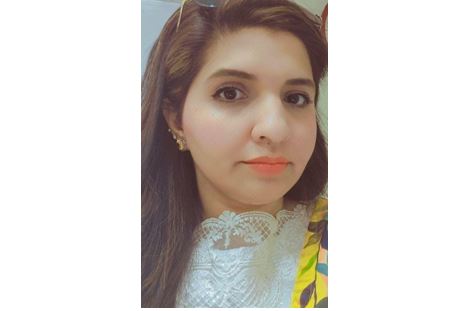
Gul Ayesha Bhatti

Post-Cold-war a shift is observed in the world politics and system. But the primary actor in the international system is still a state because all the activities of the world politics and affairs revolve around the state. To ensure its survival and security a state enhances influence and control over its neighbors and region through economic activities and military equipment. Today these activities and measures are creating highly complicated situation. The new trends of economic activities, mutual trade and the access to resources like coal, oil, gas, and coal as well as to control geo -economic instruments are being introduced

The physical entrance into a certain region or state is referred to as routes, which are both a topographical and a tactical concept. The domestic growth impacts by routes or in area of security and development. Routes are also a key instrument for revealing the qualitative relationships between the states and for providing open doors to greater economic efficiency, safety, rural growth, and access to urban or international markets. Having easy access to market is the most important of all these benefits since without it, a state cannot maintain its economic and commercial events.

                 The boundaries of Pakistan, particularly the province of Baluchistan, have historically been crucial for gaining control of influence, pursuing development, and attracting attention from the globe. In the contemporary world, the position of Gawadar is highly appealing to regional and global powers who are interested in the South, West, and Asia from a strategic and economic standpoint. Gawadar lies at the entrance to the Persian Gulf in the south while being adjacent to the Chinese region of Xinjiang in the north. The proximity of its harbor to the Hormuz Strait, a route for nearly 17 million barrels of oil per day, makes it the ideal location between three important regions: South Asia, the Persian Gulf (rich in oil), and Central Asia (resource-rich in oil and gas), which further increases its strategic value.

 Moreover, powerful states like China, United States, Russia and regional states are willing in extending economic dominance in this region due to its terrestrial and strategic value. Gwadar stands out in the global maritime scene as an alternative to Dubai (beyond the Strait of Hormuz’s choke point and shallow seas), due to its closeness to important SLOCs and its importance to the new great game as a member of the so-called String of Pearls.

China is Pakistan’s main partner in commerce, investment, and defense relations. CPEC, the centerpiece project of China’s larger Belt and Road Initiative, is being vigorously pursued as it moves forward with economic projects in the area. China has an alternative for the Strait of Malacca because of Gwadar, which shows that all the participating nations may benefit strategically from using the coastlines of Gwadar and Makran owing to the access to the coastline that can provide economic and strategic goals in the region. It can increase access across the Hormuz Straits and the northern Indian Ocean, enabling admission to marine channels for China.

Furthermore, In comparison to Iran (4500 km) and Turkey (5000 km), Pakistan gives the CARs the quickest land route (2600 km via Afghanistan) to the Arabian Sea for trade. Additionally, the CPEC route has been operating since 2004 under a Quadrilateral Trade Agreement between China, Kyrgyzstan, Tajikistan, and Kazakhstan. It also extends to Tajikistan, Kyrgyzstan, Kazakhstan, and Uzbekistan. TAPI (Termez, Kabul, Peshawar, Islamabad) is an alternative project of TAPI with a length of 750 km (almost half of TAPI: 1700 km) to reach Islamabad. TKPI (Termez, Kabul, Peshawar, and Islamabad) is an alternative project of TAPI with a length of 750 km (nearly half of TAPI: 1700 km). 

The majority of Afghan trade, which includes everyday necessities and critical foods, passes through Pakistan. After the US and NATO withdrawal, Pakistan would unavoidably need help throughout the reconstruction and rehabilitation phase of Afghanistan. Pakistan practically continues to be the most practical choice for regional connection with Afghanistan, notwithstanding Indian investment or desire for alternatives like the Chahbahar Port of Iran.

The geopolitical interests of the main countries converge in Pakistan. Two Muslim and two non-Muslim states are positioned on either side of a vast body of water. It is situated between three nuclear-armed states and also possesses nuclear weapons of its own. Due to its geostrategic and geopolitical significance, it has been and continues to be the focus of the desires of the great powers. According to academics, the benefits of 21st-century economic progress are being felt throughout the Asian continent. The Asian continent may benefit from this evolution in terms of both affluence and the scope of power. However, some academics also assert that political instability and personal vendettas are promoted by economic development slogans. Political unrest results from economic growth because it disturbs regional and international power dynamics.

Stephen Cohen rightly stated that Pakistan’s geography has been its greatest benefit. Owing to the fact that Pakistan can gain extreme economic benefits by utilizing its geographic location intelligently, however, Pakistan is facing internal and external security issues that give rise to a less productive economic environment for neighborhood states and superpowers. The government’s role to deal with internal stability issues related to terrorism and insurgency, specifically in Baluchistan and in the north of Pakistan, is crucial. Furthermore, without comprehensive planning and infrastructure for international trade and transportation, it is almost impossible to achieve the benefits of our transit routes.On international level, Pakistan, being a littoral state, must develop positive relations with the rest of the littoral states of the Indian Ocean. Rigorous efforts to meet international Maritime standards will further top our efforts in becoming a transit economy.

Gul Ayesha Bhatti

PhD scholar of International Relations

[email protected]

Digital Warfare a National Security Threat

Ujala Siddique

The near-total inundation of society by digitisation has wide-reaching effects on various aspects of human activity and culture. The threat does not arise from computers but from states and non-state actors with hostile intent. Economic and critical infrastructure networks vulnerable to digital attacks are considered a threat to national security.

In 1991, the US used a computer virus known as AF/91 during the Gulf War against Iraq. It was able to disable the country’s air defence system. In 2005, a hacker with the alias ‘Titan Rain’ carried out a cyber-attack against the US. In 2007, Russia carried out a cyber-attack against Estonia, obtaining access to the country’s websites and various ministries and organizations. These examples highlight the varied and broad range of impact that cyber-attacks can have on nations. There are different categories and types of cyber-attacks. Some types of cyber-attacks are: Denial-of-service (DoS) and distributed denial-of-service (DDoS) attacks simply incapacitate networks by overloading them with overwhelming dummy activity, whereas other attacks such as Man-in-the-middle (MitM) attack, Phishing attacks, Drive-by-download attack, Password Attack, SQL Injection Attack, Cross-site scripting (XSS) attack, Eavesdropping attack, and Malware Attack can cause greater levels of damage from stealing critical information, taking entire networks offline or even destroying invaluable data.

Alex Stamos, Facebook’s former chief security officer, tweeted that ‘While it is rarely discussed publicly, India and Pakistan have been embroiled in continuous offensive cyber and information operations against each other for years. This might be a situation where that low-level invisible war becomes a destabilising factor.’ There have been multiple reports of both countries having their official government agency websites hacked and defaced, as well as documented instances of official information being stolen and put up for sale online. The Centre for Strategic and International Studies (CSIS) published a report, Economic Impact of Cybercrime – No Slowing Down, that concluded that losses due to cybercrime amounted to US $600 billion in just 2018 — a whopping 1 percent of global GDP. This does not touch upon the major threats in the security and defense domains due to the weaponisation of digital attacks.

Attacks on digital infrastructure pose a serious threat to Pakistan, which needs to able to properly address the increasing number of cyber-crimes. In Pakistan, there are about 194 million cellular network subscriptions and 124 million broadband internet users, which means that society relies on technology to a great extent in everyday life. According to the FIA (Federal Investigation Agency,) cases of cybercrime have consistently gone up over the years. Pakistani banks have expanded their operations from traditional in-person services to digitally enabled branchless banking, where ATM fraud has been steadily on the rise, as well as identity theft to perpetrate financial crime. Attention needs to be paid to non-traditional threats to national security. As the country’s reliance on technology increases, it is becoming increasingly vulnerable. Different types of cyber-crimes have been known to affect Pakistan’s communication systems.

There is also the issue of sophisticated spyware being deployed to infiltrate and compromise communications of critical importance and steal over 13 billion pieces of communications, completely shattering any notion of privacy in communication and online activity. This issue has raised serious concerns about Pakistan’s national security as compromised officials and organisations pose serious security risks. In this regard, Israel puches far above its weight in the realm of digital security and attacks. It spends a huge amount of resources and effort on its own cyber warfare capabilities, reaping benefits from it. Stuxnet — the first known cyberweapon — designed by Israeli and US intelligence, was able to infiltrate and hamper Iran’s nuclear programme. Isreal is currently ranked as one of the top five countries in the world when it comes to cyber warfare capability and has manufactured extremely powerful spyware that was sold to at least 14 countries, as per NSO group’s (the spyware manufacturers) response to questioning by a European Parliamentary committee investigating the matter.

Pakistan should sign the international treaties such as the Budapest Convention on Cybercrime to make its cyber defence stronger. These will help the country to develop its digital infrastructure and improve its defensive capabilities against digital attacks and tackle rampant cybercrime. To enforce the laws related to cybercrime, a bill called ETO (Electronic Transactions Ordinance) was passed in 2002 and then an electronic and cybercrime bill was passed in 2007 and the third set of laws passed in Pakistan pertaining to digital crimes was the Prevention of Electronic Crimes Act, 2016 (PECA). The government has also established a response cell named National Response for Cyber Crime in Pakistan. In addition, a dedicated effort was initiated to bolster cyber security and enhance cyber warfare capabilities under the aegis of the PAF with the setting up of the Cyber Security Academy, and the Cyber Centre of Excellence planned under the National Aerospace Science and Technology Park (NASTP) initiative. This future-oriented strategy will help Pakistan to develop robust digital infrastructure and capabilities that are resistant to cyber-attacks and disruptions and expand its technological reach.

Ujala Siddique is a researcher at the Centre for Aerospace and Security Studies (CASS), Lahore. She can be reached at [email protected]

Morocco launches mega project to boost green, low-carbon economy

DNA

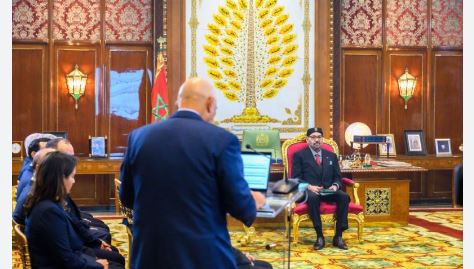
RABAT: King Mohammed VI of Morocco chaired, on Saturday December 03, 2022, the signing ceremony of the relevant protocol agreement between the government and the OCP group (Morocco’sgiant fertilizer producer andtop exporter of phosphate fertilizers) concerning the new green investment program(2023-2027) of theGroup.

The ceremony comes in the morrow of the work meeting presided over by the Sovereign, last November 22, devoted to the development of renewable energies and to the new perspectives in the field.

The OCP group Chairman and Chief Executive Officer, Mr. Mostafa Terrab, presented before His Majesty the King the results of the group’s first investment program (2012) which helped solidly anchor OCP group in the fertilizers market. By trebling its fertilizer production capacity, OCP group is today positioned as one of the world’s leading producers and exporters of phosphate fertilizers.

Thanks to its partnership with Mohammed VI Polytechnic University in terms of research and development, the group was able to seize the opportunities offered by the new industrial and digital technologies.its reliance on state-of-the-art technologies, makes it led the way in sustainable agriculture and food security and develop an expertise in innovative technologies for balanced fertilization.

The new OCP investmentplan is in line with King Mohammed VI’s instructions relating to the need for a faster transition toward a carbon-neutral economy. Itrevolves around increasing the fertilizer production capacities, while committing to achieve carbon neutrality before 2040 by relying on the unique source of renewable energies as well as on the Kingdom’s progress in this field.

By investing in solar and wind power, the group plans to feed all its industrial facilities with green energy by 2027. The low-carbon energy will also be used to supply the new seawater desalination capacities in order to meet the group’s needs and provide the areas around OCP sites with drinking and irrigation water.

This investment will help the group, first world importer of ammonia, to eventually end reliance on these imports by also investing in renewable energy – green hydrogen – green ammonia sector, allowing the group to strongly enter the market of green fertilizer and of fertilization solutions adapted to the specific needs of different soils and crops.

This ambition will be backed by supporting programs for industrial Small and Medium-Sized Enterprises and those operating in the sectors of energy and agriculture, hence, favoring the emergence of an innovative national ecosystem and the creation of new employment and job integration opportunities for the youth.

The new program, which will help consolidate OCP’s world position, provides for a global investment of 13 billion dollars (130 billion dirhams) over the period 2023-2027, the achievement of a local integration rate of 70%, the backing of 600 Moroccan industrial enterprises and the creation of 25000 direct and indirect jobs.

Polio will be eradicated from Pakistan by end of 2023: Unicef director

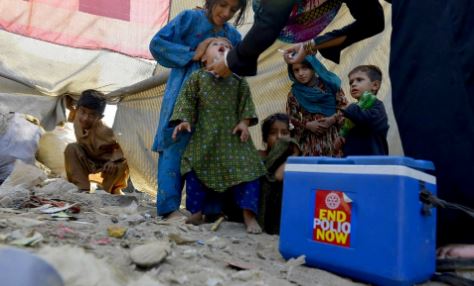
Unicef’s Regional Director for South Asia George Laryea-Adjei on Sunday said the polio programme in Pakistan was back on track, expressing hope that the crippling disease will be eradicated from the country by the end of 2023 following effective measures to check its spread.

After staying polio-free for almost 15 months, Paki­stan reported a polio case in April. The country detected only one case last year.

Polio is a highly infectious disease caused by poliovirus and mainly affects children aged under five years. It enters the nervous system and causes paralysis and even death. While there is no cure, vaccination is the most effective way to protect children from this crippling disease.

Adjei said the current data suggested that the virus was now under control in the country.

“We are using all available resources and services at our disposal to reach every girl and boy in Pakistan with lifesaving vaccines and protect them against the entirely preventable disease,” he said.

Appreciating the efforts of over 350,000 health workers travelling to every part of the country to administer doses of the vaccine to every child, he said, “the programme is back on track to stop all wild poliovirus transmission in 2023.”

Adjei added that Pakistan was in a much better position today to eradicate polio than a year ago. However, he said there were challenges that hampered the efforts to eliminate the virus completely.

He expressed concern over the attacks on polio and health workers in some parts of Pakistan and lauded the courage of polio teams.

The Unicef official also appreciated efforts of the government’s polio eradication endeavours, recalling that Pakistan was the first country to launch an ambitious programme for training its health workers to support national immunisation programmes.

Highlighting the challenges, he said the “onslaught of back-to-back disasters” — drought, heatwaves, floods, and acts of violence — continued to put millions of children’s lives at risk in Pakistan.

Ajei said the recent catastrophic floods destroyed vital health facilities and exacerbated health risks for millions of children, especially those living in districts historically at the highest risk for polio.

The Unicef director said the agency had been working with the government, UN agencies, and NGO partners from day one of the floods to respond to the needs of the most vulnerable children and families, in 54 of the 90 calamity-hit districts.

In the health sector, he said 110 mobile health teams were providing critical health services to children, women, and adolescents and Unicef was also assisting the national measles and rubella vaccination campaigns for children under the age of five in flood-affected districts.

Moreover, Unicef was working on water, sanitation, and hygiene in the flood-affected areas as well, he added.

“We are delivering over two million litres of safe drinking water to the flood-affected communities,” Adjei said.

He added that Unicef also built toilets and distributed hygiene and menstrual hygiene management kits, besides installing new taps and repairing critical water networks destroyed by the floods.

Highlighting his organisation’s endeavours, Adjei said the agency established over 600 temporary learning centres to provide safe spaces for children to learn and play in the education centres.

Divulging details of Unicef’s activities in northern Pakistan at the outset of winters, he said the agency procured 16,000 warm clothing kits for children up to 12 years of age which were being dispatched for distribution in snowbound areas of Balochistan, Khyber Pakhtunkhwa and Gilgit Baltistan.

Moreover, around 15,000 blankets were distributed in KP and Balochistan, he added.

Referring to the impact of climate change, he said, “The impact is profound throughout South Asia and in 2022 alone, climate-induced floods in Pakistan, Bangladesh, northern India, and Afghanistan left over 15 million boys and girls in need of assistance.”

He pointed out that summers were getting hotter, glaciers melting, sea levels rising, and landslides sweeping away homes and schools.

The regional director said Pakistan was already a “climate hotspot” before the current emergency broke out.

According to Unicef’s Children’s Climate Risk Index, children in Pakistan were at “extremely high risk” of the impacts of climate change, ranking 14th out of 163 countries and regions.

Since April, Pakistan has been hit by a series of extreme weather events. There was no spring this year, with the country going from winter directly into a scorching summer. Temperatures reached over 50 degrees Celsius in some areas of the country followed by catastrophic floods.

He said these reoccurring and escalating climate catastrophes were “directly threatening” children’s lives and destroying infrastructure critical to their well-being.

First and foremost, global leaders must urgently limit global heating to 1.5°C as this was the only way to save children’s lives, the Unicef official suggested.

“We must prepare children to live in a climate-changed world through climate change education and green skills training,” Adjei concluded.

As Pakistan strives to become polio-free, the region of southern KP threatens to upend the progress, with this year’s 13th case reported in July.

In August, environmental samples from seven cities returned positive, indicating the presence of the virus in major urban centres.

Isphanyar Bhandara organizes a luncheon for minority community

DNA

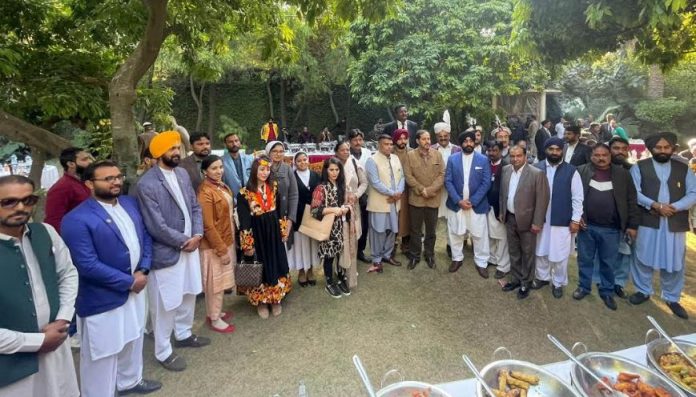
RAWALPINDI: Former Member of the National Assembly Isphanyar Bhandara organized a lavish luncheon in honor of the minority community on Saturday at his residence.

According to the details, the luncheon in honor of the minority citizens was held on behalf of Isphanyar Bhandara on Saturday at his residence at No. 1, Park Road, Murree Estate, Rawalpindi. Citizens from Sikh, Hindu, and Christian communities and other religions attended the lunch. A large number of people participated.

Speaking on the occasion, former Member National Assembly Isphanyar  Bhandara welcomed the participants and wished them all the best in the future.

He said that the role of the minority community in the construction and development of Pakistan is unforgettable. Since the creation of Pakistan, the minority community has played a role in the country’s development alongside its fellow citizens and, in the future, will continue to play a role in the country’s development.

CM Elahi echoes son Moonis’ remarks, says Gen Bajwa nudged PML-Q towards PTI

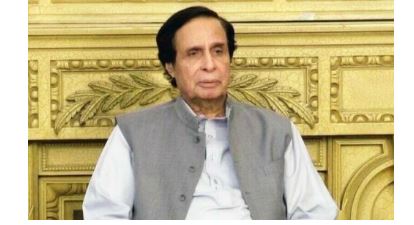
LAHORE: Days after his son Moonis Elahi made a similar statement, Punjab Chief Minister Parvez Elahi on Sunday said that former army chief General (retd) Qamar Javed Bajwa had nudged the PML-Q to support the PTI and former prime minister Imran Khan.

In an interview with Bol News programme Tajzia, Elahi said he had received offers from both the PTI camp and the then-opposition for the PML-Q’s support. The chief minister said that his son Moonis Elahi had also expressed a desire to side with the PTI.

“God changed our path in the last moments and sent Bajwa sahab to show us the way. When I expressed my concerns about the Sharifs and that I don’t trust them then Bajwa sahab said, ‘You should proceed carefully and the path going towards Imran is better for you and your friends,’” CM Elahi said without specifying if his interaction with the former COAS occurred prior to the no confidence move against Imran or at the time of the Punjab chief minister elections.

Similarly, Moonis had claimed during Hum News programme Hum Meher Bokhari Kay Sath on Thursday night that Gen Bajwa advised his party to support the PTI in a weeks-long tussle that ended with Imran’s ouster as the prime minister through a no-confidence vote in April.

“At present, a certain section on social media has been bashing Bajwa sahib without any reason. He is the same Bajwa sahib who had bent the direction of the river’s flow for the PTI,” Moonis had said, adding that he had had a disagreement on this with the PTI and anyone else speaking against the retired army chief.

He went on to say that a man “went all out for you (PTI)”, but now that he had retired, “he has become bad”.

“Had he been bad, he wouldn’t have asked us to back Imran.”

When Bokhari sought clarification on whether Gen Bajwa had asked them to support Imran, Moonis had elaborated: “When the decision was being taken on which way we have to go, we had received offers from both sides — mian sahiban [Sharif family], the PDM (Pakistan Democratic Movement), as well as the PTI.

“Obviously, as everyone knows, my inclination was towards the PTI. There’s no doubt about it.”

Moonis had continued, “I then had a discussion with walid sahib (his father) and walid sahib had a talk with them (an apparent reference to the military establishment).

“They said, ‘It is my wish that you side with them (PTI)’. Had that man (Gen Bajwa) been bad, why would he have asked us to side with them at that critical juncture … Had that man been that bad and against Khan sahib and the PTI, […] he only had to give a signal at that juncture and we would have gone the other way.

“This is why I don’t even buy this story that he is against [the PTI],” he had added.

Moonis’ claim had come as PTI leaders intensified their criticism of Gen Bajwa following his retirement.

On Saturday, Imran said that he had committed a “big mistake” by granting Gen Bajwa an extension and also accused the former army chief of engaging in “double games”, double speak, mixed messages and more, alleging that Gen Bajwa denied everything when asked about the establishment’s contact with the then-opposition. Answering a question about Moonis’s claim, Imran had explained: “Moonis was asked to support Imran Khan, while the other one [Chaudhry Shujaat Hussain] had been asked to go to PML-N. Gen Bajwa was playing a double game and I could later identify that even PTI’s different men were being given different messages.”

Stay Connected

64FansLike
60FollowersFollow

Latest Reviews

Exchange Rates

USD - United States Dollar
EUR
1.17
GBP
1.35
AUD
0.67
CAD
0.72