Home Blog Page 138

SIFC to streamline foreign investment before PM’s China visit

SIFC to streamline foreign investment before PM’s China visit

ISLAMABAD, MAY 16 /DNA/ – Pakistan Government Merges Board of Investment into SIFC to Boost Foreign Investment Islamabad: In a significant move to streamline investment procedures and attract more foreign capital, the federal government has decided to merge the Board of Investment (BOI) with the Special Investment Facilitation Council (SIFC).

The decision aims to make Pakistan’s investment ecosystem faster, more efficient, and investor-friendly, particularly for global investors including those from China. The integration is expected to be completed before Prime Minister Shehbaz Sharif’s scheduled visit to China on May 23.

Key Objectives of the Restructuring Under the new framework, the SIFC will serve as the central body responsible for promoting foreign investment and ensuring effective implementation of investment policies. The council has also been tasked with preparing a comprehensive roadmap for Special Economic Zones (SEZs), regulatory reforms, and investment facilitation.

This development is part of broader efforts to strengthen investment cooperation under the second phase of the China-Pakistan Economic Corridor (CPEC). Expected BenefitsThe merger is expected to:

  • Accelerate the investment approval process
  • Improve institutional coordination
  • Enhance investor confidence
  • Create a more cohesive and effective investment ecosystem

Official sources described the move as an important step toward making Pakistan’s investment regime more robust, result-oriented, and attractive to international investors.The strengthened SIFC will play a pivotal role in fast-tracking key projects, removing bottlenecks, and providing one-window facilitation to foreign and local investors.

Pakistan: The Heart of Asia’s Destiny

Pakistan: The Heart of Asia’s Destiny

by Muhammad Mohsin Iqbal

In the divine act of creation, the Almighty fashioned the human form with organs so perfectly attuned to one another that health and vigour depend upon their unbroken harmony. No faculty may falter without imperilling the rest. Foremost among them is the heart, which tirelessly propels the life-blood from the seat of intellect in the brain to the remotest vein in the toes. Through carelessness or affliction, however, obstructions arise; vessels constrict, clots form, and the vital current slows. Medicine is first employed to restore flow; when remedies prove inadequate, a stent may reopen the passage; and in the gravest peril, the surgeon must perform a bypass to safeguard existence itself.

Such, in many respects, is the condition of Pakistan today. Like the heart within the body of nations, Pakistan occupies a position of singular importance—geographically, politically, commercially, and strategically. It stands at the crossroads of civilisations, bearing responsibilities far beyond its borders. Pakistan has consistently extended every form of cooperation and assistance to address regional challenges, yet it has been afflicted by a persistent malady; terrorism nurtured from Afghan soil and abetted by Indian design. This external interference has disrupted the nation’s stability and hindered its natural rhythms.

With exemplary patience, Pakistan pursued negotiations to resolve these tensions. When dialogue bore no lasting fruit, military operations were undertaken, not out of choice but necessity, to protect the country’s integrity and the welfare of its people. Even now, despite these efforts, acts of terrorism continue, guided from across the border. In these difficult times, brotherly nations have extended valuable support for mediation. Qatar and Türkiye, along with other friendly countries, have offered their good offices to facilitate dialogue between Pakistan and Afghanistan, demonstrating a shared commitment to regional peace and stability. Such mediations reflected the hope that wisdom and mutual understanding could prevail over hostility, but all efforts went in vain due to Afghanistan’s obstinacy in stopping hostile activities from their side.

The deeper tragedy lies in opportunities forfeited by continued strife. Central Asia—encompassing Kazakhstan, Uzbekistan, Turkmenistan, Tajikistan, and Kyrgyzstan—holds some of the world’s most abundant reserves of natural gas, oil, uranium, and rare earth minerals. These landlocked states remain largely cut off from global markets. To their south lie Pakistan and Afghanistan, positioned by geography as the most direct overland bridge connecting this resource wealth with the energy-hungry economies of South and East Asia, particularly China and India. China, the planet’s largest energy consumer, and India, its fastest-growing major economy, both grapple with structural deficits that could be eased through reliable northern corridors.

Pipelines for gas and oil, efficient road freight networks, and modern rail links traversing Pakistan and Afghanistan could generate billions of dollars annually in transit revenues. Such corridors would ignite industrial activity, multiply employment, develop infrastructure, and enable both nations to evolve from aid-dependent economies into thriving hubs of regional commerce. Ports such as Gwadar and Karachi could serve as vital gateways, while existing roads and proposed railways would knit together markets stretching from the steppes of Central Asia to the bustling ports of the Arabian Sea and beyond. This vision, however, remains locked behind a single critical barrier; the absence of enduring stability and cooperative governance in Afghanistan.

Pakistan and Afghanistan together constitute the natural link between supply and demand in this vast region. Transforming the corridor from a theatre of conflict into an artery of commerce is achievable, yet it requires genuine political will and responsible conduct from Kabul. A landlocked Afghanistan cannot forge a stable and self-reliant future without dependable transit partnerships with its neighbours. It faces a clear choice; become a corridor of commerce that benefits its people or remain trapped as a corridor of conflict that perpetuates isolation and dependence on international charity.

The potential rewards are substantial and mutual. Peaceful connectivity would bring transit fees, vibrant border trade, fresh investment, and thousands of jobs for Afghans and Pakistanis alike. Pakistan, in turn, would secure enhanced access to Central Asian resources and fuller utilisation of its strategic ports and highways. Ordinary citizens on both sides of the Durand Line stand to gain from shared prosperity. Yet no economic endeavour of this magnitude can succeed while terrorism, militant sanctuaries, and cross-border attacks persist. Afghan soil must no longer serve as a base for groups operating against Pakistan. The region’s transit promise is therefore inseparable from a firm recalibration of policy in Kabul.

The current Afghan dispensation’s tolerance—and in some instances apparent facilitation—of anti-Pakistan terrorist activity remains the foremost obstacle to integration. Kabul must review its posture, cease support for elements hostile to Pakistan, and take credible, verifiable action against networks destabilising Balochistan and the border regions. The Afghan people, who ultimately bear the heaviest cost of their leadership’s decisions, would do well to ask themselves whether they desire a future marred by proxy conflict and seclusion, or one illuminated by connectivity, commerce, and collective advancement.

The strategic implications extend beyond immediate neighbours. Balochistan possesses considerable deposits of minerals and rare earth elements essential to modern technology. This wealth cannot be fully realised while terrorism, sustained through Afghan sanctuaries, continues to unsettle the province. Peace in Balochistan therefore serves not only Pakistani interests but aligns with the broader aims of the United States and other stakeholders who seek secure trade routes and diversified supply chains of critical materials. Washington and the international community have every reason to encourage Kabul to act responsibly, deny safe havens to terrorists, and support regional connectivity rather than permit instability to fester.

Central Asia offers the resources, South and East Asia the demand, and Pakistan and Afghanistan the vital corridor between them. Security and mutual trust remain the only missing elements—qualities that depend largely upon a change of approach in Kabul. The Almighty has endowed this region with extraordinary gifts of geography and potential. It falls to its leaders and peoples, guided by foresight and statesmanship, to remove obstructions so that these blessings may flow freely, nourishing prosperity and harmony much as a healthy heart sustains the entire body in balanced and enduring life.

Govt slashes petrol, diesel prices by Rs5 per litre for next week

Govt slashes petrol, diesel prices by Rs5 per litre for next week

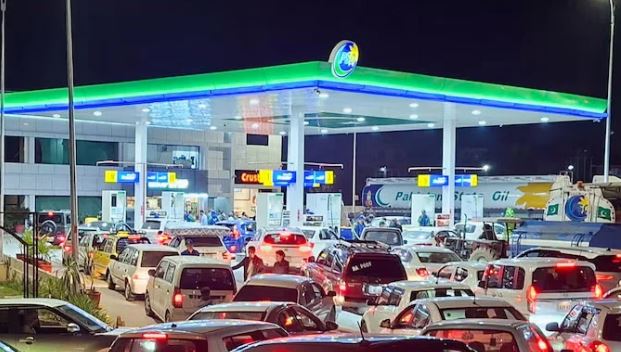
ISLAMABAD, MAY 16: The government on Friday slashed the price of petrol and high-speed diesel (HSD) by Rs5 per litre each for the next week.

In a notification issued on Friday, the Petroleum Division said new fuel rates will come into effect from May 16.

Following the decrease, the price of petrol stands at Rs409.78 per litre and HSD at Rs409.58.

In the previous weekly review, the government raised the price of petrol by Rs14.92 per litre and HSD by Rs15.

The government has been reviewing petroleum prices on a weekly basis since the US-Israeli conflict with Iran on February 28.

The conflict also triggered a global fuel crunch after the closure of the Strait of Hormuz, a key route through which around one-fifth of the world’s oil and gas supplies pass during peacetime.

Global oil prices gained more than 3% on Friday, climbing more than $3 a barrel, after comments by US President Donald Trump and Iran’s foreign minister further dented hopes of a deal to end ship attacks and seizures around the Strait of Hormuz.

Brent crude futures gained $3.35, or 3.17%, to $109.07 a barrel by 1734 GMT. US West Texas Intermediate futures were up $3.85, or 3.81%, at $105.02.

Over the week, Brent has climbed 7.72% and WTI 10.11% on uncertainty over the shaky ceasefire in the Iran war.

Petrol is mainly used by commuters in small vehicles, rickshaws and two-wheelers. Higher fuel prices significantly impact the budgets of middle and lower-middle-class households, who rely on petrol for daily travel.

On the other hand, a significant portion of the transport sector relies on high-speed diesel.

Its price is considered inflationary since it is predominantly used in heavy goods transport vehicles, trucks, buses, trains, and agricultural machinery such as tractors, tube wells, and threshers.

The consumption of high-speed diesel particularly contributes to the increased prices of vegetables and other food items.

MBS, Qatar emir discuss regional developments in phone call

MBS, Qatar emir discuss regional developments in phone call

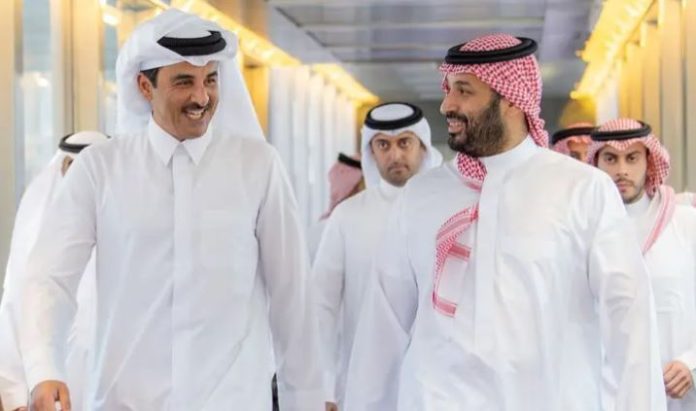
RIYADH, MAY 15: Saudi Crown Prince Mohammed bin Salman on Friday discussed regional developments during a phone call with Qatar’s Emir Sheikh Tamim bin Hamad Al Thani.

The Saudi Press Agency reported that the two officials reviewed bilateral ties and areas of joint cooperation.

They also discussed the latest regional and international developments and ongoing efforts aimed at enhancing security and stability, according to the SPA.

Pakistani, Iranian nationals of seized US vessels repatriated, says DPM Dar

Pakistani, Iranian nationals of seized US vessels repatriated, says DPM Dar

ISLAMABAD, MAY 15: Deputy Prime Minister and Foreign Minister Ishaq Dar announced on Friday that the government has successfully repatriated 11 Pakistanis and 20 Iranians through Singapore who were abroad vessels seized in the high seas by the United States.

In a post on X, DPM Dar stated that all individuals were in good health and high spirits, adding that the welfare and well-being of Pakistanis abroad, particularly those in distress, remained the government’s highest priority.

Dar said the individuals travelled from Singapore to Bangkok, where they boarded a flight scheduled to arrive in Islamabad later that night, completing the next phase of their return journey.

He further said that Iranian nationals would subsequently be facilitated to return to their home country.

The deputy prime minister expressed gratitude to Singapore’s Foreign Minister Vivian Balakrishnan and his government for their continued support and engagement throughout the process, which was undertaken at Pakistan’s request.

He also thanked Iranian Foreign Minister Abbas Araghchi for placing trust in Pakistan for the repatriation of Iranian nationals.

Dar acknowledged the role of the US government in ensuring close coordination that facilitated the smooth return of 11 Pakistani and 20 Iranian nationals.

He further appreciated the government of Thailand for facilitating transit through Bangkok at Pakistan’s request.

The deputy prime minister also extended gratitude to officials at Pakistan’s Foreign Office, Ministry of Interior, and diplomatic missions in Singapore and Thailand for ensuring timely coordination and the successful completion of the operation.

Abu Dhabi marks a new chapter in Ethiopian-Arab cultural diplomacy

Abu Dhabi marks a new chapter in Ethiopian-Arab cultural diplomacy

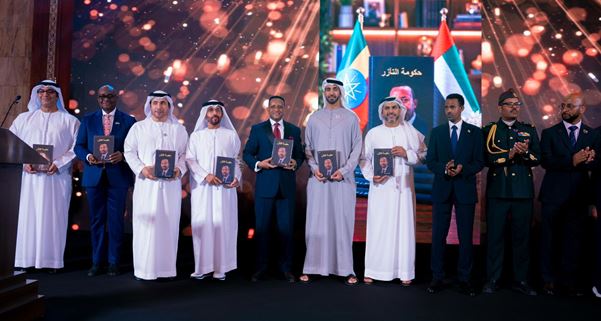
ABU DHABI, MAY 15 /DNA/ – Abu Dhabi witnessed a landmark moment in Ethiopian-Arab cultural and intellectual diplomacy on 14 May 2026, as the Embassy of the Federal Democratic Republic of Ethiopia hosted the official launch of the Arabic edition of “Medemer Mengist” (“Medemer State”) — a seminal philosophical and governance work authored by His Excellency Prime Minister Dr. Abiy Ahmed. The event drew significant attendees including UAE cabinet ministers, ambassadors, business leaders, academics, and prominent members of both the Ethiopian and Arab communities – cementing the occasion as one of the most significant Ethiopian cultural events held in the UAE in recent years.

AN EVENING OF DIPLOMACY AND IDEAS

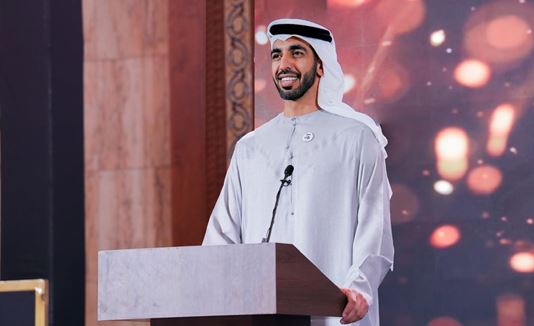
The ceremony was graced by the presence of His Excellency Sheikh Shakhboot bin Nahyan Al Nahyan, Cabinet Member and Minister of State at the UAE Ministry of Foreign Affairs, His Excellency Abdullah Sultan bin Awad Al Nuaimi, Minister of Justice, and senior UAE government officials alongside a distinguished gathering ofambassadors and heads of diplomatic missions, and leaders from the private sector and civil society.

In his keynote address, H.E. Sheikh Shakhboot underscored the importance of dialogue and cultural understanding among nations and peoples, while highlighting the strong and steadily growing relations between the two nations. He further reaffirmed the UAE’s commitment to deepening its strategic partnership with Ethiopia across cultural, economic, and diplomatic fronts.

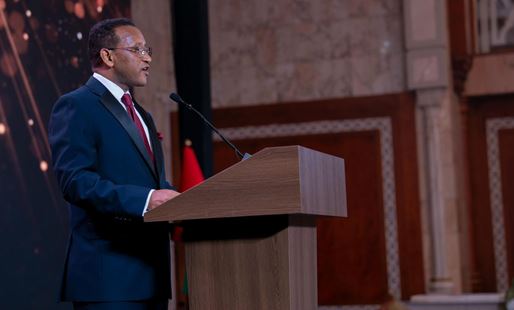
H.E. Dr. Jemal Beker Abdula, Ambassador Extraordinary and Plenipotentiary of the Federal Democratic Republic of Ethiopia to the UAE, emphasized the transformative significance of the Arabic translation. He described the publication not merely as a linguistic exercise but as a bridge — an invitation for Arabic-speaking readers across the region to engage directly with Ethiopia’s evolving political philosophy and its vision for the future.

SCHOLARLY DIALOGUE: THE PHILOSOPHY OF MEDEMER

The launch ceremony featured a prominent Ethiopian Scholar, Professor Adem Kamil, who offered a rich intellectual review of Medemer Mengist and its policy dimensions. The scholar highlighted the book’s philosophical grounding in synergy — the principle that collective effort, guided by shared values and inclusive institutions, generates outcomes far greater than the sum of individual parts. He also noted the particular relevance of the Medemer model for Arab-African relations, as both regions navigate questions of development, identity, and regional integration in a rapidly changing global landscape.

A NIGHT OF ETHIOPIAN CULTURE

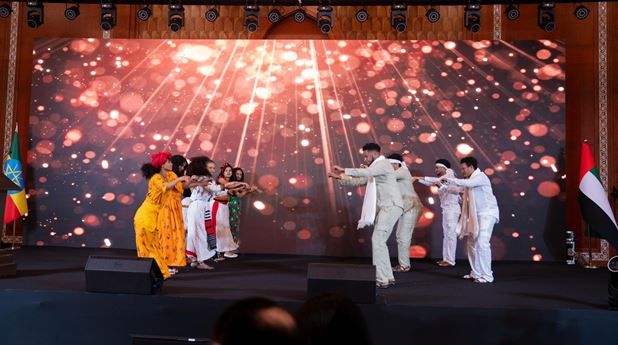
Beyond its intellectual programme, the evening offered guests a vibrant and immersive experience of Ethiopia’s cultural heritage. Traditional Ethiopian music and dance performances brought the vibrancy of the country’s diverse communities to the heart of Abu Dhabi, while an exquisite selection of Ethiopian culinary offerings allowed guests to savour the country’s storied gastronomic traditions. The cultural programme drew a warm and enthusiastic reception from the audience – many of whom expressed admiration for the depth and beauty of Ethiopia’s artistic heritage. For many attending diplomats and business leaders, the evening offered a first and deeply personal encounter with Ethiopian cultural expression.

A MILESTONE IN ETHIOPIAN-UAE RELATIONS

The launch of Medemer Mengist in Arabic marks a defining moment in the cultural and diplomatic relationship between Ethiopia and the United Arab Emirates. As the book reaches Arabic-speaking audiences across the region, the evening stood as a powerful testament to what the two nations are building together: a relationship grounded not only in trade and strategic interest, but in a shared conviction that ideas, culture, and open dialogue are among the most enduring foundations of genuine partnership.

Trump says he’s OK with Iran suspending nuke program for 20 years if there’s a ‘real’ commitment

Trump says he’s OK with Iran suspending nuke program for 20 years if there’s a ‘real’ commitment

WASHINGTON, MAY 15: US President Donald Trump said Friday that he would accept a 20-year suspension of Iran’s nuclear program if Tehran gave a “real” commitment, apparently walking back his previous demands that Iran permanently halt its program.

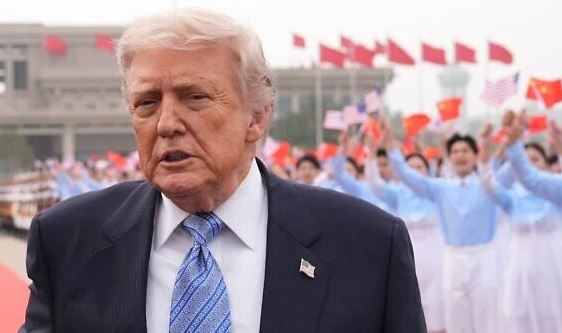
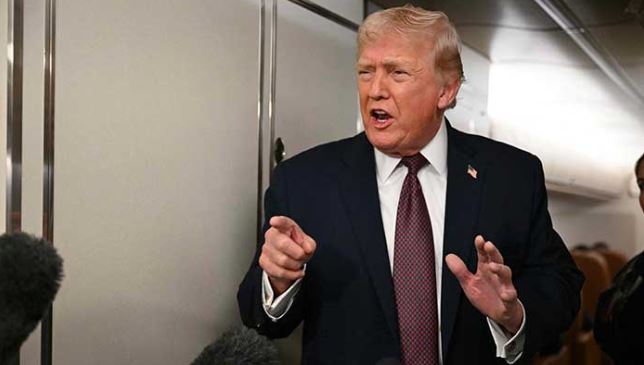
Asked by a reporter on Air Force One as he departed China following his two-day summit with President Xi Jinping whether a 20-year suspension would be sufficient, Trump responded, “Twenty years is enough, but the level of guarantee from them, it’s got to be a real 20 years.”

In the past, Trump has demanded that Iran agree to forever cease enrichment, and commit to never seeking nuclear weapons, claiming that he didn’t want to pass the problem off to a future president.

While Trump gave no further details on what the suspension would entail, the 20-year commitment appears to mirror the much-maligned “sunset clause” in the 2015 nuclear deal with Iran that would have allowed Tehran to enrich unlimited amounts of uranium once the deal elapsed.

Trump had pulled the US out of that agreement, calling the sunset clause “totally unacceptable” and saying that it would spark a nuclear arms race in the Middle East.

However, Trump on Friday also said his patience with Iran was running out and that he had agreed in talks with Xi that Tehran could not be allowed to have a nuclear weapon and must reopen the Strait of Hormuz.

Tehran denies seeking nuclear weapons, but it has enriched uranium to levels that have no peaceful application, obstructed international inspectors from checking its nuclear facilities, and expanded its ballistic missile capabilities.

Washington and Tehran announced a ceasefire last month but have been struggling to thrash out a lasting peace pact. Talks mediated by Pakistan have been suspended since Iran and the US each rejected the other’s latest proposals last week.

Israel, which launched the military campaign against Iran jointly with the US six weeks ago, is not represented at the talks. Host Pakistan has no diplomatic ties with Israel and does not recognize its sovereignty.

The ceasefire declared by Trump in April came with core declared goals of the war unfulfilled, including ensuring that Iran does not attain nuclear weapons, destroying its missile program, and creating the conditions for the Iranian public to overthrow the regime.

Speaking to reporters on Air Force One, Trump also said he discussed lifting sanctions on Chinese companies that buy Iranian oil during his visit to Beijing and will make a decision soon.

Advertisement
The US recently imposed sanctions on several Chinese oil refiners for buying Iranian oil, including Hengli Petrochemical 600346.SS, one of the country’s largest private refiners and a symbol of Beijing’s drive to modernize and upgrade the industry.

“We talked about that and I’m going to make a decision over the next few days,” Trump said.

US officials, including Trump, raised the possibility of China buying more American energy over the course of the summit, although Chinese readouts of the meeting made no mention of any deals.

‘No trust’
While Trump indicated there was flexibility in the US position, Iranian Foreign Minister Abbas Araghchi said on Friday that Tehran has “no trust” in the US and would only be interested in negotiating with Washington if it was serious.

Araghchi told reporters in New Delhi that “contradictory messages” had raised Iranian doubts about the Americans’ real intentions, adding that the Pakistani mediation process had not failed but was in “difficulty.”

Iran is trying to keep the latest ceasefire to give diplomacy a chance, but is also prepared to go back to fighting, Araghchi said.

“What was said that the United States rejected Iran’s proposal or Iran’s response to the American proposal was a few days ago, when Mr. Trump tweeted and said that it was unacceptable,” Araghchi said.

“But after that, we received messages again from the Americans saying that they are willing to continue the talks and continue the interaction.”

Advertisement
The issues holding up negotiations between the two sides include Iran’s nuclear ambitions and its control of ⁠the Strait of Hormuz.

With regard to Hormuz, Araghchi claimed all vessels can pass through the Strait of Hormuz except those “at war” with Tehran, if they coordinate with Iran’s navy.

But the situation around the waterway, vital to global energy and commodities markets, was “very complicated,” he added, during a visit to attend a BRICS foreign ministers’ meeting in India.

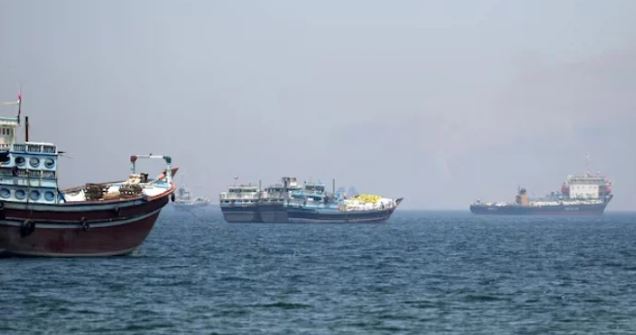
Iran effectively shut the strait, which normally handles about one-fifth of the world’s seaborne oil and gas supply, to most shipping after the US and Israel began their war on Iran in February.

On Thursday, a ship anchored off the east coast of the United Arab Emirates was seized and was heading toward Iranian waters, the British military said, while India said a cargo ship was sunk amid the battle over the strait.

Asked if Tehran was open to mediation by Beijing, Araghchi said Friday Iran appreciated the efforts of any country that had the ability to help.

“We have very good relations with China,” he said. “We are strategic partners, and we know that the Chinese have good intentions. So, anything they can do to help diplomacy would be welcomed.”

Araghchi added: “We hope that, with the advancement of negotiations, we will reach a good conclusion so that the Strait of Hormuz can be completely secured and we can expedite the normalisation of traffic through the strait.”

BRICS ministers fail to issue joint statement over Mideast conflict
The two-day BRICS meeting concluded without a joint statement because of “differing views among some members” on the situation in the Middle East, host India said.

Advertisement
The differences highlighted the challenge of maintaining unity within the bloc as it seeks to expand its influence.

Russia’s Foreign Minister Sergey Lavrov, third right, talks to Vice Minister of Foreign Affairs of Saudi Arabia, Waleed bin Abdulkarim, second right, as Indian Foreign Minister S.Jaishankar, right, South Africa’s Minister of Foreign Affairs Ronald Lamola, second left, Iranian Foreign Minister Abbas Araghchi, left, and and Vietnam Deputy Foreign Minister Nguyen Hang, third left, watch at a photo call of Government representatives and partner countries of BRICS during a two day meeting in New Delhi, India, May 14, 2026. (AP Photo/Manish Swarup)
The Indian statement said members expressed “their respective national positions and shared a range of perspectives” on issues including sovereignty, maritime security, and the protection of civilian infrastructure and civilian lives in the Middle East.

It also included a footnote saying that “a member had reservations” about parts of sections dealing with Gaza and security in the Red Sea and Bab al-Mandeb Strait.

BRICS includes Brazil, Russia, India, China, South Africa, Ethiopia, Egypt, Iran, the United Arab Emirates and Indonesia.

Divisions among members have become more visible during the Iran war, particularly between Iran and the UAE — which Iran repeatedly attacked with missiles and drones throughout the war.

Araghchi on Thursday urged BRICS nations to condemn the US and Israel over what he described as their “unlawful aggression.” He also called on member states to resist what he said was the politicization of international institutions.

Trump Says US-Iran ceasefire agreed as ‘favour to Pakistan’ Ishaq Dar confirms repatriation of Pakistanis and Iranians

Trump says US military studying 'very strong options' for Iran

DNA

ISLAMABAD: Former US President Donald Trump has claimed that the United States agreed to a ceasefire understanding with Iran as a “favour to Pakistan,” amid renewed diplomatic activity involving Islamabad, Tehran, Washington and Beijing.

Trump, speaking during a media interaction, also stated that Chinese President Xi Jinping wants Iran to “open up” the Strait of Hormuz to ensure uninterrupted global energy supplies and ease tensions in the Gulf region. His remarks came at a time of growing international concern over regional stability and maritime security in one of the world’s most critical oil shipping routes.

Meanwhile, Iranian Foreign Minister Abbas Araghchi said Tehran had “received messages” from the United States indicating Washington’s willingness to continue diplomatic talks despite ongoing tensions and sanctions-related disputes. The development is being viewed by analysts as a possible indication of backchannel diplomacy aimed at avoiding further escalation in the Middle East.

Diplomatic observers believe Pakistan has quietly played an important role in facilitating communication between regional and global stakeholders amid the evolving situation. Islamabad has maintained close ties with both Tehran and Washington while also coordinating with Beijing on regional security and economic matters.

In another significant development, Deputy Prime Minister and Foreign Minister Ishaq Dar announced the successful repatriation of 11 Pakistani nationals and 20 Iranian citizens who had been aboard vessels seized by the United States on the high seas.

Dar shared the update through a statement on X, saying all individuals were safe and in good health.

“All individuals are in good health and high spirits,” Dar stated, adding that the welfare of Pakistanis abroad, particularly those facing distress situations, remained the government’s highest priority.

According to the foreign minister, the rescued individuals had reached Bangkok from Singapore and later boarded a flight to Islamabad scheduled to arrive late at night.

“Our Iranian brothers will then be facilitated to return to their homeland,” Dar added, highlighting Pakistan’s humanitarian coordination with Iranian authorities.

The incident involving the seized vessels has not yet been fully explained publicly by US authorities, though it comes amid heightened maritime monitoring operations in regional waters linked to sanctions enforcement and anti-smuggling activities.

The successful repatriation effort has been welcomed in diplomatic circles as an example of practical regional cooperation despite broader geopolitical tensions. Analysts say the development also underscores Pakistan’s increasing diplomatic relevance in regional crisis management and mediation efforts.

The Strait of Hormuz remains central to the ongoing strategic calculations of global powers, with nearly one-fifth of the world’s oil trade passing through the narrow waterway. Any disruption in the route has the potential to trigger major economic consequences worldwide.

With Washington and Tehran apparently keeping communication channels open, and Pakistan continuing active diplomatic engagement, regional observers hope that tensions can be managed through dialogue rather than confrontation.

Punjab eases business hour restrictions until June 1

Punjab eases business hour restrictions until June 1

Decision applies to markets, shopping malls, hotels, restaurants and food outlets, reads notification

Abid Raza

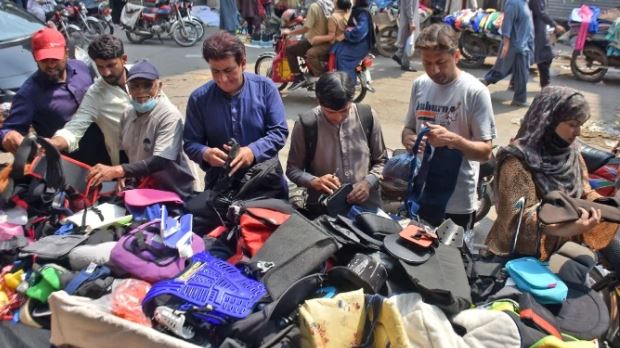
LAHORE: The Punjab government on Friday relaxed business operating hour restrictions across the province until June 1, suspending the mandatory closure of markets and commercial centres by 8pm.

According to an official notification, the decision will apply to markets, shopping malls, hotels, restaurants and food outlets throughout Punjab, with the decision taking effect immediately.

Lahore Deputy Commissioner Ali Ejaz said the relaxation in market timings would provide relief to traders and make shopping more convenient for citizens.

“Providing relief to traders is the government’s priority,” he said, adding that there would no longer be a restriction requiring markets to shut by 8pm from Friday onwards.Business hours were curtailed across the country last month as part of energy conservation measures introduced amid a sharp increase in domestic fuel prices, triggered by the conflict in the Middle East.

In a handout issued on April 6, the Prime Minister’s Office said shopping malls, departmental stores and shops dealing in daily-use items would close at 8pm in Punjab, Khyber Pakhtunkhwa, Balochistan, Islamabad, Gilgit Baltistan and Azad Jammu and Kashmir.

The measures formed part of the federal government’s broader austerity and fuel-conservation plan aimed at reducing energy consumption following the surge in fuel prices.

In line with the federal policy, the Punjab government also introduced province-wide restrictions to curb fuel and electricity use.

Besides limited business hours, the provincial administration directed educational institutions to hold physical classes only from Monday to Thursday, while public transport services — including the Orange Line, Metro Bus, Speedo and Green Bus — were made free for commuters.

As part of relief measures, the provincial government announced a subsidy of Rs100 per litre of diesel per acre for farmers, while motorcyclists were offered Rs100 on every 20 litres of petrol purchased.

The government also cut allowances of Punjab Assembly members by 25% for two months and taking 70% of official assembly vehicles off the road.

Police uncovered foreign involvement in Anmol’s drug network, says Karachi AIG

Police uncovered foreign involvement in Anmol's drug network, says Karachi AIG

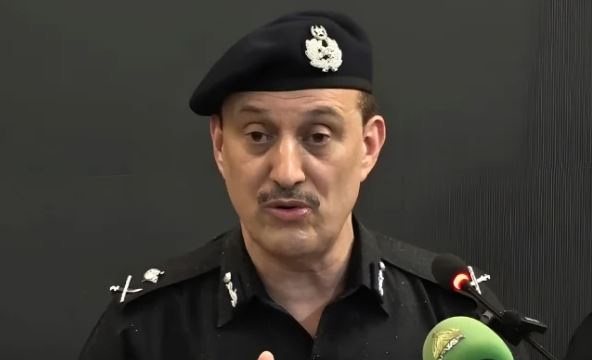
KARACHI, MAY 15: Karachi Additional Inspector General (AIG) Azad Khan on Friday said that police uncovered foreign involvement in Anmol alias Pinky’s drug network, saying some Lahore-based women were also involved in the ring.

The top cop made the revelations during a press conference alongside DIG Crime and Investigation Amir Farooqi and DIG West Irfan Baloch, where he shared updates on Anmol’s arrest and ongoing raids to apprehend her accomplices.


The case came under scrutiny after a video surfaced on May 12, showing her being produced before a judicial magistrate (South) in Karachi without handcuffs and under special protocol.

Police later said that Anmol was a highly wanted suspect who had been absconding in 10 different cases.

At the time, police said that weapon, cocaine and other drugs worth around Rs1.5 million were recovered from her custody, adding that she was reportedly operating a network of drug supply in the port city.

During today’s briefing, AIG Khan said that the drug network included six African nationals and female suspects based in Lahore.

According to him, Anmol was arrested from the Garden police jurisdiction, with 1.5 kilogrammes of cocaine and seven kilogrammes of chemical material recovered along with a pistol.

Further narcotics were recovered during a raid conducted at the suspect’s old residence in the Sachal area, he said, adding that drugs were being trafficked from outside Pakistan.

He said that negligence during court production had led to action against responsible officers, while further investigations were underway, with teams formed under the supervision of the Sindh police chief and coordination with the Federal Investigation Agency (FIA) and cybercrime authorities.

AIG Khan said that forensic examination of the alleged drug dealer’s mobile phone revealed 869 contacts, including 132 Karachi-based numbers, and financial records showed transactions worth Rs30 million.

He added that the suspect had been active since 2014, while she began operations in Karachi from 2018.

According to AIG Khan, facilitation networks were being traced nationwide, with authorities preparing to place the names of all involved individuals on the Exit Control List as the probe continues.

Arrest and investigation
Following her arrest from Karachi’s Garden area on May 11, police had initially failed to secure her physical remand after the court sent her to judicial custody until May 25.

However, investigators later filed a fresh plea, arguing they needed custody to trace the cocaine supply source, investigate her financial network, and verify her criminal record. The court subsequently approved a three-day physical remand.

During preliminary investigation, the alleged drug dealer revealed that she used to pay hundreds of thousands of rupees monthly to different police stations of Karachi as a bribe, sources told Geo News on Thursday.

Anmol revealed that she was involved in the sale of narcotics worth more than Rs20 million per month in Karachi, the sources said.

According to the statement attributed to her, the suspect revealed that drugs were being transported from Lahore using intercity bus services. When her original identity card was blocked, she opened a bank account under the name of another person,

The sources added that drug-related payments were made and received through mobile applications, and that another bank account was opened under the name “Zeeshan” for financial transactions.

It was also revealed that the mobile SIM cards used by her were registered under the names “Afzal” and “Sabra Bibi”.

Anmol, according to sources, said that multiple raids resulted in her associates being arrested, but they were later released after payments were made.

She revealed that one officer repeatedly detained her brother but released him after taking bribes.

Stay Connected

64FansLike
60FollowersFollow

Latest Reviews

Exchange Rates

USD - United States Dollar
EUR
1.14
GBP
1.34
AUD
0.70
CAD
0.71