Home Blog Page 122

Prime Minister’s China Visit in a Changing Global Order

PM Shehbaz arrives in Hangzhou on four-day China visit

T.M. Awan

Prime Minister Shehbaz Sharif’s upcoming visit to China comes at a moment when the global strategic landscape is rapidly shifting and regional uncertainty is deepening across multiple fronts. From rising tensions in the Middle East to intensifying great-power competition in Asia and continued instability in Afghanistan, the geopolitical environment surrounding Pakistan has become increasingly fragile. In such circumstances, Islamabad’s engagement with Beijing is no longer merely symbolic diplomacy. It is increasingly about economic survival, strategic positioning, and long-term regional relevance.

The visit, scheduled as both countries mark 75 years of diplomatic relations, carries significance beyond routine bilateral engagement. For decades, Pakistan-China relations have often been described through familiar phrases such as “all-weather friendship” and “ironclad partnership.” Yet today, both Islamabad and Beijing appear focused on transforming that historic political trust into a more institutionalized economic, technological, and strategic framework capable of adapting to a changing world order.

The timing itself is geopolitically important. Pakistan is navigating post-2025 tensions with India, economic fragility at home, and a volatile western frontier. China, meanwhile, faces mounting pressure from an increasingly polarized Indo-Pacific environment shaped by US-China rivalry, supply-chain restructuring, and strategic competition over technology and trade corridors. In this context, both countries are recalibrating their partnership from rhetoric toward operational convergence.

That shift is perhaps most visible in the expected acceleration of CPEC Phase-II.

The first phase of the China-Pakistan Economic Corridor fundamentally transformed Pakistan’s infrastructure landscape through roads, energy projects, and connectivity initiatives. However, it also exposed critical structural weaknesses within Pakistan’s economy. Infrastructure alone could not guarantee industrial growth, export competitiveness, or sustainable economic recovery. Critics repeatedly questioned whether Pakistan had developed the institutional capacity necessary to translate Chinese financing into long-term productivity.

CPEC Phase-II is therefore being framed as a transition from infrastructure to industrialization. The emphasis is now expected to move toward business-to-business (B2B) investment models, Special Economic Zones (SEZs), export-oriented manufacturing, agricultural modernization, technology transfer, and digital integration. China’s growing interest in relocating segments of its manufacturing supply chains into Pakistan reflects broader global economic trends, including rising labor costs within China and the diversification of industrial production networks.

Yet the real challenge lies not in announcing industrial cooperation but in creating an environment where Chinese private capital feels secure enough to invest long term.

This is where Pakistan faces uncomfortable realities.

Chinese state-backed infrastructure financing and private-sector industrial relocation operate according to very different calculations. Private investors require regulatory consistency, reliable energy supplies, transparent taxation systems, legal predictability, efficient logistics, and above all, security guarantees. Pakistan’s long-standing issues—bureaucratic delays, policy inconsistency, currency volatility, and governance inefficiencies—continue to discourage industrial investment despite strong political ties between Islamabad and Beijing.

Unless Pakistan undertakes serious structural reforms, the promise of SEZ-led industrial transformation risks remaining largely aspirational.

The visit is also expected to deepen cooperation under China’s broader “Digital Silk Road” initiative. Emerging discussions surrounding artificial intelligence, cybersecurity, cloud infrastructure, digital payments, telecommunications modernization, and e-commerce integration indicate that Pakistan-China cooperation is entering a new technological phase. This reflects a wider global reality: modern strategic competition is increasingly being fought not only through military alliances or trade routes, but through data infrastructure, technological ecosystems, and digital connectivity.

For Pakistan, this creates both opportunity and responsibility. Deeper digital integration with China could modernize domestic industries and provide Pakistani SMEs access to wider commercial networks. At the same time, it also raises long-term questions regarding technological dependence, cybersecurity governance, and strategic balancing in an era of expanding US-China competition.

Beyond economics, the security dimension of the visit cannot be ignored. China’s concerns regarding militant attacks on Chinese nationals and CPEC-linked projects remain significant. Meanwhile, post-May 2025 regional tensions have accelerated strategic coordination between Islamabad and Beijing in areas ranging from deterrence stability to cybersecurity and regional counterterrorism cooperation.

Afghanistan will also remain central to these discussions. Both countries increasingly view regional instability as a direct threat to long-term Belt and Road connectivity and broader economic integration across Asia.

Still, perhaps the most important aspect of this visit lies in what it symbolizes after seventy-five years of diplomatic relations.

Few bilateral relationships in modern international politics have displayed the continuity that Pakistan-China ties have maintained across wars, sanctions, regime changes, and shifting global alignments. What began as a strategic understanding during the Cold War has gradually evolved into one of the most consequential partnerships in Asia.

However, history alone cannot sustain future relevance.

The true success of this visit will not be measured by ceremonial statements or the number of memorandums signed in Beijing. It will depend on whether both countries can transform strategic trust into practical economic delivery, industrial modernization, technological advancement, and sustainable regional stability.

Because in an increasingly multipolar world, partnerships survive not through slogans, but through implementation.

The writer is a journalist, strategic communication, and public diplomacy advisor based in Islamabad.

Punjab announces three Eid-ul-Azha holidays

Punjab announces three Eid-ul-Azha holidays

LAHORE, MAY 23: The Punjab government has announced four public holidays across the province on the occasion of Eid-ul-Azha. According to the notification, Eid holidays will be observed from May 26 to 28.

The notification said holidays will be observed on Tuesday, Wednesday and Thursday for Eid-ul-Azha. Government offices and relevant institutions across Punjab will follow the announced holiday schedule.

Earlier, the Khyber Pakhtunkhwa government announced four public holidays on the occasion of Eid-ul-Azha, with all government offices and institutions set to remain closed across the province.

According to a notification issued by the chief secretary of Khyber Pakhtunkhwa, official holidays will be observed from Tuesday, May 26 to Friday, May 29.

The provincial government said all government offices, educational institutions and other public sector departments will remain closed during the Eid holidays.

Officials added that when combined with the regular Saturday and Sunday weekend holidays, citizens will enjoy a total six-day break.

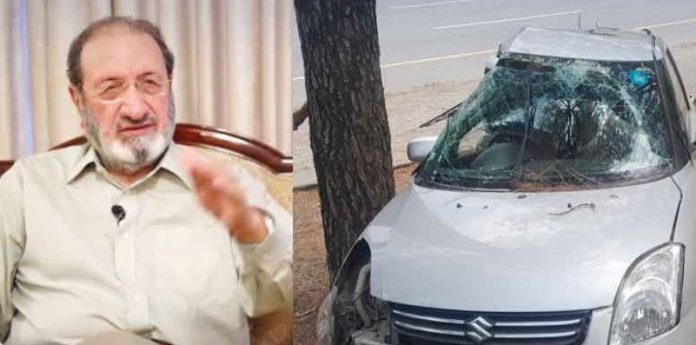
Ex-diplomat Ayaz Wazir’s daughter dies in Islamabad crash

Ex-diplomat Ayaz Wazir’s daughter dies in Islamabad crash

ISLAMABAD, MAY 23: Rayan Wazir, daughter of former diplomat Ayaz Wazir, died in a traffic accident in Islamabad after her car crashed near Parade Ground Metro Station, police sources said.

According to police, the vehicle lost control and crashed onto the footpath. The woman driving the car died on the spot.

Police sources said the accident took place near Parade Ground Metro Station in Islamabad. The car reportedly went out of control before hitting the footpath.

The deceased was later identified as Rayan Wazir, daughter of former diplomat Ayaz Wazir.

According to police sources, the vehicle involved in the accident bore registration number CB 214. Police said the car is registered in the name of Ayaz Khan.

Rescue personnel shifted the body to PIMS Hospital after the accident. Police have started an investigation to determine the cause of the crash.=DNA

PM Shehbaz arrives in Hangzhou on four-day China visit

PM Shehbaz arrives in Hangzhou on four-day China visit

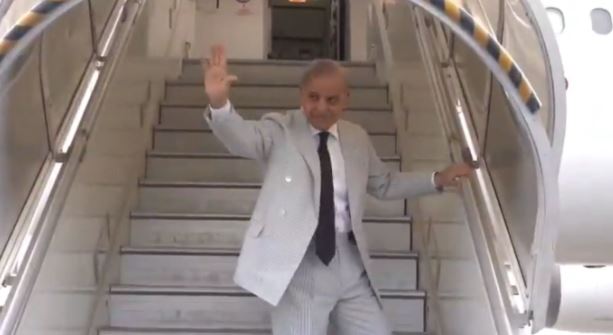
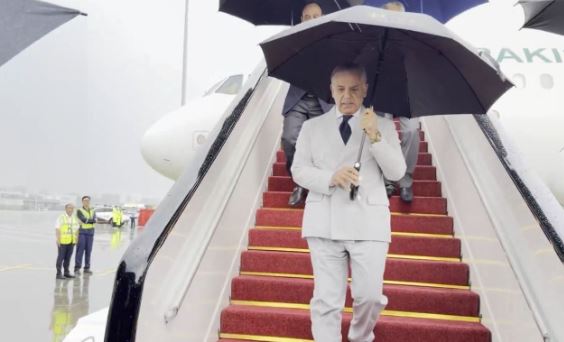
ISLAMABAD: Prime Minister Shehbaz Sharif has arrived in Hangzhou in the first phase of his four-day official visit to China, aimed at strengthening bilateral strategic cooperation and expanding economic engagement between the two countries.

Upon arrival at Hangzhou Xiaoshan International Airport, the prime minister was welcomed by Deputy Governor of Zhejiang Xu Wenguang, Chinese Ambassador to Pakistan Jiang Zaidong and Pakistan’s Ambassador to China Khalil Hashmi, the Government of Pakistan said in a post on X.


In a post on X, the prime minister expressed gratitude to leadership of Zhejiang province for the warm welcome extended to him and his delegation upon arrival.

“We look forward to strengthening practical cooperation with Zhejiang Province across diverse fields, including the digital economy, e-commerce, information technology, telecommunications, agriculture, renewable energy, advanced manufacturing, and skills development,” PM Shehbaz said.

The premier reaffirmed commitment to further strengthening the “enduring bond of friendship” between the two nations.

The prime minister was accompanied by Deputy Prime Minister and Foreign Minister Ishaq Dar, Planning Minister Ahsan Iqbal, Information Minister Attaullah Tarar, IT Minister Shaza Fatima Khawaja and Special Assistant to the Prime Minister Tariq Fatemi, the government of Pakistan said in a X post.

“The visit assumes special significance as Pakistan and China commemorate the 75th anniversary of the establishment of diplomatic relations. It will provide an opportunity to reaffirm the abiding strength of the Pakistan-China All-Weather Strategic Cooperative Partnership and advance the shared vision of building an even closer Pakistan-China Community with a Shared Future,” the Foreign Office said.

During his stay in Hangzhou, the premier is scheduled to meet the Party Secretary of Zhejiang province and will also chair the Pakistan-China B2B Investment Conference on IT & Telecom, Battery Energy Storage Systems (BESS), and Agriculture.

The prime minister will also witness the exchange of agreements and memoranda of understanding between companies from both countries.

According to officials, PM Shehbaz is expected to hold meetings with the chief executives of leading Chinese companies and visit the headquarters of Alibaba Group, where he will participate in a ceremony for the signing of cooperation memorandums.

In the second phase of the visit, the prime minister will travel to Beijing for meetings with Chinese President Xi Jinping and Premier Li Qiang.

The two sides will review bilateral cooperation in the political, economic, and strategic domains, with particular focus on the high-quality development of CPEC, trade, investment, industrial cooperation, agricultural modernisation, information technology, science and technology, and people-to-people exchanges.

“The visit is expected to further deepen political trust, strengthen strategic coordination, expand practical cooperation, and consolidate the longstanding friendship between Pakistan and China,” the FO added.

Rubio visits India to renew ties after US-China summit

Rubio visits India to renew ties after US-China summit

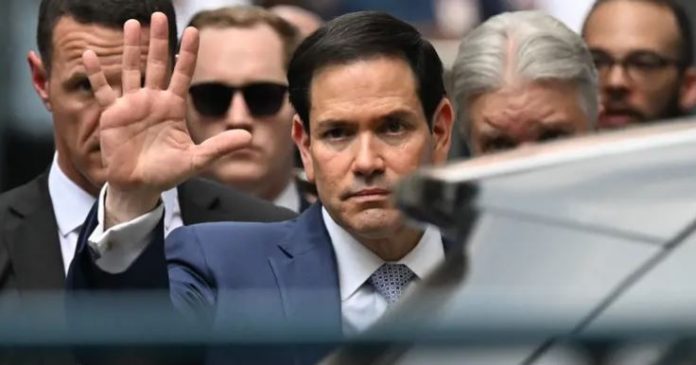
WASHINTON, MAY 23: US Secretary of State Marco Rubio on Saturday invited Indian Prime Minister Narendra Modi to Washington, reaffirming the importance of a relationship that has come under growing strain, a week after the United States held a warm summit with China.

After joining President Donald Trump in Beijing a week ago, Rubio – visiting both Asian powers for the first time – flew to New Delhi and saw Modi for more than an hour, inviting the premier to visit the White House soon.

Rubio “underscored the strategic importance of the US-India partnership, rooted in our shared democratic, profound economic and commercial opportunity and the strong personal ties” between Modi and Trump, State Department spokesman Tommy Pigott said, glossing over last year’s friction between the world’s two largest democracies.

Trump has shaken up core assumptions on US foreign policy, including a commitment to building a stronger relationship with India, which was barely mentioned in his administration’s national security strategy released last year.

Visiting China, Trump hailed the reception he received from President Xi Jinping, despite limited concrete announcements.

Trump also spoke of the United States and China being a “G2” – a formulation that had fallen out of favor in recent years as US allies fear being shut out of Washington’s dealings with a rising China.

Starting with nuns
Rubio, a devout Catholic, began his four-day, four-city tour by touring the headquarters of Mother Teresa’s charity in the eastern city of Kolkata and praying over her tomb.

Wearing a yellow garland over his suit, Rubio, joined by his wife Jeanette, smiled before an assembly of nuns, all clad in the late humanitarian’s signature white and blue saris.

“Rubio spoke about aiding the homeless, terminally ill and those afflicted by leprosy,” Sister Marie Juan of Missionaries of Charity told reporters after his hour-and-a-half-long visit.

“He was happy to pray, and we were also happy to have him,” she said.

While Trump rarely raises human rights, some elements of his base have expressed concerns over the treatment of Christians under the Hindu nationalist Modi, making Rubio’s choice of first stop highly symbolic.

Rights groups say there has been a rise in attacks on minority Christians across India, including vandalism of churches, since Modi came to power in 2014.

The government rejects the claims as exaggerated and politically motivated.

Before leaving on Tuesday, Rubio will also take part in a meeting of foreign ministers of the so-called Quad – Australia, India, Japan and the United States – four democracies seen as a counterweight to China’s presence in the Indian Ocean.

China has long been suspicious of the Quad, calling it an attempt to encircle it, and has chastised India in the past for taking part in it.

Ahead of the trip, Rubio called India a “great ally” and “great partner,” and said the United States would be looking to find ways to sell it more oil.

India’s fast-growing economy is reliant on energy imports and like many countries has been rattled by the US-Israeli attack on Iran, which retaliated by choking off the strategic Strait of Hormuz, sending global oil prices soaring.

India has historic ties with Iran but also a growing relationship with Israel, which Modi visited just days before the war erupted on February 28.

But the conflict has also seen the re-emergence as a key US partner of India’s traditional adversary Pakistan, which has positioned itself as a mediator, with its powerful army chief flying Friday to Tehran.

The United States was a Cold War partner of Pakistan but increasingly took a distance as it prioritized relations with India, seeing the democracy as a natural partner in a global order marked by China’s rise.

Trump has turned away from long-held assumptions and warmed to Pakistan, which has lavished him with praise over his diplomacy in its short war with India last year, and has welcomed a cryptocurrency firm owned by the US president’s family.

Modi irritated Trump by not crediting him with ending the war, in which India struck Pakistan following the massacre of mostly Hindu civilians in Indian-administered Kashmir.

How Saudi Arabia is using AI to transform the Hajj experience

How Saudi Arabia is using AI to transform the Hajj experience

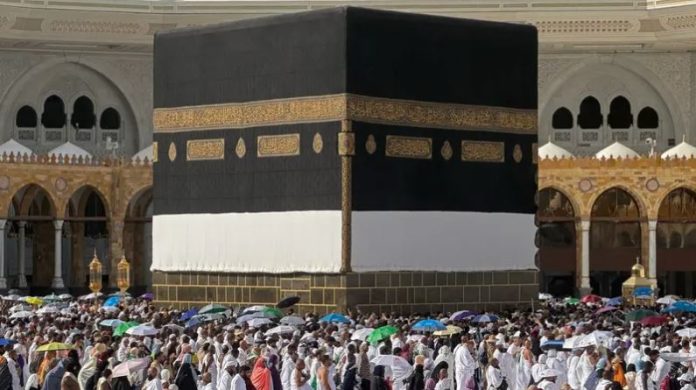
RIYADH, MAY 23: As millions of Muslims prepare for this year’s Hajj, Saudi Arabia has expanded the use of artificial intelligence and smart digital infrastructure to improve crowd management, enhance operational efficiency and make the pilgrimage safer and smoother for worshippers from around the world.

The Kingdom’s efforts are being led by the Saudi Data and Artificial Intelligence Authority (SDAIA), which is operating a range of integrated AI-powered platforms and digital services throughout the pilgrimage journey – from pilgrims’ departure from their home countries to their arrival in Saudi Arabia and departure after completing Hajj.

“Our goal is to ensure that AI operates quietly in the background while making the pilgrim journey safer, smoother and more efficient at every stage,” SDAIA official spokesperson Majed al-Shehry told Al Arabiya English.

For more news on Saudi Arabia, visit our dedicated page.

He added that AI has become a key tool in managing large-scale crowd operations through predictive technologies, advanced data analytics and real-time monitoring systems that help improve safety and operational efficiency.

According to SDAIA, the systems are designed to improve crowd flow, support emergency response, enhance transportation logistics and provide multilingual assistance for pilgrims during one of the world’s largest annual human gatherings.

AI-powered crowd management
One of the main areas of focus this Hajj season is crowd management around the Grand Mosque in Mecca and the holy sites of Mina, Arafat and Muzdalifah.

According to SDAIA, platforms such as Baseer and Sawaher – developed in partnership with the Ministry of Interior – use computer vision, thermal imaging and AI-driven analytics to monitor crowd density and movement patterns in real time.

The systems analyze live video feeds and surveillance data to identify congestion points, predict crowd surges and support faster decision-making by authorities.
Multilingual robots

An employee stands at the control room for traffic and crowd management for pilgrims at the General Transport Centre at the Royal Commission for Mecca and Holy Sites in Mecca on June 3, 2025. (AFP)
Saudi Arabia has also deployed a multi-service AI-powered robot designed to provide religious guidance and real-time translation in several languages as part of a wider digital ecosystem aimed at enriching visitors’ spiritual and intellectual experience.

The robot offers interactive religious and educational content through an easy-to-use interface, including information on locations and services inside the two holy mosques, answers to religious inquiries, and instant translation services to help visitors from different nationalities and cultures communicate more easily.

Smart digital services for pilgrims
Saudi Arabia is also expanding the use of AI-powered digital services aimed at assisting pilgrims throughout their journey.

More than 1.5 million pilgrims have benefited from the Mecca Route Initiative, which uses advanced digital verification and intelligent data processing technologies and is currently operating across 17 airports in 10 countries.

The initiative enables pilgrims to complete several travel and entry procedures before arriving in Saudi Arabia, including biometric enrolment and ticket processing.

The Tawakkalna and Nusuk applications are also playing a central role during Hajj this year, offering more than 1,300 digital services designed to support pilgrims.

Services include digital Hajj permits, navigation tools, weather updates, emergency assistance, ambulance requests, Qibla direction services and digital identification through the Nusuk Card, which contains medical records and emergency contact information.

Vision for the future
Saudi officials say the continued integration of AI technologies into Hajj reflects the Kingdom’s broader ambitions to position itself as a global leader in digital transformation and smart governance.

The expanding use of smart surveillance systems, predictive analytics, digital identity services, robotics and automated operations is expected to play an increasing role in future Hajj seasons as Saudi Arabia continues investing in smart city infrastructure in Mecca and Madinah.

“The continued integration of AI technologies into Hajj operations reflects Saudi Arabia’s broader efforts to position the Kingdom as a global leader in digital transformation and smart governance, while improving the experience and safety of pilgrims from around the world,” SDAIA said.

Iran-US talks: CDF Munir, Araghchi discuss efforts to ‘prevent further escalation’

Iran-US talks: CDF Munir, Araghchi discuss efforts to 'prevent further escalation'

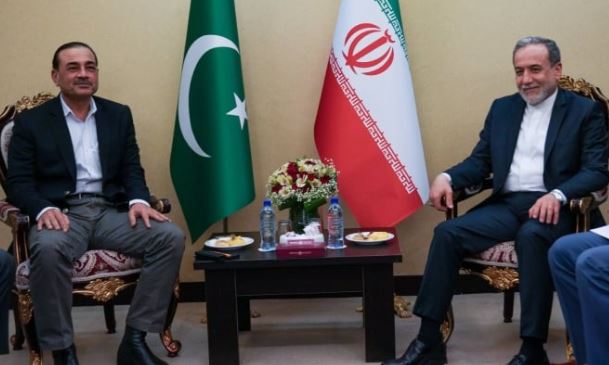
TEHRAN, MAY 23: Chief of Army Staff and Chief of Defence Forces Field Marshal Syed Asim Munir and Iranian Foreign Minister Abbas Araghchi held a meeting to exchange views on the latest diplomatic efforts aimed at ending the US-Israel war on Iran, the Iranian government said.

“Field Marshal Asim Munir met FM in Tehran to discuss diplomatic efforts aimed at preventing further escalation and promoting peace, stability, and security in West Asia,” the government of Iran wrote on X.

The meeting, which lasted late into Friday night, focused on the latest diplomatic initiatives aimed at preventing further escalation and ending the conflict, according to media reports.

The field marshal reached Tehran on Friday as part of ongoing mediation efforts to end the US-Israel war on Iran, according to the Inter-Services Public Relations (ISPR).

Interior Minister Mohsin Naqvi, who was already in Tehran, along with Iranian Interior Minister Eskandar Momeni and others, received and warmly welcomed the field marshal, the military’s media wing said.

The visit comes amid Pakistan’s ongoing efforts to mediate between the United States and Iran after plans for a second round of negotiations in Islamabad did not materialise.

The first round of direct US-Iran talks was held in Islamabad on April 11 and 12 following a Pakistan-brokered ceasefire on April 8. The negotiations ended without an agreement, but the talks did not collapse.

Iran weighs peace proposal
Meanwhile, Tehran accused the United States of “excessive demands”, Iranian media said on Saturday, as US media reports raised the prospect that Washington was mulling new strikes and leaders of the Islamic republic considered the latest peace proposal.

Araghchi said in a call with UN Secretary-General Antonio Guterres that Tehran was engaged in the diplomatic process despite “repeated betrayals of diplomacy and military aggression against Iran, along with contradictory positions and repeated excessive demands” by the United States, according to the ministry.

US President Donald Trump has described the stop-start negotiations this week as teetering on the “borderline” between renewed attacks and a deal to end the war, which began with US-Israeli strikes on Iran on February 28 and led to competing blockades around the strategic Strait of Hormuz that have roiled the global economy.

US media outlets Axios and CBS News, citing unnamed sources, reported the White House was considering strikes on Iran, although both added a final decision had not been made yet.

Hormuz squeeze
US officials have repeatedly raised the prospect of renewed action against Iran if a deal were not reached, with Secretary of State Marco Rubio saying on the sidelines of a Nato conference in Sweden that there had been “some progress” towards a peaceful resolution but “things were not there yet”.

“We’re dealing with a very difficult group of people. And if it doesn’t change, then the president’s been clear he has other options,” he said.

Iranian foreign ministry spokesman Esmaeil Baqaei said the status of the Strait of Hormuz and a retaliatory US blockade of Iranian ports were also under discussion, according to IRNA.

The future of the strategic maritime chokepoint remains a key sticking point, with fears growing that the global economy will suffer as pre-war oil stockpiles run down.

PM Shehbaz departs for China on four-day visit to ‘strengthen strategic partnership’

PM Shehbaz departs for China on four-day visit to 'strengthen strategic partnership'

ISLAMABAD, MAY 23: Prime Minister Shehbaz Sharif on Saturday departed for China on a four-day official visit aimed at strengthening bilateral strategic cooperation and expanding economic engagement between the two countries.

The prime minister left for Hangzhou in the first phase of his visit, accompanied by Deputy Prime Minister and Foreign Minister Ishaq Dar, Planning Minister Ahsan Iqbal, Information Minister Attaullah Tarar, IT Minister Shaza Fatima Khawaja and Special Assistant to the Prime Minister Tariq Fatemi, the government of Pakistan said in a X post.

“The visit assumes special significance as Pakistan and China commemorate the 75th anniversary of the establishment of diplomatic relations. It will provide an opportunity to reaffirm the abiding strength of the Pakistan-China All-Weather Strategic Cooperative Partnership and advance the shared vision of building an even closer Pakistan-China Community with a Shared Future,” the Foreign Office said.

During his stay in Hangzhou, the premier is scheduled to meet the Party Secretary of Zhejiang province and will also chair the Pakistan-China B2B Investment Conference on IT & Telecom, Battery Energy Storage Systems (BESS), and Agriculture.

The prime minister will also witness the exchange of agreements and memoranda of understanding between companies from both countries.

According to officials, PM Shehbaz is expected to hold meetings with the chief executives of leading Chinese companies and visit the headquarters of Alibaba Group, where he will participate in a ceremony for the signing of cooperation memorandums.

In the second phase of the visit, the prime minister will travel to Beijing for meetings with Chinese President Xi Jinping and Premier Li Qiang.

The two sides will review bilateral cooperation in the political, economic, and strategic domains, with particular focus on the high-quality development of CPEC, trade, investment, industrial cooperation, agricultural modernisation, information technology, science and technology, and people-to-people exchanges.

“The visit is expected to further deepen political trust, strengthen strategic coordination, expand practical cooperation, and consolidate the longstanding friendship between Pakistan and China,” the FO added.

Punjab announces Rs50,000 fine for illegal offal disposal during Eid ul Adha

Punjab announces Rs50,000 fine for illegal offal disposal during Eid ul Adha

LAHORE: The Punjab government has decided to impose a Rs50,000 fine on citizens found dumping animal remains and waste in streets and residential areas during Eid ul Adha.

The decision was taken in a meeting chaired by Punjab Chief Minister Maryam Nawaz to review foolproof cleanliness arrangements across Punjab for Eid ul Adha, said a press statement issued on Saturday.

In Pakistan, Eid ul Adha will fall on Wednesday, May 27, according to Central Ruet-e-Hilal Committee Chairman Maulana Abdul Khabeer Azad.

The chief minister directed authorities to ensure strict monitoring and prevention of dumping animal waste and remains at prohibited locations. Vigilance squads will be established across the province to monitor violations and enforce cleanliness rules.

CM Maryam also directed the concerned authorities to launch a public awareness campaign to discourage people from throwing animal waste in unauthorised places. She instructed officials to ensure special cleaning and monitoring of drains, canals, and other areas across the province.

The chief minister further directed authorities to ensure cleanliness in private housing societies, railway colonies and cantonment areas during Eid operations. Special arrangements have also been ordered for cleaning 2,687 major commercial markets across Punjab, the statement read.

Addressing the participants via video link, Maryam said all departments would have to work as “one government unit” to make the cleanliness operation successful. She also announced that the officers showing outstanding performance would be rewarded, while warning that negligence and public complaints would result in strict accountability.

During the meeting, a cleanliness plan called the “Suthra Punjab Operation” was presented. The officials informed the meeting that biodegradable shopping bags would be provided for the disposal of animal waste and remains.

Rose water spray arrangements would also be made at Eid prayer gatherings and mosques.

According to the briefing, around 176,000 sanitation workers and more than 8,000 temporary staff members will participate in “Suthra Punjab” operation.

Authorities have established 3,800 primary collection centres and designated 3,100 dumping sites for the disposal of animal remains. In addition, 7,000 dumping points will be set up province-wide.

More than 4,500 special camps will be established across Punjab, while over 40,000 additional vehicles will be deployed during the operation.

It was said that loader rickshaws, mini dumpers, tractor trolleys and pickup vehicles will also be hired to strengthen waste collection efforts.

The provincial government also announced that citizens will be able to register complaints and seek assistance through the “Suthra Punjab” helpline 1139 during Eid ul Adha.

Zero tolerance for tax harassment, Bilal Azhar assures

Zero tolerance for tax harassment, Bilal Azhar assures

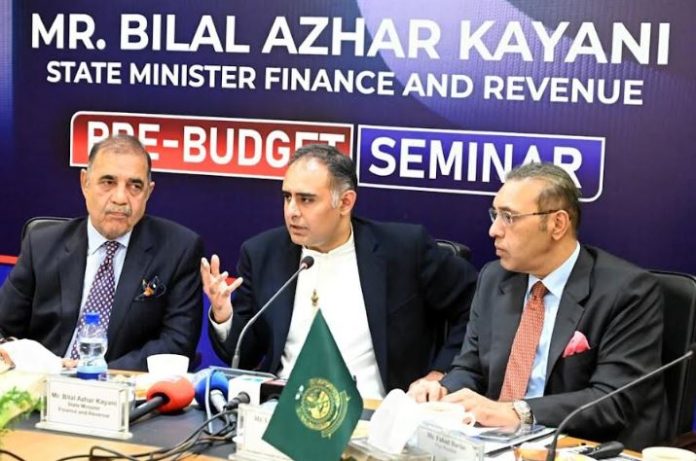
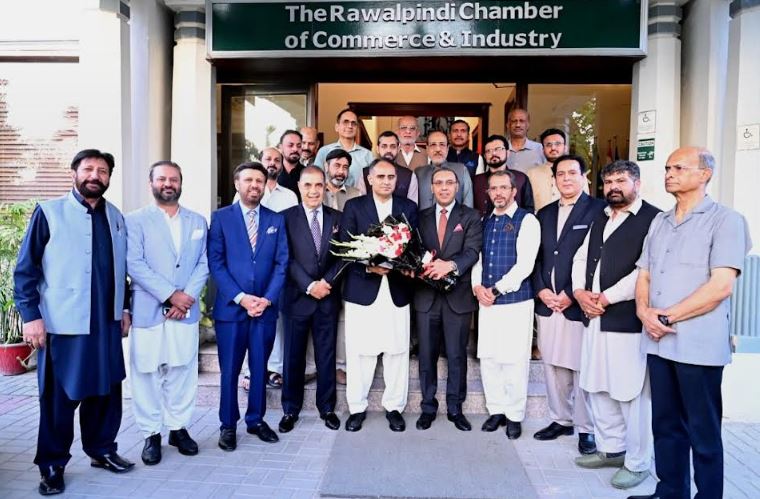
ISLAMABAD, MAY 23 /DNA/ – A pre-budget seminar was organized at the Rawalpindi Chamber of Commerce and Industry where Minister of State for Finance and Revenue Bilal Azhar Kayani addressed the business community and shared the government’s economic priorities ahead of the upcoming federal budget.

Zero tolerance for tax harassment, Bilal Azhar assures

Speaking on the occasion, Bilal Azhar Kayani said that the government intends to reduce the burden on taxpayers and the salaried class in the forthcoming budget. However, he noted that due to commitments under the IMF program, there is limited fiscal space available for major relief measures. He informed participants that the federal budget is expected to be presented during the first week of June and assured the business community of zero tolerance against high-handedness and harassment by tax authorities.

The minister stated that over the past two years, the government has achieved economic stability through fiscal discipline, resulting in improved foreign exchange reserves and restoration of confidence among international financial institutions. He added that despite the impact of regional conflicts, the Pakistani rupee remained stable and the country did not face shortages of petrol and diesel unlike several other countries in the region.

Bilal Azhar Kayani emphasized that increasing exports and strengthening the national economy remain the government’s top priorities so that Pakistan can eventually move away from dependence on IMF programs. He further shared that special measures are being introduced to facilitate Small and Medium Enterprises (SMEs), while the utilization period for imported goods by small exporters has been extended to 18 months to support ease of doing business.

He said the government continues consultations with the business community and remains committed to providing maximum possible relief despite global economic pressures. He added that efforts are underway to introduce greater facilitation and ease for businesses in the upcoming budget.

Discussing privatization reforms, the minister stated that the privatization process is progressing rapidly. He mentioned that the privatization of Pakistan International Airlines has recently been completed, while the process for privatizing three power distribution companies is currently underway. He remarked that privatization offers a sustainable solution for improving the performance of these sectors and that the Privatization Commission is actively working on these initiatives.

He also highlighted that the Prime Minister has approved a housing finance scheme aimed at supporting the construction sector and stimulating economic activity.

President RCCI Usman Shaukat, in his address, demanded the abolition of super tax, reduction in corporate and sales tax rates, and an increase in the minimum taxable income threshold for the salaried class. He also stressed the need to reduce the cost of doing business and introduce a long-term industrial policy for sustainable economic growth.

Former President and Group Leader Sohail Altaf called for an immediate end to harassment and misuse of authority by government departments and officials, emphasizing the need for improved behavior and facilitation for businesses.

Former  President Asad Mashhadi said that Pakistan’s recent diplomatic achievements should also be transformed into economic opportunities to strengthen trade and investment in the country. Representatives from the trade associations, Shahid Ghafoor Paracha, Shiekh Hafeez, Munir Baig Mirza, SVP Small Chamber Dost Jan, sectors like gems and jewelry, food among others also had an interactive session with the minister of estate. Senior Vice President Khalid Farooq Qazi, Vice President Fahad Barlas, Former Presidents, executive committee members, tax bar association representatives and a large number of members attended the session.

Stay Connected

64FansLike
60FollowersFollow

Latest Reviews

Exchange Rates

USD - United States Dollar
EUR
1.14
GBP
1.34
AUD
0.70
CAD
0.71