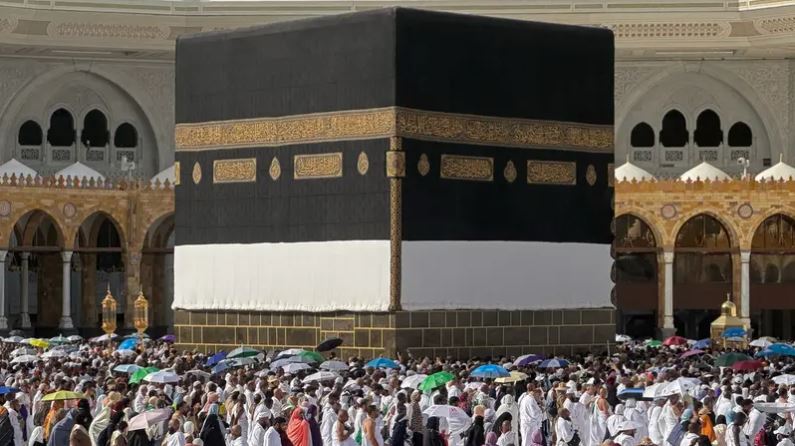
RIYADH, MAY 23: As millions of Muslims prepare for this year’s Hajj, Saudi Arabia has expanded the use of artificial intelligence and smart digital infrastructure to improve crowd management, enhance operational efficiency and make the pilgrimage safer and smoother for worshippers from around the world.
The Kingdom’s efforts are being led by the Saudi Data and Artificial Intelligence Authority (SDAIA), which is operating a range of integrated AI-powered platforms and digital services throughout the pilgrimage journey – from pilgrims’ departure from their home countries to their arrival in Saudi Arabia and departure after completing Hajj.
“Our goal is to ensure that AI operates quietly in the background while making the pilgrim journey safer, smoother and more efficient at every stage,” SDAIA official spokesperson Majed al-Shehry told Al Arabiya English.
For more news on Saudi Arabia, visit our dedicated page.
He added that AI has become a key tool in managing large-scale crowd operations through predictive technologies, advanced data analytics and real-time monitoring systems that help improve safety and operational efficiency.
According to SDAIA, the systems are designed to improve crowd flow, support emergency response, enhance transportation logistics and provide multilingual assistance for pilgrims during one of the world’s largest annual human gatherings.
AI-powered crowd management
One of the main areas of focus this Hajj season is crowd management around the Grand Mosque in Mecca and the holy sites of Mina, Arafat and Muzdalifah.
According to SDAIA, platforms such as Baseer and Sawaher – developed in partnership with the Ministry of Interior – use computer vision, thermal imaging and AI-driven analytics to monitor crowd density and movement patterns in real time.
The systems analyze live video feeds and surveillance data to identify congestion points, predict crowd surges and support faster decision-making by authorities.
Multilingual robots
An employee stands at the control room for traffic and crowd management for pilgrims at the General Transport Centre at the Royal Commission for Mecca and Holy Sites in Mecca on June 3, 2025. (AFP)
An employee stands at the control room for traffic and crowd management for pilgrims at the General Transport Centre at the Royal Commission for Mecca and Holy Sites in Mecca on June 3, 2025. (AFP)
Saudi Arabia has also deployed a multi-service AI-powered robot designed to provide religious guidance and real-time translation in several languages as part of a wider digital ecosystem aimed at enriching visitors’ spiritual and intellectual experience.
The robot offers interactive religious and educational content through an easy-to-use interface, including information on locations and services inside the two holy mosques, answers to religious inquiries, and instant translation services to help visitors from different nationalities and cultures communicate more easily.
Smart digital services for pilgrims
Saudi Arabia is also expanding the use of AI-powered digital services aimed at assisting pilgrims throughout their journey.
More than 1.5 million pilgrims have benefited from the Mecca Route Initiative, which uses advanced digital verification and intelligent data processing technologies and is currently operating across 17 airports in 10 countries.
The initiative enables pilgrims to complete several travel and entry procedures before arriving in Saudi Arabia, including biometric enrolment and ticket processing.
The Tawakkalna and Nusuk applications are also playing a central role during Hajj this year, offering more than 1,300 digital services designed to support pilgrims.
Services include digital Hajj permits, navigation tools, weather updates, emergency assistance, ambulance requests, Qibla direction services and digital identification through the Nusuk Card, which contains medical records and emergency contact information.
Vision for the future
Saudi officials say the continued integration of AI technologies into Hajj reflects the Kingdom’s broader ambitions to position itself as a global leader in digital transformation and smart governance.
The expanding use of smart surveillance systems, predictive analytics, digital identity services, robotics and automated operations is expected to play an increasing role in future Hajj seasons as Saudi Arabia continues investing in smart city infrastructure in Mecca and Madinah.
“The continued integration of AI technologies into Hajj operations reflects Saudi Arabia’s broader efforts to position the Kingdom as a global leader in digital transformation and smart governance, while improving the experience and safety of pilgrims from around the world,” SDAIA said.