Home Blog Page 105

PHF launches nationwide School Hockey Uplift Plan to revive national game

PHF announces squad for Azalan Shah Hockey Cup

ISLAMABAD, JUN 3: In a major initiative aimed at reviving the country’s national game, the Pakistan Hockey Federation (PHF), in collaboration with the Pakistan Sports Board (PSB) and the Ministry of Inter-Provincial Coordination (IPC), has launched a nationwide “School Hockey Uplift Plan” to promote hockey at the grassroots level.

According to a PHF statement issued on Wednesday, the year-long programme envisages the provision of complete and modern hockey equipment to 1,000 schools across the country during its first phase.

The initiative is being implemented on an urgent basis with financial and technical support from the Government of Pakistan, the PSB and private-sector sponsors.

A PHF spokesperson said the primary objective of the programme was to foster a sporting culture at the school level and develop a new generation of hockey players capable of restoring Pakistan’s past glory in the sport.

Under the plan, inter-school competitions and specialised coaching camps will be organised across the country to identify talented young players. By the end of the first year, thousands of promising boys and girls are expected to be assessed, leading to the formation of a strong national Under-15 talent pool.

The spokesperson said the federation was committed to ensuring transparency in the utilisation of funds provided by the government and sponsors so that the benefits of the programme could reach the maximum number of schools in all regions of the country.

He added that the School Hockey Uplift Plan represented a significant step towards rebuilding the foundations of hockey in Pakistan, strengthening the talent development pathway and securing a brighter future for the national game.

The initiative is expected to provide young players with greater access to hockey facilities, coaching opportunities and competitive exposure, while contributing to the long-term development and sustainability of the sport in the country.

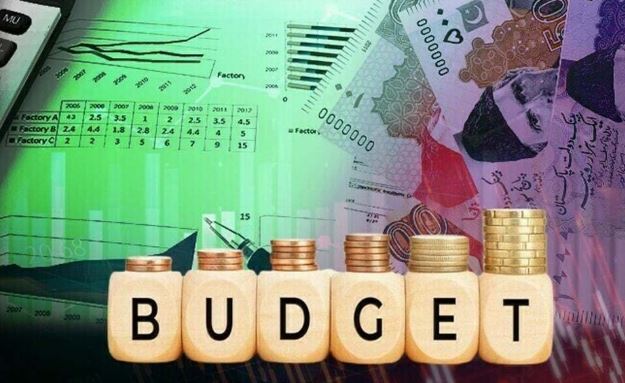
Govt to present budget on June 10

Govt to present budget on June 10

Mehtab Pirzada

ISLAMABAD: Finance Minister Muhammad Aurangzeb on Wednesday said that the federal budget for fiscal year 2026-27 will be presented on June 10, as the government works to build consensus among allies on proposals.

The finance minister said that the government’s discussions with coalition partners were positive, adding that another meeting was scheduled by the end of the ongoing week.

He reiterated that the government must move forward in coordination with the International Monetary Fund (IMF), coalition partners and other stakeholders, while improving tax collection through enforcement and widening the tax net.

“Efforts afoot to ensure no new taxes are imposed,” he said.

The finance minister’s confirmation comes after reports emerged that the budget was facing delays due to challenges in convincing the provinces to align their higher development allocations with overarching national priorities and the inability to finalise budgetary figures with the IMF.

The National Assembly and Senate are set to meet in Islamabad on June 5 for proceedings related to the federal budget for the fiscal year 2026-27.

The NA session will begin at 5pm, while the Senate will meet at 6pm the same day, read a statement issued by the President House.

The government plans to complete budget deliberations and adopt the budget proposals by June 24.

Under constitutional requirements, the budget must be passed before June 30 to take legal effect from July 1 across the country.

The federal government has proposed a development budget of more than Rs1.1 trillion for the upcoming financial year 2026-27, according to budget documents detailing the sector-wise allocation of development spending.

Malaysia’s MTCP trains 850 Pakistanis, strengthens “Human Capital Development”: Malaysian envoy

Malaysia’s MTCP trains 850 Pakistanis, strengthens “Human Capital Development”: Malaysian envoy

ISLAMABAD, JUN 3: /DNA/ – Malaysia’s flagship Malaysian Technical Cooperation Programme (MTCP) has played a significant role in developing human capital not only in Malaysia and ASEAN countries but across the globe, Malaysian High Commissioner to Pakistan, Dato’ Mohammad Azhar bin Mazlan, said on Wednesday.

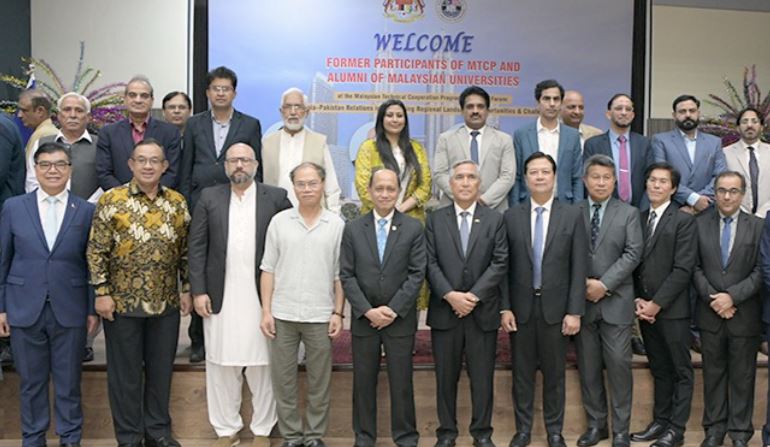
Addressing a gathering of alumni of the MTCP and Malaysian universities at the Malaysian Embassy in Islamabad, the envoy said that around 850 Pakistanis had completed various training programmes in Malaysia under the initiative, contributing to nation-building and human resource development.

Malaysian High Commissioner said the programme had benefited participants from 144 countries, serving as an important platform for capacity building and international cooperation.

Malaysia’s MTCP trains 850 Pakistanis, strengthens “Human Capital Development”: Malaysian envoy

“Human capital is the key to nation-building and economic progress. Pakistan and Malaysia can further strengthen cooperation to enhance productivity and competitiveness in both economies,” he said.

The High Commissioner noted that more than 40,000 participants worldwide had been trained under the MTCP, which has been recognized for supporting the objectives of the United Nations, Millennium Development Goals (MDGs).

He emphasized that policy consistency had been one of the key factors behind Malaysia’s sustainable economic development and highlighted the country’s effective management of natural resources, including food preservation and seafood processing systems.

The envoy said Malaysia MTCP had also trained diplomats from five Central Asian countries and provided training to around 1,200 Afghan english-language teachers to support educational development.

Malaysia’s MTCP trains 850 Pakistanis, strengthens “Human Capital Development”: Malaysian envoy

“We believe in working together with Pakistan for mutual development and prosperity. Our cooperation spans human resource development, trade, education and economic growth,” he added.

Speaking on bilateral relations, he said the leadership of both countries remained engaged in expanding cooperation. He referred to Prime Minister Shehbaz Sharif’s recent visit to Malaysia, during which discussions focused on strengthening trade, investment and economic cooperation.

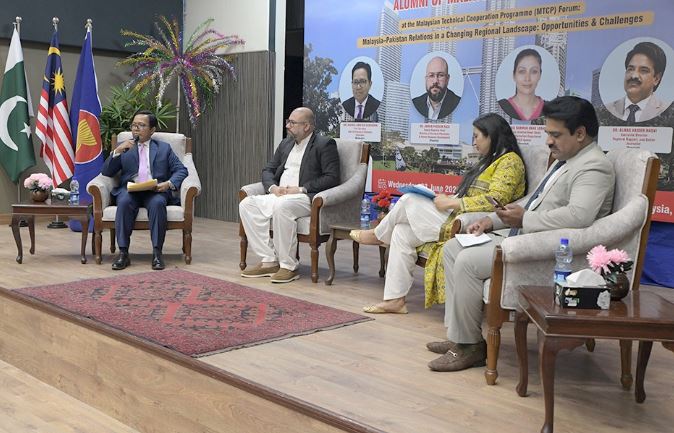
A panel discussion, moderated by First Secretary of the Malaysian Embassy Amri Kamrudi, focused on Malaysia-Pakistan relations and the experiences of MTCP and Malaysian university alumni.

Speaking on the occasion, MTCP alumnus and academician at Riphah International University, Dr Jibran Raza, highlighted Malaysia’s remarkable transformation from an agriculture-based economy in the 1960s to a high-income nation.

He said Malaysia’s success was driven by sustained investment in human capital, innovation and sustainable development policies. He also described Malaysia as a global leader in Islamic finance and fintech.

Dr. Raza noted that Malaysia’s capital market exceeds $1 trillion, compared to Pakistan’s approximately $70 billion, underscoring the scale of Malaysia’s economic development.

He identified several areas for enhanced Pakistan-Malaysia cooperation, including agriculture technology, Islamic finance, Shariah-compliant contracts, halal certification and fintech innovation.

“Pakistan faces challenges related to productivity and competitiveness, and there is much to learn from Malaysia’s development experience,” he said.

Another MTCP alumna, Asia Loudi, described the programme as a transformative bridge between the two nations that promotes cultural understanding, knowledge exchange and professional development.

Senior journalists, Almas Naqvi participating in the discussion also highlighted the growing political, economic and people-to-people ties between Pakistan and Malaysia, stressing the importance of expanding cooperation in education, trade and human resource development.

The event concluded with a renewed commitment from both sides to further strengthen bilateral relations and deepen collaboration through educational and professional exchange programmes.

Governor KP, Iranian envoy discuss regional peace, trade cooperation

Governor KP, Iranian envoy discuss regional peace, trade cooperation

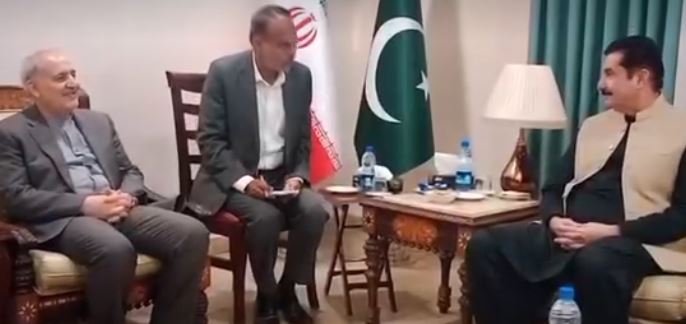
ISLAMABAD, Jun 03: Governor of Khyber Pakhtunkhwa Faisal Karim Kundi met Iranian Ambassador to Pakistan Dr. Reza Amiri Moghaddam at the Governor House on Wednesday to discuss regional peace, bilateral relations, trade cooperation, and economic opportunities between Pakistan and Iran.

Speaking on the occasion, the Governor said an end to the Iran-US conflict and the establishment of lasting peace were essential for regional and global prosperity. He said Pakistan desired peace and was making efforts to promote stability in the region.

He expressed the hope that Iran would emerge stronger from recent challenges through unity, patience and resilience, adding that Pakistan wished to see its neighbouring and long-standing friend progress and prosper.

Faisal Karim Kundi said Pakistan’s civil and military leadership, including the Prime Minister, Deputy Prime Minister, Interior Minister and Field Marshal were actively engaged in efforts to promote peace.

He said peace in Iran would contribute to the development and prosperity of both countries and described Pakistan’s role in facilitating dialogue between Iran and the United States as a diplomatic success.

The Governor also stressed the need for exchanges of parliamentary and trade delegations between Khyber Pakhtunkhwa and Iran and highlighted vast opportunities for economic cooperation with Iranian support.

The Iranian Ambassador appreciated Pakistan’s role during the recent conflict and said the Iranian nation valued the support extended by Pakistan.

He acknowledged the contribution of Pakistan’s political and military leadership in helping avert further destruction and instability in the region.

Dr. Reza Amiri Moghaddam said bilateral trade, particularly in oil and other commodities, would expand in the future and emphasized the importance of connecting Gwadar, Bandar Abbas and Karachi to strengthen commercial activities and regional connectivity.

He also referred to Iranian oil containers currently present at Karachi Port and termed Israel a major obstacle to peace in the region.

The ambassador reiterated that Iran would not relinquish its rights regarding nuclear matters and invited Governor Faisal Karim Kundi to visit Iran.

Later, the Governor hosted a luncheon in honour of the visiting delegation. Pakistan Peoples Party Central Secretary Information Nadeem Afzal Chan and PPP Parliamentary Leader in the Khyber Pakhtunkhwa Assembly Ahmad Kundi were also present.

PM says upcoming budget to provide public relief

Shehbaz Sharif

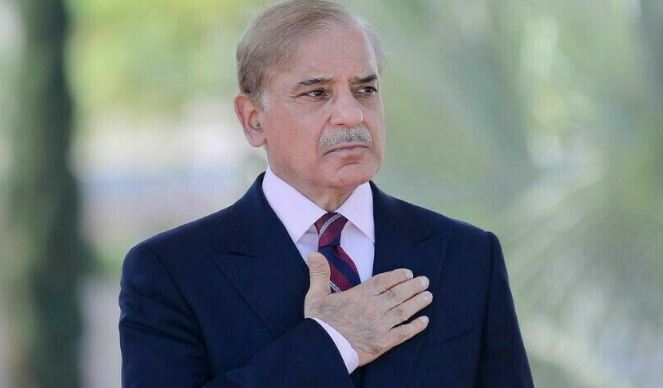
ISLAMABAD, 03 JUN (DNA) —    Prime Minister Muhammad Shehbaz Sharif on Wednesday said the upcoming FY2026-27 federal budget would include measures aimed at providing relief to the public while advancing the government’s export-led growth agenda.

He said the government was pursuing an export-led growth strategy, which was the central pillar of the economic policy. Talking to the leading industrialists and prominent business leaders at the PM House, the prime minister underscored that measures were being taken to bring the informal economy into the tax net.

Welcoming the business leaders, the prime minister said that they were Pakistan’s ambassadors and represent the country’s identity around the world. “We are grateful to the business community for supporting the government during difficult economic conditions,” he said adding that a strong partnership between the government and the private sector was the guarantee of economic growth.

He said consultation with the business community was of critical importance in economic policymaking. — DNA

Pakistan-Turkiye trade holds vast untapped potential: Turkish Ambassador

Pakistan-Turkiye trade holds vast untapped potential: Turkish Ambassador

ISLAMABAD, 03 JUN (DNA) — Ambassador of the Republic of Türkiye, Dr. Irfan Neziroglu, has emphasized the need for Pakistan and Türkiye to capitalize on the immense untapped potential in bilateral trade and investment, stating that the strong political, cultural, and historical bonds between the two brotherly countries should be translated into deeper economic cooperation.

He expressed these views while talking to a delegation of the Islamabad Chamber of Commerce and Industry (ICCI) led by its President Sardar Tahir Mehmood, which visited the Turkish Embassy to discuss avenues for promoting trade, investment, and business-to-business collaboration between the two countries.

The Ambassador recalled the longstanding and exemplary relations between Pakistan and Türkiye and noted that both nations share common values, mutual trust, and a strong sense of brotherhood. He said that despite excellent diplomatic relations, the existing volume of bilateral trade does not reflect the true potential of the two economies.

 He stressed the need for greater interaction between the private sectors, chambers of commerce, and investors of both countries to unlock new opportunities for growth and prosperity. Dr. Neziroglu assured the ICCI delegation of the Embassy’s full support in facilitating stronger linkages between the business communities of Pakistan and Türkiye.

He underscored the importance of regular exchange of trade delegations, business networking, and institutional cooperation to enhance commercial ties and encourage joint ventures in diverse sectors. Speaking on the occasion, ICCI President Sardar Tahir Mehmood said that Türkiye has always enjoyed a special place in the hearts of the people of Pakistan and remains one of the country’s most important economic partners.

 He noted that both countries possess significant potential for collaboration in sectors such as construction, tourism, information technology, agriculture, food processing, healthcare, education, renewable energy, and manufacturing.

He said that the Islamabad Chamber of Commerce and Industry is committed to strengthening economic engagement with Türkiye and creating new opportunities for the business community. He informed the Ambassador that ICCI is planning to take a high-level business delegation to Türkiye in August 2026 to explore investment opportunities, establish direct business contacts, and promote bilateral trade.

He sought the cooperation of the Turkish Embassy in arranging meetings with leading Turkish chambers of commerce, trade bodies, and business leaders during the visit. Sardar Tahir Mehmood further observed that enhanced collaboration between the private sectors of Pakistan and Türkiye can play a pivotal role in increasing trade volumes, attracting investment, and fostering sustainable economic growth in both countries.

He expressed confidence that stronger institutional linkages and regular business exchanges would help transform the existing friendship into a more robust economic partnership. Both sides agreed to continue working closely to promote trade and investment cooperation and facilitate meaningful engagement between the business communities of the two countries.

 The ICCI delegation included Vice President Irfan Chaudhry, former President Sheikh Amir Waheed, Executive Member Zulqurnain Abbasi, and Secretary General Ghulam Murtaza.— DNA

Chinese diplomat urges academic ties with Pakistan at NUML

Chinese diplomat urges academic ties with Pakistan at NUML

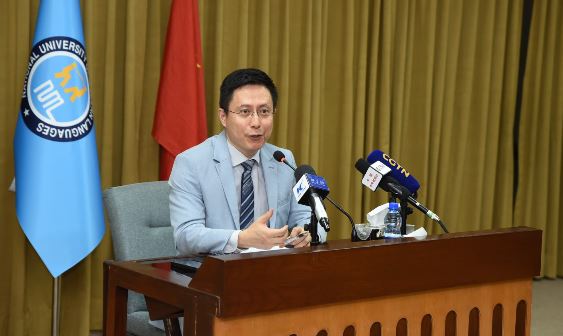
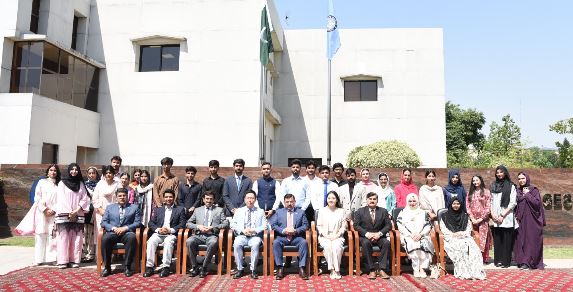
ISLAMABAD, JUN 3 /DNA/ – The National University of Modern Languages (NUML) hosted Mr. Wang Shengjie, Political and Press Counsellor at the Chinese Embassy in Pakistan, for an interactive session with students and faculty aimed at strengthening academic and people-to-people ties between Pakistan and China.

Chinese diplomat urges academic ties with Pakistan at NUML

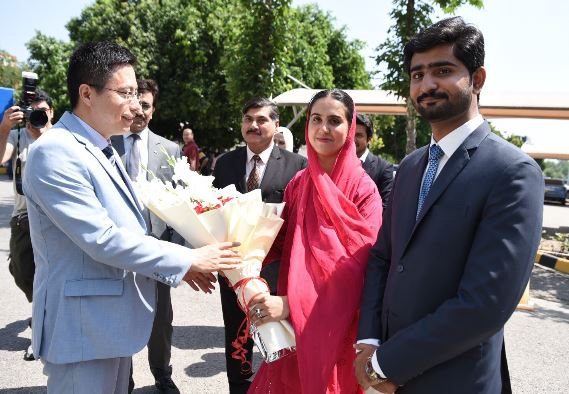
Mr. Wang was received by Rector NUML, Major General (R) Shahid Mahmood Kayani, who presented him with a souvenir. The session was organized by Dean Faculty of Social Sciences, Prof. Dr. Riaz Shad.

Addressing the participants, Mr. Wang highlighted the enduring Pakistan-China friendship and emphasized opportunities for enhanced cooperation in education, technology, and research. He encouraged NUML students to benefit from academic exchange programs and scholarship opportunities in China.

Chinese diplomat urges academic ties with Pakistan at NUML

Highlighting Pakistan’s importance in China’s regional development vision, Mr. Wang described Pakistan as a key partner in the Belt and Road Initiative (BRI) and noted that Chinese investments in highways, power projects, and industrial corridors are contributing significantly to the country’s economic transformation. He emphasized that people-to-people connectivity and academic collaboration remain vital pillars for further strengthening bilateral relations.

Referring to the 75-year diplomatic partnership between Pakistan and China, Mr. Wang said the relationship has remained a model of mutual trust, respect, and unwavering support. Describing the friendship as “higher than mountains, deeper than oceans, and sweeter than honey,” he noted that both countries have consistently stood by each other during challenging times, including natural disasters and public health emergencies.

During the question-and-answer session, students shared suggestions for expanding academic collaboration through joint research initiatives and student exchange programs.

Rs. 51 billion annual revenue potential from cigarette tax

Rs. 51 billion annual revenue potential from cigarette tax

ISLAMABAD, JUN 3 (DNA): The Society for the Protection of the Rights of the Child (SPARC) has highlighted the public health and fiscal implications of cigarette, estimating that it could generate Rs. 51 billion in additional revenue while lowering tobacco consumption and associated costs.

Dr. Khalil Ahmad, Program Manager at SPARC, highlighted the need for strengthened tobacco taxation in the context of Pakistan’s public health and fiscal challenges.

He added that international evidence shows tobacco taxation is commonly associated with reduced tobacco use. Such measures may contribute to increased revenue generation, lower consumption levels, reduced healthcare costs, and fewer preventable deaths.

Pakistan is currently facing a considerable tobacco burden, with an estimated 31 million adults using tobacco products. Tobacco-related diseases are responsible for more than 192,000 deaths annually, including approximately 526 deaths each day, primarily due to cardiovascular diseases, cancer, and other smoking-related illnesses.

It was further noted that Federal Excise Duty (FED) rates on cigarettes have remained unchanged since February 2023, resulting in a reduced tax share in retail prices and greater affordability, particularly for low-cost brands.

Over the same period, Pakistan has witnessed a steady increase in fuel prices and the cost of essential commodities, contributing to broader inflationary pressures on household budgets.

In contrast, cigarette taxation has remained largely unchanged since 2023, leading to relatively stable cigarette prices compared to other goods and services. This divergence has, in real terms, increased the affordability of cigarettes, especially low-priced brands, despite the overall rise in the cost of living.

Dr. Khalil Ahmad stated that the economic burden of tobacco use is substantial. Health-related costs attributed to tobacco are estimated at approximately Rs. 1,835 billion, around 1.6 percent of GDP, which far exceeds the Rs. 266 billion collected in tobacco tax revenue. This indicates that for every rupee earned from tobacco taxation, Pakistan spends nearly seven rupees on treating tobacco-related diseases, resulting in a significant net economic loss.

To address this crisis, SPARC has proposed an increase in the Federal Excise Duty (FED) on cigarettes in the forthcoming federal budget. The proposal recommends raising taxes by Rs. 35 per pack on low cost cigarette brands and Rs. 21 per pack on premium brands, alongside a gradual transition toward a uniform tax structure.

This reform aims to reduce cigarette affordability, particularly among children and young people and to discourage consumers from switching to cheaper brands.

Evidence indicates that higher tobacco taxation is among the most effective measures to reduce tobacco consumption. According to SPARC’s analysis, the proposed tax increase could generate up to Rs. 51 billion in additional revenue, prevent approximately 370,000 youth from initiating smoking, and encourage nearly 270,000 existing smokers to quit or reduce consumption. These outcomes would contribute to improved public health while strengthening fiscal stability.

Aligned with global best practices, including the WHO Framework Convention on Tobacco Control (FCTC) and the WHO’s MPOWER strategy, SPARC emphasized that increasing tobacco taxes delivers a dual benefit: safeguarding public health and enhancing government revenue.=DNA

France committed to gender equality, climate diplomacy: envoy

France committed to gender equality, climate diplomacy: envoy

In Pakistan, the French Development Agency (AFD) has supported more than 40 projects since 2006, worth over 1.5 billion euros, with a strong focus on gender and climate co-benefits

ISLAMABAD, JUN 3 /DNA/ – The French Embassy in Pakistan in collaboration with its partners such as UNDP, UN Women, hosted the 4th edition of the Gender and Climate Award ceremony. The event was presided over by H.E. Nicolas Galey, Ambassador of France to Pakistan, in the presence of Senator Sherry Rehman, Chair of the Senate Climate Committee, senior officials, representatives of civil society, international partners, and members of the diplomatic community.

In his address, Ambassador Galey emphasized the growing importance of the award, created by the French Embassy to highlight the role of Pakistani women in climate action. He noted that the initiative has steadily expanded since its inception, with more than 350 applications received this year, reflecting the diversity and strength of women’s contributions to climate resilience.

The Ambassador warmly congratulated the 2026 laureates:Zillay Mariam, recognized for her innovative work in green enterprise and technological solutions for plastic and organic waste. Songul Jamal, honored for her efforts in protecting fragile coral ecosystems.

He praised their perseverance and impact, underscoring that their achievements embody the spirit of the award.

Ambassador Galey also reaffirmed France’s commitment to gender equality and climate diplomacy, recalling France’s adoption of feminist diplomacy in 2019 and its continued leadership in global climate efforts.

He highlighted France’s role in hosting the United Nations Oceans Conference (UNOC-3) in Nice in 2025, and its annual commitment of over 6 billion euros to support climate transition and resilience projects in developing countries. In Pakistan, the French Development Agency (AFD) has supported more than 40 projects since 2006, worth over 1.5 billion euros, with a strong focus on gender and climate co-benefits.

The Ambassador expressed gratitude to the Civil Society Coalition for Climate Change (CSCCC), led by Aisha Khan, for organizing the event, and acknowledged the support of partners including UNDP, UN Women, the Aga Khan Foundation, and the Pakistan Poverty Alleviation Fund. He also welcomed the continued engagement of the EU Delegation in Pakistan.

The ceremony concluded with a call to strengthen collaboration between governments, civil society, and international partners to address the urgent challenges of climate change in Pakistan, with inclusivity and gender equality at the forefront.=DNA

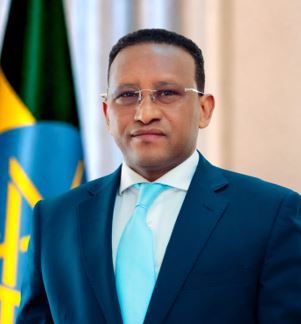
Ethiopia Voted: The historic election marks a major step in Ethiopia’s political maturity

Ethiopia Voted: The historic election marks a major step in Ethiopia’s political maturity

By Ambassador Jemal Beker (PhD)

Ethiopia, as a nation with a remarkable centuries-old history, diverse civilizations, and an unyielding legacy of independence, has achieved a critical milestone in political maturity. While my country’s formal engagement with modern democratic systems is relatively recent, the progress forged over the past four decades demonstrates a steadfast commitment to institutional evolution. By moving past deep-seated historical challenges, we have successfully institutionalized a system that respects the voice of its citizens, proving that its democratic trajectory is both resilient and irreversible.

Historically, one of the primary vulnerabilities identified within our state architecture has been the lack of deeply rooted democratic traditions. Following recent reform under H.E. Prime Minister Abiy Ahmed (PhD), the nation embarked on an ambitious, holistic restructuring project to establish genuinely independent, non-partisan institutions. This transition has been heavily anchored in a home-grown democratic philosophy Medemer- an approach that synthesizes international best practices with local socioeconomic realities to repair legacy structural fractures. Supported by strategic updates in administrative organization, political thought, and electoral technology, this institutional shift ensures that political transition is dictated solely by law and the ballot box.


The Architecture of the 7th National Election
Building directly upon the foundations and lessons learned from the landmark 6th National Election, the recent 7th National Election represents a highly sophisticated evolution in governance style. It intentionally reflects the principles of consociational democracy, explicitly designed to maintain stability and equitable representation in a multi-faceted nation. The operational structure of this election was built upon four pillars consisting of Grand Coalitions to foster broad political alliances for widespread consensus, Fair Representation to ensure equitable legislative weight across diverse political views, Segmental Autonomy to allow cultural and regional identities to manage local interests securely, and Minority Rights Protection to safeguard the voices and inclusion of smaller communities.


Consequently, these inclusive structural pillars directly inspired an unprecedented wave of nationwide civic enthusiasm, translating high-level design into historic voter turnout.


Numbers Don’t Lie: High Engagement and Inclusive Participation
To evaluate the democratic integrity of an election, international standards examine three core phases consisting of the Pre-Election, Election Day, and Post-Election periods. Ethiopia’s rigorous management of the pre-election phase laid the groundwork for an inclusive, highly competitive environment, verified by exact institutional data points. The process achieved a total registered candidate field of over 10,438 candidates across participating 42 political parties, with opposition and party competitors deploying 250,000 observers to guarantee transparency across polling stations. Additionally, the field included 80 independent candidates contesting outside traditional party structures, while registered voter turnout reached exactly 54,057,871 citizens who successfully registered and secured their voting cards. Among the registered voters, 90% of them have cast their votes in the ballot box.


Out of an overall eligible population of 135+ million, this impressive turnout represents an undeniable vote of confidence from the Ethiopian public. Furthermore, during this pre-election phase, the political parties successfully conducted 19 televised debate forums across five distinct languages using strategically allocated public airtime slots to guarantee equity in media access. In tandem with this remarkable civic energy, Election Day unfolded as a peaceful, joyful climax where voters confidently exercised their democratic rights.


Election Day: A Free, Fair, and Sovereign Expression
On Election Day, citizens turned out en masse to cast their ballots freely, peacefully, and without external influence or intimidation. This smooth execution reaffirms a fundamental truth that our public embraces a credible electoral process as the sole legitimate mechanism for establishing a social contract with governance. By mobilizing to build an accountable administration, the electorate has consciously chosen a path of constitutional continuity, stability, and peaceful institutional transition.


The transparency and exclusivity of the entire process were thoroughly observed and verified by international monitoring bodies, including the African Union (AU) and the Intergovernmental Authority on Development (IGAD), complemented extensively by domestic civil society. Specifically, the African Union deployed a 59-member Election Observer Mission led by the former President of the Republic of Kenya, H.E. Uhuru Kenyatta, while IGAD fielded a specialized team of 26 international observers. On the domestic front, 55 legally authorized civil society organizations successfully mobilized and deployed 1,562 certified domestic monitors across the country’s polling infrastructure. Their unified presence validated that the election met rigorous international standards for fairness, openness, and civic participation. As the seat of the African Union, Ethiopia’s successful election serves as a powerful, stabilizing template for other emerging democracies across the African continent and the global south, proving that complex, diverse nations like us, can execute seamless democratic cycles.


During the preliminary post-election briefing, the African Union and IGAD Election Observation Missions confirmed that Ethiopia’s electoral process took place in a peaceful, orderly, and calm environment, with observer teams reporting smooth voting procedures and orderly polling station operations across observed areas. Head of the AU Election Observation Mission and former Kenyan President Uhuru Kenyatta stated that voting had “progressed smoothly,” noting that citizens were freely and voluntarily exercising their democratic rights and choosing their preferred parties without pressure. Kenyatta further described the electoral process as a “completely peaceful and credible process.” Observer missions highlighted strong citizen participation, broad voter engagement, and voting processes that largely proceeded without major incidents in observed areas. These preliminary findings reinforced confidence in the overall conduct, credibility, and peaceful nature of the electoral process while demonstrating the commitment of Ethiopian citizens to express their democratic will through the ballot box.


Consequently, this profound milestone stands validated before the international community, perfectly setting the stage for a bright, self-determined future for our nation’s democratic exercise. The successful completion of this historic 7th election is a testament to our growing political maturity and the enduring resilience of our state architecture. Ultimately we, the Ethiopian people, are the true authors of this success, establishing a sacred mandate for our own peace, justice, and equitable development. By coming together to transcend past fractures, we have proven that our democratic path is irreversible, positioning Ethiopia as a powerful global exemplar of democratic consolidation.


Stay Connected

64FansLike
60FollowersFollow

Latest Reviews

Exchange Rates

USD - United States Dollar
EUR
1.14
GBP
1.34
AUD
0.70
CAD
0.71