
by Muhammad Mohsin Iqbal
Man holds nothing dearer in this world than his own life. For its safety he will pass through every danger and endure every trial, knowing that life is granted by Allah but once, a sacred trust to be guarded with all the vigilance a mortal heart can muster. Yet there exist a few lion-hearted souls who, setting aside all thought of self-preservation, step forward not merely for their own sake or even their homeland, but for the sake of their neighbours and the wider brotherhood of faith.
Placing their lives upon their palms as if they were mere pebbles, they accomplish what only those with unwavering trust in Allah and the unyielding heart of a lion can achieve. Among such men stands Field Marshal Syed Asim Munir, a commander whose name has come to echo across the Islamic world as a symbol of selfless courage.
At a moment of extraordinary delicacy, when the shadow of conflict loomed large and the drums of war threatened to echo once more across the Middle East, he chose to journey to Tehran, the proud capital of brotherly Iran. The risks were neither hidden nor slight. Entering a region still tense from recent clashes, where any unforeseen spark could ignite wider flames, he travelled undeterred. Pakistan’s falcons—those steadfast guardians of the skies—provided an iron canopy of protection, yet every soul aboard knew that true safety lay only in the hands of the Almighty. Israel, long recognised for its cunning and its repeated assaults upon human and moral values, had already struck at Iranian military and civilian leaders with calculated brutality. Still, this commander felt neither fear nor hesitation. Within his breast resides the Quran, an unshakeable fortress of faith that has guided him through trials far greater than any earthly peril.
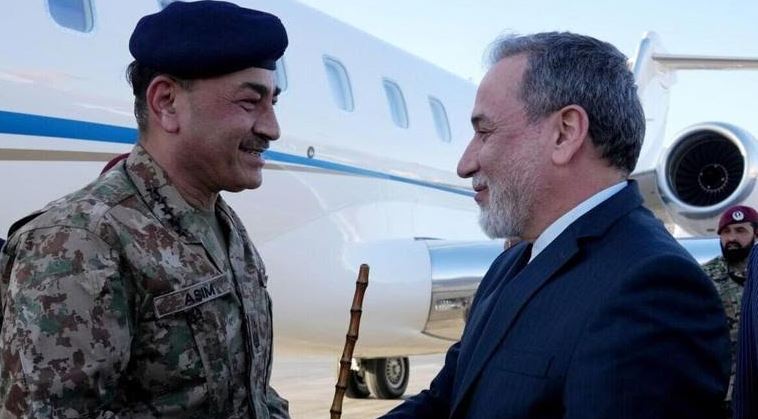
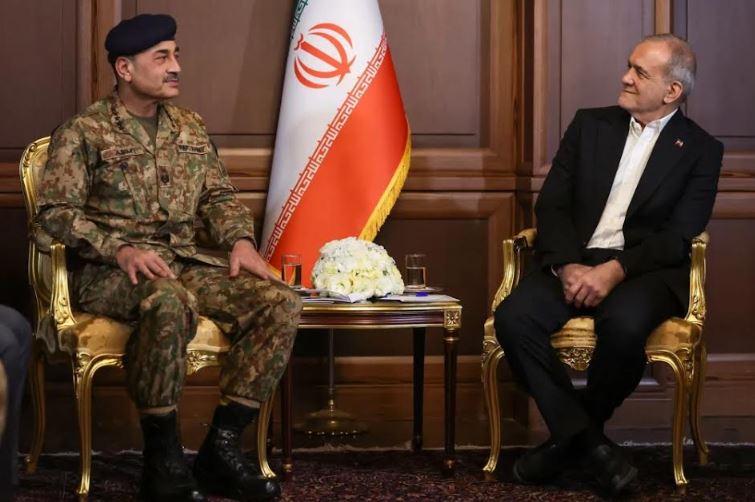
Upon landing, the warmth of the welcome spoke louder than any formal protocol. Iran’s Foreign Minister, Abbas Araghchi, received him at the airport with such genuine enthusiasm and heartfelt respect that the moment itself became a living testament to the bonds of Islamic brotherhood. From there, Field Marshal Munir proceeded directly to Iran’s defence headquarters at Khatam al-Anbiya, the nerve centre of the nation’s military resolve. There, in closed and candid sessions, he engaged with Iran’s highest leadership, carrying forward Pakistan’s quiet but determined diplomacy. His presence was no mere courtesy call; it was a bold assertion that even in the most perilous hour, reason and restraint could still prevail over the logic of vengeance.
The world had already witnessed his mettle only last May, when he struck decisively against enemies within their own strongholds, demonstrating a resolve that left adversaries stunned and allies inspired. Yet it is not only in battle that his stature shines. When the hour calls for friendship and mediation, he upholds it with the same sincerity and depth. Iranian leaders could scarcely contain their admiration, praising both his courage and his unwavering commitment to peace. In him they saw not merely the commander of Pakistan’s armed forces, but a valiant leader for the entire Muslim ummah.
Indeed, it would be difficult to find a single country across the Islamic world where songs of his bravery and dedication have not been sung in local tongues—from the bustling streets of Jakarta to the ancient alleys of Damascus, from the highlands of Anatolia to the shores of North Africa. Even those who once stood as adversaries now appear compelled to acknowledge his merit. Western media outlets, long accustomed to bias and hostility toward Pakistan, have grown tireless in their praise, recognising in this soldier-statesman a figure who transcends narrow national boundaries.
In Field Marshal Syed Asim Munir flows the blood and spirit of the great commanders of Islamic history—Khalid bin Waleed, whose tactical brilliance turned the tide of empires; Tariq bin Ziyad, who burned his boats to inspire conquest through faith alone; and Salahuddin Ayyubi, who united fractured realms through justice and chivalry. Like them, he understands that when intentions are pure and the heart is anchored in divine guidance, the path to the destination becomes clearer, the burdens lighter, and the outcome, God willing, crowned with success.
The mission he has undertaken in these tense days builds upon earlier rounds of mediation hosted in Islamabad. Accompanied by his close aides and a high-level delegation, he has worked tirelessly to transform a fragile ceasefire between the United States and Iran into something more enduring—a genuine opening for dialogue that might spare the region fresh rivers of blood and suffering. In a world too often fractured by suspicion and power plays, Pakistan has emerged as a trusted bridge, and Field Marshal Syed Asim Munir its steadfast architect.
Pakistan can take quiet yet profound pride in this hour. In a time when many nations shrink from risk, a son of this soil has risen to serve not only his own people but the broader cause of stability, brotherhood, and peace. His actions remind us that true leadership is not measured merely in ranks or titles, but in the willingness to stand where others hesitate, guided by faith and a vision that looks beyond borders.
May Allah Almighty protect and guide Field Marshal Syed Asim Munir, granting him every success in his noble endeavours. May He shield Pakistan and its people from all harm, and bless these efforts so that the ominous drums of war may yet give way to the enduring blessings of peace and fraternity. Lastly, it is such lion-hearted souls who remind humanity that courage, when rooted in faith, can still bend the arc of history toward justice and hope.