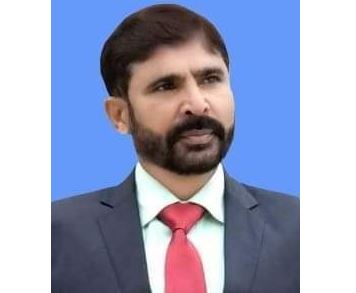
Dr. Muhammad Akram Zaheer
The spectre of a direct war between Iran and the United States has long haunted the Middle East. For decades, hostility has simmered through proxy conflicts, economic sanctions, covert operations and diplomatic brinkmanship. Yet the possibility of open confrontation once dismissed as too costly for both sides has resurfaced in moments of acute crisis. If such a war were to coincide with the death of Iran’s Supreme Leader, Ali Khamenei, the consequences would reverberate far beyond the region.
Ayatollah Khamenei has been at the helm of the Islamic Republic since 1989, shaping its ideological posture and foreign policy orientation. Under his stewardship, Iran positioned itself as the standard-bearer of “resistance” against American influence in the region. From Lebanon to Iraq, Syria to Yemen, Tehran cultivated alliances and armed networks that extended its reach while maintaining plausible deniability. The United States, for its part, relied on sanctions, diplomatic isolation and regional partnerships to contain Iranian influence.
An outright war would mark a rupture in this long-standing pattern of calibrated hostility. The Middle East, already fragile after years of upheaval, would be plunged into deeper instability. The Strait of Hormuz, through which a significant portion of the world’s oil supply passes, could become a flashpoint. Even limited disruption would rattle global energy markets, sending oil prices soaring and straining economies still grappling with inflation and debt.
For South Asia, including Pakistan, the fallout would be immediate. Higher oil prices would widen trade deficits and fuel domestic inflation. Remittances from expatriate workers in Gulf states could decline if regional economies falter. Moreover, sectarian tensions — often inflamed by regional rivalries — could find new expression, complicating internal security dynamics.
Yet the military dimension tells only part of the story. The death of Ayatollah Khamenei during such a conflict would introduce a profound layer of uncertainty. In Iran’s political system, the Supreme Leader wields ultimate authority over the armed forces, judiciary and key institutions. His passing would trigger a succession process overseen by the Assembly of Experts, but the outcome would not be merely procedural. It would shape the ideological and strategic trajectory of the Islamic Republic.
A leadership vacuum in wartime carries inherent risks. Competing factions within Iran’s political and security establishment could manoeuvre to assert influence. The Islamic Revolutionary Guard Corps, long a powerful actor in its own right, might consolidate its role. Alternatively, pragmatic elements could argue for de-escalation to preserve the state. The direction chosen would determine whether conflict intensifies or diplomacy regains ground.
For the United States, the optics and strategy would be complex. Washington has historically oscillated between pressure and engagement with Tehran. A war culminating in the death of Iran’s Supreme Leader could be interpreted by some as the collapse of a long-standing adversarial structure. Others, however, would warn that destabilising a nation of nearly 90 million people carries grave risks, including state fragmentation, refugee flows and the rise of extremist elements.
Regional actors would also recalibrate. Israel, Saudi Arabia and the United Arab Emirates each with distinct stakes would assess whether the weakening of Iran enhances their security or invites new uncertainties. Russia and China, both of which have deepened ties with Tehran in recent years, would weigh how to protect their interests while avoiding entanglement in a broader conflagration.
Beyond geopolitics lies the human cost. Iran’s population is young, urban and increasingly connected to the wider world. Years of sanctions have strained livelihoods, yet national pride remains strong. A war could unleash suffering on a scale unseen since the Iran-Iraq conflict of the 1980s. Civilian infrastructure, already under pressure, would be vulnerable. The international community, divided though it may be, would confront the challenge of delivering humanitarian relief amid hostilities.
The global economy would not remain insulated. Energy shocks would ripple across continents. Shipping lanes could become insecure. Financial markets, sensitive to geopolitical tremors, would react sharply. Developing economies especially those dependent on energy imports — would bear disproportionate pain. Multilateral institutions might urge restraint, but their leverage would depend on the willingness of major powers to prioritise stability over confrontation.
At a deeper level, the death of Ayatollah Khamenei would symbolise the end of an era. He embodied the continuity of Iran’s post-revolutionary order, bridging the fervour of 1979 with the complexities of the 21st century. His departure could open space for generational change. Whether that change tilts toward reform or retrenchment would hinge on internal dynamics as much as external pressures.
History suggests that wars rarely unfold as planned. What begins as a limited strike can spiral into protracted conflict. In the interconnected world of today, regional wars seldom remain confined. Cyberattacks, drone warfare and proxy engagements blur traditional battle lines. The Iran–US rivalry has already manifested in these domains; a full-scale war would expand them.
For Pakistan and other middle-income countries, the prudent course would be diplomatic engagement and neutrality. Islamabad has historically sought balanced relations with both Tehran and Washington. In a scenario of war and leadership transition in Iran, quiet diplomacy could serve regional stability. The Organisation of Islamic Cooperation and the United Nations might also attempt mediation, though success would depend on political will.
Ultimately, the prospect of an Iran–US war, compounded by the death of Ayatollah Khamenei, underscores the fragility of global order. It reminds policymakers that entrenched hostilities, left unresolved, carry latent dangers. The international community has witnessed the costs of miscalculation before in Iraq, Syria and beyond. Preventing another conflagration demands foresight, restraint and a willingness to pursue dialogue even amid distrust.
The stakes extend beyond two nations. They encompass energy security, regional equilibrium, economic stability and the aspirations of millions who yearn for peace. In a world already beset by crises, the last thing it needs is a war that could redraw the political map of the Middle East and unsettle the global system for years to come