Home Blog Page 96

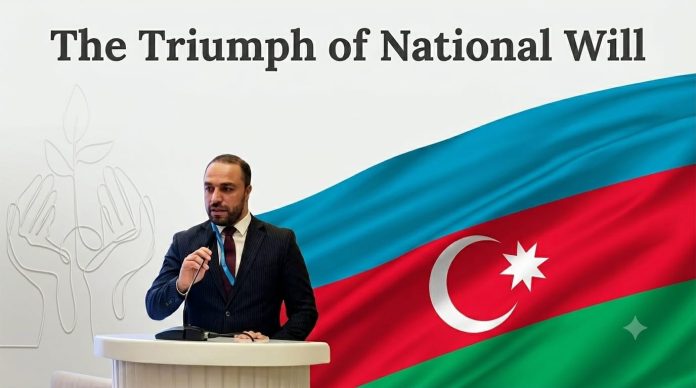
The Triumph of National Will

When we look at different periods of human history, one truth becomes evident: the fate of nations is not determined during calm and comfortable times. On the contrary, the most important decisions, the greatest turning points, and the events that shape the lives of future generations emerge during complex and uncertain periods. History books tell us much about great events, yet the fundamental factor behind them is often the same—responsibility toward statehood, national determination, and the ability to envision the future. There are certain dates that remain alive in the collective memory of nations and stand apart from ordinary days on the calendar. Such dates are not merely associated with a specific event; they embody the essence of an entire era. June 15 – National Salvation Day occupies exactly such a place in the historical memory of the Azerbaijani people. When reflecting on this date, the most important issue for me is not a simple chronology of events. More significant is understanding the challenges the state faced during that period, the trials endured by the people, and the choices upon which the future was built. The advantage of viewing history from a distance is that time reduces emotional influence and allows the true nature of events to become clearer. The early 1990s represented one of the most difficult periods in Azerbaijan’s history. Having only recently restored its independence, the country was confronted with serious political, economic, and military challenges. State institutions were still in the process of formation, uncertainty prevailed within the governance system, and tensions were escalating in various regions of the country. As a result of Armenia’s military aggression, Azerbaijani territories were occupied, and hundreds of thousands of people were forced to leave their native lands. Under such circumstances, concerns regarding the future of Azerbaijani statehood were becoming increasingly serious. History presents moments when the subsequent course of events depends on a single decision, a single step, or a single act of political will. Not everyone is capable of carrying such a burden of responsibility. Leadership during a crisis is fundamentally different from governance in times of stability. Decisions made in such moments do not merely address immediate challenges; they shape the development trajectory of entire decades.

June 15, 1993, became precisely such a turning point in Azerbaijan’s history. The return of National Leader Heydar Aliyev to political leadership at the call of the people played a crucial role in preventing the deepening crisis, restoring effective state governance, and ensuring stability throughout the country. The measures taken during that period helped preserve Azerbaijani statehood, strengthen national unity, and lay the foundation for a long-term development strategy. Today, with the benefit of historical perspective, it is clear that the achievements attained in subsequent years were built upon the political stability established during that critical period. The strengthening of state institutions, the implementation of economic reforms, the expansion of international relations, the successful realization of the country’s energy strategy, and Azerbaijan’s transformation into one of the leading states of the region were all logical outcomes of decisive historical choices. However, in my view, the significance of National Salvation Day cannot be measured solely by events of the past. This date carries a broader meaning. It serves as a reminder of how delicate, yet how invaluable, statehood truly is. The existence of a state is often taken for granted. As people live in conditions of security, stability, and development, they may not always consider the sacrifices and challenges through which these achievements were secured. History demonstrates, however, that preserving statehood requires great responsibility, political wisdom, and national solidarity.

In this sense, June 15 is also a day of national remembrance. Without understanding the path a nation has traveled, it is impossible to properly appreciate its future. Looking back at history should not be an exercise in nostalgia. The primary purpose of studying history is to build the future upon stronger foundations. History is a teacher in itself, and forgetting its lessons may lead to the repetition of past mistakes. In today’s world, where geopolitical dynamics are changing rapidly and the international system faces new challenges, the importance of statehood has become even more evident. The concept of a strong state can no longer be measured solely by military and economic indicators. A strong state is also defined by national unity, social solidarity, strategic thinking, and civic responsibility. These values do not emerge by chance; they are formed through years of experience and historical trials. One of the most important messages of June 15 is precisely this: the destiny of statehood is directly linked to the destiny of every citizen. A strong state creates a strong society, and a strong society ensures the resilience and sustainability of the state. This mutual relationship is one of the fundamental conditions for national development. Today, Azerbaijan is experiencing a new chapter in its history. The full restoration of territorial integrity and sovereignty, the large-scale reconstruction efforts in the liberated territories, the country’s growing international influence, and its position as a regional leader are the results of a long-term state-building strategy. Looking at these achievements, the significance of June 15 becomes even more apparent. Just as it is impossible to construct a magnificent building without a solid foundation, it is impossible to build a strong state without strong political foundations. National Salvation Day is not merely a tribute to the past; it is also a vision for the future. It reminds us that history is not simply a collection of events preserved in the memory of a nation. History is also the ability to bear responsibility for future generations. Statehood, in turn, is among the greatest moral treasures that each generation protects and passes on to the next. June 15 continues to live in Azerbaijan’s history as a symbol of salvation, political foresight, national unity, and the will of statehood. As the years pass, the value of this date becomes even clearer, while the lessons it offers remain as relevant as ever. For some days remain merely dates on a calendar, while others become the destiny of an entire nation.

Farid Mustafayev

“Progress” social and economic research public union deputy chairman , Member of the New Azerbaijan Party, Member Of The Western Azerbaijan Community, Board Member Of The Youth Anti-Drug Public Union
Pakistan Moves to Integrate Herbal Medicine into Mainstream Healthcare as COMSTECH-DRAP Seminar and Exhibition Opens

Pakistan Moves to Integrate Herbal Medicine into Mainstream Healthcare as COMSTECH-DRAP Seminar and Exhibition Opens

Experts call for evidence-based validation, stronger regulation and greater investment in traditional medicine research

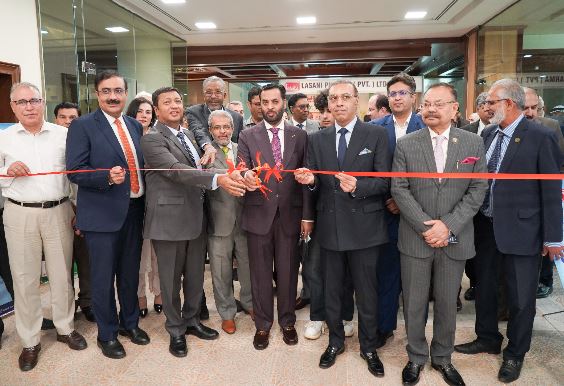
ISLAMABAD, JUN 9 /DNA/ – Pakistan has taken an important step towards integrating herbal and traditional medicines into the national healthcare system as a two-day Exhibition and Seminar on Research, Processing and Drug Development of Herbal Medicines commenced at the COMSTECH Secretariat on Tuesday.

The event, jointly organized by OIC-COMSTECH, the Drug Regulatory Authority of Pakistan (DRAP), and the Ministry of National Health Services, Regulations and Coordination, brought together policymakers, regulators, diplomats, scientists, traditional medicine practitioners, researchers, academia and representatives of the herbal industry to deliberate on the future of traditional medicine in Pakistan.

Federal Minister for National Health Services, Regulations and Coordination Syed Mustafa Kamal inaugurated the seminar and exhibition as chief guest. Addressing the inaugural session, he appreciated COMSTECH for bringing together experts, regulators, industry leaders and policymakers on a single platform to discuss the integration of traditional medicine into the healthcare system.

The minister said the government was committed to creating an enabling regulatory environment for herbal and alternative medicines and was actively advancing reforms aimed at strengthening the sector. He noted that the absence of clinical evidence and regulatory mechanisms had limited the wider acceptance of traditional medicine in the past, but informed participants that the legislative and regulatory process for traditional medicines had already moved forward and was expected to provide a stronger framework for the sector.

Emphasizing the importance of preventive healthcare, he said Pakistan possessed substantial indigenous medicinal resources and medicinal plants that could support the development of a vibrant herbal medicine industry while reducing dependence on imported pharmaceutical raw materials.

Coordinator General OIC-COMSTECH Prof. Dr. M. Iqbal Choudhary said traditional systems of medicine, including Unani medicine, represented centuries of accumulated knowledge and continued to serve millions of people worldwide. He observed that healthcare systems around the world were increasingly recognizing the importance of holistic and patient-centred approaches to health and well-being.

Prof. Choudhary stressed that the future of traditional medicine lies in scientific validation, clinical research and evidence-based practice. He said traditional, complementary and alternative medicine should be integrated into national healthcare systems where safety, efficacy and quality are supported by credible scientific evidence. He reaffirmed COMSTECH’s commitment to promoting research, clinical validation, capacity building and international cooperation among OIC member states to advance safe and effective traditional medicines.

DRAP Chief Executive Officer Dr. Obaidullah highlighted the growing importance of traditional and complementary medicine, particularly in rural and underserved communities. He said Pakistan had made considerable progress in regulating herbal, homeopathic and traditional medicines, but emphasized that further scientific research and clinical evidence were needed to facilitate their wider acceptance within mainstream healthcare. Strengthening quality standards and regulatory oversight, he added, would help unlock the sector’s significant potential.

The seminar is accompanied by a major exhibition featuring 53 manufacturers and stakeholders from the herbal, Unani, homeopathic and traditional medicine sectors. Fifteen leading companies and institutions, including Qarshi Industries, Marhaba Laboratories, Ashraf Laboratories, Herbion, Nutrifactor, Herbiotics, Hamdard, Hemani and Mint Pharmaceuticals, established exhibition stalls showcasing products, technologies and innovations.

The inaugural session was attended by ambassadors and diplomats from Jordan, Palestine, Sudan, Yemen, Mauritania, Thailand, Kazakhstan, Indonesia, and the Turkish Republic of Northern Cyprus, as well as representatives of the Russian Federation and other friendly countries.

Over the two-day programme, experts from DRAP, universities, research institutions and the herbal industry are discussing regulatory frameworks, medicinal plant research, evidence-based validation of traditional therapies, clinical trial guidelines, quality assurance standards, export opportunities and the integration of herbal medicines into primary healthcare systems.

Participants are expected to formulate recommendations and a future roadmap aimed at strengthening research, regulation, product development, clinical validation and industry growth, while facilitating the integration of safe and effective traditional medicines into Pakistan’s healthcare system.

Wang urges enhancing understanding among civilizations via dialogue

Wang urges enhancing understanding among civilizations via dialogue

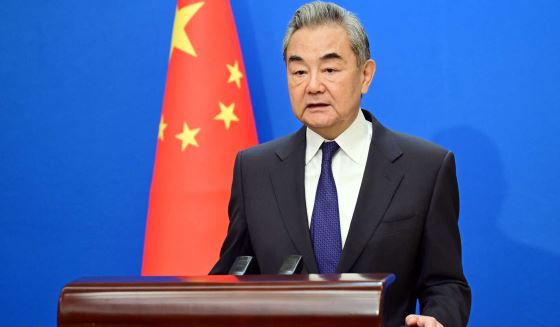
BEIJING, JUN 9: /DNA/ – Chinese Foreign Minister Wang Yi on Monday called for improving understanding and fostering mutual trust through dialogue when addressing an event observing the International Day for Dialogue among Civilizations via video.

Wang, also a member of the Political Bureau of the Communist Party of China Central Committee, called on all sides to promote unity and seek consensus through exchanges, and continuously consolidate the popular and cultural foundation for building a community with a shared future for humanity in the face of unprecedented challenges.

Wang highlighted that China proposes a four-pronged approach to promoting dialogue among civilizations.

He said, firstly, that all sides should adhere to mutual respect and promote harmonious coexistence among different civilizations, calling for championing equality, mutual learning, dialogue and inclusiveness among civilizations.

Secondly, all sides should abide by a people-oriented approach and lay a solid foundation for exchanges among civilizations, Wang said, adding that efforts should be made to promote mutual understanding and friendship among people of all countries and ensure that the fruits of mutual learning among civilizations benefit the people more extensively and directly.

China is willing to enhance dialogue among civilizations with all countries and deepen exchanges of experience in state governance, in order to jointly solve the problems of the times and work together to broaden the path of world modernization, Wang added.

Thirdly, Wang called for endeavors in inheritance and innovation of traditional culture to enhance the driving force of civilization and progress, noting that China will assist all countries in achieving creative transformation and innovative development of their outstanding traditional cultures.

He also appealed for fully exploiting technological dividends such as artificial intelligence and social media, to empower exchanges, mutual learning, inheritance and innovation among civilizations, and promote the common prosperity of human civilization.

Fourthly, Wang said all sides should adhere to exchanges and mutual learning and improve the mechanism for dialogue among civilizations.

China supports further leveraging platforms including the United Nations Alliance of Civilizations, the United Nations Educational, Scientific and Cultural Organization and the Forum of Ancient Civilizations to enable them to play an important role in inter-civilization dialogue, he added.

Day of Portugal in Islamabad celebrates shared values, growing ties

Day of Portugal in Islamabad celebrates shared values, growing ties

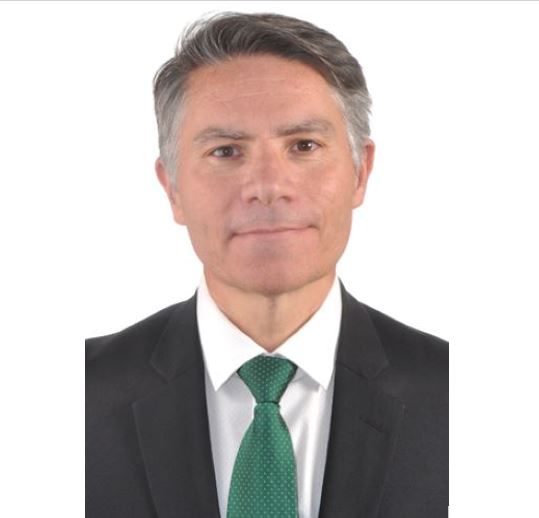
ISLAMABAD, JUN 9 /DNA/ – The Embassy of Portugal in Islamabad commemorated the Day of Portugal, Camões and Portuguese Communities with a spirited tribute to the nation’s history, language, and global diaspora, while underscoring the deepening ties between Portugal and Pakistan.

In a statement marking the occasion, Portugal’s Ambassador to the Islamic Republic of Pakistan, Paulo Guedes Domingues, honored Luís de Camões, the literary giant whose work embodies Portugal’s legacy of openness, discovery, and intercultural dialogue.

The Ambassador extended special gratitude to Portuguese citizens living abroad, noting that their talent and dedication serve as valuable bridges between peoples and nations. “Through their dedication, talent and commitment, they strengthen Portugal’s presence in the world,” he said.

Celebrating the day in Pakistan held particular significance, Ambassador Domingues noted, as the two countries share a rich, though geographically distant, history of exchanges. He highlighted the growing human dimension of the relationship, pointing to a rising number of Portuguese citizens of Pakistani origin who are making meaningful contributions to Portuguese society.

“Their presence reflects the close links that unite our countries and serves as a living bridge between Portugal and Pakistan, strengthening mutual understanding and friendship,” the Ambassador stated.

According to the Ambassador, bilateral relations have expanded positively in recent years across political dialogue, trade and investment, education, culture, and people-to-people contacts. He described the current phase as “particularly positive,” marked by regular high-level engagement and a shared commitment to deepening cooperation in areas of mutual interest.

Ambassador Domingues also acknowledged the professionalism of the Embassy staff in Islamabad and extended sincere appreciation to Portugal’s Honorary Consuls in Karachi and Lahore—Mr. Fakir S. Ayazuddin and Mr. Iftikhar Firoz, respectively—for their role in fostering closer ties with Pakistani institutions, businesses, and citizens.

He expressed deep appreciation to Pakistani authorities, the diplomatic corps, business and academic leaders, media representatives, and “all friends of Portugal” for their role in strengthening the friendship between the two nations.

“As we celebrate Portugal today, we also celebrate the friendship between Portugal and Pakistan and the values that bring us together: respect, dialogue, cooperation and mutual understanding,” the Ambassador said, concluding with: “Long live Portugal, and long live the friendship between Portugal and Pakistan.”

Dar urges swift release of Pakistani hostages in call with Somali FM

Dar urges swift release of Pakistani hostages in call with Somali FM

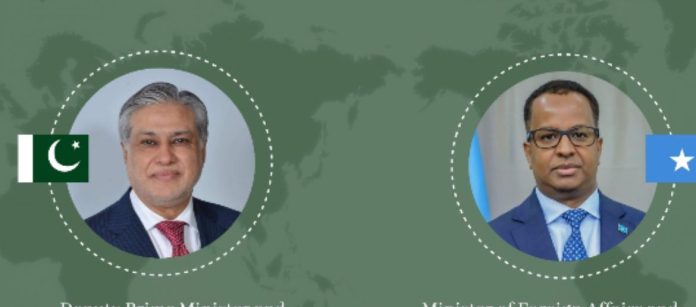
ISLAMABAD, JUN 9: Deputy Prime Minister / Foreign Minister Senator Mohammad Ishaq Dar, Tuesday, spoke with Somalia’s Foreign Minister Abdisalam Ali, to discuss ongoing efforts to secure the release of the Pakistani hostages aboard the MT Honour 25.

“Pakistan has been actively engaging with Somali authorities following the vessel’s hijacking off the Somali coast in April,” the Foreign Office Spokesperson said in a press release.

The DPM / FM conveyed Pakistan’s grave concern over the situation and underscored the importance of ensuring the hostages’ well-being, their early release, and safe repatriation.

Foreign Minister Abdisalam Ali assured him of his government’s continued and sincere efforts to secure the hostages’ release at the earliest opportunity.

Both leaders agreed to maintain close coordination until the matter is resolved.

The two counterparts also expressed satisfaction with the positive momentum in bilateral relations between Pakistan and Somalia. The Somali FM also commended Pakistan’s constructive mediation and diplomatic efforts in the broader regional context.

Pakistan-China joint research centre inaugurated in China

Pakistan-China joint research centre inaugurated in China

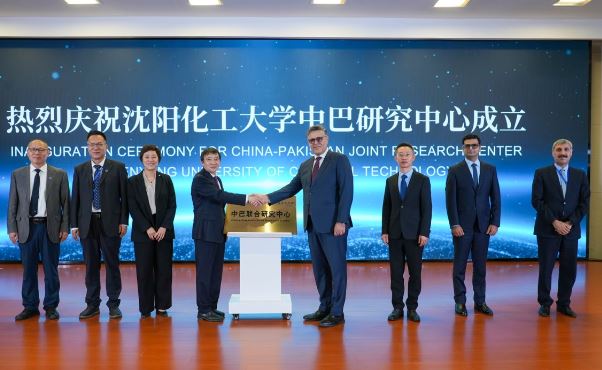
ISLAMABAD, JUN 9 /DNA/ – The China-Pakistan Joint Research Centre was inaugurated today at Shenyang University of Chemical Technology (SYUCT), Liaoning Province of China. The inauguration ceremony was attended by H.E. Khalil Hashmi, Ambassador of Pakistan to China, together with Prof. Xu Guangwen, Member of the Standing Committee of the Liaoning Provincial People’s Congress, and Prof. Qin Gaowu, President of SYUCT.

The establishment of this centre marks an important milestone in Pakistan-China cooperation in research, science, technology, and higher education, coinciding with the 75th anniversary of diplomatic relations between the two countries.

The Centre is the outcome of an initiative undertaken last year by the leadership of Liaoning Province and Ambassador Khalil Hashmi. Following the signing of a Document of Understanding between the Embassy of Pakistan and SYUCT in June 2025, a cooperation agreement was concluded separately with three leading Pakistani institutions- Pakistan Institute of Engineering and Applied Sciences (PIEAS), Islamabad, NED University of Engineering and Technology, Karachi, and University of Engineering and Technology, Peshawar to establish a framework for academic, scientific, and technological research collaboration.

In his welcome remarks, President Qin Gaowu highlighted the enduring Pakistan-China friendship and noted that the Centre is the first China-Pakistan joint research platform established at a local Chinese university. He expressed confidence over promotion of scientific innovation, talent development, and people-to-people exchanges while contributing to sustainable development in both countries.

Speaking at the ceremony, Ambassador Khalil Hashmi commended SYUCT’s achievements in research and innovation, including its advances in green technologies, and its success in the Dual Carbon Competition 2025. He emphasized that the Centre would serve as a bridge linking academia, technology, and industry, while fostering knowledge-sharing, skills development, and joint research between Pakistan and China.

Reaffirming the Embassy’s full support for the initiative, the Ambassador underscored Pakistan’s commitment to strengthening scientific, educational, and technological cooperation with SYUCT, Shenyang City, and Liaoning Province.

The establishment of the China-Pakistan Joint Research Centre opens a new chapter in Pakistan-China collaboration and reflects the shared commitment of both countries to advancing innovation, research excellence, and sustainable development.

Leaders and representatives of Pakistani partner Universities also participated in the Inauguration ceremony. It was also attended by university professors, international students including four from Pakistan.

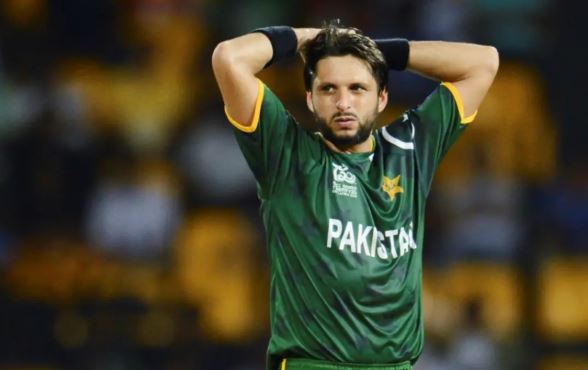
Junaid, Shahid Afridi explore Ports–Sports Cooperation Initiative

Junaid, Shahid Afridi explore Ports–Sports Cooperation Initiative

ISLAMABAD, 09 JUN (DNA) —     Federal Minister for Maritime Affairs Muhammad Junaid Anwar Chaudhry and former Pakistan cricket captain Shahid Afridi held a meeting to explore cooperation between the ports and the sports sector. The discussions focused on expanding the role of maritime and coastal infrastructure beyond trade and logistics to include sports development, youth engagement and environmental awareness, said a press release.

The minister assured full support from maritime institutions for initiatives aimed at promoting sports, particularly in coastal regions. He said ports and maritime zones were increasingly becoming centres of national development where education, sports and environmental awareness could be integrated.

Junaid Chaudhry said under blue economy vision, sports development could be advanced through public-private partnerships, including the establishment of coastal sports academies, cricket training centres and structured youth programmes along the coastline. He added that cricket, as the most popular sport, could be used as a unifying platform to raise awareness about marine conservation, climate change and the importance of ocean resources among young people.

The meeting also discussed linking sports activities with ocean literacy campaigns to address issues such as marine pollution, declining fish stocks and the protection of coastal ecosystems. Afridi welcomed the proposal, saying sports were one of the most effective tools to engage young people in positive activities and could also be leveraged to promote environmental awareness.

He noted significant potential for sports tourism and grassroots cricket development. The two sides also reviewed proposals to launch coastal sports and ocean awareness drives in Karachi, Gwadar, and other port cities. These initiatives would combine cricket tournaments with awareness sessions on mangrove conservation, marine biodiversity and sustainable use of ocean resources.

Under the proposed framework, maritime institutions would provide infrastructure support, while sports organisations and private sector partners would develop training and outreach programmes.

Both sides agreed to develop a comprehensive roadmap to strengthen cooperation between the maritime and sports sectors, aiming to promote Pakistan’s blue economy vision while encouraging social cohesion and environmental awareness through sports. — DNA

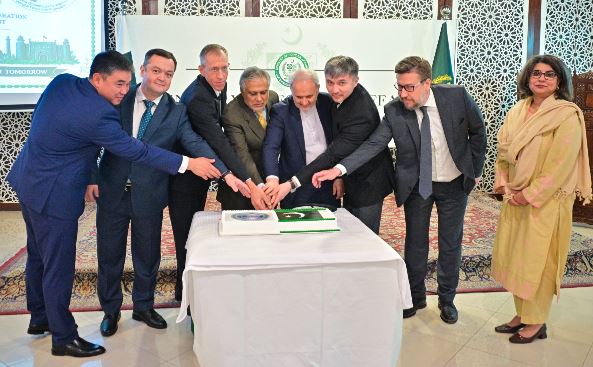
Pakistan reaffirms multilateralism at SCO Silver Jubilee event

Pakistan reaffirms multilateralism at SCO Silver Jubilee event

ISLAMABAD, JUN 9 /DNA/ – Deputy Prime Minister and Foreign Minister Senator Mohammad Ishaq Dar participated in a cake-cutting ceremony at the Ministry of Foreign Affairs on Monday to mark the 25th anniversary (Silver Jubilee) of the Shanghai Cooperation Organization (SCO).

The event was attended by resident ambassadors of SCO member states based in Pakistan. The ceremony was held to commemorate the Organization’s founding and its contributions to regional stability and cooperation.

Speaking on the occasion, Deputy Prime Minister Dar reaffirmed Pakistan’s strong commitment to multilateralism. He highlighted that the SCO continues to serve as a vital platform for promoting peace, security, economic connectivity, and shared prosperity across the Eurasian region.

He extended heartfelt congratulations to the entire SCO family on this important milestone and expressed confidence in the Organization’s continued role in fostering regional cooperation and development.

The Shanghai Cooperation Organization, founded in 2001, currently includes member states such as China, Russia, India, Pakistan, and four Central Asian nations, among others. Pakistan remains an active participant in SCO initiatives aimed at counter-terrorism, trade, and cultural exchange.

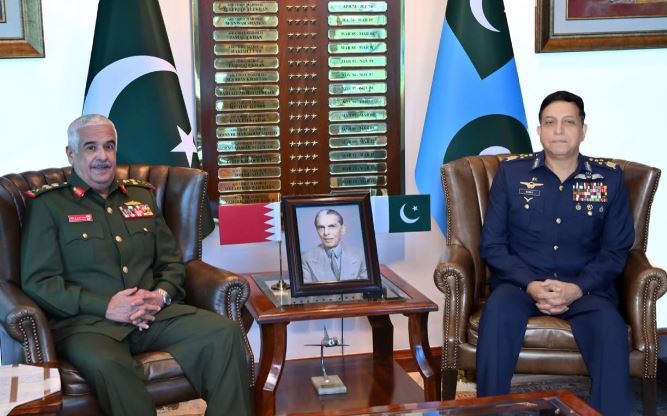
Commander Bahrain national guard calls on air chief

Commander Bahrain national guard calls on air chief

ISLAMABAD, JUN 9 /DNA/ – Commander Bahrain National Guard, General Shaikh Mohammed Bin Isa Bin Salman Al Khalifa, called on Air Chief Marshal Zaheer Ahmed Baber Sidhu, Chief of the Air Staff, Pakistan Air Force, during his visit to Air Headquarters, Islamabad. During the meeting, both dignitaries discussed matters of mutual interest, with a keen focus on enhancing bilateral defence cooperation and professional collaboration between the Armed Forces of the two brotherly countries.

The Air Chief highlighted Pakistan Air Force’s ongoing modernization drive, encompassing capability enhancement, infrastructure development, indigenization and transformation of training paradigms to meet the demands of contemporary warfare. He also underscored the deep-rooted fraternal ties between Pakistan and Bahrain as a strong foundation for enduring cooperation. A key focus of the discussions was the evolving domain of drone warfare, with both sides exchanging insights on the expanding role of unmanned systems in modern military operations and their transformative impact on future battlefields amid ongoing regional security challenges. Both Commanders also deliberated on emerging technologies, highlighting the transformative impact of artificial intelligence, autonomous systems, advanced sensors and digital innovation in shaping next-generation defence capabilities. Reaffirming PAF’s commitment to further expanding bilateral engagement, Chief of the Air Staff stated, “Pakistan deeply values its longstanding diplomatic, economic and defence relationship with the Kingdom of Bahrain. Our partnership is anchored in mutual trust, shared interests and a common commitment towards regional peace, security and stability.”

The visiting dignitary lauded the professionalism of PAF and commended its achievements in modernization, indigenous capability development and operational excellence under the leadership of Air Chief Marshal Zaheer Ahmed Baber Sidhu. Expressing keen interest in expanding Air Force-to-Air Force cooperation, he acknowledged PAF’s multi-domain capabilities and conveyed Bahrain’s interest in benefiting from PAF’s expertise in training and emerging warfare domains. Recognising the increasingly complex nature of modern aerial threats, both sides discussed the contemporary Air Defence environment, emphasizing the need for adaptive strategies and integrated defence architectures to counter evolving challenges. Commander Bahrain National Guard also lauded the advanced technological infrastructure of National Aerospace Science & Technology Park while expressing a strong desire to leverage PAF’s expertise in niche technologies in order to enhance futuristic aerospace and aviation capabilities of the Armed Forces of Bahrain.

The meeting between Chief of the Air Staff and Commander Bahrain National Guard reflects the shared commitment of Pakistan and Bahrain to strengthening defence ties and promoting regional peace & security through enhanced military cooperation.

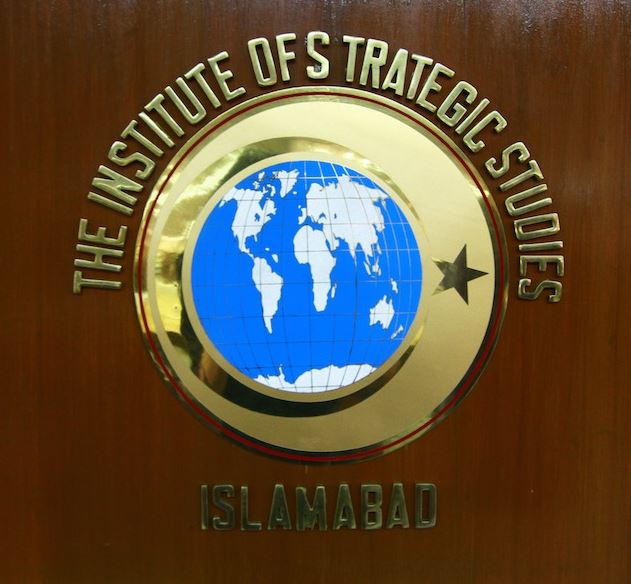
ISSI, Moscow University host Pakistan-Russia webinar

ISSI, Moscow University host Pakistan-Russia webinar

ISLAMABAD, JUN 9 /DNA/ – The Institute of Strategic Studies Islamabad (ISSI), in collaboration with the University of World Civilizations, Moscow, organized a high-level webinar titled “Pakistan–Russia Bilateral Relations at the Cusp of a Shifting Global Order,” on. The webinar brought together senior policymakers, diplomats, scholars, media professionals, and strategic experts from Pakistan and Russia to examine the evolving trajectory of bilateral relations and explore avenues for enhanced cooperation in an increasingly multipolar world.

Delivering the inaugural remarks, Dr. Neelum Nigar, Director, Centre for Strategic Perspectives (CSP), ISSI, highlighted the significance of Pakistan–Russia engagement amid rapidly changing regional and global dynamics. She emphasized that the objective of the webinar was not only to deepen strategic understanding between the two countries but also to strengthen public diplomacy, academic exchanges, media cooperation, and people-to-people contacts.

The Chief Guest of the event, Federal Minister for Energy, Sardar Awais Ahmed Khan Leghari, described Pakistan–Russia relations as a steadily strengthening partnership that has made significant progress over the past two decades. He noted that this progress has taken place against the backdrop of a rapidly evolving global landscape characterized by shifting power dynamics, technological advancements, geopolitical competition, and the emergence of new economic centres. He highlighted the expansion of bilateral cooperation across energy, trade, industry, defence, education, science and technology, and people-to-people exchanges, supported by increasing high-level engagements and the work of the Pakistan–Russia Intergovernmental Commission. The Minister also emphasized growing coordination between the two countries through the United Nations and the Shanghai Cooperation Organisation, welcomed discussions on Pakistan’s participation in the International North-South Transport Corridor and its possible connection to Gwadar Port, and noted the importance of the Programme of Economic Cooperation between Pakistan and Russia up to 2030. He concluded that both countries are well placed to promote regional stability, economic integration, and a more balanced international order.

In his keynote address, Ambassador Faisal Niaz Tirmizi, Pakistan’s Ambassador to the Russian Federation, described the current period as a defining moment in international politics. He underscored the growing importance of Moscow in shaping emerging geopolitical and economic trends and highlighted the increasing diplomatic engagement between Pakistan and Russia. He expressed confidence that connectivity projects, economic cooperation, and political coordination would continue to strengthen bilateral relations and contribute to a more inclusive and balanced regional order.

During the first working session, Pakistani and Russian experts, diplomats, academics, and media practitioners shared insights on the evolving international order and the future of Pakistan–Russia relations. Ambassador Syed Tariq Fatemi, Special Assistant to the Prime Minister, noted that bilateral relations are at their strongest point in history, driven by growing convergence on regional and global issues and expanding cooperation in energy, trade, connectivity, security, and counterterrorism. He added that current global transformations present an opportunity to deepen mutually beneficial engagement and promote regional peace and stability. Ambassador Masood Khan, Former President of Azad Jammu and Kashmir, placed the discussion in the context of Eurasian geopolitics and an emerging multipolar world, highlighting the potential of Pakistan and Russia to advance connectivity, energy security, trade integration, and counterterrorism cooperation. He called for stronger economic engagement and broader regional connectivity involving Pakistan, Russia, China, and Central Asian states. From Moscow’s perspective, Dr. Natalia Zamaraeva emphasized growing momentum in bilateral relations, stressing economic connectivity, transport corridors, energy cooperation, educational exchanges, and regional integration, noting Pakistan’s strategic role in Eurasian trade. Dr. Roxolana Zigon described the relationship as entering a new phase of strategic trust, underscoring the importance of sustained dialogue, academic collaboration, people-to-people exchanges, and institutional partnerships. Ambassador Jauhar Saleem highlighted the implications of global geopolitical shifts for sovereignty, security, and governance, noting the increasing role of middle powers like Pakistan in fostering dialogue, mediation, and consensus-building in a multipolar world.

The second session of the webinar focused on strengthening societal and informational linkages between Pakistan and Russia, emphasizing the need to complement official diplomacy with deeper people-to-people and media engagement. Russian media expert Dimitri Alexander Simes highlighted the untapped potential of media cooperation, calling for expanded journalistic exchanges and stronger institutional collaboration to improve mutual understanding and bilateral narratives. Senior Pakistani journalist, Syed Talat Hussain stressed the importance of cultural diplomacy, noting that long-term relations depend on strong people-to-people connections. He called for enhanced cooperation in education, tourism, cultural exchanges, and media partnerships to strengthen societal ties. Russian analyst Leonid Savin supported this view, urging broader engagement through universities, academic institutions, cultural organizations, and professional networks as essential to realizing the full potential of Pakistan–Russia relations. Concluding the session, Ms. Tanya Juliet Francis, News Anchor at Asia One, highlighted a shared recognition of global transformation and emphasized that stronger communication, public diplomacy, cultural interaction, and media cooperation are key to sustaining the positive trajectory of bilateral relations.

Ambassador Khalid Mahmood, Chairman, BoG, ISSI, concluded the event with by giving his views on emerging geopolitical trends, regional connectivity initiatives, energy cooperation, media engagement, and prospects for further strengthening Pakistan–Russia relations. He reaffirmed the shared commitment of both sides to sustaining dialogue and expanding cooperation across multiple domains.

Stay Connected

64FansLike
60FollowersFollow

Latest Reviews

Exchange Rates

USD - United States Dollar
EUR
1.14
GBP
1.34
AUD
0.70
CAD
0.71