Home Blog Page 95

Spain, Pakistan discuss climate cooperation, energy security, sustainable development

Spain, Pakistan discuss climate cooperation, energy security, sustainable development

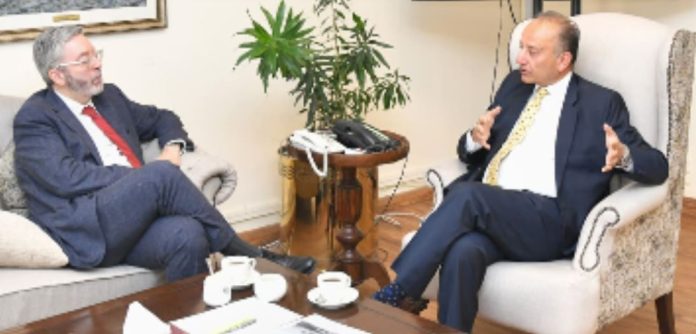
ISLAMABAD, JUN 10: Ambassador of Spain to Pakistan, Carlos Aragón, called on Federal Minister for Climate Change and Environmental Coordination Dr. Musadik Malik on Wednesday and discussed a range of regional and global issues, including climate change, energy security and opportunities for bilateral cooperation in sustainable development.

During the meeting, both sides exchanged views on the implications of climate change, evolving geopolitical dynamics and matters of mutual interest.

Discussing the Indus Waters Treaty and recent geopolitical developments, Dr. Musadik Malik observed that the international system appeared to be moving from multilateralism towards increasing unilateralism.

He said that if a long-standing international agreement such as the Indus Waters Treaty could be held in abeyance unilaterally, it raised important questions regarding the sanctity of international agreements and rules-based cooperation.

The minister highlighted the devastating impact of recent floods in Pakistan, saying that changing weather patterns and increasing climate variability had created greater uncertainty.

He stressed the need for enhanced preparedness and preventive interventions to reduce future climate-related risks.

The meeting also focused on energy security and the global transition towards renewable energy sources.

In light of ongoing geopolitical tensions and their impact on energy markets, both sides underscored the importance of accelerating the adoption of green energy solutions, including solar and wind power.

It was noted that recent developments had highlighted the vulnerability of many regions, including Europe, to disruptions in conventional energy supply chains and reinforced the need for diversified and sustainable energy systems.

The Spanish ambassador shared observations from his recent visit to Gilgit-Baltistan and appreciated the region’s natural beauty, cultural diversity and the hospitality of its people.

Dr. Musadik Malik also briefed the ambassador on two initiatives currently under development by the Ministry of Climate Change and Environmental Coordination, namely Green University and Green Fields.

He said the Green University initiative aimed to promote climate education, research and innovation, while Green Fields sought to connect young entrepreneurs working on green ventures with investors and opportunities to scale sustainable businesses.

Both sides discussed potential avenues of cooperation and knowledge exchange in support of these initiatives and reaffirmed their commitment to strengthening collaboration in the fields of climate action and sustainable development.

President, PM express grief over Pakistan Army MI-17 helicopter crash

President, PM express grief over Pakistan Army MI-17 helicopter crash

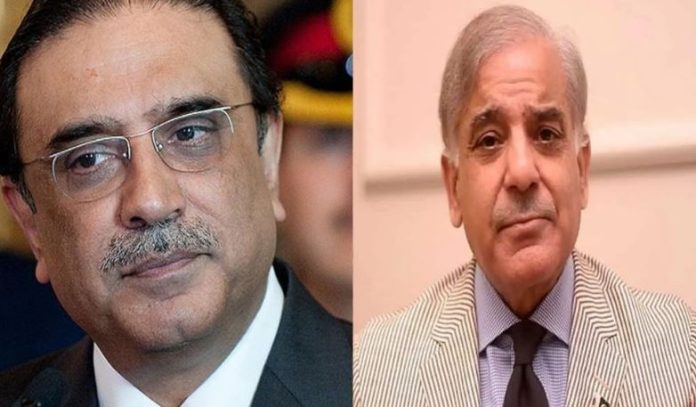
ISLAMABAD, Jun 10: President Asif Ali Zardari and Prime Minister Shehbaz Sharif on Wednesday expressed deep grief and sorrow over the Pakistan Army’s MI-17 helicopter crash near Muzaffarabad.

In separate statements, the president and the prime minister extended their heartfelt sympathies to the families of those martyred in the accident.

“The entire nation pays tribute to the great sacrifice of the martyrs and shares the grief of the bereaved families,” President Asif Ali Zardari said.

Paying tribute to the personnel who embraced martyrdom in the crash, Prime Minister Shehbaz Sharif said that the entire nation salutes the brave soldiers for their sacrifices.

Both leaders prayed for the elevation of the martyrs’ ranks in Jannah and for strength and patience for the bereaved families to bear the loss.

1 day to go: Golden Messi

1 day to go: Golden Messi

MEXICO CITY, JUN 10: Only one man has won multiple adidas Golden Balls at the World Cup. Lionel Messi registered four goals, including three beauties, as Argentina finished runners-up at Brazil 2014. He duly beat Germany’s Thomas Muller and Arjen Robben of the Netherlands to the tournament’s top individual award.

Lionel Messi | Golden Ball Award | 2014 FIFA World Cup Brazil™
The adidas Golden Ball is presented to the best player at each FIFA World Cup finals. Those who finish as runners-up in the vote receive the adidas Silver Ball and Bronze Ball awards as the second and third most outstanding players in the tournament respectively.
At his fifth World Cup at Qatar 2022, Messi finally got his hands on the trophy. Argentina’s first triumph in 36 years was indebted to ‘The Atomic Flea’, who struck seven goals, including two in the final.

Four other players have been on the categorical podium twice. Paolo Rossi seized the adidas Silver Ball in 1978 and the Golden Ball four years later. Diego Maradona grabbed the Golden Ball in 1986 and the adidas Bronze Ball in 1990. Ronaldo claimed the Golden Ball in 1998 and the Silver Ball in 2002, and Luka Modric won the Golden Ball in 2018 and the Bronze Ball in 2022.

Kyrgyz Airlines See EU Flight Ban Lifted After Two Decades

Kyrgyz Airlines See EU Flight Ban Lifted After Two Decades

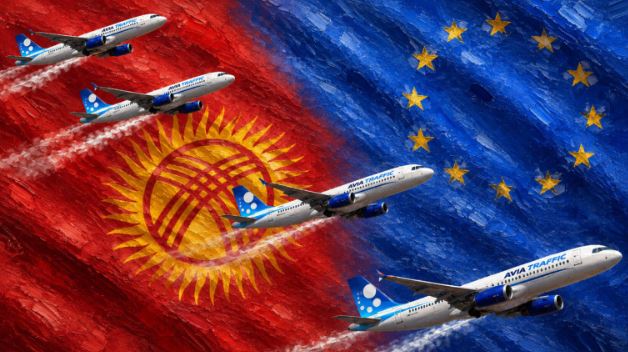
BISHKEK, JUN 10: The European Commission has removed all air carriers certified in Kyrgyzstan from the EU Air Safety List, ending restrictions first imposed in 2006.

The decision opens a route back into European Union (EU) airspace for airlines certified in Kyrgyzstan. Regular flights cannot start on the delisting alone. Each airline will still need aircraft suited to European routes and approval to operate under EU rules.

The change came through the EU’s 48th update to the Air Safety List. After the update, 154 airlines remain banned from EU skies. The list also identifies 16 countries where the EU says national aviation authorities lack adequate safety oversight.

Airlines certified in Kyrgyzstan were added to the list in October 2006 under Commission Regulation (EC) No 1543/2006. That decision followed a European expert mission to Kyrgyzstan from September 10 to 15, 2006. The EU found that the country’s civil aviation authority lacked enough capacity to apply and enforce safety standards under the Chicago Convention. It also found that most of the carriers inspected held Kyrgyzstan-issued air operator certificates but did not have their principal place of business in the country.

The 2006 decision placed all air carriers certified by Kyrgyzstan’s aviation authorities under a blanket ban. Last September, The Times of Central Asia reported that 16 carriers from Kyrgyzstan were still on the list, out of 169 banned airlines worldwide.

Kyrgyzstan moved through the final stage of the EU review process over the past year. Last October, the State Civil Aviation Agency under the Cabinet of Ministers of the Kyrgyz Republic held a technical meeting with the Commission. In February, the agency submitted evidence on the revised Kyrgyz Air Code, along with new rules for airline certification and recertification.

An EU assessment team visited Kyrgyzstan from March 23 to 27. It examined how the new legal framework worked in practice and reviewed the recertification of airlines. The team also checked the SCAA’s oversight of operators and visited AeroStan Air Company LLC and Avia Traffic Company.

The Commission Implementing Regulation credited the agency with significant progress in applying the revised Air Code and related aviation legislation. The new legal framework gave it an acceptable basis for certification and oversight.

The EU still identified weaknesses. Recurrent training and document control were not yet consistent enough, while oversight procedures needed clearer standardization. Some aircraft safety checks still require attention, including non-destructive testing at approved maintenance organizations.

Kyrgyzstan reduced the number of active operators before the EU decision. Between December 2025 and February 2026, all certified air carriers went through a full reassessment. Active air operator certificates fell from 21 to eight. The SCAA said only carriers able to meet the new safety and regulatory requirements kept their certificates.

The decision followed the EU Air Safety Committee meeting in Brussels from May 19 to 21. By then, Kyrgyzstan had closed 19 of 23 observations from the March assessment and seven of 12 recommendations. The remaining items were described as being at an advanced stage.

The removal has renewed attention on direct flights between Kyrgyzstan and Europe. Airports of Kyrgyzstan Chairman Manasbek Samidinov said Germany would be the first European destination.

Samidinov told Kabar that Airports of Kyrgyzstan signed an agreement in March to purchase two Airbus A321 aircraft, with delivery expected in March 2027. “As soon as the aircraft arrive, we will immediately open flights to Germany,” he said.

The aircraft plan was already in motion before the EU decision. In March, The Times of Central Asia reported that Airports of Kyrgyzstan had signed an agreement to acquire two Airbus A321ceo aircraft from BBAM Aircraft Leasing & Management. The aircraft are intended for Asman Airlines, a state-owned carrier under Airports of Kyrgyzstan.

The agreement supports the route plan, but direct flights cannot begin until the aircraft arrive. The carrier will also need European operating approval and a viable schedule.

The EU decision removes the main regulatory barrier that kept Kyrgyzstan-certified airlines out of the European market.

The EU will keep monitoring Kyrgyzstan’s aviation safety system. The regulation says Kyrgyzstan should report before each EU Air Safety Committee meeting. EU member states should also prioritize ramp inspections of air carriers certified in Kyrgyzstan. The Commission can impose new restrictions if new safety information shows an imminent risk.

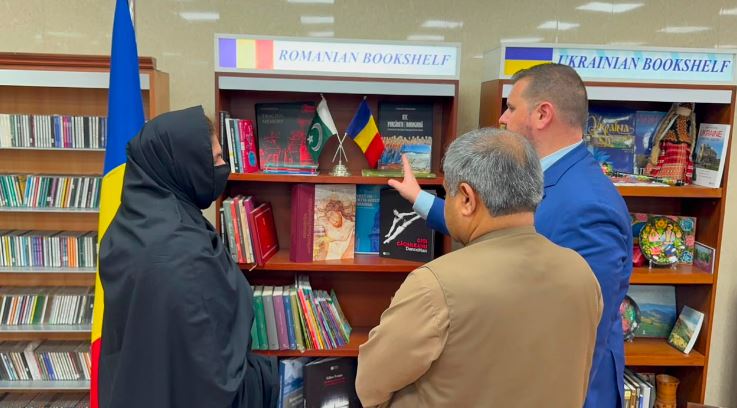
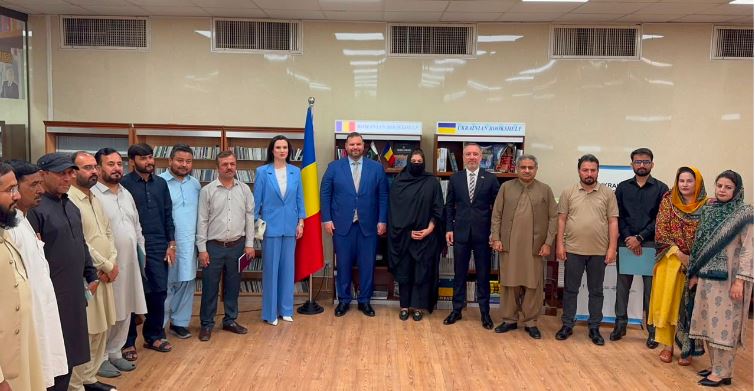
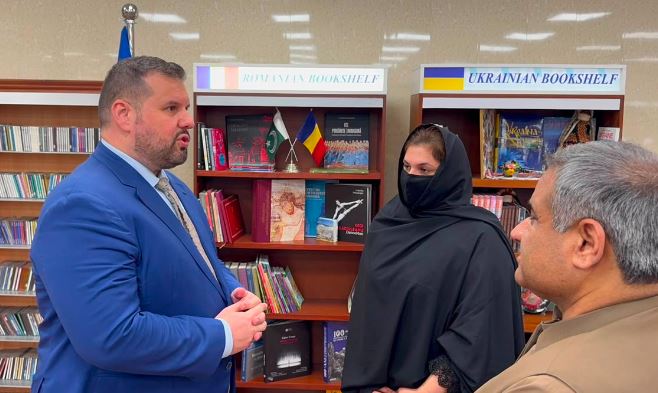
Embassy of Romania inaugurates “Romanian Shelf” at National Library of Pakistan

Embassy of Romania inaugurates

A milestone in Romania–Pakistan cultural and educational cooperation

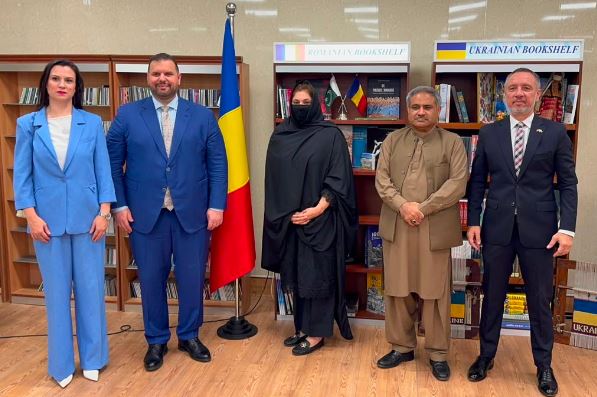
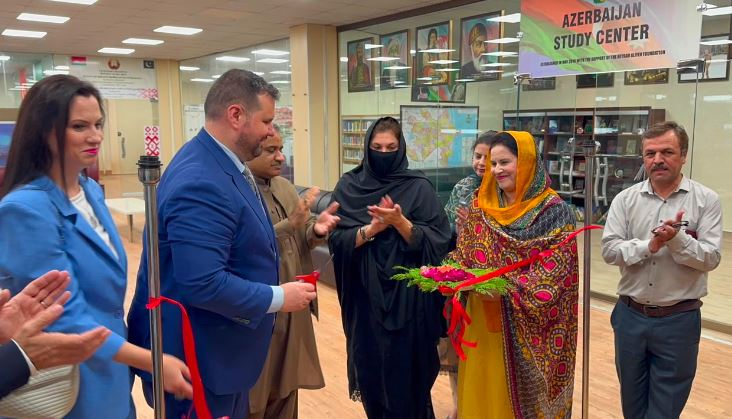
ISLAMABAD, JUN 10 /DNA/ — The Embassy of Romania in Pakistan today marked a significant step in bilateral cultural relations with the inauguration of the “Romanian Shelf” at the National Library of Pakistan in Islamabad. The ceremony took place during an official visit by the Ambassador of Romania Dr Dan Stoenescu to the National Library, where a formal donation of Romanian books was presented to Director General Muhammad Ali Shahzad Muzaffar and his team.

The donation, comprising volumes published by the Romanian Cultural Institute Publishing House, covers a wide range of subjects including history, literature, art, and cultural heritage. These works offer Pakistani readers a direct window into Romania’s rich intellectual tradition and its vibrant cultural life.

“Libraries connect people, preserve identity, and build bridges of understanding. The Romanian Shelf at the National Library of Pakistan is more than a collection of books – it is an open invitation to discover Romania’s spirit, creativity, and scholarship. Strengthening cooperation in education, culture, and knowledge exchange is an essential pillar of the Romania–Pakistan partnership.”

— Dr Dan Stoenescu, Ambassador of Romania to Pakistan

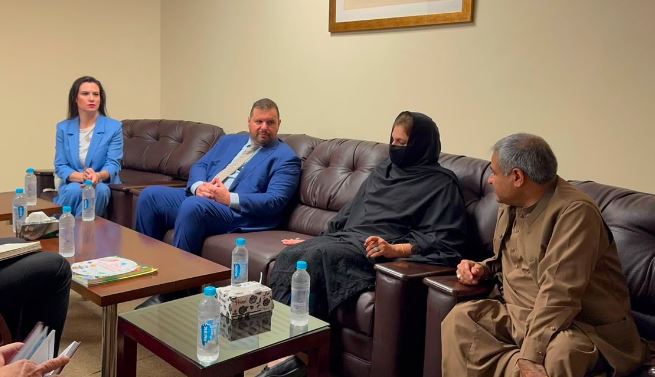
During the visit, the Ambassador and Director General Muzaffar also discussed the prospect of signing a Memorandum of Understanding (MoU) between the National Library of Pakistan and the National Library of Romania. Such an agreement would establish a formal framework for long-term institutional cooperation between the two libraries, facilitating exchanges of publications, expertise, and joint cultural initiatives.

The inauguration was also attended by Eduard Preda, Deputy Head of Mission of the Embassy of Romania, Romanian soprano Georgiana Costea-Glugă, coordinator of opera courses at PNCA (Pakistan National Council of the Arts), and Syeda Nosheen Iftikhar, member of the National Assembly and president of the Young Parliamentarian Forum (YPF). The establishment of the Romanian Shelf reflects the shared commitment of Romania and Pakistan to deepening people-to-people ties and promoting mutual understanding through culture and education. The Embassy of Romania in Islamabad looks forward to further expanding this partnership in the years ahead.

Embassy of Romania inaugurates "Romanian Shelf" at National Library of Pakistan

About the Romanian Cultural Institute Publishing House

The Romanian Cultural Institute (ICR) Publishing House produces high-quality volumes dedicated to promoting Romanian culture, history, literature, and art internationally. Its publications are distributed to cultural institutes, libraries, and diplomatic missions around the world.

Pak Army helicopter crashes near Muzaffarabad

Pak Army helicopter crashes near Muzaffarabad

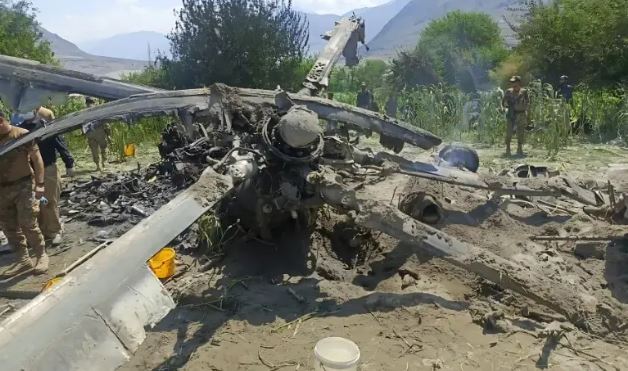
RAWALPINDI, JUN 10 /DNA/ – An Mi-17 helicopter of Pakistan Army Aviation crashed near Muzaffarabad today during take-off due to technical fault.

All personnel on board embraced Shahadat. There were no survivors.

Rescue and recovery teams immediately reached the crash site. A board of inquiry has been ordered to ascertain the exact technical cause of the accident.

COAS & CDF and all Ranks Pakistan Army express deep grief over the tragic loss of precious lives and extend heartfelt condolences to the bereaved families.

Over a dozens killed in van fire in Murree

Over a dozens killed in van fire in Murree

DNA

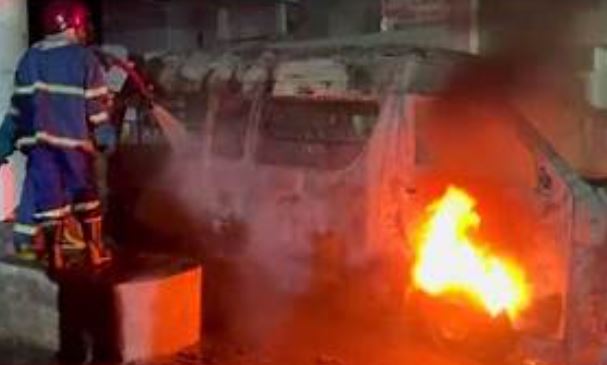
RAWALPINDI: over a dozen people were killed and 13 were injured when a fire broke out in a van after it fell into a nullah while taking a turn on the Islamabad-Murree Expressway near Khajut on Monday, the National Highways & Motorway Police (NHMP) said.

The NHMP statement said the Hiace van had fallen in such a manner that it was not possible for the passengers to open its door.

“The victims are from the same family and were travelling from Multan to Murree,” it said.

The bodies and the injured were taken to the Pakistan Institute of Medical Sciences in Islamabad, the statement said, adding that relief and rescue efforts were initiated after contingents of the motorway police and the district administration reached the site.

Last month, a heavy rush was reported on the Murree Expressway as traffic from the Murree Road was diverted there due to reconstruction work.

Iran targets US bases in Jordan and Gulf after Trump orders strikes near Hormuz

Iran targets US bases in Jordan and Gulf after Trump orders strikes near Hormuz

TEHRAN, JUN 10: Iran’s Revolutionary Guards said they had carried out attacks against a US base in Jordan and 21 other targets in the Gulf on Wednesday in retaliation for American strikes around the Strait of Hormuz, Iranian media reported.

The clashes mark one of the biggest exchanges in hostilities since the two countries agreed to a ceasefire in April.


The Iranian strikes, which included attacks in Kuwait and Bahrain, came after the US military said on X it had targeted Iranian air defence, ground control stations and surveillance radar sites near the strait in response to what US President Donald Trump said was the downing of a US Apache helicopter on Tuesday.

“I believe the response should be very strong, very powerful, and that’s what this one is,” Trump told ABC News on Tuesday.

The escalation in violence deepens doubts about the prospects for a deal to end the war that started on February 28 with joint US-Israeli strikes against Iran. Tehran responded by firing on Gulf neighbours that host US bases and all but choked off the Strait of Hormuz, a vital conduit for oil and gas.

The latest US strikes lasted around four hours before the US Central Command posted just before 9pm ET (0100 GMT Wednesday) that they had ended. A US official said almost 20 Iranian targets had been struck.

Iran’s state media reported that Qeshm island and the port city of Sirik in the Strait of Hormuz were attacked.

Sounds of explosions were heard in nearby Bandar Abbas, and later in the vicinity of Jask, near the entrance to the strait, Iranian media reported, citing local sources and residents.

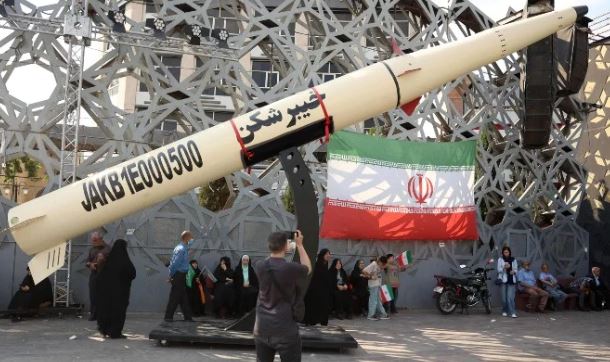
Iran’s Revolutionary Guards said in response they had targeted four sites at the US al-Azraq base in Jordan using long-range missiles, Iranian media reported.

The Guards said the targets included F-35 fighter jet hangars and a command-and-control centre, and warned they were ready to deliver a “crushing and decisive” response to any further US attack.

Jordanian armed forces said on Wednesday they had intercepted and shot down five missiles launched from Iran toward al-Azraq. The military added that debris from the interception operation fell on Jordanian territory but caused no injuries or material damage.

The Kuwaiti army said its air defence systems were engaging hostile aerial targets and urged the public to follow official safety instructions, after Iran’s Revolutionary Guards said they had targeted the Ali Al Salem base in Kuwait with drones.

Iran’s Revolutionary Guards said earlier they attacked the US Fifth Fleet in Bahrain with drones and threatened “more severe responses” if hostilities continued, according to media.

Bahrain’s Interior Ministry said a warning siren had been sounded and urged the public to head to safety. Air defences had repelled Iranian attacks, a media adviser to Bahrain’s king said soon after in a post on X.

In a statement, Iran’s Foreign Ministry condemned US strikes in the country’s south, saying Tehran acted in self-defence, and warned Gulf states they would face consequences if their territory was used by US or Israeli forces, vowing to target the sources of any future attacks.

A US official, speaking on condition of anonymity, said initial assessments showed nearly all missiles and drones launched by Iran were intercepted and they were not immediately aware of any reports of harm to US personnel or damage to US locations.

The Pentagon did not immediately respond to a request for comment. Reuters could not immediately verify the battlefield reports.

Oil prices climbed about 1% in early Asian trade on Wednesday following the escalation in hostilities.

Not a big deal?
On Tuesday, a US Apache helicopter was brought down by a one-way Iranian attack drone, according to a US official who spoke on condition of anonymity.

In this picture obtained from Irans ISNA news agency on June 1, 2026, Iranians sit on Suru Beach in Bandar Abbas along the Strait of Hormuz. — AFP
In this picture obtained from Iran’s ISNA news agency on June 1, 2026, Iranians sit on Suru Beach in Bandar Abbas along the Strait of Hormuz. — AFP
Two US pilots involved in the helicopter incident were uninjured, Trump said.

Iran’s state media cited a military source as saying that no offensive air military operations had been conducted in the Strait of Hormuz in the previous 24 hours.

A US Navy surface drone found and rescued the two crew, the US military said, after the US Army attack helicopter went down in waters near Oman’s coast while on patrol at around 3 a.m. on Tuesday (2300 GMT on Monday).

The US military’s Central Command gave no reason for the crash. It said the two crew were rescued after two hours and said they were in stable condition – a more cautious assessment than Trump’s description.

Iran’s Foreign Minister Abbas Araghchi did not directly address the helicopter incident, but said in a post on X that foreign forces in the region risked being involved in accidents or crossfire.

“To reduce risk, best solution is for them to leave,” he wrote.

Trump told The Wall Street Journal during a phone call on Tuesday that the helicopter incident “wasn’t a big deal” and stressed that “the pilot is fine.”

However, the episode could well add further strain to efforts to broker a peace deal to end the wider Middle East war and reopen Hormuz.

Trump has repeatedly said Iran and the United States are close to an agreement, though there have been few signs of progress since a tenuous ceasefire took effect in early April.

Fighting between Israel and Iran-backed Hezbollah in Lebanon has continued, and Tehran has maintained its restrictions on most shipping through the Strait of Hormuz, which before the war carried a fifth of the world’s crude oil and liquefied natural gas. Washington has imposed its own blockade of Iranian ports.

US Energy Secretary Chris Wright said on Tuesday that ship traffic through Hormuz is rising “very meaningfully,” but added it would take many months to get back to normal flows of energy once the war is over.

Trump has said any peace deal must ensure Iran cannot develop a nuclear weapon. Iran denies any such ambitions.

Iran’s demands include the lifting of international sanctions, the release of billions of dollars in frozen assets and recognition of its control of the strait.

Govt extends austerity measures till June 30, revises business timings

Govt extends austerity measures till June 30, revises business timings

ISLAMABAD: The federal government on Wednesday extended its austerity drive and fuel conservation measures until June 30, while also revising business operating hours across the country, according to an official statement.

Deputy Prime Minister and Foreign Minister Ishaq Dar chaired a meeting of the Committee for Monitoring and Implementation of Fuel Conservation and Additional Austerity Measures, which reviewed exemptions requested by various ministries and divisions and finalised its recommendations.


The committee decided that consular attestation services at the Ministry of Foreign Affairs and its liaison offices in Quetta, Karachi, Peshawar, Gujrat, and Lahore will remain open on Fridays to facilitate the public.

It further recommended extending the validity of austerity measures, originally set to expire on June 13, 2026, until June 30, 2026.

The committee also approved extending the closing time of standalone grocery and kiryana stores to 10pm on all days, including weekends.

Earlier, the federal government had issued a notification introducing revised business closure timings under fuel conservation measures, directing provincial governments to ensure implementation.

Under the revised schedule, shops, markets, malls, and general retail outlets will close at 9pm, while restaurants, cafes, and eateries are allowed to operate until 11pm.

Takeaway and delivery services have been exempted from these restrictions. Marriage halls and event venues will continue to close at 10pm without any change in timings.

Essential services, including pharmacies, hospitals, fuel stations, and IT and telecom services, will remain exempt from the updated regulations.

The committee also directed provincial governments to ensure effective enforcement of the revised guidelines in coordination with federal authorities.

The austerity measures were originally introduced in April as part of a broader energy conservation strategy in response to rising fuel costs linked to regional tensions in the Middle East. The restrictions were temporarily eased ahead of Eid ul Adha, with multiple provincial and federal relaxations granted throughout May.

Lessons from History and the Imperative of National Vigilance

Lessons from History and the Imperative of National Vigilance

by Muhammad Mohsin Iqbal

History is often described as the mirror of nations. Within its reflection are preserved the triumphs and tragedies, the wisdom and follies, the achievements and failures of those who came before us. Yet not every image in this mirror is immediately clear. Some reflections are obscured by the dust of time, prejudice, and incomplete understanding. To perceive the truth in its proper form, one must carefully remove that dust and examine the past with honesty and courage. Only then does history reveal itself as an open book from which valuable lessons may be drawn.

No nation is free from weaknesses or mistakes. Every society encounters moments of failure, misjudgment, and internal discord. The difference between decline and progress lies in whether a nation learns from those experiences. The countries that have advanced in the world are not necessarily those that never erred; rather, they are those that confronted their shortcomings, corrected their course, and transformed painful experiences into sources of strength.

The history of Pakistan presents many such lessons. Among the most painful chapters is the separation of East Pakistan in 1971. It was not merely a political event; it was a national tragedy that left a deep scar on the collective memory of the country. The loss of one wing of Pakistan remains a sobering reminder of the consequences of internal divisions and external interference.

It must never be forgotten that the Muslims of Bengal played an indispensable role in the Pakistan Movement. Their sacrifices, commitment, and support were instrumental in the creation of Pakistan. From the earliest demands for Muslim political rights to the achievement of independence in 1947, the people of East Bengal stood shoulder to shoulder with their brethren in other parts of the Sub-Continent. The bond that united them was forged through shared aspirations, common sacrifices, and a collective vision of a homeland for the Muslims of South Asia.

However, geography placed a formidable challenge before the new state. Between its eastern and western wings stood India, a country whose relations with Pakistan were marked by persistent hostility from the very beginning. The strategic reality provided opportunities for external manipulation, and over time those opportunities were exploited. Through political manoeuvring, propaganda, and support for separatist elements, India sought to widen existing differences and transform misunderstandings into irreconcilable divisions. The emergence of the Mukti Bahini and the events that followed culminated in the dismemberment of Pakistan.

Yet history demands honesty as well as patriotism. While external intervention undoubtedly played a significant role, it is equally important to examine the internal shortcomings that created conditions favourable for such interference. Nations are seldom weakened solely by their enemies; they are often first weakened by their own failures to maintain unity, trust, and effective governance. The tragedy of 1971 therefore remains not only a lesson about foreign designs but also a lesson about the importance of national cohesion.

As years passed, many hidden realities came to light. Political leaders, scholars, and observers across the region acknowledged the extent of foreign involvement in the events surrounding the separation of East Pakistan. Statements made by Indian Prime Minister Narinder Modi and Bangladeshi Prime Minister Hasina Wajid in subsequent years reinforced the widely held belief that India had actively pursued policies aimed at weakening and dividing Pakistan. Such acknowledgements served to confirm what many had long suspected about the strategic objectives pursued during that turbulent period.

The story, however, did not end in 1971. Many Pakistanis believe that efforts to destabilise the country continued in various forms in the decades that followed. Karachi, the economic lifeline of Pakistan, experienced prolonged periods of unrest and violence that affected national stability and economic growth. Similar concerns have frequently been raised regarding disturbances in Balochistan and parts of Khyber Pakhtunkhwa. Pakistani authorities have, on numerous occasions, asserted that credible evidence exists linking hostile external actors to activities intended to create insecurity and unrest within the country.

The changing regional environment further complicated these challenges. Developments in neighbouring Afghanistan often added new dimensions to the security landscape, creating opportunities for forces seeking to undermine Pakistan’s stability. Whether through direct interference, proxy networks, or information campaigns, the objective remained the same: to exploit internal vulnerabilities and weaken national unity.

Today, many observers believe that new arenas of contestation are emerging. Concerns are increasingly expressed regarding attempts to influence public opinion in sensitive regions and to create divisions among communities that have historically demonstrated loyalty to Pakistan. In an age where information travels faster than ever before, the battlefield is no longer confined to borders and armies. Narratives, perceptions, and misinformation have become powerful instruments capable of shaping attitudes and influencing societies.

The lesson of history is therefore clear. National security is not safeguarded solely by military strength; it is equally protected by unity, awareness, and resilience. A vigilant nation is one that recognises the value of its internal harmony and refuses to become a victim of discord, misinformation, or manipulation. The greatest defence against any external design is a strong bond between the state and its people.

History does not exist merely to recount what has happened. Its true purpose is to illuminate the path ahead. The tragedy of the past should not become a source of perpetual bitterness, but rather a reminder of the importance of unity, wisdom, and vigilance. If Pakistan is to move confidently towards a stable and prosperous future, it must continue to learn from its history, strengthen its institutions, and preserve the spirit of national solidarity that has enabled it to overcome many challenges. The mirror of history reflects not only what was lost, but also the lessons necessary to ensure that such losses are never repeated.

Stay Connected

64FansLike
60FollowersFollow

Latest Reviews

Exchange Rates

USD - United States Dollar
EUR
1.14
GBP
1.34
AUD
0.70
CAD
0.71