Home Blog Page 93

Govt proposes 7% salary, pension hike in FY2026-27 budget

Govt proposes 7% salary, pension hike in FY2026-27 budget

ISLAMABAD, JUN 12: The federal government has proposed a 7% increase in the salaries of public sector employees in the federal budget for fiscal year 2026–27

The PML-N-led coalition government also proposed a 7% increase in pensions for retired government employees. In addition, the federal government has suggested a 10% increase in the minimum wage.


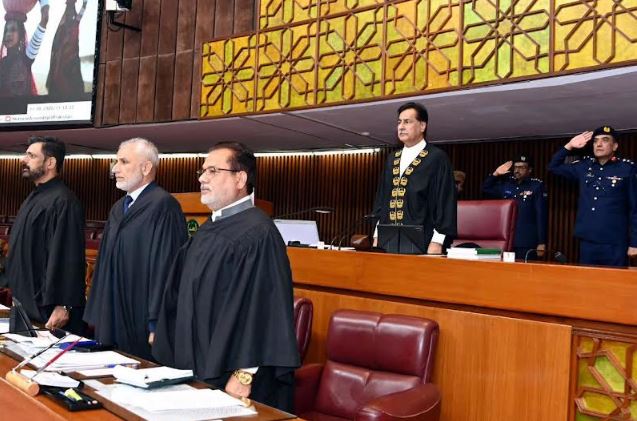
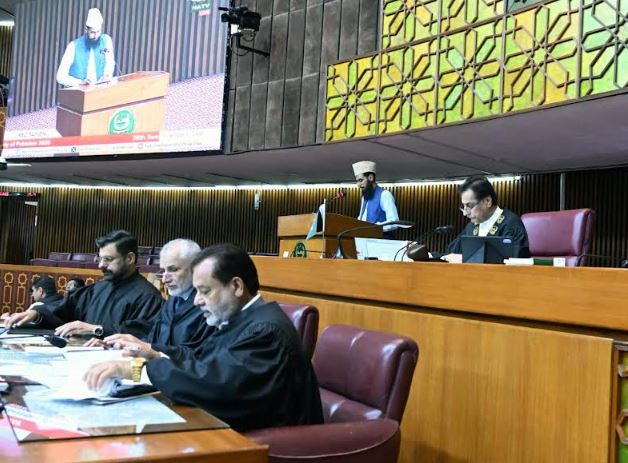
The proposal for the salary hike was unveiled by Federal Finance Minister Muhammad Aurangzeb during his National Assembly budget speech for the fiscal year 2026-27 on Friday.

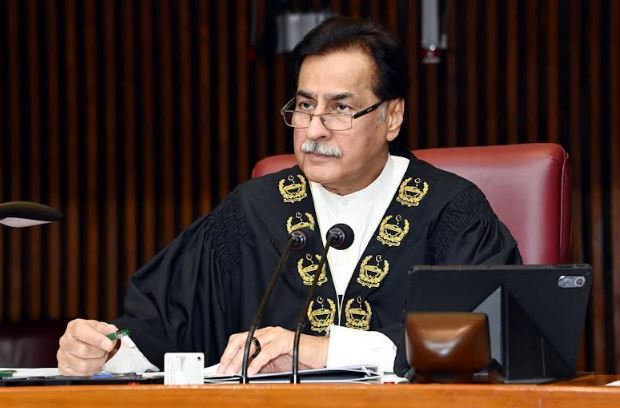
Expressing his views on the assembly floor, during a session being chaired by NA Speaker Ayaz Sadiq, FinMin noted: “This budget is being presented at a time when Pakistan has achieved the status in the eyes of its people and the world as a country whose voice is listened to, and whose friendship is desired.”

The session witnessed noisy scenes, with opposition members raising slogans while treasury lawmakers welcomed PM Shehbaz by thumping desks in the lower house.

During the proceedings, PTI lawmakers also brought placards and posters into the NA.

Furthermore, the government proposed income tax relief in four slabs for salaried individuals and the abolition of the surcharge on the salaried class.

The Finance Bill proposed reducing income tax rates for salaried taxpayers through restructuring of tax slabs, with additional intermediate slabs introduced.

For salaried persons earning between Rs2.2 million and Rs3.2 million annually, the proposed tax is Rs116,000 plus 20% of the amount exceeding Rs2.2 million.

For those earning between Rs3.2 million and Rs4.1 million annually, the proposed tax is Rs316,000 plus 25% of the amount exceeding Rs3.2 million.

For salaried individuals earning between Rs4.1 million and Rs5.6 million, the proposed tax is Rs541,000 plus 29% of the amount exceeding Rs4.1 million.

For those earning between Rs5.6 million and Rs7 million, the proposed tax is Rs976,000 plus 32% of the amount exceeding Rs5.6 million.

FPCCI praises budget, urges shift to growth

FPCCI praises budget, urges shift to growth

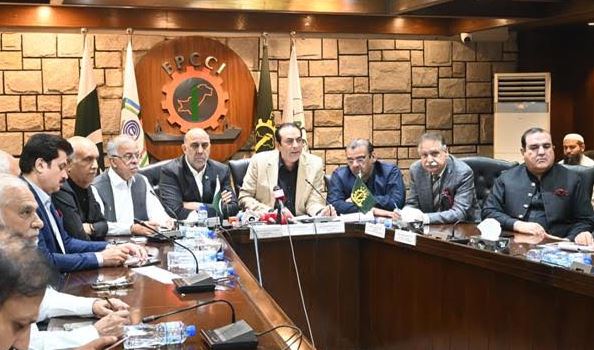
Islamabad / Lahore / Karachi, JUN 12 /DNA/ – Atif Ikram Sheikh, President of the Federation of Pakistan Chambers of Commerce & Industry (FPCCI), has acknowledged the presentation of the Rs. 18.7 trillion Federal Budget 2026-27, commending the government’s efforts toward macroeconomic stabilization – while urging a stronger transition toward sustained economic and industrial growth.

Mr. Atif Ikram Sheikh, addressing the business community and media in a post-budget session today, the President of FPCCI congratulated Prime Minister Mian Muhammad Shehbaz Sharif and the government’s economic team on their fifth consecutive federal budget – noting that it reflects a vital continuity of economic policy.

Mr. Atif Ikram Sheikh said that Pakistan’s economy has shown encouraging signs of stability; with GDP growth improving to 3.7%, the fiscal deficit reducing to 0.7% of GDP, and public debt servicing costs declining by 23% – the economy has undeniably moved toward fiscal discipline. However, the Federal Budget is not merely a statement of revenue and expenditure; it is a critical policy document that must dictate our transition from sheer stabilization to robust economic growth, he added.

Welcomed Relief and Accepted Proposals

Mr. Atif Ikram Sheikh expressed appreciation that several of its key recommendations were incorporated into the budget, signaling a partial shift toward a “Growth-Driven Model.” Key budget measures welcomed by the business community include:

●        Tax Relief: The abolishment of the Capital Value Tax (CVT) on foreign assets and the elimination of the Federal Excise Duty (FED) on international business class travel.

●        Super Tax Reforms: The abolishment of the Super Tax on six slabs up to Rs. 500 million, a reduction from 10% to 8% for incomes exceeding Rs. 500 million, and a complete waiver for exporters.

●        Salaried Class Support: The elimination of the surcharge on salaried individuals and considerable reductions in tax rates across all slabs.

●        Sector-Specific Incentives: The extension of the 0.25% final tax exemption on IT exports until June 2029, and the reduction of Withholding Tax (WHT) for filers in the construction sector by 50% (from 2.5% to 1.25% on purchase, and 5.5% to 2.75% on sale).

●        Retail Digitalization: A new 1% fixed sales tax scheme for retailers with annual sales under Rs. 200 million, exempting them from POS machines and routine audits via a green QR code system.

●        Exporter Relief: A revised 1.25% Minimum Tax for exporters, replacing the previous 1% Minimum and 1% Advance Tax structure.

Core Economic Concerns and Unaddressed Proposals

Mr. Atif Ikram Sheikh maintained that, despite the positive indicators, FPCCI highlighted significant concerns regarding the overarching economic environment. The Investment-to-GDP ratio remains stagnant at 14.38%, and the savings rate has declined to 14.13%. Most alarmingly, urban poverty has surged from 11% to 17%, reflecting a significant downturn in core business activities.

Mr. Atif Ikram Shikh voiced strong reservations regarding the Federal Board of Revenue’s (FBR) aggressive tax collection target of Rs. 15.2 trillion (a 17% increase) and the petroleum levy target of Rs. 1.7 trillion (an 18% increase). The Federation warned that these targets risk further fueling inflation amid already high international oil prices.

Furthermore, several critical FPCCI proposals designed to spur industrialization and export competitiveness were notably absent from the budget speech, including:

●        Restoration of the Final Tax Regime (FTR) for exporters.

●        Reductions in the corporate tax rate and turnover tax under Section 113.

●        Elimination of the Minimum Tax Regime and Further Tax.

●        Withdrawal of the repeal of Section 8B of the Sales Tax Act.

●        Broader systemic digitalization of the economy.

Next Steps and Comprehensive Review

Mr. Atif Ikram Sheikh highlighted that the proposed measures give mixed signals regarding the support for sustained industrialization, job creation, and higher economic growth,” the President noted. “The next phase of reforms must hyper-focus on productivity enhancement, export diversification, and lowering the cost of doing business.

The FPCCI considers it premature to issue a final assessment of the budget at this stage. Over the next 48 hours, the Federation will conduct a comprehensive review of the Finance Bill in consultation with member chambers, trade associations, and key stakeholders across the country. A detailed response outlining the business community’s complete observations and recommendations will be issued subsequently.

The FPCCI remains committed to constructive engagement with the government to build a stronger, more competitive, and prosperous Pakistan.

Ireland’s home game against Israel in Nations League to be played at neutral site

Ireland’s home game against Israel in Nations League to be played at neutral site

MEXICO CITY: Ireland’s home game against Israel in the Nations League will be played at a neutral site and behind closed doors, the Irish football federation confirmed Friday.

The Football Association of Ireland, which faced calls by pro-Palestinian activists for a boycott, said the October 4 game originally scheduled for Aviva Stadium in the Irish capital posed “operational challenges.”

At a recent home friendly against Qatar, Irish activists hurled tennis balls onto the pitch in protest. The balls had “Stop the Game” messages on them, referring to the Nations League matches against Israel.

The Irish federation confirmed that it received UEFA approval to move the October game. A location hasn’t been announced. The teams will also meet on Sept. 27 at a neutral site for Israel’s “home” game.

Advertisement
“Following consultation with various stakeholders, the Association is of the view that operational challenges could impact on the delivery of the game on home soil, so the fixture will be played away from the Aviva Stadium,” it said in a statement.

“The Association understands and respects the views expressed by players and staff, supporters, its members, campaigners, members of the public and the Irish footballing community in relation to this fixture.”

The federation reiterated that boycotting the games could damage Ireland’s chances of qualifying for the 2028 European Championship, which Ireland is co-hosting with Britain.

Forfeiting six points “could lead to relegation to League C in the UEFA Nations League and weaken our qualifying potential for (the Euros),” it said.

The federation also said it has been in close contact with the Palestinian Football Association, which it said expressed its appreciation “for the principled positions taken by the Football Association of Ireland in support of the rights of the Palestinian people and Palestinian athletes.”

Ireland’s federation added that previously it had called on UEFA to suspend the Israel Football Association from UEFA competitions — in protest of Israel’s military action in Gaza. The Israel-Hamas war was sparked by the militant group’s attack on Israel on October 7, 2023.

Trump says US, Iran could sign peace deal as soon as this weekend

Trump says US, Iran could sign peace deal as soon as this weekend

WASHINGTON, JUN 12: President Donald Trump on Thursday said the United States and Iran could sign a peace deal as soon as this weekend that would reopen shipping traffic through the Strait of Hormuz.

The agreement, if finalized, would be the most significant diplomatic breakthrough yet to end the three-month-old war, which has killed thousands of people and sent global energy prices sharply higher.

For all the latest headlines follow our Google News channel online or via the app.

“We just made a great settlement of the war with Iran,” Trump told reporters at the White House.

“The strait will officially open as soon as we sign, which could be soon, very soon, maybe over the weekend in Europe,” he said. Vice President JD Vance could sign for the United States, Trump added.

When asked if Iran’s Supreme Leader Mojtaba Khamenei has approved the deal, Trump said: “I understand the answer is yes.”

Trump’s announcement came after he called off planned military strikes on Iran, citing progress in talks.

Since mid-March, Trump has repeatedly claimed that a deal with Iran to end the war is close. The two sides have traded strikes throughout the week, straining a ceasefire announced in April.

“It’s a very strong memorandum of understanding that is a little conceptual,” Trump told reporters.

Trump has repeatedly said that any peace deal must ensure Iran cannot develop a nuclear weapon.

Iran’s demands include the lifting of international sanctions, the release of billions of dollars in frozen assets and recognition of its control of the Strait of Hormuz.

“We have a deal that Iran will never have a nuclear weapon, which was the whole purpose of what we had to go through to get this. So it was a very big thing,” he said on Thursday.

Iran’s semi-official Fars news agency reported that Tehran is likely to approve the agreement, though it has yet to give a formal response.

Meanwhile, Iran’s Foreign Ministry spokesperson Esmaeil Baghaei said Tehran has not yet made a final decision on a possible agreement with the US, according to IRNA news agency.

Separately, Israeli Prime Minister Benjamin Netanyahu said Trump and Netanyahu spoke on Thursday.

Israel is “not a party to the memorandum of understanding,” and Netanyahu expressed his appreciation for Trump’s commitment to securing a final deal that includes resolving the issue of enriched nuclear material, according to a readout from Netanyahu’s office.

Trump also told reporters that he would soon talk to Turkey’s President Recep Tayyip Erdogan.

Us stocks rose and oil prices fell on the news.

The war has killed thousands of people, mainly in Iran and Lebanon, and pushed up global oil prices since the US and Israel launched airstrikes on Iran on February 28.

US-Pakistan program boosts digital trade for 50 entrepreneurs

US-Pakistan program boosts digital trade for 50 entrepreneurs

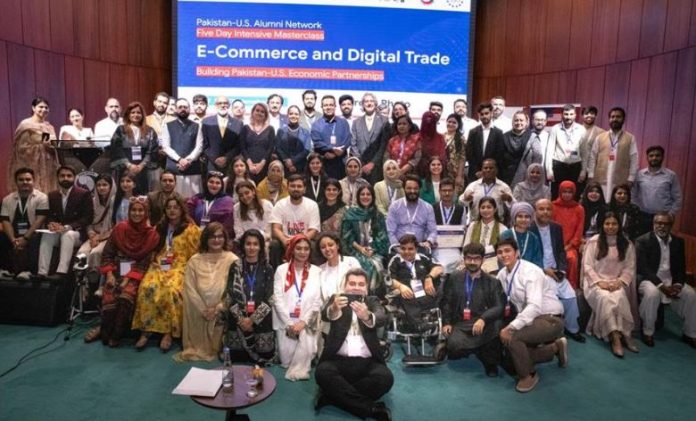
ISLAMABAD, JUN 12 /DNA/ – U.S. Mission Pakistan, in partnership with the Pakistan-U.S. Alumni Network (PUAN) and Tech Valley Pakistan, concluded a five-day business accelerator program designed to strengthen the digital trade capabilities of Pakistani entrepreneurs to better compete in international e-commerce markets.

The program, titled “E-Commerce and Digital Trade: Building the U.S.-Pakistan Economic Partnership,” was held June 8–12 at the newly established headquarters of the U.S. Educational Foundation in Pakistan (USEFP) in Islamabad.  Fifty entrepreneurs were selected for participation through a competitive, nationwide multi-stage process and who represented a diverse cross-section of Pakistani industries from artisan crafts and agriculture to fashion, software development, and health.

At the closing ceremony, Chargé d’Affaires, ad interim Andrew Halus reaffirmed the U.S. commitment to investing in Pakistan’s future through entrepreneurship and innovation.

He told the graduates, “The United States is Pakistan’s largest export market.  You are now equipped to access that market and expand digital trade.”  He also noted that the Google Digital Marketing & E-Commerce Professional Certificate awarded to participants would strengthen their business credentials.

Google for Education supported the initiative by providing digital tools, integrating learning resources into the curriculum, and offering professional certification through the Google Digital Marketing & E-Commerce Professional Certificate program. Participants received training in building online stores, understanding digital trade regulations, and managing logistics and supply chains.

By the end of the program, each entrepreneur had built an online store, mastered digital trade regulations, secured logistics partnerships and learned to harness AI-powered marketing tools.  Every participant also walked away with a personalized export roadmap plan to take their products to international markets.

The cohort showcased the richness of Pakistani industry, with products ranging from handcrafted goods and agricultural exports, including dried mangoes and organic oils, to fashion and apparel items such as shawls and jewelry.

Tech Valley Pakistan, a designated Google for Education and Canva for Education partner, provided technology solutions, training, and consultancy services for the program.  The organization operates across Pakistan, Canada, Bahrain, Saudi Arabia, and the United States, and has reached more than 500,000 individuals to date.

Gritfit Gym celebrates anniversary

Gritfit Gym celebrates anniversary

ISLAMABAD, JUN 12 /DNA/ – The Gritfit Gold Gym, located in Sector G-11, celebrated its anniversary with enthusiasm as members and management gathered for a cake-cutting ceremony to mark another successful year of promoting health and fitness in the capital.

The event, held at the gym premises, brought together fitness enthusiasts, trainers, and administrative staff. The celebration served as an opportunity to reflect on the gym’s journey, acknowledge the dedication of its members, and recognize the efforts of the management team in maintaining high standards of training and facilities.

Speaking on the occasion, the gym’s management expressed gratitude to the members for their continued trust and commitment. “This anniversary is not just about us; it is about every person who walks through our doors to work on their health. Our members are the heart of Gritfit Gold G-11,” a senior manager said.

Pak Army clinches 1st position at Int’l Pacesticking Competition 2026

Pak Army clinches 1st position at Int’l Pacesticking Competition 2026

RAWALPINDI, Jun 12: In a remarkable display of excellence, Pakistan Army team, represented by  Pakistan Military Academy (PMA), has clinched 1st Position at the prestigious International Pacesticking Competition 2026 held at the Royal Military Academy (RMA) Sandhurst, United Kingdom.

The PMA team made a clean sweep at the competition, securing all major honors, that is 1st Overall Team Trophy, Best Pace Sticker and Best Driver awards, said a news release issued by Inter Services Public Relations (ISPR).

The 9-member Pakistani contingent, led by Major Haider Gulzar (Adjutant, PMA), arrived in UK on June 5, 2026.

A total of 16 international teams from different armies participated in the fiercely competed annual event. The Pakistan Army team’s victory is reflective of the highest standards of professional training, excellence and dedication maintained by the Armed  Forces of Pakistan.

South Korea fight back to beat Czech Republic in World Cup opener

South Korea fight back to beat Czech Republic in World Cup opener

South Korea next face Mexico on June 18 and Czechs travel to Atlanta to meet South Africa

MEXICO: South Korea rallied from a goal down to defeat the Czech Republic 2-1 and make a winning start to their World Cup Group A campaign, much to the delight of their fans and the sizeable local Mexican support they enjoyed in a festive Guadalajara on Thursday.

The Koreans joined Mexico on three points at the top of the pool after the co-hosts defeated nine-man South Africa 2-0 in the tournament opener in Mexico City.

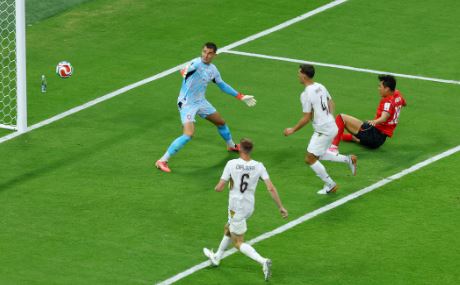
Ladislav Krejci put the Czechs ahead with a fine header as the European side dominated in the air, but Hwang In-beom equalised shortly afterwards and turned provider for substitute Oh Hyeon-gyu’s winner.

Oh had come on for the misfiring Son Heung-min, who had five chances in the first half alone but endured an off-day in front of goal and is still two goals shy of the all-time scoring record for the side, failing to add to his 56 strikes.

South Korea next face Mexico on June 18 and the Czechs travel to Atlanta to meet South Africa on the same day.

There were noticeable areas of empty seats in the stadium, but the vast majority of the 44,985 in attendance were firmly behind the Koreans.

It was a game of contrasting styles, the technical quality and passing range of the Koreans versus the brute strength and direct style of the Czechs.

The first half was goalless but the game sprang to life in the second period and it was the Czechs who took the lead after 59 minutes when Krejci rose highest to head home from a long throw by Vladimir Coufal.

South Korea were level eight minutes later and it was a fine goal too. Lee Kang-in’s excellent through ball created the shooting opportunity for Hwang In-beom and he cut inside before curling a right-footed shot low into the far corner.

Korea were undone by a set-piece again when Thomas Soucek headed in a free kick, but the flag was raised for offside as the Czechs’ first game at the World Cup in 20 years ended in defeat.

Mexico get World Cup party started with 2-0 win over South Africa

Mexico get World Cup party started with 2-0 win over South Africa

Julian Quinones scores early goal as Mexico dominate opener; Raul Jimenez adds second with header

DNA

NEW YORK: Mexico got the World Cup party started as the co-hosts swept away South Africa 2-0 on Thursday in an encounter with three red cards as the pyrotechnic smoke of the opening ceremony gave way to a cloud of red mist at a thrumming Azteca stadium.

The match fired the starting gun for the quadrennial football extravaganza, yet the scrappy encounter will likely be remembered not for its thrilling football but for its flurry of dismissals.

Julian Quinones’s early strike set the tone for a dominant Mexican display in the Group A encounter with Raul Jimenez’s header midway through the second half removing any lingering tension for the home crowd.

Yet South Africa were reduced to 10 men when Sphephelo Sithole was sent off early in the second half, with his teammate Themba Zwane following him off the pitch before Mexico’s Cesar Montes was dismissed in the dying moments.

The ill-tempered encounter spoiled an otherwise party atmosphere, yet the home crowd got to celebrate an opening victory that will set them up nicely to make it out of a group that also includes South Korea and the Czech Republic.

“It’s a moment I’ll carry with me for the rest of my life,” said Mexico midfielder Erik Lira. “The only thing I felt was that everything it took to get here had been worth it.”

It was a day of firsts for the World Cup, as the first 48-team edition, and the first to be held in three countries, got underway in the first stadium to host three World Cup openers.

South Africa players look dejected after their 2-0 defeat to Mexico in the Fifa World Cup 2026 Group A match at Estadio Azteca, Mexico City on June 11, 2026. — Reuters

It was fitting therefore that the first of a record 104 matches had Mexico clinch a first win in the tournament’s opening match after seven previous failures and of course, it was the first World Cup opener to feature three red cards.

The fixture was a repeat of the 2010 tournament opener, when South Africa held Mexico to a 1-1 draw in Johannesburg, yet this encounter was played out in a stadium with World Cup history stamped all over it.

The Azteca has witnessed some of the tournament’s most iconic moments, from Maradona’s ‘Hand of God’ and 1986 heroics to Pele’s all-conquering Brazil side of 1970.

While there was none of that era-defining quality on show on Thursday, it mattered little to the hordes of green-clad supporters, who had already been revved into frenzied excitement before a ball was kicked.

With the match played against a backdrop of protests that had threatened to bring Mexico City to a standstill, supporters were taking no chances, with many already hovering around the stadium nearly seven hours before kickoff.

An opening ceremony that featured Shakira and Burna Boy performing the World Cup anthem had pumped up the crowd still further before Mexico swiftly got down to business.

A drone view shows fans watching the match between Mexico and South Africa during the 2026 FIFA World Cup at a public screening in Plaza Garibaldi in Mexico City, Mexico, June 11, 2026. — Reuters

The game was barely minutes old when Jimenez stung the fingertips of South Africa goalkeeper Ronwen Williams with a volley from 12 yards, but the tournament’s opening goal was not long in coming.

Sithole was robbed on the edge of his own box by Lira, preferred in the heart of midfield to captain Edson Alvarez, and he quickly fed Quinones who danced inside before drilling a low finish beneath Williams.

South Africa were clinging on for dear life as the first half came to a close and the second began in a similar vein.

Brian Gutierrez drew the first red card when his marauding run towards the box was stopped in its tracks by Sithole, whose clumsy tackle from behind earned him his marching orders to complete a miserable afternoon’s work for the midfielder.

The crowd had begun to get a little restless at Mexico’s failure to turn their numerical advantage into another goal but that frustration was relieved when Jimenez bagged his first World Cup goal, with a powerful downward header past Williams from a devilish cross by Roberto Alvarado.

The game’s finale was dominated by the dismissals with Zwane sent off after a VAR check for a supposed arm to the face while Montes was sent off for Mexico for denying a goalscoring opportunity.

A Parliament Transformed: The Vision and Leadership of Ayaz Sadiq

A Parliament Transformed: The Vision and Leadership of Ayaz Sadiq

by Muhammad Mohsin Iqbal

The progress of nations is seldom measured merely by the laws they enact or the institutions they build. Rather, it is reflected in the character of those entrusted with leadership and in their ability to adapt institutions to the demands of changing times. History bears witness to the fact that true leadership is not confined to authority; it is manifested through tolerance, magnanimity, foresight, and an unwavering commitment to the public good. Such qualities are neither acquired overnight nor sustained without perseverance. They require patience in the face of criticism, resilience amid challenges, and the courage to pursue reform even when the path is difficult. In contemporary Pakistan, few public figures embody these attributes more distinctly than thricely elected Speaker National Assembly Sardar Ayaz Sadiq.

A Parliament Transformed: The Vision and Leadership of Ayaz Sadiq

The hallmark of great leadership lies in bringing people together while steering institutions towards excellence. Throughout his parliamentary career, Sardar Ayaz Sadiq has demonstrated a rare ability to combine humility with determination, fostering consensus while pursuing meaningful change. His tenure has not merely been about presiding over parliamentary proceedings; it has been marked by a sustained effort to transform the National Assembly into a modern, efficient, and accountable institution capable of meeting the governance challenges of the twenty-first century.

A Parliament Transformed: The Vision and Leadership of Ayaz Sadiq

One of the most remarkable achievements under his stewardship has been the implementation of a comprehensive programme of right-sizing, fiscal discipline, and institutional modernization within the National Assembly Secretariat. At a time when public resources are under immense pressure and governments across the world are seeking greater efficiency, the Secretariat has emerged as a model of prudent financial management. Through carefully planned austerity measures and administrative reforms, it is projected to save approximately Rs. 4.5 billion during the financial year 2025–26, amounting to more than a quarter of its total budgeted expenditure.

A Parliament Transformed: The Vision and Leadership of Ayaz Sadiq

What makes this accomplishment particularly noteworthy is that it has been achieved without sacrificing institutional effectiveness or employee welfare. The Secretariat undertook a substantial reduction in sanctioned posts, decreasing its workforce structure from 1,725 positions to 1,344. Yet not a single employee was dismissed or compelled to resign. This reflects a sophisticated approach to human resource management in which efficiency was enhanced through strategic restructuring rather than punitive measures.

Equally significant has been the reduction in non-employee expenditure through stronger financial oversight, rational procurement practices, energy conservation initiatives, and tighter operational controls. These measures have not only generated considerable savings but have also cultivated a culture of accountability and responsible governance. In an era where public trust in institutions often depends upon transparency and fiscal prudence, such reforms set an example worthy of emulation.

Perhaps the most transformative dimension of this reform agenda has been the Speaker’s vision of a paperless Parliament. For generations, parliamentary work relied heavily upon mountains of documents, reports, agendas, notices, and legislative papers. The extensive digitization of parliamentary business has revolutionized this process. Electronic circulation of official documents has significantly reduced paper consumption, printing expenses, and administrative delays while contributing positively to environmental sustainability. This shift reflects a recognition that technological innovation is not merely a convenience but an essential instrument of modern governance.

The culmination of this vision was witnessed with the launch of Pakistan’s first AI-enabled parliamentary system. This historic initiative represents a milestone not only for the National Assembly but for parliamentary institutions throughout the developing world. By integrating advanced digital tools and artificial intelligence into legislative processes, the Assembly has entered a new era of institutional capability. Legislative research, document management, information retrieval, and administrative coordination are now being strengthened through technology-driven solutions designed specifically for parliamentary requirements.

What distinguishes this initiative is its emphasis on national ownership and data sovereignty. The AI platform has been developed as a highly secure, fully on-premises system, ensuring that all parliamentary data remains within Pakistan and under the exclusive control of the National Assembly. At a time when concerns about cybersecurity and data protection are becoming increasingly significant, this approach demonstrates both foresight and responsibility.

The digital transformation has also extended to the Speaker’s Office and parliamentary administration. Members of the National Assembly have been provided with digital devices enabling immediate access to legislative documents and parliamentary records. Training programmes for technical staff have been introduced to ensure that the institution possesses the capacity required to sustain and expand these innovations. The establishment of a modern data centre further underscores the Assembly’s commitment to building a technologically empowered parliamentary ecosystem.

These achievements gain even greater significance when viewed against the backdrop of Sardar Ayaz Sadiq’s parliamentary legacy. By March 2026, he had become the longest-serving Speaker in Pakistan’s parliamentary history, surpassing the record previously held by Maulvi Tamizuddin Khan. Having been elected Speaker on three separate occasions, he occupies a unique place in the democratic evolution of the country. Yet longevity alone does not define greatness. What distinguishes his tenure is the manner in which experience has been translated into institutional reform and enduring progress.

The National Assembly’s journey toward efficiency, transparency, and technological modernization illustrates how visionary leadership can transform public institutions without compromising democratic values. In a world where governance increasingly depends upon innovation and adaptability, Pakistan’s Parliament has demonstrated that tradition and technology need not stand in opposition. Instead, they can work together to strengthen democratic institutions and improve public service.

The reforms introduced under the leadership of Sardar Ayaz Sadiq offer an important lesson: genuine progress is achieved not through rhetoric but through sustained effort, careful planning, and a willingness to embrace change. By combining fiscal responsibility with digital innovation and institutional modernization, the National Assembly has set a precedent for other public institutions. It is a reminder that when leadership is guided by wisdom, tolerance, and a commitment to the national interest, even the oldest institutions can be renewed and prepared for the challenges of the future.

Stay Connected

64FansLike
60FollowersFollow

Latest Reviews

Exchange Rates

USD - United States Dollar
EUR
1.14
GBP
1.34
AUD
0.70
CAD
0.71