Home Blog Page 912

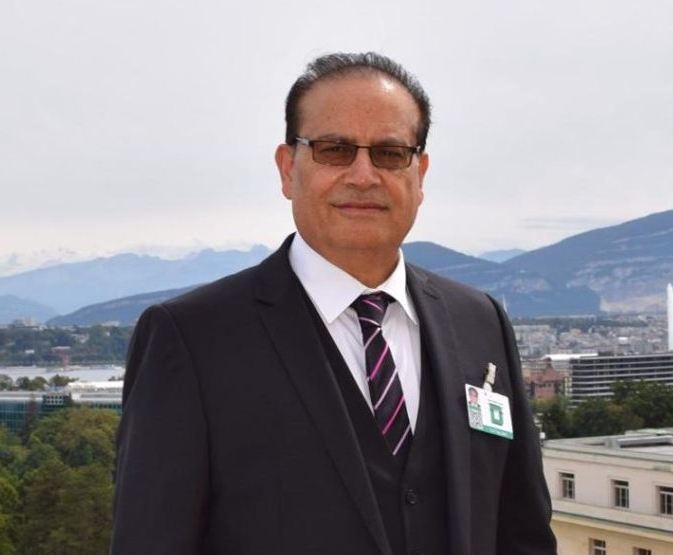
Nawaz Sharif elected PML-N president after 6 years

Nawaz Sharif

LAHORE, MAY 28: Nawaz Sharif has been elected “unopposed” as president of the Pakistan Muslim League-Nawaz (PML-N), once again after more than six years today.

No other PML-N leader submitted their nomination papers against the party supremo for the top post. Nawaz’s papers were approved for the party election.

The development came after his party nominated him as the party’s head.

Speaking to Geo News senior political analyst Mazhar Abbas said that Nawaz retaking the PML-N’s helm was expected.

However, he noted that the party decided to give back the presidency to Nawaz after the February 8 elections as previously he was aiming to be a candidate for the prime ministership if the party had secured a simple majority in the National Assembly.

Stressing that the PML-N faces a wide array of challenges in Punjab, Abbas underscored that it is to be seen what direction Nawaz will set as the party’s president.

According to The News, sources from the party had earlier said that Nawaz would be elected through an election for the party president which has been rescheduled from the second week of May to May 28, the day celebrated as Youm-e-Takbir. On this day in 1998, Pakistan had responded to India’s nuclear tests while Nawaz was prime minister.

Through a notification on Monday, Prime Minister Shehbaz Sharif has declared May 28, 2024, a public holiday.

On July 28, 2017, Nawaz lost both the prime minister’s office and the presidency of his party as a result of the Panama Papers ruling. Ever since, the PML-N has constructed a narrative centred around the catchphrase “Mujhy Kyun Nikala” (Why was I removed?).

At a news conference on Monday, PML-N Chief Election Commissioner Rana Sanaullah stated that the party leaders had the consensus that Nawaz should lead the party. He said that Shehbaz had resigned from his position as party president, but he was still permitted by the Central Working Committee to carry out his responsibilities until the election of a new leader.

As per the party constitution, the election commission was appointed by the Central Working Committee and the commission issued the election timetable, said Sanaullah.

Today’s timing for accepting nomination papers were from 10am to 12pm; they had to be examined at 1pm, and the final list had to be readied by 3pm. Any party member was allowed to submit nomination papers.

Sanaullah said each party had its own election procedures such as nomination papers were not submitted in Jamaat-e-Islami, where the Shura elected the ameer. He underlined that he was not against Jamaat-e-Islami’s approach.

He highlighted Pakistan’s success in becoming a nuclear power under Nawaz’s leadership, as well as his role in turning the PML-N into a party for the average man. Nawaz had always been involved in major party decisions and would remain so, he underlined.

He said that other party positions should be filled by different members and that Shehbaz remained a significant leader, especially noted for his efforts in restoring the economy. He mentioned that Shahid Khaqan Abbasi could also submit his candidature documents, which would be scrutinised for eligibility.

Sanaullah asserted that the PML-N was a party of dialogue and emphasised the importance of cooperation between the government and the opposition. He also expressed his hope that PTI’s founder avoided a fate similar to that of Mujeebur Rahman and stressed the need for dialogue.

He reassured that Nawaz Sharif was not angry with anyone and remained fully active. Fundamental decisions in the federal and Punjab governments involved Nawaz’s consultation and approval. Nawaz’s statements were expected to become more frequent over the time.

If no other candidate submits nomination papers, Nawaz will be elected unopposed; otherwise, the election will be decided by a show of hands. Party sources mentioned that besides the election of the party president, the PML-N meeting will also discuss various resolutions to be presented to the general council.

After roti, bread prices also reduced significantly in Punjab

bread prices

Lahore, MAY 28: After the price of roti, the rate of bread has also seen a notable decrease across Punjab. This price reduction follows a recent cut in the price of naan and roti, bringing much-needed relief to households.

The price of bread has been reduced by Rs50 to Rs70, with the new prices taking immediate effect as per the recently issued notification.

In Lahore, the price of 750 grammes of bread has been reduced from Rs230 to Rs180. The Lahore deputy commissioner has announced that the maximum price for bread weighing up to 400 grammes will now be Rs95.

Also Read: Maryam Nawaz reduces price of roti in Lahore to Rs14

Authorities have assured that these new prices will be enforced without delay, ensuring that the benefits of the reduction reach consumers promptly.

On May 23, Punjab Chief Minister Maryam Nawaz tweeted the new price of roti, which was further reduced and fixed at Rs14. Maryam said the Punjab government had further reduced the price of roti in the province.

The price of roti was fixed at Rs14 in several areas, including Lahore, while in Bahawalpur and Bahawalnagar, the price was fixed at Rs12.

Also Read: Multan’s nanbais refuse to comply with fixed price of roti

However, the naanbais in Multan rejected the government’s decision. Despite the government’s efforts to provide relief to citizens through cheap roti, naanbais in Multan were selling roti at the old price. The citizens demanded the government take action to implement its decision and provide relief to the people.

In Multan, naanbais were selling roti at Rs20 and naan at Rs25, despite the government’s fixed price.

Aurangzeb briefs US envoy Blome about fiscal reforms

Aurangzeb briefs US envoy Blome about fiscal reforms

The Federal Minister reiterated the Prime Minister’s commitment to privatizing State-Owned Enterprises (SOEs), which has sparked interest from local and foreign investors in the case of Pakistan International Airlines (PIA).

Faisal Sheikh

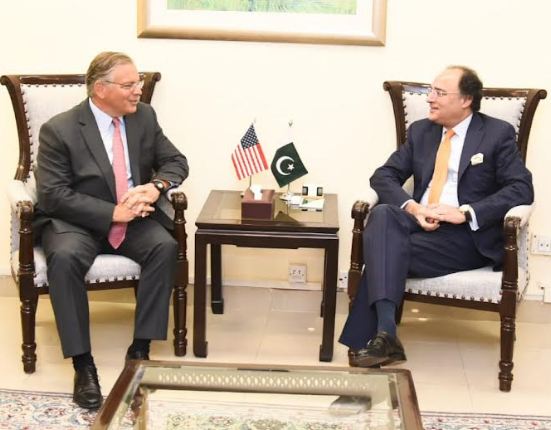
ISLAMABAD, MAY 27 /DNA/ – Ambassador of the United States of America to Pakistan H.E. Donald Blome called on Minister for Finance & Revenue Senator Muhammad Aurangzeb at the Finance Division today.

Finance Minister Muhammad Aurangzeb welcomed Ambassador Blome and underscored the long-term mutual relations between Pakistan and the USA. He informed the Ambassador about  successful completion of the Stand-By Arrangement (SBA) and that the Government of Pakistan is engaged with the fund to build upon the reforms under the SBA.

Senator Mr. Muhammad Aurangzeb highlighted the priority reform areas of the Government including increasing the tax-to-GDP ratio through end-to-end digitization, bringing the under-taxed sectors into the tax net, and tax administrative reforms.

The Federal Minister reiterated the Prime Minister’s commitment to privatizing State-Owned Enterprises (SOEs), which has sparked interest from local and foreign investors in the case of Pakistan International Airlines (PIA). On the energy sector reforms, he mentioned steps being taken to bring private sector experts to enhance efficiency. He also apprised the Ambassador of the potential investments from investors in the Agriculture, Mining, and IT sectors.

Ambassador Mr. Blome appreciated the Pakistani government’s efforts and initiatives to improve macroeconomic indicators. He assured the support of the United States in helping Pakistan achieve economic stability and sustainable growth.

FED rate hike essential to counteract smoking costs, claims SPDC Study

FED rate hike essential to counteract smoking costs

ISLAMABAD, MAY 27 /DNA/ – Anti tobacco activists have warned that the government would lost the revenue and benefit gained through tax reforms if the Federal Excise Duty (FED) rate is not increased in the upcoming budget.

A fact based study released by The Social Policy and Development Centre (SPDC) said, 31.6 million adults in Pakistan use tobacco, resulting in over 160,000 deaths annually. Smoking-related illnesses and deaths cost Pakistan at least 1.4% of its GDP annually.

However, the 2022-23 FED reforms on tobacco have generated good revenue, with collections reaching PKR 122 billion from July 2023 to January 2024.

Study said the reforms have not only increased revenue but also contributed to public health by reducing consumption and potentially recovering 17.8% of the total healthcare costs associated with smoking in Pakistan.

It said however, maintaining the current rate could result in a decrease in health recovery from 17.8% to 15.6% and to achieve similar health cost recovery levels observed in 2023-24, a 37% increase in the FED rate for the upcoming year is suggested.

Anti tobacco activists argue that a tax increase will not promote illicit trade, as research evidence shows that tobacco firms manipulate their reported production to influence tax policy and evade taxes. The recently initiated track and trace system is expected to reduce counterfeiting, curb illicit trade, and keep a check on front-loading.

Study said the proposed tax rates for the Budget 2024-25 aim to increase the FED share in retail price to 70%, generating additional revenue and promoting public health. The tax proposal is a clear ‘win-win’ in terms of health and revenue for the government and the people of Pakistan.

Pakistan in grip of worst individual dictatorship: PTI

PTI wants judicial commission to probe claims by Rawalpindi commissioner

System of tyranny won’t last for long, as it will soon meet a drastic end: PTI Spokesperson

ISLAMABAD, MAY 27 /DNA/ – Pakistan Tehreek-e-Insaf (PTI) said that Pakistan was in the grip of the worst dictatorship of an individual in the aftermath of the regime change operation, as the country was deprived of its constitution and law.

Reacting to the statement of Malik Riaz Hussain, a well-known businessman, PTI Spokesperson said that not only politicians but also judges, journalists, lawyers, traders and businessmen and people from all walks of life were being targeted and harassed and forced to the will and the whims of an individual.

He said that in this system of giving oxygen to the power of individual, it has become a tradition to be forced into submission through bullying, coercion and oppression.

PTI Spokesperson stated that under the same chain of oppression, nearly 203 false, bogus and politically motivated cases were registered against PTI Founding Chairman Imran Khan, including the Al-Qadir Trust case.

He recalled that six judges of the Islamabad High Court (IHC) wrote a letter to the Supreme Judicial Council against this infamous series of bullying and oppression, exposing the practice of agencies’ meddling into state institutions.

PTI Spokesperson stated that no system of oppression and tyranny in the world could sustain for long, and if it was set up, it would eventually collapse.

He asserted that the clear cracks in the personal dictatorship were a sign of its impending end.

PTI Spokesperson expressed optimism that the time was nearing when PTI’s struggle would bear fruits and the system of oppression and individual dictatorship would soon meet a drastic end and would usher in a new era of rule of law and democracy in the country.

Ethio-Pakistan Business Forum held in Addis Ababa

Addis Ababa

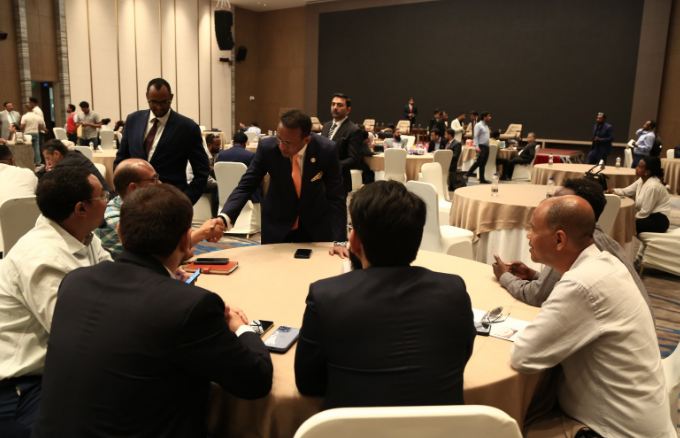
ADDIS ABABA, MAY 27 /DNA/ – A productive and fruitful Ethio-Pakistan Business Forum held in Addis Ababa, Ethiopia on Tuesday in presence of more than 500 businesspersons from diverse economic sectors including agriculture and agro-processing, manufacturing, mining, tourism and ICT.

Key Ministers from the Government of the Federal Democratic Republic of Ethiopia including H.E. Ambassador Birtukan Ayano, State Minister of Foreign Affairs and Gebremeskel Chala, Minister of Trade and Regional Integration and Aklilu Tadesse CEO of Industrial parks graced the forum as the guest of honors.

The senior officials from the Ethiopian Investment Commission, Ethiopian Investment Holding and Industrial Parks Development Corporation also attended the forum.

From Pakistani side, Zubari Motiwala, Chairman of the Trade and Development Authority of Pakistan (TDAP), H.E. Dr. Khurram Tariq, President of the Faislabad Chamber of Commerce and Industry, H.E. Dr. Abdul Ghafoor Malik President of the Sialkot Chamber of Commerce and Industry, H.E. Malik Azhar Ali President of Sundar Industry and Trade Association, H.E. Fazal Jillani, Chief Executive Officer of AirSial and other big businesspersons including investors and industrialists attended the Business Forum.

Addressing the Business Forum, H.E. Ambassador Birtukan Ayano, State Minister of Foreign Affairs expressed her gratitude for the delegates who became part of the 2nd Business and Trade Delegation from the Islamic Republic of Pakistan.

Lauding the Ethiopian Embassy Islamabad’s performance, she said the Ethio-Pakistan Business Forum would be instrumental in giving the first-hand information to the business community of Pakistan on the business, trade and investment opportunities in the Federal Democratic Republic of Ethiopia.

The Minister said prime focus of the foreign policy of Ethiopia was to attract the foreign direct investment, boost its exports through trade and technology transfer from the brotherly countries.

She said Ethiopia and Pakistan enjoyed longstanding relations that have been flourishing with the increased cooperation in economy, health and education.

H.E. Gebremeskel Chala, Minister of Trade and Regional Integration, said the Government of the FDR Ethiopia was committed to economic development, making extensive efforts to attract foreign investment in Ethiopia.

He highlighted the homegrown economic agenda 2.0 under which multiple initiatives were taken to facilitate and incentivize the business, trade and investment.

Chief Executive Officer IPDC H.E. Aklilu Tadesse briefed the forum about 13 state-of-the-art industrial parks with investors friendly policies.

Ambassador of Ethiopia to Pakistan, Jemal Beker Abdula said the bilateral relations between the two countries were on upward trajectory as the Ethiopian Embassy Islamabad had organized two big business and trade delegation of Pakistani businesspersons to Ethiopia within one and half year of its establishment.

Ambassador of Pakistan in Ethiopia Atif Sharif Mian said there was a need to send similar size of business and trade delegation to Pakistan from Ethiopia to further boost the bilateral trade between the two countries.

Zubair Motiwala, TDAP Chairman, underlined the need for establishing cooperation between the banking sectors of both the countries for enhancing the bilateral trade between the two countries.

Following the Business Forum, a panel discussion was held on Investment opportunities in diverse economic sectors of Ethiopia and Public Private Partnership opportunities with the Ethiopian Investment Holding for 2nd Business and Trade Delegation from Pakistan.

Business-to-Business meetings also held in the second half of the Ethio-Pakistan Business Forum where businesspersons from economic sectors of both countries discussed potential areas of cooperation and collaboration.

Amir Muqam applauds IOM services for Afghan refugees

Amir Muqam

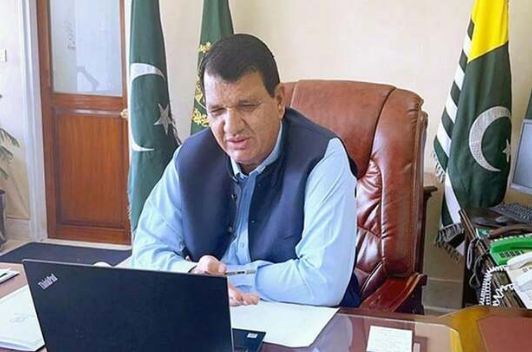
ISLAMABAD, MAY 27 (DNA) —Federal Minister for States and Frontier Regions, Kashmir Affairs and Gilgit Baltistan, Engr. Amir Muqam has said that Pakistan continues to bear the world’s largest refugee burden, having done so for the past 40 years, and urged the international community to acknowledge this.

Talking to a delegation led by Ms. Mio Sato, Chief of Mission for the United Nations International Organization for Migration (IOM) in Pakistan, the federal minister commended the International Organization for Migration (IOM) for its services to Afghan citizen card holders and the host community, said a press release here on Monday.

Chief Commissioner for Afghan Refugees Mohammad Abbas Khan, Joint Secretary of SAFRON, and other senior officials were also present on the occasion. Federal Minister Engr Amir Muqam said that more support is needed in health, education, and infrastructure building. The federal minister expressed the desire for Afghan refugees to return to their country with dignity, noting that there have been no incidents of forced expulsion or harassment.

 He emphasized the need for screening to determine their locations and activities. Engr Amir Muqam stated that Pakistan is aware of the business activities, education, and relationships of Afghan refugees within the country. He highlighted that many Afghans are involved in businesses that are beneficial to both Pakistan and its citizens.

The federal minister said that he will travel to Geneva in June at the invitation of the High Commissioner of UNHCR, and he plans to meet with the DG of IOM. The ministry of SAFRON and IOM have agreed to maintain ongoing communication. Chief of Mission MIO Sato expressed gratitude to the federal minister for meeting despite the holiday and stated her intention to maintain close contact with the ministry. — DNA

ISSI hosts young “Azadi Fellows” from IRCRA

ISSI

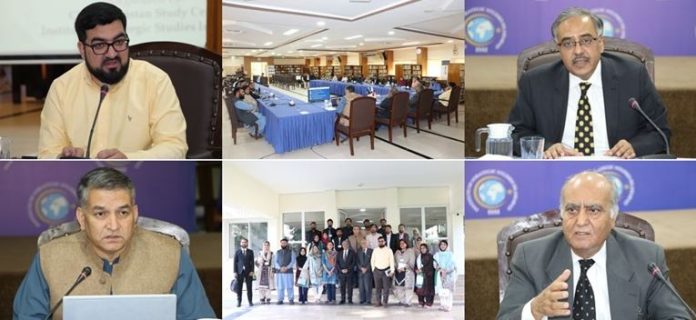
ISLAMABAD, MAY 27 /DNA/ – The Institute of Strategic Studies Islamabad (ISSI) hosted a delegation of the International Research Council for Religious Affairs (IRCRA) as part of their Azadi Fellowship program, which aims to engage University and madrasa graduates to deepen their understanding of regional and global affairs. The event provided a platform for a wide range of exchanges on critical issues with the young delegates drawn from different parts of Pakistan.

Director General ISSI Ambassador Sohail Mahmood, in his address on the subject of “Regional Stability in a Global Context,” emphasized the importance of the current historical juncture, noting that this was another defining moment in world politics. He reflected on the ongoing debate among intellectuals regarding the perceived ‘decline of the West’ and the ‘rise of the rest’, particularly the shift of the global center of gravity from the West to the East. He also touched upon the concept of the ‘Thucydides Trap,’ the intensifying competition between the U.S. and China, as well as the impact of longstanding unresolved disputes such as Palestine and Kashmir on regional and global stability. He also highlighted transnational terrorism; the critical food, fuel and financial crises (3Fs); and the existential threat posed by climate change. Additionally, he highlighted the effect of emerging technologies and the risks posed by their militarization. The DG ISSI underscored the intrinsic link between internal strength and external influence and stressed that a stable polity, a robust economy, and nimble diplomacy, were indispensable to respond effectively to the current and future challenges and to realize the opportunities.

Earlier, Dr. Talat Shabbir, Director of the China-Pakistan Study Centre, provided an introduction of ISSI and its research work. He elaborated the Institute’s rich history, organizational structure, and core mission. He highlighted ISSI’s commitment to policy inputs, fostering dialogues, advocating for critical issues, extending outreach, and conducting in-depth analysis on various strategic matters.

During the question-and-answer session, the “Azadi Fellows” and other attendees posed insightful questions, leading to a lively and informative discussion. Topics ranged from specific regional conflicts to broader global strategic trends, providing an opportunity for deeper understanding and exchange of ideas.

At the end of the discussion, the President of IRCRA, Mr. Israr Madni, thanked ISSI for the opportunity for “Azadi Fellows” for an insightful discourse. The event concluded with closing remarks from Ambassador Khalid Mahmood, Chairman BoG, ISSI.

Calls for Divine Intervention by a President and a Tycoon

Qamar Bashir

By: Qamar Bashir

There are two statements on X, one by Dr. Arif Alvi, former President, and the other from real estate tycoon Malik Riaz. Incidentally, I know both of them very closely. I served Dr. Alvi as his Press Secretary and Media Advisor for ten months, and I had a very close association with Malik Riaz during my time at the newly constructed Bilawal House in Lahore as Director of Media with President Asif Ali Zardari, where we often engaged in healthy conversations. I found both of them extremely committed to their causes, very wise, good leaders, innovators, and excellent managers and doers.

Both of them, with many successes and achievements behind them, in their recent statements, perhaps due to their age, deep experience of worldly affairs, and their closeness to religion and Almighty Allah, called for divine intervention and refused to yield to worldly gains, speaking what they believed was correct, truthful, and good for the country and its people.

President Alvi, having led all three pillars of the state—the executive, the judiciary, and the parliament—and being the supreme commander of the armed forces, has perhaps realized that the solution to the country’s woes does not only lie in mundane and worldly power dynamics but rests with the will, intervention, and blessing of Almighty Allah for those who are on the right path. He suggests that divine anger and retribution will come for those who, allegedly consumed with the toxicity of brute power, have unleashed a reign of terror on the innocent, righteous, and hardworking people of Pakistan.

His recent tweets are outrightly rebellious, fearless, and bold. He has warned all those who have assumed the sources of every worldly power in the country that the volcano, which on the surface looks peaceful and harmless, will spew fire, lethal ashes, and molten lava when it bursts, and nothing can stand against its wrath especially those who have a false, usurping, and tyrannical grip on power.

The aim of this statement and its warning is addressed to the alleged supra executive and those who are allegedly occupying the parliament, the provincial assemblies, the senate, and the government after the 2024 elections, not because of their merit but because of the blessing of the supra executive, which allegedly, by a swirl of a magic wand, changed the election results in their favor, thus imposing an illegitimate government in the center and in Punjab.

Having said this, the president paused and raised a very pertinent question: if this lava bursts, it would burn anyone in its destructive path. Many innocent and well-intentioned people, whose past, present, and future are tied to this country, may also suffer.

But those in power, sensing the danger, would soon flee the country and take refuge in their safe havens, which they have created out of allegedly looted wealth in different parts of the world. However, he adds that Allah would make the world difficult for them.

He then takes a turn and gives hope that all loyal Pakistanis, who have their fate tied to this country and will live and die here, will finally defeat them. He warns the mafia not to take this warning lightly and to be aware that we will save Pakistan, build and develop this country, and ensure that our people regain their lost honor and that the country gets its rightful place in the community of nations.

He does not rest here but adds that we will build our homeland on the ashes of the ongoing looting under this false, brutal, illegal, and oppressive government. All this will be possible only with the grace of Allah through a very brave, proud son of this soil, the supreme commander of the hearts of the people of Pakistan, who will lead and will die only after reaching the destination.

This statement seems full of rhetoric, predictions, and hopes and desires for a better future, though it falls short of any mundane plan or strategy for how these desires would materialize in reality when the PTI is in shambles and its leader has been incarcerated for almost a year with little hope of release.

However, since these words are coming from a former president, who has seen the country’s inner workings with his own eyes, they should not be brushed aside but taken as a legitimate warning and a sincere effort to put things right to avoid an imminent catastrophe where the ultimate victims would be common people and the country.

The second powerful statement, which places all faith in divine mercy, was made on X by none other than the most powerful, resourceful, and creative real estate tycoon who has created dream housing societies unparalleled in the country and around the world, where millions of people live with dignity and honor.

Malik Riaz vowed to stand by his principles under divine guidance, and while remaining apolitical, refused to be used by one party against another. He sustained immense pressure with divine help, remained steadfast, and, in the face of imminent adversity, did not succumb to pressure and refused to be used as a pawn for political motives. He said he has been facing these pressures with grit and tenacity and will continue to do so even today, yielding to pressure “over his dead body.”

The reference to Mr. Malik Riaz is also allegedly aimed at the all-powerful supra executive, as the current lot of politicians and civil bureaucracy lack the grit or courage to challenge Malik Riaz, who has given decent living conditions of the millions and through his philanthropic work, which benefits thousands of downtrodden people every day.

These  statements reflect significant concerns and warnings that should not be taken lightly by either the supra executive or civilian government. Both figures emphasize the need for divine intervention, suggesting that the current state of affairs requires moral and spiritual rectification rather than merely political or military solutions. This appeal to divine will resonates deeply in a society where religion plays a central role in everyday life. By invoking divine intervention and standing firm on principles, both Alvi and Riaz position themselves as morally upright leaders, which can sway public opinion and reduce the legitimacy of those perceived as oppressors.

By: Qamar Bashir

Former Press Secretary to the President

Former Press Minister to the Embassy of Pakistan to France

Former MD, SRBC

Youm-e-Takbeer: Pakistan’s Nuclear Odyssey and Beyond

Global Misperceptions

Faiza Abid

In Pakistan’s illustrious journey, few chapters shine as brightly as the saga of its nuclear programme, a narrative woven with unwavering determination, wisdom, and national pride. Amid the chants of “Allah-o-Akbar”, Pakistan conducted its first series of nuclear tests in the Chagai District of Balochistan on 28 May 1998. The day came to be known as Youm-e-Takbeer, which literally translates to the day when “Allah’s name was exalted”.  The day reaffirmed the Pakistani nation’s faith in the omnipotence of Allah Almighty. As dawn breaks on this day, Pakistan stands at the threshold of remembrance and celebration, honouring the sacrifices and achievements of those who fortified the nation’s defence and made it unassailable.

In the wake of India’s provocative nuclear tests, Pakistan’s decision to assert its sovereignty and security through nuclear capability was a defining moment for the nation. It served as a declaration to the world that Pakistan will not be dictated to, nor will it falter in safeguarding its people and territory. From its humble beginnings in 1971 to the historical milestone of 1998, Pakistan’s nuclear programme stands as a testament to the vision and dedication of key figures, who emerged as guiding lights, navigating a complex web of technocratic, political, and military hurdles. One prominent figure among them is Dr Abdul Qadeer Khan, renowned as the “father of Pakistan’s nuclear programme,” standing tall for his pivotal role. His expertise in metallurgy and uranium enrichment technologies played an instrumental role in Pakistan’s nuclear advancement. Accompanying Dr Khan in his endeavour were a host of brilliant minds, including Dr Samar Mubarkmand, Dr Ishfaq Ahmen, and Mr Munir Ahmad Khan. Collectively, these distinguished individuals defied formidable challenges, showcasing Pakistan’s capacity to achieve technological excellence against all odds.

The origins of Pakistan’s nuclear programme lie in the turbulent geopolitical landscape of South Asia. After India denoted six nuclear devices between 11 and 13 May 1998, the response of the international community was tepid at best, failing to hold India accountable for its actions. Hence, amidst India’s assertiveness and perceived threat to its security, Pakistan found itself compelled to react swiftly, marking a pivotal moment in its pursuit of deterrence and defence. Pakistan’s nuclear testing ushered in an era of strategic equilibrium in the region, preventing conflicts from escalating into a full-scale war. Thereafter, this delicate balance of power has provided a semblance of stability in an extremely volatile region. Under a robust command and control system, Pakistan’s Full Spectrum Deterrence, in line with the dictates of Credible Minimum Deterrence, acts as a bulwark against Indian aggressive designs, including the ominous spectre of the Cold Start Doctrine and more recently their tilt towards first-strike counterforce options.

However, Pakistan is committed to responsible nuclear stewardship, as evident from its adherence to global norms and protocols governing nuclear weapons, active engagement in nuclear diplomacy, and regular safety assessments to ensure the safe operation of its nuclear facilities. 

The dividends of Pakistan’s nuclear programme extend far beyond defence. By harnessing the potential of nuclear technology, Pakistan has made significant strides towards attaining the United Nations’ Sustainable Development Goals (SDGs) in crucial spheres, such as energy, healthcare, industry, and agriculture. For example, in pursuit of cost-effective and clean energy, Pakistan’s Energy Security Plan 2030 delineates a target of 5 percent or 8800 MWE of nuclear power generation. However, in the aftermath of the advancement of expertise gained from KANUPP 1 and Chashma 1 and 2, this plan has expanded to a relatively ambitious projection of 42,000 MWE by 2050.

KANUPP-2 and KANUPP-3 stand as significant milestones, signifying ongoing strides in nuclear energy development, shaping a future of resilience for Pakistan’s energy needs. The signing of Chashma-5, equipped with HPR 1000 technology, also represents a leap forward in nuclear innovation. It also reinforces the enduring partnership between Pakistan and China, as well as shared aspirations for a sustainable future.

Therefore, Pakistan aims to harness the transformative potential of nuclear technology to bring unparalleled benefits to its people as well as the global community. Endeavours in this regard range from advancement in production of medical isotopes for treating cancer to exploration of nuclear desalination technologies for mitigating fresh water scarcity. Likewise, ongoing research in next-generation nuclear reactors, such as Small Modular Reactors (SMRs) carry a promise to revolutionise Pakistan’s energy production.

Today, Pakistan remains a steadfast partner in international collaboration, sharing its expertise and best practices for the greater good of humanity. Yet, amid the triumphs, challenges such as denial of technology loom large, testing Pakistan’s resolve. However, fervent nationalism and determination prevails to overcome all challenges. Therefore, as we reflect upon Pakistan’s nuclear journey, it is imperative to not only celebrate the past achievements, but also the boundless opportunities that lie ahead. United, the country can march forward with courage and determination, creating a bright future for Pakistan and its people.

Faiza Abid is a researcher at the Centre for Aerospace and Security Studies (CASS), Lahore. She can be reached at [email protected]

Stay Connected

64FansLike
60FollowersFollow

Latest Reviews

Exchange Rates

USD - United States Dollar
EUR
1.17
GBP
1.35
AUD
0.72
CAD
0.73